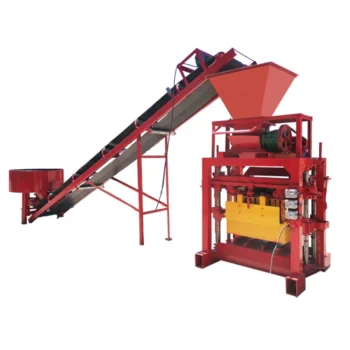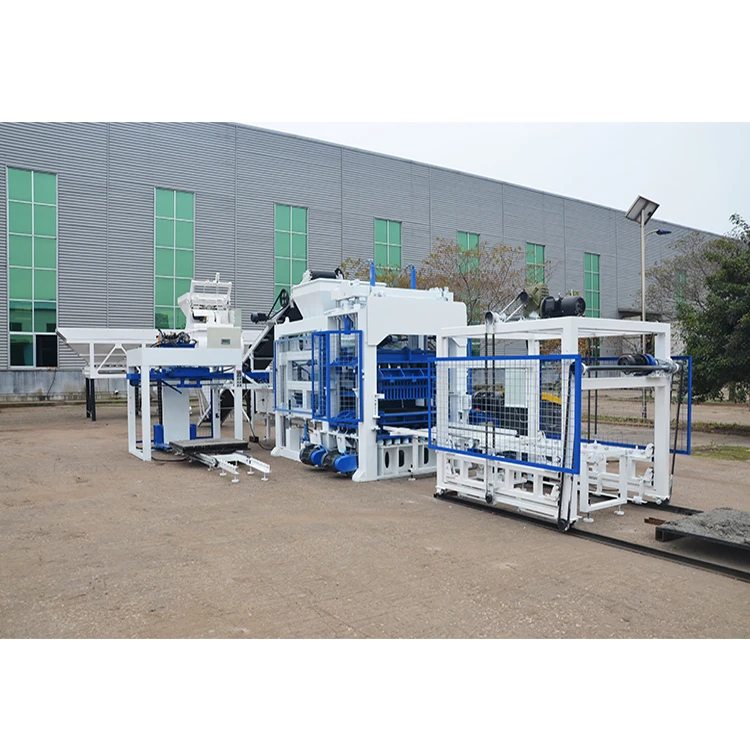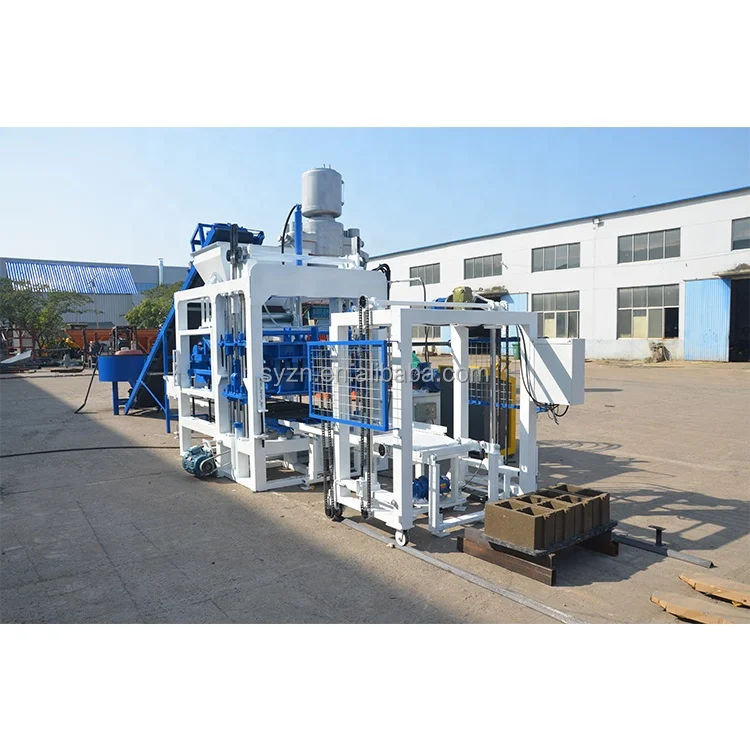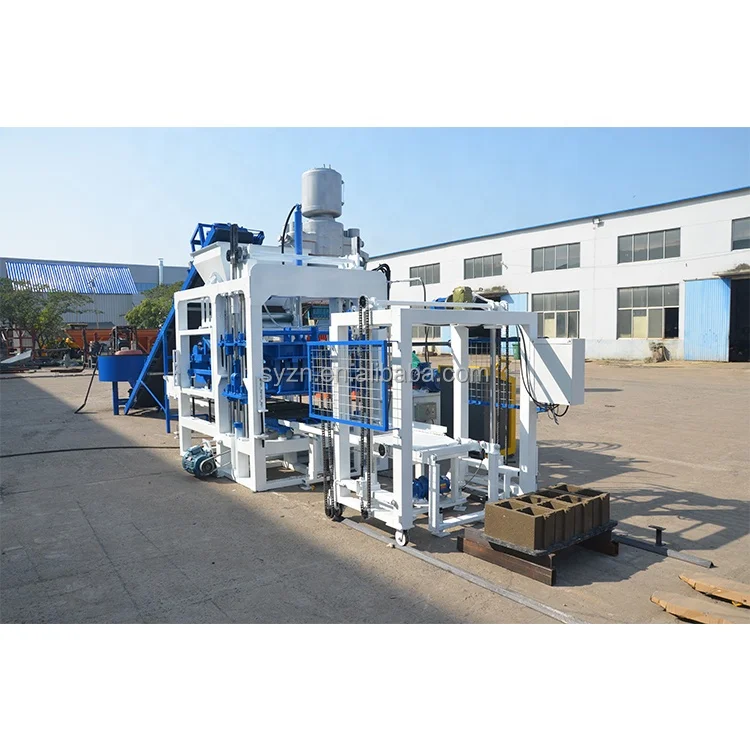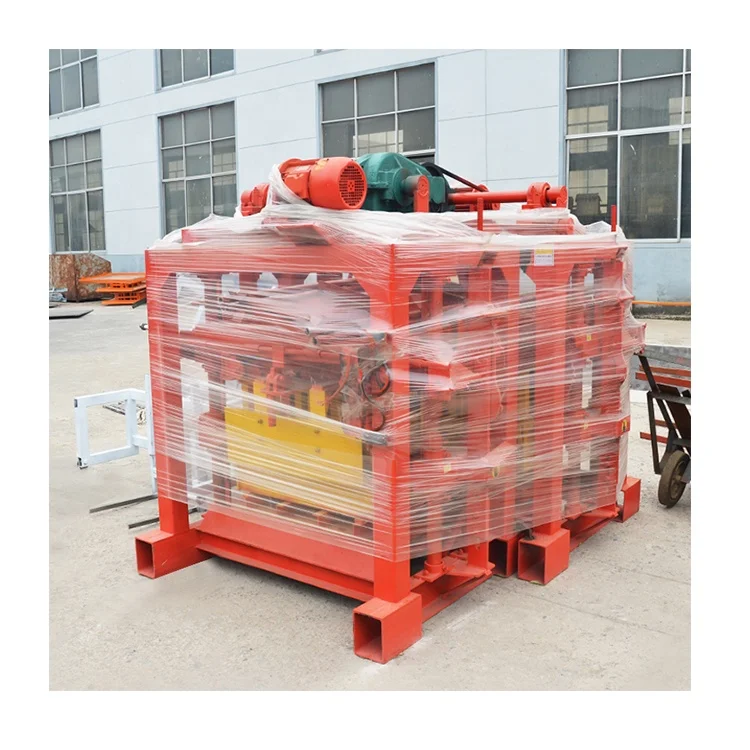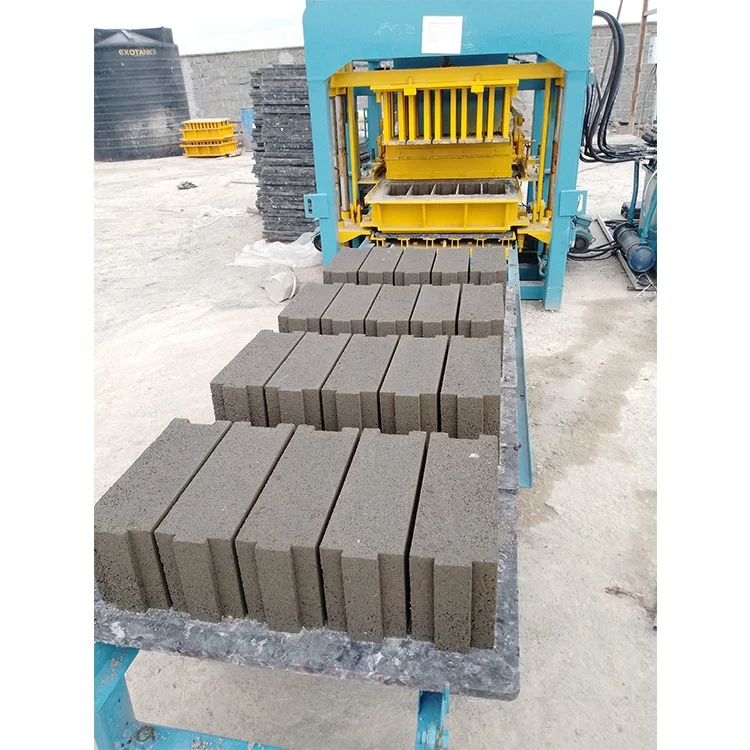
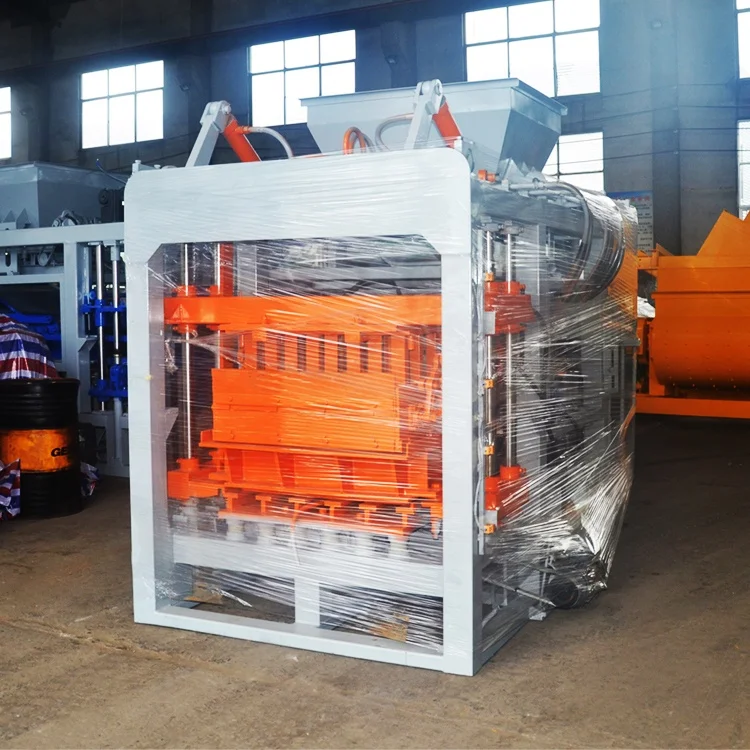
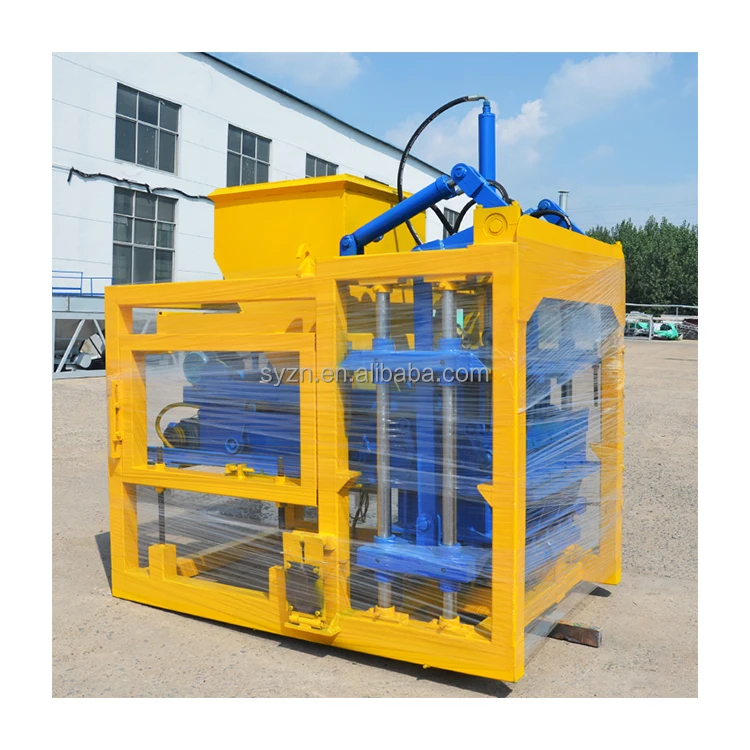
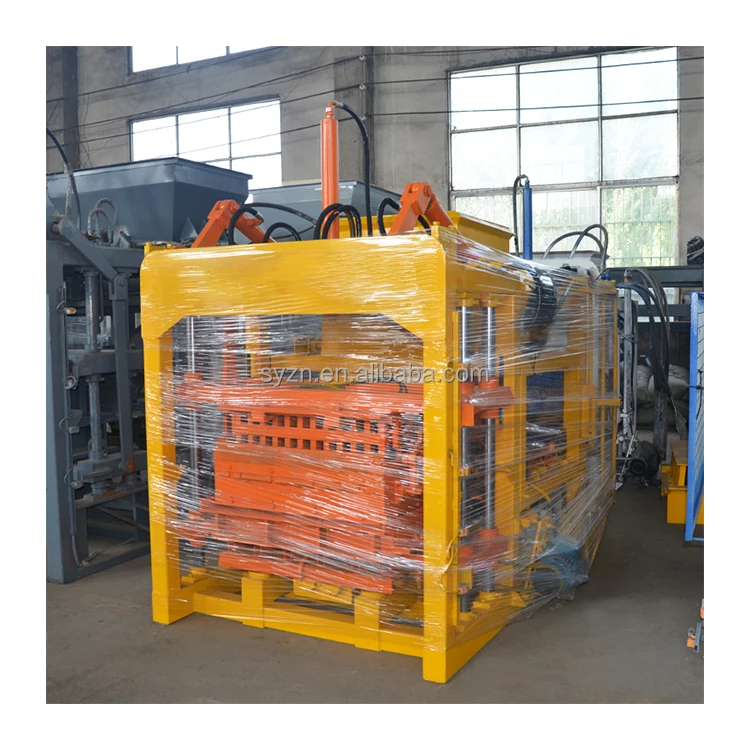

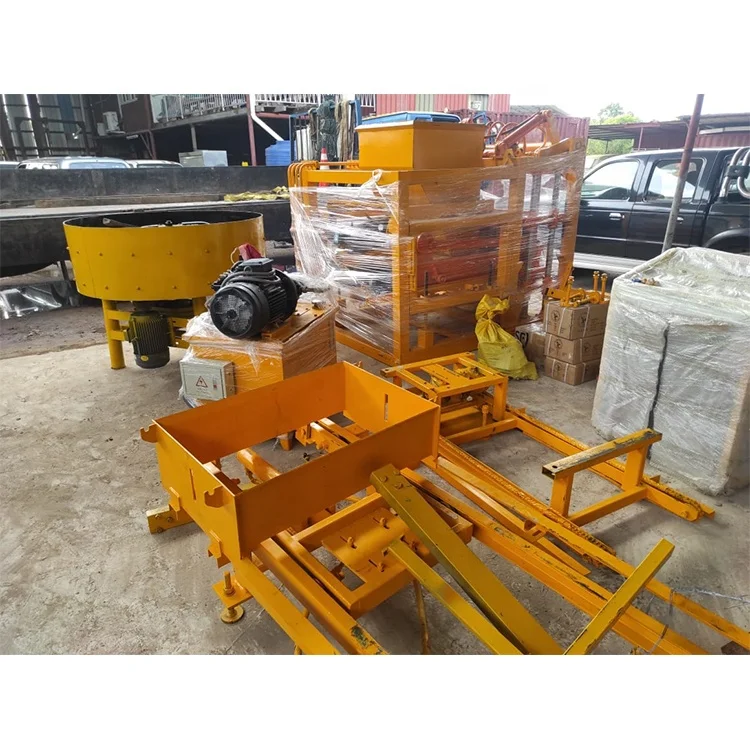
Description
Per-Format Capacity — QT4-15A output stated by block dimension, not a single headline cycle, so plant sizing matches the product your market actually buys.
Technical Specifications
| Parameter | Value |
|---|---|
| Model | QT4-15A |
| Product Type | Hydraulic Block Making Machine |
| Overall Dimensions (L×W×H) | 7100×1600×2610 mm |
| Molding Cycle | 15–25 s (varies by block format) |
| Vibration Frequency | 4600 r/min |
| Vibration Force | 40–50 kN |
| Rated Power | 18.45 kW |
| Mixer Model | JQ350 |
| Pallet Size | 850×550×25 mm |
| Net Weight | 3 T |
| Applied Products | Paver, solid block, hollow block, curbstone |
| Raw Materials | Crushed stones, sand, cement, dust, fly ash |
| Control System | PLC |
| Hydraulic Station | Included |
| Included Equipment | Block making machine, hydraulic station, PLC control system, pallet feeder, brick conveyor, block sweeper |
| Free Accessories | Manual hydraulic trolley, spare parts and tools |
| Output — Hollow Block 400×200×200 mm | 408 pcs/h, 3264 pcs/8hr |
| Output — Hollow Block 400×150×200 mm | 510 pcs/h, 4080 pcs/8hr |
| Output — Solid Brick 240×115×53 mm | 2100 pcs/h, 17000 pcs/8hr |
| Automation Level | Semi-automatic (with pallet feeder and PLC) |
| Voltage & Frequency | Basis to be confirmed with buyer’s local grid |
| PLC Display Language | Basis to be confirmed before production |
| Hydraulic Pressure Rating | Basis to be confirmed during configuration |
Application Suitability
| Application | Material or Output |
|---|---|
| Hollow block production for load-bearing and partition walls | Crushed stone, sand, cement, fly ash at 400×200×200 mm or 400×150×200 mm |
| Solid brick manufacturing for structural masonry | Cement-bound aggregate mixes at 240×115×53 mm |
| Interlocking paver production for driveways and walkways | Fine aggregate and cement blends with pigmentation |
| Curbstone and kerb production for road edging | High-density concrete mixes via hydraulic compression |
| On-site block production for housing projects | Locally sourced crushed stone and dust with cement |
| Fly ash brick manufacturing near thermal power plants | Fly ash blended with sand and cement binder |
What "408 Blocks per Hour" Actually Means for Your Plant
A capacity figure without a block format attached is meaningless for daily planning.
When a quotation lists a single cycle rate, buyers often assume that number holds across every mould they intend to run. In reality, a QT4-15A hydraulic block making machine producing 400×200×200 mm hollow blocks at 408 pieces per hour will shift to a different throughput the moment you swap to a 400×150×200 mm cavity or a solid brick die. I once reviewed a project proposal where the investor sized his curing yard around a headline number, only to discover the actual daily output for his primary product was noticeably lower because the cycle time stretched with a denser mix [NEED_CITE: block cycle time variation by format and mix density]. Honest capacity planning starts with the format you will sell most, not the format that produces the highest number on paper.
Mould Selection Starts With the Block Your Market Buys
The QT4-15A supports paver, solid block, hollow block, and curbstone formats through mould changeover. Each format demands a specific vibration profile and hydraulic dwell. Buyers frequently request a machine that "does everything," yet the block dimensions that sell in one region may be irrelevant in another. Before specifying the mould set, confirm which formats your distributors and contractors actually order in volume, then match the hydraulic block making machine specifications to those dimensions rather than ordering a catalogue default set.
Pallet Sizing Against Your Existing Curing Infrastructure
The 850×550×25 mm pallet is the interface between the press and everything downstream. If your curing racks were built for a different pallet dimension, or your forklift forks are spaced for a narrower profile, every loaded pallet becomes a handling problem from day one. I have seen plants where the block machine arrived before anyone measured the curing area — pallets stacked by hand because the forklift could not engage them properly. Confirm the pallet footprint against your rack spacing, curing yard dimensions, and material handling equipment before production begins [NEED_CITE: pallet and curing area compatibility in block plants].
Vibration Force, Hydraulic Pressure, and the Mix on Your Bench
The 40–50 kN vibration force at 4600 r/min works in concert with the hydraulic station to compact the mix into the mould cavity. But vibration alone does not determine block strength — the hydraulic pressure must be set against the specific aggregate grading and cement ratio your local materials produce. A laterite-heavy mix in Southeast Asia responds very differently under pressure than a river sand and crushed granite blend. During configuration, the vibration frequency and hydraulic dwell should be adjusted against a sample of your actual raw material, not assumed from a standard test mix. This is where block density and face finish are genuinely decided.
The Hidden Cost of Skipping Format Confirmation
When a buyer accepts a quotation without pinning down which block format each output figure assumes, the consequences cascade through the entire operation. The curing yard ends up too small for the real daily volume. Labour is hired based on optimistic throughput. Delivery contracts with construction sites are signed against numbers the machine cannot sustain on the buyer’s primary product. These are not warranty issues — the machine performs exactly as engineered — but the plant economics break down because the capacity was never matched to the format that pays the bills [NEED_CITE: capacity planning errors in concrete block production].
Why Configuration Matters More Than Catalogue Price
This is not a machine shipped from a warehouse shelf in a single standard build. The hydraulic block making machine specifications for each QT4-15A are set against the buyer’s block format, local aggregate sample, and existing plant infrastructure. Mould drawings are prepared for the dimensions your market demands, not a generic assortment. Pallet sizing is confirmed against your curing racks and forklift before steel is cut. PLC display language and electrical configuration are locked down during the order stage, not discovered at commissioning. Every machine leaves the factory with a test record run on a mix profile that matches your raw materials.
Documentation & Verification
- Line layout drawing showing pallet flow from feeder through curing rack
- Capacity calculation sheet stating block format assumed for each output figure
- Mould drawing pack with dimensional tolerances for each cavity
- Pallet specification matched to your curing area and forklift capacity
- Hydraulic and electrical schematic with confirmed voltage and frequency
- Factory test record run against buyer’s aggregate sample and mix design
Installation, Commissioning & Support
- Foundation plan based on 7100×1600 mm footprint and 3 T operating weight
- Electrical supply requirement confirmed at 18.45 kW with dedicated circuit
- Pallet feeder alignment checked against your curing rack entry height
- PLC control system commissioned with confirmed display language
- Mould changeover procedure trained with your operators on each format
- Wear parts list supplied with first replacement intervals noted
Before You Send an Inquiry
Tell us the block formats your market sells in volume, with target dimensions and daily output for each. Share a sample or lab report of your local aggregate and cement type so the hydraulic block making machine specifications can be set against real material. Confirm your available voltage, frequency, and PLC language preference. If you have existing curing racks or forklifts, provide their dimensions so pallet sizing is resolved before the machine is built.
Frequently Asked Questions
Q: How is output capacity calculated for each block format?
A: Each figure in the specification table is measured with a specific block dimension — for example, 408 pieces per hour assumes a 400×200×200 mm hollow block cavity. Cycle time shifts when you change format or mix density, so the capacity calculation document you receive will state the exact format and mix profile behind every number.
Q: What mould formats are available, and how does changeover work?
A: The QT4-15A accepts moulds for hollow blocks, solid bricks, pavers, and curbstones. Mould drawings are prepared for the dimensions you specify. Changeover involves releasing the mould clamps, lifting the current die, and seating the replacement — the procedure is trained on-site during commissioning so your team can switch formats within a standard shift.
Q: How should I confirm pallet size before ordering?
A: Measure your existing curing rack spacing, yard dimensions, and forklift fork width. The standard 850×550×25 mm pallet must pass through every handling step without manual intervention. If your infrastructure uses a different profile, pallet dimensions are adjusted during configuration so the entire line remains compatible.
Q: Can the machine run my local aggregate and raw materials?
A: Yes — vibration force and hydraulic pressure are adjusted against a sample of your actual crushed stone, sand, fly ash, or laterite. The factory test is run on a mix profile matching your local supply, so block strength and face finish are verified before the machine ships rather than discovered during commissioning.
Q: What electrical and control confirmations are needed before production?
A: Voltage, frequency, and PLC display language must be confirmed during the order stage. A mismatch discovered after arrival delays commissioning and may require component replacement. These three parameters are locked into the build specification so the machine arrives ready to connect to your local grid and be operated in your team’s language.