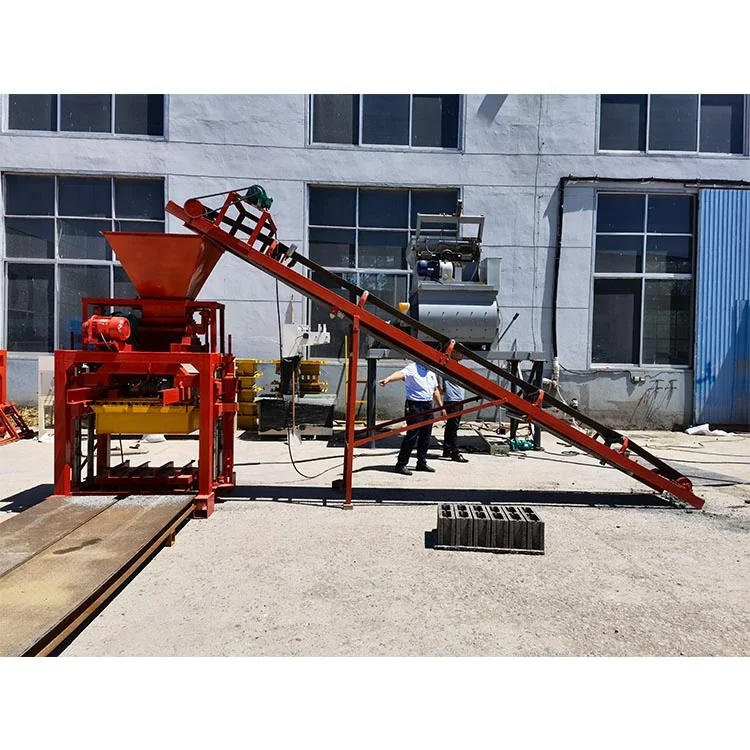
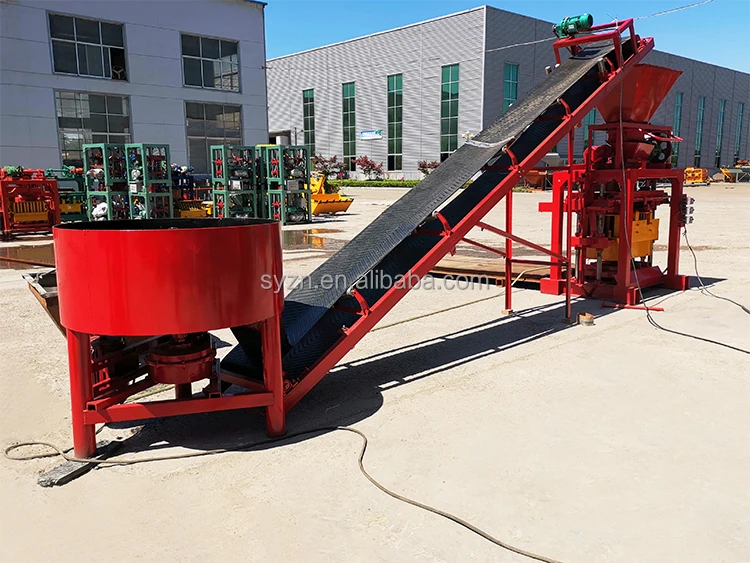

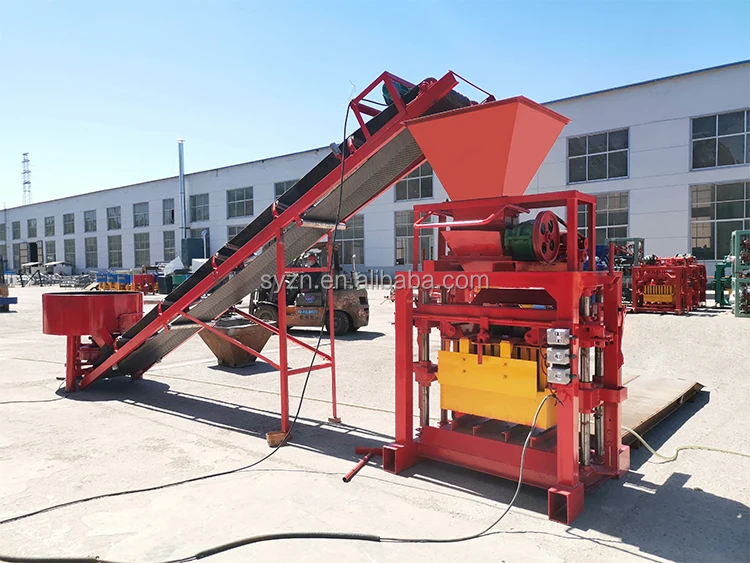
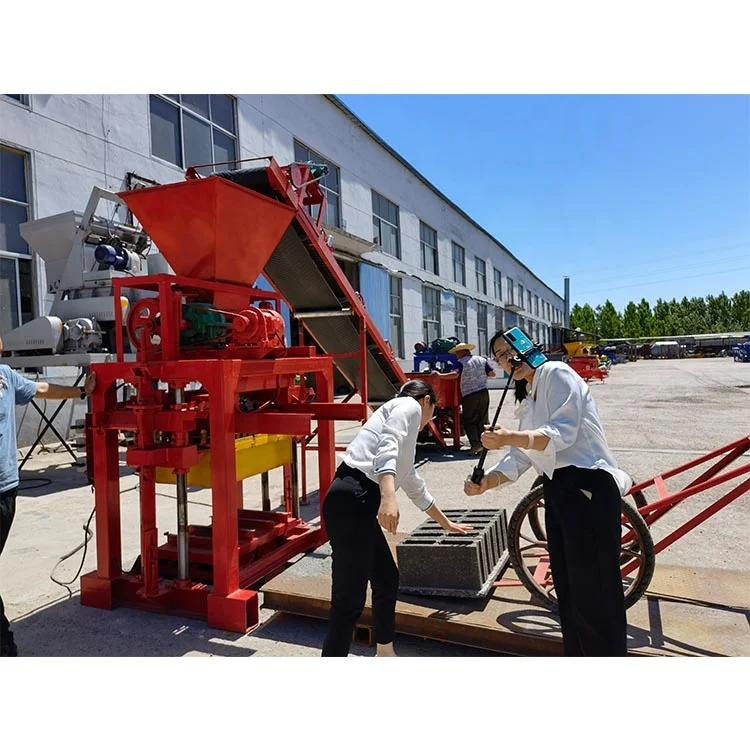
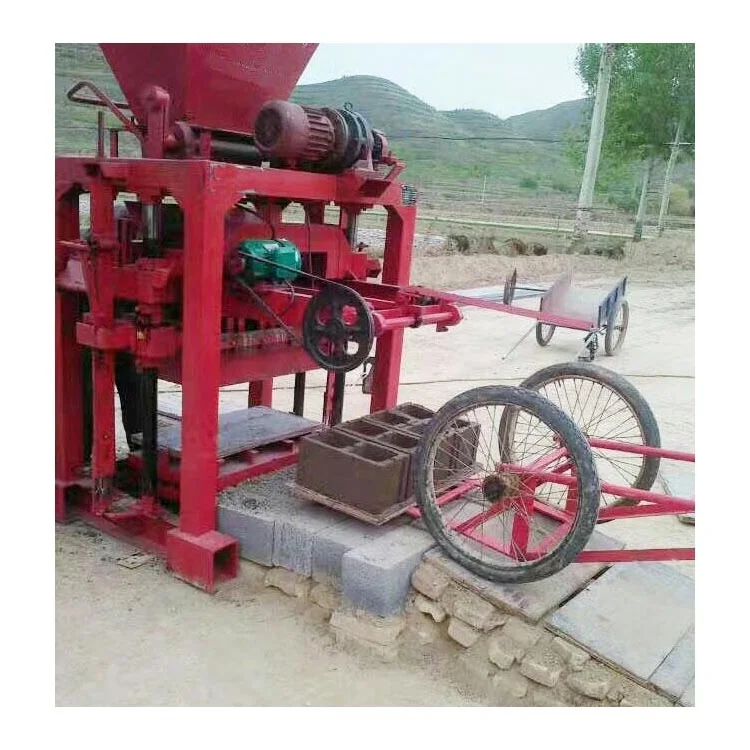
Description
Mould-to-format matching — every capacity figure for the QTJ4-35 block making machine is stated against a specific block dimension and cycle time, so buyers see what the press actually delivers on the format they sell.
Technical Specifications
| Parameter | Value |
|---|---|
| Model | QTJ4-35 |
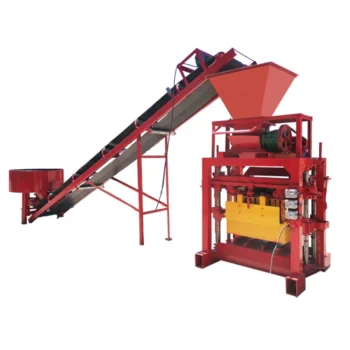
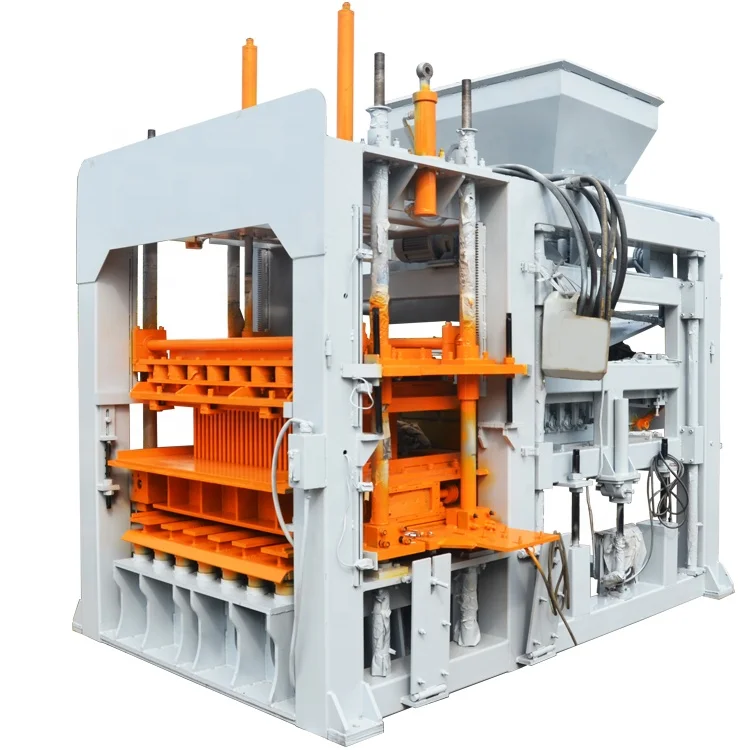
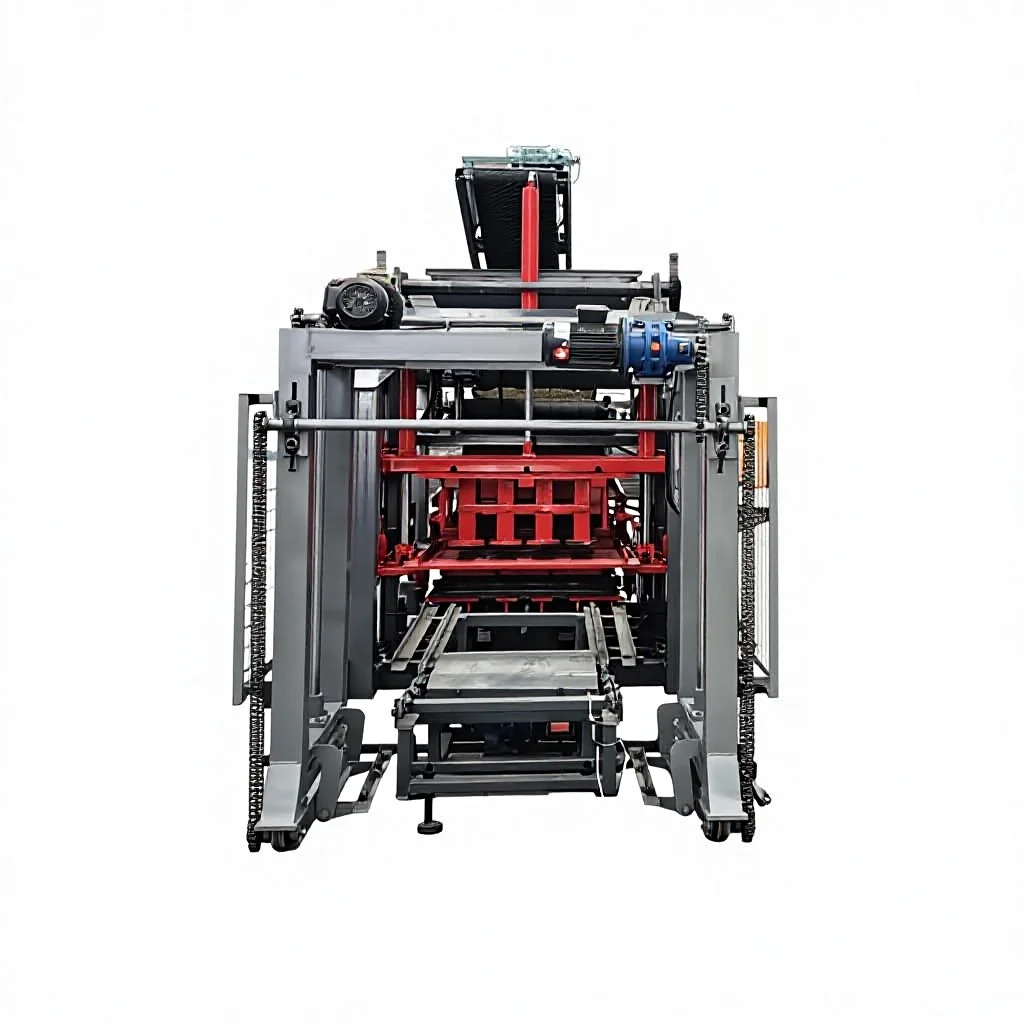
| Product Type | Semi-Automatic Hydraulic Block Making Machine |
| Overall Dimensions (L×W×H) | 1350×1460×1800 mm |
| Molding Cycle | 35 s |
| Vibration Frequency | 2800 r/min |
| Vibration Force | 30 kN |
| Rated Power | 11.15 kW |
| Mixer Model | JQ350 |
| Pallet Size | 850×450×20 mm |
| Net Weight | 1500 kg |
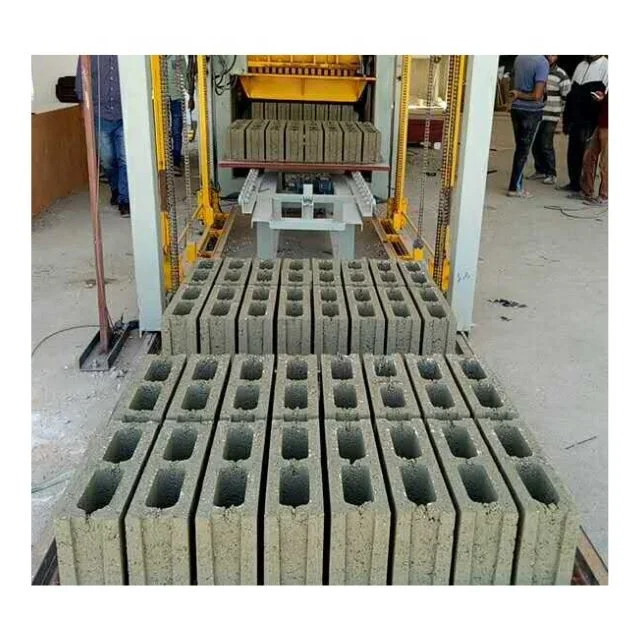
| Applied Products | Concrete hollow blocks (8 in / 6 in), solid bricks, pavers |
| Raw Materials | Crushed stone, sand, cement, fly ash, stone dust |
| Hydraulic Station | Equipped |
| Automation Level | Semi-automatic |
| Output Capacity — Hollow Block 400×200×200 mm | 4 pcs/mould, 408 pcs/h, 3264 pcs/8h |
| Output Capacity — Hollow Block 400×150×200 mm | 5 pcs/mould, 510 pcs/h, 4080 pcs/8h |
| Output Capacity — Solid Brick 240×115×53 mm | 18 pcs/mould, 2100 pcs/h, 17000 pcs/8h |
Application Suitability
| Application | Material or Output |
|---|---|
| Small block plant producing 8-inch hollow blocks | Crushed stone, sand, cement mix on 400×200×200 mm mould |
| On-site solid brick production for housing contractors | Stone dust and cement on 240×115×53 mm mould |
| First-time block plant entrepreneur | Semi-automatic line with JQ350 mixer, lower capital entry |
| Existing product manufacturer adding 6-inch hollow format | 400×150×200 mm mould swap on the same host machine |
What "Pieces per Hour" Actually Means for QTJ4-35 Block Making Machine Specifications
The number changes entirely depending on which block sits in the mould.
Most catalogues quote a single output figure and leave the format out. I have watched buyers in West Africa sign for machines that promised thousands of blocks daily, only to find the stated capacity was measured on a solid brick mould while their market needed 8-inch hollow blocks. The real daily tonnage dropped to a fraction of what the contract implied. With QTJ4-35 block making machine specifications, the 35-second cycle produces 408 hollow blocks per hour on a 400×200×200 mm mould but 2100 solid bricks per hour on a 240×115×53 mm mould. Those two numbers describe the same press doing different work [NEED_CITE: block plant capacity calculation methods by format].
How Vibration Force and Hydraulic Pressure Work Together
The QTJ4-35 delivers 30 kN of vibration force at 2800 r/min through the mould table while the hydraulic station applies downward compaction pressure. Neither force alone is sufficient. Vibration settles the aggregate around the cement paste; hydraulic pressure eliminates air voids. When the two are balanced for the buyer’s actual mix, block density stays consistent from the first pallet to the last. This balance shifts when local aggregate changes, which is why the configuration must be set against a sample of the buyer’s material rather than a default recipe.
Mould Compatibility Across Three Block Formats
The same host machine runs hollow blocks in two wall-thickness variants and standard solid bricks, with the mould bolting directly onto the vibration table. A buyer entering a market where both 8-inch and 6-inch hollow blocks sell can stock two moulds and swap them as orders require. The cycle time stays at 35 seconds across formats, so the line rhythm does not need recalibration after a change. Pallet dimensions remain constant at 850×450×20 mm regardless of the mould mounted [NEED_CITE: block machine mould change practices in semi-automatic lines].
Reading the Specification Sheet Against Your Project
Three parameters on the QTJ4-35 data sheet deserve close attention before a purchase order is placed. First, the 11.15 kW rated power covers both the vibration motor and the hydraulic pump; confirm the local supply can sustain this draw continuously through an eight-hour shift. Second, the 850×450×20 mm pallet size must fit the curing racks and forklift tines already on site. Third, the JQ350 mixer is sized to feed one press at the stated cycle rate; if the buyer plans to add a second press later, the mixer will need upgrading independently. The QTJ4-35 block making machine specifications become meaningful only when checked against these surrounding constraints.
The Hidden Cost of Skipping Format-Level Detail
When the pallet size is chosen without checking the curing yard, buyers end up re-racking blocks by hand because the forklift cannot reach the shelves. When voltage and frequency are assumed rather than confirmed, the control panel sits idle while a transformer is sourced locally, sometimes weeks after arrival. I have seen contractors lose an entire rainy season because the PLC display shipped in a language the operators could not read. These delays do not appear in any quotation; they surface only on the job site [NEED_CITE: equipment commissioning delays due to unconfirmed electrical standards].
Why Procurement Through Shiyue Brick Machine Stands Apart
Every QTJ4-35 quotation starts with the buyer’s target block format, local aggregate sample, and site conditions — not a catalogue default. Mould drawings are provided before production so the buyer knows exactly which blocks the press will make from day one. The pallet specification is cross-checked against the curing area dimensions the buyer already has. Voltage, frequency, and PLC display language are confirmed in writing before the machine enters assembly. Factory test records cover the specific block format the buyer ordered, filmed on the pallet size that will ship.
Documentation & Verification
- Line layout with capacity stated per block format and mould drawing
- Factory test record on buyer’s specified hollow or solid block dimension
- Pallet specification matched to curing rack width and forklift capacity
- Hydraulic and electrical schematic with confirmed voltage and frequency
- Operation and maintenance manual in buyer’s required language
Installation, Commissioning & Support
- 1350×1460 mm footprint requires level concrete pad with drainage channel
- 11.15 kW draw needs dedicated circuit; confirm local amperage rating
- Machine ships partially assembled; vibration table and hydraulic station align on site
- First-day trial run uses buyer’s own aggregate sample to tune vibration and pressure
- Mould mounting bolts and hydraulic hose fittings included in spare parts pack
- Daily grease points marked on vibration bearings and pallet guide rails
What We Need to Configure Your Line
Send us the block format your market buys most — dimension, wall thickness, and target strength grade. Include a sample or description of the aggregate available locally so we can match the vibration force to your mix. Confirm the voltage, frequency, and the language your operators will read on the control panel.
Frequently Asked Questions
Q: How is daily output calculated per block format, and what cycle time does each require?
A: The QTJ4-35 runs a 35-second cycle across all standard moulds. On a 400×200×200 mm hollow block mould it produces 408 pieces per hour, and on a 240×115×53 mm solid brick mould it produces 2100 pieces per hour. Daily output is calculated by multiplying the hourly figure by the number of effective production hours, deducting pallet loading and mould change time.
Q: Is the vibration force matched to my local aggregate and mix design?
A: The 30 kN vibration force at 2800 r/min is the starting specification. Before production we ask for a description or sample of the local aggregate so we can confirm whether the standard frequency works or needs adjustment. This step prevents the cracking and weak-density issues we have seen on sites where the mix was never validated.
Q: What pallet size ships with the machine, and how does it integrate with my curing setup?
A: The standard pallet is 850×450×20 mm. We cross-check this dimension against the curing rack spacing and the forklift tine width the buyer already uses. If the existing racks are narrower, a custom pallet size can be quoted before the machine enters production.
Q: How long does a mould change take, and can I order custom moulds?
A: Mould change on the QTJ4-35 involves unbolting the current mould from the vibration table and bolting the replacement in place. Custom moulds can be manufactured to the buyer’s own block drawings, including non-standard formats, and supplied alongside the host machine or as a later order.
Q: What voltage and control language will the machine ship with?
A: Voltage, frequency, and PLC display language are confirmed in writing before the machine enters assembly. We do not ship until these three items are agreed, because correcting them after arrival causes commissioning delays that can stretch into weeks.