Description
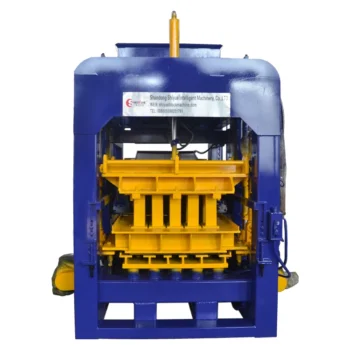
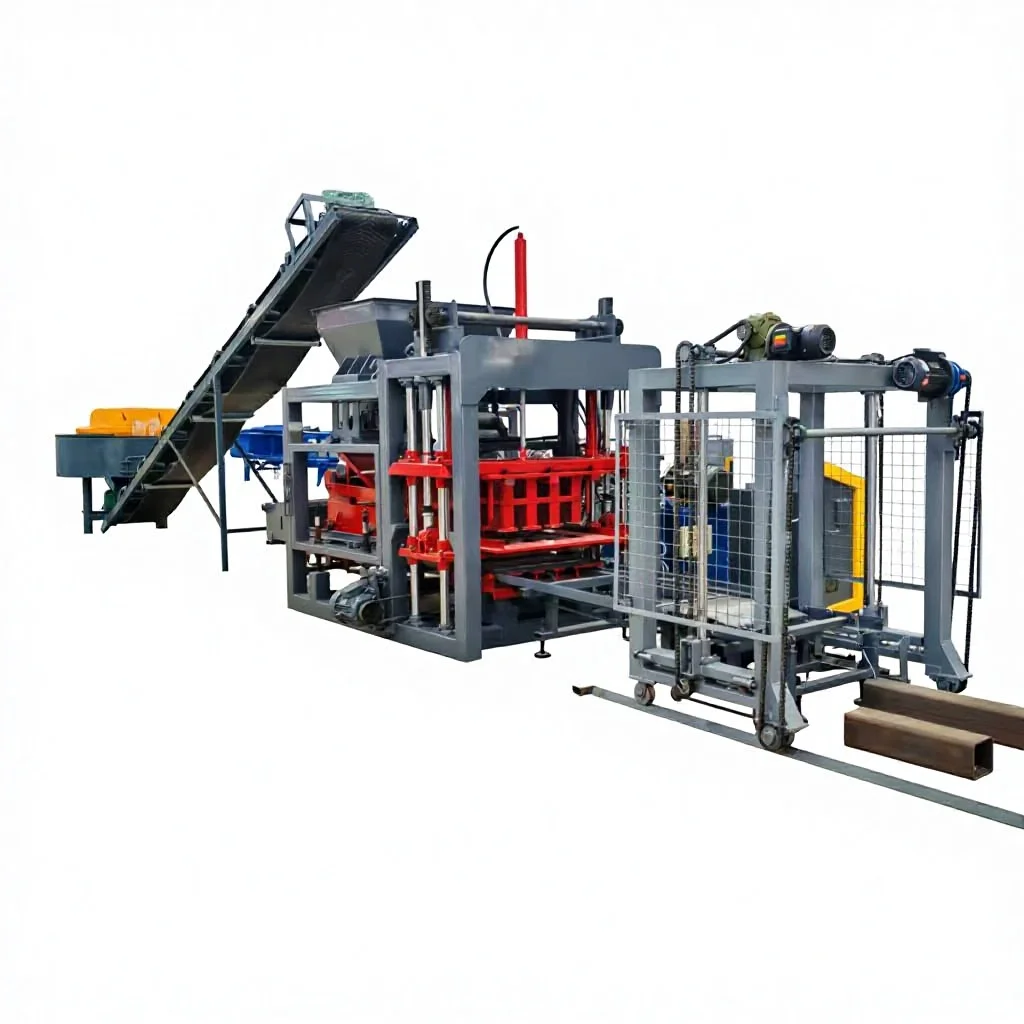
Matched System Design — the QT4-15A block press, pallet size, and mould formats are specified together against your local aggregate rather than sourced from separate suppliers and forced to fit.
Technical Specifications
| Parameter | Value |
|---|---|
| Model | QT4-15A |
| Product Type | Fully Automatic Hydraulic Concrete Block Making Machine |
| Overall Dimensions (L×W×H) | 4100 × 1600 × 2600 mm |
| Rated Pressure | 16–21 MPa |
| Main Vibration Form | Platform Vibration |
| Vibration Frequency | 4200 r/min |
| Vibration Force | 55 kN |
| Pallet Size | 880 × 550 mm |
| Molding Cycle | 25–30 s (basis not stated in source — confirm block format, material and wall thickness) |
| Overall Power | 18.45 kW (source value listed as "18.45W" — verify against manufacturer catalog) |
| Total Mass | 4 T |
| Demolding Method | Hydraulic |
| Required Factory Area | Approx. 300 m² |
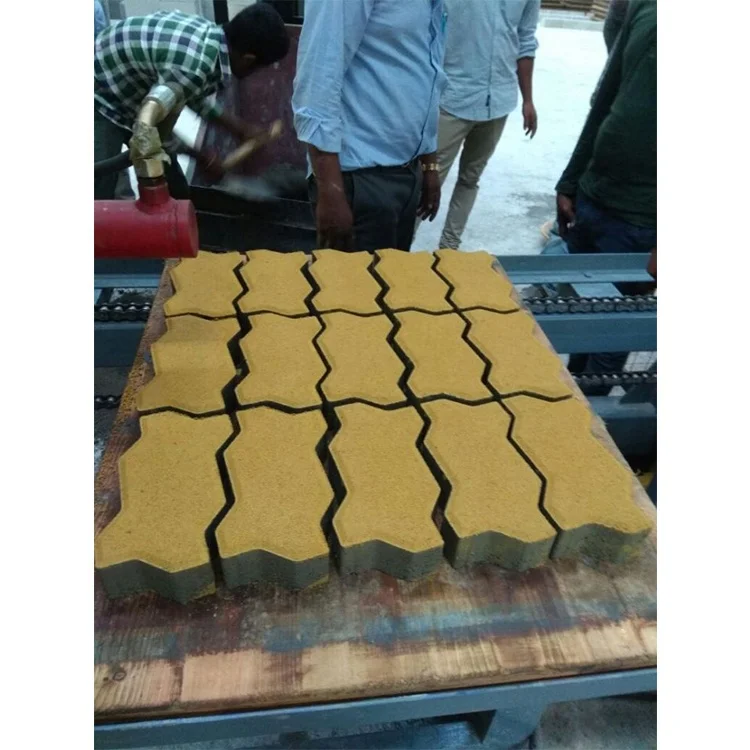
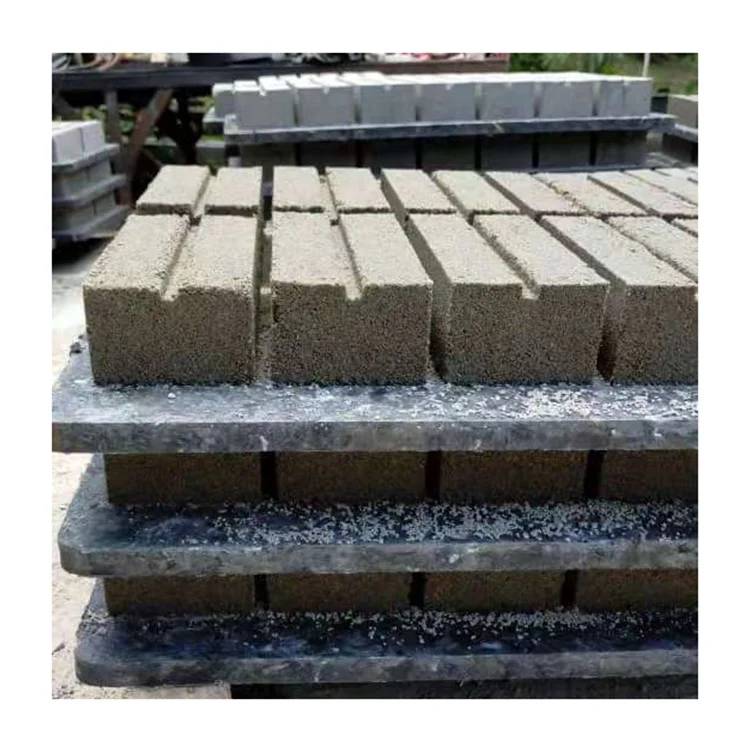
| Applied Products | Hollow blocks, solid blocks, pavers, interlocking blocks, kerbstones, colored pavers |
| Raw Materials | Crushed stone, sand, cement, stone dust, fly ash, gravel, slag |
| Control System | PLC |
| Automation Level | Fully Automatic |
| Warranty | 1 year (whole machine, excluding spare parts) |
| Shipping Configuration | Fully assembled, 1 × 40 HQ container (basic equipment) |
Application Suitability
| Application | Material or Output |
|---|---|
| Hollow block production for residential and commercial walls | Crushed stone, sand, cement, fly ash blends |
| Solid block manufacturing for load-bearing structures | Gravel, sand, cement mixes with local aggregate |
| Paving block and interlocking brick for roads and walkways | Colored concrete mixes with fine aggregate |
| Kerbstone production for municipal and highway projects | High-strength concrete with coarse aggregate |
| On-site block production for housing and development projects | Site-available sand, stone dust, and cement |
Why "25-Second Cycle Time" Means Nothing Without the Block Format
The cycle time printed on a nameplate only matters when you know which block format and wall thickness it was measured against.
I have watched buyers sign off on fully automatic block machine specifications that quoted a single cycle figure, then arrive at the plant to discover the number applied to a thin paver while they needed 200 mm hollow blocks. The same QT4-15A running a standard hollow block will cycle differently from when it presses a solid kerbstone. Without the format tied to the number, the daily output calculation is guesswork [NEED_CITE: realistic block output calculation methods per format]. This is where procurement decisions quietly go wrong — the machine arrives, the shift starts, and the actual tonnage falls short of what the proforma invoice implied.
Vibration Force and Hydraulic Pressure as a Matched Pair
The QT4-15A delivers 55 kN of vibration force through platform vibration at 4200 r/min, paired with hydraulic pressure rated at 16–21 MPa. On-site, these two forces must work together against whatever aggregate your local quarry supplies. In West Africa I have seen red laterite aggregate absorb vibration energy differently from the river sand used during factory testing, producing blocks that crumble at the edges until the pressure and frequency are re-tuned. That tuning only works when the fully automatic block machine specifications are set against a real sample of your raw material, not a generic datasheet assumption.
Pallet Size Decides More Than You Think
The 880 × 550 mm pallet on this machine was not chosen at random — it must match the curing rack spacing, the forklift tine width, and the floor area you have allocated for drying. A buyer in South Asia once ordered a press with oversized pallets, only to find their existing curing racks could not accept them. They spent weeks welding new racks while the machine sat idle [NEED_CITE: block plant pallet and curing area planning guidelines]. Before the QT4-15A ships, confirm your rack dimensions and forklift capacity so the pallet specification aligns with your existing handling infrastructure.
Reading the Core Parameters for Production Impact
The rated hydraulic pressure of 16–21 MPa determines how densely the concrete is compacted inside the mould cavity. Higher pressure means greater block density and compressive strength, but only if the mix design can transmit that force — too dry a mix and the pressure creates lamination cracks instead of consolidation. The platform vibration at 55 kN settles the aggregate particles before the hydraulic head applies full pressure, which is why both values must be read together. The 4 T total mass of the QT4-15A provides the static weight needed to resist vibration recoil; a lighter frame would transfer energy into the foundation rather than into the block. Finally, the 18.45 kW total power draw tells your electrical contractor the minimum dedicated circuit capacity required at the panel — undersizing this circuit is a frequent cause of PLC faults during commissioning.
The Cost of Skipping Format-Level Capacity Checks
When a block plant orders a press based on a headline cycle time, the hidden cost surfaces during the first production week. Operators discover that switching from hollow blocks to pavers adds seconds per cycle, and the daily tally drops. If the mould change itself takes most of a shift because the changeover system was not specified, the format flexibility the buyer paid for is effectively lost [NEED_CITE: block machine mould change procedures and downtime impact]. The QT4-15A is capable of producing multiple formats, but only if each format’s cycle time and mould change procedure are documented and verified before the machine leaves the factory.
Why Procurement Through Shiyue Works for This Machine Class
Block machinery is the single focus at Shiyue, so the QT4-15A press, its moulds, pallets, and handling equipment are specified as one matched system. The configuration is set against the buyer’s actual mix design and local aggregate, not pulled from a catalogue default. Mould design covers the formats your market actually sells, and custom drawings are accepted when your region requires a non-standard block dimension. Automation level is selectable — you can start with the fully automatic configuration and plan an upgrade path as production volume grows. Installation support includes on-site commissioning and operator training so the crew running the QT4-15A on day one understands the parameter adjustments that protect block strength.
Documentation & Verification
- Line layout and capacity calculation stating the block format assumed for each output figure
- Mould drawing and format list covering all available block types for the QT4-15A
- Pallet specification including material grade and dimensional tolerances
- Hydraulic and electrical schematic for the 18.45 kW power configuration
- Voltage, frequency, and PLC display language confirmation before production starts
- Factory test record run on the buyer’s specified block format before dispatch
Installation, Commissioning & Support
- Foundation must support the 4 T total mass and vibration load across the 4100 × 1600 mm footprint
- Dedicated circuit sized for 18.45 kW with voltage and frequency confirmed before wiring begins
- Machine ships fully assembled in one 40 HQ container; on-site positioning requires a crane rated for 4 T
- First-run commissioning includes hydraulic pressure calibration within the 16–21 MPa range against your mix
- PLC display language set per operator requirement and verified during training sessions
- Wear parts and mould inventory list provided with recommended replacement intervals
What We Need to Quote Accurately
To size the QT4-15A correctly for your project, share the specific block formats you intend to produce along with the target daily output for each format. Provide a sample analysis of your local aggregate — particle size distribution and material type — so the vibration and pressure settings can be matched before build. Confirm your site voltage, frequency, and preferred PLC language, along with the curing area dimensions and forklift model already in use at your plant.
Frequently Asked Questions
Q: How is daily output calculated for the QT4-15A, and which block format does the cycle time assume?
A: The 25–30 second molding cycle listed in the fully automatic block machine specifications is a reference value that must be confirmed against a specific block format, wall thickness, and mix design. We calculate daily output per format by multiplying verified cycle time, blocks per pallet, pallets per hour, and effective shift hours. Each output figure on the proposal will state the exact format it applies to, so there is no ambiguity when production begins.
Q: What mould formats can the QT4-15A run, and how long does a changeover take?
A: The QT4-15A accepts moulds for hollow blocks, solid blocks, pavers, interlocking bricks, and kerbstones. Mould change time depends on the quick-release system specified at order stage. We document the changeover procedure for each format pair you plan to run and verify it during factory testing, so you know the actual downtime before the machine ships.
Q: How do you match vibration force and hydraulic pressure to our local aggregate?
A: We request a sample or laboratory analysis of your aggregate — including particle grading and material type — before finalizing the vibration frequency and hydraulic pressure settings. The 55 kN vibration force and 16–21 MPa pressure range on the QT4-15A are adjustable within limits, and we tune them during factory testing using material that matches your supply as closely as possible.
Q: What pallet size does the QT4-15A use, and how do we confirm compatibility?
A: The standard pallet size is 880 × 550 mm. We cross-check this against your existing curing rack spacing, forklift tine width, and available curing floor area. If your plant is already equipped with a different pallet size, we discuss whether the QT4-15A can be configured to match or whether adapting your handling equipment is the more practical option.
Q: How are voltage, frequency, and PLC language confirmed before the machine is built?
A: During the order confirmation stage we collect your site voltage, supply frequency, and preferred PLC display language in writing. These parameters are locked into the build specification for the QT4-15A and verified during the factory test. A confirmation document listing all electrical and control settings is included in the shipping documentation so your electrician can prepare the connection before the container arrives.