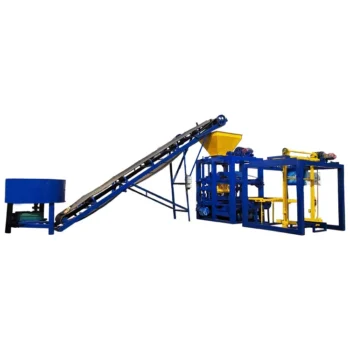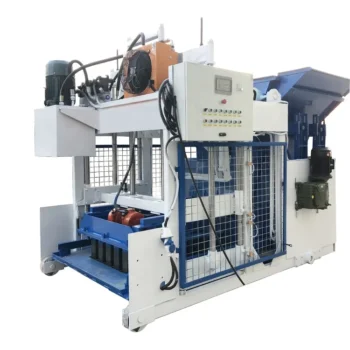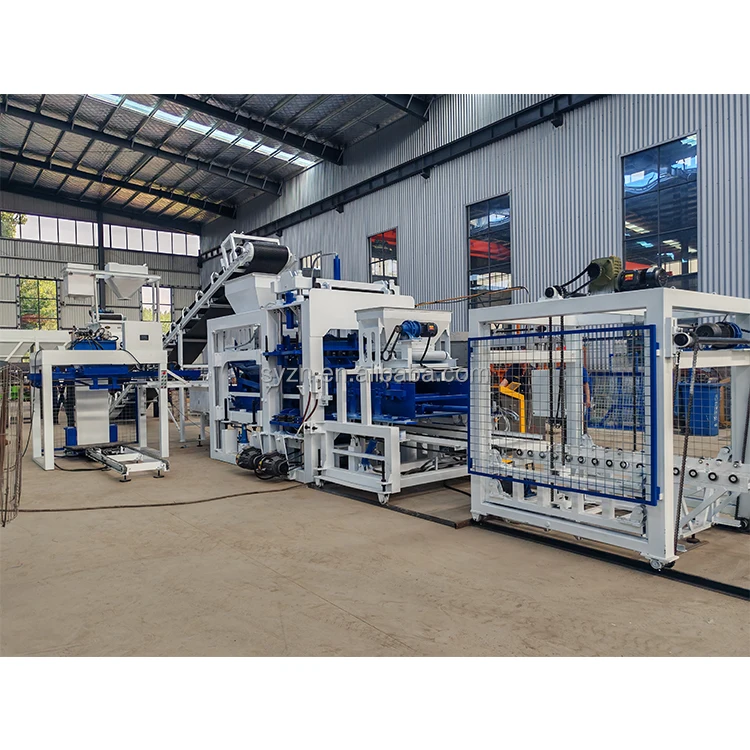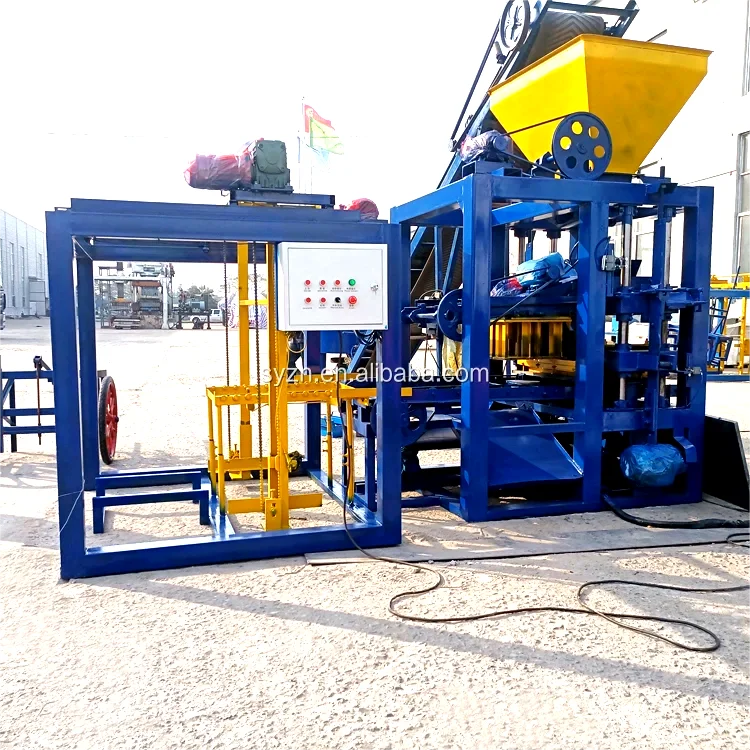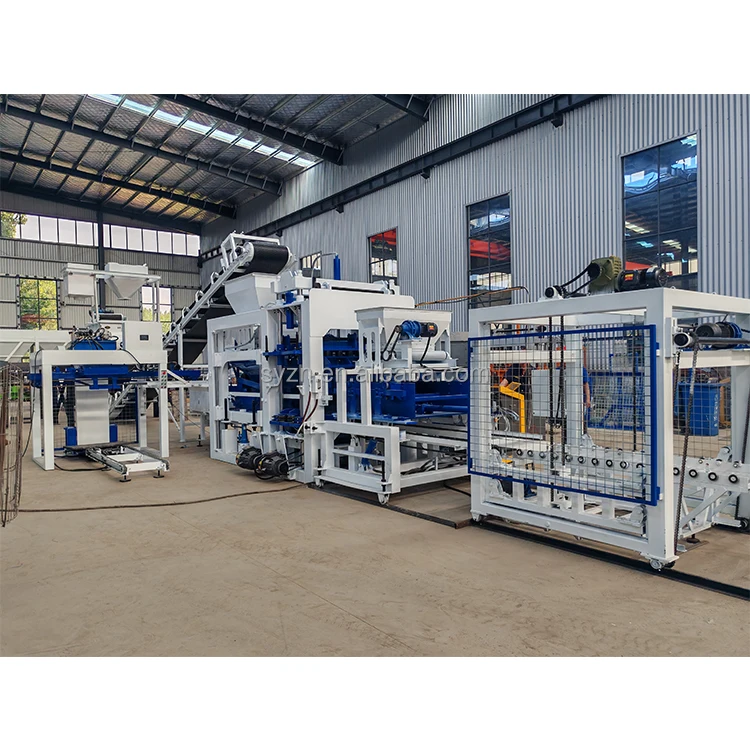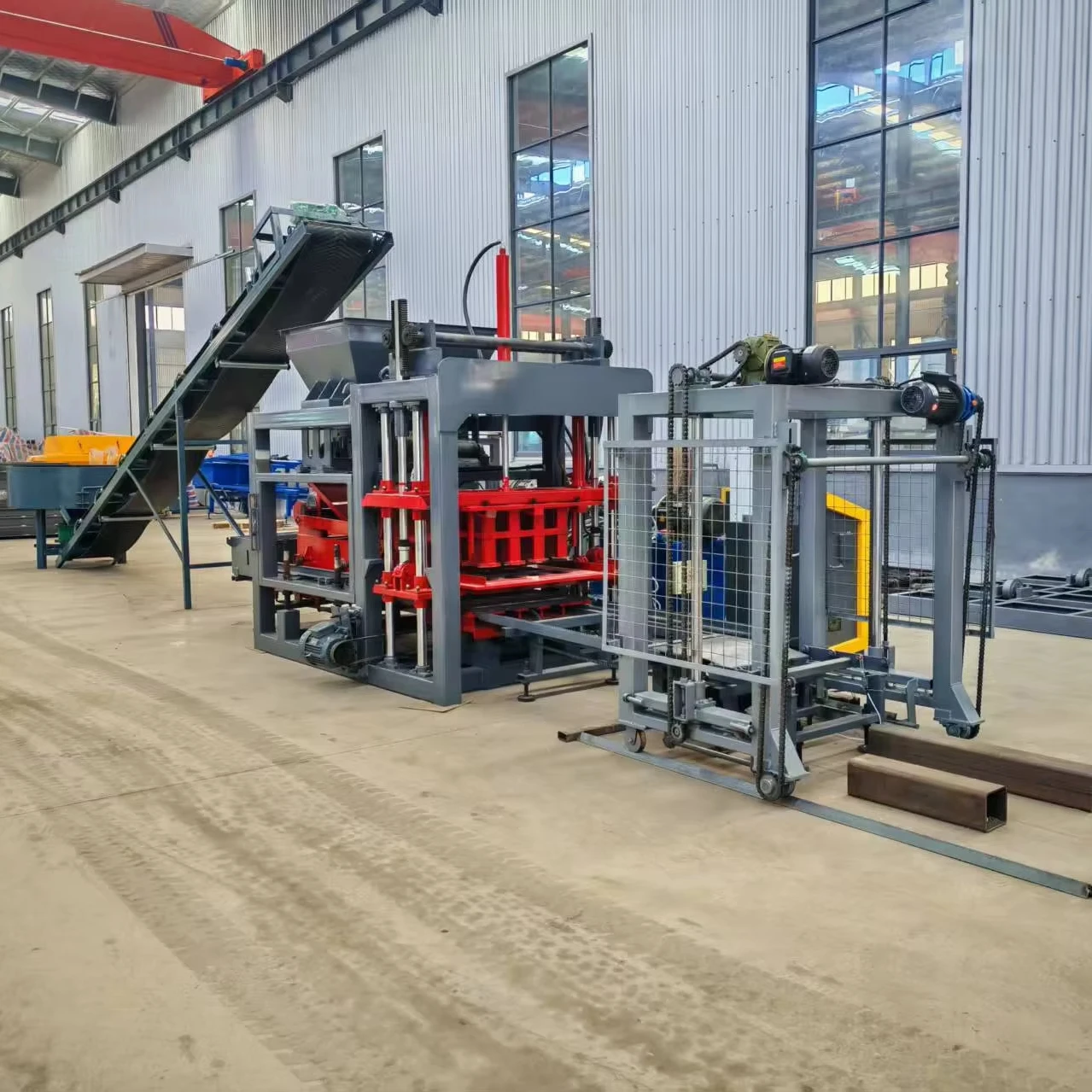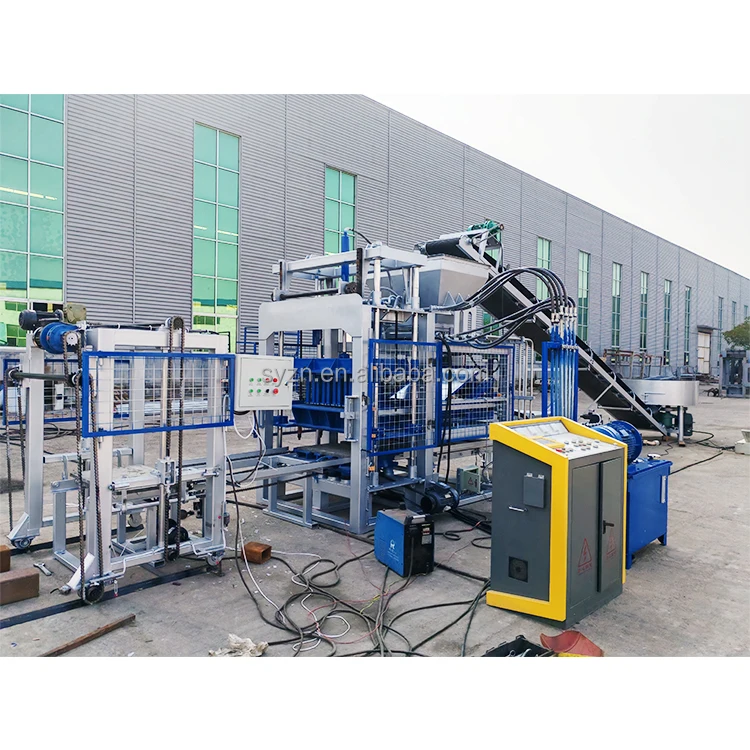
Description
Matched System Sizing — the QT4-15 block machine, moulds, pallets, and handling are configured against your actual mix design and target format rather than shipped as catalogue defaults.
Technical Specifications
| Parameter | Value |
|---|---|
| Model | QT4-15 |
| Product Type | Automatic Concrete Block Making Machine |
| Overall Dimension | 4100 × 1600 × 2600 mm |
| Total Mass | 4 T |
| Rated Pressure | 16–21 MPa |
| Main Vibration Form | Platform Vibration |
| Vibration Frequency | 4200 r/min |
| Vibration Force | 55 KN |
| Molding Cycle | 25–30 s (basis to be confirmed per block format) |
| Pallet Size | 880 × 550 mm |
| Overall Power | 18.45 kW (source value — verify against manufacturer catalog) |
| Demolding Method | Hydraulic |
| Factory Area Required | 300 m² |
| Automation Level | Fully automatic |
| Raw Materials | Crushed stone, sand, cement, fly ash, gravel, slag, dust |
| Applied Products | Concrete blocks, hollow/solid blocks, pavers, interlocking blocks, curbstone, colored pavers |
Application Suitability
| Application | Material or Output |
|---|---|
| Hollow block production for building walls | Crushed stone, sand, cement mix |
| Solid block manufacturing for load-bearing structures | Gravel, cement, fly ash blends |
| Interlocking paver production for walkways and driveways | Fine aggregate, cement, pigment |
| Kerbstone forming for road and curb projects | Coarse aggregate, cement |
| Porous brick production for permeable surfaces | Graded aggregate, cement |
| On-site block production for housing projects | Locally sourced sand, stone, cement |
What the QT4-15 Cycle Time Actually Means for Your Daily Output
A 25–30 second molding cycle only translates into realistic daily output when the block format behind that number is stated explicitly.
Most quotations for automatic block machines list cycles per hour without naming which block size that figure assumes. Buyers then discover on their own site that switching from a standard 400 × 200 × 200 mm hollow block to an interlocking paver can stretch the cycle noticeably, cutting daily output well below expectation [NEED_CITE: block machine capacity calculation standards by format]. With the QT4-15 block machine specifications, the conversation starts with the format you actually sell, so the capacity calculation reflects your real product mix.
Matching Vibration Force to Your Local Aggregate
Platform vibration at 4200 r/min delivers 55 KN of compaction force across the mold cavity. That force must be evaluated against the density and particle shape of the aggregate available in your region. A mix built on fine river sand behaves very differently under vibration than one using crushed basalt or laterite, and the QT4-15 block machine specifications should be confirmed with a sample press test before the mold is finalized.
Hydraulic Pressure and Block Strength Consistency
The rated pressure range of 16–21 MPa works through a hydraulic demolding system that strips the block from the mold under controlled force. Consistent pressure matters most when you run multiple formats in one shift — hollow blocks need enough pressure for wall integrity while pavers require higher compaction for surface density [NEED_CITE: hydraulic pressure requirements for concrete block formats]. The QT4-15 holds pressure within this band cycle after cycle, which is what keeps block strength uniform across a production run.
Reading the Numbers That Matter Most
The 880 × 550 mm pallet size determines how many blocks fit per cycle and must align with the curing racks and forklifts already on your floor. The 4100 × 1600 × 2600 mm overall dimension defines the press footprint, but you also need to account for pallet return and block stacking space within the recommended 300 m² factory area. At 4 T total mass, the QT4-15 requires a level concrete foundation capable of absorbing repeated vibration loading. The vibration frequency of 4200 r/min paired with 55 KN force is the combination that actually determines whether your local mix can be compacted to target strength — neither number alone tells the full story.
The Hidden Cost of Skipping a Mix Trial
I once saw a QT4-15 shipped to a West African site where the buyer used locally dug red soil with high clay content. The laterite stuck to the mold walls and absorbed vibration energy unevenly, so blocks came out with cracked corners and low compressive strength. Daily output fell far below what the quotation stated because the operator kept stopping to clean the mold [NEED_CITE: effect of clay content on concrete block vibration compaction]. That situation could have been caught with a sample press test at the factory before the mold was machined, and it is now a standard step in every configuration process.
Why Source the QT4-15 Through a Single-System Supplier
Block machinery is the sole focus here, which means the press, mold, pallet, and handling equipment are specified as one matched set rather than sourced from separate vendors and bolted together on site. Configuration starts from your actual mix design and target block format, not a default line in a catalog. Mold design covers the formats your market demands, including custom drawings when standard options do not fit. Automation level is selectable — you can begin with a semi-automatic layout and add automatic stacking or cubing later. Installation support includes operator training on the QT4-15 so your team understands mold change procedure, hydraulic adjustment, and daily maintenance from the first shift.
Documentation & Verification
- Line layout drawing showing pallet flow and curing rack arrangement for the QT4-15
- Capacity calculation sheet stating the block format assumed for each output figure
- Mold drawing and format list confirming compatible block types and dimensions
- Pallet specification matched to your curing area dimensions and forklift capacity
- Factory test record showing cycle time and block strength against your mix sample
- Voltage, frequency, and PLC display language confirmed before production starts
Installation, Commissioning & Support
- Level concrete foundation poured to handle 4 T static load plus dynamic vibration forces
- Dedicated power circuit rated for 18.45 kW overall power at confirmed voltage and frequency
- Machine arrives in shipping configuration; reassembly includes vibration platform and hydraulic unit
- First-run commissioning includes pressure calibration across the 16–21 MPa range on your mix
- Operator training covers mold change, pallet loading sequence, and daily hydraulic inspection
- Wear parts list provided with mold and hydraulic seal replacement intervals documented
Before You Request a Quotation
To size the QT4-15 accurately, share the block format you plan to produce most, your target daily output, and a sample of the local aggregate and sand you intend to use. Confirm the voltage and frequency at your site along with the preferred PLC display language. If you already have curing racks or forklifts, send the pallet dimensions they accept so the 880 × 550 mm pallet can be evaluated against your existing handling setup.
Frequently Asked Questions
Q: What block format does the QT4-15 cycle time assume, and how does output change across formats?
A: The 25–30 second molding cycle must be evaluated against the specific block format you plan to run. A standard hollow block may achieve that range, while a denser interlocking paver or a taller curbstone typically extends cycle time. A capacity calculation should state the assumed format so you can project realistic daily output before ordering.
Q: Which molds are included and how long does a format change take on the QT4-15?
A: The mold package depends on the formats you confirm during configuration. Each mold is matched to the 880 × 550 mm pallet and the hydraulic demolding stroke. Format change time varies with mold size and the clamping arrangement, and it is documented during commissioning so your operators can plan shift scheduling around product runs.
Q: How is the 880 × 550 mm pallet size chosen relative to my curing area and forklift?
A: The pallet size determines how many blocks are produced per cycle and must physically fit your existing curing racks and forklift tine spacing. If your current equipment was set up for a different pallet dimension, the pallet specification can be reviewed before production so that handling after the press remains compatible with your floor layout.
Q: Can the QT4-15 be configured for my local aggregate to ensure block strength?
A: Yes. The vibration force of 55 KN and hydraulic pressure range of 16–21 MPa are adjusted based on a sample press test using your actual aggregate, sand, and cement. This trial confirms whether the mix compacts to target strength and whether the mold releases cleanly, preventing surprises once the machine is running on your site.
Q: What documentation confirms voltage, PLC language, and capacity per format before shipment?
A: Before production begins, you receive a written confirmation covering site voltage and frequency, PLC display language, and a capacity calculation sheet that names the block format behind each output figure. A factory test record using your mix sample is also provided before the machine is cleared for dispatch.