![QMY10-15 Mobile Block Machine – Technical Guide QMY10-15 Mobile Block Machine – Technical Guide QMY10-15 Mobile Block Machine Specifications QMY10-15 Mobile Block Machine Technical Guide ===== 关键决策说明 ===== – 记录ID 81396 数字和=28,28 mod 6 = 4,句式:[品类词] with [核心配置] – [站点修饰词] – 目标站 shiyuebrickmachine.com → 技术选型类 → 池:Specifications / Technical Guide / Model Selection – 第三层:28 mod 3 = 1 → Technical Guide 按句式4填入:Mobile Block Machine with Hydraulic Pressure – Technical Guide(62字符)](https://shiyuebrickmachine.com/wp-content/uploads/2026/04/H5d0ed98e7d244cb5a89c3f713b6c2eb82.webp)
![QMY10-15 Mobile Block Machine – Technical Guide QMY10-15 Mobile Block Machine – Technical Guide QMY10-15 Mobile Block Machine Specifications QMY10-15 Mobile Block Machine Technical Guide ===== 关键决策说明 ===== - 记录ID 81396 数字和=28,28 mod 6 = 4,句式:[品类词] with [核心配置] – [站点修饰词] - 目标站 shiyuebrickmachine.com → 技术选型类 → 池:Specifications / Technical Guide / Model Selection - 第三层:28 mod 3 = 1 → Technical Guide 按句式4填入:Mobile Block Machine with Hydraulic Pressure – Technical Guide(62字符) - Image 2](https://shiyuebrickmachine.com/wp-content/uploads/2026/04/He81bfbad095b4c72b3f554fb46dee1f9l.webp)
![QMY10-15 Mobile Block Machine – Technical Guide QMY10-15 Mobile Block Machine – Technical Guide QMY10-15 Mobile Block Machine Specifications QMY10-15 Mobile Block Machine Technical Guide ===== 关键决策说明 ===== - 记录ID 81396 数字和=28,28 mod 6 = 4,句式:[品类词] with [核心配置] – [站点修饰词] - 目标站 shiyuebrickmachine.com → 技术选型类 → 池:Specifications / Technical Guide / Model Selection - 第三层:28 mod 3 = 1 → Technical Guide 按句式4填入:Mobile Block Machine with Hydraulic Pressure – Technical Guide(62字符) - Image 3](https://shiyuebrickmachine.com/wp-content/uploads/2026/04/He2b29d7a79e148d1b0cfbadd5e99d89dm.webp)
![QMY10-15 Mobile Block Machine – Technical Guide QMY10-15 Mobile Block Machine – Technical Guide QMY10-15 Mobile Block Machine Specifications QMY10-15 Mobile Block Machine Technical Guide ===== 关键决策说明 ===== - 记录ID 81396 数字和=28,28 mod 6 = 4,句式:[品类词] with [核心配置] – [站点修饰词] - 目标站 shiyuebrickmachine.com → 技术选型类 → 池:Specifications / Technical Guide / Model Selection - 第三层:28 mod 3 = 1 → Technical Guide 按句式4填入:Mobile Block Machine with Hydraulic Pressure – Technical Guide(62字符) - Image 4](https://shiyuebrickmachine.com/wp-content/uploads/2026/04/H8f32ea7555c04ad9826320e4c85a03a7o.webp)
![QMY10-15 Mobile Block Machine – Technical Guide QMY10-15 Mobile Block Machine – Technical Guide QMY10-15 Mobile Block Machine Specifications QMY10-15 Mobile Block Machine Technical Guide ===== 关键决策说明 ===== - 记录ID 81396 数字和=28,28 mod 6 = 4,句式:[品类词] with [核心配置] – [站点修饰词] - 目标站 shiyuebrickmachine.com → 技术选型类 → 池:Specifications / Technical Guide / Model Selection - 第三层:28 mod 3 = 1 → Technical Guide 按句式4填入:Mobile Block Machine with Hydraulic Pressure – Technical Guide(62字符) - Image 5](https://shiyuebrickmachine.com/wp-content/uploads/2026/04/Hc95cbcdee7274413b3c0909331e8c829z.webp)
![QMY10-15 Mobile Block Machine – Technical Guide QMY10-15 Mobile Block Machine – Technical Guide QMY10-15 Mobile Block Machine Specifications QMY10-15 Mobile Block Machine Technical Guide ===== 关键决策说明 ===== - 记录ID 81396 数字和=28,28 mod 6 = 4,句式:[品类词] with [核心配置] – [站点修饰词] - 目标站 shiyuebrickmachine.com → 技术选型类 → 池:Specifications / Technical Guide / Model Selection - 第三层:28 mod 3 = 1 → Technical Guide 按句式4填入:Mobile Block Machine with Hydraulic Pressure – Technical Guide(62字符) - Image 6](https://shiyuebrickmachine.com/wp-content/uploads/2026/04/H71d86fd0eaae4bf181056ce913fa6636R.webp)
Description
Mobile Block Machine with Hydraulic Pressure – Technical Guide
Format-Matched Output — Every capacity figure for the QMY10-15 mobile block machine is tied to a specific block format, ensuring the daily tonnage you plan on is the daily tonnage you actually produce on site.
Technical Specifications
| Parameter | Value |
|---|---|
| Product Type | Mobile Concrete Block Making Machine |
| Model | QMY10-15 |
| Molding Capacity | 10 pcs/mold |
| Molding Cycle | 10s-15s per cycle depending on block format |
| Total Power | 16 kW |
| Output Capacity | 11,000 pcs/day (basis not stated in source — confirm block format, material and thickness before planning) |
| Vibration System | Dual vibration motors |
| Hydraulic System | Controls upper and lower demould |
| Walking System | Electric walking |
| Steering System | Hydraulic steering |
| Pallet Requirement | No pallets needed (egg-laying type) |
| Heat Dissipation | Hydraulic oil heat dissipator equipped |
| Automation Level | Semi-automatic with hydraulic demould |
| Mould Change | Quick mould change for multiple brick formats |
| Basic Equipment | QMY10-15 host machine, JS7500 concrete mixer, dump truck |
| Optional Equipment | PL1200 batching machine, cement silo, screw conveyor, loader |
Application Suitability
| Application | Material or Output |
|---|---|
| On-site hollow block production for housing projects | Crushed stone, sand and cement mixes laid directly on compacted ground |
| Interlocking paver production on development sites | Fine aggregate blends with pigment for coloured surface courses |
| Solid block production for boundary walls and foundations | Dense aggregate mixes requiring higher hydraulic pressure and vibration force |
| First block plant setup with minimal infrastructure | Locally sourced sand, stone dust and cement with basic hand-mix or JS7500 mixer |
What "11,000 Pieces per Day" Actually Means for Your Block Format
The QMY10-15 output figure only becomes useful once you state which block format and cycle time it assumes.
I have watched buyers sign off on a mobile block machine based on a headline capacity number, then discover on site that the same machine running a larger hollow block format produces considerably fewer pieces across a shift. The QMY10-15 achieves its quoted output under specific cycle conditions, and those conditions change when you swap moulds for a different format or when local aggregate demands a longer press time. Before any order is placed, the capacity calculation needs to be restated against the exact block the buyer intends to sell. [NEED_CITE: block format impact on mobile machine cycle time]
Cycle Time, Mould Format and Realistic Daily Output
The QMY10-15 completes one moulding cycle in 10 to 15 seconds, but the exact position within that range depends on block geometry, mix stiffness and the vibration duration required to achieve target density. A thin solid block may hit the lower end of the cycle, while a tall hollow block with thin walls needs a longer vibration phase to consolidate properly. When you multiply the per-format cycle time by the 10-cavity mould and the number of productive hours in a shift, the daily output figure lands where it should — anchored to the format you actually plan to produce. This is the discipline we apply to every mobile block machine specifications enquiry we receive.
Matching Vibration Force and Hydraulic Pressure to Local Aggregate
The dual vibration motors and hydraulic demould system on the QMY10-15 must be set to match the buyer’s mix design and aggregate character. Coarse, angular crushed stone typically demands higher vibration amplitude and longer consolidation time, while fine sand blends respond to shorter cycles with higher hydraulic squeeze. I once spent a week on a Middle East site where the local aggregate carried a high clay content; blocks were cracking during demould because the vibration force had not been adjusted for the mix behaviour. Only after we obtained a sieve analysis and adjusted the pressure-to-vibration balance did the output stabilise at acceptable strength. [NEED_CITE: aggregate clay content effect on block vibration parameters]
Interpreting the QMY10-15 Key Parameters
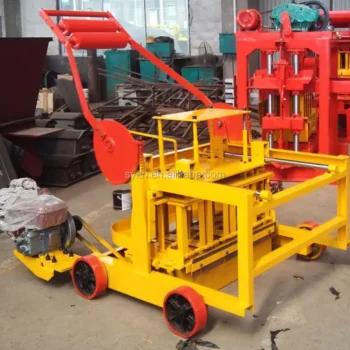
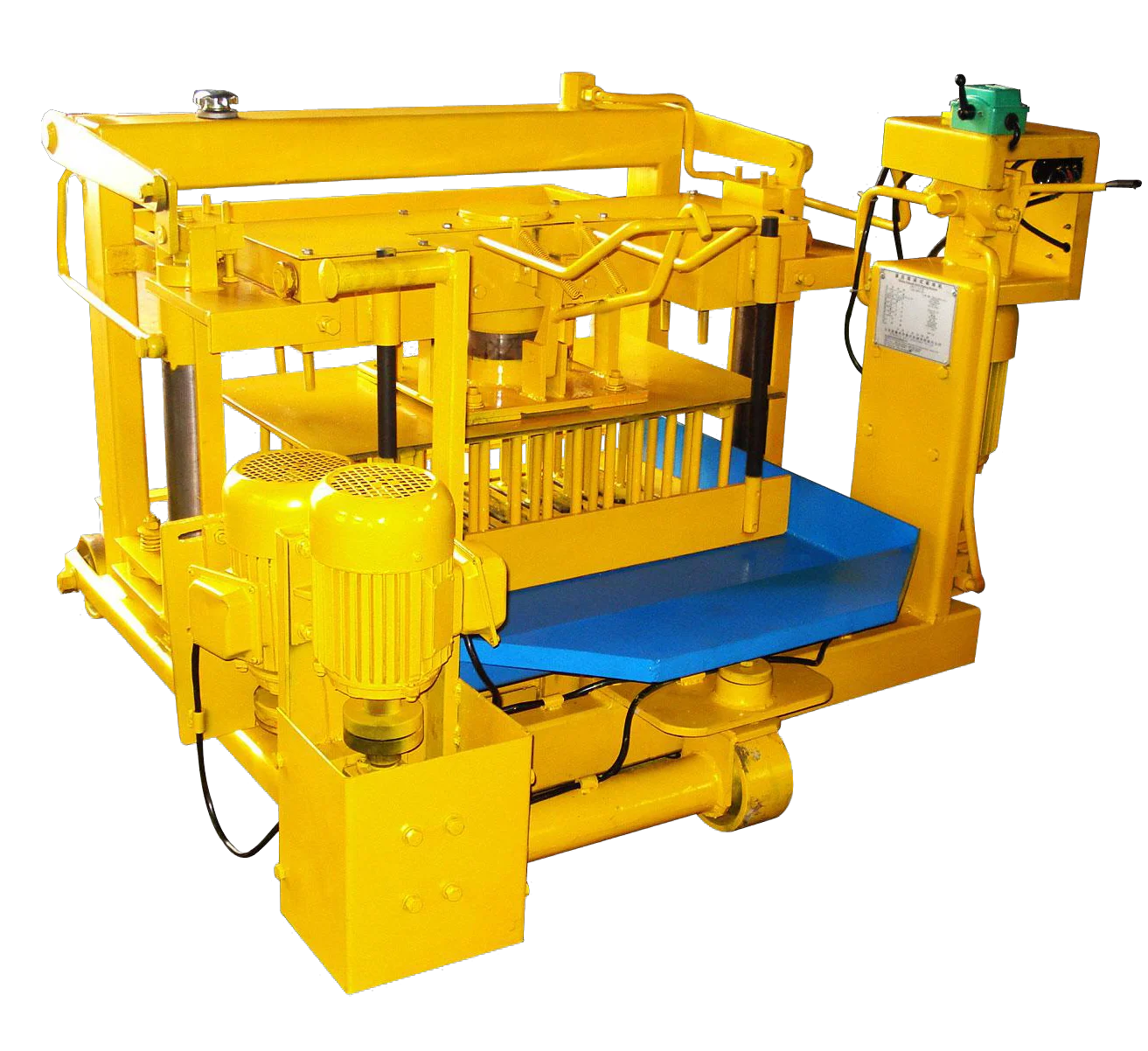
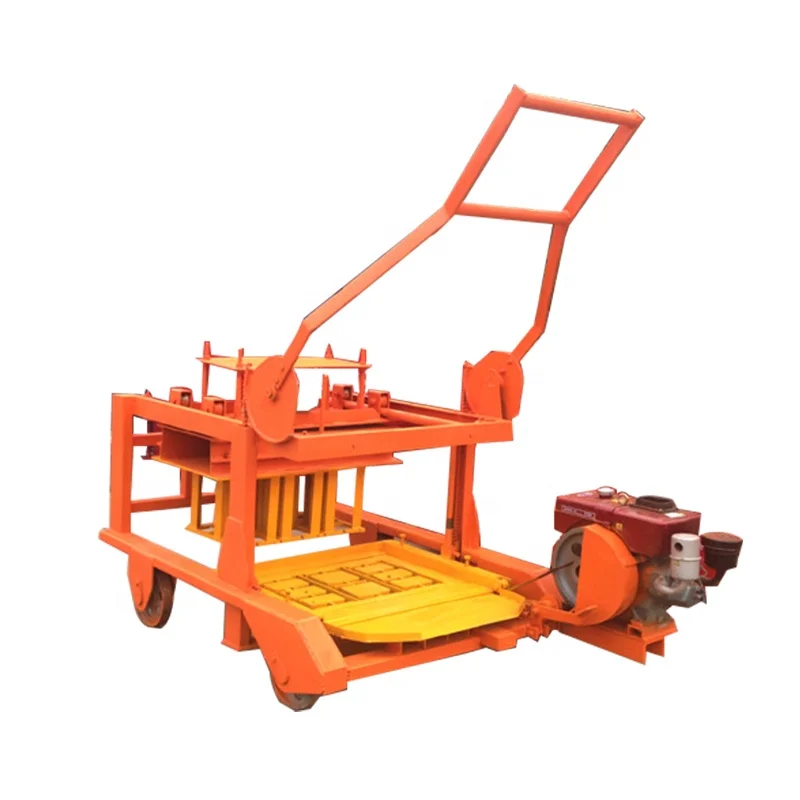
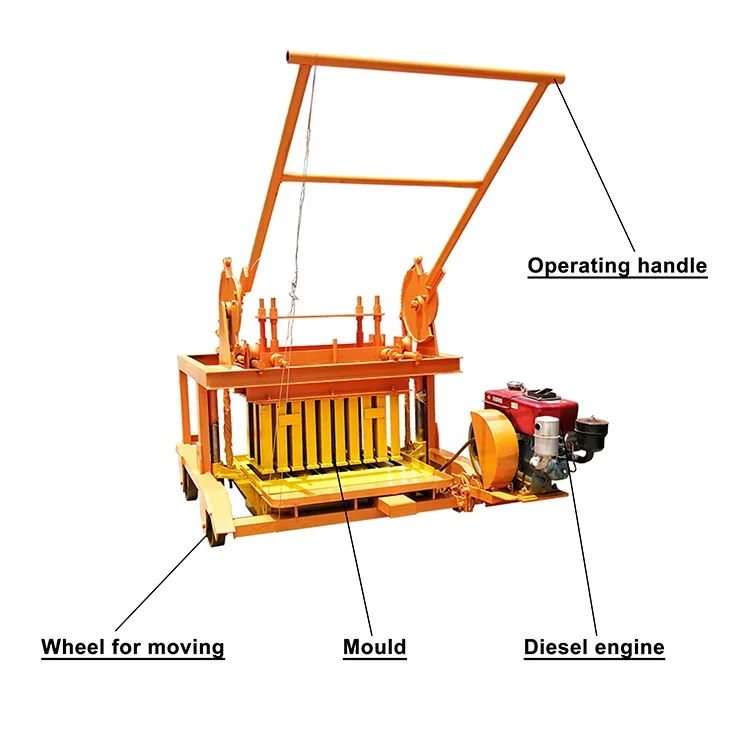
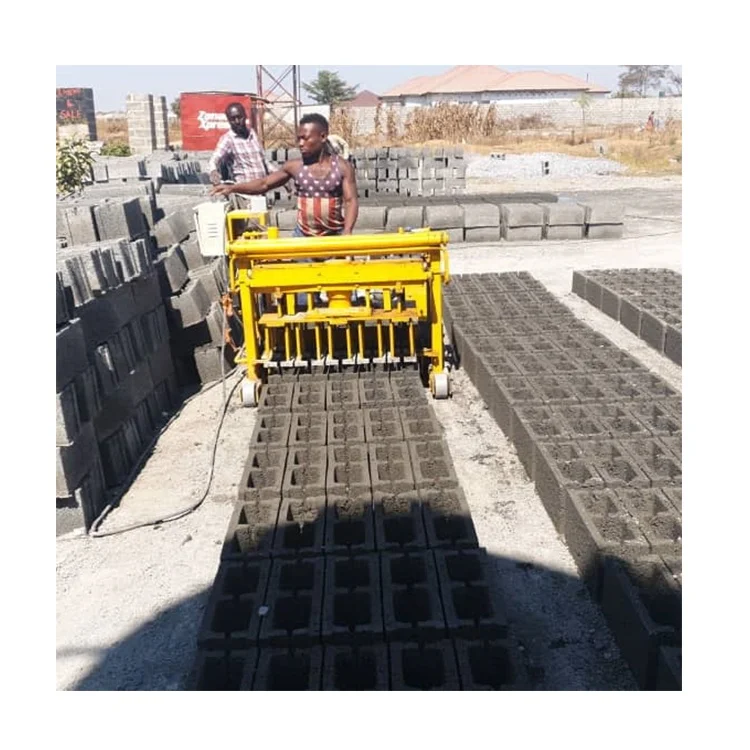
The 16 kW total power budget must cover vibration motors, hydraulic pump and electric walking drive simultaneously, so a buyer needs to confirm that the site generator or grid connection can sustain continuous draw plus starting surge. The JS7500 concrete mixer in the basic package handles a defined batch volume per cycle; pairing it with the optional PL1200 batching machine improves mix consistency across long production runs. The egg-laying design eliminates pallet dependency entirely — blocks are deposited on the ground and the machine walks forward, which means curing area planning revolves around ground space and sprinkler access rather than pallet rack capacity. Hydraulic steering and electric walking allow one operator to reposition the machine along a production row without auxiliary equipment, keeping the crew size small on tight project sites.
The Cost of Skipping Format-to-Aggregate Verification
When a buyer orders a QMY10-15 without providing local aggregate samples and target block drawings, the factory ships a default vibration and pressure setting. On arrival, blocks may show inconsistent density across the mould face, edges may spall during demould, or the machine may need repeated manual intervention to release the product cleanly. These issues compound across a shift: operators slow the cycle to compensate, daily volume drops, and the project timeline slips. The root cause is almost always a configuration that was never matched to the material and format combination actually running on site. [NEED_CITE: mobile block machine commissioning issues from unmatched configurations]
Why Sourcing the QMY10-15 Through a Single-Focus Block Machinery Supplier Matters
Block machinery is the only product line we manufacture, so the QMY10-15 host machine, its moulds, the JS7500 mixer and any optional batching equipment are specified as one matched system rather than assembled from unrelated catalogues. Mould design and supply covers the block formats the buyer’s market actually sells, including custom drawings when a project specification calls for a non-standard interlocking profile. Configuration is set against the buyer’s mix design and local aggregate — not a generic default — so vibration and hydraulic parameters arrive on site already close to the correct operating window. Automation level is selectable, meaning a buyer can begin with the semi-automatic hydraulic demould and add supporting equipment as production volume grows. Installation support includes operator training on mould change procedures and basic hydraulic maintenance so the crew is self-sufficient after handover.
Documentation & Verification
- Line layout showing QMY10-15 production row spacing and curing area based on your chosen block format
- Capacity calculation document stating the specific block format and cycle time behind the daily output figure
- Mould drawing and format list confirming which brick profiles are included and their changeover procedure
- Voltage, frequency and control language confirmation sheet signed off before the machine enters production
- Factory test record run on your target block format with demould and density check before dispatch
Installation, Commissioning & Support
- Confirm 16 kW continuous power supply with dedicated circuit and correct voltage and frequency before the QMY10-15 arrives on site
- Prepare level, compacted ground for egg-laying production and define curing row spacing per the supplied layout drawing
- Verify hydraulic oil grade and fill to specified level before first start-up of the dual vibration and demould system
- Run initial test batches with local aggregate to set vibration duration and hydraulic squeeze pressure per block format
- Train operators on quick mould change procedure, JS7500 mixer batch sequence and hydraulic heat dissipator maintenance schedule
- Provide wear parts and mould availability list so first replacements are on hand before production ramp-up
What We Need From You Before Quoting
Send us the block format drawings or sample photos of the product your market sells, along with the daily output target you need to hit. Provide a sieve analysis or at least clear photos of your local sand and aggregate so we can assess clay content and grading. State your site voltage, frequency and preferred control language so the electrical package is confirmed before the QMY10-15 enters production — mobile block machine specifications only become meaningful when they are locked to your actual conditions.
Frequently Asked Questions
Q: How is the 11,000 pcs/day capacity calculated and which block format does it assume?
A: The figure is based on a specific block format, mould cavity count and cycle time that must be confirmed before the number is useful. We restate the calculation against your target block dimensions and local mix design, then provide a written capacity document showing the assumed format and per-cycle timing so there is no ambiguity when the machine arrives on your site.
Q: What mould formats are available and what is the mould change time on site?
A: The QMY10-15 accepts moulds for hollow block, interlocking block and solid block in various dimensions. Quick mould change is a standard feature, though actual changeover time depends on operator familiarity and the specific format swap. We supply a changeover procedure document and train your crew during commissioning so the switch between formats does not consume a large portion of the shift.
Q: How do I match the vibration force and hydraulic pressure to my local aggregate?
A: We request a sieve analysis, aggregate photos and your proposed mix proportions before finalising the machine configuration. The dual vibration motors and hydraulic demould settings are then adjusted at the factory to suit your material character. If on-site conditions differ from the samples provided, further adjustment during commissioning brings the parameters into alignment with actual production behaviour.
Q: What is included in the basic equipment package and what might I source locally?
A: The basic package includes the QMY10-15 host machine, a JS7500 concrete mixer and a dump truck for material movement on site. Optional items such as the PL1200 batching machine, cement silo, screw conveyor and loader can be added. Water supply, curing sprinklers and ground preparation are typically handled by the buyer, and we specify those requirements in the line layout document.