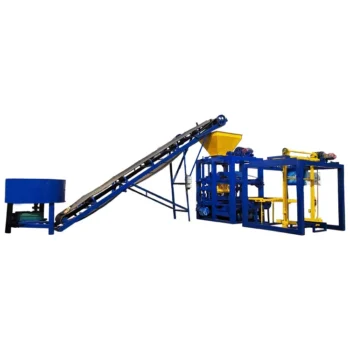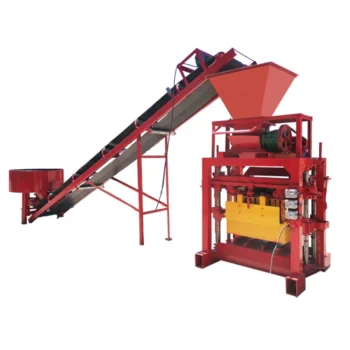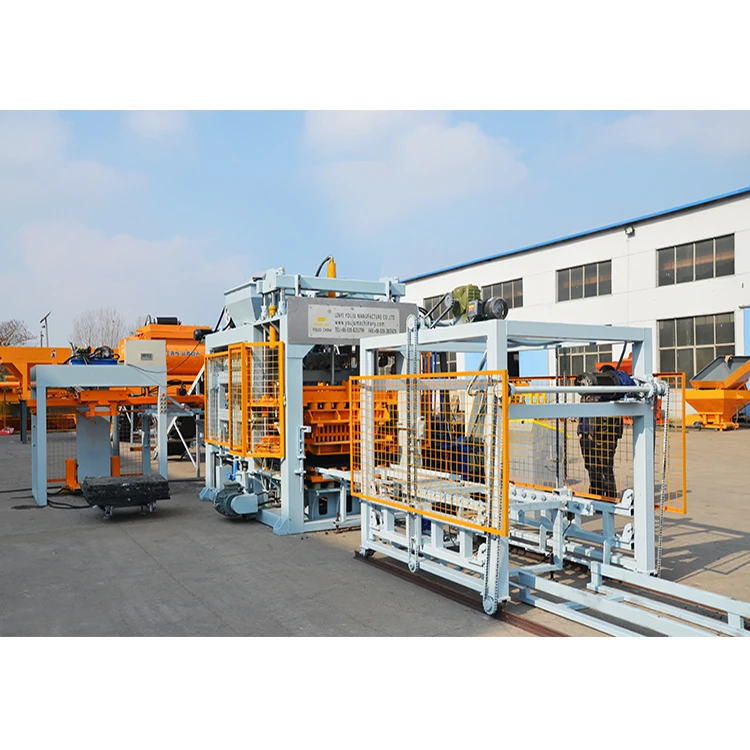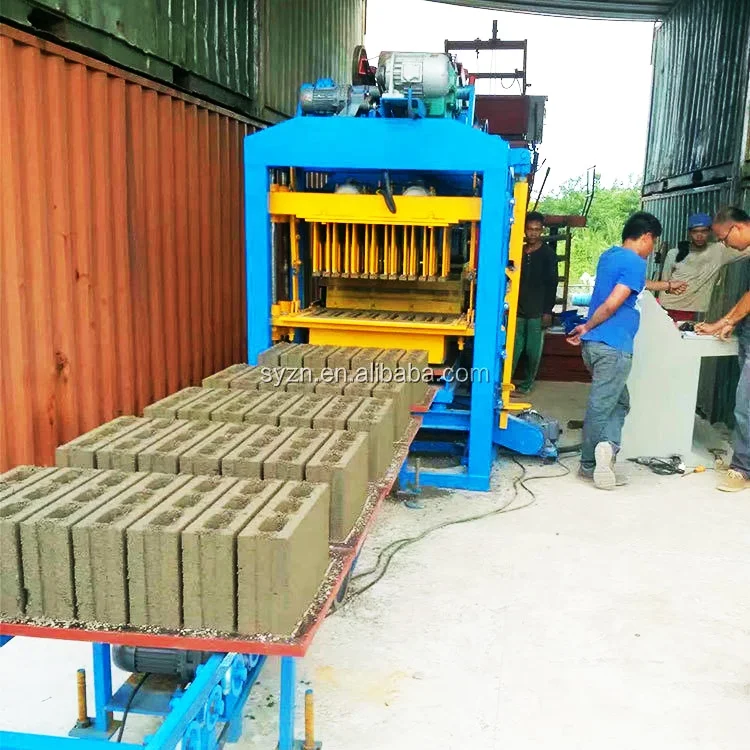
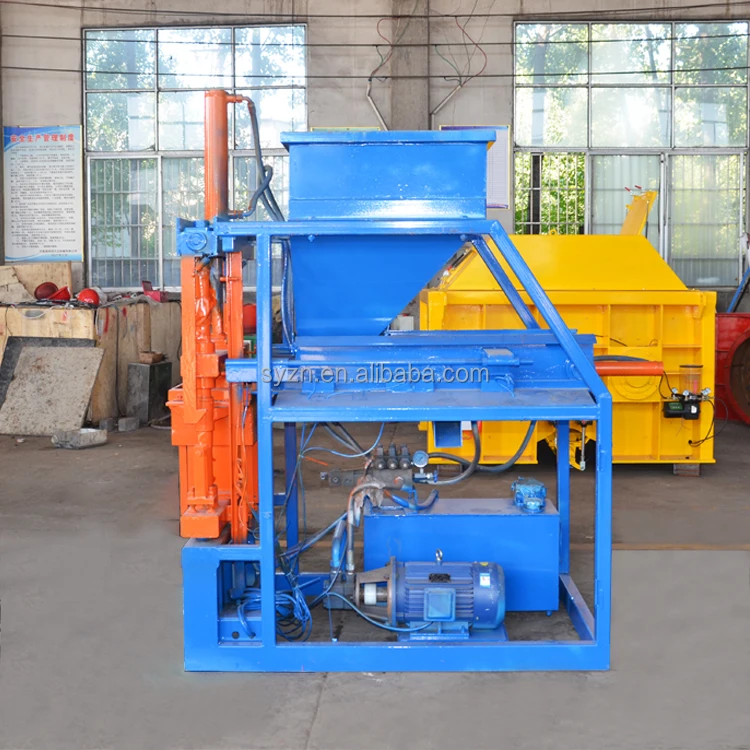

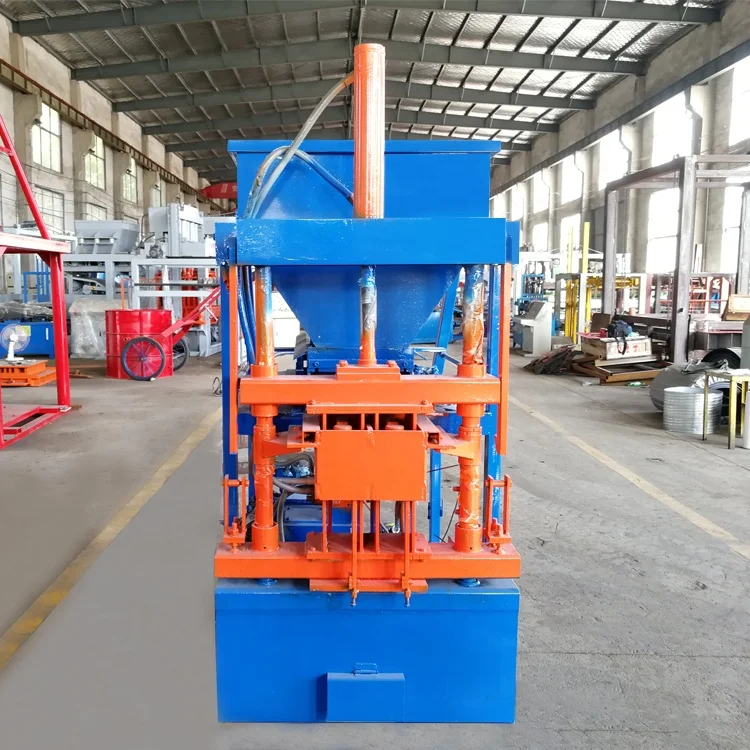
Description
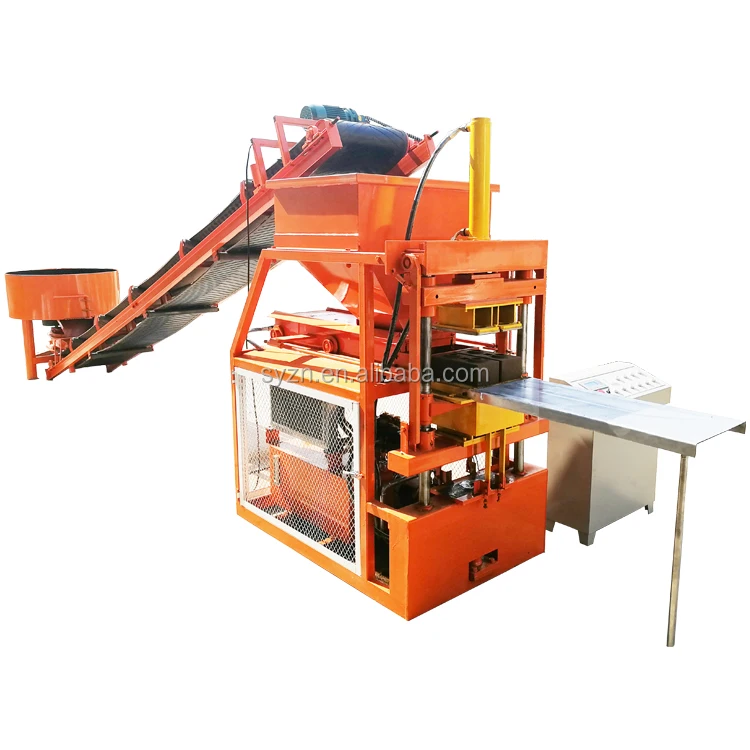
Matched System Approach — The LY2-10 clay interlocking brick making machine specifications are configured against your actual soil sample and target block format, not pulled from a generic catalogue, ensuring the press, mould, and pallet work as one verified unit.
Technical Specifications
| Parameter | Value |
|---|---|
| Model | LY2-10 |
| Product Type | Clay Interlocking Brick Making Machine |
| Machine Power | 7.5 kW |
| Molding Cycle | 10 s |
| Output Capacity | 6000 pcs / 8 hours (basis not stated in source — confirm block format / material / thickness) |
| Pcs per Hour | 750 (per listed format) |
| Bricks per Mould | 1 pc/mould (source states 2 in text but 1 in table — verify against manufacturer catalog) |
| Mould Formats | 300×150×100 mm / 250×125×75 mm / 230×220×115 mm |
| Raw Materials | Clay, soil, earth, mud, concrete, cement, fly ash |
| Automation Level | Semi-automatic |
| Overall Dimensions (L×W×H) | 1300 × 1800 × 2400 mm |
| Control System | Not stated in source |
| Hydraulic Pressure | Not stated in source |
| Voltage & Frequency | Not stated in source |
Application Suitability
| Application | Material or Output |
|---|---|
| Interlocking clay brick production for building construction | Stabilized clay or soil with cement binder |
| On-site or small-plant brick making | Locally available earth, mud, or fly ash mixes |
| Soil/cement stabilized block production | Compressed earth blocks for load-bearing or infill walls |
| Contractors adding interlocking formats | Concrete or clay mixes adapted to local aggregate |
What "6000 Bricks per Shift" Actually Means for Your Site
Capacity figures only hold weight when tied to a specific block format, mix design, and curing method.
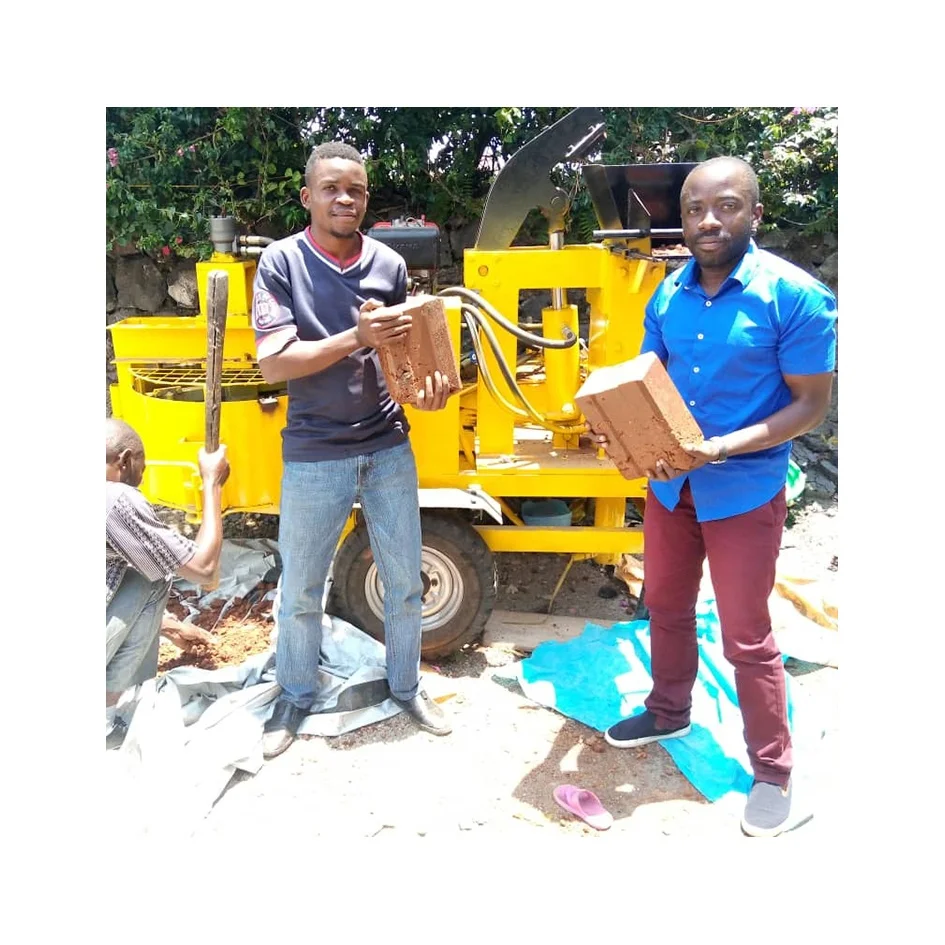
I once spent a week in Kenya re-tuning a hydraulic press because the quoted output assumed a standard sand-cement mix, while the local red soil had a much higher clay content. The bricks cracked during curing and the daily count dropped far below the brochure number. When reviewing clay interlocking brick making machine specifications, buyers often see a single headline capacity without knowing which mould size, moisture content, or compression ratio that number assumes. A 300×150×100 mm interlocking block requires a different compaction energy than a 230×220×115 mm format, and the cycle behaviour changes when you switch from a sandy loam to a heavy clay [NEED_CITE: soil classification and compaction energy relationships for compressed earth blocks]. Without that context, the number on the spec sheet becomes meaningless on your production floor.
Mould Format and Cycle Time as the Real Capacity Drivers
The LY2-10 lists three mould formats: 300×150×100 mm, 250×125×75 mm, and 230×220×115 mm. Each format produces one brick per cycle at a 10-second molding cycle, yielding approximately 750 pieces per hour per listed format. This gives you a verifiable starting point: if your market primarily sells the 300×150×100 mm interlocking profile, you can calculate your shift output against that specific block rather than a blended average. The clay interlocking brick making machine specifications should always be read format-by-format, because the volume of material per press stroke and the demoulding behaviour differ across sizes.
Raw Material Compatibility and Local Aggregate Matching
The press accepts clay, soil, earth, mud, concrete, cement, and fly ash. In practice, this means the machine can be configured around whatever material you can source within a reasonable haul distance from your site. I have seen projects stall because the supplier set up the mixer for a crushed-sand blend that was simply not available locally, forcing the buyer to import aggregate at a cost that destroyed the project margin. Before any machine leaves the factory, a soil sample from your site should be tested to confirm the clay-to-sand ratio and the optimum cement stabilization percentage [NEED_CITE: compressed earth block mix design and soil testing standards]. The LY2-10’s semi-automatic operation leaves room for manual adjustment of feed volume and moisture, which is valuable when you are still dialling in a new local material.
Reading the Specs That Actually Affect Your Block Quality
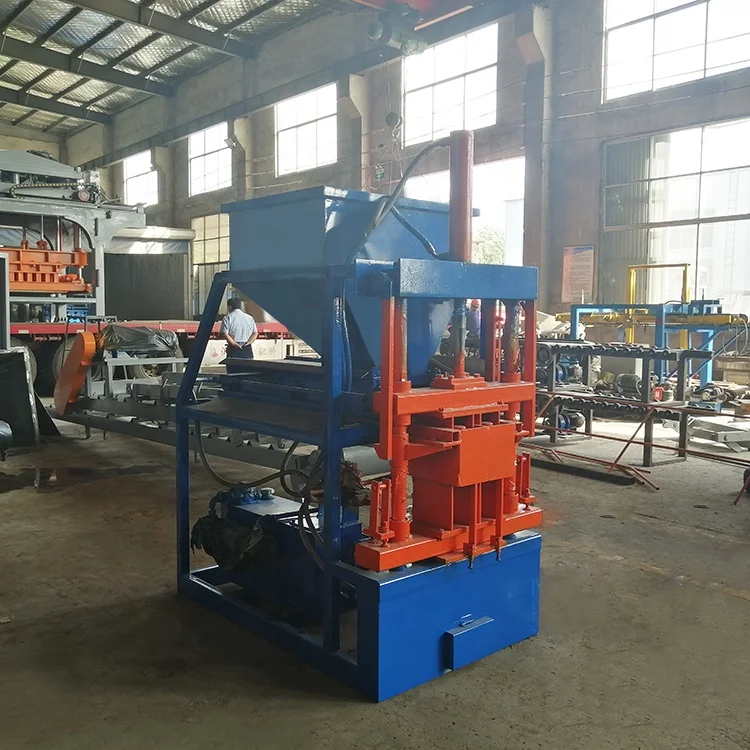
The 7.5 kW machine power drives the compression mechanism, and for a semi-automatic clay press of this footprint (1300 × 1800 × 2400 mm), it positions the unit for small-plant or on-site production rather than high-volume industrial output. The overall dimensions are compact enough to fit inside a standard site container or a modest workshop bay. However, the spec sheet does not list hydraulic pressure or vibration force — two values that directly govern the density and compressive strength of the finished block. Without knowing the compaction pressure, you cannot predict whether a 250×125×75 mm interlocking brick will meet the load-bearing requirement your local building code demands. Buyers should request these values explicitly and match them against their target block strength before committing to a purchase order.
The Hidden Cost of Skipping Format-Level Verification
When a machine arrives and the mould produces a block that does not match local market dimensions, the buyer faces a choice: run a product nobody wants, or order a custom mould and wait through a multi-week lead time while the press sits idle. I have watched contractors in South Asia lose an entire curing cycle — sometimes several weeks — because the interlocking profile did not align with the mortar-less stacking system their masons were trained on. The consequence is not just delayed revenue; it is idle labour, wasted cement, and a curing yard full of unsellable stock [NEED_CITE: construction project delay costs from equipment specification mismatches].
Why Sourcing This Machine Through Shiyue
Block machinery is our single focus, which means the LY2-10 is not sourced from a general trading catalogue but specified alongside its mould, pallet, and handling equipment as one system. Configuration is set against your actual mix design and local aggregate, not a default setting. Mould design covers the formats your market sells, and custom profiles can be produced from your drawings if none of the three standard formats match. The automation level is selectable, so you can begin with semi-automatic operation and add pallet feeding or stacking later. Installation includes on-site commissioning and operator training, so the first week of production is supervised rather than left to trial and error [NEED_CITE: manufacturer-supported commissioning and operator training for block making equipment].
Documentation & Verification
- Line layout showing the LY2-10 footprint against your workshop bay dimensions
- Capacity calculation sheet stating the exact mould format and mix ratio assumed
- Mould drawing and format list with interlocking profile dimensions before order
- Factory test record run on your soil sample or equivalent material before dispatch
- Voltage and control language confirmation matched to your destination country grid
- Wear parts and mould replacement list with pricing for your first reorder cycle
Installation, Commissioning & Support
- Foundation pad sized to the 1300 × 1800 mm footprint with anchor bolt template
- Dedicated power circuit rated for the 7.5 kW motor with correct voltage and frequency
- Machine shipped in dismantled state with reassembly supervised by our technician on arrival
- First production run supervised to confirm compaction pressure against your target block strength
- Operator training covering mould change procedure and daily greasing points on the press
- Wear parts list provided so you can stock seals and liner plates before the first replacement is due
Sizing the LY2-10 to Your Project
Before requesting a quotation, share your target block format and the soil or clay material you plan to use, including any cement stabilization ratio you have already tested. Confirm the voltage and frequency at your site, along with the control language your operators need. Let us know whether you plan to run the press as a standalone unit or connect it to an existing mixer and curing area, so we can match pallet size and handling to what you already have in place.
Frequently Asked Questions
Q: How is the 6000 pcs per 8 hours capacity calculated, and does it change with a different block format?
A: That figure is based on the listed mould formats running at a 10-second cycle, but the source does not state which specific format or material thickness it assumes. Output will differ when you switch between the 300×150×100 mm and 230×220×115 mm profiles, and mix moisture content also affects cycle behaviour. Always request a capacity calculation tied to your exact target block.
Q: What clay-soil-cement mix ratios work with the LY2-10, and how does local aggregate affect block strength?
A: The press handles clay, soil, earth, mud, concrete, cement, and fly ash, but the optimum stabilization percentage depends on your soil’s clay-to-sand ratio. A heavy clay needs less cement than a sandy loam. We recommend sending a soil sample for testing before the machine is configured, so the compaction pressure and feed volume are matched to your material from day one.
Q: How long does a mould change take, and can custom interlocking profiles be designed?
A: Mould change time is not stated in the published specifications, so you should request a demonstration or a timed procedure sheet. Custom interlocking profiles can be designed from your drawings if the three standard formats do not match your local market. Lead time for a custom mould should be confirmed before the machine order is finalized.
Q: What voltage and control language options are available for my market?
A: The published spec sheet does not list voltage, frequency, or display language. These must be confirmed before production begins to avoid commissioning delays after the machine arrives. Share your local grid specification and operator language preference at the inquiry stage so the electrical panel and control interface are built to match.
Q: What is the realistic daily output when accounting for material preparation and curing handling?
A: The 750 pcs per hour figure covers the press cycle only. Real daily output depends on how fast your mixer feeds material, how quickly operators handle pallets in the semi-automatic setup, and how your curing area is organized. A realistic calculation must include material preparation time, mould change intervals, and pallet handling to give you a number you can plan against.