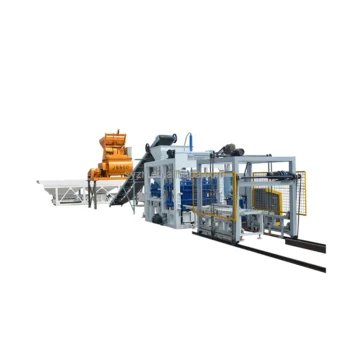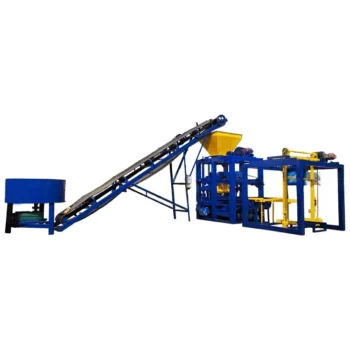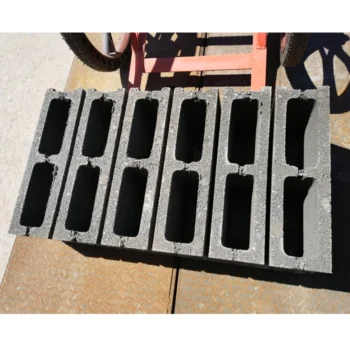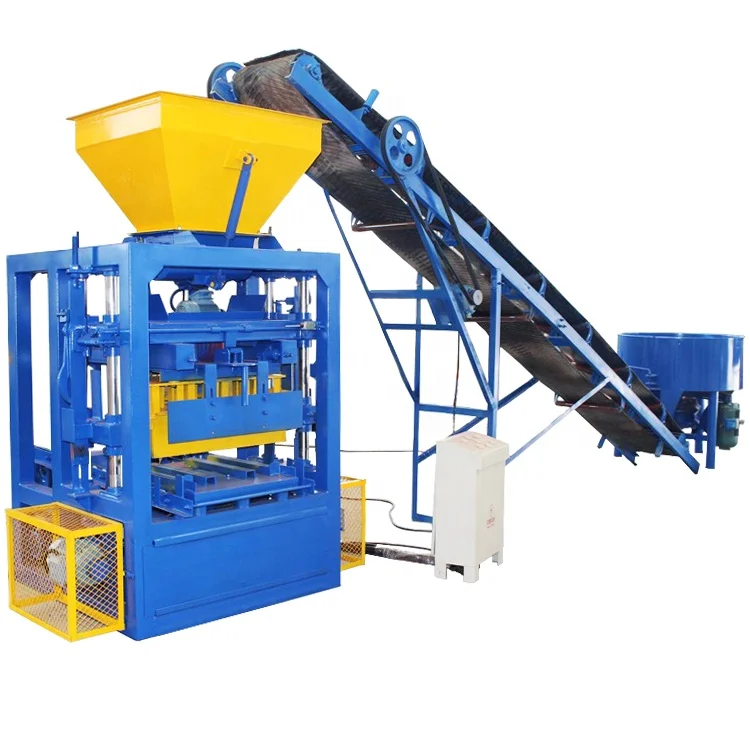
Description
Matched to Your Format — Capacity is calculated per block type you actually produce, not quoted as a single catalogue figure that hides which format it assumes.
Technical Specifications
| Parameter | Value |
|---|---|
| Model | QT4-15A |
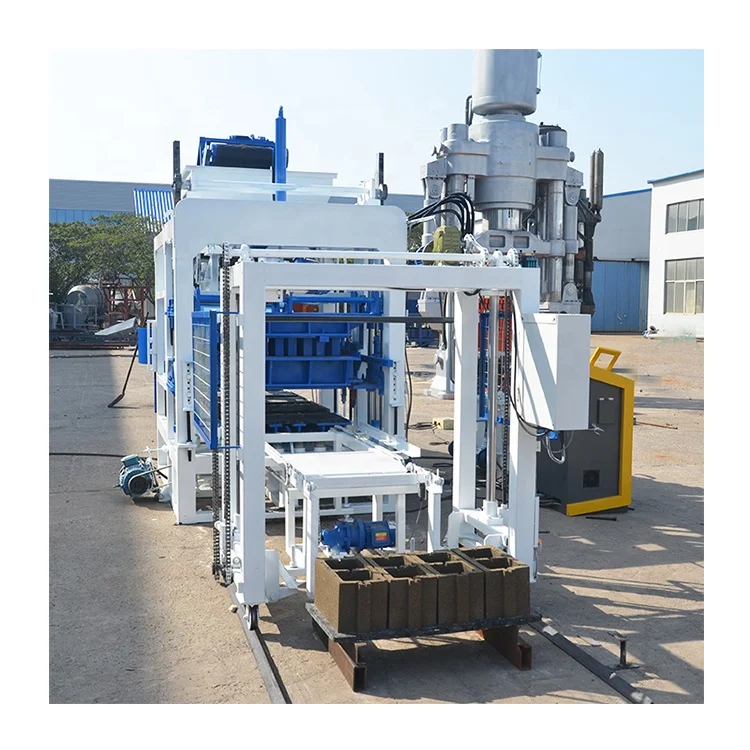
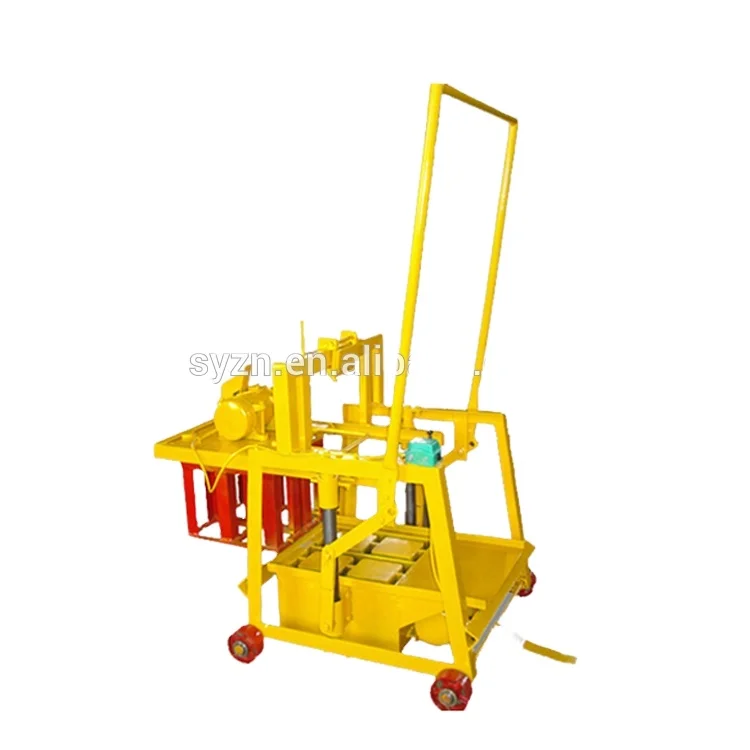
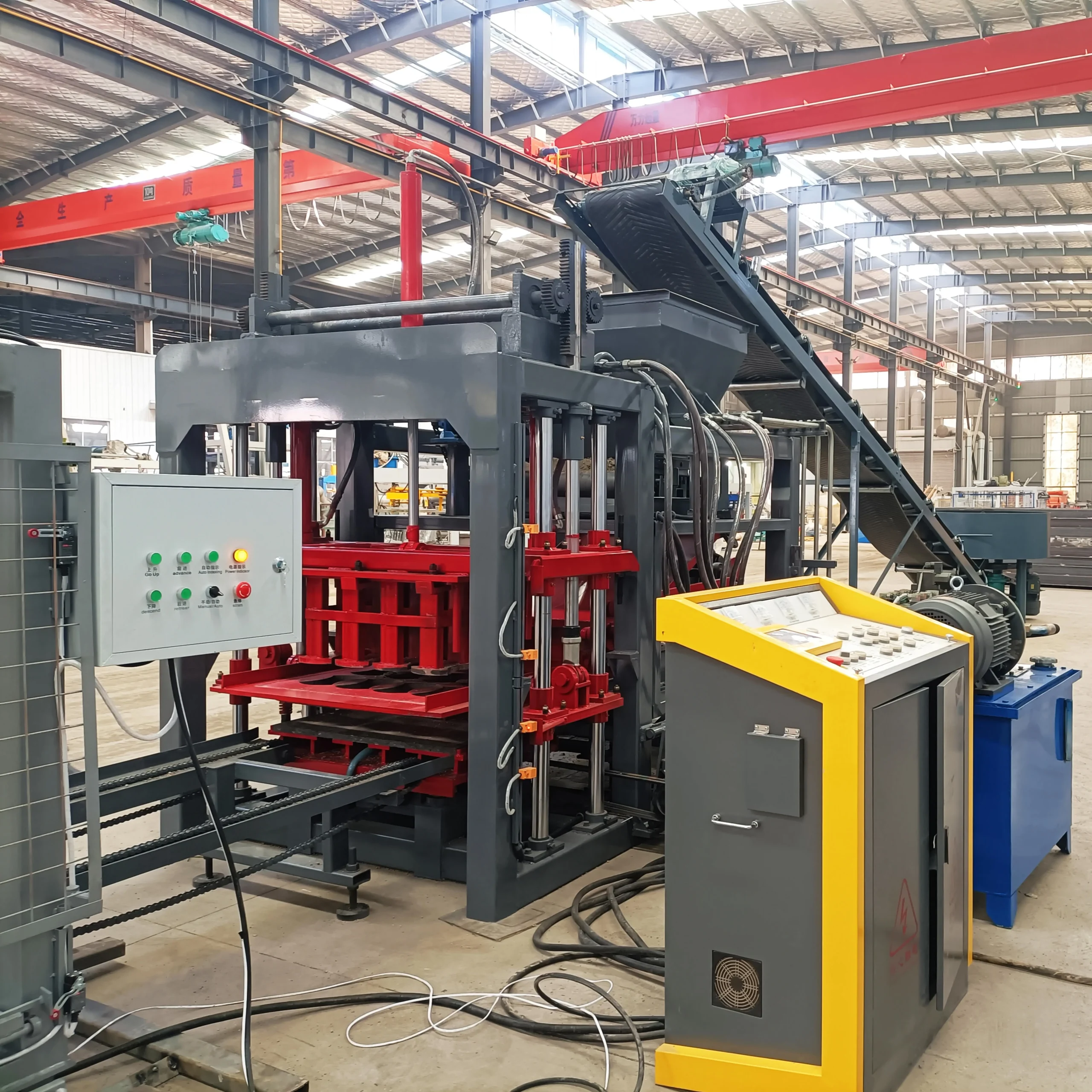
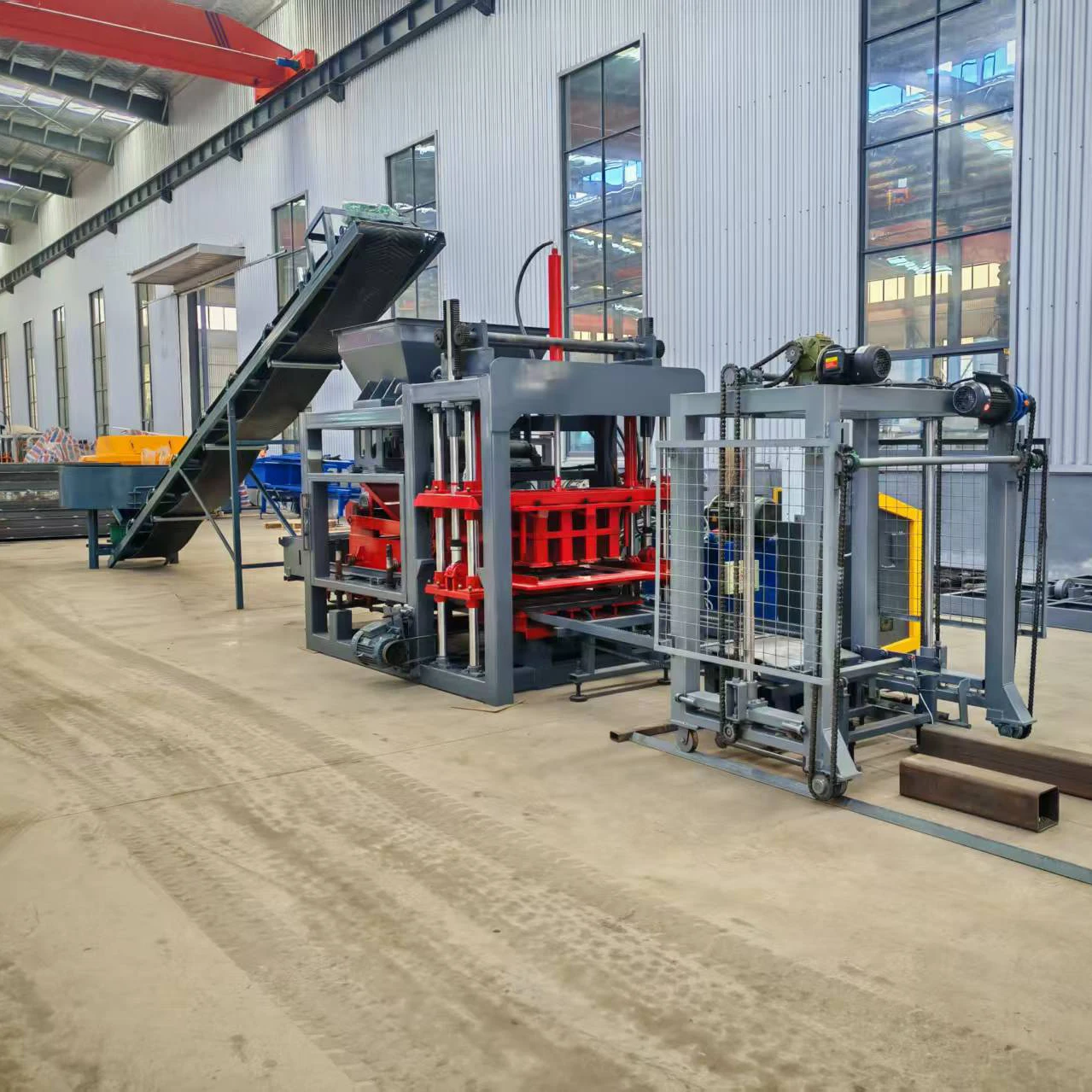
| Product Type | Fully Automatic Concrete Block Making Machine |
| Overall Dimensions (L×W×H) | 4100 × 1600 × 2600 mm |
| Total Mass | 4 T |
| Rated Pressure | 16–21 MPa |
| Main Vibration Form | Platform Vibration |
| Vibration Frequency | 4200 r/min |
| Vibration Force | 55 kN |
| Pallet Size | 880 × 550 mm |
| Molding Cycle | 25–30 s (basis to be confirmed per block format and material) |
| Overall Power | 18.45 kW |
| Demolding Method | Hydraulic |
| Factory Area Required | 300 m² |
| Applied Products | Hollow blocks, solid blocks, pavers, interlocking blocks, curbstone |
| Raw Materials | Crushed stone, sand, cement, fly ash, gravel, slag, dust |
| Automation Level | Fully automatic |
| Control System | To be confirmed (PLC brand and display language) |
| Voltage & Frequency | To be confirmed for target market |
| Mould Change Time | To be confirmed |
| Stacking Method | To be confirmed |
| Warranty | 1 year (whole machine, excluding spare parts) |
Application Suitability
| Application | Material or Output |
|---|---|
| Hollow block production for load-bearing walls | Crushed stone and cement blends |
| Solid block manufacturing for structural masonry | Sand, gravel and cement mixes |
| Paving block production for walkways and yards | Crushed stone with colored face mix |
| Interlocking block forming for retaining walls | Fly ash, sand and cement blends |
| Curbstone production for road edging | High-density gravel and cement |
| Porous brick for permeable surface projects | Slag, dust and cement composites |
Why Cycle Time Alone Does Not Define Output on the QT4-15A Block Machine
A 25-second cycle means nothing until you state which block format is in the mould.
Catalogue sheets love to quote cycles per hour and leave the format out entirely. I have seen buyers in Latin America sign off on a machine that promised a certain hourly figure, only to discover on commissioning that the number assumed a thin paver while their daily production target was based on a 400×200×200 hollow block. The QT4-15A block machine specifications must always be read against the specific product drawing, because a hollow block with deep cores takes a longer fill and press stroke than a flat paver of the same pallet footprint [NEED_CITE: block format effect on cycle time in hydraulic press machines]. Without this link, daily output planning becomes guesswork.
Matching Vibration and Pressure to Your Local Aggregate
The QT4-15A delivers 55 kN of platform vibration at 4200 r/min alongside 16–21 MPa of hydraulic pressure. These two forces must work together to compact the mix into a dense, consistent block. When the local aggregate is angular crushed stone rather than rounded river gravel, vibration frequency and pressure setting need adjustment to achieve full compaction without cracking the green block. Getting this balance wrong shows up as uneven strength across a batch — blocks on the outer edge of the mould cavity receive less force and test lower than those in the centre.
Pallet Size and Curing Area Alignment
An 880 × 550 mm pallet defines how many blocks sit on each board and how those boards stack in your curing racks. If your forklift is rated for a certain load and your curing yard has fixed rack spacing, the pallet dimension must slot into that existing layout. I once visited a plant in Colombia where the owner bought a machine with a pallet size that was too wide for his curing racks; the boards had to be handled individually by labourers instead of racked by forklift, turning a supposed fully automatic line into a manual bottleneck [NEED_CITE: pallet handling and curing area planning for concrete block plants]. The QT4-15A concrete block machine capacity by format only reaches its potential when the pallet, rack and forklift are specified as one system.
What the Molding Cycle Really Tells You
The stated 25–30 second molding cycle covers press close, vibration, compaction and demolding — but the exact duration shifts with block geometry. A hollow block with three or four large cores requires more concrete to flow into deep cavities under vibration, extending the fill phase. A flat paver with a thin profile compacts faster. On the QT4-15A block machine specifications sheet, the cycle figure is a starting point. What matters for your business plan is the output recalculated for each format you intend to sell, documented before you commit to the order.
Reading the Power and Pressure Numbers Together
At 18.45 kW overall power, the QT4-15A runs a hydraulic system that delivers up to 21 MPa while the vibration motor spins at 4200 r/min. The hydraulic pump must maintain pressure through the entire compaction stroke without the motor drawing excessive current. In regions where voltage fluctuates, a pressure drop mid-stroke produces a softer block that may fail strength testing. Confirming the local voltage and frequency before production ensures the motor and pump are wound for your grid conditions, avoiding commissioning delays once the machine arrives on site.
When the Wrong Pallet Material Costs You Downtime
Pallets endure repeated vibration, hydraulic pressure and exposure to moisture during curing. A pallet specified without regard to the block weight and vibration force can warp or delaminate after a few months, forcing an unplanned purchase. On a machine with a 55 kN vibration force, the pallet must carry the load without flexing, or block dimensions drift out of tolerance [NEED_CITE: pallet material selection for high-vibration block presses]. Buyers who treat pallets as a commodity item rather than a matched component often discover the true cost only after the first batch of replacements arrives with a different thickness than the original set.
Why Buyers Choose This Configuration
The QT4-15A is specified as a matched system — press, mould, pallet and handling are selected together against your actual block format and local raw material, not pulled from a generic catalogue. Mould design covers the formats your market demands, including custom drawings when standard dimensions do not match local building codes. Automation level starts at fully automatic and can be reviewed later if you add stacking or cubing stages. Documentation arrives with a factory test record run on your specific block format, so you see real output before the machine ships.
Documentation & Verification
- Factory test record run on your target block format before dispatch
- Mould drawing and format list confirming every block type in your product range
- Pallet specification sheet covering size, material and load rating
- Line layout showing QT4-15A placement within your 300 m² factory area
- Hydraulic and electrical schematic matched to your confirmed voltage and frequency
- Operation and maintenance manual in your preferred control display language
Installation, Commissioning & Support
- Foundation plan accounts for 4 T mass and vibration isolation across 300 m² area
- Electrical supply confirmed for 18.45 kW draw at your local voltage and frequency
- Machine arrives dismantled for container loading; reassembly supervised on site
- First production run sets hydraulic pressure between 16–21 MPa to match your mix
- Operator training covers PLC functions, mould change procedure and daily checks
- Wear parts list includes vibration bearings, hydraulic seals and mould springs
What to Share With Your Quotation Request
Tell us the exact block formats your market sells — dimensions, core count, face finish — along with your target daily output per format. Share your local raw material source and any existing curing racks or forklifts so the pallet can be matched. Confirm your site voltage, frequency and the language you need on the PLC display. If you have a project deadline, state the required arrival date so lead time can be quoted upfront.
Frequently Asked Questions
Q: How is daily output calculated for each block format on the QT4-15A?
A: Output starts with the molding cycle for each specific format — hollow block, paver or interlocking brick — not a single machine-wide number. We calculate pieces per pallet, pallets per hour and then multiply by your planned shift length. The capacity document you receive states the format and mix assumed so you can verify the figure against your own production target before ordering.
Q: How do I confirm the mould will produce the exact block dimensions my market requires?
A: We supply a mould drawing and format list for review before production. You check the cavity dimensions, core placement and face finish against your local building standards. If a standard mould does not match, we design to your drawing. The factory test runs your chosen mould so the first blocks you see are from the actual tooling that ships.
Q: What hydraulic pressure and vibration force settings match my local aggregate?
A: The QT4-15A operates between 16 and 21 MPa hydraulic pressure with 55 kN platform vibration. The correct setting depends on your aggregate shape, size distribution and cement content. We ask for your mix design and local material sample data, then recommend the pressure and vibration duration that produce consistent compaction without cracking.
Q: How long does a mould change take, and what tools are required?
A: Mould change time depends on the format size and whether quick-release fasteners are specified. We document the procedure and required tools in the operation manual. For plants running multiple formats daily, we can discuss mould change systems that reduce the time between production runs and keep your schedule on track.
Q: What pallet size and material should I choose based on my curing area and handling equipment?
A: The standard 880 × 550 mm pallet must align with your curing rack spacing and forklift load capacity. We ask for your existing rack dimensions and forklift rating, then confirm pallet material and thickness that withstand the 55 kN vibration force without warping. This prevents handling problems that appear only after production starts.