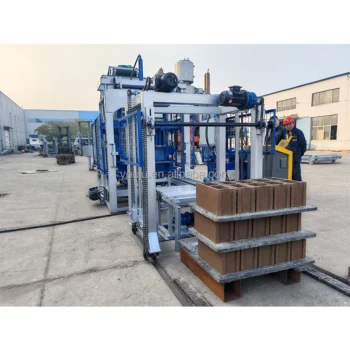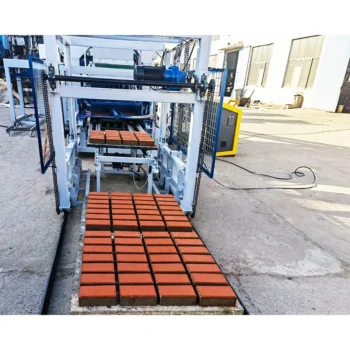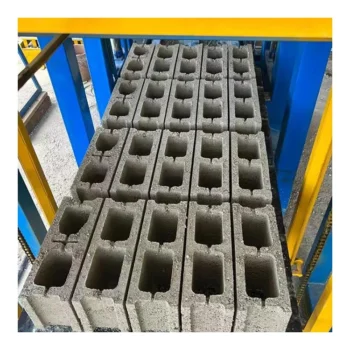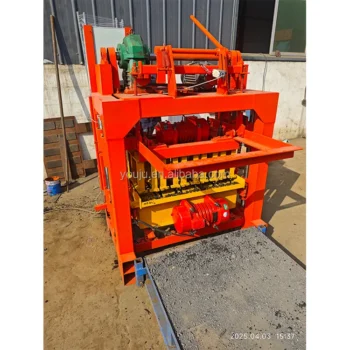
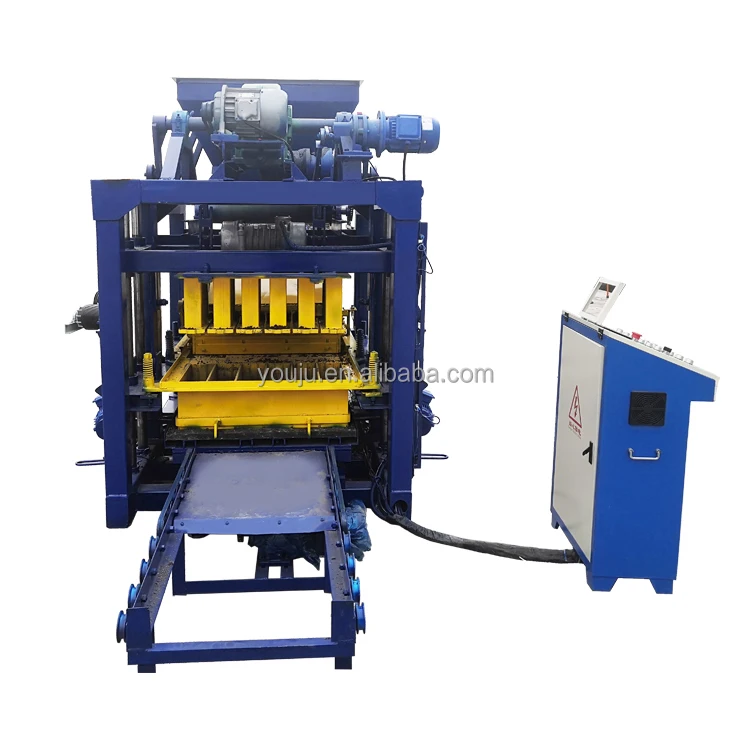
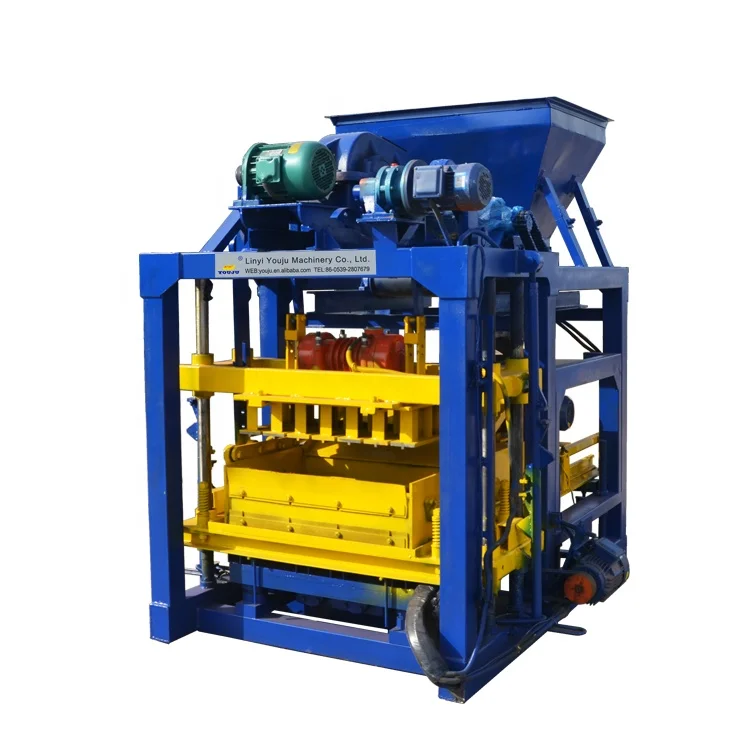
Description
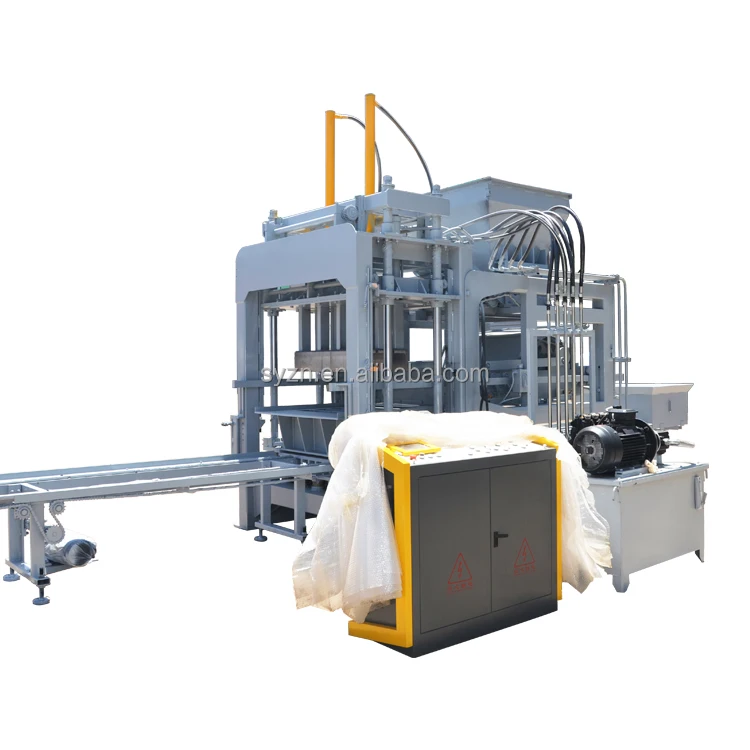
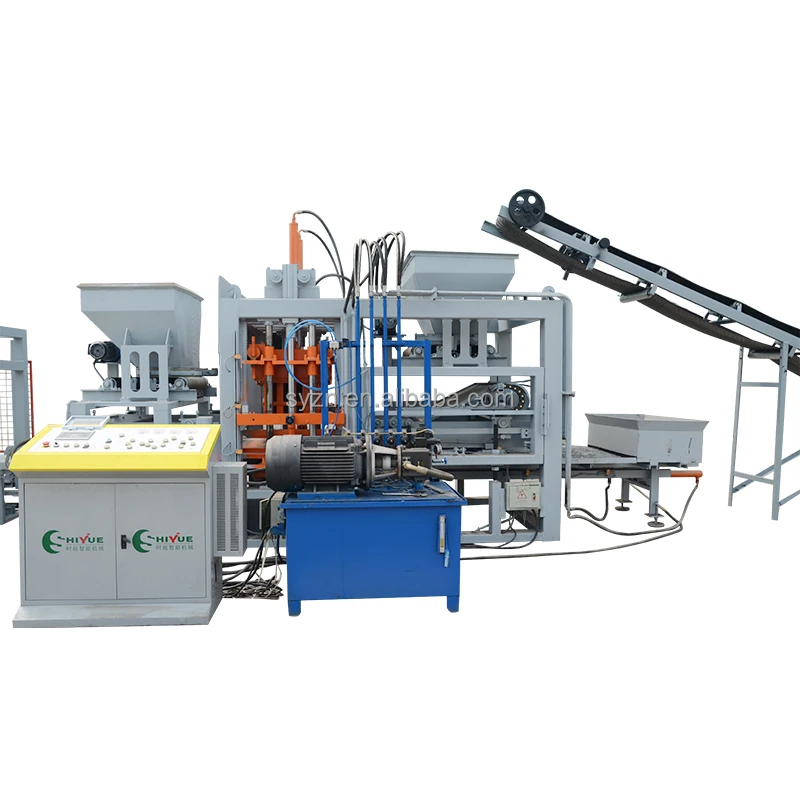
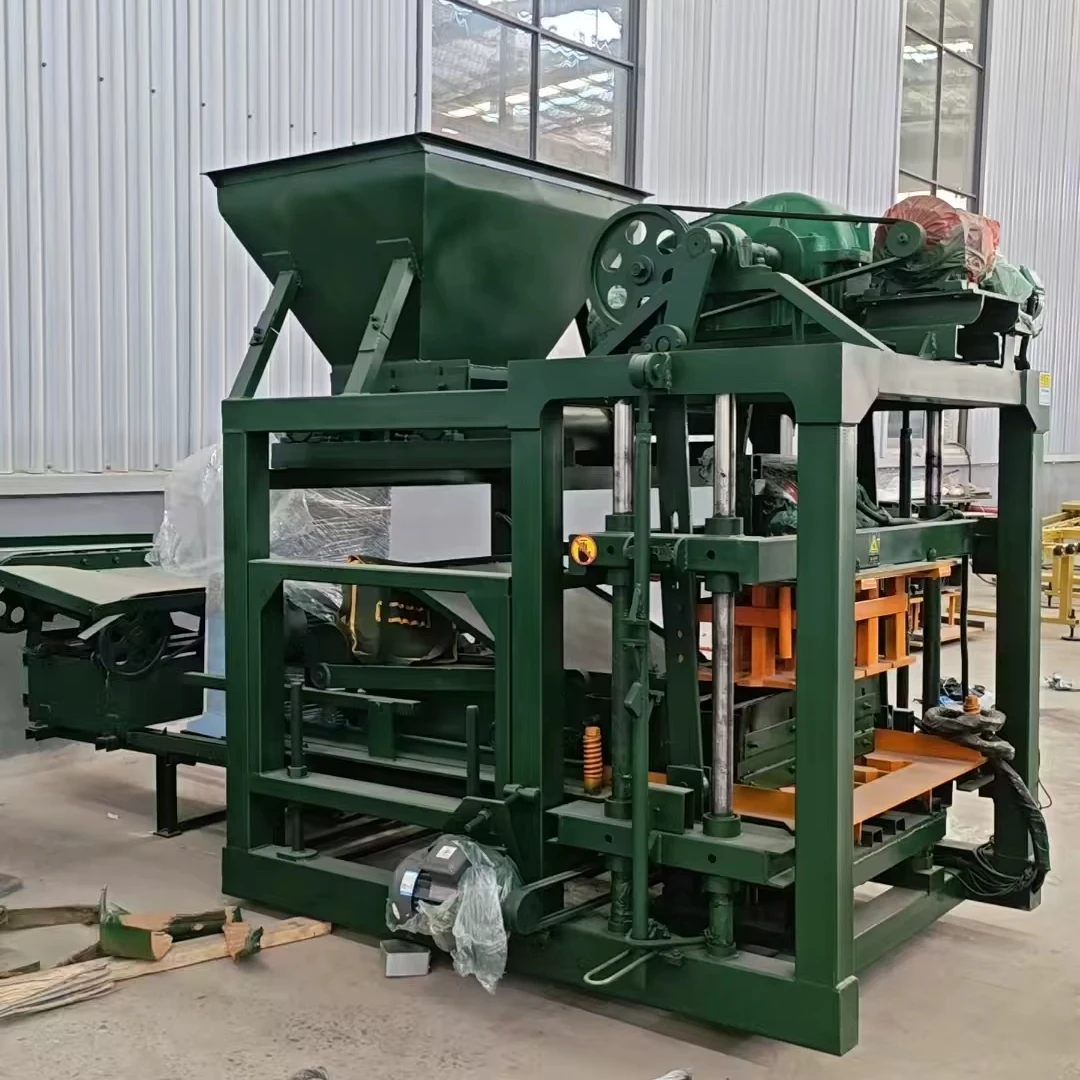
Configuration Set Against Local Aggregate — the QTJ4-25 block making machine specifications are matched to your actual mix design and target block format, not pulled from a catalogue default.
Technical Specifications
| Parameter | Value |
|---|---|
| Model | QTJ4-25 |
| Product Type | Semi-Automatic Hydraulic Concrete Block Making Machine |
| Rated Power | 17.9 kW |
| Vibration Frequency | 2800 r/min |
| Exciting Force | 60 kN |
| Molding Cycle | 25 s (based on 400×200×200 mm hollow block) |
| Output Capacity | 960 pcs/h, 7680 pcs/day (based on 400×200×200 mm hollow block, 4 pcs/mould) |
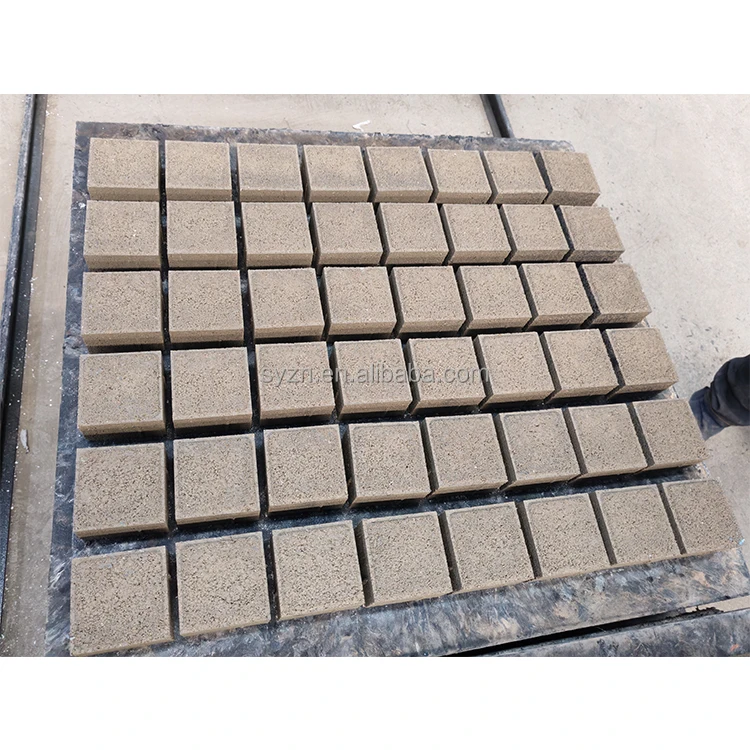
| Pallet Size | 850 × 550 × 20 mm |
| Overall Dimensions | 6400 × 1500 × 2700 mm |
| Net Weight | 2500 kg |
| Control System | Semi-automatic with hydraulic station (PLC options to confirm) |
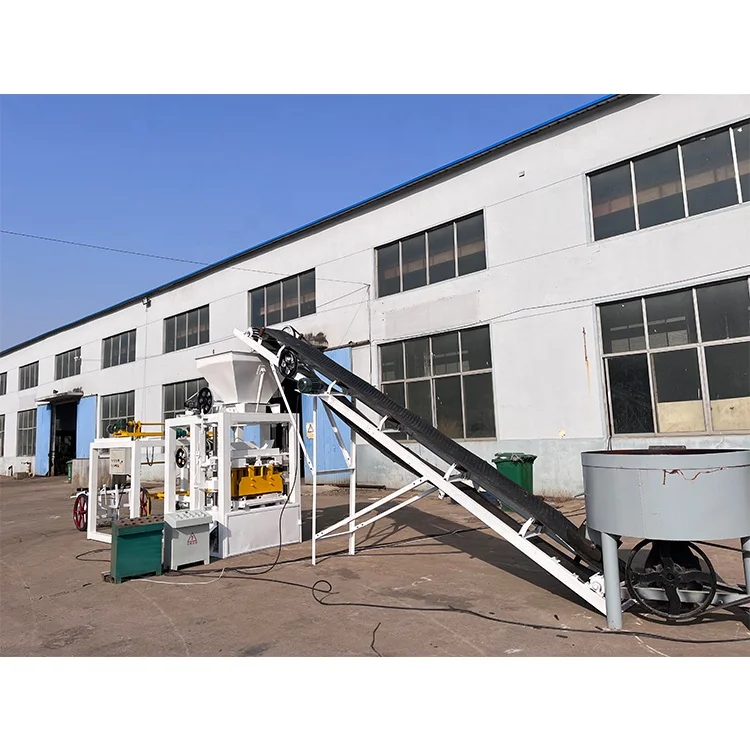
| Standard Configuration | Host machine 1 set, block mould 1 set, JQ350 mixer |
Application Suitability
| Application | Material or Output |
|---|---|
| Hollow Block Production | 400×200×200 mm, 8", 6", 5", 4" formats using local aggregate and cement |
| Solid Block Manufacturing | Dense concrete mixes for load-bearing structural walls |
| Paving Block & Curbstone | High-strength mixes for pedestrian and light-traffic areas |
| Small-Scale Plant Setup | First block plant for entrepreneurs with limited initial capital |
What the "960 Pieces per Hour" Figure Leaves Out on the QTJ4-25
Capacity is always tied to a specific block format; without that context, the number means nothing.
When a supplier quotes 960 pieces per hour for the QTJ4-25 block making machine, that figure is based strictly on a 400×200×200 mm hollow block with four cavities per mould and a 25-second cycle. If your market primarily sells 6-inch solid blocks or interlocking pavers, the cycle time and pieces per mould will differ, and your real daily output will not match the headline number. [NEED_CITE: block format impact on cycle time in hydraulic vibration presses] Buyers often discover this mismatch after the machine arrives and the first production run falls short of the business plan.
Matching the Mould to the Block Your Market Actually Buys
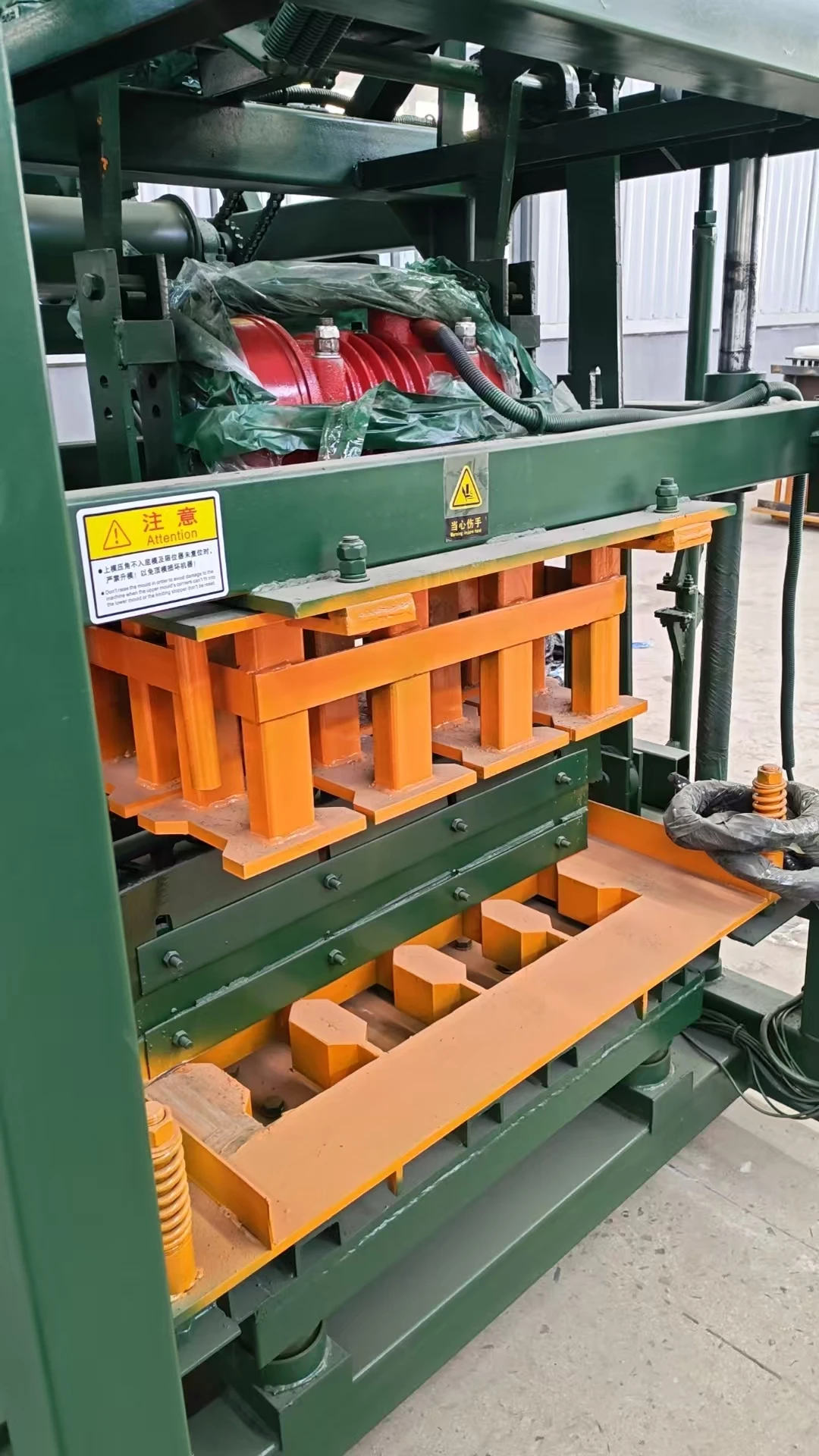
The QTJ4-25 supports hollow, solid, paver, and curbstone formats through mould changes, but the machine’s value depends on having the right moulds on the floor. A technical buyer must verify which mould is included in the standard configuration and which require a separate purchase order, because switching formats without the corresponding tooling halts production entirely.
Vibration Force and Local Aggregate Must Align
The vibration system operates at 2800 r/min with a 60 kN exciting force, combining vertical bed mould vibration with upper mould compression. If your local aggregate is a lightweight volcanic scoria or a porous recycled material rather than standard crushed granite, that vibration profile may not compact the mix correctly. [NEED_CITE: vibration frequency matching for different aggregate densities in block making] This is why the QTJ4-25 block making machine specifications must be reviewed against a sample of your actual raw material before the order is finalized.
Reading the Specs That Dictate Your Floor Layout
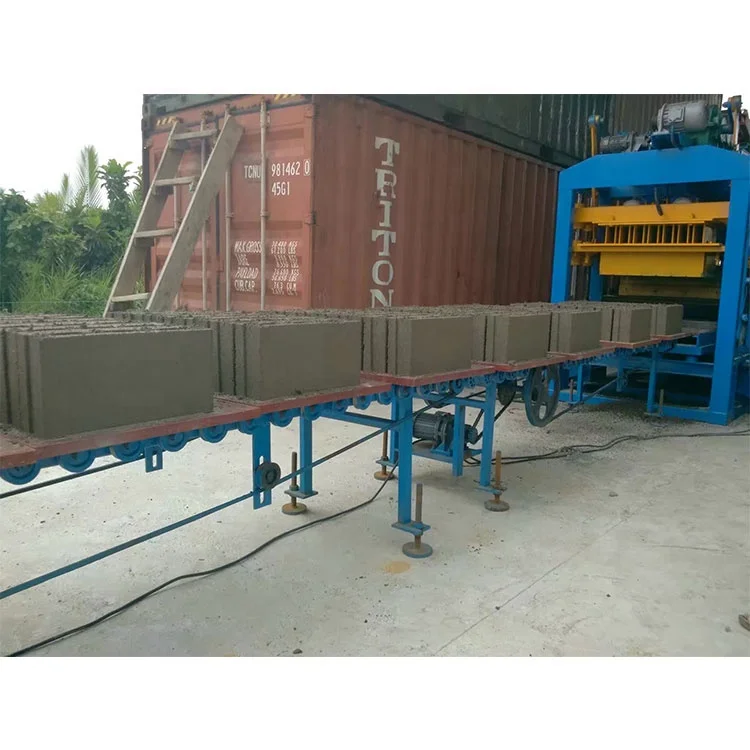
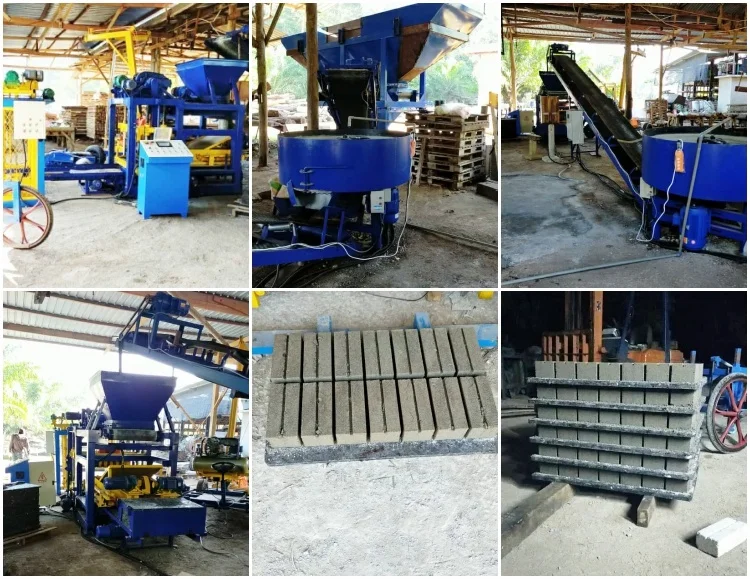
The pallet size of 850 × 550 × 20 mm determines the dimensions of every cured block leaving the press. This measurement must be checked against your existing curing racks and the fork tines on your forklift; a mismatch here means blocks cannot be moved to the yard without manual re-stacking. The overall footprint of 6400 × 1500 × 2700 mm defines the minimum bay width, while the JQ350 mixer must be positioned so its discharge aligns with the hopper without the press waiting for the next batch.
The Cost of Skipping the Voltage and Language Confirmation
A semi-automatic machine with a hydraulic station still relies on electrical controls for cycle timing and safety interlocks. If the voltage and frequency are not confirmed against your site’s supply, the motor may burn out on day one or the hydraulic pump may run at the wrong speed, altering the pressing force. [NEED_CITE: industrial motor failure rates from voltage mismatch in export markets] Control panel language is equally practical: if the display defaults to a language your operators cannot read, troubleshooting a jammed pallet becomes a guesswork exercise rather than a guided procedure.
Why the Configuration Conversation Matters Here
The machine, mould, pallet, and mixer are specified as a matched system rather than assembled from separate vendors, so cycle times between the JQ350 mixer and the press are calculated together. Mould design is available for the specific block formats your local market sells, including custom drawings if you need a non-standard dimension. Automation level is selectable, meaning a buyer can start with the semi-automatic QTJ4-25 and plan an upgrade path as volume grows. Configuration is set against your actual mix design and local aggregate, not a generic catalogue entry, which protects block strength from day one.
Documentation & Verification
- Line layout and capacity calculation stating the exact 400×200×200 mm hollow block format assumed.
- Mould drawing and format list confirming which sizes are included and which are optional extras.
- Pallet specification sheet covering 850 × 550 × 20 mm dimensions, material, and recommended quantity.
- Voltage, frequency, and control language confirmation document signed before production begins.
- Factory test record showing cycle times on your specified block format prior to dispatch.
Installation, Commissioning & Support
- Foundation must support the 2500 kg net weight and 6400 × 1500 mm footprint without differential settlement.
- Electrical supply must match the confirmed voltage and frequency for the 17.9 kW rated power load.
- Hydraulic station filled and bled on site before the first cycle to protect pump and valve components.
- JQ350 mixer positioned and tested to ensure discharge timing matches the 25-second molding cycle.
- Operator training covers mould change procedure, pallet alignment, and daily hydraulic inspection points.
What to Prepare Before Requesting a Quotation
To receive a configuration that actually fits your site, provide the target block format and dimensions you intend to sell, your daily output target, and a description of your local aggregate type. Confirm your available floor space and curing area dimensions so the 850 × 550 mm pallet can be verified against your existing racks. State your site voltage, frequency, and the preferred language for the control interface so the electrical package is built correctly before shipment.
Frequently Asked Questions
Q: What block format is behind the quoted capacity of 960 pcs/h, and how does output change for other sizes?
A: The 960 pcs/h figure is based on a 400×200×200 mm hollow block with four pieces per mould and a 25-second cycle. Smaller solid blocks or pavers will have different pieces per mould and potentially different cycle times, so hourly output will change accordingly. A capacity calculation per format should be requested before ordering.
Q: Which moulds are included in the standard configuration, and how long does a mould change take on the QTJ4-25?
A: The standard configuration includes one set of block mould, but the specific format is confirmed at order. Additional moulds for pavers or other sizes are optional. Mould change time is not stated in the source data and must be confirmed with the manufacturer to plan shift schedules.
Q: What pallet material and quantity do I need, and can I source pallets locally?
A: The specified pallet size is 850 × 550 × 20 mm. Material choice depends on your curing method and local availability; bamboo, steel, and PVC are common options. A typical plant requires several hundred pallets to keep the curing rack full, and local sourcing is possible if dimensions are matched precisely.
Q: Is the JQ350 mixer matched to the QTJ4-25’s cycle time, or will the press wait for material?
A: The JQ350 mixer is included as part of the standard configuration and is selected to support the press cycle. However, the actual match depends on your specific mix design and batch size, which should be confirmed during the line layout stage to avoid idle press time.
Q: What voltage, frequency, and PLC language options are available, and how are they confirmed before shipment?
A: Voltage and frequency are configurable but not stated as fixed values in the base specification. The control system language must be confirmed during the order process. A written confirmation document covering all three items should be signed before production starts to avoid commissioning delays.