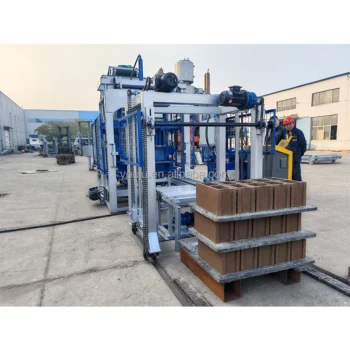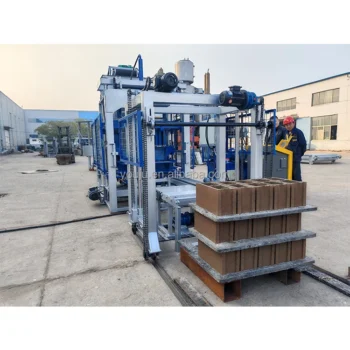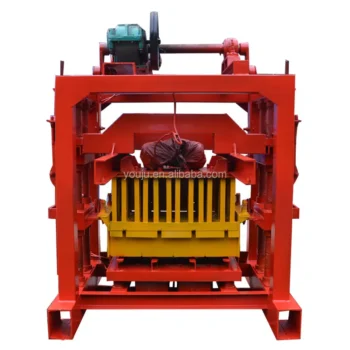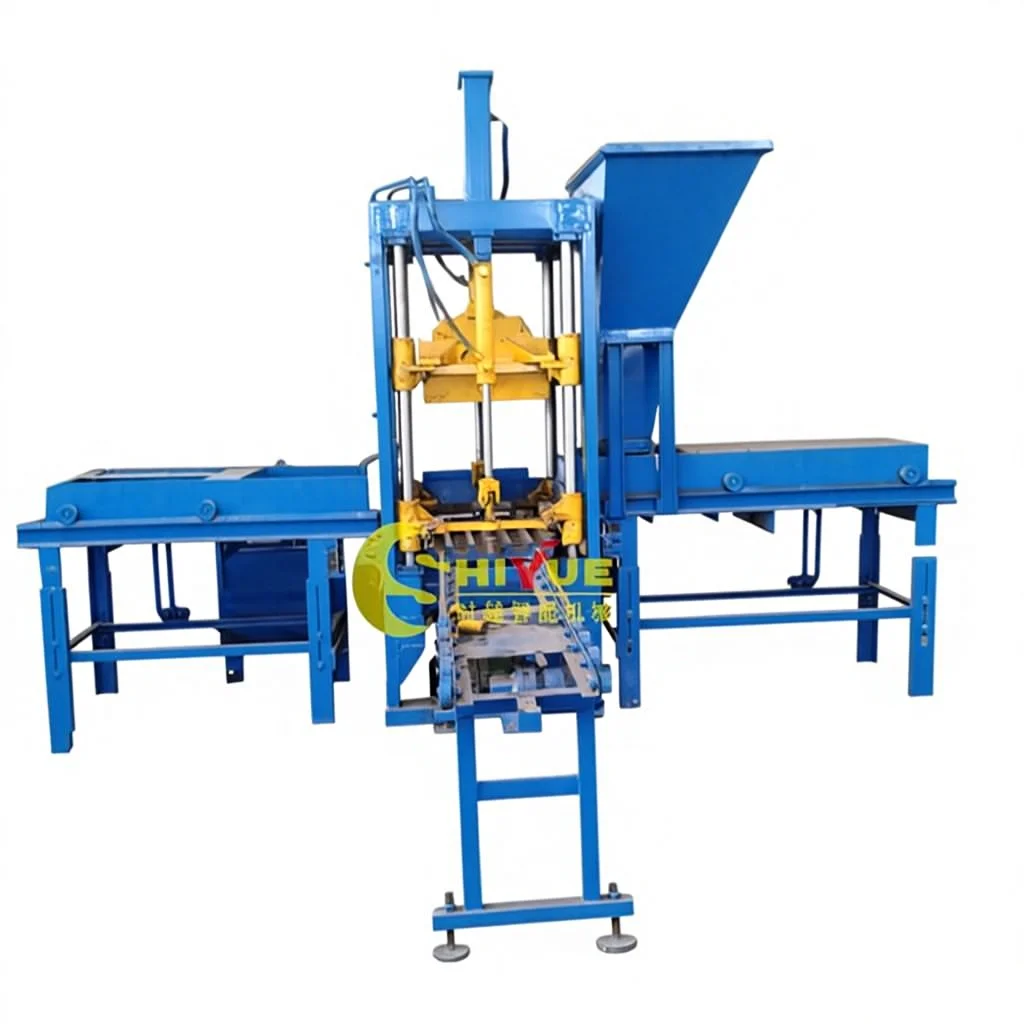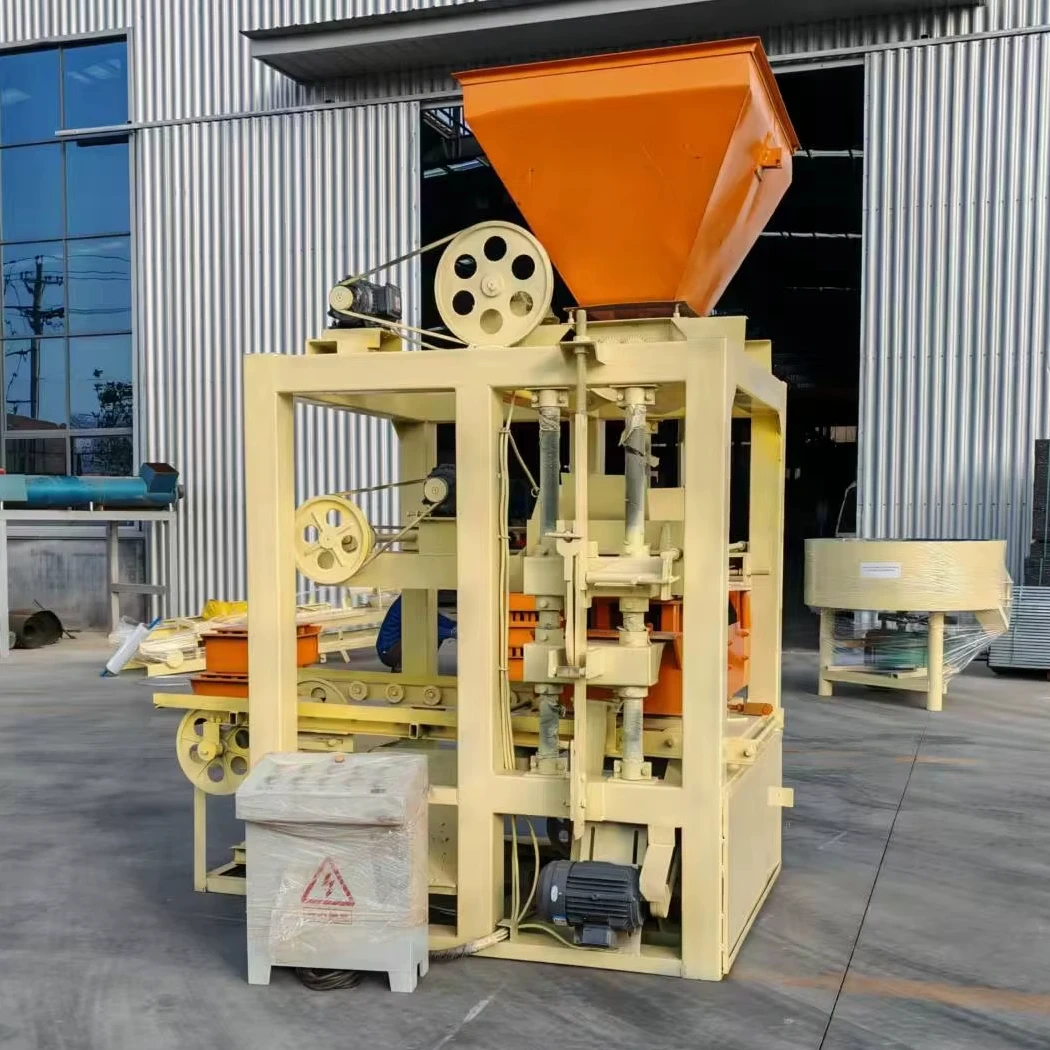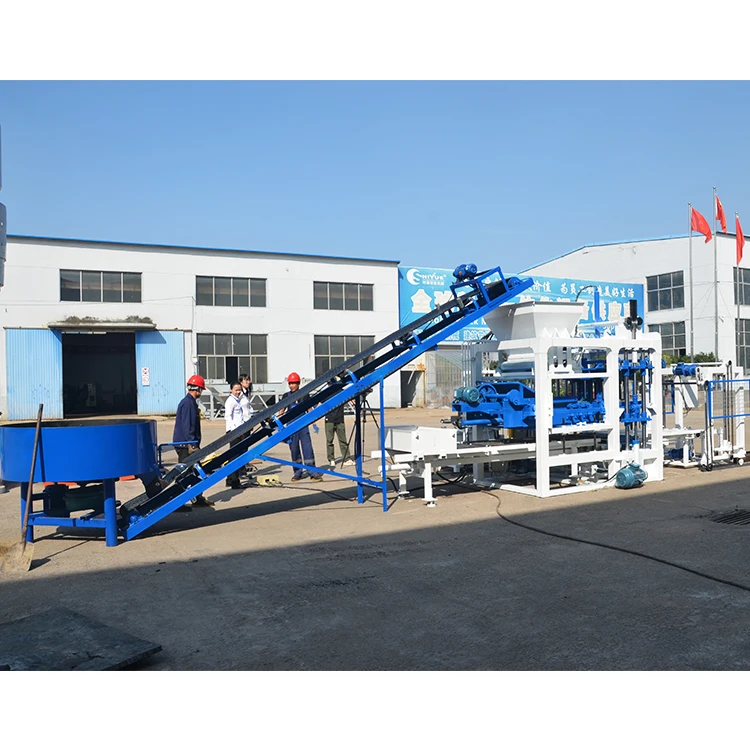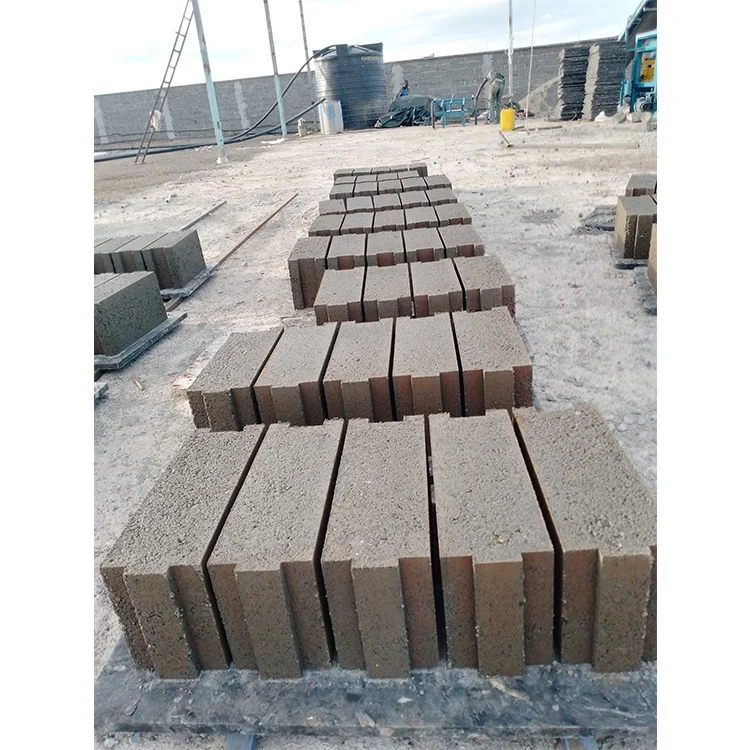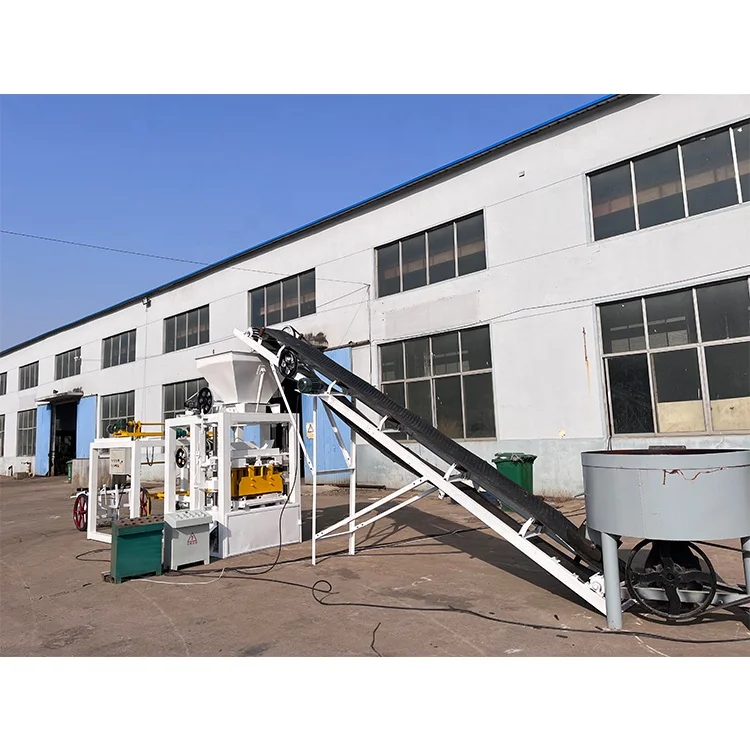
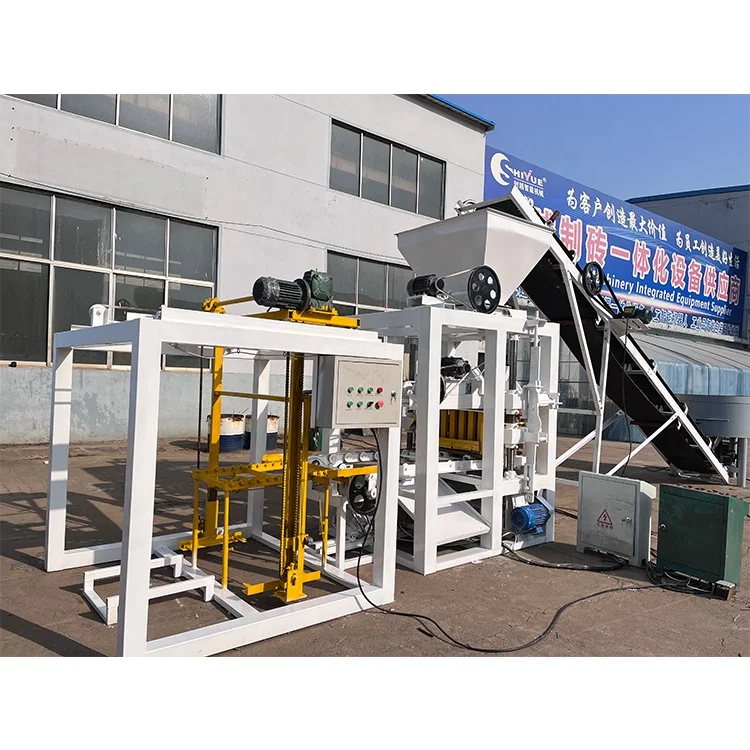
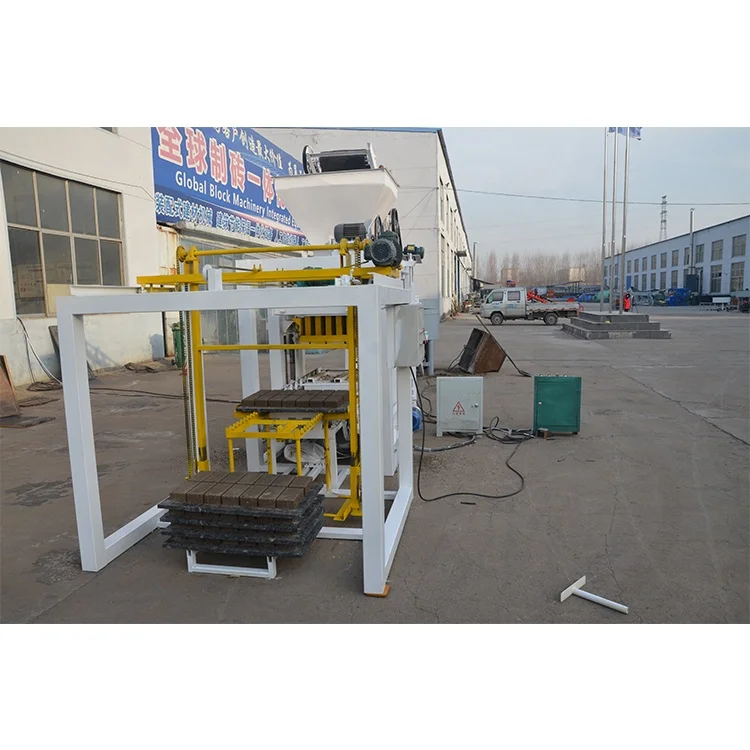
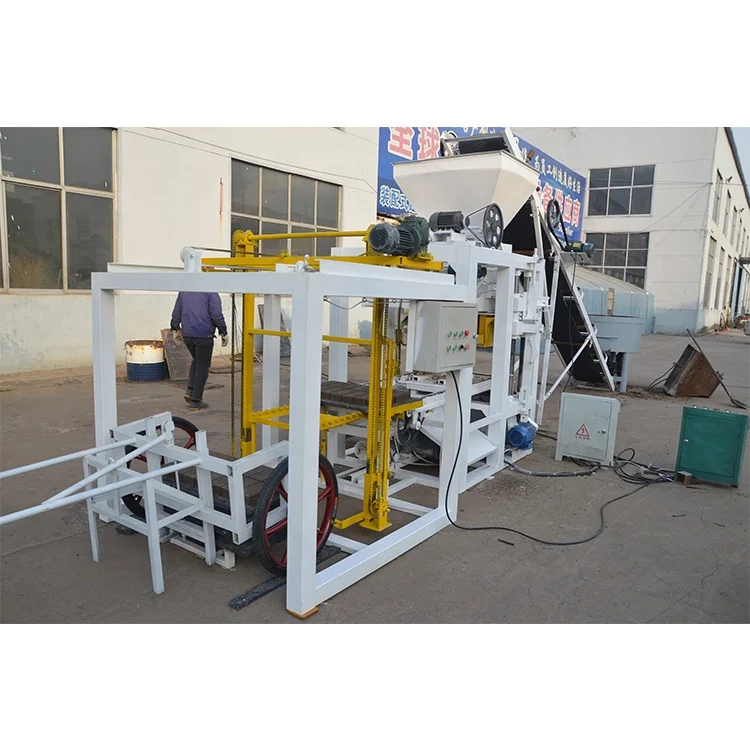
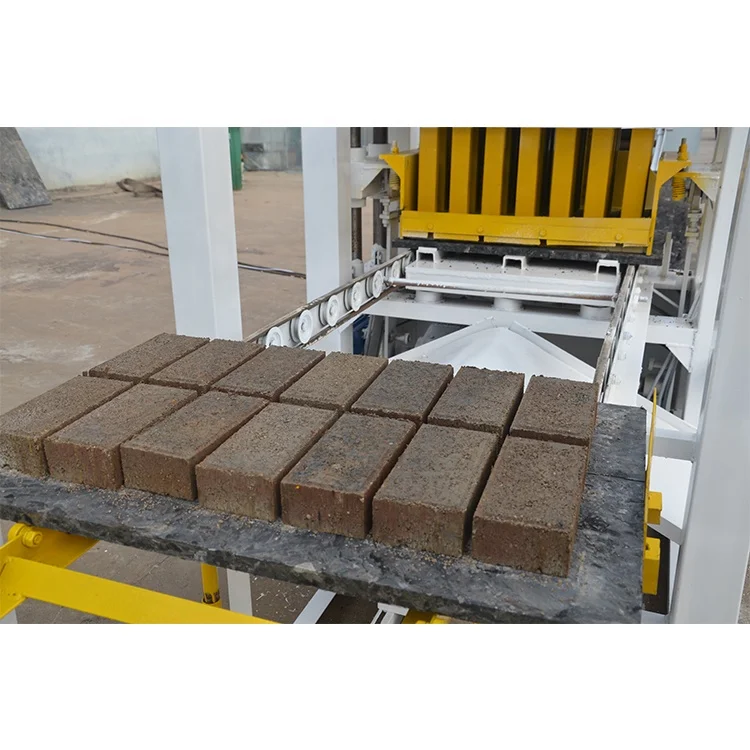
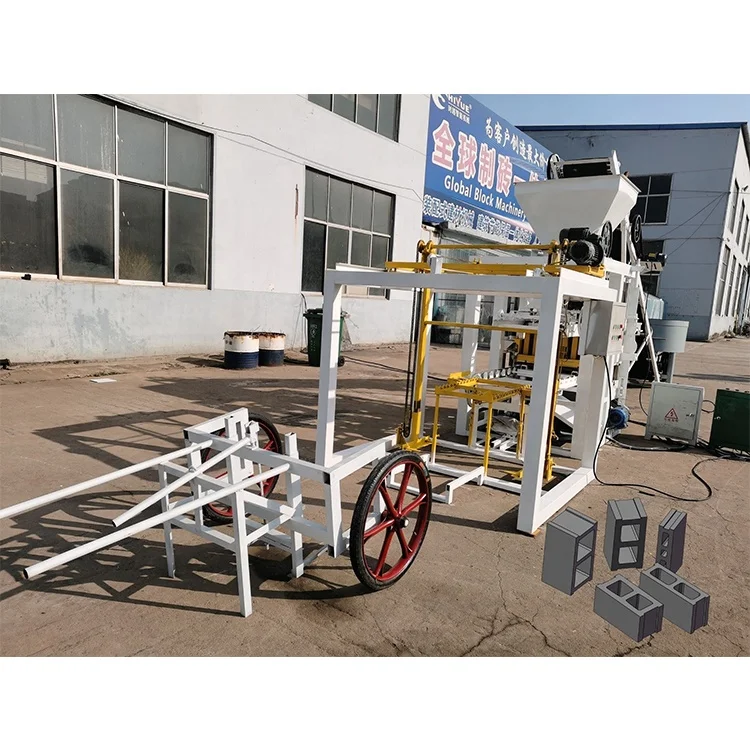
Description
Mould format matched to market — Every QTJ4-24 configuration starts with the block format your local buyers actually purchase, so daily output is calculated per shape, not guessed from a generic cycle rate.
Technical Specifications
| Parameter | Value |
|---|---|
| Model | QTJ4-24 |
| Product Type | Stationary Concrete Block Making Machine |
| Overall Dimensions (L×W×H) | 3600×1700×2560 mm |
| Pallet Size | 850×450 mm |
| Molding Cycle | 24–26 s (basis not stated in source — confirm block format / material / thickness) |
| Vibration Force | 45 kN (2×3 kW lower vibrators + 2×1.5 kW upper vibrators) |
| Overall Power | 11.95 kW |
| Net Weight | 2 T |
| Molding Method | Mechanical |
| Control System | PLC controlled |
| Drive Type | Gear drive |
| Material Distribution | Full-automatic spiral material distribution |
| Reducer | 350-type for mould lifting |
| Automation Level | Semi-automatic with mechanical moulding |
| Raw Materials | Cement, sand, stone |
| Voltage & Frequency | Configurable to buyer’s site supply (basis to be confirmed) |
| PLC Language Options | Selectable before production (basis to be confirmed) |
| Warranty | 1 year for whole machine (excluding spare parts) |
Application Suitability
| Application | Material or Output |
|---|---|
| Hollow block production for residential and commercial walls | Crushed stone, sand, and cement blends with varied aggregate grading |
| Interlocking brick manufacturing for paving and landscaping | Fine sand and cement mixes with colour oxide additives |
| Solid brick forming for load-bearing structures | Dense aggregate and cement with controlled moisture content |
| Paving brick runs for driveways and municipal walkways | Coarse aggregate blends requiring higher vibration compaction |
Why "Cycles per Hour" Tells You Almost Nothing
A cycle figure means nothing without the block format it was measured on.
Every stationary block machine specifications sheet in the market quotes a cycle time — but the block size, wall thickness, and mix moisture behind that number stay hidden. I once saw a plant owner celebrate a fast cycle rate only to discover his 200 mm hollow blocks needed eight extra seconds of vibration to reach target strength. The daily tally dropped by half before the first week ended. When the local aggregate carries high clay content, the vibration force and pressure curve must be re-checked against that specific material, or the compaction density swings from batch to batch [NEED_CITE: effect of aggregate clay content on block compressive strength]. Output must be stated per format, not per catalogue page.
Cycle Time Tied to Block Geometry
The QTJ4-24 posts a 24–26 second molding cycle, yet that window only holds true for a defined block geometry and mix consistency. A thin solid brick compacts faster than a 200 mm hollow block with thin webs, and the spiral material distributor must fill every cavity evenly before vibration starts. When we quote output, we list each format separately — hollow, solid, paving, interlocking — so the buyer sees the real daily count for the product that leaves the yard.
Vibration Matched to Local Aggregate
The dual upper and lower vibrators deliver a combined 45 kN, but raw force alone does not guarantee block strength. The stationary block machine specifications only matter when the vibration frequency and amplitude are tuned to the buyer’s aggregate density and cement ratio. Coarse crushed stone demands a different resonance profile than fine river sand, and getting this wrong leaves the core of the block under-compacted while the surface looks acceptable.
Pallet Size as a System Constraint
An 850×450 mm pallet governs how many blocks fit per press stroke, but it also dictates curing rack spacing and forklift tine width. If the buyer’s existing racks were built for a different pallet dimension, every loaded board becomes a handling problem before the first block even cures [NEED_CITE: curing rack and pallet compatibility in block plant layout]. We confirm pallet size against the buyer’s current curing area and transport equipment before the machine enters production.
Reading the Spec Sheet Against Real Output
The 11.95 kW total power draw covers the spiral feeder, vibration motors, and gear-driven mould lift, so the electrical supply must sustain continuous start-stop cycles without voltage sag. The 350-type reducer handles mould lifting duty throughout long shifts, and its gear ratio was chosen to balance lift speed against mechanical shock on the frame. Vibration force at 45 kN is sufficient for most standard concrete mixes, yet when a buyer switches to lightweight aggregate the amplitude may need adjustment to avoid segregating the cement paste from the filler. Semi-automatic operation means an operator manages pallet transfer and stacking, so labour planning must account for that manual step in every shift schedule.
The Cost of Skipping Mix Validation
When the vibration force is set for a textbook mix but the yard receives sand with high silt content, the blocks crack during curing and the rejection rate climbs quietly. The buyer blames the press, yet the real fault lies in a configuration that never saw the actual raw material. Format flexibility also suffers — if the mould change procedure was never timed with the buyer’s crew, a shift can evaporate swapping from hollow to paving format, cancelling the variety the machine was bought to deliver [NEED_CITE: mould change procedure and downtime in semi-automatic block production].
Why Sizing Starts With the Block, Not the Machine
We begin every QTJ4-24 quotation by asking which block format the buyer’s market moves fastest. The machine, mould, and pallet are then specified as one matched set rather than assembled from separate catalogue pages. Configuration is locked against the buyer’s confirmed mix design and local aggregate sample, not a default recipe. Mould drawings are produced for the exact formats the buyer will sell, including custom profiles when the local market demands a non-standard shape. Automation level stays selectable — a buyer can open with semi-automatic pallet handling and add automatic stacking later without replacing the press.
Documentation & Verification
- Line layout drawing showing capacity per block format for the QTJ4-24
- Mould design package listing every format the buyer’s market requires
- Pallet specification sheet cross-referenced with buyer’s curing racks
- Voltage, frequency, and PLC language confirmation before production begins
- Factory test record run on buyer’s sample aggregate and mix ratio
- Operation and maintenance manual covering the 350-type reducer service intervals
Installation, Commissioning & Support
- Foundation pad sized for the 3600×1700 mm footprint and 2 T operating weight
- Dedicated circuit rated for 11.95 kW continuous draw with voltage stabiliser
- Machine shipped as a single skid with vibration motors pre-wired
- First-run compaction tests conducted on buyer’s local sand and stone blend
- Operator training on PLC menu navigation and mould change sequence
- Wear parts list identifying vibrator bearings and reducer oil change intervals
What We Need to Size Your Line
Send us the block formats that move in your market along with target daily volume for each shape. We also need your local aggregate type, available voltage and frequency, and the pallet dimensions that match your current curing racks and forklift. With those details the stationary block machine specifications we return will carry an honest output figure for every format on your list.
Frequently Asked Questions
Q: How is output capacity calculated and which block format is it based on?
A: We calculate output for each block format individually, factoring in the molding cycle, pallet size, and realistic operator pace for semi-automatic pallet transfer. The quotation lists daily numbers per shape — hollow, solid, paving — so you see the real count for the product your market buys, not a single blended figure.
Q: How do vibration force and pressure match my local aggregate?
A: Before production, we request a sample of your sand and stone to test compaction response under the 45 kN vibration setup. If the aggregate carries high fines or clay, we adjust vibration duration and recommend mix adjustments so block strength stays consistent across every batch that leaves the yard.
Q: What pallet size works best with my existing curing area?
A: The standard 850×450 mm pallet suits many rack systems, but we cross-check your curing space dimensions and forklift tine width before confirming. If your racks were built for a different size, we adjust the mould cavity layout so the new pallets slide straight into your current handling workflow.
Q: Which voltage, frequency, and PLC language ship with the machine?
A: We confirm your site supply — voltage, phase, and frequency — plus the operator’s preferred PLC display language before the control panel is wired. This step prevents commissioning delays and ensures the operator can read every alarm message from day one without a translator on the floor.