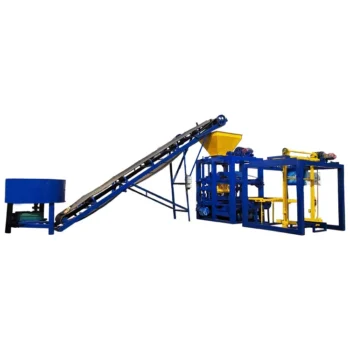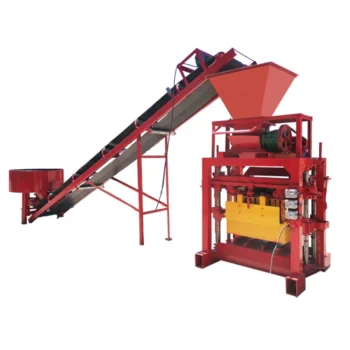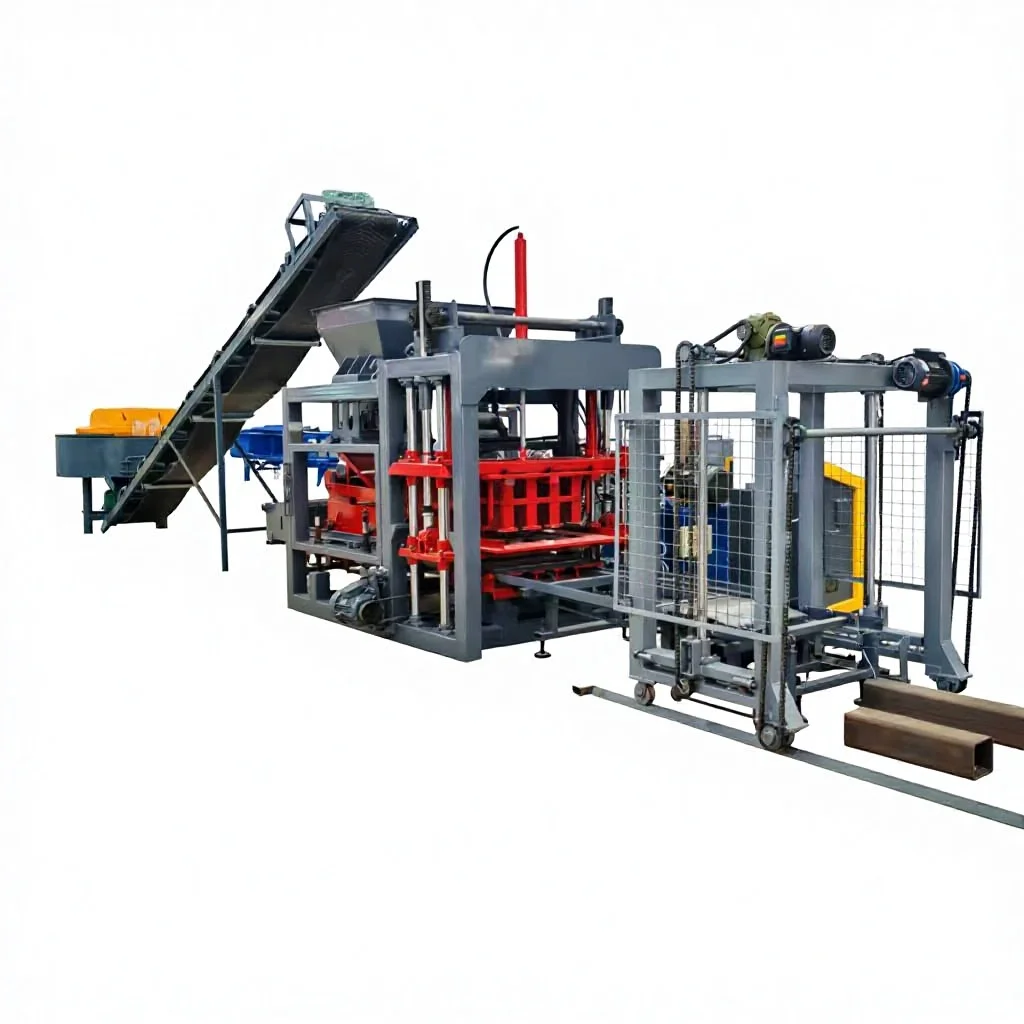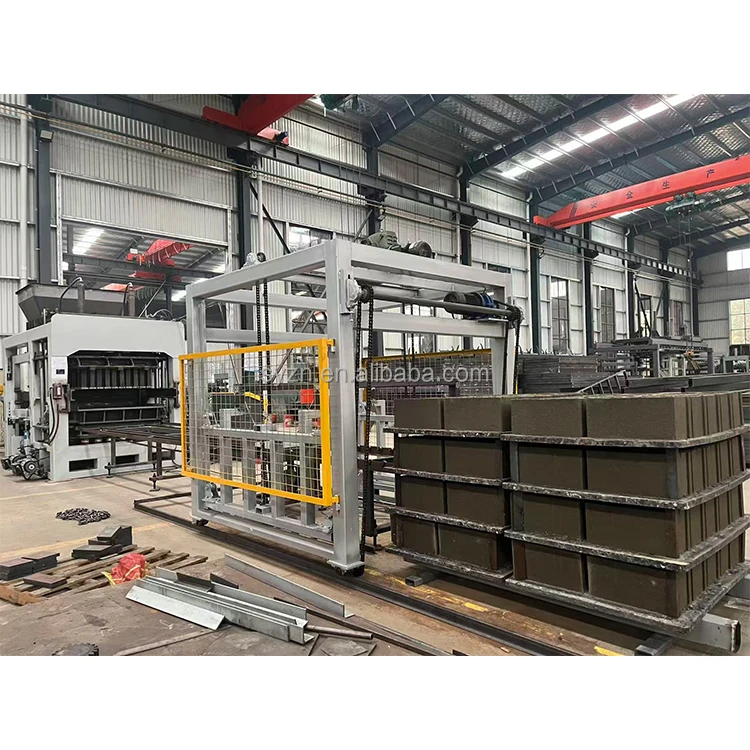


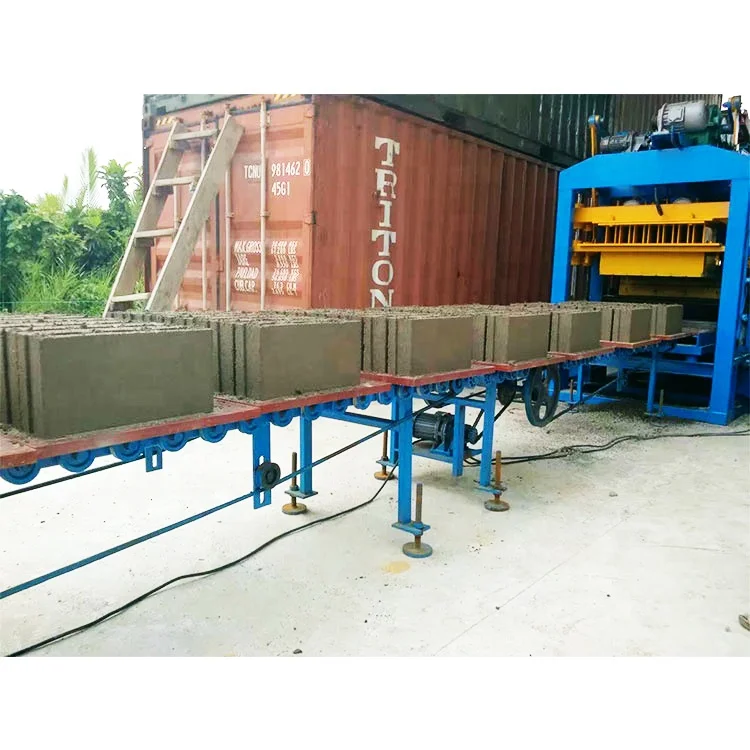

Description
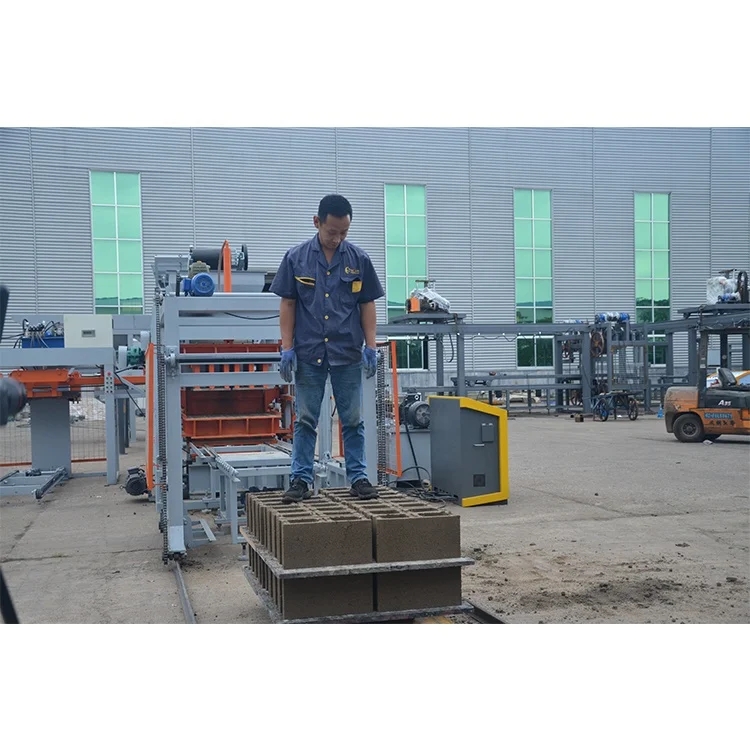
Pallet Match Before Press Match — capacity on the QTJ4-25 is sized around the 850×550 mm pallet and the specific block format, so your curing racks and forklift are confirmed compatible before the machine enters production.
Technical Specifications
| Parameter | Value |
|---|---|
| Model | QTJ4-25 |
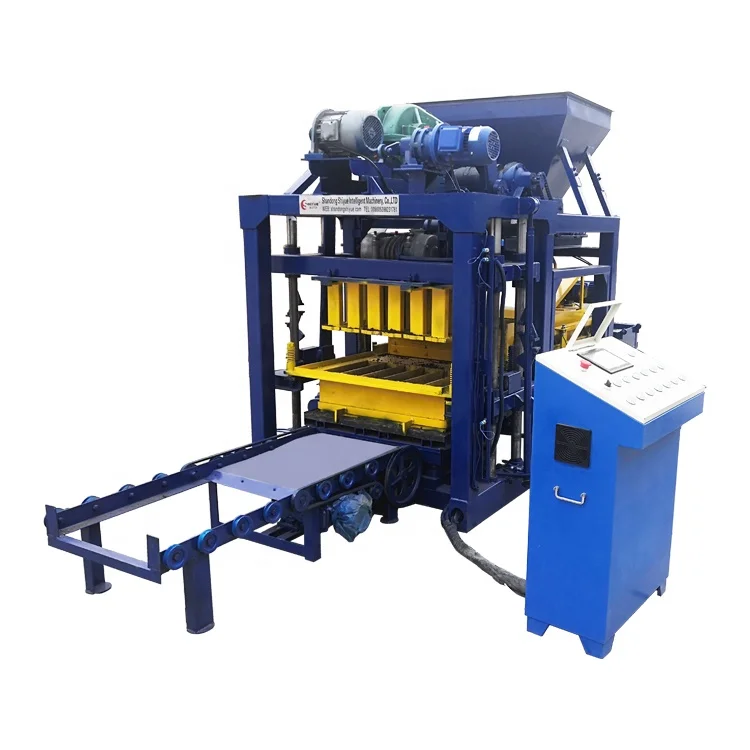
| Product Type | Automatic Concrete Block Making Machine |
| Overall Dimensions (L×W×H) | 6400×1500×2700 mm |
| Molding Cycle | 25 s |
| Vibration Frequency | 2800–5100 r/min |
| Exciting Force | 60 KN |
| Total Power | 17.9 KW |
| Mixer Model | JQ350 |
| Pallet Size | 850×550×20 mm |
| Net Weight | 2500 KG |
| Applied Products | Concrete hollow block (8 inch, 6 inch), solid brick |
| Raw Materials | Crushed stones, sand, cement, dust, fly ash |
| Control System | PLC |
| Automation Features | Automatic plate-supplying, material-disturbing, brick-discharging |
| Vibration Type | Flat vibration and squeeze compression vibration |
| Output Capacity (Hollow block 390×190×190 mm) | 480 pcs/h, 3800 pcs/8hr (basis: stated format) |
| Output Capacity (Hollow block 400×150×200 mm) | 600 pcs/h, 4800 pcs/8hr (basis: stated format) |
| Output Capacity (Solid brick 240×115×53 mm) | 2100 pcs/h, 17000 pcs/8hr (basis: stated format) |
Application Suitability
| Application | Material or Output |
|---|---|
| Hollow block production for building walls | 390×190×190 mm and 400×150×200 mm formats from crushed stone, sand, and cement |
| Solid brick manufacturing | 240×115×53 mm standard brick from fly ash, dust, and cement blends |
| On-site block production for housing projects | Mobile setup using locally sourced aggregate and cement |
| First block plant for entrepreneurs | Entry-level automatic line covering 8-inch and 6-inch hollow blocks |
What "3800 Pieces per Shift" Actually Means for the QTJ4-25 Block Making Machine Specifications
Capacity is only honest when the block format behind the number is named.
I once worked with an overseas buyer who ordered a machine rated at a headline cycle figure, only to find that number assumed a small solid brick while the market actually needed 8-inch hollow blocks. Daily output fell far short of the plan, and the project schedule slipped. The QTJ4-25 block making machine specifications here list each output figure tied to a named format and a 25-second molding cycle, so there is no gap between the quotation and the workshop floor [NEED_CITE: common causes of capacity shortfall in block production].
How Format, Mould and Cycle Time Define Real Output
Every capacity figure for the QTJ4-25 is anchored to a specific mould and the 25-second cycle. Hollow block output at 390×190×190 mm stands at 480 pieces per hour, while the 400×150×200 mm format reaches 600 pieces per hour. Solid brick at 240×115×53 mm records 2100 pieces per hour. These are not interchangeable numbers; switching the mould changes the count because the pallet area holds a different quantity per cycle.
Mould Coverage and Custom Drawing Capability
The standard format list covers 8-inch hollow block, 6-inch hollow block, and the standard solid brick dimension. If your local market sells a format outside this list, custom moulds can be produced to your drawings. The critical step is confirming the target format before the quotation, because the mould determines how many cavities fit on the 850×550 mm pallet and therefore what the shift output will be [NEED_CITE: mould cavity count and pallet area relationship].
Exciting Force, Vibration Frequency and Block Density
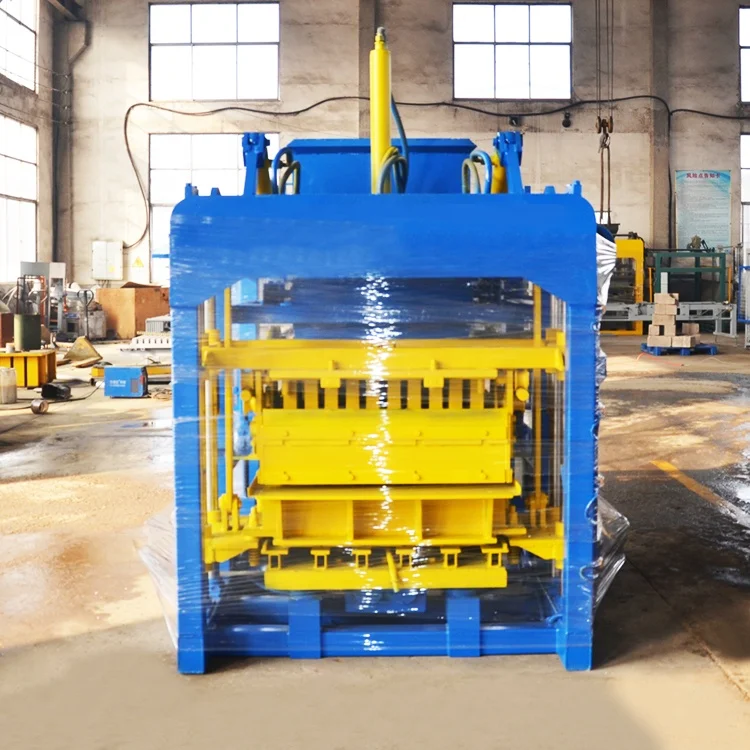
The 60 KN exciting force combined with flat vibration and squeeze compression vibration at 2800–5100 r/min is what compacts the mix into a dense block. The vibration frequency range allows adjustment to different aggregate gradations — coarser crushed stone generally needs a higher frequency, while fly ash blends respond better at the lower end. If the vibration force is not matched to the local aggregate, blocks come out weak regardless of how much cement is in the mix. The total power of 17.9 KW covers the press, the JQ350 mixer, and the automatic plate-supplying and brick-discharging functions together.
The Cost of Skipping the Pallet and Voltage Conversation
Ordering a block machine without confirming pallet size against your existing curing racks and forklift means pallets may not fit the racks you already built, forcing a rebuild of the curing area. Similarly, shipping a machine with the wrong voltage or PLC display language delays commissioning until a transformer arrives or a new HMI is sourced. I have seen both situations add weeks of idle time on site before the first saleable block is produced [NEED_CITE: site readiness checklist for block machine installation].
Why Source the QTJ4-25 Here
Block machinery is the single product focus, so the press, mould, pallet and handling equipment are specified as one matched line rather than assembled from separate vendors. The configuration is set against your actual mix design and local aggregate, not a default catalogue sheet. Moulds are designed for the formats your market buys, with custom drawings accepted. Automation level is selectable, so you can begin with automatic plate-supplying and brick-discharging and add stacking later. Installation support includes operator training on the PLC controls and the specific mould change procedure.
Documentation & Verification
- Line layout showing capacity per named block format for the QTJ4-25
- Mould drawing and cavity list confirming included formats
- Pallet specification sheet matched to your curing rack dimensions
- Voltage, frequency and PLC display language confirmation before production
- Factory test record run on your target block format
- Operation and maintenance manual with wear parts list
Installation, Commissioning & Support
- Foundation pad sized for the 6400×1500 mm footprint and 2500 KG operating weight
- Dedicated power circuit rated for the 17.9 KW total load at confirmed voltage and frequency
- Machine arrives dismantled for container loading; reassembly supervised on site
- First production run supervised with cycle time and vibration frequency tuned to your aggregate
- Operator training on PLC interface, mould change procedure and daily maintenance points
- Wear parts and mould replacement list supplied at handover
What to Include in Your Inquiry
Send the exact block format and dimensions your market requires, along with a sample or description of your local aggregate and cement type. Confirm the voltage, frequency and the language you need on the PLC display. If you already have curing racks or a forklift, share the dimensions so the 850×550 mm pallet is verified against your site before the order is placed.
Frequently Asked Questions
Q: How is each capacity figure verified and which block format does it assume?
A: Every output number is tied to a named block dimension and the 25-second molding cycle. The 3800 pieces per 8-hour shift, for example, assumes the 390×190×190 mm hollow block. Switching to a different format changes the cavity count per pallet and therefore the hourly and shift totals.
Q: Which mould formats come with the machine and can I order custom moulds?
A: The standard package covers 8-inch and 6-inch hollow blocks plus the 240×115×53 mm solid brick. Custom moulds to your own drawings are available. The format must be confirmed before quotation so the cavity layout is matched to the 850×550 mm pallet.
Q: How does the pallet size relate to my curing racks and forklift?
A: The 850×550×20 mm pallet must fit your existing curing rack spacing and forklift fork width. We confirm pallet dimensions against your site equipment before production so there is no mismatch on arrival.
Q: What voltage, frequency and PLC language options are confirmed before shipment?
A: Voltage and frequency are confirmed during the quotation stage to match your local grid. The PLC display language is specified at the same time so operators can read the interface on day one without waiting for a software update.
Q: How long does a mould change take and is a quick-change system available?
A: Mould change time depends on the format and the quick-change option selected. On the QTJ4-25, the procedure involves releasing the mould clamps and lifting the old mould out with the plant forklift. We provide a step-by-step procedure during operator training.