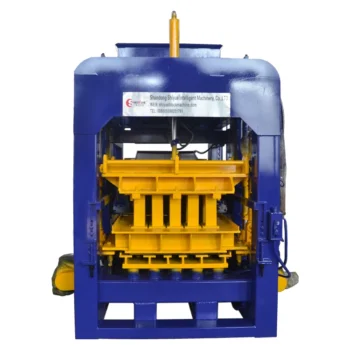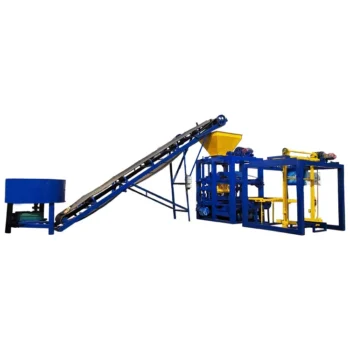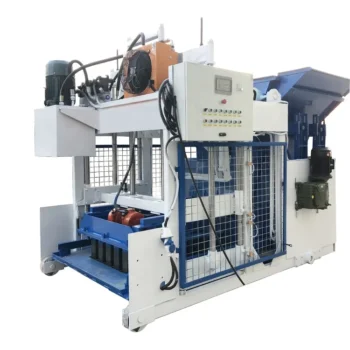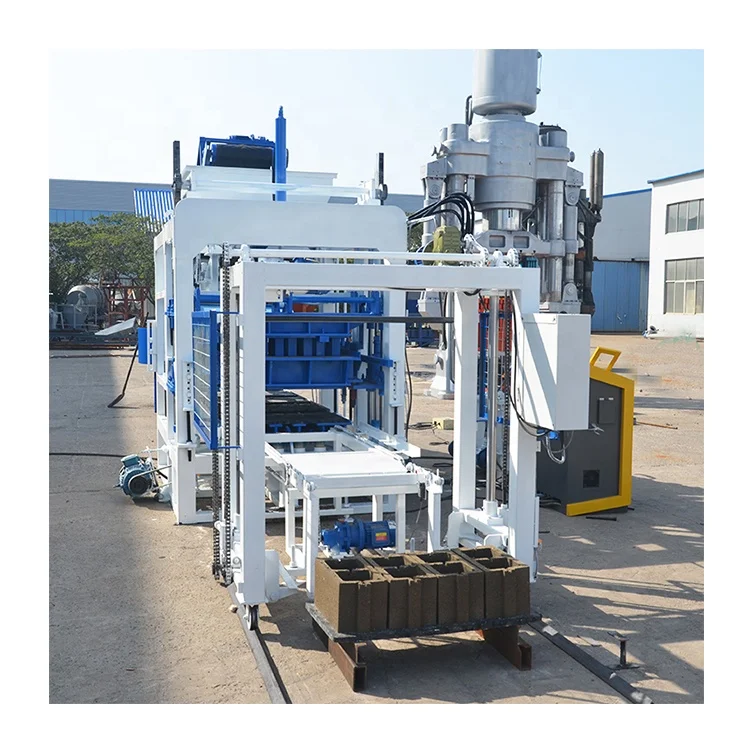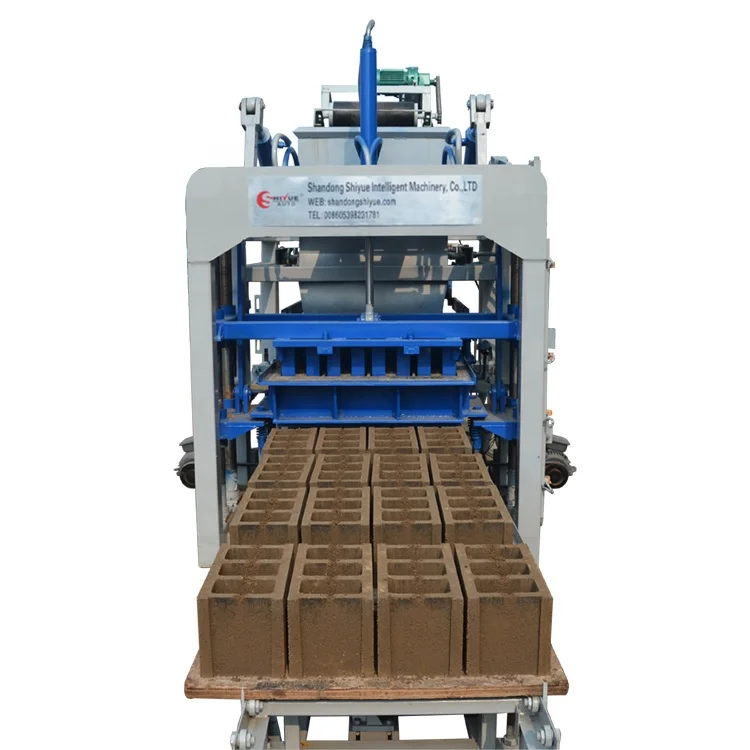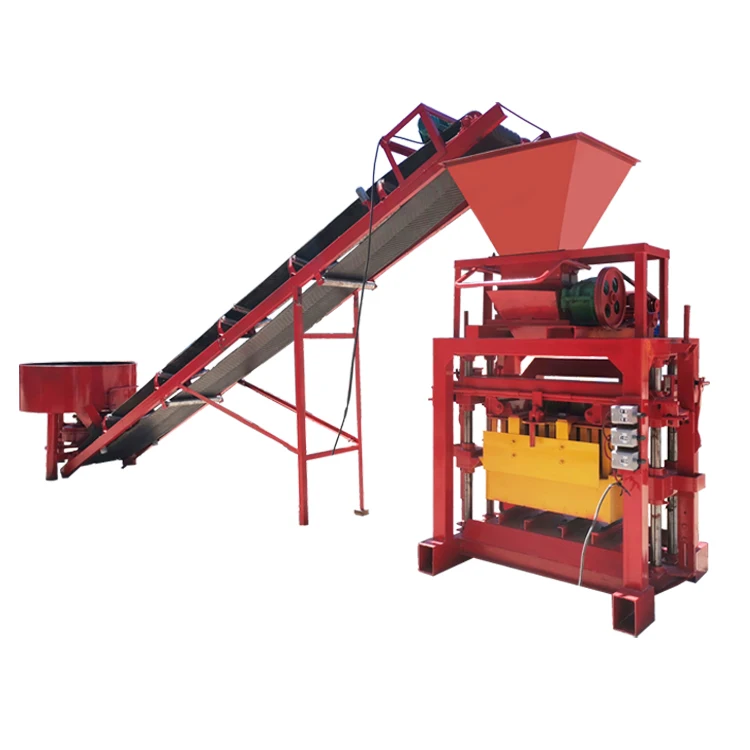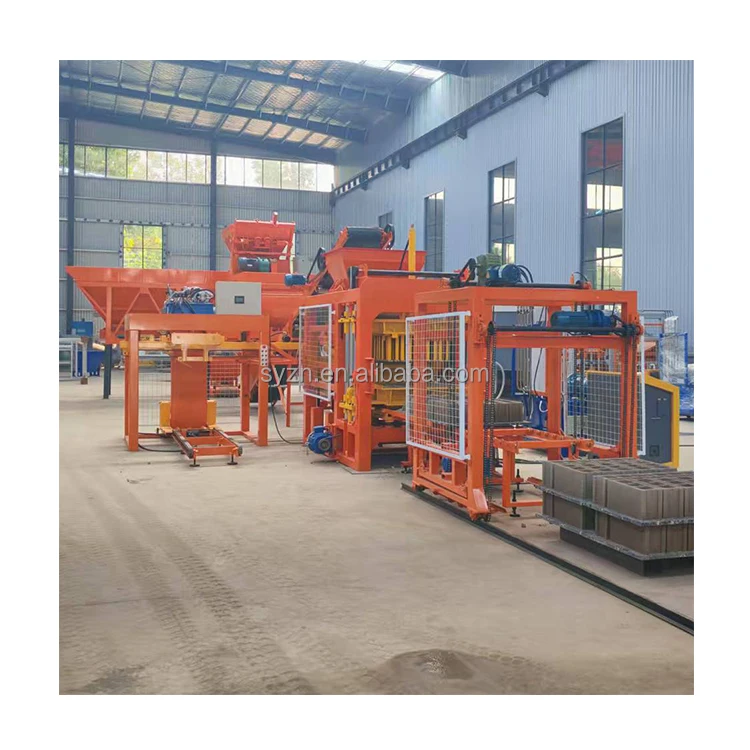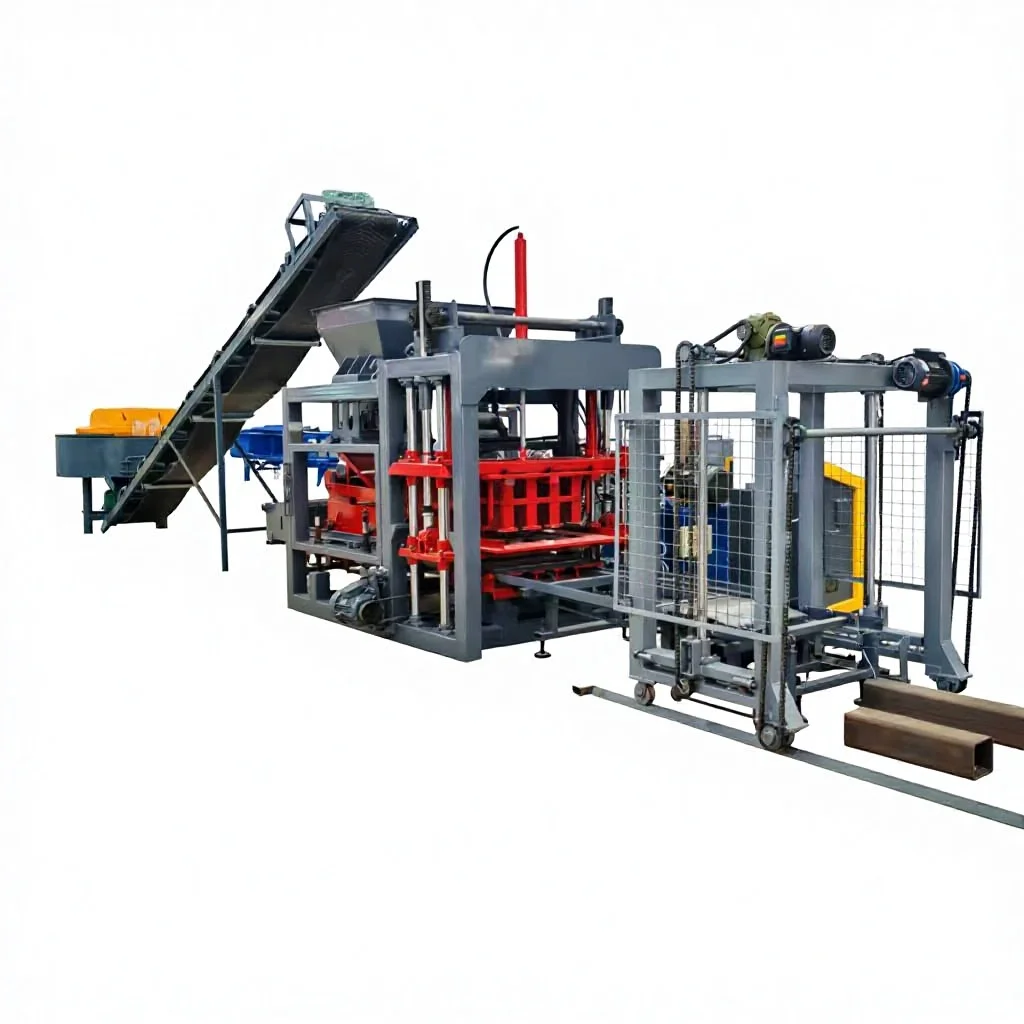
Description
Format-Matched Configuration — The QT4-15A is specified against your actual block format, local aggregate and daily output target rather than quoted as a single catalogue number that collapses when the mould changes.
Technical Specifications
| Parameter | Value |
|---|---|
| Model | QT4-15A |
| Product Type | Fully Automatic Hydraulic Concrete Block Making Machine |
| Overall Dimensions (L×W×H) | 4100×1600×2600 mm |
| Rated Pressure | 16-21 MPa |
| Main Vibration Form | Platform Vibration |
| Vibration Frequency | 4200 r/min |
| Vibration Force | 55 kN |
| Pallet Size | 880×550 mm |
| Molding Cycle | 25-30 s (basis not stated in source — confirm block format / material / thickness) |
| Overall Power | 18.45 kW (source value listed as 18.45W — verify against manufacturer catalog) |
| Total Mass | 4 T |
| Demolding Method | Hydraulic |
| Applied Products | Concrete blocks, hollow/solid blocks, pavers, interlocking blocks, curbstone, colored pavers |
| Raw Material | Crushed stone, sand, cement, dust, fly ash, gravel, slag |
| Warranty | 1 year (whole machine, excluding spare parts) |
| Loading | 1×40HQ container (for basic equipment) |
Application Suitability
| Application | Material or Output |
|---|---|
| Hollow Block Production | Crushed stone, sand, cement, fly ash |
| Solid Block Production | Gravel, sand, cement, slag |
| Paving Brick Production | Crushed stone, dust, cement, colored pigments |
| Interlocking Brick Production | Sand, cement, fly ash |
| Kerbstone Production | Crushed stone, gravel, cement |
Why "30 Seconds Per Cycle" Does Not Tell You Your Daily Output
A molding cycle only becomes meaningful when it is tied to a specific block format, mix design and pallet size.
The QT4-15A block machine specifications often show a 25-30 second cycle, but that figure assumes a particular mould, material and block thickness. If your market sells 400×200×200 mm hollow blocks while the quoted cycle was measured on a thin paver, your actual output per shift will fall noticeably short of what the brochure suggests. I have seen plants arrive at commissioning expecting a certain daily volume, only to discover the real number is lower because the cycle time was never recalculated for their specific format [NEED_CITE: concrete block cycle time variation by format].
Mould Selection Drives the Real Capacity
The concrete block making machine capacity by format is the only honest way to compare machines at this tier. A single QT4-15A press running a 4-cavity hollow block mould produces fewer pieces per hour than the same press running a multi-cavity interlocking brick mould, simply because each cycle yields a different count. When we size this press for a buyer, we calculate daily output separately for every format the buyer intends to sell, so the investment decision rests on real numbers rather than a single optimistic figure.
Matching Vibration Force to Local Aggregate
Platform vibration at 55 kN and 4200 r/min works well with clean, graded crushed stone, but high-silt desert sand or poorly graded fly ash absorbs energy differently. Years ago I configured a machine in the Middle East using standard test sand; when the buyer switched to local desert sand with high clay content, the blocks cracked during curing because the vibration parameters were never adjusted [NEED_CITE: aggregate grading effect on block density]. The fix is straightforward: send us a sample of your actual aggregate, and we run trial blocks before the machine leaves the factory.
Hydraulic Pressure and Block Density
Rated pressure between 16-21 MPa gives the operator a range to dial in, but the right setting depends on the mix. A lean cement mix with coarse aggregate needs higher pressure to achieve structural density, while a rich fly-ash mix may require less pressure to avoid over-compacting and trapping moisture. Getting this wrong means either weak blocks that fail compressive tests or dense blocks that are heavier and costlier to ship than the market demands. The QT4-15A hydraulic system lets you adjust within this band, but the starting point must come from trial blocks made with your own materials.
What Happens When Pallet Size Is Chosen by Default
The standard 880×550 mm pallet fits the QT4-15A press, but it also has to fit your curing racks, your forklift tines and the aisle width in your yard. I once saw a buyer receive a full set of pallets that were too wide for the curing chamber doors they had already built, forcing a costly rebuild of the chamber frames. The pallet dimension should be confirmed against your existing infrastructure before the machine enters production, not after [NEED_CITE: pallet handling compatibility in block plants]. If your forklift is rated for a certain load, the combined weight of wet blocks plus pallet must stay within that limit.
Why Procurement Based on Catalogue Defaults Fails
Choosing a block press on catalogue output alone leads to a cascade of mismatches. The mould set does not cover the formats your distributors actually order. The automation level is higher or lower than your workforce can manage. The voltage and control language are wrong for your site, delaying commissioning by weeks. Every one of these problems is avoidable if the configuration conversation starts with your product range, your raw materials and your facility conditions rather than a model number.
Why Source the QT4-15A Here
Block machinery is our single focus, so the press, moulds, pallets and handling equipment are specified as one matched system. We calculate capacity per format using your actual block drawings, not a generic brochure table. Custom mould design is available to your market dimensions, not limited to a fixed catalogue. Automation level is selectable, so you can start semi-automatic and add stacking later. Installation support includes operator training on your specific mix and formats, so the first production run is already saleable.
Documentation & Verification
- Line layout drawing stating the block format assumed for each output figure
- Mould drawing pack listing every format included and optional extras
- Pallet specification matched to your curing rack dimensions and forklift capacity
- Voltage, frequency and PLC display language confirmed in writing before production
- Factory test record using your aggregate sample before dispatch
- Hydraulic and electrical schematic for your site’s maintenance team
Installation, Commissioning & Support
- Foundation plan sized for the 4 T total mass and vibration isolation requirements
- Power supply confirmation for the 18.45 kW load on your local voltage and frequency
- Machine assembled and tested at our factory, dismantled for 1×40HQ container loading
- On-site commissioning with vibration force and hydraulic pressure tuned to your mix
- Operator training covering mould change procedure and daily maintenance routines
- Wear parts and mould spare parts list with reorder codes provided at handover
What to Include in Your Inquiry
Tell us which block formats your market sells, with dimensions and daily volume targets for each. Share a sample or lab report of your local aggregate and cement type. Specify your available factory area, curing yard layout and existing forklift capacity so we can match the pallet size and handling equipment. State your site voltage, frequency and preferred control language so the electrical and PLC configuration is locked before production begins.
Frequently Asked Questions
Q: How is daily output calculated per block format on the QT4-15A, and which format does the quoted cycle time assume?
A: The 25-30 second cycle is a reference point; real output depends on the mould cavity count and block thickness. We calculate daily capacity separately for each format you plan to produce, factoring in pallet return time and shift length, so every figure on the quotation names the exact block it applies to.
Q: How do I match vibration force and hydraulic pressure to my local aggregate and mix design?
A: Send us a representative sample of your aggregate along with your cement brand and target block strength. We run trial pressings at our factory across a pressure and vibration range, then ship the machine with the validated parameter set recorded in your commissioning document.
Q: What is the realistic mould change time, and does it require tools or a second operator?
A: Mould change time varies by format complexity and whether quick-release clamps are specified. On a standard QT4-15A setup, a trained operator can complete a change within a single shift break, but we confirm the exact procedure and tooling list for your chosen mould set before the machine is built.
Q: Which pallet size and material should I choose given my curing area and existing forklift?
A: The standard 880×550 mm pallet works for most layouts, but we verify against your curing rack spacing, chamber door width and forklift load rating. Material options include bamboo-composite and hardwood, selected based on your climate humidity and expected pallet lifespan before replacement.
Q: How do I confirm voltage, frequency and PLC language before the machine enters production?
A: We issue a written configuration confirmation listing voltage, frequency, motor winding specification and PLC display language for your approval before any electrical panel is wired. This step is built into our production schedule so there is no delay at commissioning.