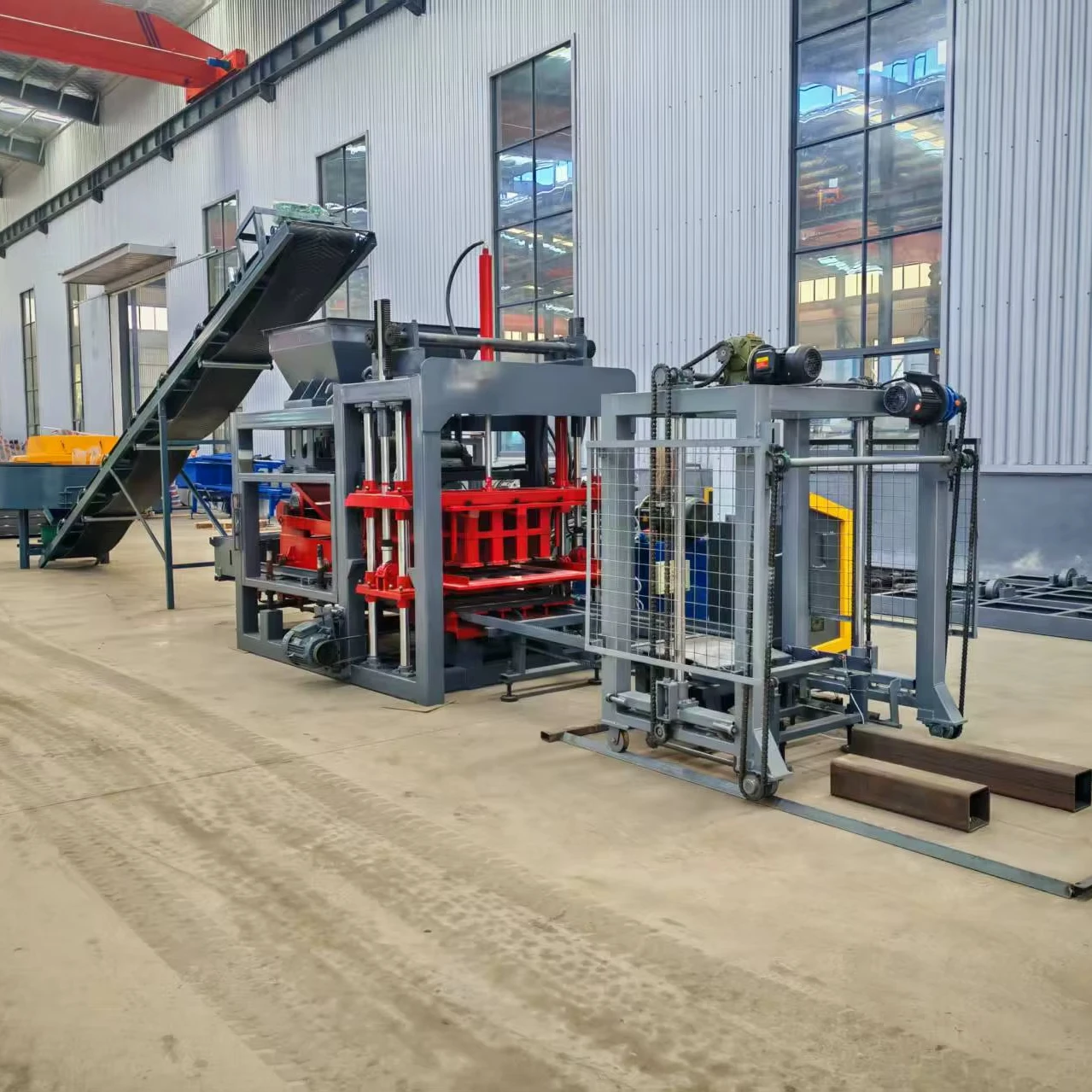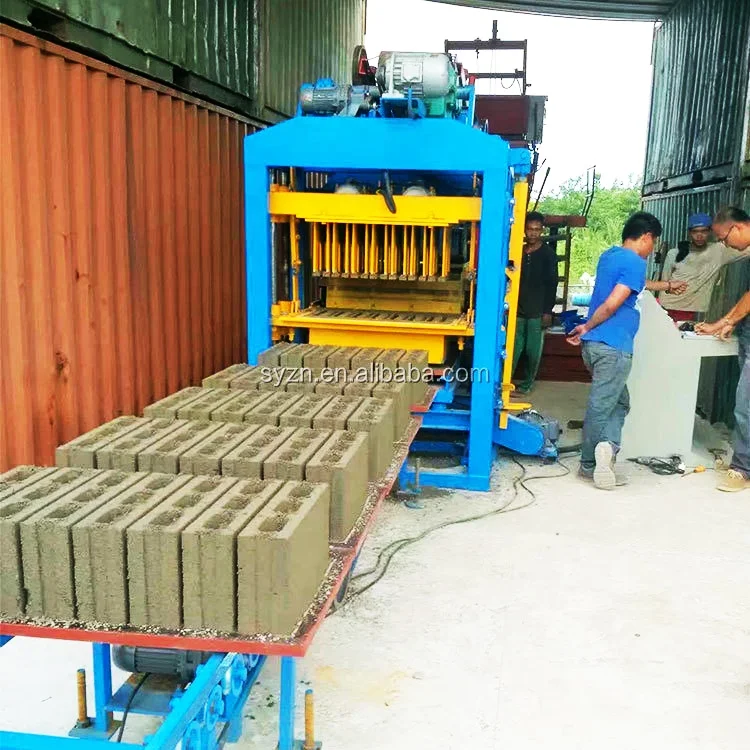

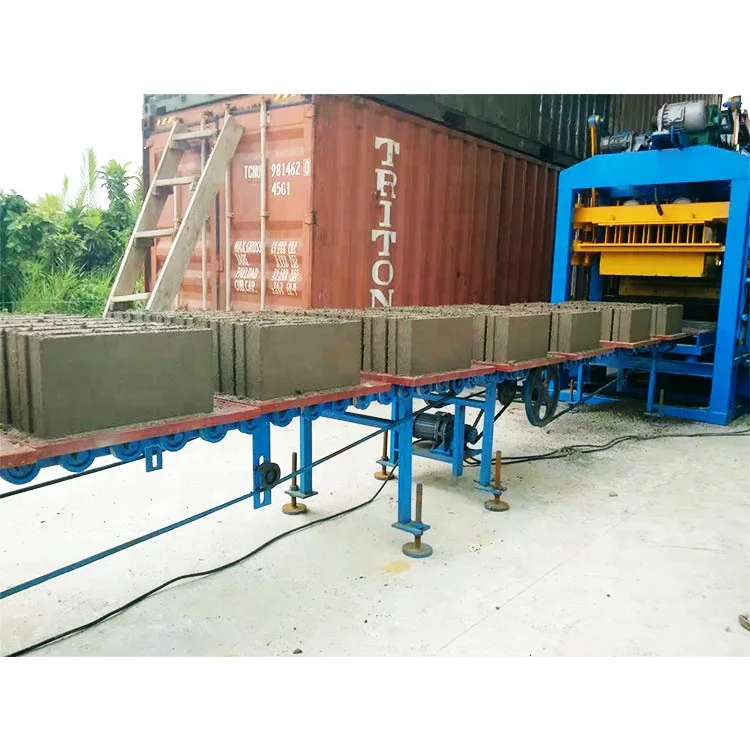

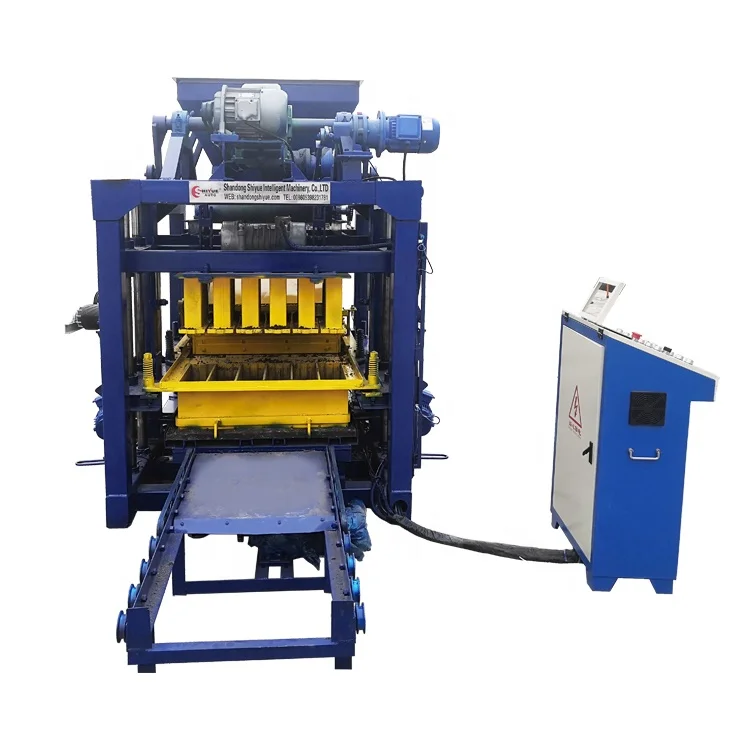

Description
Block machinery as a single focus — we match every QTJ4-25 configuration to your exact block format, local aggregate, and pallet infrastructure rather than handing you a catalogue default that underperforms on day one.
Technical Specifications
| Parameter | Value |
|---|---|
| Model | QTJ4-25 |
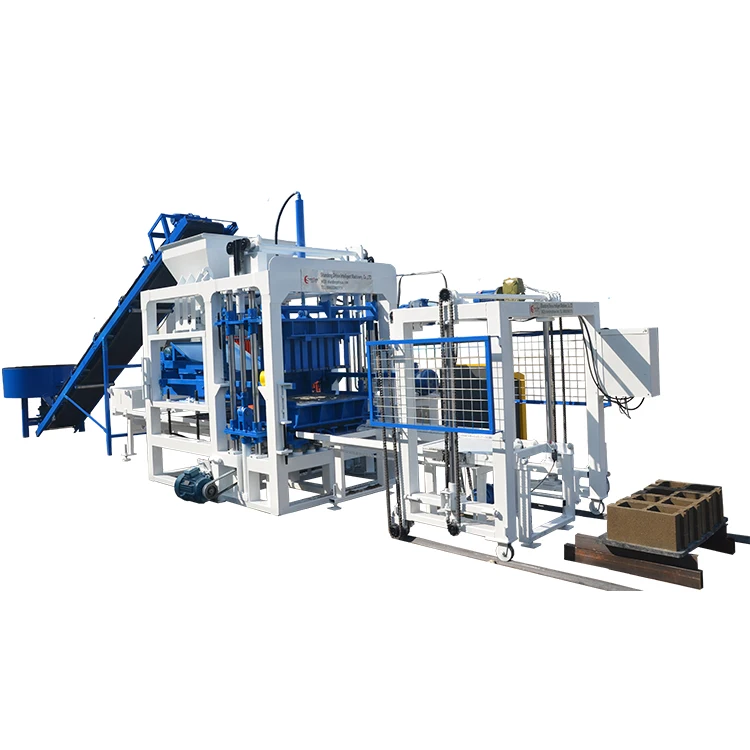
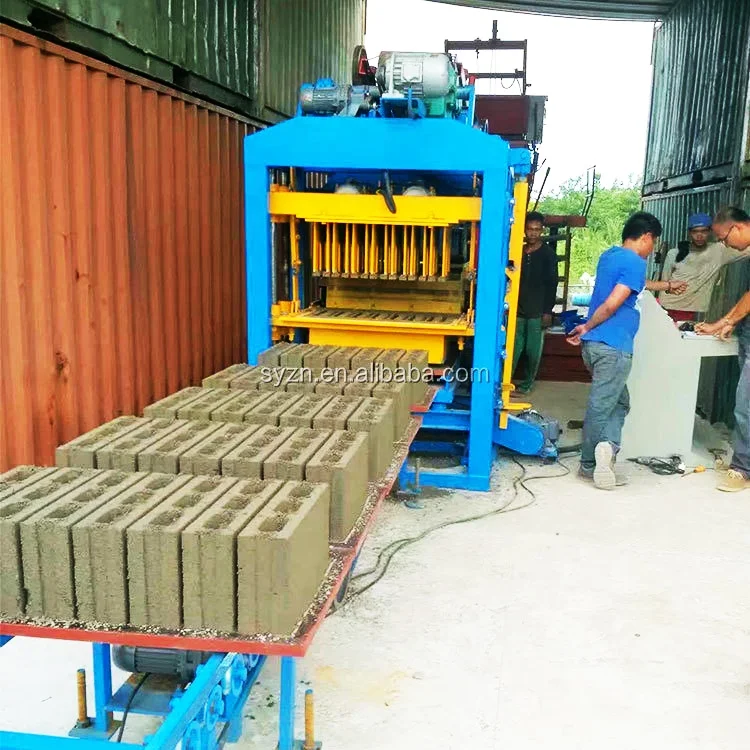
| Product Type | Semi-Automatic Concrete Block Making Machine |
| Overall Dimensions (L×W×H) | 3060 × 1730 × 2580 mm |
| Rated Pressure | 16–21 MPa |
| Main Vibration Form | Platform Vibration |
| Vibration Frequency | 4200 r/min |
| Vibration Force | 45.5 KN |
| Pallet Size | 850 × 550 mm |
| Molding Cycle | 25–30 s (basis not stated in source — confirm block format / material / thickness) |
| Overall Power | 14.9 kW |
| Total Mass | 4 T |
| Demolding Method | Vibration |
| Required Factory Area | 200 m² |
| Raw Materials | Crushed stone, sand, cement, dust, fly ash, gravel, slag |
| Automation Level | Semi-automatic |
| Mould Format | Custom moulds available per buyer drawings |
| Stacking Method | Manual (basis to be confirmed) |
| Voltage & Frequency | Configurable to buyer’s local supply (to be confirmed) |
| Control System | To be confirmed with buyer |
| Warranty | 1 year (whole machine, excluding spare parts) |
Application Suitability
| Application | Material or Output |
|---|---|
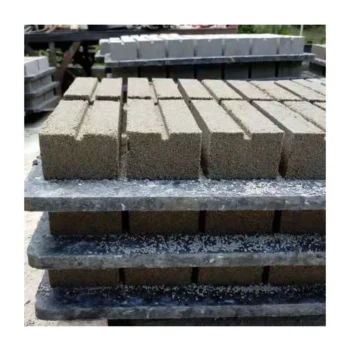
| Hollow block production for residential and commercial walls | Crushed stone, sand, cement, fly ash |
| Solid block manufacturing for load-bearing structures | Gravel, sand, cement, slag |
| Paving block production for driveways and walkways | Crushed stone, sand, cement, colored pigments |
| Interlocking brick production for landscape and retaining walls | Sand, cement, dust, fly ash |
| Kerbstone production for road and pavement edging | Coarse aggregate, sand, cement |
Why "Cycles per Hour" Tells You Nothing Without the Block Format
A cycle time is only meaningful when tied to a specific block format, mix design, and pallet layout.
The most common reason a new block plant disappoints its owner within the first month is that the quoted capacity assumed a product the buyer never intended to make. A machine cycling every 25 seconds on a thin paver will behave very differently when switched to a 200 mm hollow block with a stiff, low-slump mix. I once supplied a semi-automatic press to a buyer in West Africa who signed based on our standard sand-and-gravel trial output, only to find his local laterite soil cut production roughly in half because the clay content changed how the mix flowed into the mould. That experience shaped how we now handle every QTJ4-25 block machine specifications how to choose inquiry: we ask for the actual block format and local raw material before we commit to any output figure. [NEED_CITE: impact of local aggregate properties on block machine cycle time]
Matching Vibration Force to Your Mix Design
The QTJ4-25 delivers platform vibration at 4200 r/min with 45.5 KN of vibration force, paired with hydraulic pressure rated between 16 and 21 MPa. These two parameters work together: vibration consolidates the mix into the mould cavity while hydraulic pressure compresses it from above. If your local aggregate is angular and coarse, the vibration force must be sufficient to work the mix into the mould corners. If your sand is fine and rounded, less vibration force is needed but pressure becomes more critical for achieving target block density. When evaluating QTJ4-25 block machine specifications how to choose, this balance is the single most important factor determining whether your blocks will meet the strength requirements your market demands.
Pallet Sizing Against Your Existing Infrastructure
The standard pallet size for this machine is 850 × 550 mm, but that number only matters if it aligns with your curing racks, handling forklift, and available floor space. A pallet that is too large for your existing curing area forces you to rebuild your yard layout before the machine even arrives. A pallet whose loaded weight exceeds your forklift capacity creates a bottleneck that no amount of press speed can solve. We confirm pallet dimensions and loaded weight against your site infrastructure before the order goes to production, so there are no surprises when the first batch of blocks comes off the line. [NEED_CITE: pallet handling compatibility in concrete block production plants]
Reading the Specs That Actually Matter for Block Density
The 4 T total mass of the QTJ4-25 is not just a shipping concern — it provides the inertial stability needed for consistent platform vibration across the full pallet area. A lighter machine frame will transmit vibration into the floor instead of into the block, producing density variation from one side of the pallet to the other. The 25–30 second molding cycle (to be confirmed against your specific block format and mix) sets the baseline throughput, but the real output determinant is how quickly the operator can complete pallet exchange and mould filling around that cycle. The 14.9 kW overall power draw reflects the combined demand of the vibration motor and hydraulic pump, and your electrical supply must be confirmed for voltage and frequency before production begins.
The Cost of Skipping Configuration Verification
Buyers who accept a standard machine configuration without verifying it against their actual product range often discover the problem only after commissioning. A mould change that should take minutes stretches into most of a shift because the quick-change system was not specified. Voltage mismatches delay commissioning by weeks while transformers are sourced locally. A mix design the machine was tuned for at the factory cannot be replicated with locally available materials, forcing the buyer into expensive material substitution. These are not manufacturing defects — they are specification failures that happen when the QTJ4-25 block machine specifications how to choose conversation is rushed. [NEED_CITE: common commissioning delays in exported block making machinery]
Why Buyers Specify With Us
Block machinery is our single focus, which means the QTJ4-25 press, its moulds, pallets, and supporting handling equipment are specified as one matched system rather than assembled from separate suppliers. We configure the machine against your actual mix design, local aggregate, and target block format instead of shipping a catalogue default. Custom mould design is available to buyer drawings, so you can produce the exact formats your regional market sells. Our automation level is selectable — you can start semi-automatic and plan an upgrade path as your output grows. Installation and commissioning support includes operator training so your team is confident from the first production run.
Documentation & Verification
- Line layout and capacity calculation stating the exact block format assumed for the quoted output
- Mould drawing and format list confirming every block type your market requires
- Pallet specification matched to your curing area dimensions and forklift capacity
- Voltage, frequency, and control language confirmed in writing before production
- Factory test record on your specified block format and mix design before dispatch
- Operation and maintenance manual with wear parts and mould replacement list
Installation, Commissioning & Support
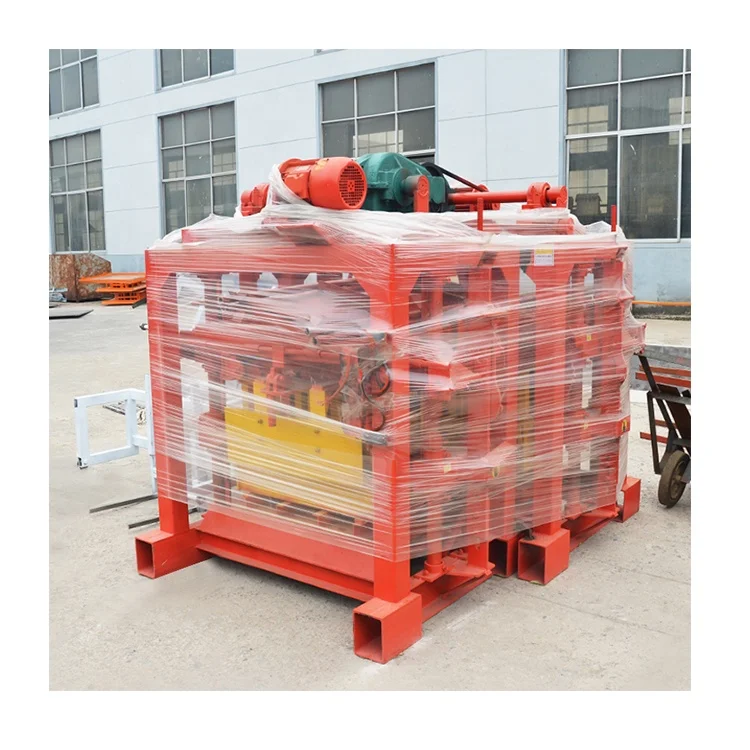
- Foundation pad sized to the 3060 × 1730 mm footprint with anchoring points for the 4 T machine mass
- Dedicated electrical circuit rated for the 14.9 kW total load at your confirmed voltage and frequency
- Machine shipped in dismantled state with reassembly guidance for the vibration platform and hydraulic frame
- First-run commissioning with your local aggregate to verify block density and cycle time per format
- Operator training covering mould change procedure, pallet handling, and daily vibration platform inspection
- Wear parts list with hydraulic seals and vibration motor bearings identified for first reorder
What We Need Before Quoting Your QTJ4-25
To give you an honest capacity figure, we need your target block format with dimensions, the local raw materials you plan to use, and your required daily output. Tell us about your existing curing area and forklift so we can match the pallet specification. Confirm your local voltage, frequency, and preferred control language so the machine arrives ready to run. If you have an existing product range you want to add formats to, send us the drawings and we will confirm mould compatibility before you commit.
Frequently Asked Questions
Q: What block format is the 25–30 second cycle time based on?
A: The published cycle time has not been tied to a specific block format in the source data, which is why we confirm it against your actual product before quoting. Switching from a thin paver to a 200 mm hollow block changes fill time, vibration duration, and demolding behavior, so output per hour shifts accordingly.
Q: How do I match the 850 × 550 mm pallet to my curing setup?
A: We need your curing rack dimensions, forklift lift capacity, and yard layout. The pallet loaded with wet blocks must fit your rack spacing and stay within your forklift’s safe working load. We adjust pallet material and thickness to match your handling infrastructure.
Q: Can I order custom moulds for block formats specific to my market?
A: Yes, custom moulds are available to buyer drawings. Send us the block dimensions, face pattern, and target strength class. We design the mould cavity and confirm it against the QTJ4-25 vibration force and hydraulic pressure before manufacturing.
Q: How long does a mould change take on this machine?
A: Mould change time depends on whether a quick-change system is included in your configuration. We specify the changeover method and required tools during the proposal stage so you know the format-switching cost before you order.
Q: How is the machine tuned to my local raw materials?
A: We request a sample of your local aggregate and a description of your intended mix design. The vibration force and hydraulic pressure settings are then adjusted to produce blocks that meet your target strength with the materials you can actually source locally.