

Description
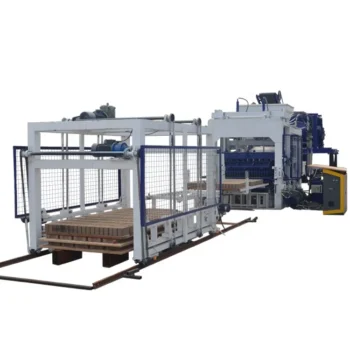
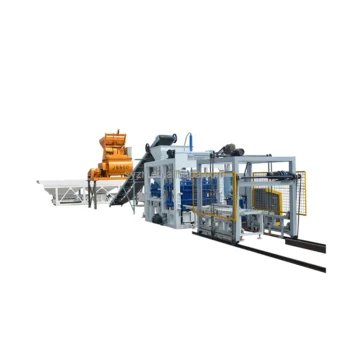
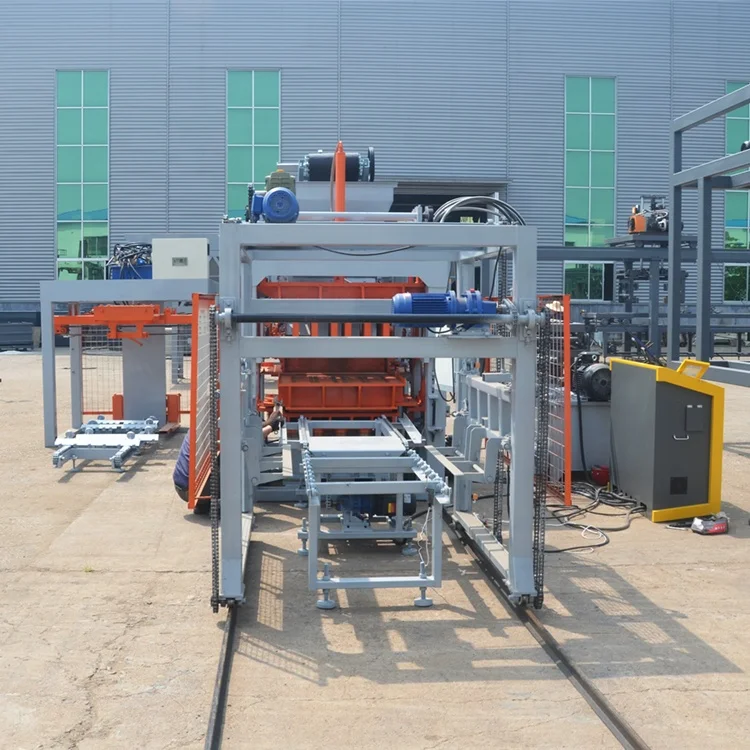
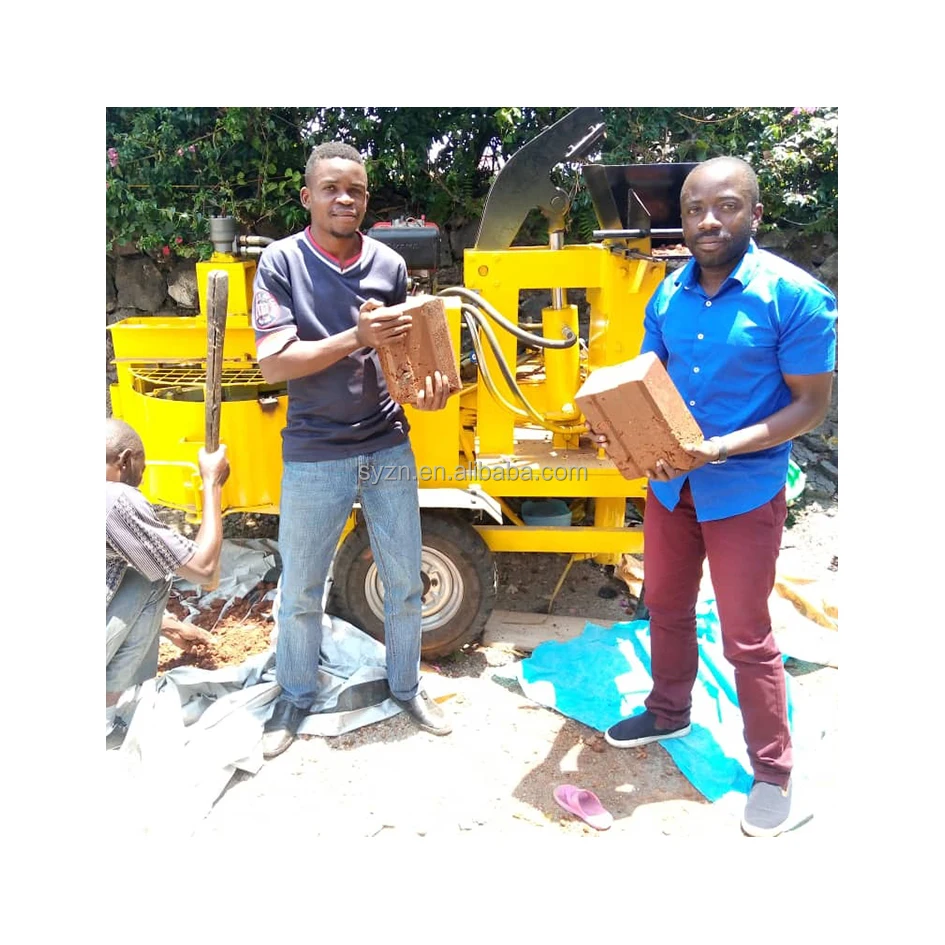
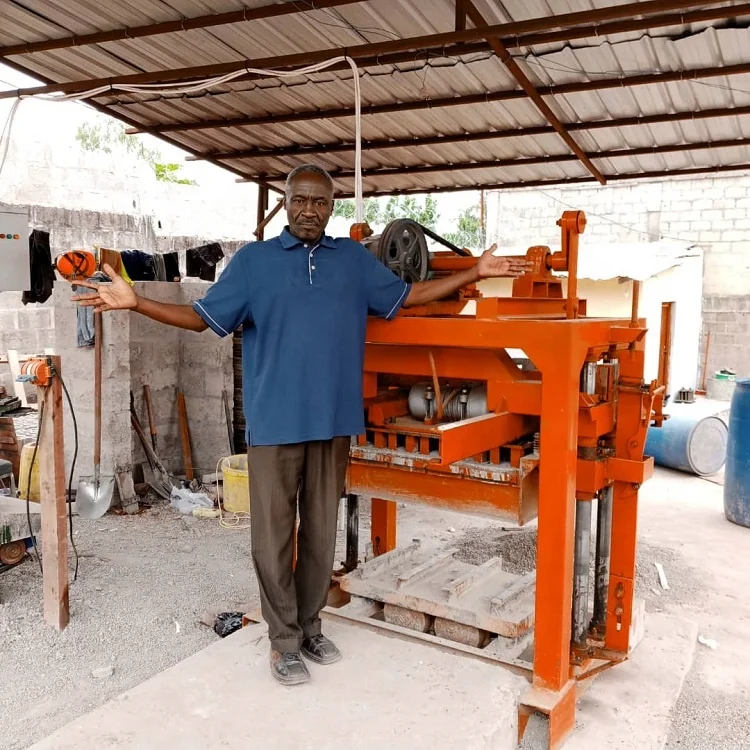
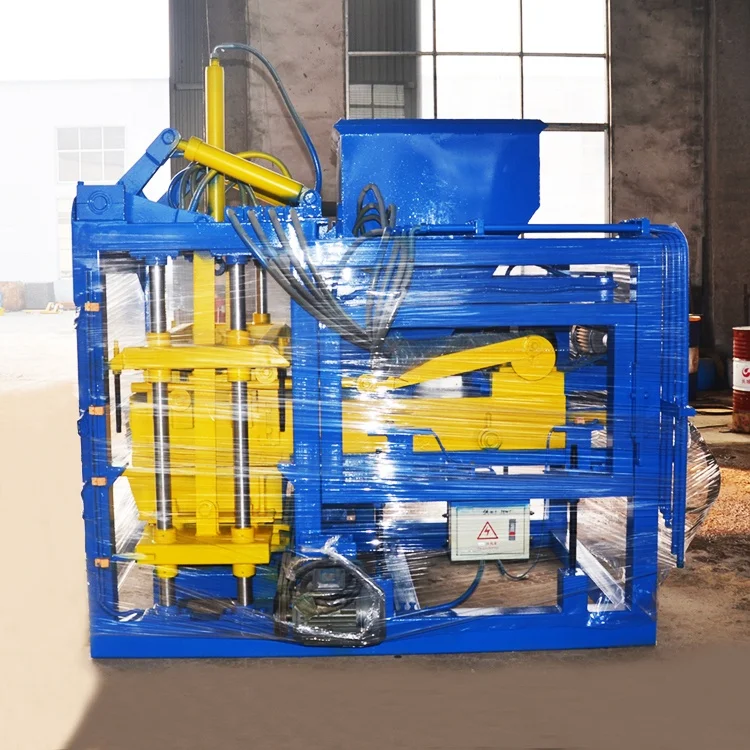
Matched system design — the QTJ4-25 block machine, pallet, and mould are specified as one coordinated unit against your actual mix design and target block format, not assembled from separate catalogue defaults.
Technical Specifications
| Parameter | Value |
|---|---|
| Product Type | Semi-Automatic Concrete Block Making Machine |
| Model | QTJ4-25 |
| Overall Dimensions (L×W×H) | 6400×1500×2700 mm |
| Net Weight | 2500 kg |
| Molding Cycle | 25 s |
| Vibration Frequency | 2800–5100 r/min |
| Exciting Force | 60 kN |
| Rated Power | 17.9 kW |
| Mixer Model | JQ350 |
| Pallet Size | 850×550×20 mm |
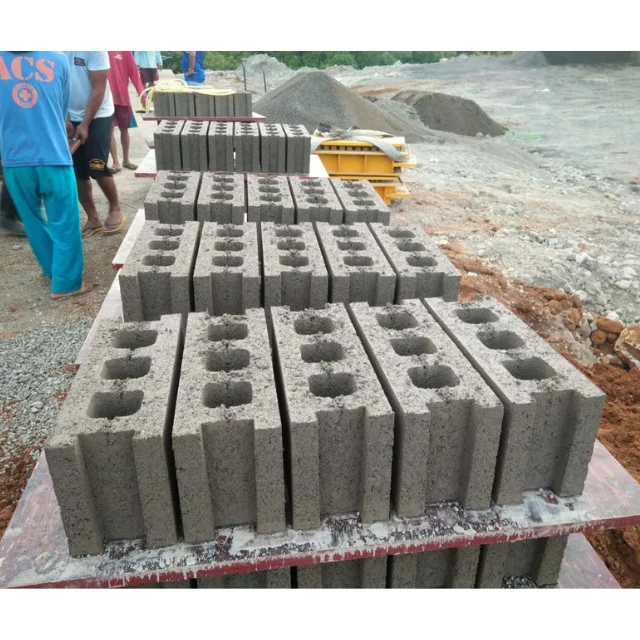
| Applied Products | Hollow blocks (8 inch, 6 inch), solid bricks, pavers, curbstone |
| Raw Materials | Crushed stone, sand, cement, dust, fly ash |
| Automation Level | Semi-automatic (manual pallet handling and stacking) |
| Output Capacity (4-cavity hollow block, 390×190×190 mm) | 480 pcs/h (basis stated in source) |
| Output Capacity (5-cavity hollow block, 400×150×200 mm) | 600 pcs/h (basis stated in source) |
| Output Capacity (18-cavity solid brick, 240×115×53 mm) | 2100 pcs/h (basis stated in source) |
| Voltage & Frequency | Configurable to buyer’s site supply (to be confirmed per order) |
| Control System | Semi-automatic operation (details to be confirmed) |
| Stacking Method | Manual (hand stacking onto trolley) |
Application Suitability
| Application | Material or Output |
|---|---|
| Small-scale hollow block plant | 390×190×190 mm and 400×150×200 mm hollow blocks from crushed stone, sand, and cement |
| On-site contractor production | Solid bricks and hollow blocks using locally sourced river sand and aggregate |
| Start-up block enterprise | Multiple formats including pavers and curbstone with low initial capital outlay |
| Fly ash brick production | Solid bricks incorporating fly ash as partial aggregate replacement |
| Existing plant adding formats | Pavers and kerbstones added to current range via mould interchange on the same press |
Why the QTJ4-25 Block Machine Specifications Must Match Your Local Aggregate
A vibration force and cycle time only deliver rated density when they are tuned to the specific sand, stone, and cement ratio available at your site.
I have stood on project sites in West Africa and South Asia where a block machine sat idle because the supplier configured it for clean quartz sand while the local river sand carried heavy silt content. The mould filled unevenly, block edges crumbled during demoulding, and what should have been a steady production rhythm turned into constant manual rework. The QTJ4-25 block machine specifications mean nothing if the vibration frequency and exciting force were selected against a generic mix rather than your actual material. [NEED_CITE: aggregate grading standards for concrete block production]
Mould Cavity Count and the Honest Output Picture
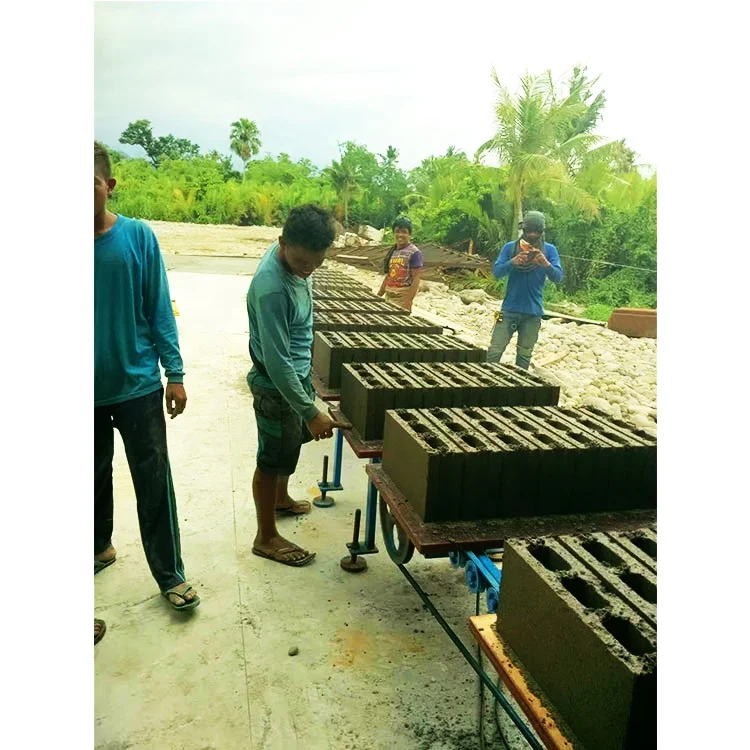
When a quotation lists a single hourly capacity figure, it usually assumes the smallest, fastest-cycling product in the mould catalogue. The QTJ4-25 completes a moulding cycle in approximately 25 seconds, but what comes out of that cycle depends entirely on which mould sits on the pallet. A four-cavity mould for 390×190×190 mm hollow blocks yields four pieces per cycle, while an eighteen-cavity solid brick mould yields eighteen. This is why the QTJ4-25 block machine specifications list output per format rather than a single headline number — a practice that should be standard across every supplier but often is not.
Pallet Dimensions and What They Mean for Your Curing Yard
The 850×550 mm pallet on the QTJ4-25 determines more than what fits inside the press. It dictates the spacing of your curing racks, the fork pocket width on your trolley, and the aisle clearance your forklift needs between rack rows. Buyers who confirm pallet size against their existing yard layout avoid the costly surprise of rebuilding curing infrastructure after the machine arrives. This semi-automatic block machine ships with pallets matched to the press, but the curing side of the line is yours to plan — and planning starts with this one dimension. [NEED_CITE: curing rack spacing guidelines for concrete products]
How Vibration and Compression Shape Block Density
The QTJ4-25 uses bed-mould vertical vibration combined with upper-mould compression to consolidate the mix. The vibration frequency range of 2800 to 5100 r/min and the 60 kN exciting force work together to settle aggregate particles into a dense matrix before the upper mould applies final compaction. If your local crushed stone has a wide particle size distribution, the higher end of that frequency range helps pack fines into the voids between coarse grains. If your sand is fine and uniform, the lower frequency prevents over-vibration that would push cement paste to the surface and leave a weak core. Understanding this balance is central to how to choose a semi-automatic block machine for consistent block strength.
The Cost of Skipping the Material Test Before Shipment
Sending a sample of your local sand, crushed stone, and cement to the factory for a trial block run takes time, and some buyers skip it to meet a project deadline. The consequence I have seen repeatedly is a machine that produces beautiful blocks in the factory test but fractures them at the demoulding stage on site. The mix behaves differently under vibration, the operator adjusts water content to compensate, and block weight drifts outside tolerance within the first week. Correcting this after commissioning means recalibrating vibration force, sometimes replacing mould liners, and always losing production days that your project timeline did not budget for. [NEED_CITE: common causes of block cracking during demoulding]
Why Buyers Specify the QTJ4-25 With Shiyue
Block machinery is our single focus, which means the press, mould, pallet, and mixer are designed as one system rather than sourced from unrelated factories and bolted together. Every QTJ4-25 configuration begins with your target block format and local raw material, not a catalogue default. Mould design covers the formats your market actually sells, and custom moulds can be built to your drawings. The automation level is selectable — a buyer can start with this semi-automatic block machine and move to a higher-tier line later without scrapping the pallet and handling investment. Installation support includes operator training so your crew understands mould change procedure and daily maintenance from the first shift.
Documentation & Verification
- Line layout and capacity calculation stating the block format assumed for each output figure
- Mould drawing and format list confirming which moulds ship standard and which are optional
- Pallet specification sheet covering material, size, and recommended quantity for your curing area
- Voltage and control language confirmation recorded in writing before production begins
- Factory test record conducted on your specified mix design before dispatch
- Operation and maintenance manual with wear parts list and mould interchange procedure
Installation, Commissioning & Support
- Foundation slab poured to level tolerances matching the 6400×1500 mm footprint of the QTJ4-25
- Dedicated power circuit sized for the 17.9 kW rated load plus mixer starting surge
- Machine arrives partially assembled; main frame, vibration table, and mould head are aligned on site
- First production run supervised to set vibration frequency and cycle timing against your live mix
- Operator training covers mould change, pallet loading rhythm, and daily vibration motor inspection
- Wear parts list identifies high-friction components with recommended replacement intervals
What We Need to Size Your QTJ4-25 Correctly
To configure this machine for your project, share the block formats your market sells most, the daily volume you need per format, and a sample or analysis of your local sand and crushed stone. We also need your site voltage and frequency, the language your operators read on a control display, and the dimensions of your existing curing yard so pallet and rack layout can be coordinated before shipment.
Frequently Asked Questions
Q: How is the QTJ4-25 output calculated, and why does the figure change with each block format?
A: Output is derived from the 25-second moulding cycle multiplied by the number of cavities in the specific mould. A four-cavity hollow block mould yields fewer pieces per hour than an eighteen-cavity solid brick mould. We quote capacity per format so your daily planning reflects the product you actually run, not the fastest theoretical cycle.
Q: Which mould formats come with the machine, and can I order custom designs?
A: Standard moulds cover hollow blocks, solid bricks, pavers, and curbstone in common dimensions. Custom moulds can be manufactured to your drawings for non-standard formats. Mould change is a manual procedure on this semi-automatic line, and the time required depends on operator familiarity after training.
Q: How do pallet size and material affect my curing area layout?
A: The 850×550 mm pallet dictates curing rack shelf spacing, forklift fork width, and aisle clearance. We recommend confirming pallet material and quantity against your rack design and production volume so the curing side of your line keeps pace with the press output without bottlenecks.
Q: My local aggregate has high silt content — will block strength suffer?
A: Silt in sand interferes with cement bonding and can reduce compressive strength. We adjust vibration frequency and recommend mix modifications based on a trial block made from your actual material sample. This step happens before shipment so the QTJ4-25 arrives configured for your aggregate, not a generic default.
Q: What documents arrive with the machine for customs and commissioning?
A: You receive a machine specification sheet, mould format list, hydraulic and electrical schematics, factory test record, operation manual, and packing photographs. CE declaration is available where applicable and should be confirmed during the quotation stage based on your destination market requirements.