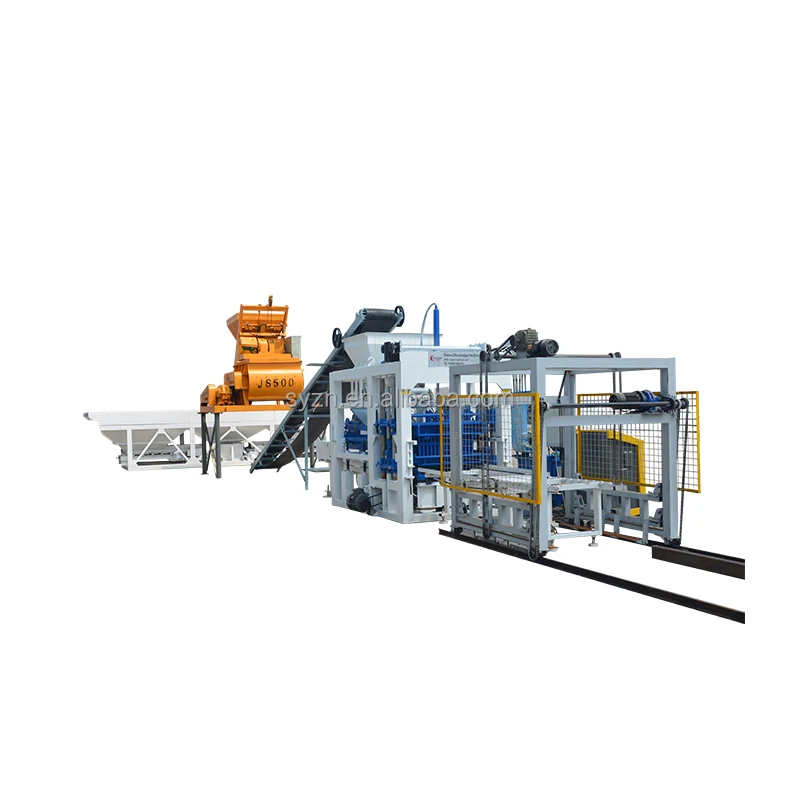

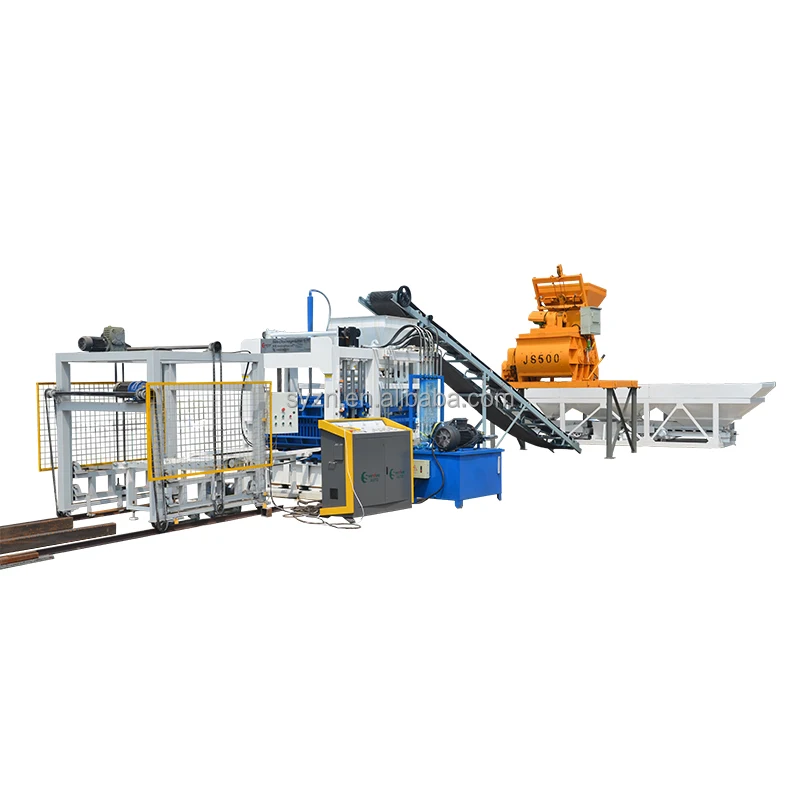
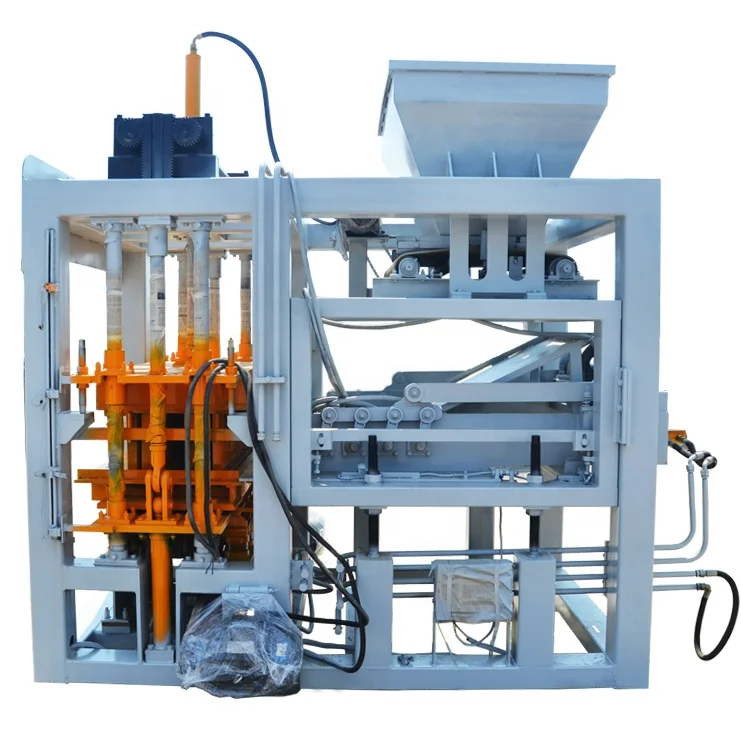
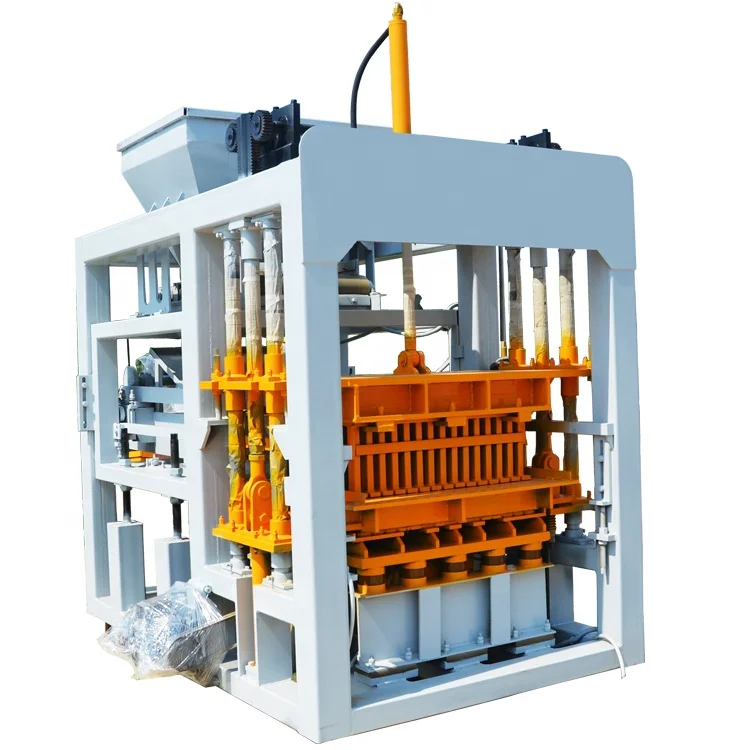

Description
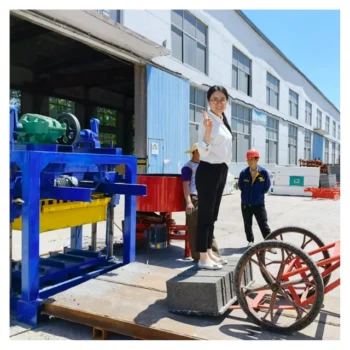
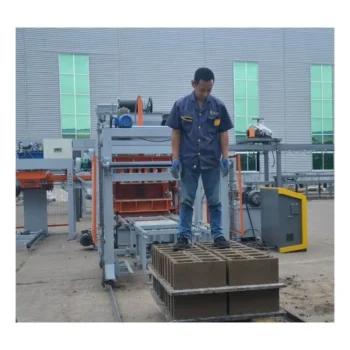
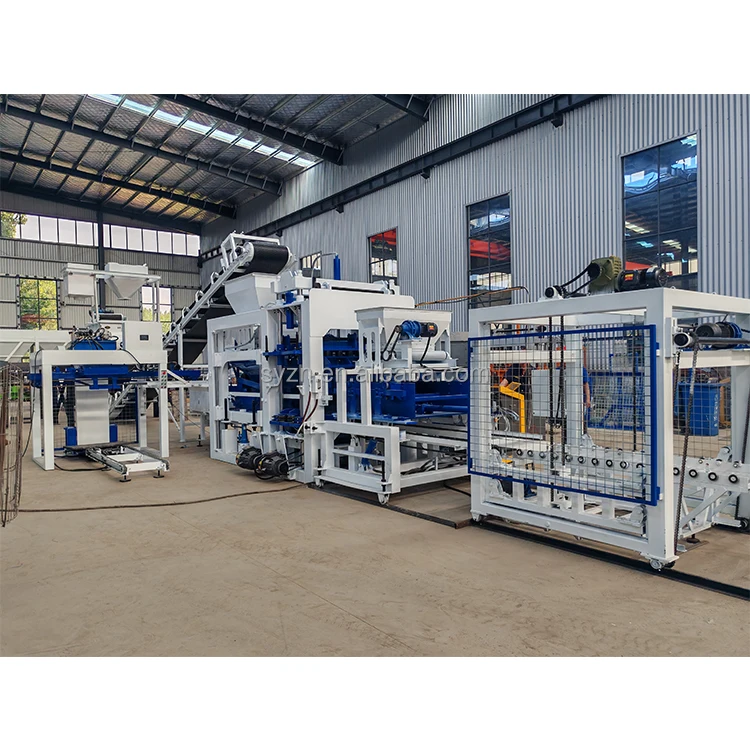
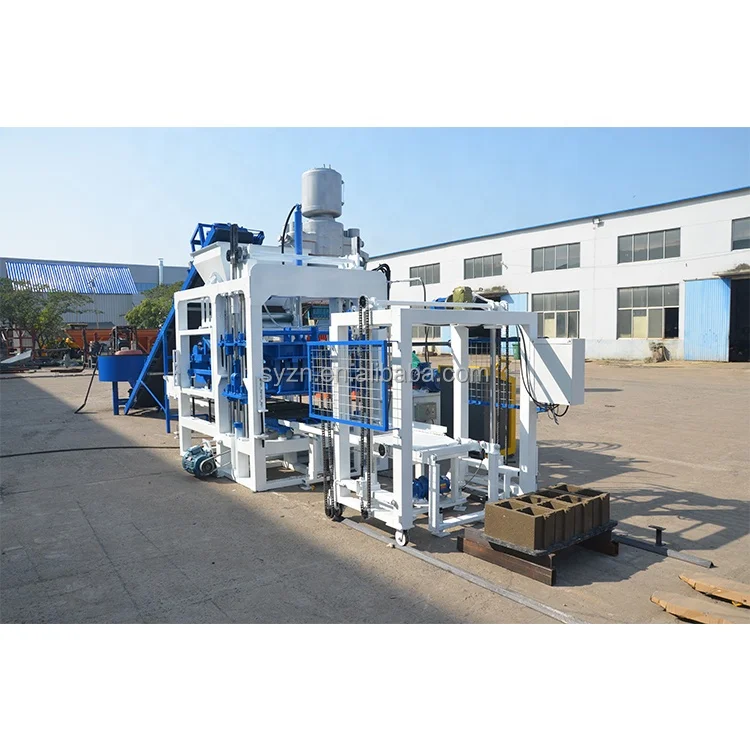
Mould & Pallet Matched — Every QT4-15 block machine configuration starts from your actual block format, local aggregate, and curing layout, so the mould, pallet, and vibration settings are verified as one system before production begins.
Technical Specifications
| Parameter | Value |
|---|---|
| Model | QT4-15 |
| Product Type | Automatic Hydraulic Block Making Machine |
| Overall Dimensions (L×W×H) | 7100 × 1600 × 2610 mm |
| Net Weight | 5800 kg |
| Rated Power | 27.5 kW |
| Voltage & Frequency | 380V or custom (frequency to confirm per target market) |
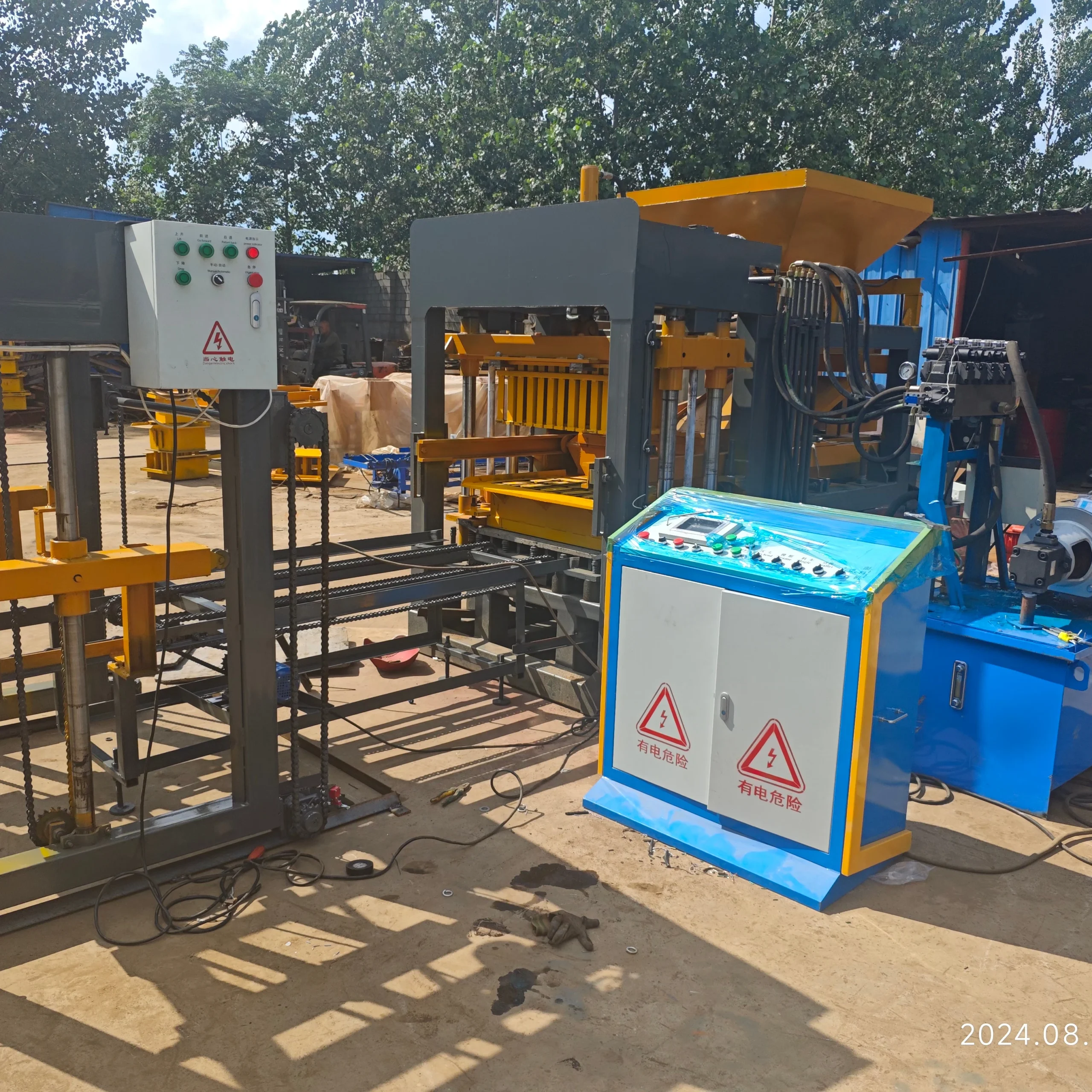
| Control System | PLC (display language options to confirm before production) |
| Vibration Force | 60 kN |
| Hydraulic Pressure | To be confirmed (MPa rating per configuration) |
| Pallet Size | 1020 × 850 × 40 mm (material: wood / PVC / steel — to confirm) |
| Cycle Time | Referenced at 15 s (basis: block format, material, and thickness to confirm) |
| Automation Level | Automatic (scope of stacking and cubing to confirm) |
| Mould Change Time | To be confirmed |
| Colour | Customizable to buyer request |
| Certification | ISO 9001:2008, CE |
| Warranty | 1 year |
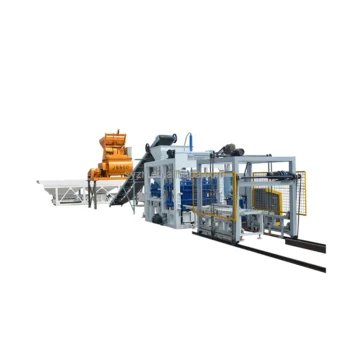
| Line Scope Reference | JS500 mixer and 6000 kg batching referenced (full line inclusion to confirm) |
Application Suitability
| Application | Material or Output |
|---|---|
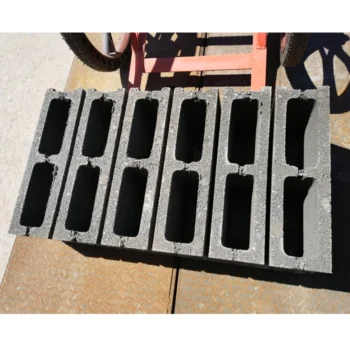
| Hollow block production for building walls | Crushed stone, sand, cement, and water at site-specific ratios |
| Solid brick production for load-bearing or partition masonry | Local aggregate blended with Portland cement |
| Paving and kerb formats (with matched mould) | Coarse aggregate mix designed for surface wear resistance |
| On-site block production for housing projects | Locally sourced sand and gravel with cement binder |
| Format expansion for existing concrete product plants | Additional mould sets to broaden the product catalogue |
What "960 Blocks per Hour" Actually Means on the QT4-15
A capacity figure without the block format attached is a number you cannot take to the bank.
Many quotations list cycles per hour and leave the buyer to assume that figure holds across every mould. On the QT4-15 block machine, the 960 pcs/h reference applies to 400 × 200 × 200 mm hollow blocks at four pieces per mould. Swap to the 225 × 112.5 × 53 mm solid brick mould — sixteen pieces per mould — and the hourly count changes entirely. I have watched buyers sign off on a daily output number, then discover on commissioning week that the format their market actually buys runs at a different pace. That gap between quoted and real output is where project timelines slip [NEED_CITE: common block machine capacity misrepresentation in export quotations].
Sizing Daily Output to Your Selling Format
The QT4-15 block machine specifications list three reference formats, each with its own per-mould count and derived hourly figure. For the 400 × 150 × 200 mm block, six pieces per mould gives a reference of 1440 pcs/h. For solid bricks, sixteen per mould yields 3840 pcs/h. These figures assume an eight-hour shift and a cycle time that depends on your mix, material moisture, and block height. That is why our quotation states capacity per format, not a single headline number.
Matching the Mould Portfolio to Market Demand
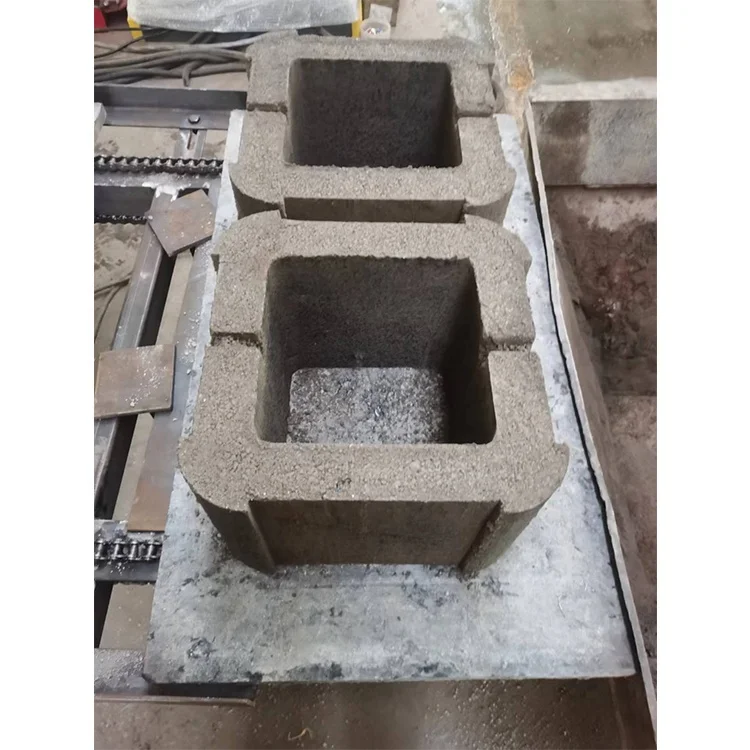
A machine is only as flexible as the moulds it runs. The standard coverage — hollow block, intermediate block, and solid brick — addresses common masonry demand, but regional markets often require interlocking profiles, kerbstones, or porous pavers. Custom mould design to buyer drawings is available, and the mould change procedure must be verified on your specific set so that format switches do not consume most of a shift.
Reading the Core Parameters Beyond the Brochure
The 60 kN vibration force must be read alongside hydraulic pressure (rating to be confirmed per configuration) and your mix design. High vibration with low pressure gives a fast cycle but weak green strength; high pressure with insufficient vibration leaves dense but poorly consolidated blocks. The 1020 × 850 × 40 mm pallet size determines your curing rack spacing and forklift fork engagement — if your existing racks are set for a different pallet, the curing bottleneck shifts downstream. The PLC control language must be confirmed in writing before the cabinet is wired [NEED_CITE: PLC language configuration best practices for exported machinery]. Voltage and frequency are equally critical; a 380V/50Hz machine arriving in a 60Hz market will run the motors at the wrong speed, altering vibration frequency and cycle timing.
The Hidden Cost of Skipping Configuration Checks
When the pallet material and size are chosen without checking your curing area, pallets pile up on the floor because the racks do not accept them. When voltage and frequency go unconfirmed, commissioning stalls while transformers or variable-frequency drives are sourced locally. When the mould set does not cover the formats your distributors actually order, the machine sits idle between runs. Every one of these delays is avoidable with a specification sheet that addresses them before the machine enters production [NEED_CITE: consequences of incomplete machinery specification at order stage].
Why This Configuration Approach Works
Block machinery is our single focus, so the QT4-15 is never quoted as a standalone press. The mould, pallet, and handling equipment are specified as one matched system. Configuration is set against your actual mix design and local aggregate, not a catalogue default. Mould design covers the formats your market sells, with custom drawings supported. The automation level is selectable, meaning a buyer can start semi-automatic and add stacking or cubing later. Installation support includes operator training so the crew understands mould changes and cycle adjustment from day one.
Documentation & Verification
- Line layout and capacity calculation naming the block format behind every hourly and daily figure
- Mould drawing and format list issued alongside the quotation for your approval
- Pallet specification sheet confirming size, material, and load rating before dispatch
- Voltage, frequency, and PLC display language confirmation signed off before production
- Factory test record on your specified block format included with shipping documents
- Wear parts and mould maintenance list supplied for your first year of operation
Installation, Commissioning & Support
- Foundation plan aligned to the 7100 × 1600 mm footprint and dynamic load from 60 kN vibration
- Dedicated power circuit sized for the 27.5 kW rated load with voltage and frequency verified on site
- Assembly state confirmed before shipment so your crew knows what to expect at container opening
- First-run parameter tuning on your local aggregate and mix ratio during commissioning
- Operator training covering mould change procedure, PLC navigation, and daily maintenance checkpoints
- Wear parts list with reorder references so hydraulic and vibration components stay in stock
Starting the Technical Conversation
To size the QT4-15 block machine accurately, we need your target block format and daily volume, your local aggregate type and typical mix ratio, and the dimensions of your existing curing area. Confirming your site voltage, frequency, and preferred PLC display language at the inquiry stage prevents rework later. If you are adding formats to an existing line, tell us which upstream and downstream equipment is already in place so the QT4-15 integrates without creating a bottleneck.
Frequently Asked Questions
Q: How is the QT4-15 capacity verified and what block format is each figure based on?
A: Each capacity figure in the QT4-15 block machine specifications is tied to a specific mould format — for example, 960 pcs/h assumes the 400 × 200 × 200 mm hollow block at four per mould. The quotation you receive will include a line layout document stating the format behind every hourly and daily number, so there is no ambiguity when the machine arrives.
Q: How do I match the mould selection to the formats my market actually sells?
A: Start by listing the block types your distributors and contractors order most frequently. The standard mould set covers hollow, intermediate, and solid brick formats, and custom mould design to your drawings is available. We confirm the full format list and mould drawings with you before the quotation is finalised.
Q: Pallet size and material — how do I align them with my curing area and forklift?
A: The standard pallet is 1020 × 850 × 40 mm, but material choice — wood, PVC, or steel — depends on your curing method and rack spacing. Share your curing rack dimensions and forklift fork width during the inquiry, and the pallet specification will be adjusted so that cured blocks move smoothly from rack to dispatch.
Q: What needs confirming about voltage, frequency, and PLC language before production?
A: Your site voltage, frequency, and the language your operators read on the PLC screen must all be confirmed in writing before the electrical cabinet is assembled. A QT4-15 block machine built for 380V/50Hz will not perform correctly on a 60Hz supply, and an unconfirmed display language delays operator training on arrival.
Q: How is vibration force and hydraulic pressure configured to my local aggregate?
A: The 60 kN vibration force works in combination with hydraulic pressure to achieve target block density. Different aggregates — river sand, crushed basalt, volcanic stone — respond differently. We ask for your mix design and a sample of your local material, then adjust the pressure and vibration settings so that block strength stays consistent across every production run [NEED_CITE: influence of aggregate type on concrete block vibration and pressure settings].