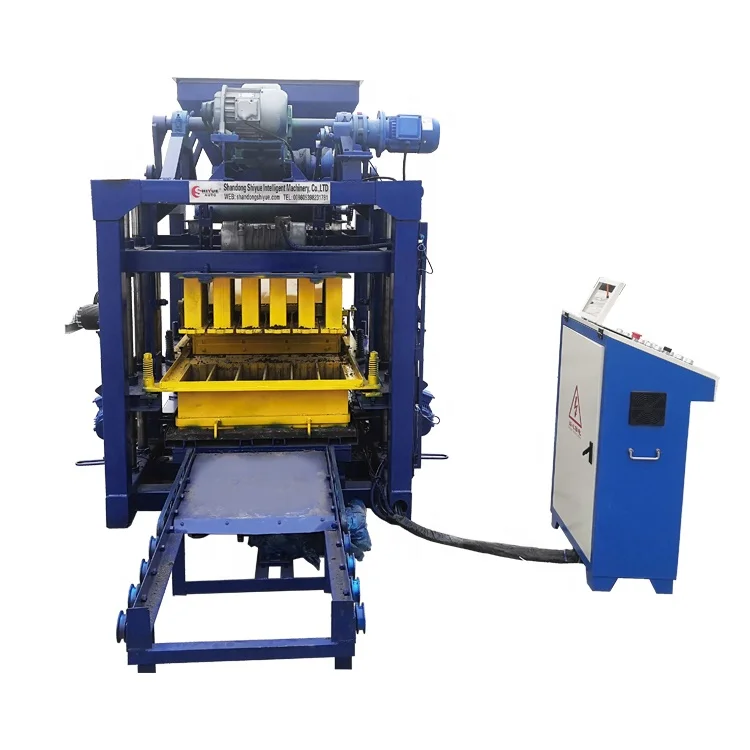

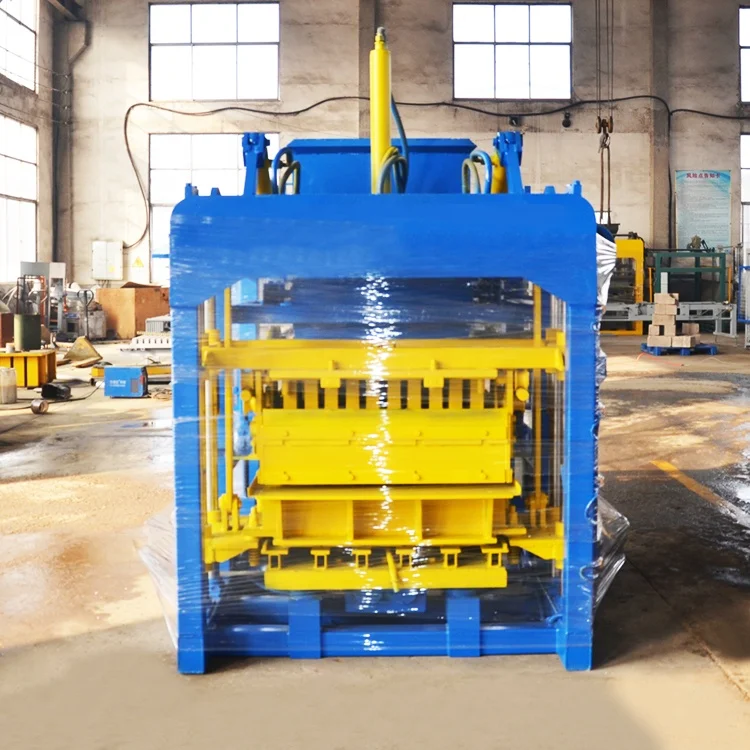
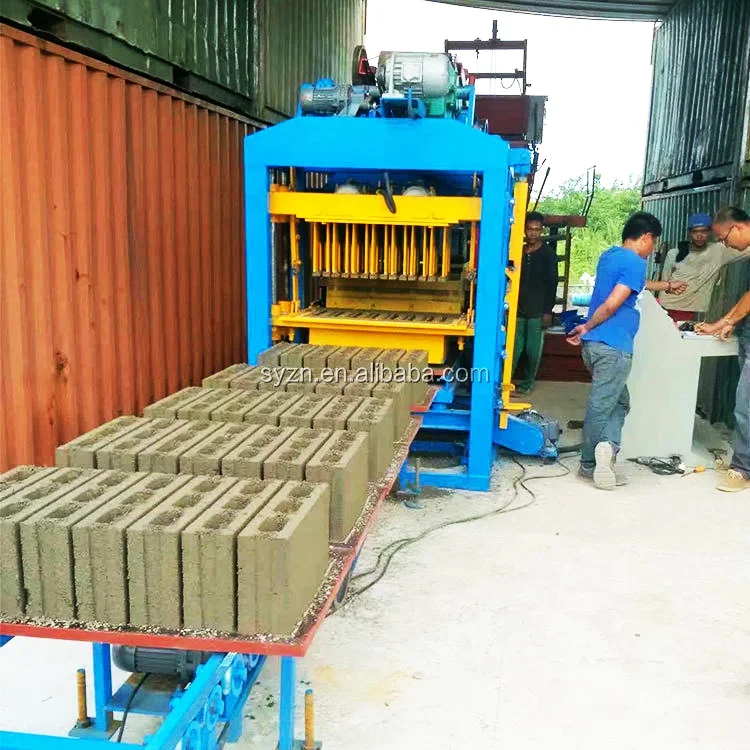
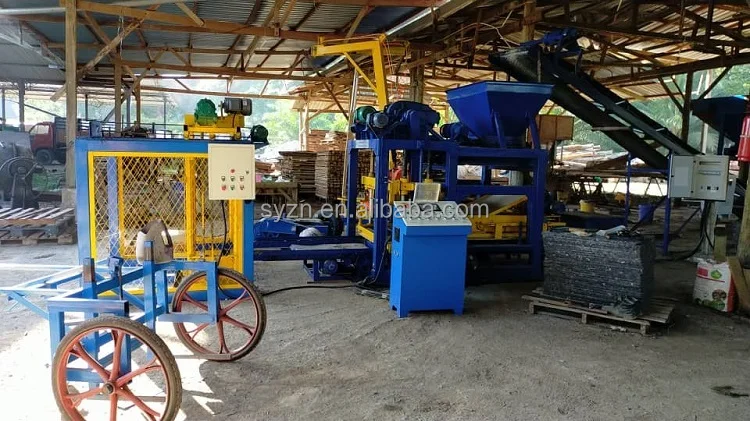
Description
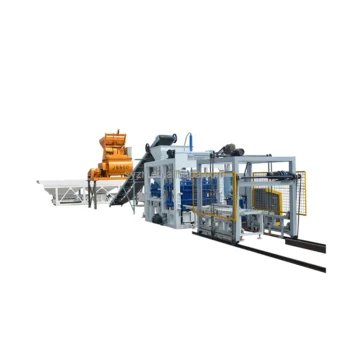
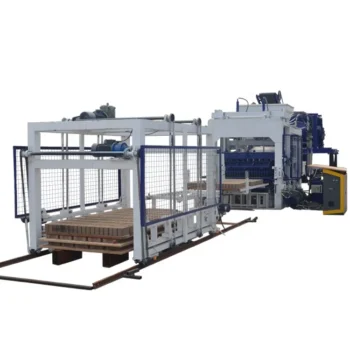
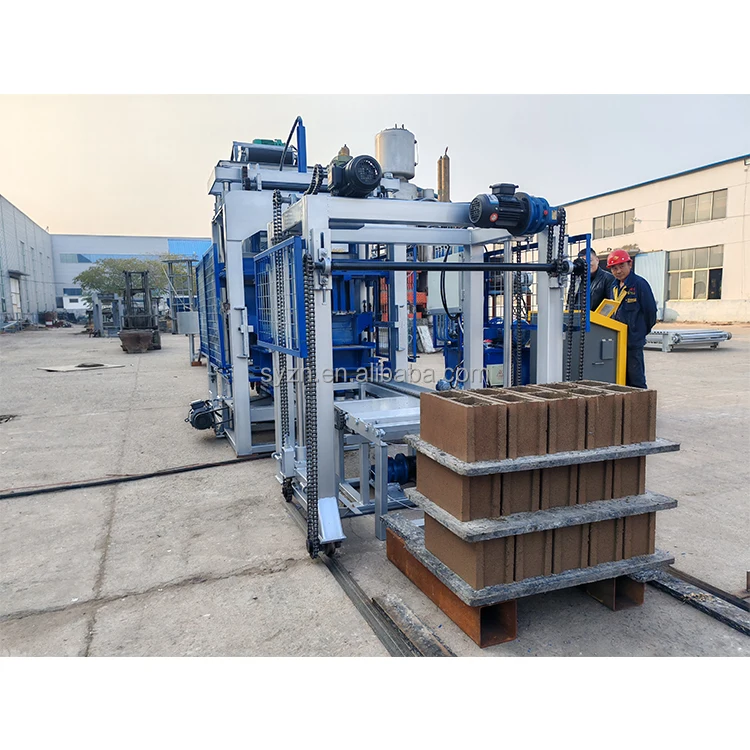
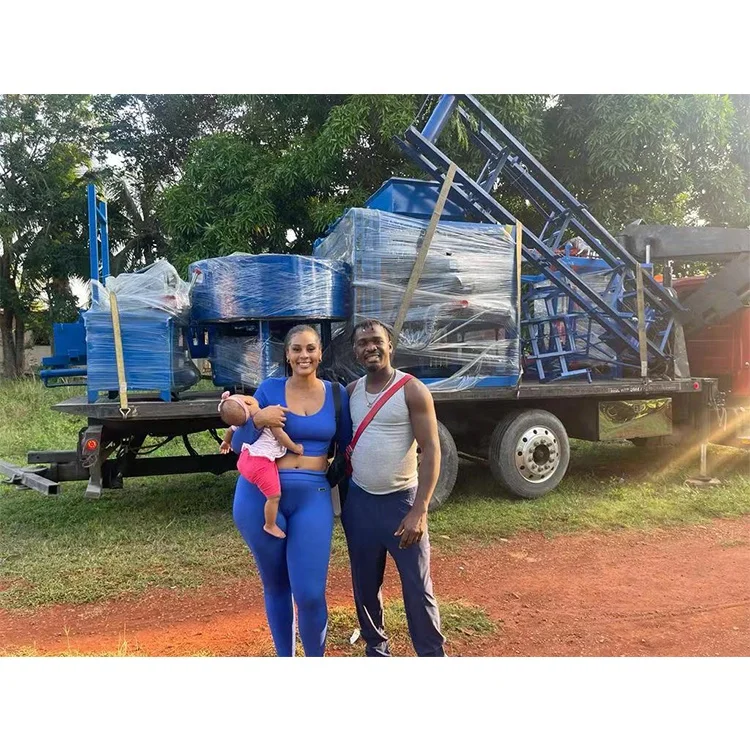
Matched system configuration — every QTJ4-25 block machine specification is verified against your local aggregate, target block format, and curing infrastructure before production begins, not pulled from a catalogue default.
Technical Specifications
| Parameter | Value |
|---|---|
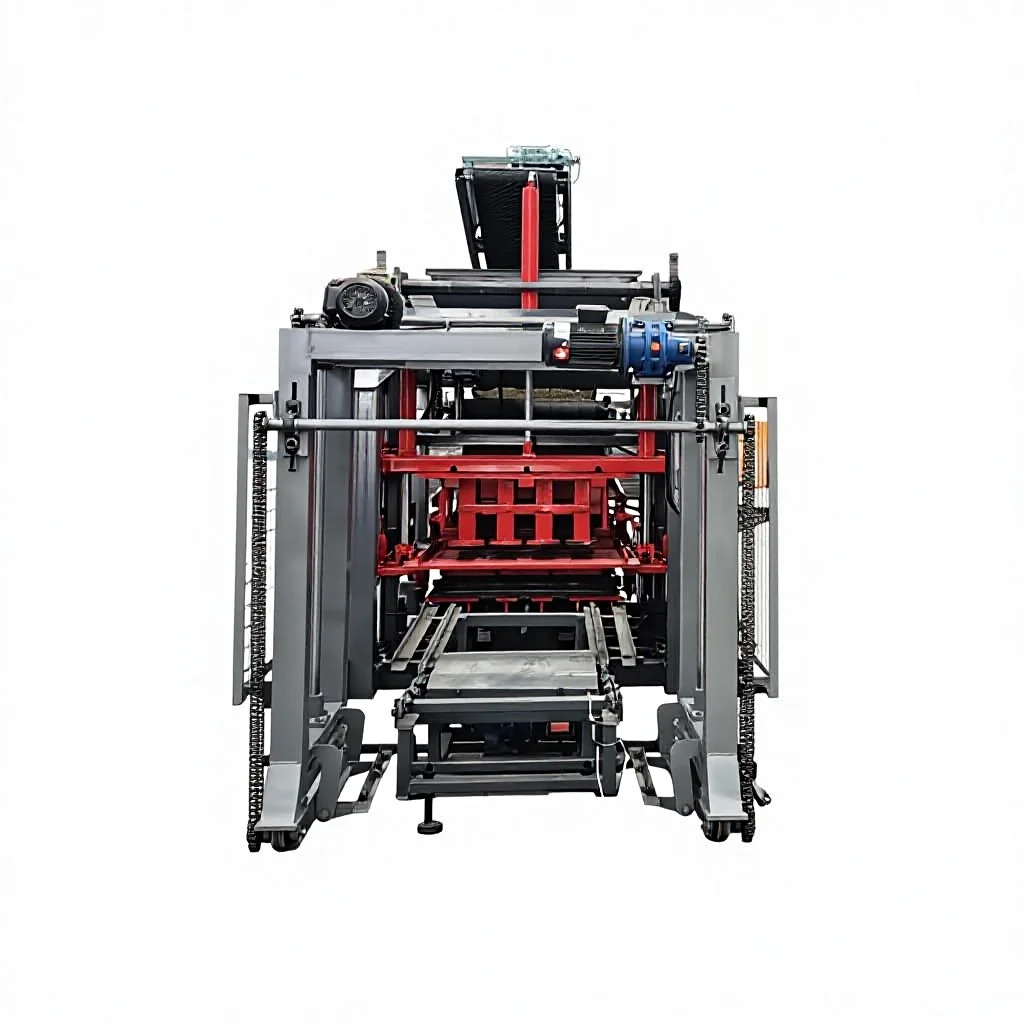
| Product Type | Automatic Concrete Block Making Machine |
| Model | QTJ4-25 |
| Overall Dimensions (L×W×H) | 6400×1500×2700 mm |
| Total Weight | 2500 kg |
| Molding Cycle | 25 s |
| Vibration Frequency | 2800–5100 r/min |
| Exciting Power (Vibration Force) | 60 kN |
| Total Power | 17.9 kW |
| Mixer Model | JQ350 |
| Pallet Size | 850×550×20 mm |
| Control System | PLC with automatic plate-supplying, material-disturbing, and brick-discharging |
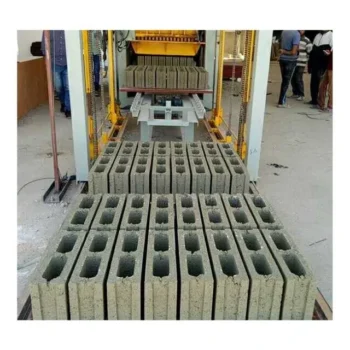
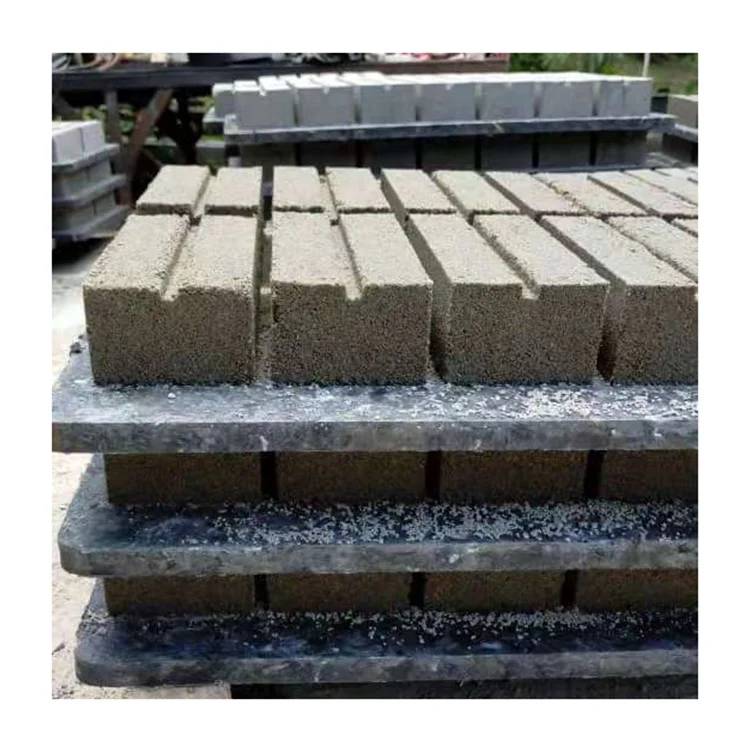
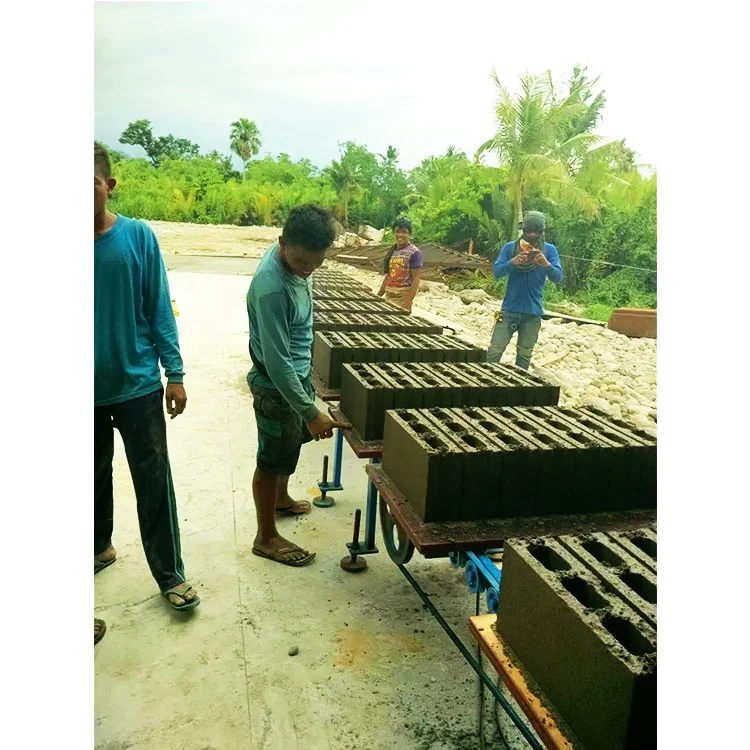
| Applied Products | Concrete hollow blocks (8 inch, 6 inch), solid bricks |
| Raw Materials | Crushed stones, sand, cement, dust, fly ash |
| Output Capacity | 480 pcs/h (based on 390×190×190 mm hollow block, 4 pcs/mould) |
| Output Capacity | 600 pcs/h (based on 400×150×200 mm hollow block, 5 pcs/mould) |
| Output Capacity | 2100 pcs/h (based on 240×115×53 mm solid brick, 18 pcs/mould) |
| Output per 8-hour Shift | 3800 pcs (based on 390×190×190 mm hollow block) |
| Output per 8-hour Shift | 4800 pcs (based on 400×150×200 mm hollow block) |
| Output per 8-hour Shift | 17000 pcs (based on 240×115×53 mm solid brick) |
| Hydraulic Pressure | basis not stated in source — confirm with manufacturer |
| Mould Change Time | basis not stated in source — confirm with manufacturer |
| Voltage & Frequency | basis not stated in source — confirm target market requirements |
| PLC Display Language | basis not stated in source — confirm before commissioning |
| Standards | CE declaration where applicable |
Application Suitability
| Application | Material or Output |
|---|---|
| Small to medium hollow block plants | 8-inch and 6-inch hollow blocks from crushed stone, sand, and cement |
| On-site production for contractors | Solid bricks and hollow blocks using locally sourced aggregate |
| First block plant setups | Standard format production with JQ350 mixer handling raw material batching |
| Format expansion for existing ranges | Hollow block and solid brick formats added using custom mould tooling |
Why the Block Format Question Must Come Before the Cycle Time
A 25-second cycle means nothing until you know which block size it produces.
The QTJ4-25 block machine specifications list a 25-second molding cycle, but that number shifts depending on the mould you run and the mix feeding through the hopper. I have seen buyers in South America receive a machine quoted at a certain hourly rate, only to find their daily production falls short because the capacity figure assumed a block format their market does not purchase. The vibration frequency range of 2800–5100 r/min and 60 kN exciting power must also be matched to the local aggregate particle size [NEED_CITE: vibration force requirements for different aggregate gradations]. Without that match, blocks crack on demoulding and the machine spends more time producing waste than saleable product.
Format-Specific Output and What It Tells You
When evaluating the QTJ4-25 block machine specifications, the three stated output tiers reveal how the machine behaves across different mould configurations. At 480 pieces per hour for 390×190×190 mm hollow blocks, the machine runs four cavities per cycle, which is typical for this block size in the 8-inch market segment. Switching to the 400×150×200 mm format with five cavities raises the rate to 600 pieces per hour, because the smaller block allows more cavities within the same 850×550 mm pallet area. The solid brick figure of 2100 pieces per hour reflects eighteen cavities per mould, where the shorter pressing height and denser fill reduce the effective cycle demand on the vibration system.
How the Mould and Pallet Must Be Specified Together
The 850×550×20 mm pallet dimension on the QTJ4-25 is not an arbitrary number — it determines the maximum mould footprint and the curing rack spacing your plant must accommodate. I once visited a site in Peru where the buyer had existing pallets of a different size from a previous machine, and the curing racks were welded to that dimension. The new machine arrived with its standard pallets, and the entire curing workflow had to be rebuilt. Pallet material also matters: bamboo, PVC, and steel pallets each behave differently under vibration and moisture [NEED_CITE: pallet material selection for block curing environments]. Confirming pallet size and material against your existing infrastructure before production prevents costly on-site improvisation.
Vibration Force, Mix Design, and Block Density
The 60 kN exciting power and adjustable vibration frequency of 2800–5100 r/min on the QTJ4-25 work together with hydraulic pressure to compact the mix into a dense, consistent block. If the local sand is coarse river sand rather than fine manufactured sand, the vibration must be tuned to push particles into a tight packing arrangement without over-vibrating, which causes segregation and weak spots. The JQ350 mixer handles the raw material batching, and its output must be matched to the press cycle so the hopper never runs dry or overflows. This balance between mixer capacity, vibration tuning, and mix moisture content is where block strength is actually determined — not at the press alone.
What Happens When Vibration Is Not Matched to Aggregate
Buyers who select a machine based on cycle time alone, without verifying that the vibration force suits their local material, often see blocks emerge with edge cracks and low compressive strength. The QTJ4-25 vibration motor can be adjusted across its frequency range, but if the mix design was never tested against the aggregate the buyer actually sources, the adjustment window may not cover what is needed. I have seen entire production runs scrapped because the machine was configured for a standard sand specification while the site could only obtain coarse crushed stone [NEED_CITE: aggregate gradation impact on block compressive strength]. The cost is not just wasted material — it is lost contract credibility when sample blocks fail laboratory testing.
Why This Machine Is Specified as a System
The QTJ4-25 is not sold as a standalone press with accessories bolted on afterward. The machine, JQ350 mixer, mould, and pallet are configured together against the buyer’s target block format and local raw material. Mould drawings are reviewed and approved before production, including custom designs if the buyer’s market requires non-standard dimensions. Voltage, frequency, and PLC display language are confirmed in writing before manufacture, so the control panel arrives ready to operate. The factory test runs the buyer’s chosen mould through actual cycles, producing blocks that can be measured for density and dimension before the machine leaves the facility.
Documentation & Verification
- Line layout with capacity calculation stating the exact block format assumed per output figure
- Mould drawing and format list reviewed before production, including custom cavity designs
- Factory test record demonstrating cycle time and block density with buyer’s chosen mould installed
- Voltage, frequency, and PLC language confirmation document signed before manufacture begins
- Hydraulic and electrical schematic provided for on-site maintenance and troubleshooting reference
- Wear parts and mould list identifying consumable components and reorder specifications
Installation, Commissioning & Support
- Foundation must accommodate 6400×1500 mm footprint and 2500 kg weight with vibration isolation
- Electrical supply requires dedicated circuit rated for 17.9 kW total power draw at confirmed voltage
- Machine arrives with PLC panel pre-configured to confirmed language, requiring parameter verification on site
- JQ350 mixer positioned and calibrated to match press hopper feed rate during commissioning
- Operator training covers mould change procedure, vibration frequency adjustment, and pallet feed sequence
- Spare vibration motor and hydraulic seals identified from wear parts list for first-year coverage
What We Need to Configure Your Line
Before we propose a QTJ4-25 configuration, we need to know which block format your market sells and what aggregate is available locally. Your target daily output and the number of production shifts planned will determine whether this model fits or whether a higher-tier machine is warranted. Tell us your curing area dimensions, existing pallet size if applicable, and the voltage and frequency at your site so the machine arrives ready to run.
Frequently Asked Questions
Q: How is the QTJ4-25 capacity verified per block format, and what happens if I switch moulds?
A: Each output figure in the QTJ4-25 block machine specifications is tied to a specific mould and block size — 480 pcs/h for 390×190×190 mm hollow block, 600 pcs/h for 400×150×200 mm, and 2100 pcs/h for solid brick. Switching moulds changes the cavity count and may shift the effective cycle time, so we recalculate capacity for each format you plan to produce.
Q: How do you match vibration force and hydraulic pressure to my local aggregate and mix design?
A: We request a sample or gradation report of your local aggregate before configuring the QTJ4-25. The vibration frequency range of 2800–5100 r/min and 60 kN exciting power are then set to achieve proper compaction without segregation. The factory test runs your actual mix through the chosen mould to confirm block density and demoulding quality before shipment.
Q: What pallet size and material do you recommend based on my curing area and forklift?
A: The QTJ4-25 uses 850×550×20 mm pallets. We confirm this dimension against your curing rack spacing and forklift fork width before production. Pallet material — bamboo, PVC, or steel — is selected based on your curing environment moisture level and expected handling frequency to avoid premature warping or breakage.
Q: Which voltage, frequency, and PLC language options are available, and when must I confirm them?
A: These must be confirmed in writing before the QTJ4-25 enters production. Voltage and frequency are set to match your site supply, and the PLC display language is configured so operators can read the interface on day one. Any delay in confirmation directly shifts the build schedule, so we raise this during the initial proposal stage.