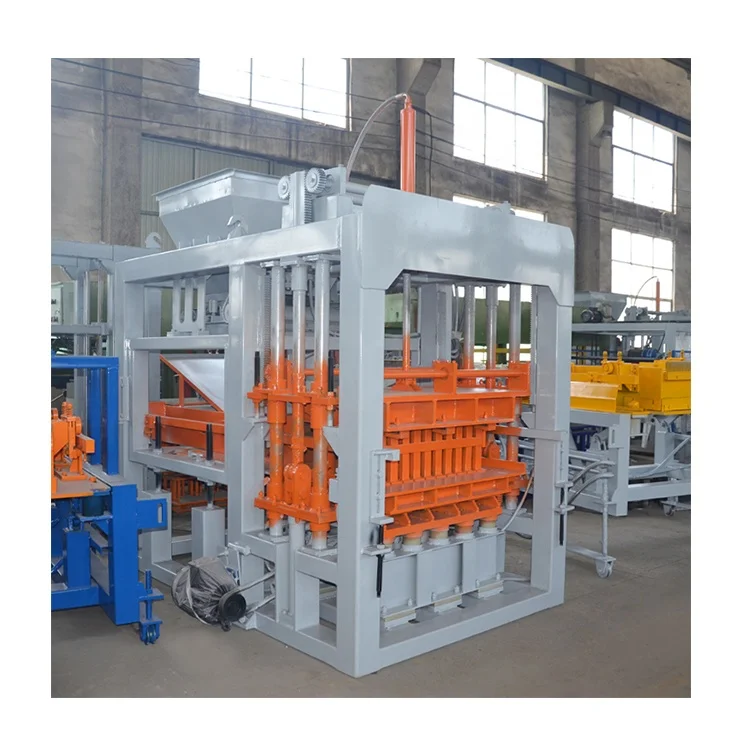

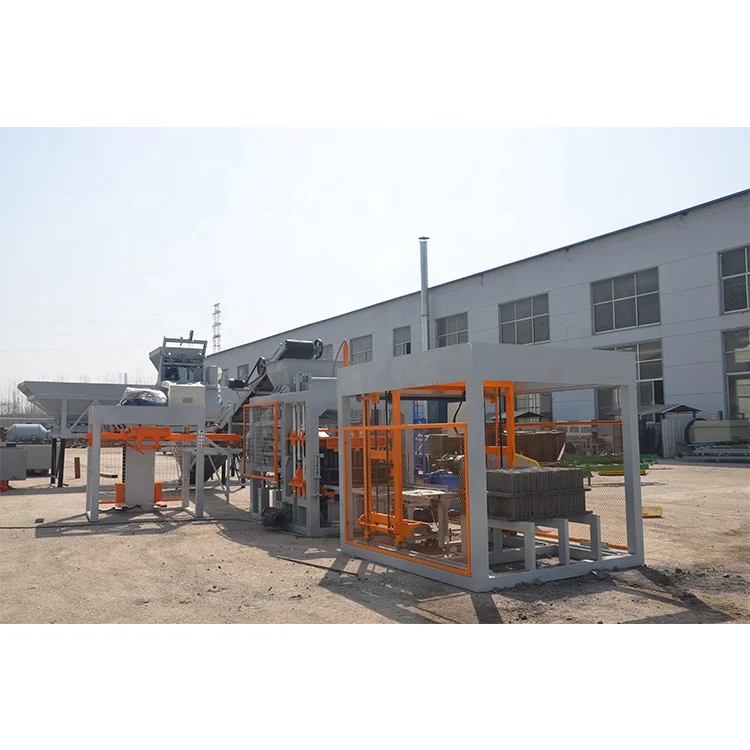


Description
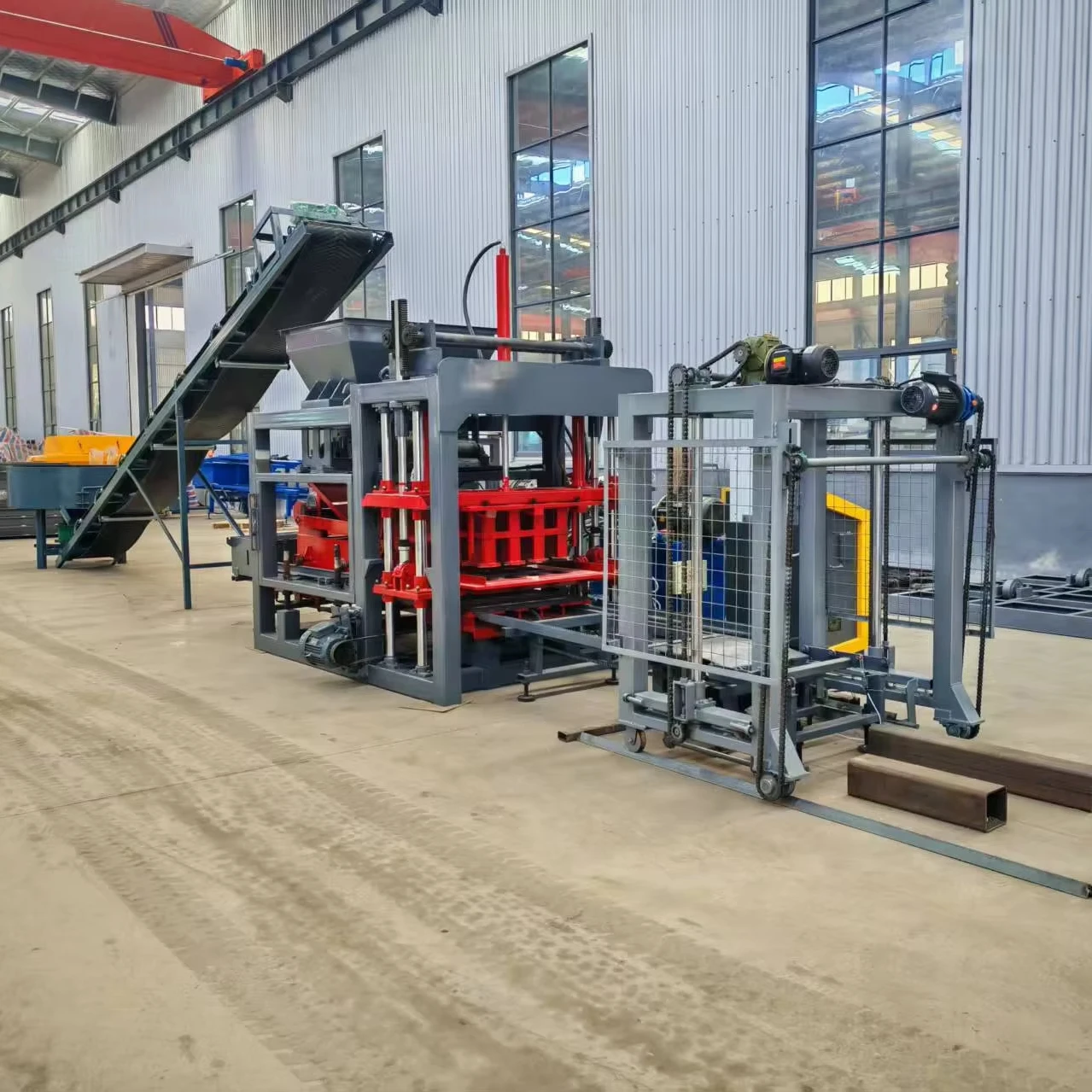
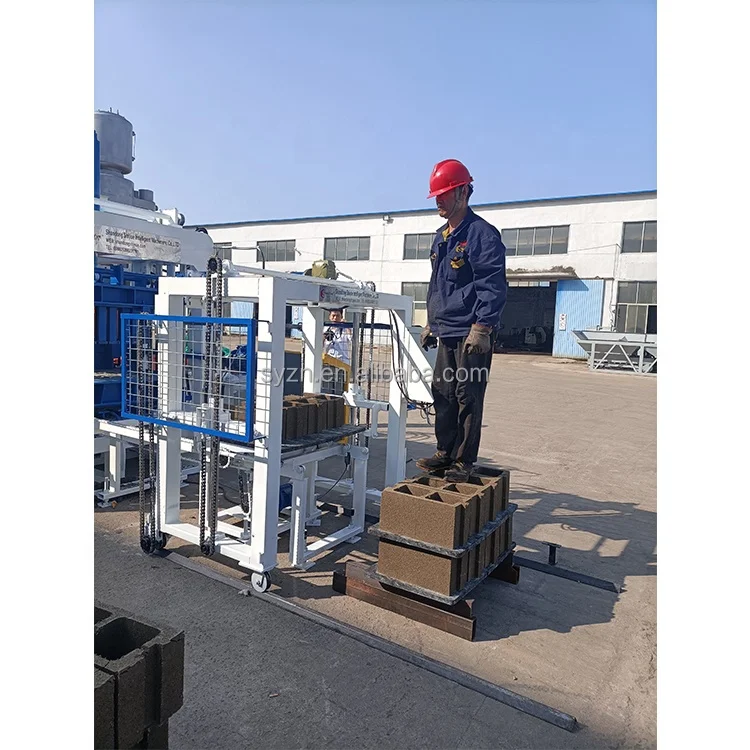
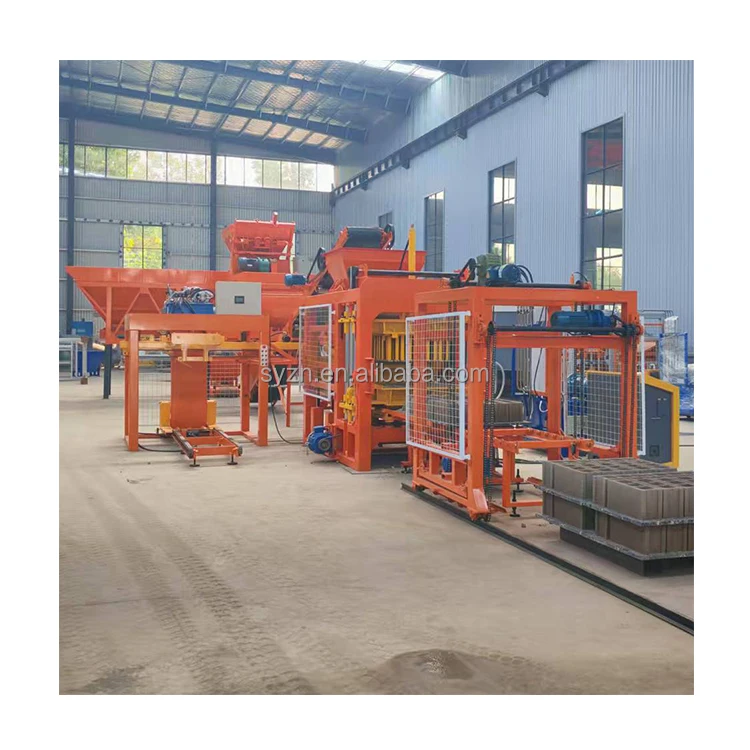
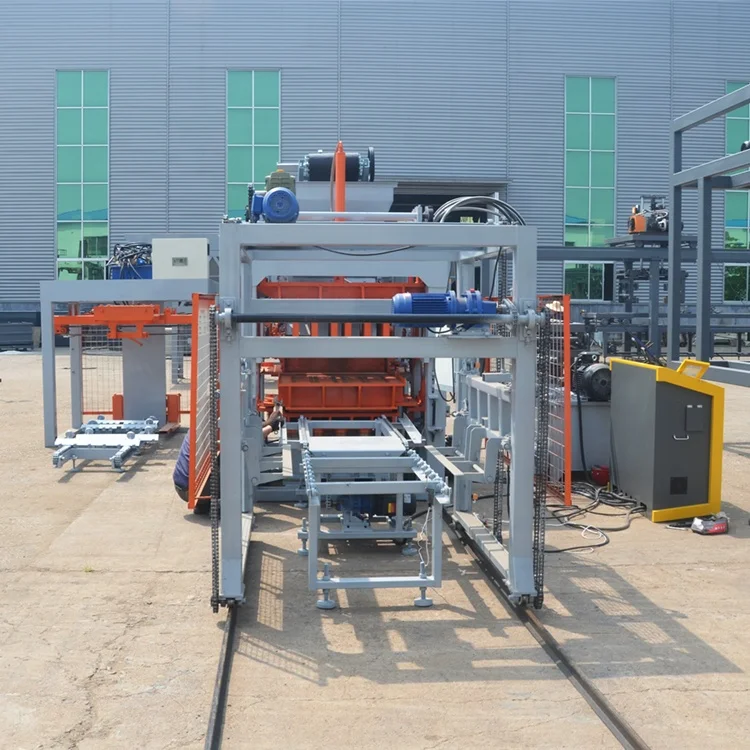
Format-matched system — the QT5-15 block machine, mould, pallet and handling are specified together against your actual block formats and local aggregate, not assembled from a catalogue default.
Technical Specifications
| Parameter | Value |
|---|---|
| Model | QT5-15 |
| Product Type | Fully Automatic Concrete Block Making Machine |
| Overall Dimensions (L×W×H) | 7100×1600×2610 mm |
| Molding Cycle | 15 s |
| Vibration Frequency | 0–60 Hz |
| Vibration Force (Exciting Power) | 40 kN |
| Total Power | 33.5 kW |
| Mixer Model | JS500 |
| Pallet Size | 1100×550 mm |
| Total Weight | 5 T |
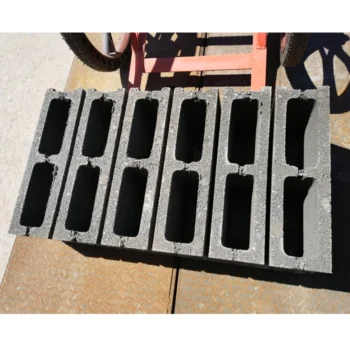
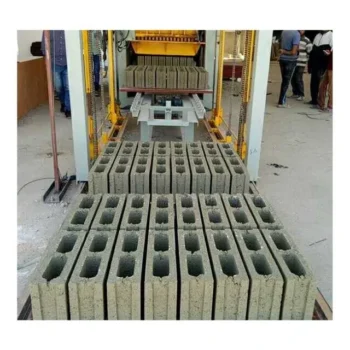
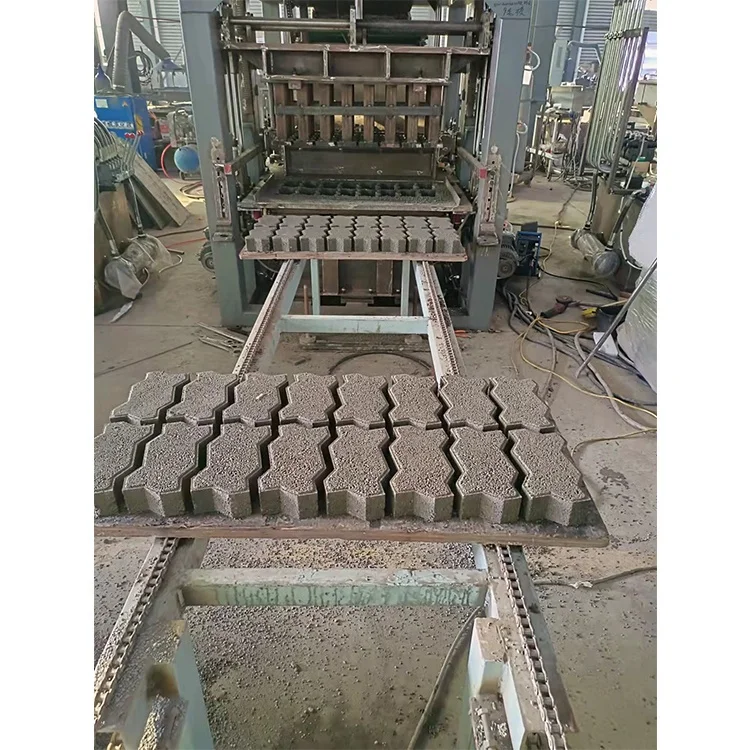
| Applied Products | Paver, solid block, hollow block, curbstone |
| Raw Materials | Crushed stone, sand, cement, dust, fly ash |
| Control System | PLC control system |
| Hydraulic Station | Included |
| Included Line Equipment | Pallet feeder, brick conveyor, block sweeper, manual hydraulic trolley |
| Output — Hollow Block 400×200×200 mm | 5 pcs/mould, 450 pcs/hr, 3600 pcs/8 hr |
| Output — Hollow Block 400×150×200 mm | 6 pcs/mould, 540 pcs/hr, 4320 pcs/8 hr |
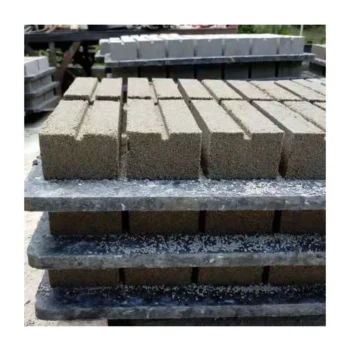
| Output — Solid Brick 400×100×200 mm | 8 pcs/mould, 720 pcs/hr, 5760 pcs/8 hr |
| Automation Level | Fully automatic |
Application Suitability
| Application | Material or Output |
|---|---|
| Hollow block production for wall construction | Crushed stone, sand, cement and fly ash; 400×200×200 mm and 400×150×200 mm formats |
| Solid brick manufacturing for load-bearing structures | Cement, sand and stone dust; 400×100×200 mm format |
| Paving block production for driveways and walkways | Crushed stone and cement with high vibration compaction |
| Curbstone forming for road and site perimeter works | Heavy aggregate mix on 1100×550 mm pallets |
What "450 Pieces per Hour" Actually Means on the QT5-15 Block Machine Specifications
Every output figure on this page is tied to a specific block format, mould cavity count and 15-second cycle — no hidden assumptions.
When a buyer receives a quotation stating a flat hourly number, that number almost always assumes one particular mould. Switch to a different format and the real throughput shifts. I once watched a plant owner in Southeast Asia discover on commissioning day that the capacity he had planned his entire curing yard around was based on a 4-inch hollow block, while his market mostly bought 6-inch. His daily target was unachievable from day one [NEED_CITE: common block machine quotation practices and capacity assumptions]. The QT5-15 block machine specifications here list three formats separately — hollow 400×200×200 mm at 5 pcs/mould, hollow 400×150×200 mm at 6 pcs/mould, and solid 400×100×200 mm at 8 pcs/mould — so the buyer sizes the line against the format that actually moves in their market.
Matching the Mould to the Block Your Market Sells
The QT5-15 covers hollow blocks, solid bricks, pavers and curbstones from a single press. The 1100×550 mm pallet defines how many cavities fit per cycle, and the mould range determines which formats are commercially viable in your region. A technical buyer choosing QT5-15 block machine specifications should start with the formats that local contractors order most, then confirm that the corresponding mould is included in the quotation and that its cycle time is accounted for in the capacity calculation.
How Local Aggregate Changes the Equation
Vibration force at 40 kN and a variable 0–60 Hz frequency must be matched to the density and gradation of the aggregate you can actually source. In volcanic ash regions of Indonesia, the fine particle shape demands longer vibration and different water ratios compared to crushed granite [NEED_CITE: effect of aggregate shape on concrete block compaction]. Sending a sample of your local sand and stone before the mould is finalised allows the vibration profile and mix design to be set against real material rather than a laboratory default.
Reading the Numbers That Matter
The 33.5 kW total power covers the press, JS500 mixer and all line conveyors, which determines the transformer capacity you need on site. The 7100×1600 mm machine footprint, plus clearance for the pallet feeder and block sweeper, defines the minimum bay width. The PLC control system governs the 15-second molding cycle, and confirming the display language before production avoids a situation where operators cannot interpret fault codes during the first week of commissioning [NEED_CITE: PLC interface language options for export machinery].
The Cost of Skipping Pallet and Format Checks
When pallet size is chosen without checking the curing racks and forklift already in the yard, pallets either do not stack or exceed the forklift’s rated load. When voltage and frequency are not confirmed before the motor is wound, a rewinding delay pushes commissioning back by weeks. These are not engineering failures — they are ordering-process failures that a complete QT5-15 block machine specifications checklist prevents.
Why Buyers Specify Here
The machine, mould, pallet and handling equipment are proposed as one system with a line layout that states the block format assumed for every capacity figure. Mould drawings are provided before production so the buyer can confirm cavity count against their product list. Voltage, frequency and PLC language are locked in writing before the electrical panel is assembled. Factory testing uses the buyer’s target format, and a test record is shipped with the machine.
Documentation & Verification
- Line layout showing capacity calculated per block format and mould
- Mould drawing and format list confirming cavity count and cycle time
- Pallet specification matched to your curing rack dimensions
- Voltage and PLC display language confirmation sheet
- Factory test record on your specified block format before dispatch
- Hydraulic and electrical schematic for on-site maintenance reference
Installation, Commissioning & Support
- 7100×1600 mm footprint requires a level concrete pad with clearance for the pallet feeder
- 33.5 kW total load needs a dedicated three-phase circuit matching your confirmed voltage
- Machine ships dismantled for container loading and is reassembled on your foundation
- First-day commissioning sets vibration frequency and cycle time to your mix design
- Operator training covers PLC fault codes in your confirmed display language
- Wear parts list and mould maintenance schedule provided at handover
What to Include in Your Inquiry
Send the exact block formats your market buys most, the local sand or aggregate type you plan to use, and your available three-phase voltage and frequency. If you already have curing racks or a forklift, share the pallet dimensions they accommodate so the 1100×550 mm pallet can be verified or adjusted before the quotation is finalised.
Frequently Asked Questions
Q: How is the QT5-15 output verified per block format and what mould does each figure assume?
A: Each output line — 3600 pcs/8 hr for 400×200×200 hollow, 4320 for 400×150×200, and 5760 for 400×100×200 solid — assumes a specific mould cavity count and the 15-second cycle. The quotation includes a capacity calculation sheet that names the exact format used for each number.
Q: How is vibration force and hydraulic pressure matched to my local aggregate?
A: We ask for a sample of your sand and crushed stone before the mould is built. The 40 kN vibration force and 0–60 Hz frequency range are then set against that material’s density and particle shape, and confirmed during the factory test.
Q: What is the realistic mould change time on the QT5-15?
A: Mould change time depends on the format size and whether quick-release bolts are specified. We confirm the estimated change time per format pair during the proposal stage so you can plan daily format switches realistically.
Q: How do the 1100×550 mm pallets fit my existing curing area and forklift?
A: The pallet specification is cross-checked against your curing rack spacing and forklift rated load before the order is confirmed. If your racks are narrower, an alternative pallet size can be discussed during the proposal.
Q: How are voltage, frequency and PLC language confirmed before shipment?
A: These are written into the quotation and signed off before the electrical panel is built. The PLC display language is set to your preference, and the factory test runs on your exact voltage and frequency.