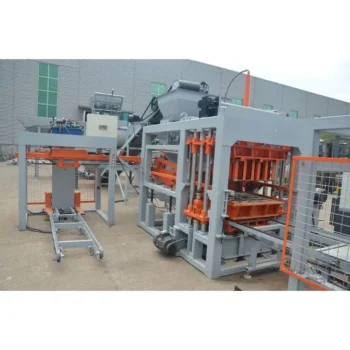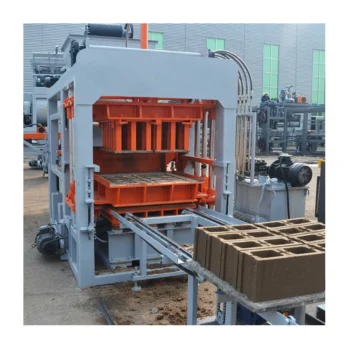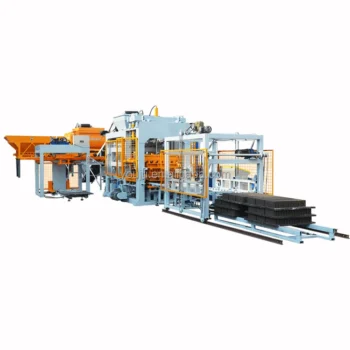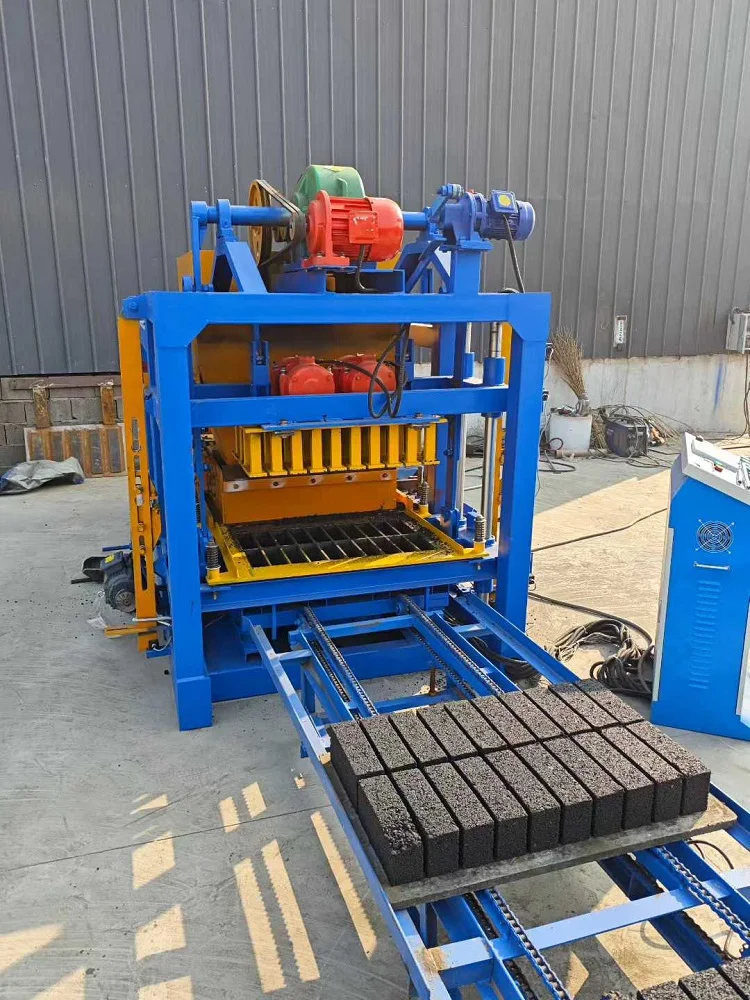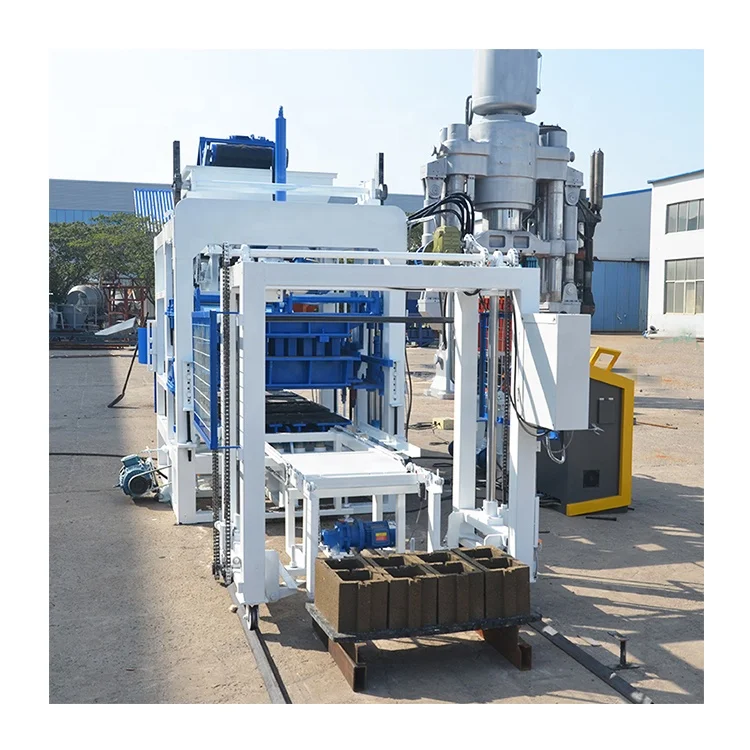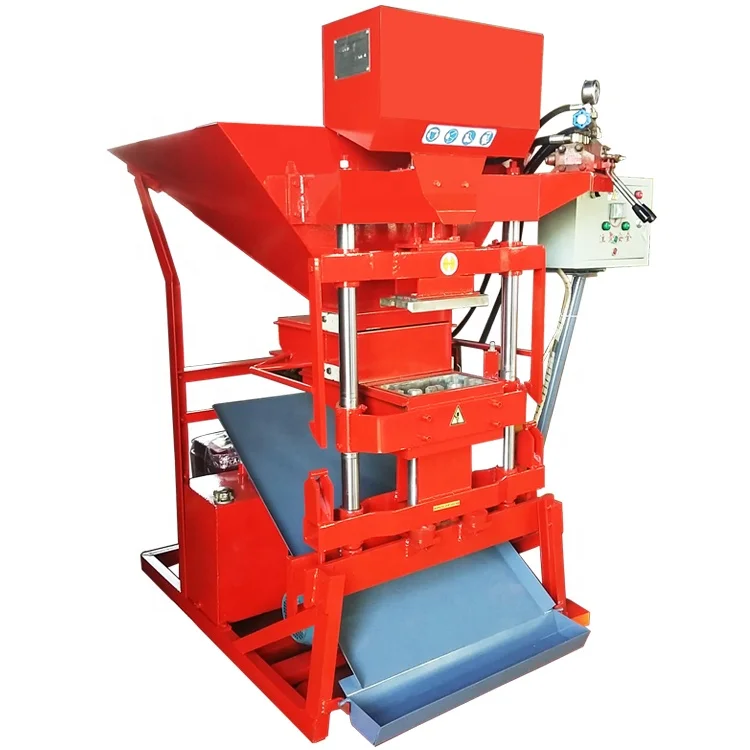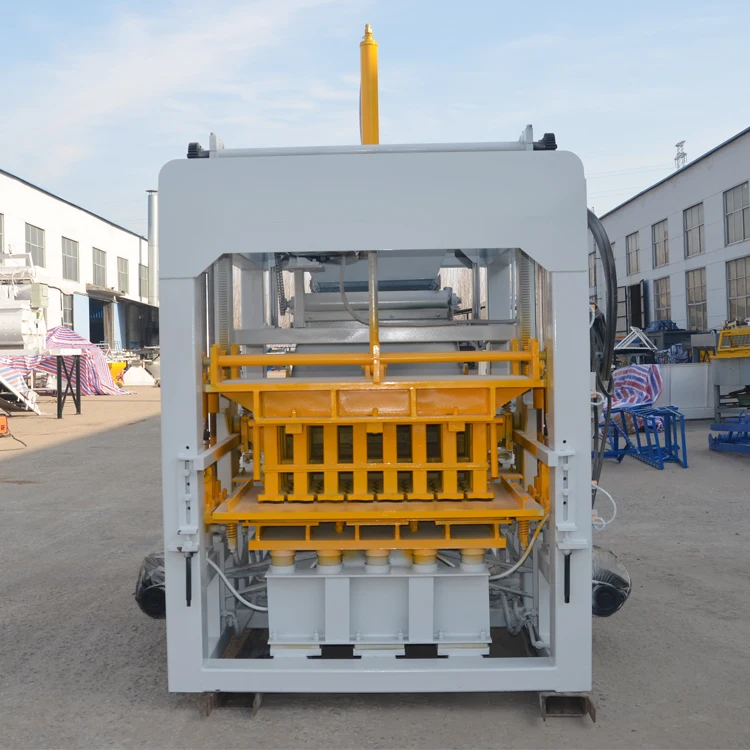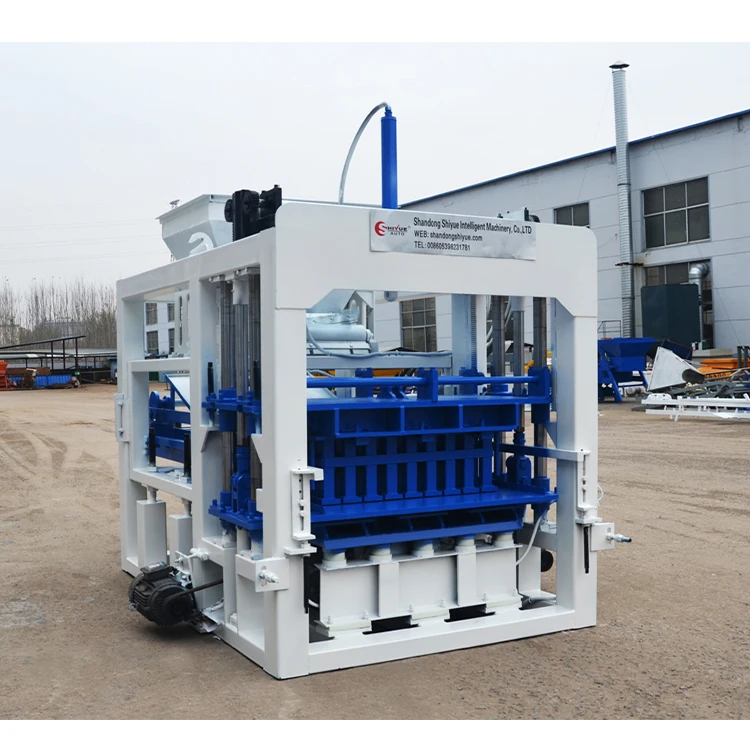
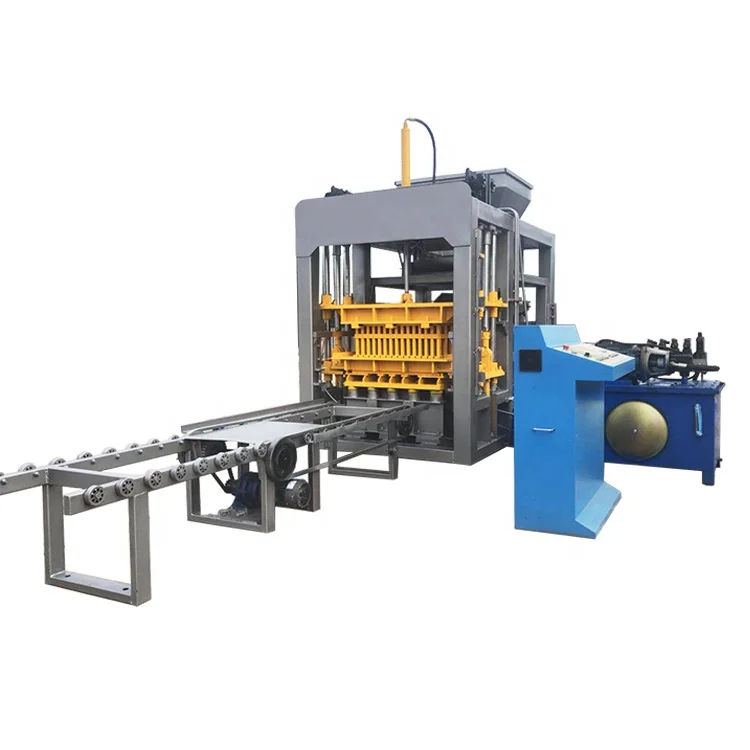
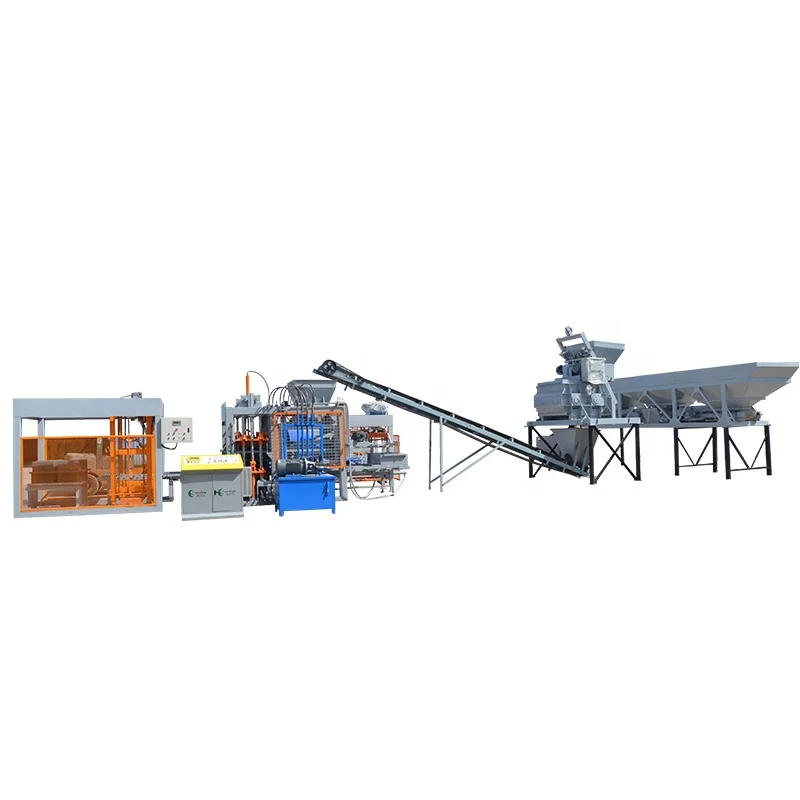
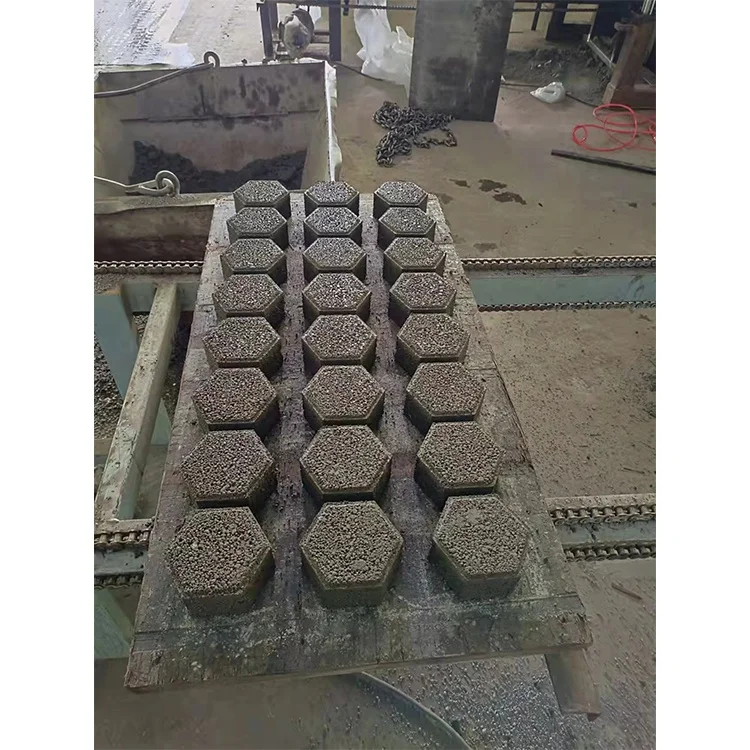

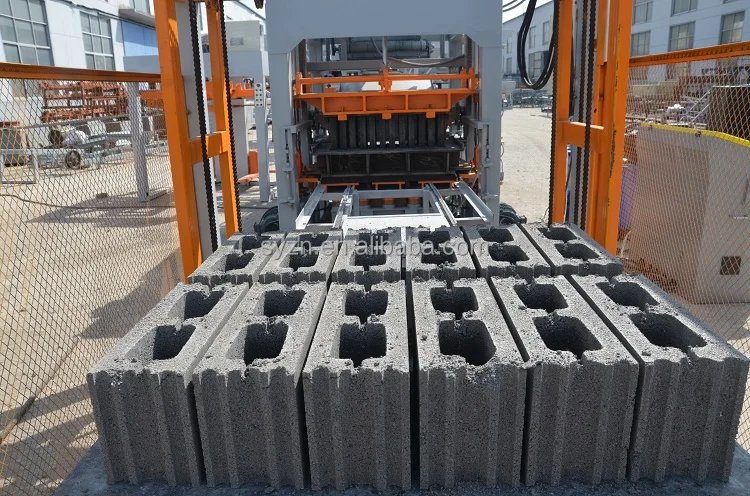
Description
Block format dictates capacity — we quote output per specific mould size and cycle time rather than a single headline figure, so the QT5-15 capacity reflects the actual interlocking or hollow format a plant runs daily.
Technical Specifications
| Parameter | Value |
|---|---|
| Model | QT5-15 |
| Product Type | Cement Interlocking Brick Making Machine |
| Overall Dimensions (L×W×H) | 7400×1950×2800 mm |
| Pallet Size | 1100×550 mm |
| Vibration Force | 80 kN |
| Vibration Frequency | 0-60 Hz |
| Vibration Form | Platform Vibration |
| Moulding Mode | Automatic loading, vibration moulding |
| Demolding Method | Hydraulic |
| Molding Cycle | 15-20 s (basis not stated in source — confirm block format / material) |
| Overall Power | 32 kW |
| Total Mass | 5000 kg |
| Control System | PLC with touch screen interface |
| Output: Hollow Block 400×200×200 mm | 900-1200 pcs/h, 7200-9600 pcs/8hr (5 pcs/mould, 15-20s cycle) |
| Output: Hollow Block 400×150×200 mm | 1080-1440 pcs/h, 8640-11520 pcs/8hr (6 pcs/mould, 15-20s cycle) |
| Output: Solid Brick 240×115×53 mm | 5760-7680 pcs/h, 46080-61440 pcs/8hr (32 pcs/mould, 15-20s cycle) |
| Output: Rectangular Paver 200×100×60 mm | 3600-4500 pcs/h, 28800-36000 pcs/8hr (25 pcs/mould, 20-25s cycle) |
| Output: Zigzag Brick 225×112.5×60 mm | 2304-2880 pcs/h, 18432-23040 pcs/8hr (16 pcs/mould, 20-25s cycle) |
| Block Compressive Strength | >15 MPa |
| Recommended Factory Area | 1000 m² |
Application Suitability
| Application Scenario | Compatible Materials and Output Focus |
|---|---|
| Hollow block production for structural walls | Crushed stone, sand, cement, water; fly ash or slag replacement up to 70% |
| Interlocking brick manufacturing for paving | Sand, fine aggregate, cement; high vibration density for abrasion resistance |
| Solid brick runs for load-bearing construction | Gangue, slag, sand, cement; hydraulic pressure matched to mix stiffness |
| Rectangular and zigzag paver production | Colored face mix or standard grey body; 20-25s cycle for thicker formats |
What the Headline Capacity Number Hides About Interlocking Formats
A machine rated at 1200 pieces per hour on large hollow blocks will produce far fewer interlocking pavers in that same hour.
When technical buyers review cement interlocking brick making machine specifications, the first number they see is often a peak output tied to the largest, simplest block the machine can press. That single figure becomes the basis for plant revenue projections, shift planning, and return calculations. The problem emerges when the buyer’s actual market demands smaller, denser formats like zigzag pavers or interlocking bricks, which require more pieces per mould but longer vibration cycles to achieve adequate compaction. The daily output can drop significantly compared to the headline number, leaving the plant unable to meet order volumes without adding shifts [NEED_CITE: block machine capacity calculation standards by format].
Format-Specific Cycle Times and Honest Output
Every capacity figure for the QT5-15 is tied to a named block format, mould cavity count, and cycle duration. Hollow blocks at 400×200×200 mm press five units per cycle in 15-20 seconds, yielding 7200-9600 pieces per eight-hour shift. Rectangular pavers at 200×100×60 mm run 25 pieces per mould but require a 20-25 second cycle due to the denser mix and higher vibration energy needed for surface finish, resulting in 28800-36000 pieces per shift. This format-by-format breakdown lets a buyer match the cement interlocking brick making machine specifications directly to the product their market actually purchases.
Mould Selection and Changeover Reality
Switching between a hollow block mould and an interlocking paver mould involves physical replacement of the mould box, adjustment of the vibration platform stops, and PLC programme selection for the new cycle parameters. The quick replacement system on the QT5-15 is designed to reduce this changeover, but it still requires trained operators and a planned production schedule. Running three different formats in a single shift means losing productive time to each changeover, which is why we recommend buyers identify their two or three highest-volume formats and order those moulds from the start, adding custom moulds later as market demand justifies the investment [NEED_CITE: mould changeover procedures for hydraulic block presses].
Vibration Force, Mix Design, and Block Strength
The 80 kN vibration force delivered through the platform must be matched to the buyer’s specific mix design and local aggregate. A mix heavy in fly ash flows differently under vibration than one based on crushed granite, and the 0-60 Hz frequency range allows adjustment to suit. If the vibration profile is not tuned to the material, the resulting blocks may show inconsistent density — strong in some batches, friable in others. We configure the hydraulic pressure and vibration duration against sample materials before finalizing the cement interlocking brick making machine specifications, ensuring the stated compressive strength above 15 MPa is achievable with the buyer’s actual raw materials.
Reading the Specifications That Actually Matter
The 1100×550 mm pallet size is a fixed constraint that determines curing rack dimensions, forklift tine spacing, and floor space allocation in the yard. Buyers who order without checking this against their existing handling equipment face costly adaptations on arrival. The 32 kW overall power requirement dictates the transformer capacity and dedicated circuit sizing, while the 5000 kg total mass requires a reinforced concrete foundation slab rather than simple floor placement. The PLC touch screen interface controls all cycle parameters, and confirming the display language before production avoids commissioning delays when the machine arrives on site.
The Cost of Skipping Format Verification
Ordering a block machine based on a single capacity number without verifying the cycle time for the target format leads to underperforming plants and frustrated buyers. When the actual interlocking brick requires a longer cycle than quoted, daily revenue falls below projections while fixed costs remain unchanged. Buyers who discover this mismatch after delivery have limited recourse — the machine is mechanically sound, just configured for a different product mix than what the market demands [NEED_CITE: common block machine procurement mismatches by format].
Why Configuration Starts with the Buyer’s Material
Block machinery built around a catalogue default mix design often underperforms when it meets real-world aggregates. Our approach begins with the buyer’s local sand, stone, and cementitious materials, testing vibration and pressure combinations to find the profile that delivers consistent density and acceptable cycle time. The mould design follows the formats that sell in the buyer’s market, including custom drawings where standard options do not cover local preferences. The pallet size, automation level, and supporting equipment are specified as one matched system, so the press is never left waiting for material or pallets. Documentation includes a capacity calculation that names the exact block format assumed for each output figure, a mould drawing and format list, pallet specifications, and voltage confirmation — all verified before production begins.
Documentation & Verification
- Line layout stating block format assumed for each capacity figure
- Mould drawing and format list for standard and custom cavities
- Pallet specification sheet with size, material, and load rating
- Voltage, frequency, and PLC language confirmation before production
- Factory test record on buyer’s target block format before dispatch
Installation, Commissioning & Support
- Reinforced foundation required for 5000 kg mass and 80 kN vibration loads
- Dedicated 32 kW circuit with voltage and frequency confirmed to local grid
- Machine arrives dismantled for container loading; reassembly on site
- PLC touch screen parameter setting for each mould format during commissioning
- Operator training on mould change procedure and cycle adjustment
- Hydraulic and vibration wear parts list with replacement intervals
What We Need to Size This Machine to Your Product
Provide the exact block formats your market demands, including dimensions and required compressive strength. Share a sample or analysis of your local aggregate and cementitious materials so we can match vibration and pressure settings. Confirm your available factory floor area, ceiling height, and existing curing rack and forklift specifications so the 1100×550 mm pallet system integrates without modification.
Frequently Asked Questions
Q: How is the output capacity calculated for each block format?
A: Each capacity figure lists the block dimensions, number of cavities per mould, and cycle time in seconds. The hourly rate is derived by dividing 3600 seconds by the cycle time and multiplying by the cavity count. The eight-hour shift figure assumes continuous operation, which requires matched upstream material feeding and downstream pallet handling to avoid press idle time.
Q: Can the machine process my local aggregate and fly ash mix?
A: The 0-60 Hz vibration frequency and adjustable hydraulic pressure allow tuning to different material profiles. We request a sample of the buyer’s aggregate and cementitious materials to test compaction behaviour and determine the vibration duration needed to achieve consistent density above 15 MPa without extending the cycle beyond practical limits.
Q: How long does a mould change take between formats?
A: The quick replacement system reduces physical mould swapping, but the total changeover includes clearing the press, installing the new mould box, adjusting platform stops, and loading the correct PLC cycle programme. Operators trained on the procedure can complete this within a planned window, though running many formats in one shift still reduces net productive time.
Q: What pallet size does the QT5-15 require and can it be changed?
A: The machine is built around a 1100×550 mm pallet, which determines the maximum block area per cycle. This size is fixed by the vibration platform and pallet feeding mechanism. Buyers must verify that their curing racks, forklift equipment, and yard layout accommodate this dimension before confirming the order.
Q: Which moulds come standard and how are custom formats handled?
A: Standard moulds cover common hollow blocks, solid bricks, and rectangular pavers. Custom interlocking or specialty formats are designed from buyer drawings or market samples, with cavity count and cycle time calculated for the new geometry. Each custom mould undergoes the same capacity verification as standard options before quotation.