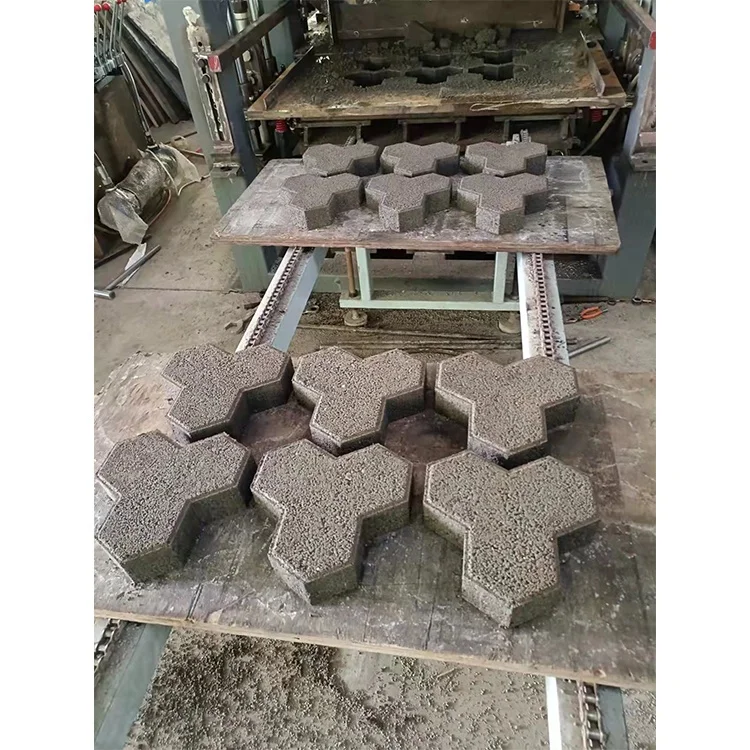
Description
Honest capacity by format — every output figure for the QT5-15 block making machine is tied to a specific block dimension and mould configuration, so you know exactly what the line will produce before it ships.
Technical Specifications
| Parameter | Value |
|---|---|
| Model | QT5-15 |
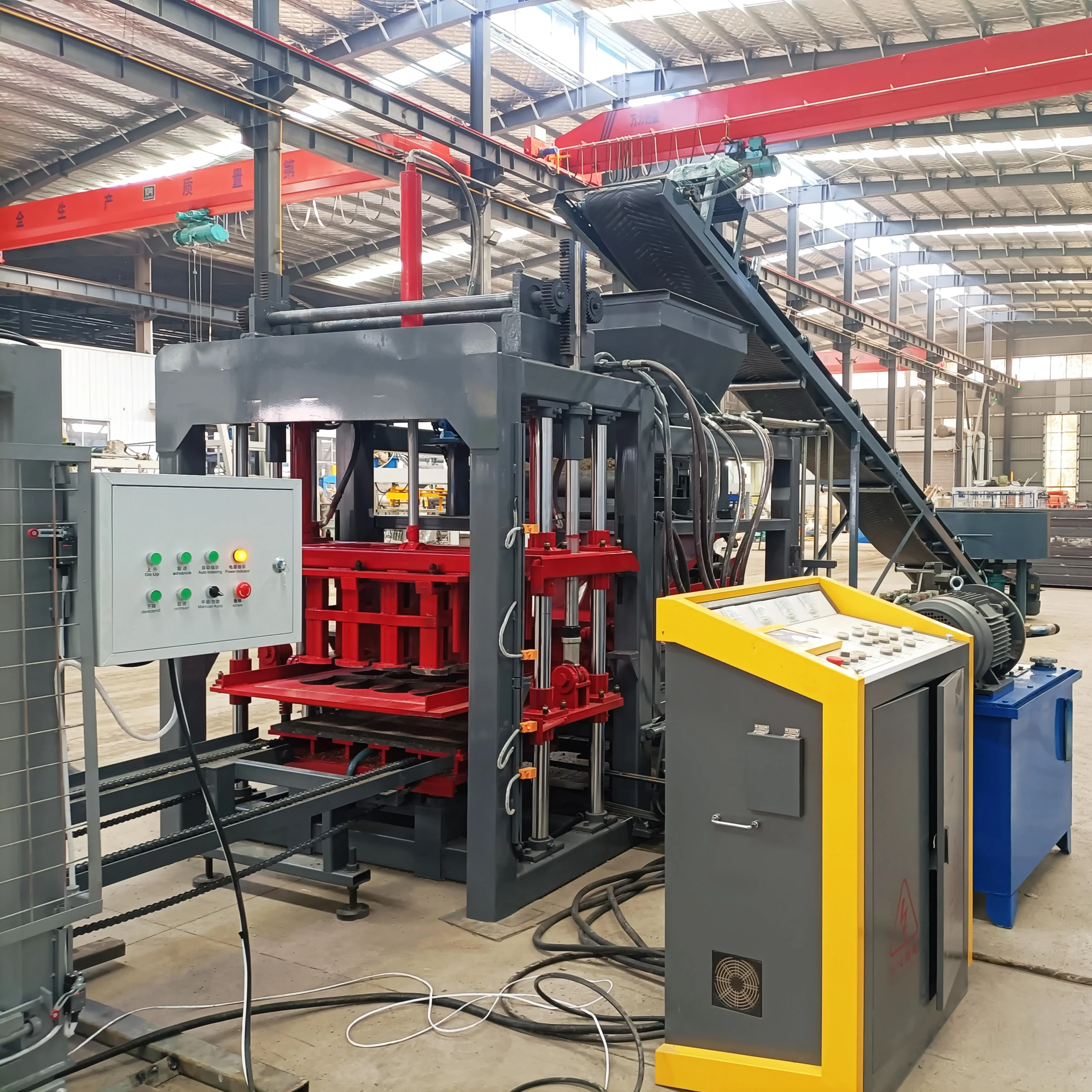
| Product Type | Automatic Hydraulic Block Making Machine |
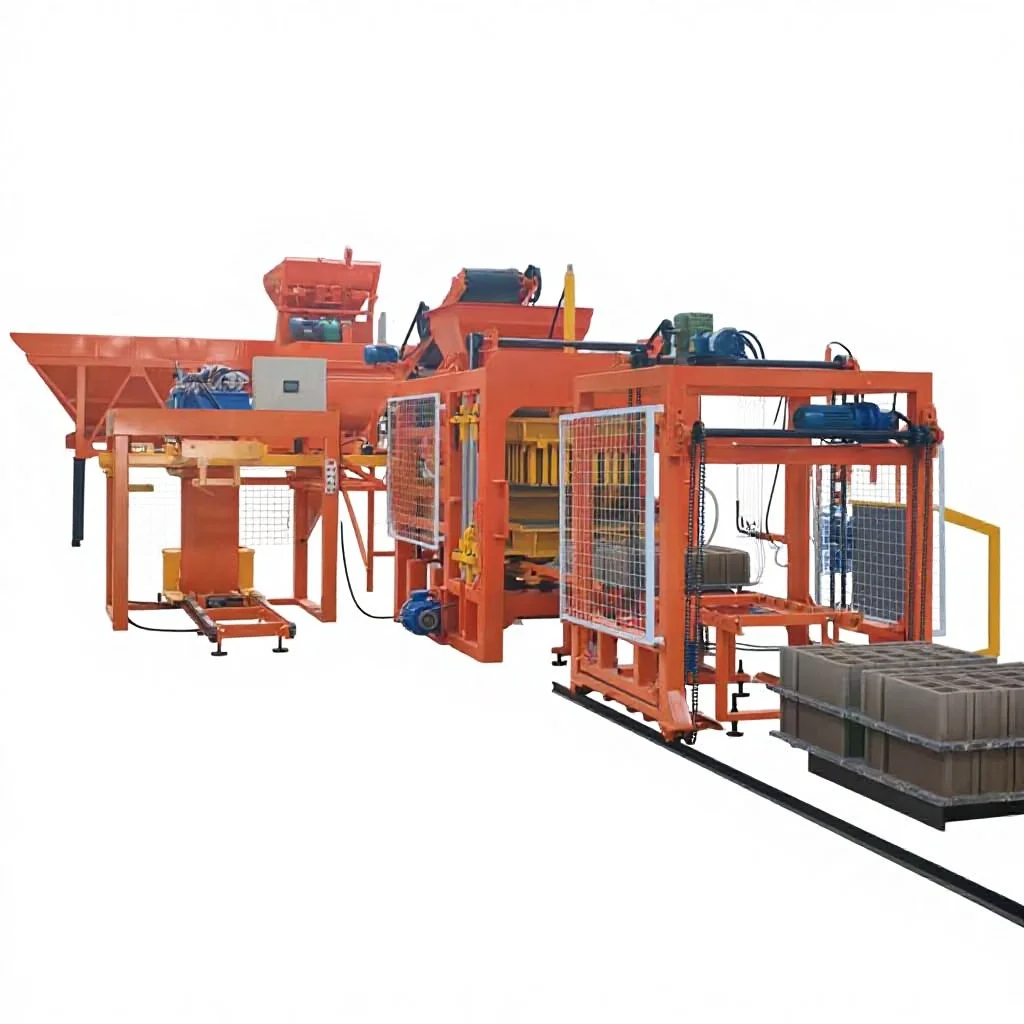
| Overall Dimensions (L×W×H) | 7100 x 1600 x 2610 mm |
| Moulding Cycle | 15 s (basis not stated in source — confirm block format, material, and thickness) |
| Vibration Frequency | 0–60 Hz |
| Exciting Power | 40 KN |
| Rated Power | 33.5 kW |
| Mixer | JS500 |
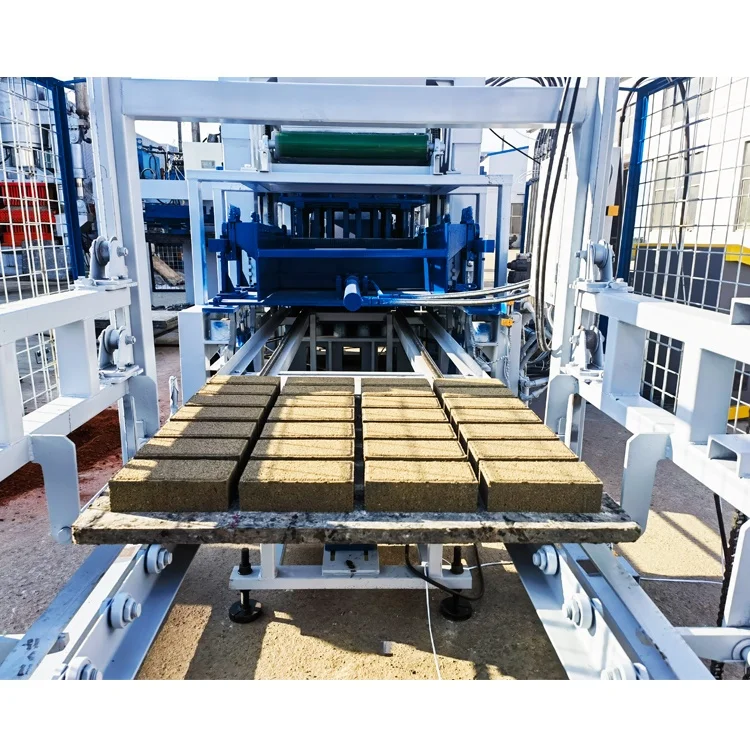
| Pallet Size | 1100 x 550 mm |
| Total Weight | 5 T (source value — verify against manufacturer catalog) |
| Control System | PLC control system |
| Hydraulic Station | Included |
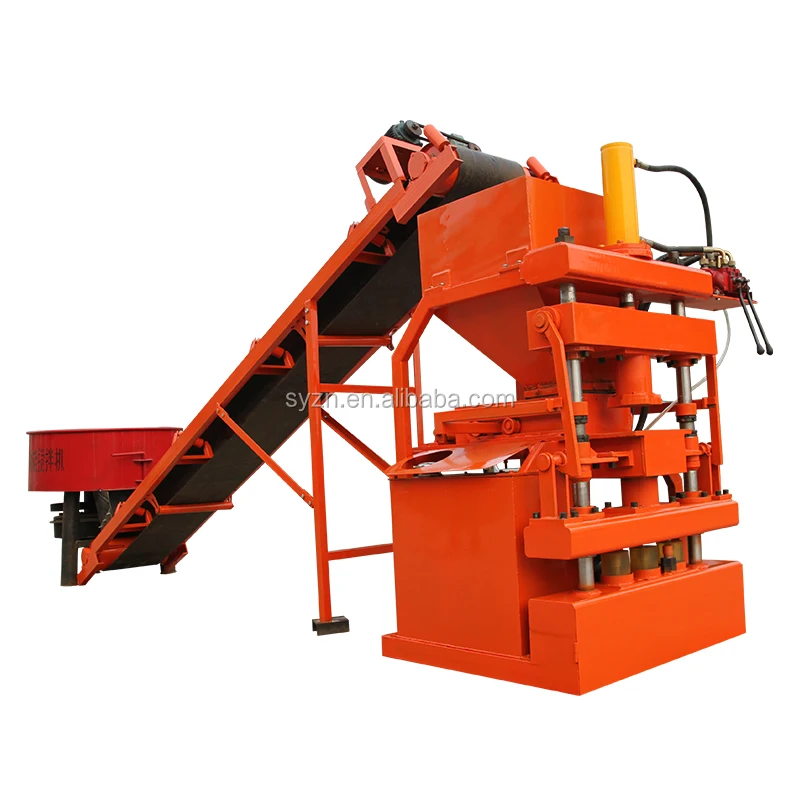
| Included Equipment | Block making machine, hydraulic station, PLC control system, pallet feeder, brick conveyor, block sweeper |
| Free Parts | Manual hydraulic trolley, spare parts and tools |
| Applied Products | Paver, solid block, hollow block, curbstone |
| Raw Materials | Crushed stones, sand, cement, dust, fly ash |
| Automation Level | Fully automatic |
| Mould Change System | Change mould to produce different block types |
Application Suitability
| Application | Material or Output |
|---|---|
| Hollow block 400×200×200 mm | 450 pcs/hr, 3600 pcs/8 hr (5 pcs/mould) |
| Hollow block 400×150×200 mm | 540 pcs/hr, 4320 pcs/8 hr (6 pcs/mould) |
| Solid brick 400×100×200 mm | 720 pcs/hr, 5760 pcs/8 hr (8 pcs/mould) |
| Paver and curbstone production | Crushed stone, sand, and cement blends matched to local aggregate |
| On-site block production for contractors | Locally available sand, fly ash, and stone dust with cement binder |
What "450 Blocks per Hour" Actually Means for the QT5-15 Block Making Machine Specifications
Capacity is meaningless without the block format attached to it.
When a quotation says the QT5-15 produces 450 blocks per hour, that figure assumes a 400×200×200 mm hollow block with five cavities per mould. Switch to a 400×100×200 mm solid brick with eight cavities and the same cycle yields 720 pieces per hour. Buyers who skip this detail end up with a machine that cannot meet the daily volume their market demands [NEED_CITE: common causes of block plant underperformance in emerging markets]. The QT5-15 block making machine specifications must always be read alongside the mould format and cycle assumption.
Matching Mould Format to Market Demand
Technical buyers choose the QT5-15 because it covers the hollow block and solid brick dimensions most common in Middle Eastern and African construction standards. The mould change system lets a single press serve multiple product lines, but the cycle time and output shift with every format swap. Confirming which formats your market actually buys — and in what volume ratio — determines whether one QT5-15 line is enough or a second press is needed.
Pallet Size and Curing Area Alignment
The 1100×550 mm pallet is not arbitrary. It must fit the curing racks already in your yard and match the fork truck tine spacing on site. A pallet that is too wide for existing racks forces a rack rebuild; one that is too narrow wastes press area and lowers output per cycle. Before the QT5-15 ships, the pallet dimension should be locked against your curing infrastructure [NEED_CITE: pallet and curing rack compatibility in block production].
How Vibration Force and Hydraulic Pressure Shape Block Density
The 40 KN exciting power and hydraulic station work together: vibration consolidates the mix into the mould cavity while hydraulic pressure locks the shape before the block leaves the press. If your local aggregate is high in clay or fines, the vibration frequency range of 0–60 Hz allows tuning to prevent surface cracking. A mix that works in the factory test may behave differently on site, which is why the JS500 mixer configuration and raw material feed must reflect your actual supply, not a laboratory ideal. The QT5-15 block making machine specifications include the hydraulic station as standard, so pressure stability across long shifts is maintained without an external unit.
Reading the Exciting Power and Cycle Time Together
A 15-second moulding cycle sounds competitive, but it only holds when the block thickness, mix moisture, and vibration frequency are all within the tested range. Thicker kerbstones or denser paver mixes may need a longer cycle to achieve full compaction. The 33.5 kW rated power covers the press, vibration motor, and hydraulic pump simultaneously, so there is no hidden power draw from an auxiliary unit. When you compare QT5-15 block making machine specifications against other models in this tier, check whether the quoted cycle includes pallet feed and block sweep or only the press stroke itself.
The Hidden Cost of Ignoring Format-Specific Output
A buyer who budgets for 6,000 blocks per day based on a generic cycle claim will fall short when the actual product mix includes multiple hollow block sizes. Each format change stops the line for mould swap, pallet adjustment, and test runs. If the quotation does not state output per format, the daily plan has no foundation [NEED_CITE: block line downtime from unplanned mould changes]. This gap shows up weeks after commissioning, when the plant owner realizes the line cannot hit contract delivery volumes.
Why Sourcing Through This Channel Matters
Block machinery is the single focus here, so the QT5-15 is specified as a matched system — press, mould, pallet, and handling — rather than assembled from unrelated suppliers. Configuration is set against your actual mix design and target block format, not a catalogue default. Mould design covers the formats your market sells, and custom drawings are available when standard sizes do not match local building codes. Automation level is selectable, so you can start with the included pallet feeder and brick conveyor, then add stacking later. Installation support includes operator training on the PLC control system so your team can run the line independently from day one.
Documentation & Verification
- Line layout with capacity calculation stating the block format assumed for each output figure
- Mould drawing and format list confirming dimensions match your local construction standard
- Pallet specification sheet aligned with your existing curing rack and fork truck setup
- Voltage, frequency, and PLC display language confirmation before the QT5-15 ships
- Factory test record run on your specified raw material mix before dispatch
- Operation and maintenance manual covering daily greasing points and hydraulic fluid intervals
Installation, Commissioning & Support
- Foundation plan sized to the 7100×1600 mm footprint and 5 T operating weight of the QT5-15
- Dedicated electrical circuit rated for the 33.5 kW total draw with voltage and frequency confirmed pre-shipment
- Machine arrives with hydraulic station and PLC cabinet pre-wired for faster on-site connection
- First-run commissioning includes cycle tuning on your local aggregate and cement blend
- Operator training covers mould change procedure, PLC fault codes, and JS500 mixer loading sequence
- Wear parts list identifies hydraulic seals, vibration springs, and mould liners with reorder codes
What to Include in Your Inquiry
To get an accurate QT5-15 configuration, share the block formats your market demands, the daily volume target per format, and the raw materials available locally. Confirm the voltage and frequency at your site, the PLC display language your operators read, and the pallet size that fits your current curing racks. If you already run a mixer or conveyor upstream, note the model so the line can be matched without duplication.
Frequently Asked Questions
Q: How is capacity calculated for different block formats on the QT5-15?
A: Each output figure is based on a specific block dimension and mould cavity count. For example, a 400×200×200 mm hollow block uses a five-cavity mould at 450 pieces per hour, while a 400×100×200 mm solid brick uses an eight-cavity mould at 720 pieces per hour. Always confirm which format the quoted capacity assumes before comparing machines.
Q: What mould change time should I expect when switching formats?
A: Mould change on the QT5-15 involves unbolting the current mould, lifting it out, positioning the new one, and running a test cycle. Plan for a portion of a shift the first few times. With practice and the correct tools from the included spare parts kit, experienced operators reduce this to a shorter window.
Q: How do I confirm the pallet size works with my curing area?
A: Measure your existing curing rack shelf width and fork truck tine spacing. The QT5-15 uses a 1100×550 mm pallet. If your racks or handling equipment do not match, discuss alternatives before the order is locked so the line integrates without yard modifications.
Q: Which raw material mixes have been tested with this vibration and pressure setup?
A: The 0–60 Hz vibration range and hydraulic station have been run with crushed stone, sand, cement, fly ash, and stone dust blends. High-clay or high-fines aggregates may need frequency adjustment. Share your local material test report so the configuration matches what you can actually source.
Q: What documentation confirms voltage and PLC language before shipping?
A: A voltage and control language confirmation sheet is issued before production. It records the agreed voltage, frequency, and PLC display language so the QT5-15 arrives ready for your site electrician and operators without commissioning delays.