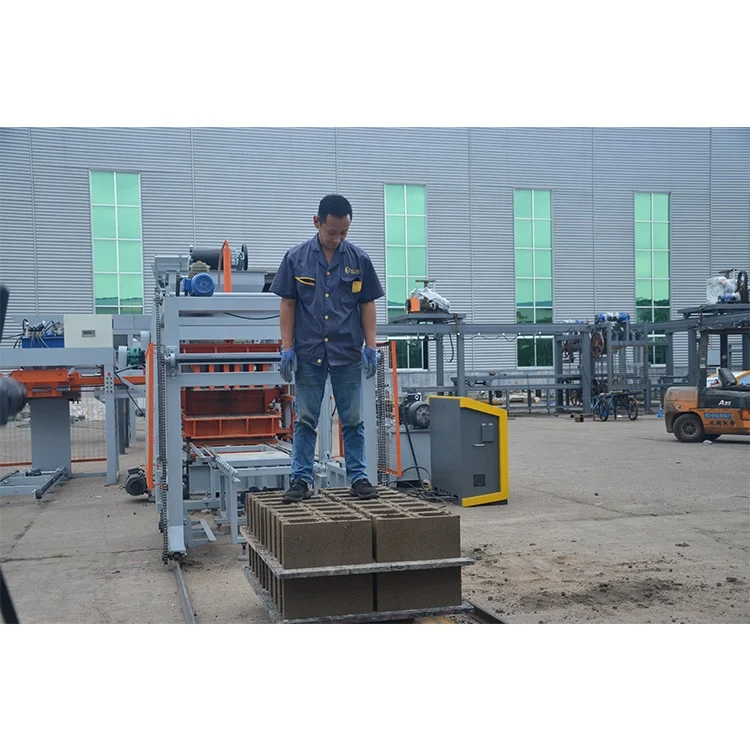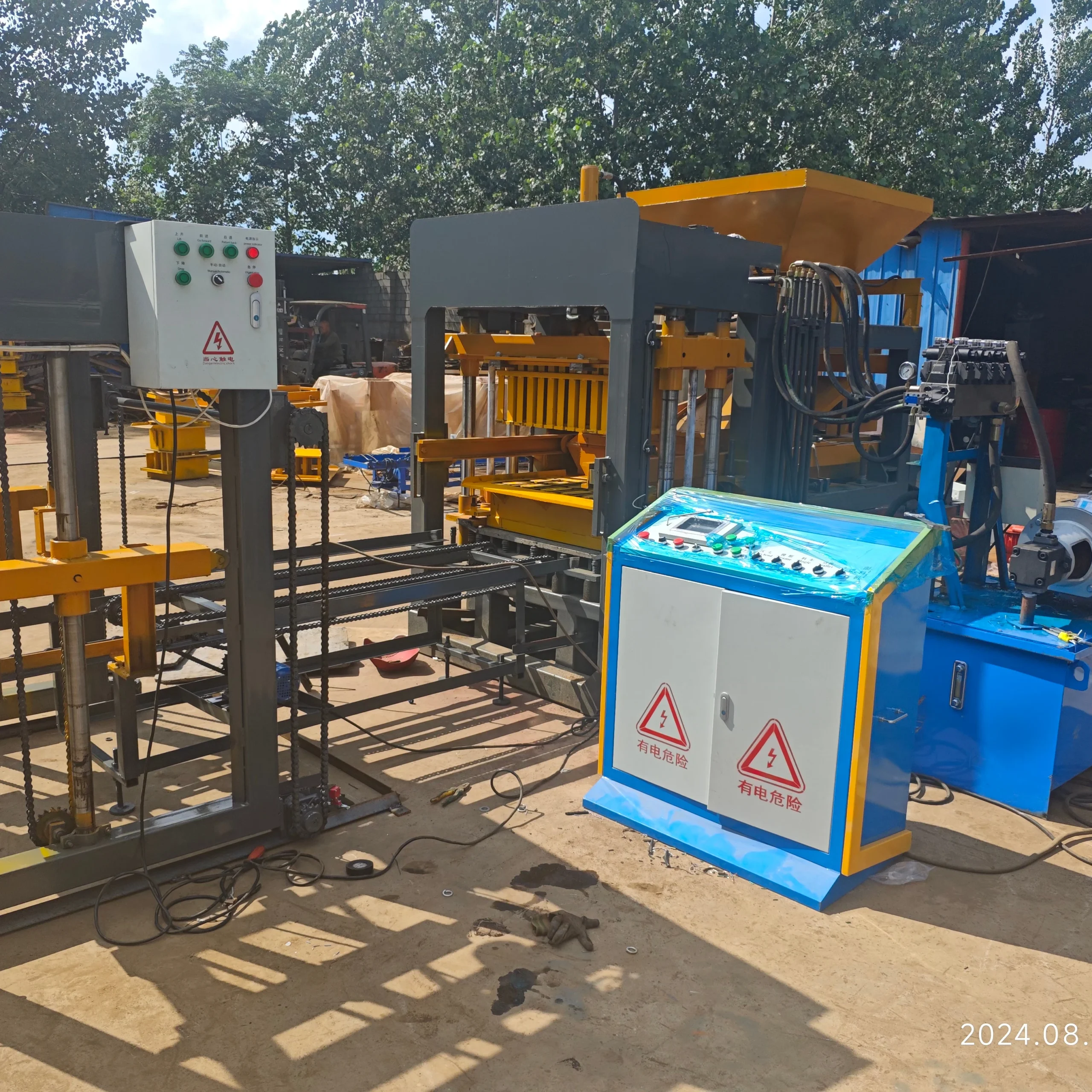
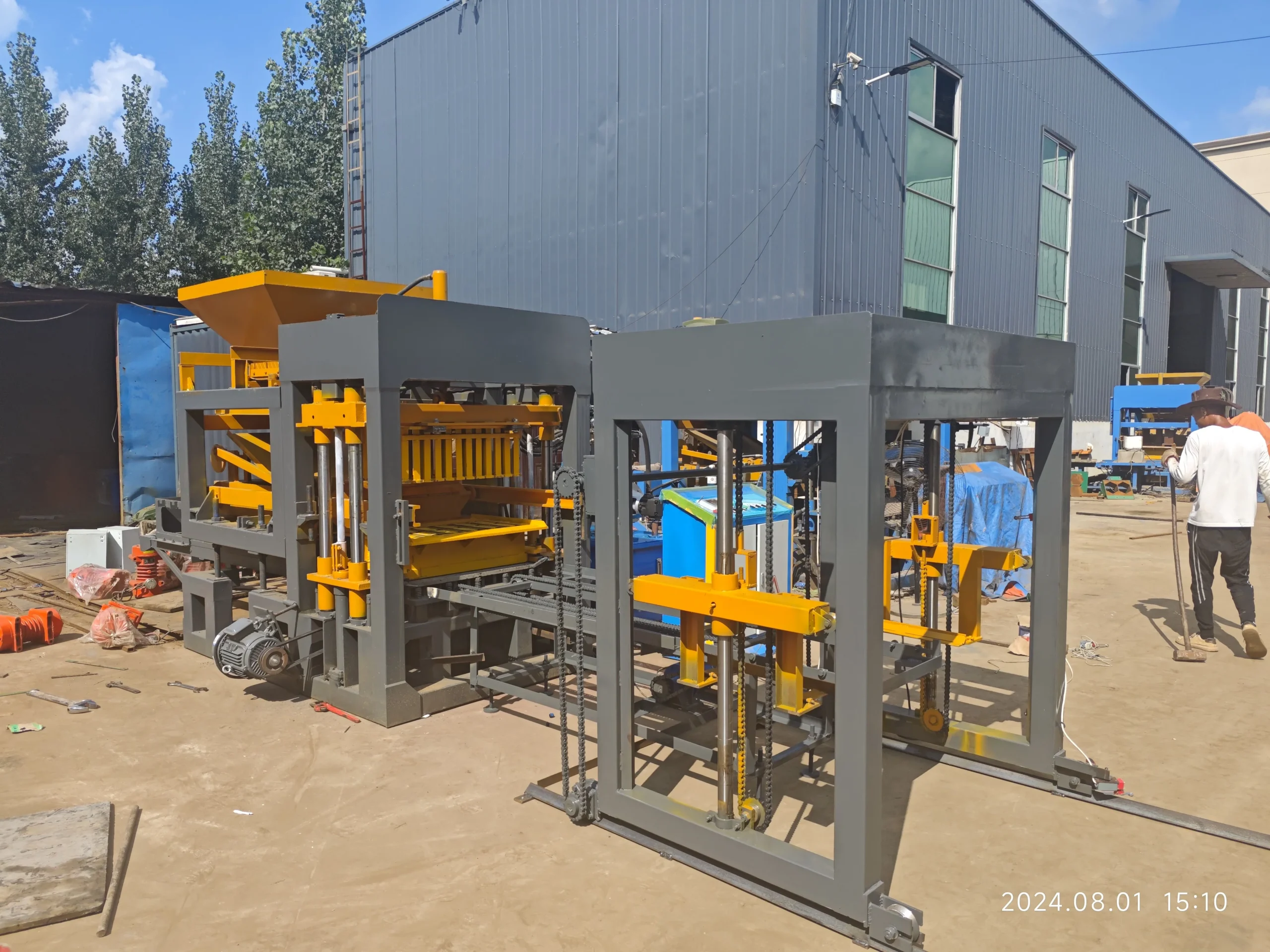
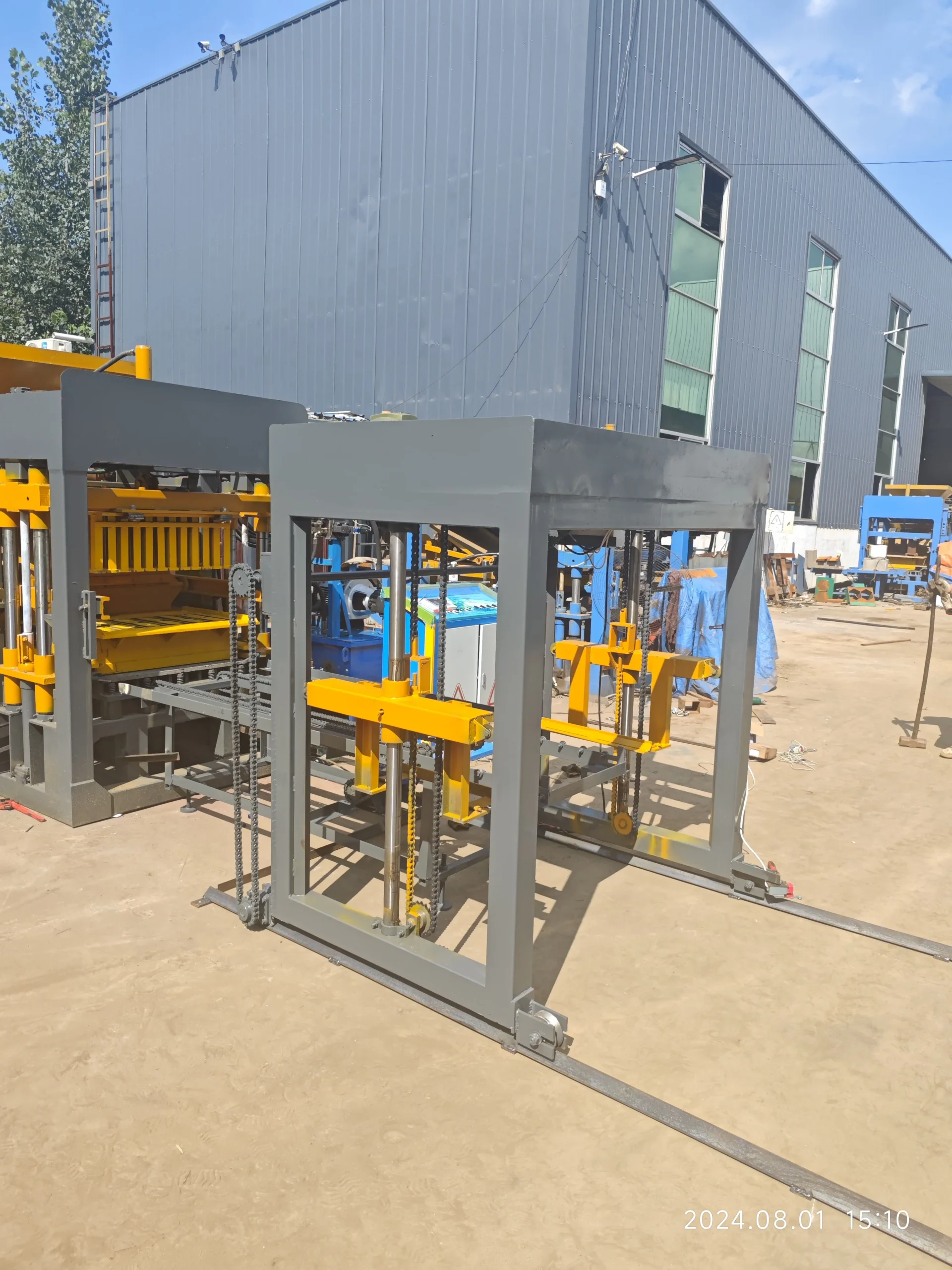
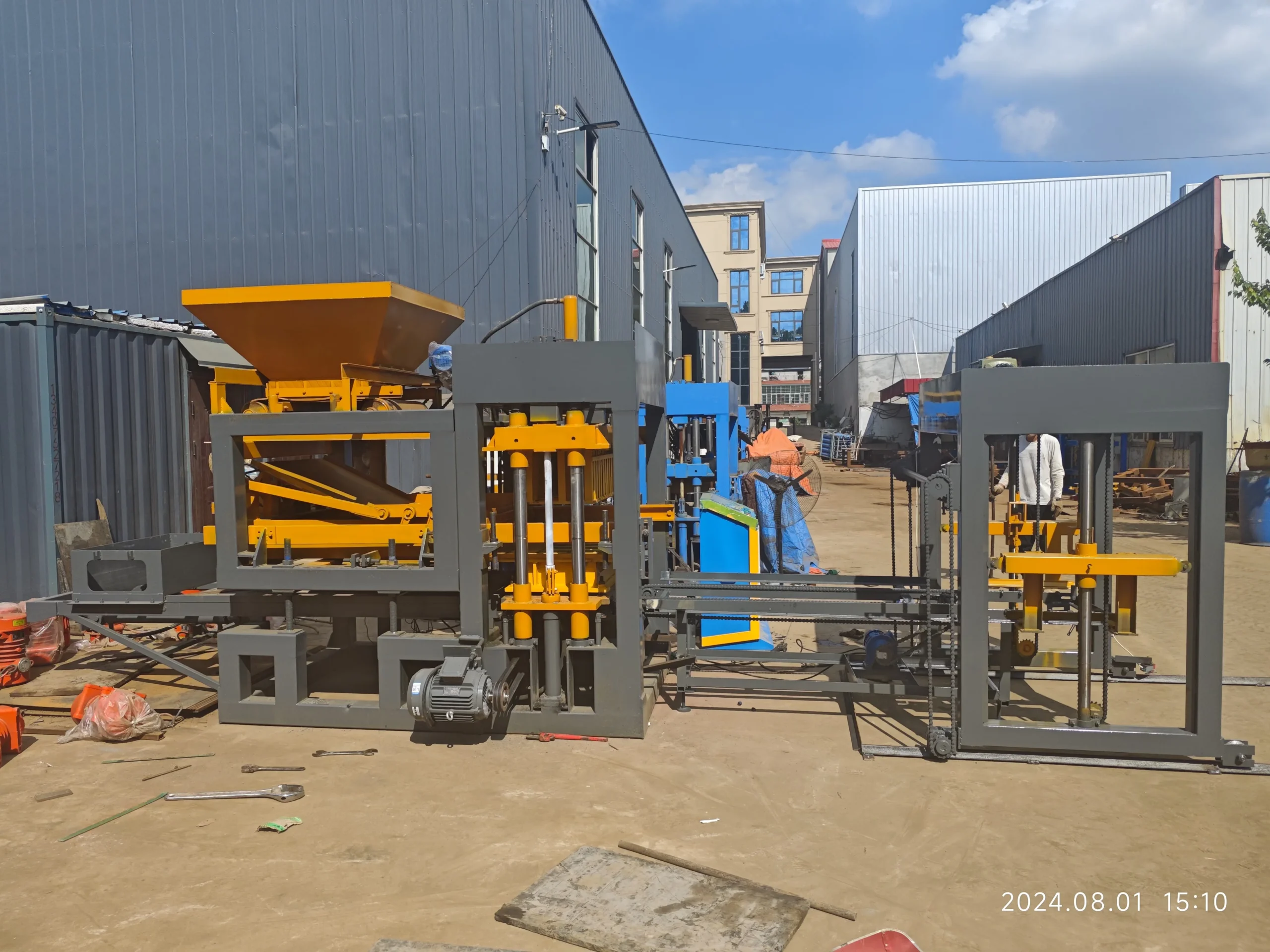
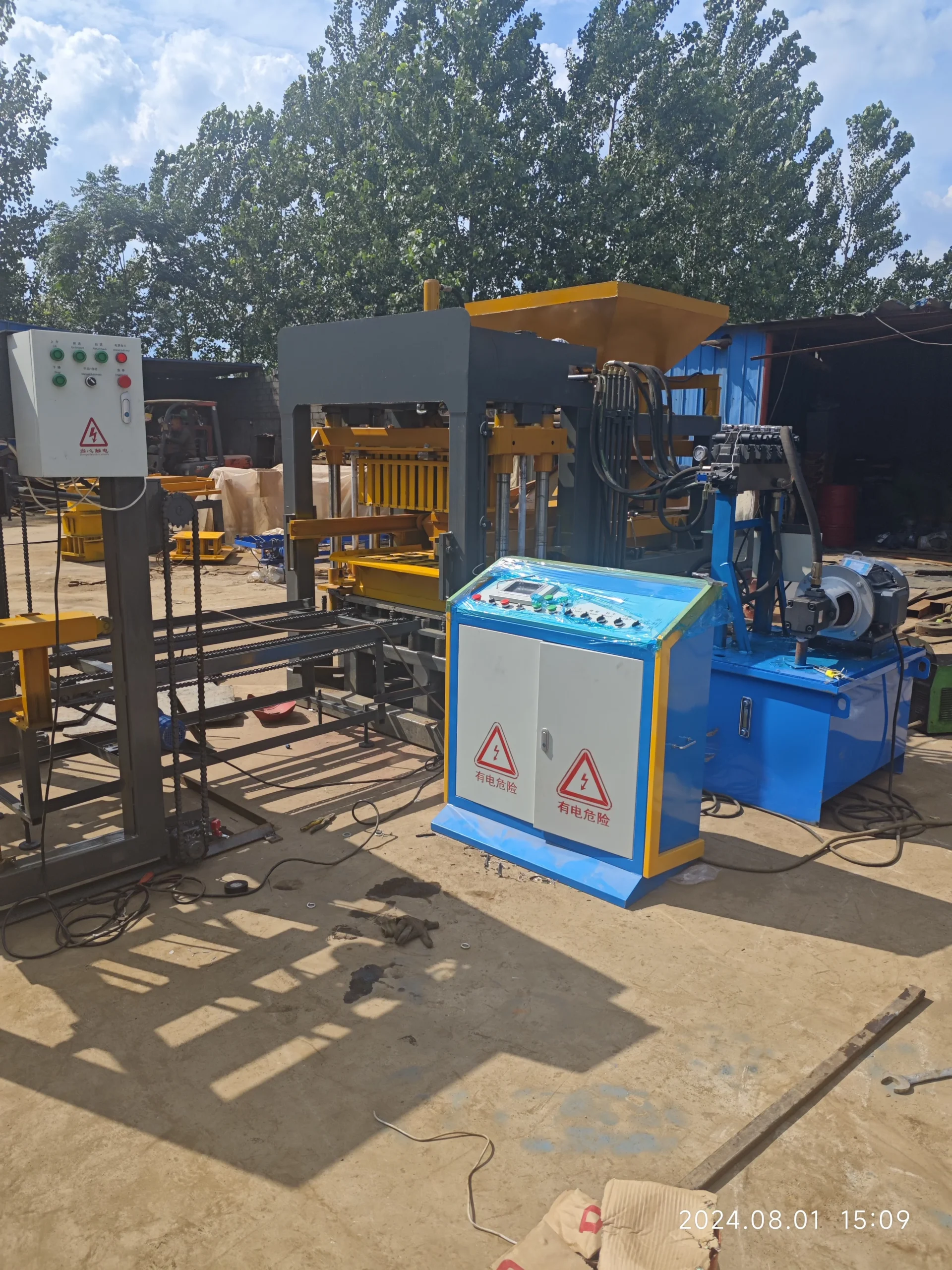
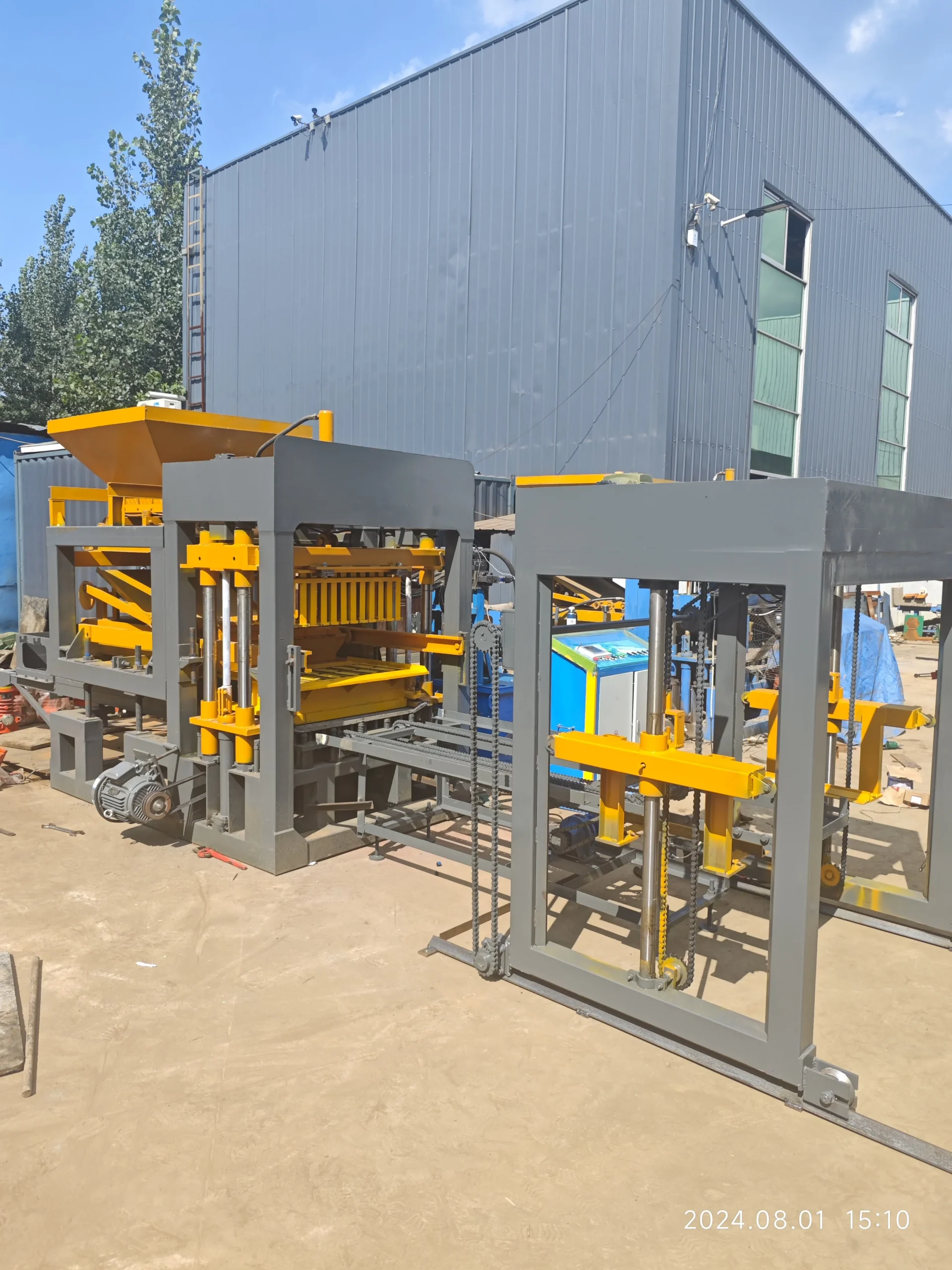
Description
Honest capacity reporting — every output figure for this machine is tied to the exact block format, mould cavity count, and cycle time that produced it, so buyers can plan real daily volumes instead of relying on a single catalogue claim.
Technical Specifications
| Parameter | Value |
|---|---|
| Model | QT4-18 |
| Product Type | Semi-Automatic Concrete Block Making Machine |
| Overall Dimensions (L×W×H) | 3900×1600×2300 mm |
| Total Weight | 3T |
| Rated Power | 24KW |
| Vibration Force | 40-50 KN |
| Vibration Type | Bed mould vertical vibration + upper mould compression vibration |
| Molding Cycle | 15-25s (basis to be confirmed depending on block format and material) |
| Mixer Model | JQ350 |
| Pallet Size | 850×550×25 mm |
| Hydraulic Station | Equipped |
| Mould Change System | Manual mould change |
| Stacking Method | Automatic stacker included |
| Automation Level | Semi-automatic |
Application Suitability
| Application | Material or Output |
|---|---|
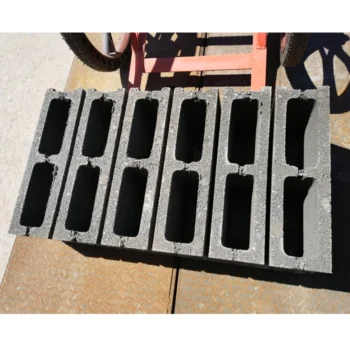
| Hollow block production | Crushed stones, sand, cement, fly ash; 4, 5, 6 and 8 inch formats |
| Solid brick production | Cement, sand and aggregate mix |
| Paving block production | Colored or standard concrete mix with high-density vibration |
| Curbstone production | High-strength concrete with coarse aggregate |
| Small to medium-scale plants | Semi-automatic operation with manual pallet feeding |
| On-site block production for contractors | Compact footprint suitable for construction sites |
| First block plant for entrepreneurs | Lower initial investment with upgrade path to full automation |
What "1200 Pieces per Hour" Actually Means on a QT4-18 Block Making Machine
Capacity only makes sense when the block format, mould cavity count, and cycle time are stated together.
I once watched a buyer sign off on a quotation that promised a comfortable daily output, only to discover on commissioning day that the figure assumed a hollow block format his market never ordered. When he switched to the solid brick his customers actually wanted, the cycle time shifted and his real output dropped noticeably. With the QT4-18 block making machine specifications, every capacity figure we show is attached to a specific block dimension and mould configuration, so there is no gap between what is quoted and what the press actually produces [NEED_CITE: block machine capacity calculation standards by format].
Mould Format Coverage and Cycle Time Reality
The QT4-18 runs hollow blocks, solid bricks, pavers and curbstones on a single press by changing the mould. The pallet size of 850×550×25 mm sets the physical boundary for every format. A four-cavity hollow block mould and a multi-cavity solid brick mould produce very different piece counts per cycle, and the 15-25 second cycle range shifts depending on the thickness and density requirement of each format. Buyers who need honest capacity planning should request the output table broken down per format, with the mould drawing and cavity count behind each line.
Dual Vibration and Block Density Control
The bed mould vertical vibration combined with upper mould compression vibration gives the QT4-18 a two-axis compaction approach. This matters because vibration force alone, rated at 40-50 KN, only settles the aggregate from below. The upper compression head then squeezes the mix from above during the same cycle, producing a block with more uniform density top-to-bottom. On formats like pavers and curbstones where surface strength is critical, this dual action reduces the weak layer that often forms at the top face of single-axis machines [NEED_CITE: vibration compaction principles in concrete block pressing].
Reading the Specification Sheet Beyond the Headline Numbers
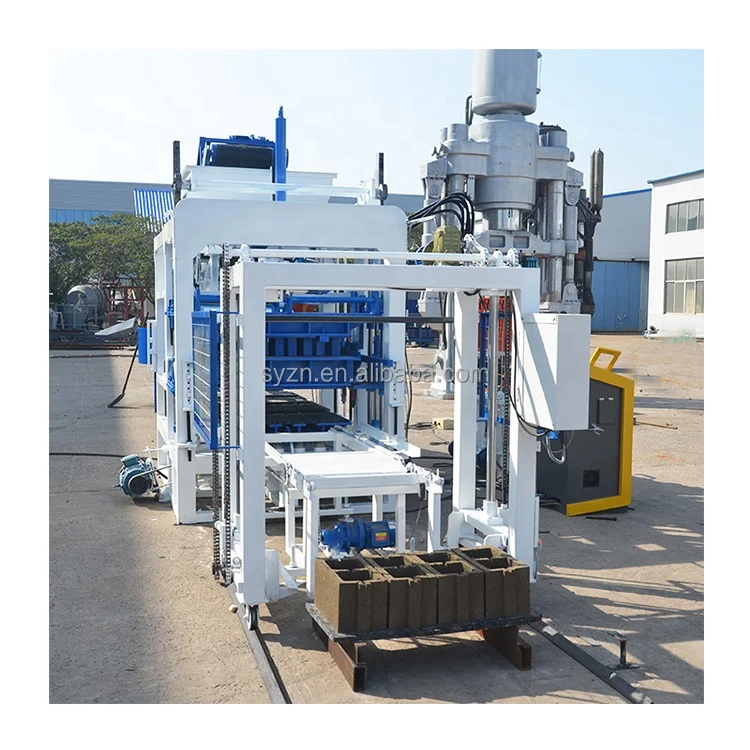
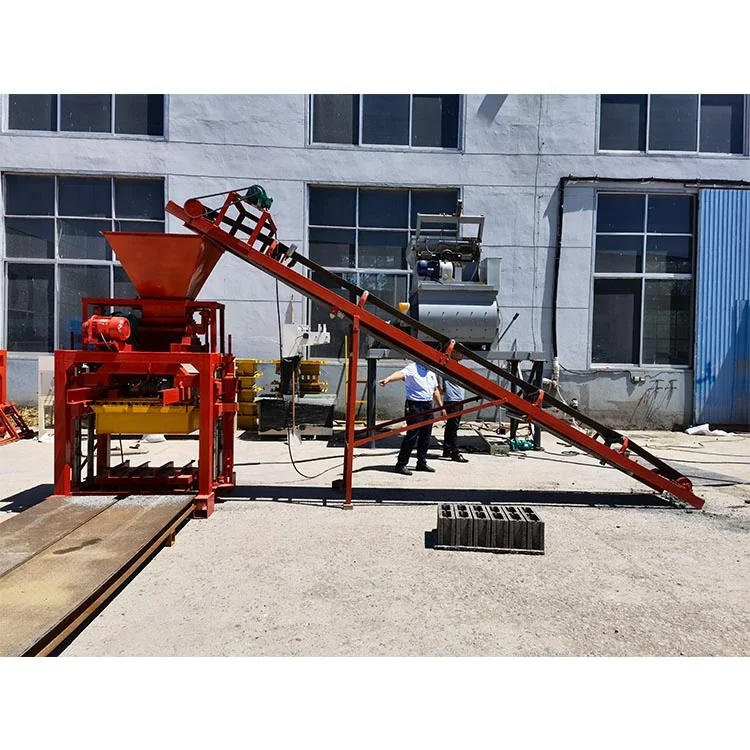
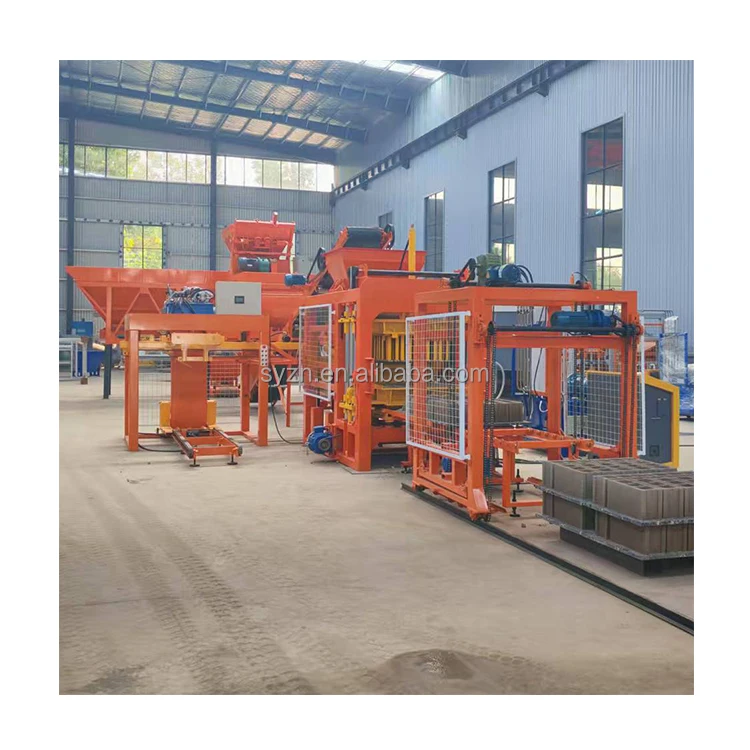
The 24KW rated power covers the vibration motors, hydraulic pump and mixer drive together, so buyers should confirm whether this figure includes the JQ350 mixer or only the press itself. The hydraulic station provides the clamping pressure that works alongside the vibration force; if the pressure is too low for the buyer’s mix design, the block will be under-compacted regardless of how strong the vibration is. Pallet size at 850×550×25 mm must match the curing rack spacing and forklift fork width already on site, otherwise the buyer faces unexpected handling changes after arrival. The semi-automatic configuration includes an automatic stacker, which places finished blocks on pallets and moves them by trolley, reducing manual lifting while keeping the investment below a fully automatic line.
The Cost of Skipping the Mix Design Conversation
When a machine is configured for a default catalogue mix and the buyer’s local sand has high silt content, the vibration force cannot compact the material properly. Blocks come out weak, the mould wears faster, and the buyer blames the machine. I have seen this happen more than once in my years around block presses. The QT4-18 vibration force range of 40-50 KN can be matched to different mix designs, but only if the buyer provides a local aggregate sample before the configuration is finalized [NEED_CITE: local aggregate testing for concrete block production].
Why Buyers Specify This Machine With Us
Block machinery is the only product line we build, which means the press, mould, pallet and stacker are specified as one system rather than sourced from separate vendors. Every configuration starts with the buyer’s actual block format and local raw material, not a catalogue default. Mould designs are available for the formats the buyer’s market sells, including custom drawings when standard options do not fit. The semi-automatic tier lets a buyer start with lower capital and upgrade automation later, and the documentation package confirms voltage, frequency and PLC display language before production begins so commissioning is not delayed on arrival.
Documentation & Verification
- Line layout and capacity calculation sheet stating the block format assumed for each output figure
- Mould drawing and format list confirming cavity count per block size
- Pallet material and dimension specification matched to buyer curing racks
- Hydraulic and electrical schematic with voltage and frequency confirmed
- Factory test record on buyer target block format before dispatch
Installation, Commissioning & Support
- Foundation plan sized to the 3900×1600 mm footprint with anchor bolt positions marked
- Power supply confirmed at rated 24KW with dedicated circuit breaker for vibration motors
- Machine shipped in dismantled state with reassembly guide for the 3T frame
- First-run cycle time and vibration force calibrated to buyer local aggregate sample
- Operator training covering mould change procedure and manual pallet feed workflow
- Wear parts list for hydraulic seals and vibration springs with reorder references
What to Share Before Requesting a Quotation
Tell us which block formats your market actually orders and the daily volume you need for each one. Send a sample or lab report of your local sand and aggregate so we can run a trial mix against the QT4-18 vibration parameters. Confirm your site voltage, frequency and the language your operators need on the control display, and we will build the specification around those constraints.
Frequently Asked Questions
Q: How is QT4-18 capacity calculated per block format, and why do different sources show different numbers?
A: Capacity changes with every mould because cavity count and cycle time differ between a hollow block and a solid brick. Some sources quote the highest figure across all formats without stating which one it belongs to. We provide a per-format table showing the mould, cavity count, cycle time and resulting hourly and daily output for each block type.
Q: Which block formats does one QT4-18 mould set cover, and how long does a mould change take?
A: The machine accepts moulds for hollow blocks in several standard sizes, solid bricks, pavers and curbstones, all within the 850×550 mm pallet boundary. Mould change is manual. The exact time depends on operator familiarity, so we include a step-by-step procedure during on-site training.
Q: How should the 850×550 mm pallet be matched to my existing curing area and forklift?
A: Measure your curing rack slot width and forklift fork span before confirming the order. If your existing equipment was built around a different pallet size, we adjust the pallet specification and corresponding mould layout so the new blocks fit your current handling system without modification.
Q: What raw material mix works best with the QT4-18 vibration force, and how is it adjusted?
A: The 40-50 KN vibration force and hydraulic pressure are tuned to the buyer’s local aggregate and cement ratio. We request a material sample, run a trial mix in our workshop, and adjust the vibration frequency and pressure settings to achieve the target block strength before the machine ships.
Q: How does the semi-automatic tier differ from fully automatic, and can I upgrade later?
A: The semi-automatic tier includes an automatic stacker but relies on manual pallet feeding, keeping initial investment lower. A fully automatic line adds automatic pallet feeding and cubing. The QT4-18 frame and control architecture allow automation upgrades, so a buyer can expand capacity as demand grows without replacing the press.