
Description
Format-anchored capacity mapping — every output figure for the Qt4-25a is tied to the exact block dimensions and mould cavity count, so daily planning starts from real shift data instead of a catalogue peak.
Technical Specifications
| Parameter | Value |
|---|---|
| Model | Qt4-25a |
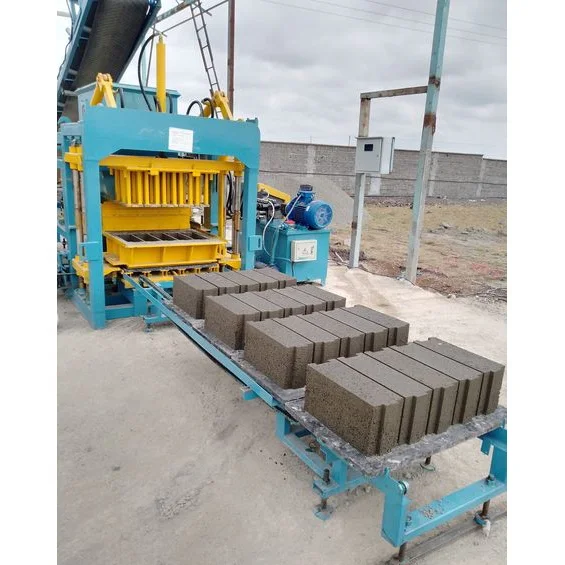
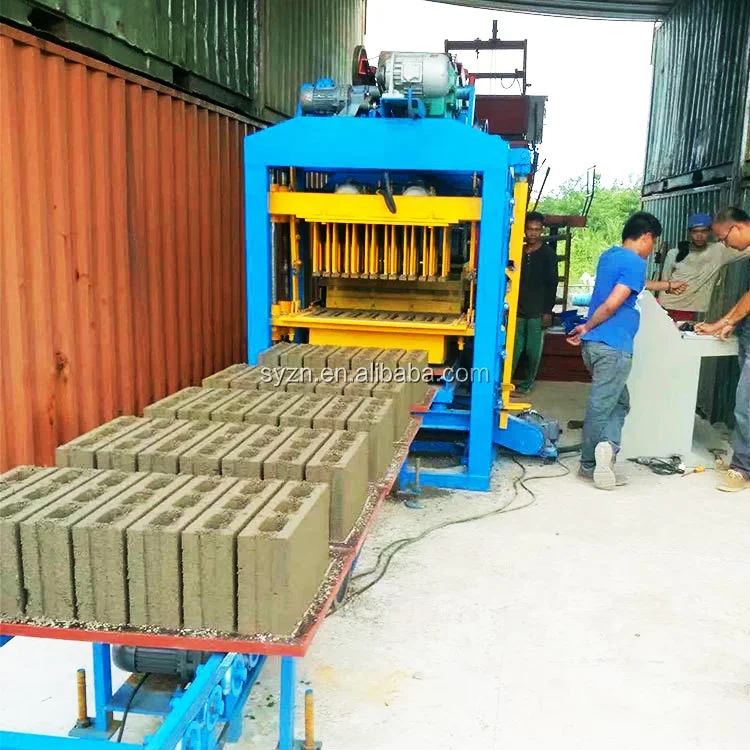
| Product Type | Automatic Hollow Block Making Machine |
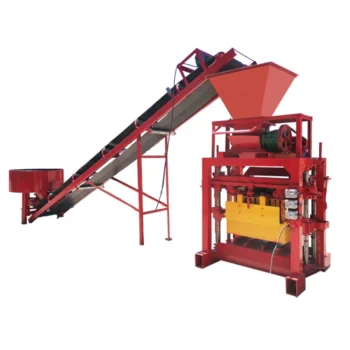
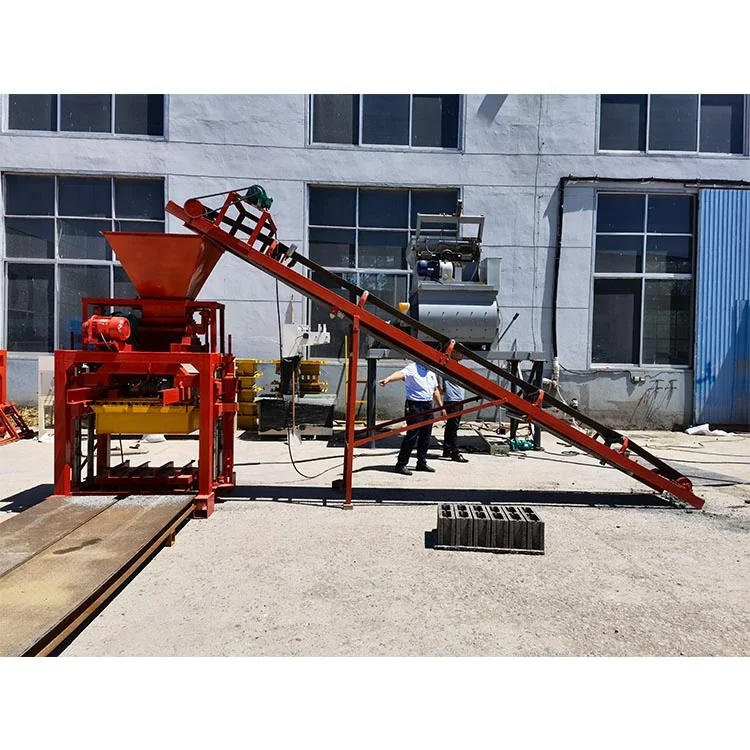
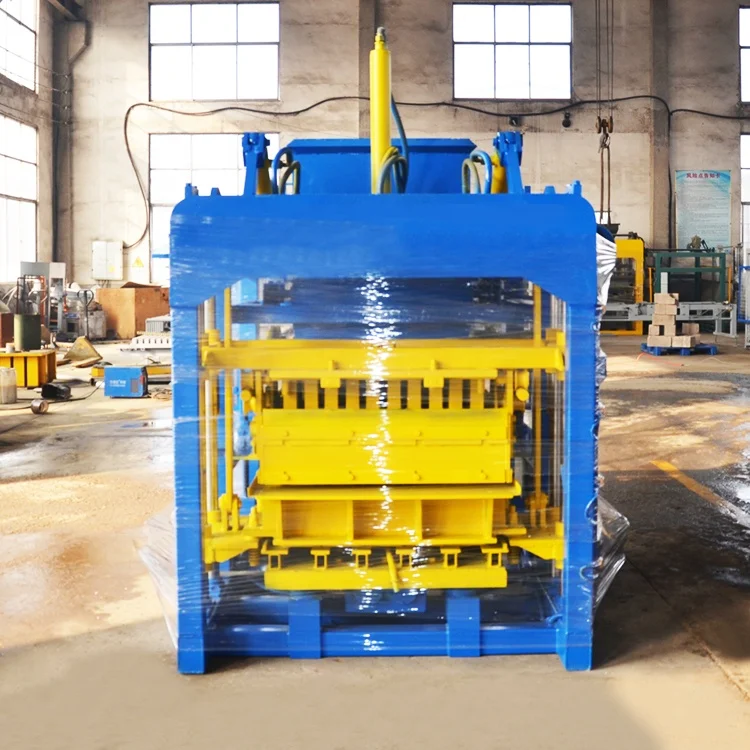
| Overall Dimensions (L×W×H) | 7100 × 1600 × 2610 mm |
| Net Weight | 5800 kg |
| Rated Power | 27.5 kW |
| Voltage | 380 V or configurable to buyer requirement (frequency to be confirmed) |
| Vibration Force | 60 kN |
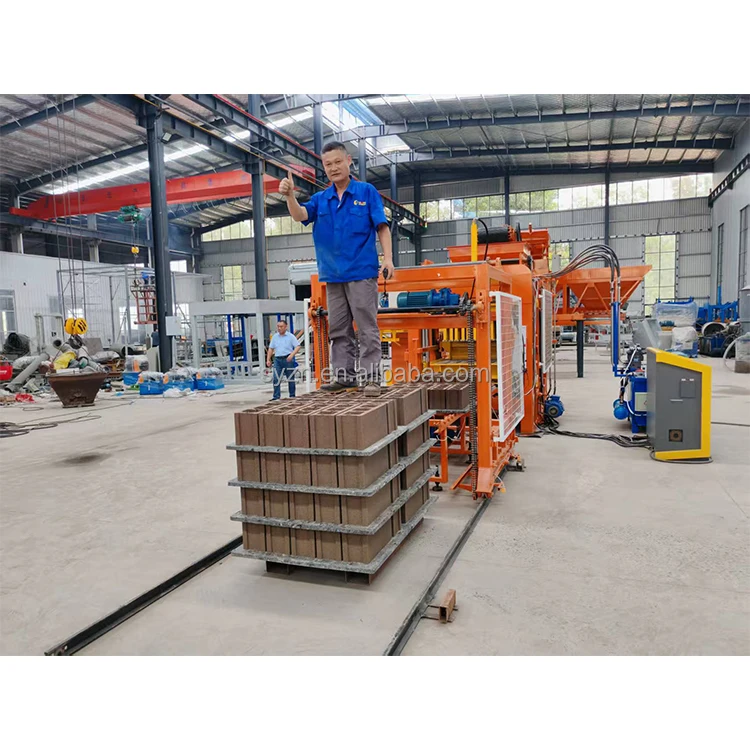
| Pallet Size | 1020 × 850 × 40 mm |
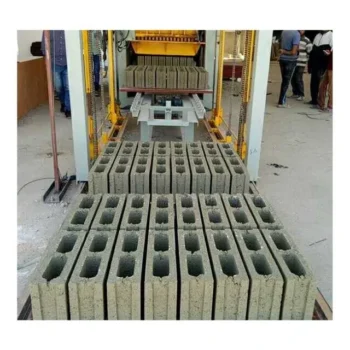
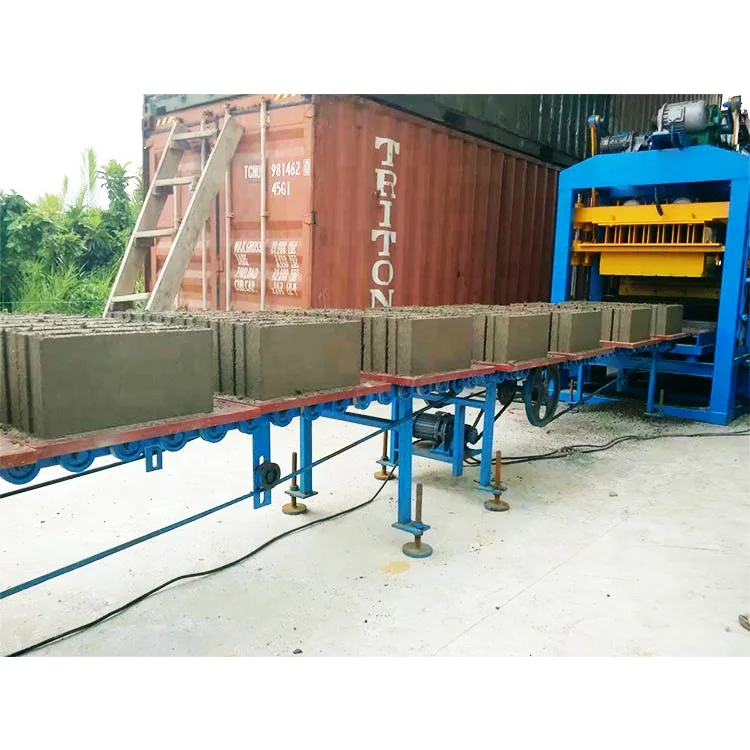
| Output — 400×200×200 mm Hollow Block | 4 pcs/mould, 960 pcs/hour, 7680 pcs/day |
| Output — 400×150×200 mm Hollow Block | 6 pcs/mould, 1440 pcs/hour, 11520 pcs/day |
| Output — 225×112.5×53 mm Solid Brick | 16 pcs/mould, 3840 pcs/hour, 30720 pcs/day |
| Control System | PLC (display language to be confirmed) |
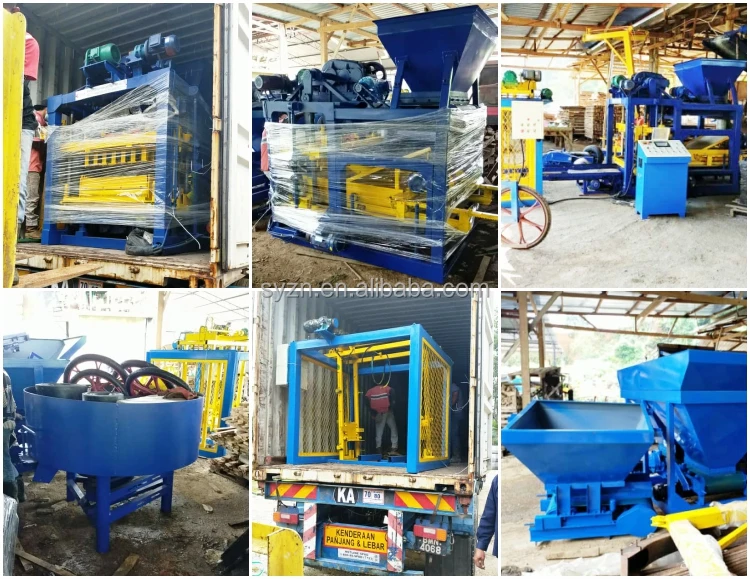
| Assembly State | Fully assembled line with hydraulic system |
| Standards | ISO 9001:2008, CE |
| Warranty | 1 year |
| Color | Configurable per buyer request |
Application Suitability
| Application | Material or Output |
|---|---|
| Standard hollow cement block production for load-bearing and partition walls | Crushed stone, sand, cement, water mix with local aggregate |
| Solid brick manufacturing for masonry and paving | Cement-bound granular mix, fine aggregate |
| On-site and fixed-plant production for building contractors | Same base mix adapted to locally sourced sand and gravel |
What the Qt4-25a Block Machine Specifications and Mould Selection Reveal About Real Output
The capacity number only matters when the block format is named beside it.
Catalogue sheets often quote a single hourly figure without disclosing which block size produced it, and that gap costs contractors real money. I have seen a Middle East housing project schedule its entire masonry timeline on a peak-hour number, only to discover the plant was rated on a smaller solid brick while the site needed 400×200×200 hollow blocks — actual throughput dropped to roughly half. With the Qt4-25a block machine specifications and mould selection laid out per format, the daily plan is built on the block the buyer actually sells. [NEED_CITE: capacity disclosure standards for block making machinery]
Matching Vibration Force to Local Aggregate
The Qt4-25a delivers 60 kN of vibration force, a figure that must be read alongside the buyer’s aggregate profile rather than in isolation. Desert sand with high fines content absorbs more energy before the mix consolidates, meaning the same vibration setting that produces clean edges with crushed basalt may leave honeycomb surfaces with poorly graded sand. Specifying the machine without confirming the local sieve curve is the single most common reason blocks fail compressive strength tests at the lab.
Pallet Dimensions and the Curing Yard
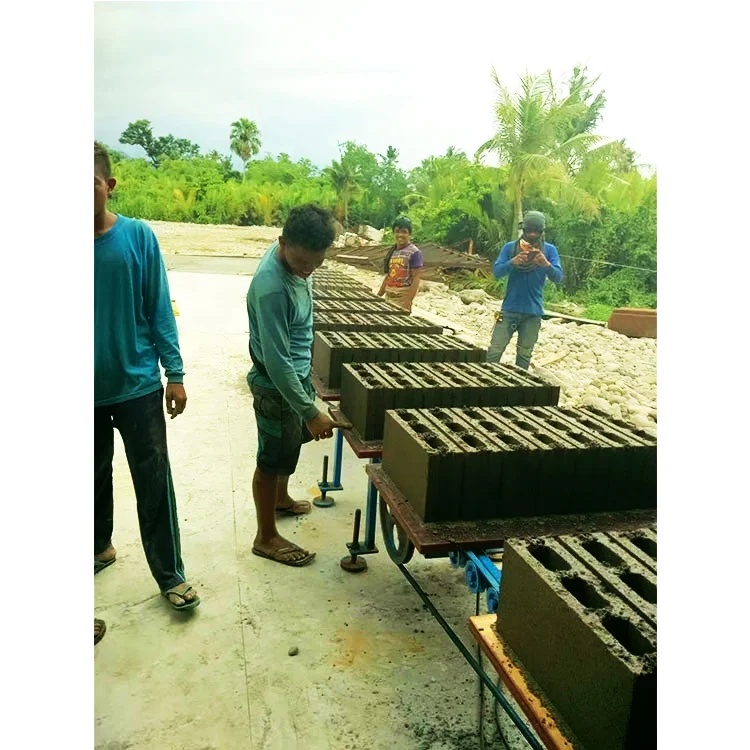
A pallet size of 1020 × 850 × 40 mm defines more than the press footprint; it locks in the curing rack spacing, the forklift tine width and the stacking pattern in the yard. If the buyer’s existing racks were built for a different pallet standard, every wet block will need manual re-stacking before it enters the curing zone — a hidden labour cost that erases the automation advantage. Confirming pallet compatibility before the machine enters production is a non-negotiable step in Qt4-25a block machine specifications and mould selection. [NEED_CITE: pallet and curing rack compatibility in block plants]
Reading the Numbers Behind the Press
The 27.5 kW rated power covers the hydraulic pump, vibration motor and conveyor drives together, so any future addition of a separate batching mixer must be budgeted on its own circuit. The hydraulic pressure and the 60 kN vibration force work in sequence — pressure pre-compacts the mix, then vibration liquefies it into the mould corners — and the balance between them determines whether a hollow block leaves the press with uniform wall density or with a weak web that cracks during pallet transfer. PLC control governs cycle timing, but the display language must be confirmed before the machine ships; an operator reading fault codes in an unfamiliar language adds minutes to every stoppage, and those minutes compound across a shift.
When the Wrong Configuration Reaches the Site
Choosing a mould format without confirming cycle time per cavity count leads to a plant that meets the contract on paper but cannot keep a masonry crew supplied. Equally damaging is specifying a voltage that does not match the local grid; a 380 V / 50 Hz motor running on a 60 Hz supply spins faster, overheats and fails within weeks, and the warranty does not cover it. I have watched a contractor lose an entire curing cycle because the PLC fault display was in a language the site electrician could not read, turning a sensor swap into a half-day shutdown. [NEED_CITE: electrical mismatch consequences in exported industrial machinery]
Why Source This Format Here
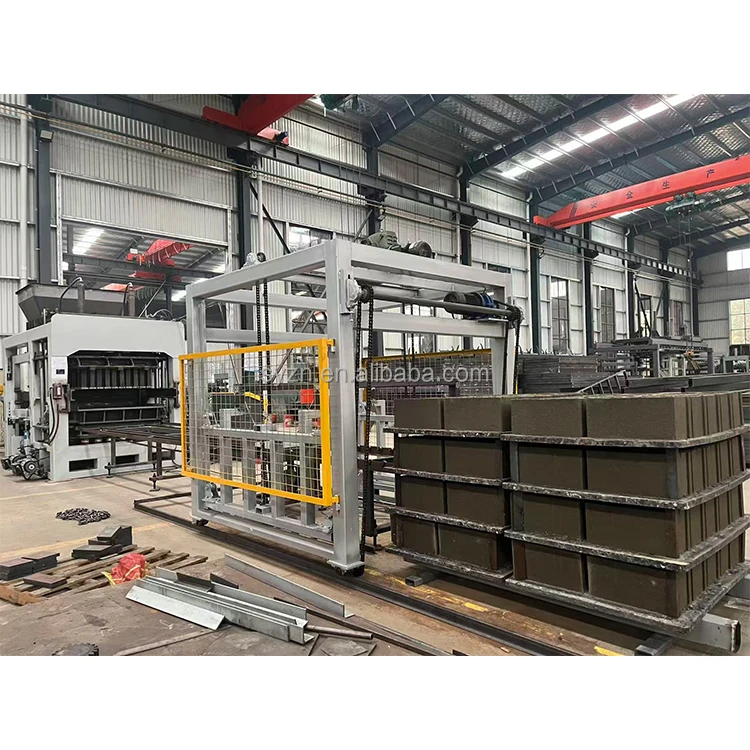
Every machine, mould, pallet and handling station is specified as one matched set, eliminating the interface gaps that appear when components come from separate suppliers. Configuration is built around the buyer’s actual mix design and target block format, not a default catalogue row. Mould design covers the formats the buyer’s market demands, with custom drawings available for non-standard profiles. Automation level is selectable, so a plant can open semi-automatic and add stacker modules later. Installation includes operator training on the specific block format and cycle time that were agreed at the order stage.
Documentation & Verification
- Line layout and capacity calculation stating the block format assumed for each output figure
- Mould drawing and format list confirming profiles the buyer’s market sells
- Pallet specification matched to the buyer’s curing rack and forklift dimensions
- Hydraulic and electrical schematic with confirmed voltage and frequency
- Factory test record run on the buyer’s target block format before dispatch
Installation, Commissioning & Support
- Foundation pad sized to the 7100 × 1600 mm footprint with anchor bolt template provided
- Dedicated 27.5 kW circuit with breaker rating confirmed against local supply code
- Machine arrives fully assembled; hydraulic lines and PLC panel require on-site connection only
- First-run cycle tuning performed on buyer’s actual block format and aggregate sample
- Operator training covers PLC navigation, mould change procedure and daily vibration motor inspection
- Wear parts list and mould maintenance schedule handed over at commissioning sign-off
Preparing Your Inquiry
To size the Qt4-25a correctly, share the block formats your market moves, the daily volume each format requires and a sieve analysis of your local sand and gravel. Confirm the site voltage, frequency and preferred PLC display language so the electrical package is locked before production starts. [NEED_CITE: voltage and frequency standards by export market]
Frequently Asked Questions
Q: How is the capacity figure calculated, and which block format does each number assume?
A: Every output number is tied to a specific block size and mould cavity count. For example, 960 pieces per hour applies to the 400×200×200 mm hollow block at four cavities per mould, while 3840 pieces per hour applies to the 225×112.5×53 mm solid brick at sixteen cavities. No single peak figure is used across formats.
Q: What mould formats are available for the Qt4-25a, and how long does a mould change take?
A: Standard formats include 400×200×200 mm and 400×150×200 mm hollow blocks plus 225×112.5×53 mm solid bricks. Custom moulds can be built to buyer drawings. Mould change time depends on operator familiarity and tooling; trained crews typically complete the swap within a short shift break once the procedure is routine.
Q: Is the vibration force matched to my local aggregate and mix design?
A: The 60 kN rating is a starting point. We review your local sieve analysis and cement content before confirming the vibration setting. High-fines desert sand may require adjusted amplitude or extended vibration time to reach the same block density that crushed aggregate achieves at default settings.
Q: Will the pallet size work with my existing curing racks and forklift?
A: The pallet measures 1020 × 850 × 40 mm. Before order confirmation we compare this against your curing rack slot width and forklift tine spacing. If a mismatch appears, we adjust the pallet specification or recommend rack modifications so blocks move straight from press to cure without manual re-handling.
Q: What voltage, frequency and PLC language options are confirmed before shipment?
A: Voltage is configurable to buyer requirement, and frequency must be stated explicitly — 50 Hz and 60 Hz grids require different motor windings. PLC display language is agreed at order stage so operators read cycle data and fault codes in their working language from the first production day.