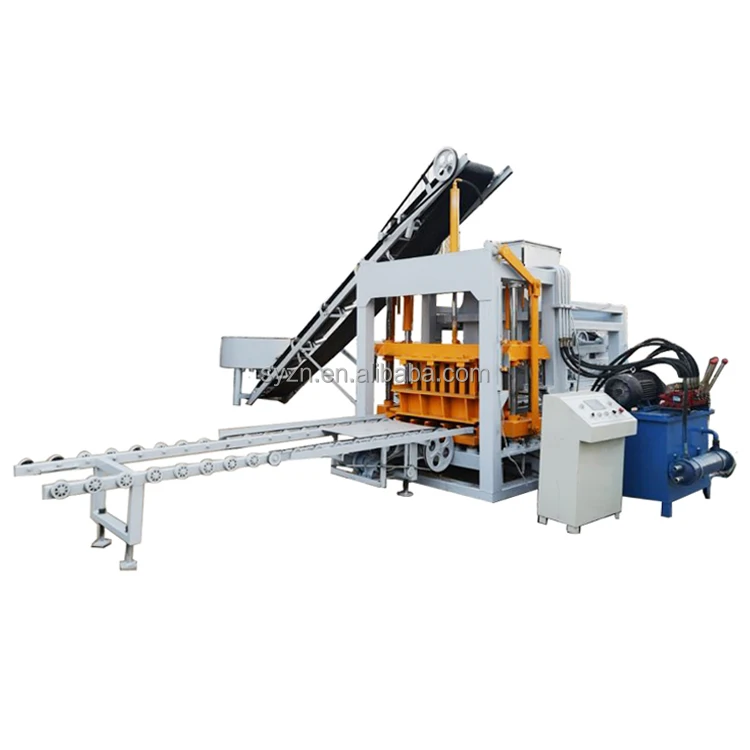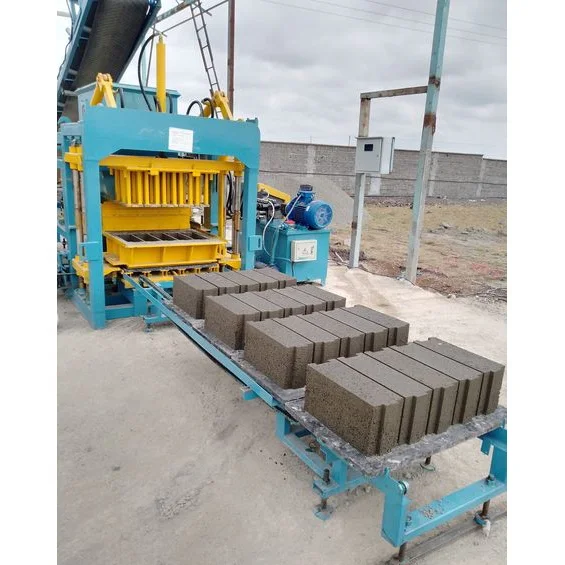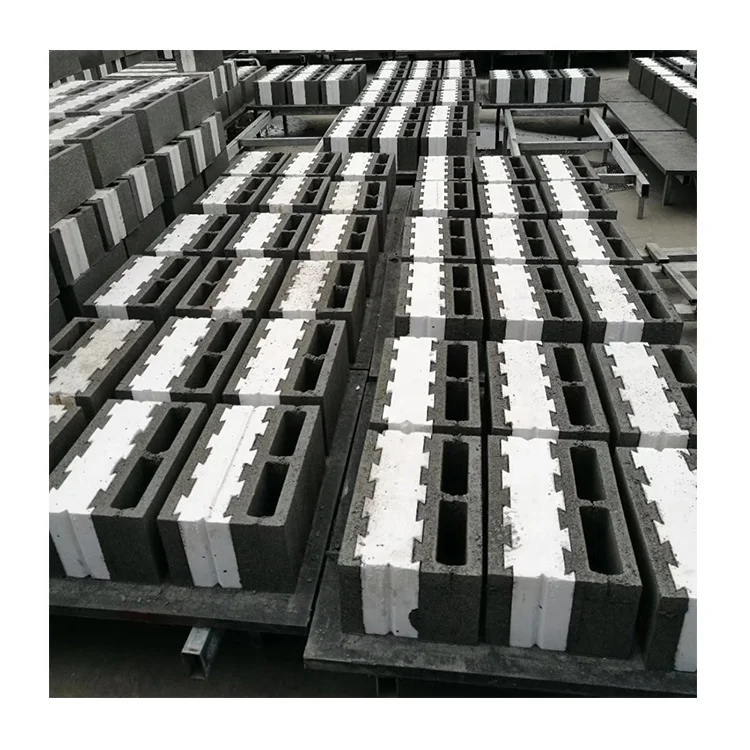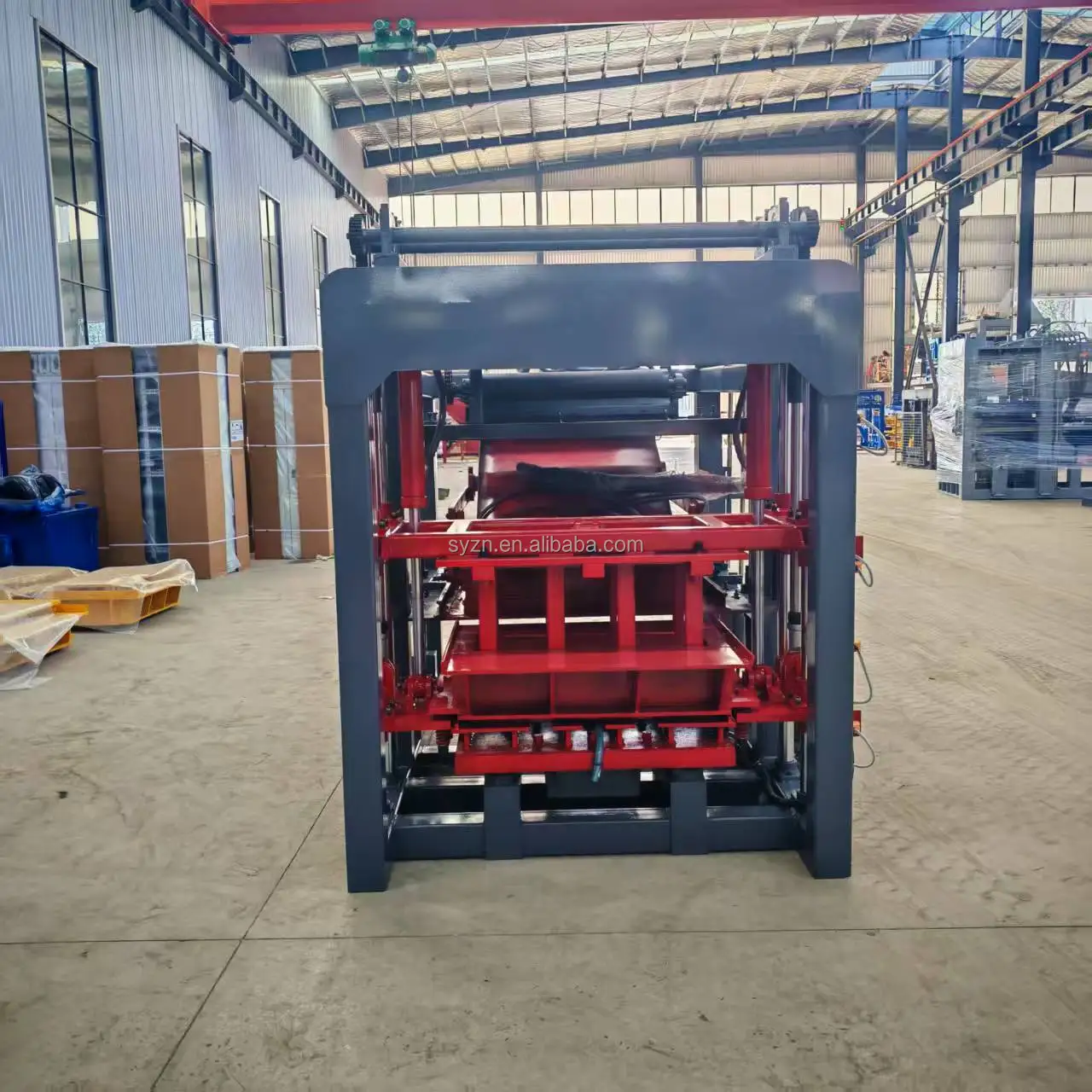

Description
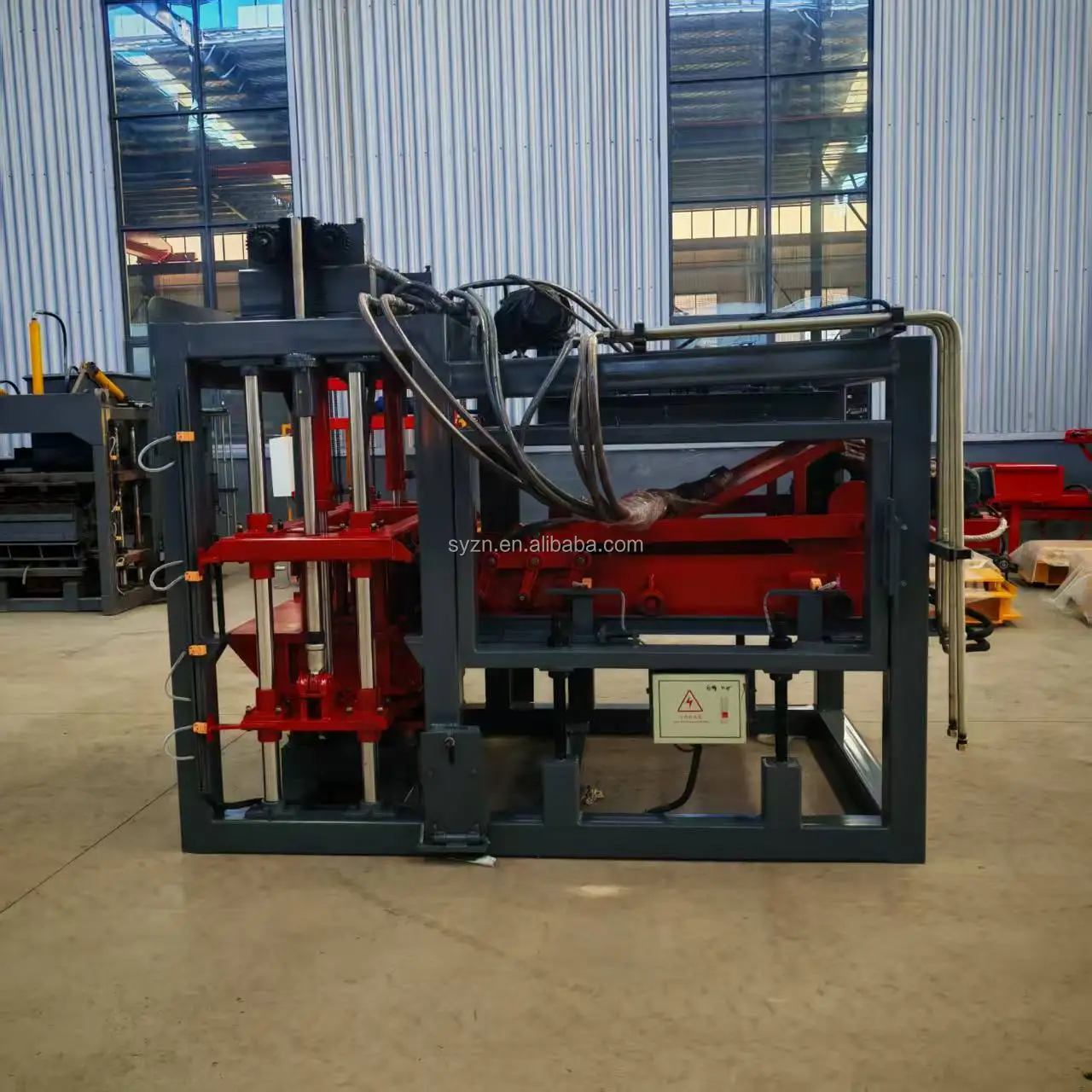
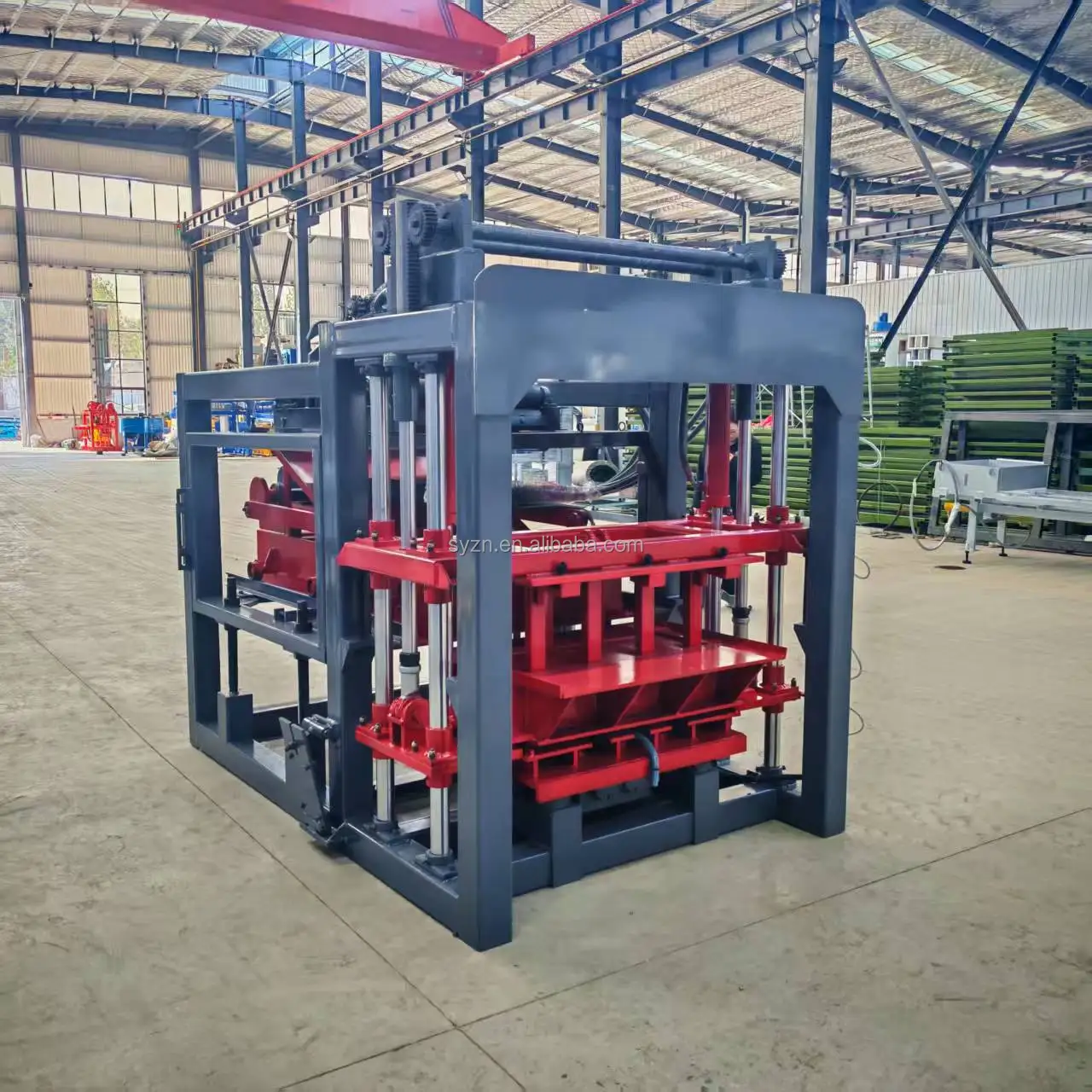
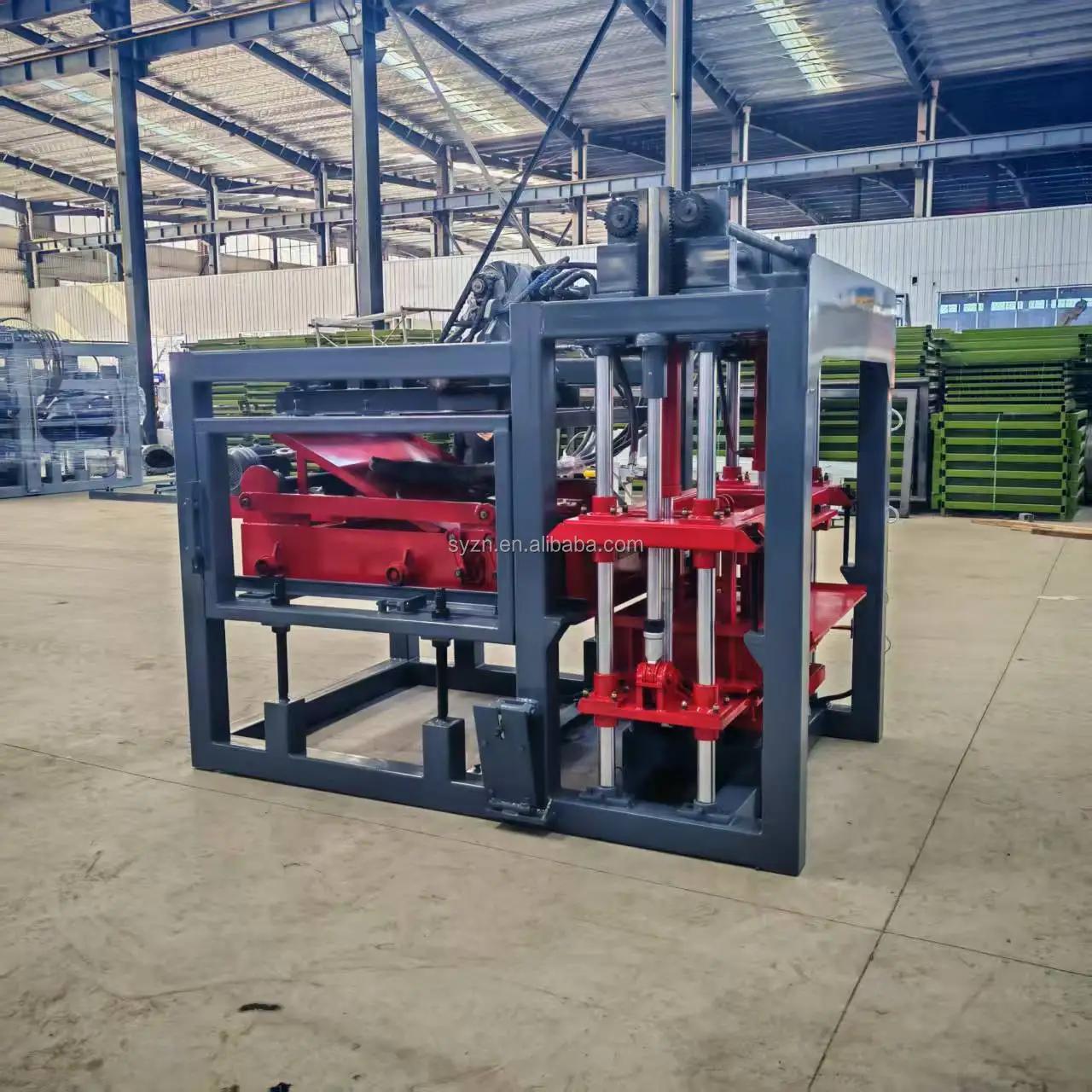
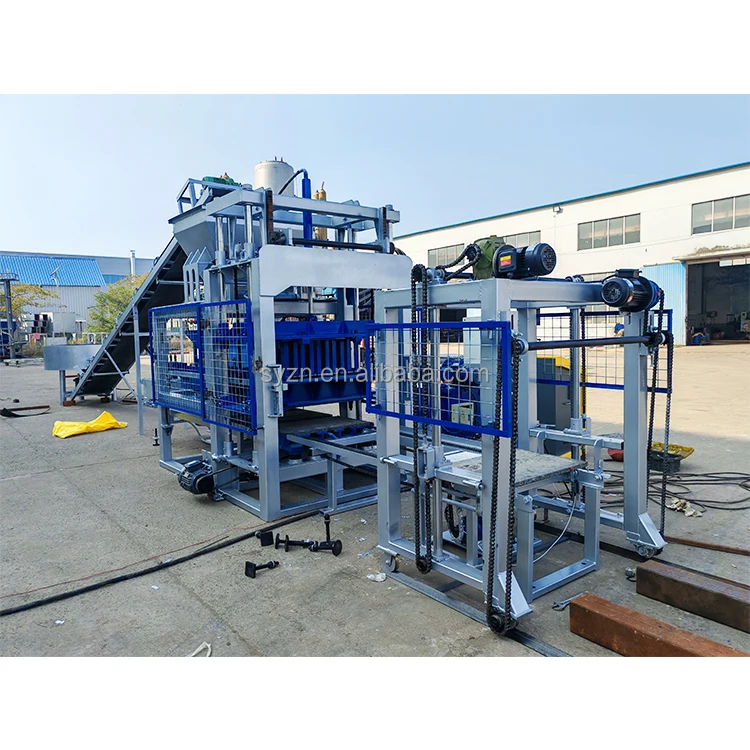
Specified Against Your Block Format — QT4-15 block machine specifications and mould capacity are calculated per target format and local mix, not quoted as a generic hourly cycle figure.
Technical Specifications
| Parameter | Value |
|---|---|
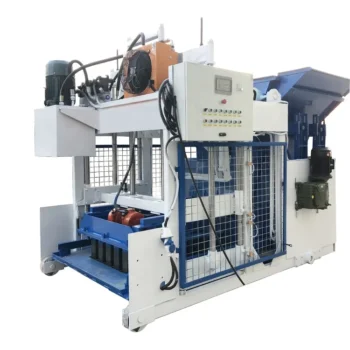
| Product Type | Fully Automatic Concrete Block Making Machine |
| Model | QT4-15A |
| Overall Dimensions (L×W×H) | 4100×1600×2600 mm |
| Rated Pressure | 16–21 MPa |
| Vibration Force | 55 kN |
| Vibration Frequency | 4200 r/min |
| Main Vibration Form | Platform Vibration |
| Pallet Size | 880×550 mm |
| Moulding Cycle | 25–30 s (basis not stated in source) |
| Overall Power | 18.45 kW |
| Total Mass | 4 T |
| Demoulding Method | Hydraulic |
| Factory Area Required | 300 m² |
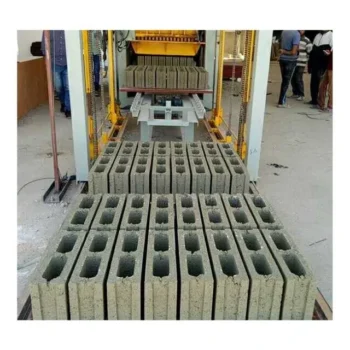
| Applied Products | Hollow, solid, interlocking, paver, curbstone, colored pavers |
| Raw Materials | Crushed stone, sand, cement, dust, fly ash, gravel, slag |
| Warranty | 1 year for the whole machine (excluding spare parts) |
Application Suitability
| Application | Material or Output |
|---|---|
| Hollow Block Production | Crushed stone, sand, cement, fly ash aggregates |
| Solid and Interlocking Brick Manufacturing | Local gravel, slag, and cementitious blends |
| Paver and Curbstone Forming | Colored concrete mixes and dense aggregates |
What the QT4-15 Block Machine Specifications and Mould Capacity Actually Mean for Your Daily Run
Capacity figures are useless if they do not name the block format used for the calculation.
I used to quote cycles per hour without tying them to a specific product, and I watched plants fall short of their business plans because the 25–30 second cycle time assumes a standard geometry and a well-graded aggregate. When a buyer runs a highly porous interlocking brick or a thick curbstone, the vibration and pressing phases extend, altering the realistic daily volume. We now build the capacity sheet around your exact target format before an order is placed [NEED_CITE: realistic block plant output planning].
Matching the Press to the Product Geometry
The QT4-15 block machine specifications and mould capacity are defined by how the 55 kN vibration force and 16–21 MPa hydraulic pressure interact with your chosen mould. A hollow block requires intense platform vibration to consolidate the thin webs, while a dense paver needs sustained hydraulic pressure to achieve the required compressive strength. The control logic must allow operators to adjust these parameters based on the specific block format being run that shift.
Pallet Sizing and Curing Logistics
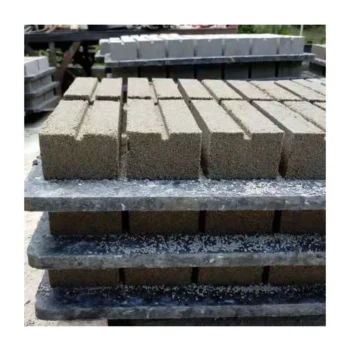
The 880×550 mm pallet size is a fixed constraint that dictates your curing rack design and forklift handling. If your existing facility uses a different pallet dimension, you face a choice between retrofitting your curing area or handling wet product manually off the press. We verify the pallet material and dimensions against your site logistics before the machine is built, preventing a bottleneck at the stacking station [NEED_CITE: block plant curing and handling logistics].
Reading the Core Engineering Parameters
The 4200 r/min platform vibration frequency is tuned for standard concrete mixes; running high-slump or overly wet mixes will cause the material to liquefy rather than consolidate, resulting in weak blocks. The 16–21 MPa rated pressure range provides the necessary compaction for structural blocks, but achieving target strength requires a mix design that matches local aggregate grading. The 18.45 kW overall power draw reflects the simultaneous operation of the hydraulic pack, vibration motors, and material feed system, requiring a stable industrial power supply.
The Cost of Ignoring Mix Design Compatibility
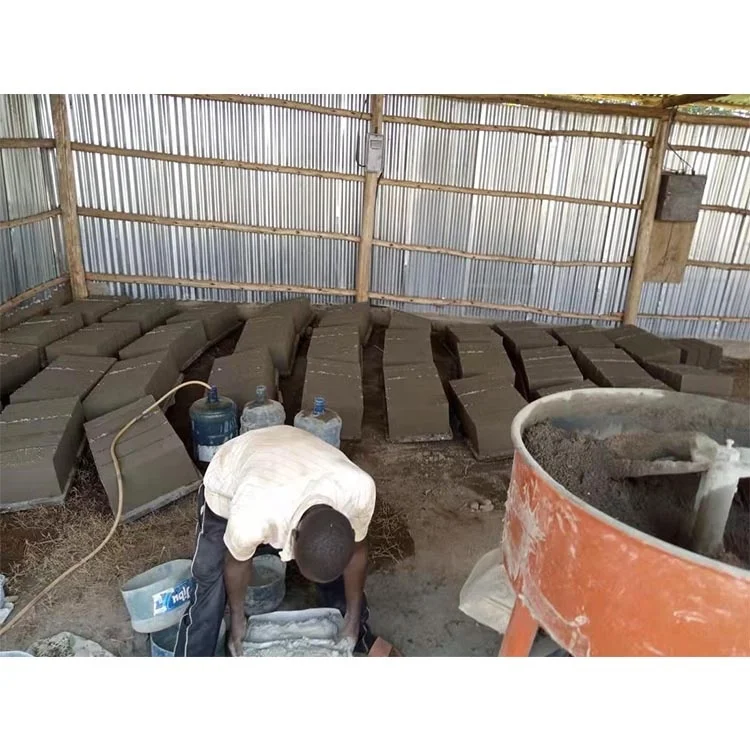
When the machine is configured for a standard silica sand mix but the buyer only has access to high-clay local sand, the vibration force cannot properly compact the material, leading to high breakage rates during curing and transport. This forces the plant owner to either source expensive imported aggregates or accept a lower grade of block that cannot compete in the local market. Mismatched mix designs also accelerate wear on the mould liners and hydraulic seals due to increased friction and abrasive fines [NEED_CITE: impact of aggregate quality on block machine wear].
Why Technical Buyers Choose This Configuration
Our approach centers on treating the press, mould, and pallet as a single integrated system rather than separate line items. We calculate the QT4-15 block machine specifications and mould capacity against your local raw material test reports, ensuring the vibration and pressure settings are viable for your specific aggregate. Mould designs are available for the formats your market actually buys, including custom drawings for non-standard interlocking profiles. The automation level allows you to specify the degree of pallet handling and stacking required, preventing you from paying for peripheral equipment you do not yet need.
Documentation & Verification
- Line layout and capacity calculation stating the exact block format and cycle time assumed.
- Mould drawing and format list confirming changeover procedures and tooling requirements.
- Pallet specification sheet matched to your curing rack dimensions and forklift capacity.
- Factory test record on your specified raw material blend before dispatch.
- Voltage, frequency, and PLC display language confirmation signed off prior to assembly.
Installation, Commissioning & Support
- Foundation plan for the 4100×1600 mm footprint, including vibration isolation requirements.
- Electrical schematic confirming the 18.45 kW load and required circuit breaker sizing.
- On-site assembly and alignment of the hydraulic demoulding system and vibration platform.
- Parameter tuning for the 16–21 MPa pressure range using your local aggregate sample.
- Operator training on mould change procedures and daily maintenance of the 55 kN vibration motors.
- Wear parts list for mould liners and hydraulic seals specific to your production format.
Preparing Your Technical Inquiry
To provide an accurate configuration, we need your target block dimensions, required daily output per format, and a sieve analysis of your local sand and gravel. Please also confirm your site voltage and frequency, as well as any existing curing racks or handling equipment that the new line must integrate with.
Frequently Asked Questions
Q: How is daily output calculated for each block format on the QT4-15?
A: Daily output is calculated by taking the confirmed cycle time for your specific block geometry, multiplying by the number of blocks per pallet, and factoring in your planned shift duration and efficiency loss for mould changes. We do not use a generic hourly rate; the calculation sheet provided with your quotation will state the exact format and mix design assumed.
Q: Which pallet size and material should I choose for my existing curing area?
A: The machine uses an 880×550 mm pallet, so your curing racks must accept this dimension. We recommend bamboo or PVC pallets based on your local humidity and the weight of the blocks you produce, as this affects both the lifespan of the pallet and the consistency of the block bottom surface.
Q: Can the vibration force and hydraulic pressure be tuned to my local aggregate?
A: Yes, the 55 kN vibration force and 16–21 MPa hydraulic pressure range can be adjusted via the control system once we review your local aggregate test report. This ensures the machine achieves the necessary compaction without damaging the block structure or causing excessive wear to the mould.
Q: How long does a full mould change take and what tools are required?
A: Mould change times depend on the complexity of the format and the condition of the fasteners. We provide a detailed procedure and the specific tools required in the operation manual, and our technicians will demonstrate the process during on-site commissioning to ensure your team can handle format switches efficiently.
Q: What voltage, frequency and PLC language will be configured before shipment?
A: These parameters must be confirmed in writing before production begins. We configure the electrical cabinet and PLC interface to match your local industrial power standards and your operators’ language preference, preventing delays during the commissioning phase at your facility.