


Description
Specified per block format — output is calculated per mould cavity and cycle time against the block your market actually buys, not a single headline figure.
Technical Specifications
| Parameter | Value |
|---|---|
| Model | QMR4-45 |
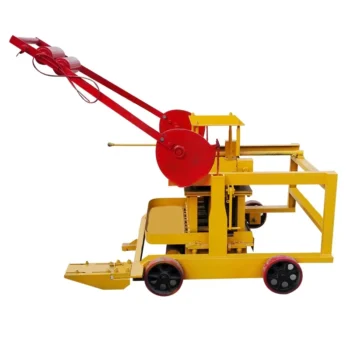
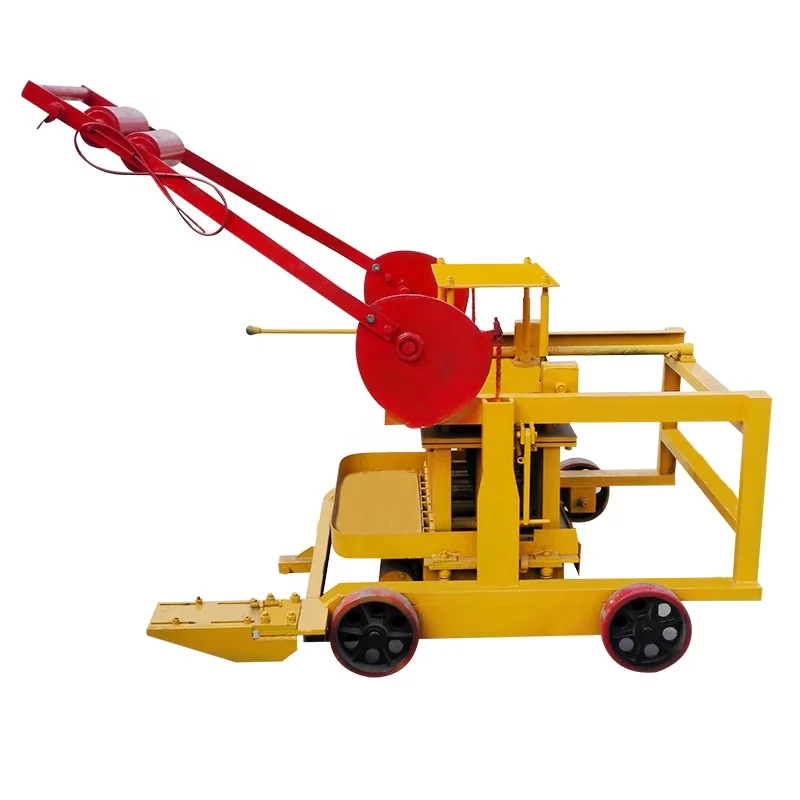
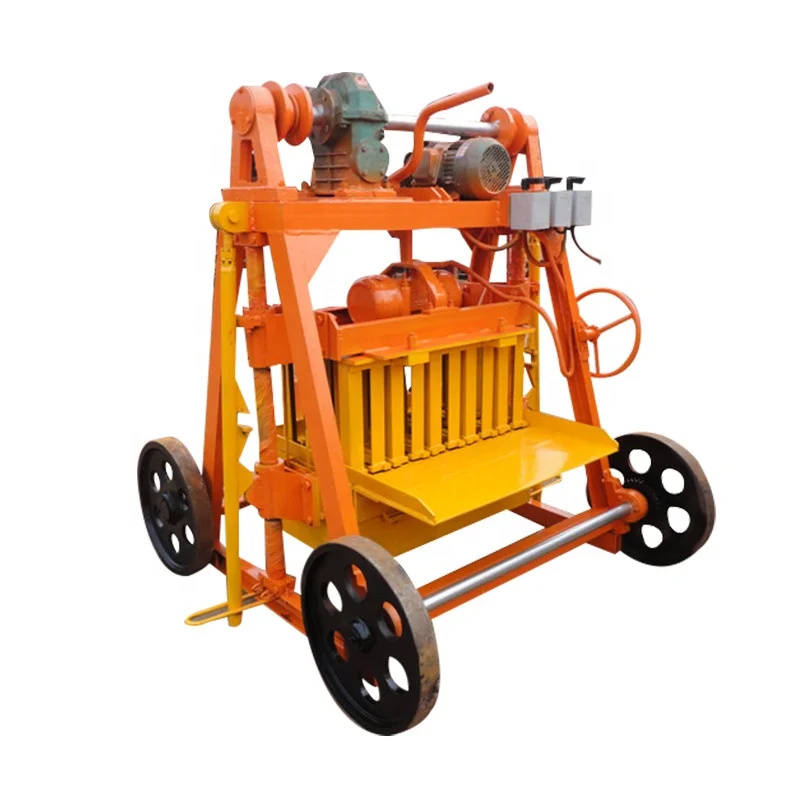
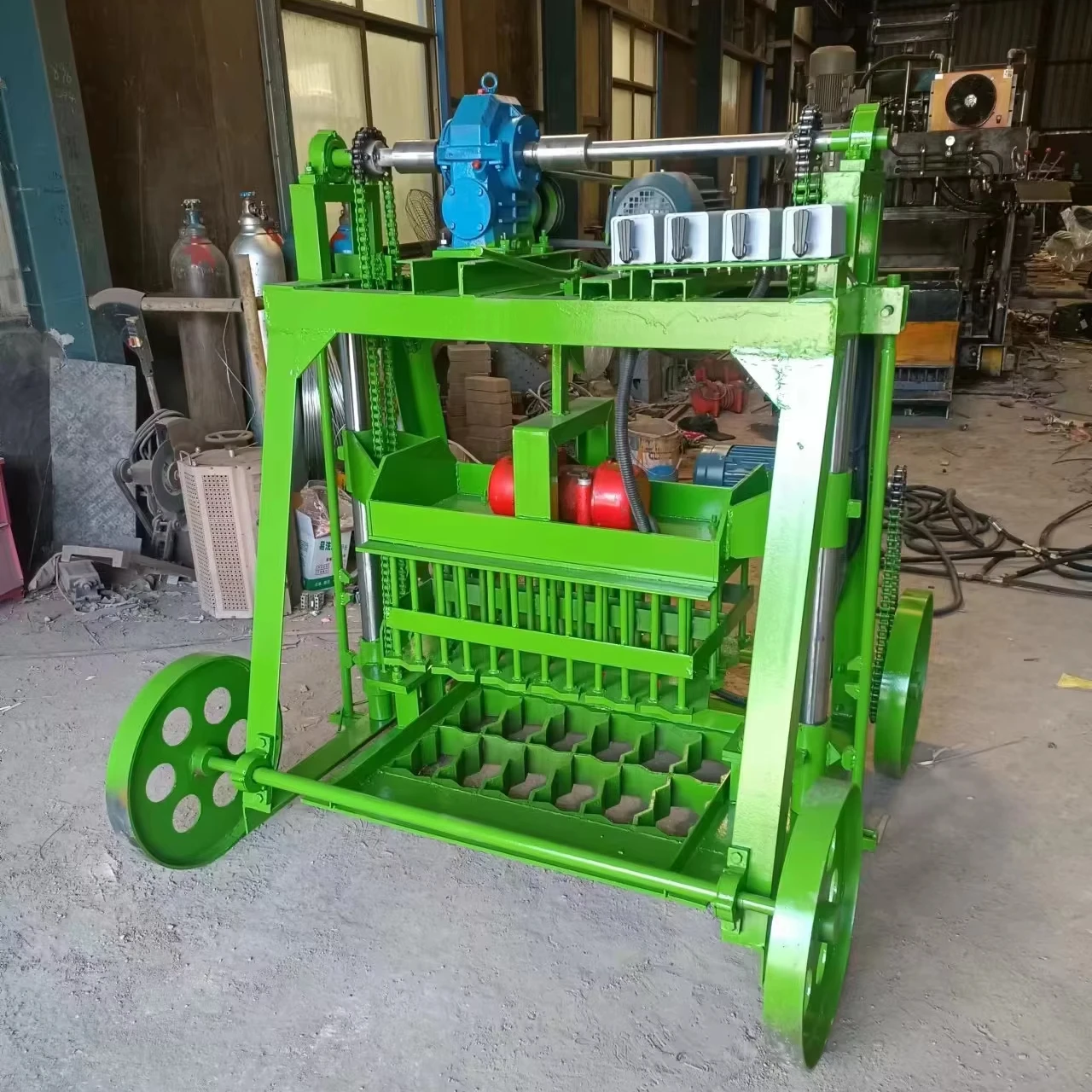
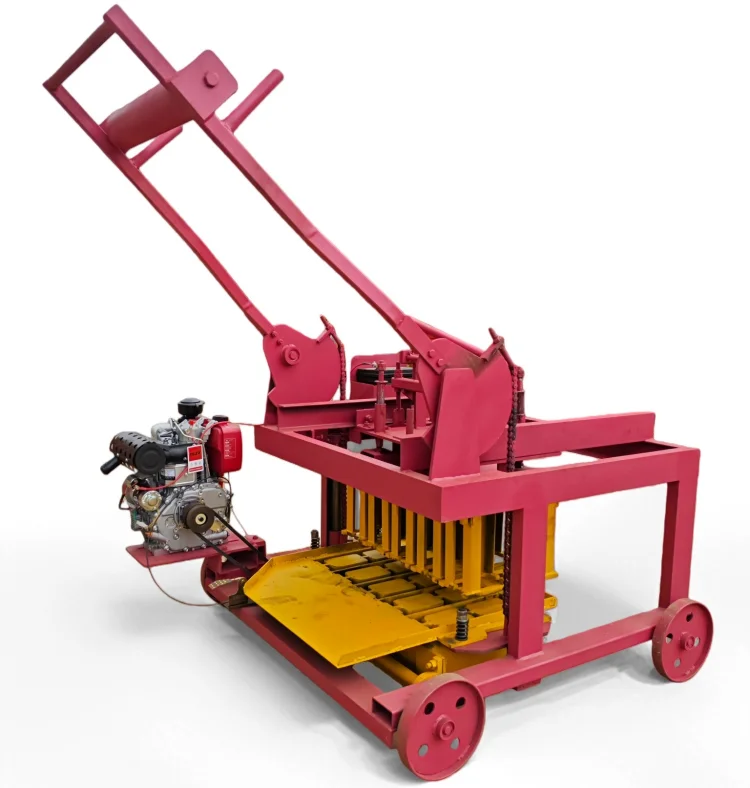
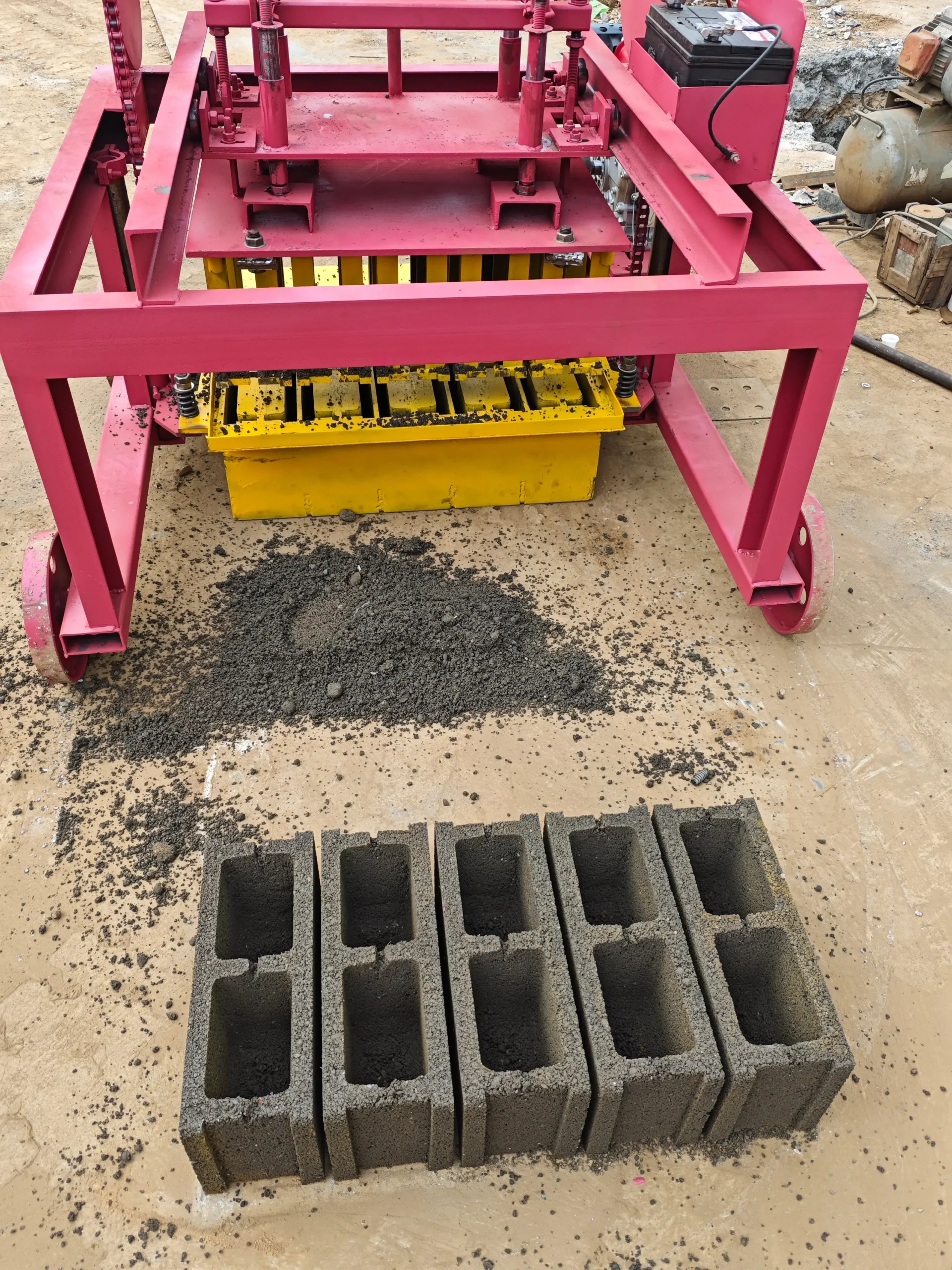
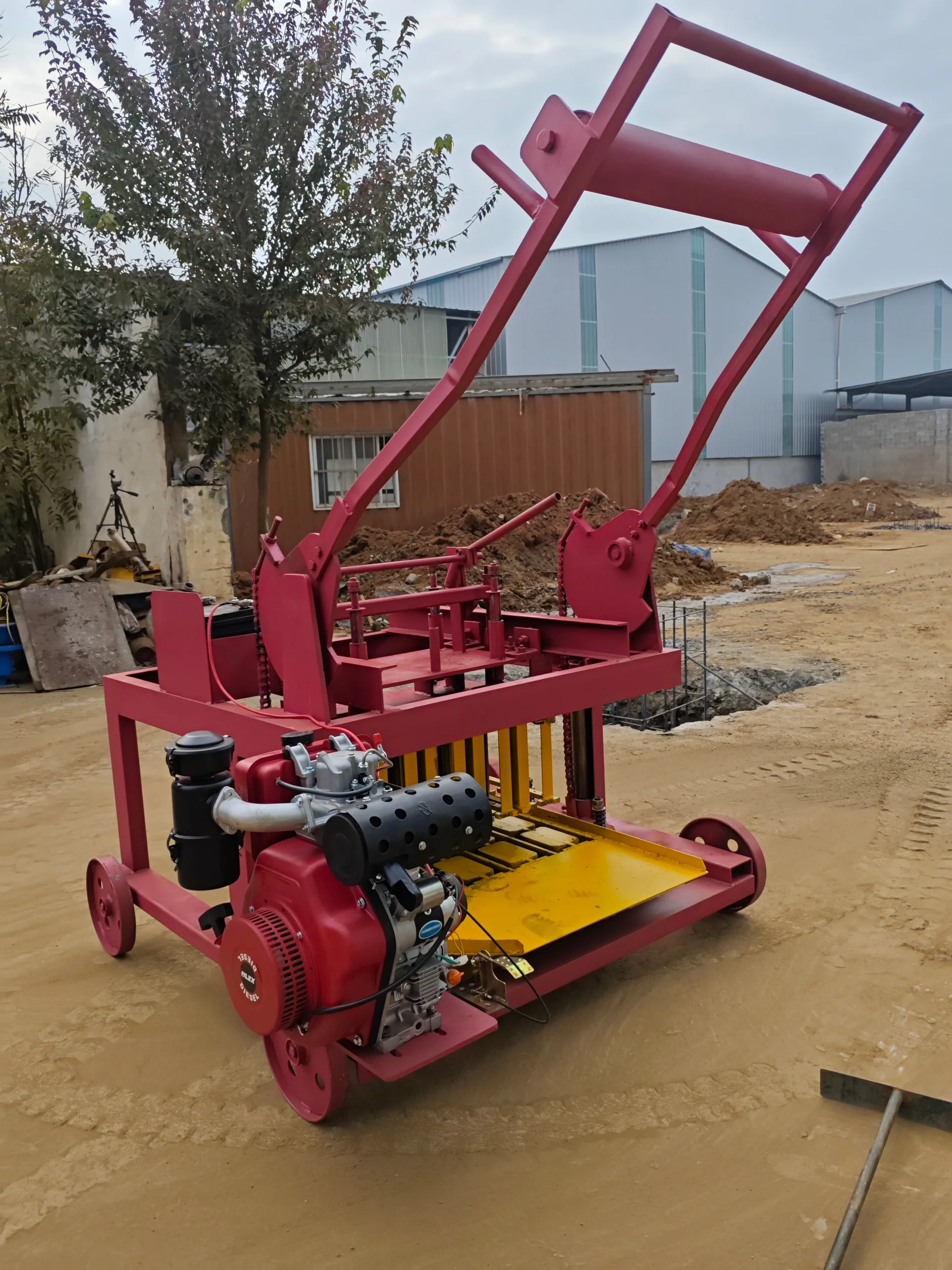
| Product Type | Mobile Egg Laying Block Making Machine |
| Overall Dimensions (L×W×H) | 2420×1320×1650 mm |
| Net Weight | 810 kg |
| Rated Power | 6 kW |
| Diesel Engine Option | 6 kW or 6-8 HP |
| Voltage | 220 V / 380 V or configurable to local supply |
| Moulding Cycle | 40-45 s |
| Pallet Requirement | None (egg laying design) |
| Productivity (400×200×200 mm hollow) | 4 pcs/mould, approx. 3000 pcs/day over 8 hours |
| Productivity (400×150×200 mm hollow) | 5 pcs/mould, approx. 3500 pcs/day over 8 hours |
| Productivity (400×120×200 mm hollow) | 6 pcs/mould, approx. 4500 pcs/day over 8 hours |
| Productivity (headline) | 3000 pcs/day (basis not stated in source — confirm block format and material) |
| Mould Format | Hollow block in multiple sizes; other formats available via mould change |
| Automation Level | Manual / small-scale mobile |
| Assembly State | Skid-mounted mobile unit, no fixed plant required |
Application Suitability
| Application | Material or Output |
|---|---|
| On-site hollow block production for housing projects | Crushed stone, sand, cement and water mixed on location |
| Remote or off-grid construction sites with unreliable power | Diesel-powered block forming using locally sourced aggregate |
| Small-scale block yard serving local masonry contractors | Multiple hollow block sizes from a single machine with mould change |
| First block plant for entrepreneurs with limited capital | Low-footprint production without a fixed batching and curing line |
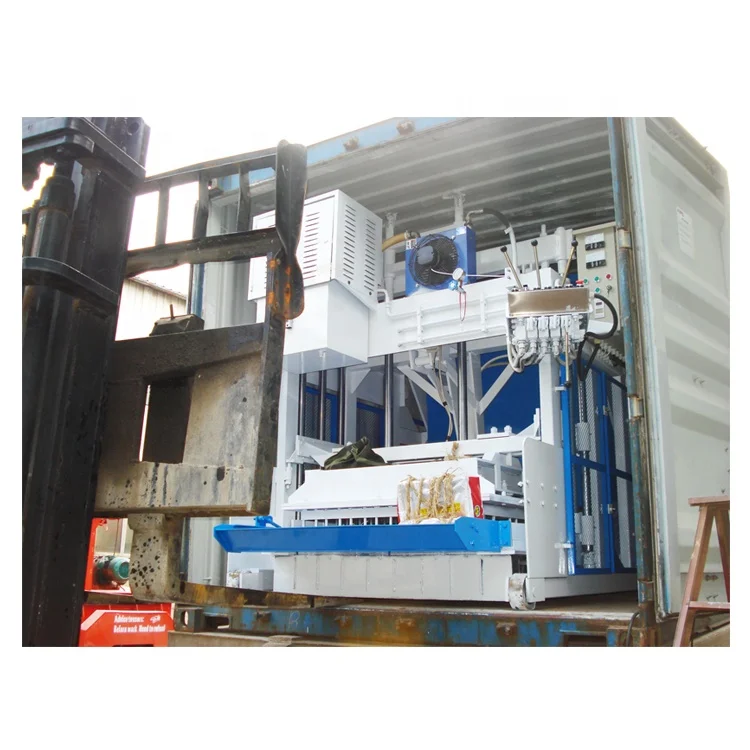
| Project-by-project block production moved between sites | Skid-mounted unit relocated by forklift or light crane |
What a "3000 Blocks per Day" Claim Actually Means for the QMR4-45 Mobile Block Machine
The number only holds if you are running 400×200×200 mm hollow blocks on a consistent mix with a steady 40-45 second cycle.
Suppliers often quote a single daily figure without naming the block format behind it. When a buyer in Guangdong took a QMR4-45 mobile block machine specification sheet at face value and planned a site schedule around 3000 units per shift, the local sand was finer than the reference mix, the cycle stretched well past 45 seconds, and real output dropped noticeably [NEED_CITE: impact of fine aggregate on vibration compaction cycle time]. The same machine running 400×120×200 mm hollow blocks with six cavities per mould can produce substantially more units in the same shift, but those thinner blocks serve a different market segment entirely. Knowing which format drives the headline number prevents scheduling shortfalls on live projects.
Matching Daily Output to the Block Your Market Sells
The QMR4-45 mobile block machine specifications list three hollow block sizes with distinct mould cavity counts. A 400×200×200 mm block comes out four per cycle, a 400×150×200 mm block five per cycle, and a 400×120×200 mm block six per cycle, all within the same 40-45 second window. This means a buyer targeting load-bearing hollow blocks for structural walls will see a different daily total than one producing partition blocks. The cycle stays consistent, but the unit count shifts with cavity configuration, so planning must start from the format your buyers actually order.
Diesel Power and the Reality of Off-Grid Production
Many construction sites in developing regions lack stable three-phase electricity, and running a block machine off a generator adds fuel cost and maintenance overhead. The QMR4-45 mobile block machine offers a 6-8 HP diesel engine option that drives the vibration and hydraulic systems independently of the grid. This matters for remote housing projects, road-side kerb production, and disaster-recovery building campaigns where connecting to mains power would delay the start of production by weeks [NEED_CITE: typical grid connection lead times in rural construction projects]. The diesel option also simplifies relocation since the machine carries its own power source from site to site.
Reading the Specification Sheet Beyond the Headline
Vibration force and hydraulic pressure are not listed in the available QMR4-45 mobile block machine specifications, yet these two parameters determine whether a block holds together after demoulding or crumbles under its own weight. The 6 kW rated power gives a ceiling for the vibration motor, but actual compaction force depends on the eccentric block configuration and the hydraulic ram pressure during the press phase. Moulding cycle at 40-45 seconds is achievable with a well-graded aggregate mix; poorly graded or overly fine material forces the operator to extend the cycle to reach adequate density. The 810 kg net weight provides some static mass during vibration, but on soft ground the machine must be levelled carefully to prevent uneven compaction across the mould face. Pallet-free egg laying operation removes one consumable cost entirely, though the ground surface must be flat and firm enough to receive freshly formed blocks without deformation.
When a Misconfigured Mould Costs More Than the Machine Itself
A buyer who orders a QMR4-45 without confirming the mould cavity layout against local block standards may receive a mould that produces blocks outside the dimension tolerances specified by local building codes [NEED_CITE: regional block dimension standards for structural masonry]. Blocks that are even a few millimetres off-spec get rejected at the site, wasting cement and aggregate for every shift. Equally, specifying an electric motor without confirming the local voltage and frequency leads to commissioning standstills — a 380 V motor on a 220 V supply simply will not start, and rewinding it on site is neither fast nor cheap.
Why Sourcing This Machine Here Makes a Difference
Block machinery is the sole focus of this operation, which means the QMR4-45 is specified as a matched system of machine, mould and ground-laying technique rather than assembled from unrelated components. Configuration is set against your actual mix design and local aggregate, not pulled from a catalogue default. Mould design covers the hollow block formats your market sells, with custom drawings available for non-standard sizes. The automation level is selectable, so a buyer starting with the manual mobile unit has a clear path to a semi-automatic line as volume grows. Installation support includes operator training on mix proportioning and cycle timing for consistent block strength [NEED_CITE: operator training impact on block compressive strength consistency].
Documentation & Verification
- Capacity calculation sheet stating the block format and cycle assumption behind every daily output figure
- Mould drawing and format list confirming included sizes and available additional moulds
- Voltage, frequency and diesel engine configuration confirmed in writing before production starts
- Factory test record run on your specified block format before dispatch
- Wear parts and mould maintenance list included with the quotation
- Operation manual covering mix proportioning guidance for local aggregate types
Installation, Commissioning & Support
- Levelled compacted ground required; no concrete foundation needed for the 810 kg skid-mounted unit
- Electric models need a dedicated 6 kW circuit at confirmed voltage and frequency
- Diesel models ship with 6-8 HP engine pre-fitted; fuel line bleeding required at first start
- Mould change procedure covered during on-site operator training at commissioning
- Vibration motor and hydraulic seals listed in the wear parts schedule for planned replacement
- Daily greasing points and weekly bolt-torque checks detailed in the maintenance manual
What We Need to Configure the Right Machine for You
Share the block format and dimensions your market demands, along with the daily volume you need to sustain. Provide a sample or description of your local sand and aggregate so the mix can be matched before the machine is built. Confirm your site power supply — voltage, phase and frequency — or whether the diesel engine option is the better fit for your location.
Frequently Asked Questions
Q: How is the daily output figure derived, and which block format does it assume?
A: The 3000 pcs/day figure assumes 400×200×200 mm hollow blocks at four per mould with a 40-45 second cycle over an eight-hour shift. Switching to a 400×120×200 mm mould with six cavities shifts the output to approximately 4500 pcs/day under the same cycle and shift length. Always confirm which block size your production plan is built around.
Q: Which block formats can the QMR4-45 produce with a mould change?
A: The standard range covers hollow blocks in 400×200×200, 400×150×200 and 400×120×200 mm dimensions. Other formats including solid blocks and pavers are available through additional moulds. The mould change is manual and requires basic hand tools; the exact procedure and time depend on operator familiarity after training.
Q: How do I match vibration and pressure to my local aggregate for consistent block strength?
A: Local sand grading and aggregate size directly affect how well the vibration compacts the mix. Fine sand may need a longer cycle or adjusted moisture content to reach target density. Share your aggregate sieve analysis and cement ratio so the vibration parameters and cycle time can be set before the machine leaves the factory.
Q: Can the machine run entirely on diesel, or is grid power still needed?
A: The 6-8 HP diesel engine option drives the vibration motor and hydraulic system, removing the need for grid electricity during block forming. A small electric supply may still be useful for site lighting and a concrete mixer, but the QMR4-45 itself can operate independently of mains power when configured with the diesel option.
Q: Does the egg laying design truly require no pallets or curing racks?
A: Correct. Blocks are laid directly onto a flat, compacted ground surface as the machine moves forward. This eliminates pallet purchase, pallet handling labour and pallet storage space. The ground must be level and firm enough to support freshly formed blocks without deformation during the initial curing period.