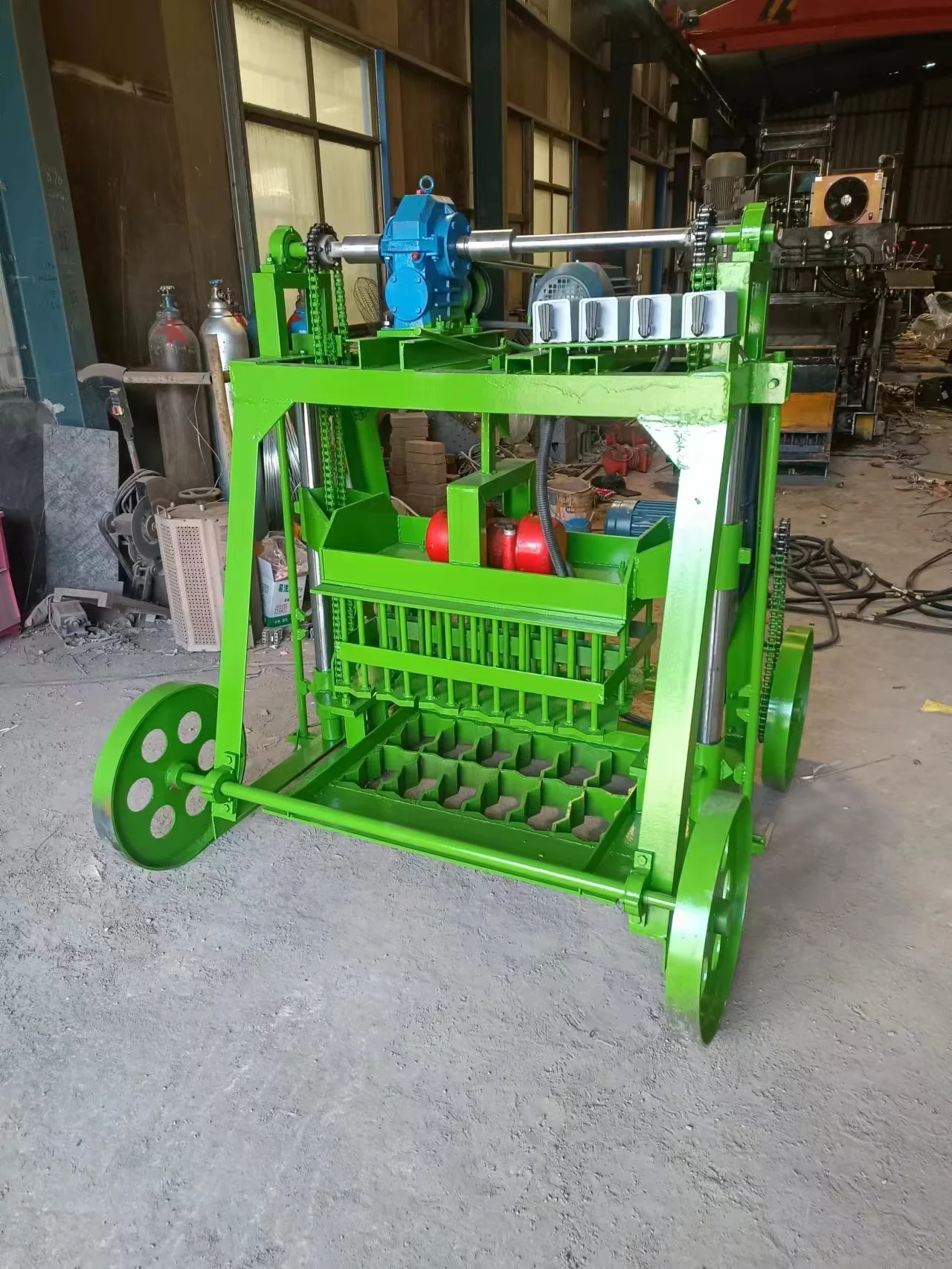


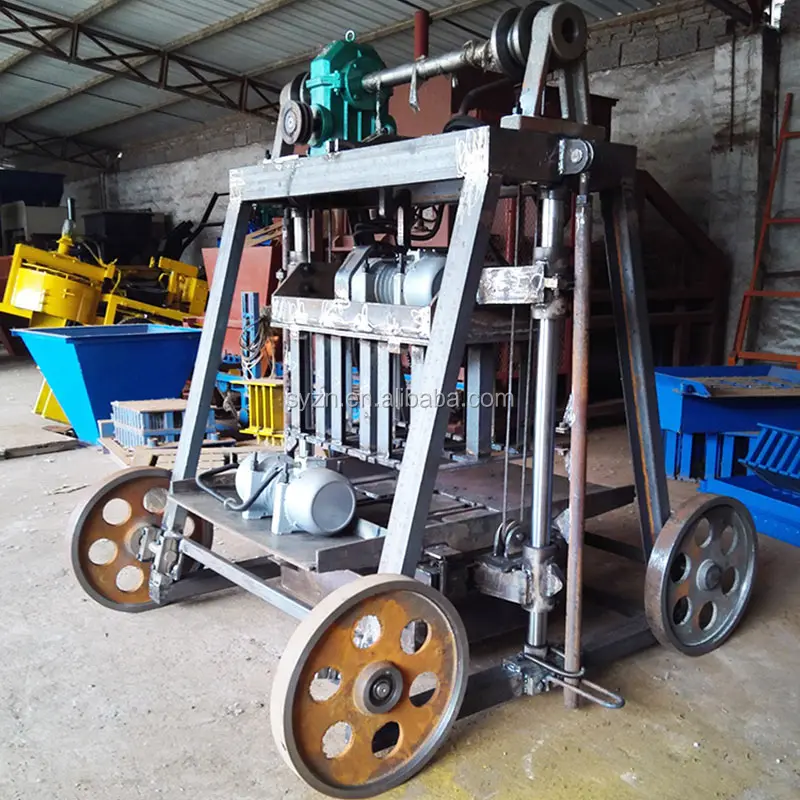
Description
Format-Matched Capacity — every QMJ4-45 mobile block machine quotation states output per block format, so daily figures hold up once production starts.
Technical Specifications
| Parameter | Value |
|---|---|
| Model | QMJ4-45 |
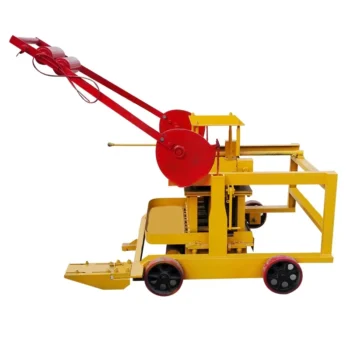
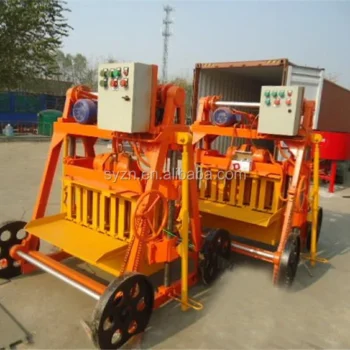
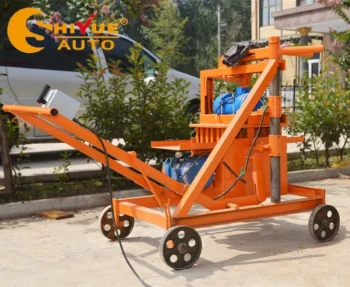
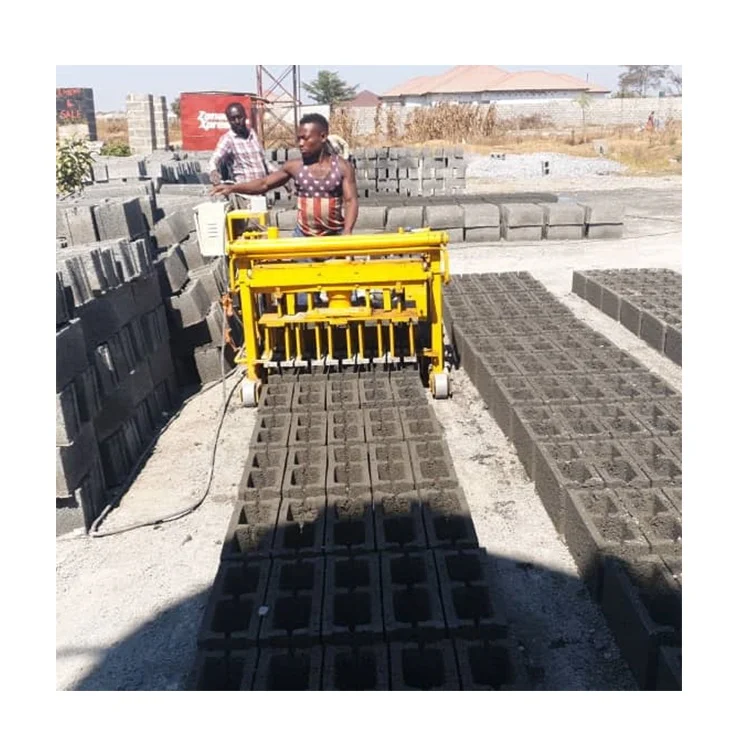
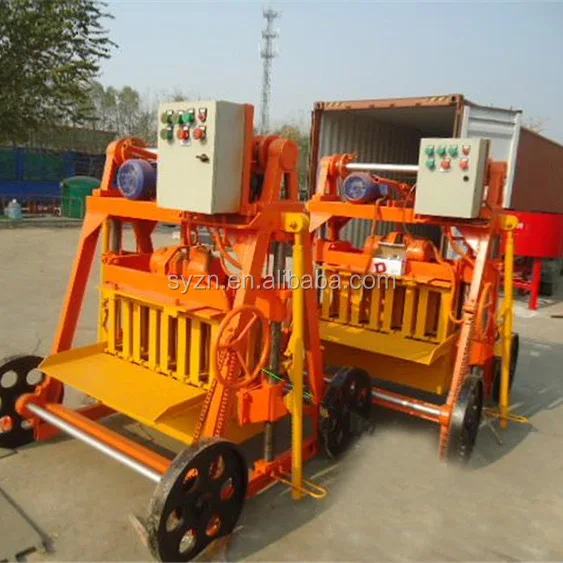
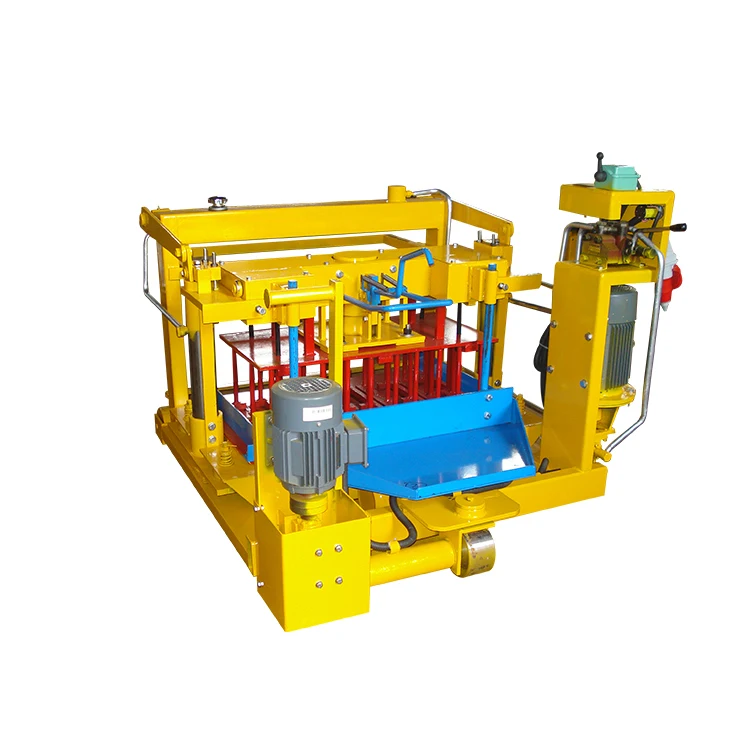
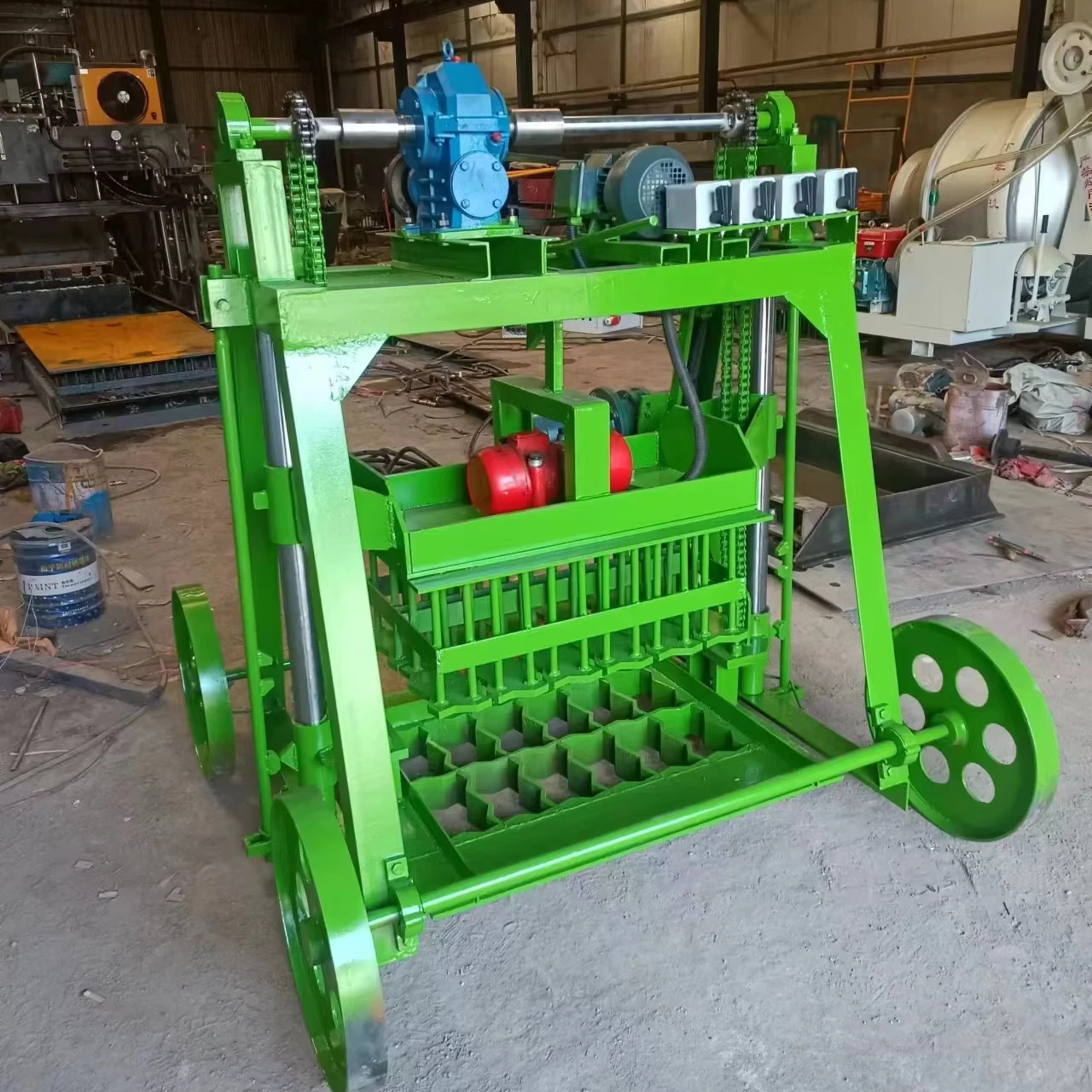
| Product Type | Mobile Egg-Laying Block Making Machine |
| Rated Power | 7.4 kW |
| Molding Cycle | 45 s |
| Output Capacity | 2,400 pcs/8 h based on 400×200×200 mm hollow block; 3,200 pcs/8 h based on 400×150×200 mm block |
| Mould Cavities | 4 pcs/mould for 400×200×200 mm; 5 pcs/mould for 400×150×200 mm |
| Net Weight | 1 T |
| Overall Dimensions (L×W×H) | 1,550 × 1,335 × 1,580 mm |
| Pallet Requirement | None (egg-laying design) |
| Guidance System | Four-pole orientation with ultralong bearing |
| Control System | Manual force control + jog control |
| Voltage | Configured to buyer’s local voltage (value to be confirmed before production) |
| Raw Material Compatibility | Concrete, sand, cement, fly ash, lime, gypsum |
| Automation Level | Semi-automatic |
| Mould Format Range | Hollow block, road block, curb stone, and other concrete products via mould change |
Application Suitability
| Application | Material or Output |
|---|---|
| On-site hollow block production at construction job sites | Crushed stone, sand, and cement mix laid directly on cured ground |
| Small block yard for local masonry supply | Fly ash, lime, and gypsum blends for 400×200×200 mm hollow blocks |
| Curb stone and road block runs for municipal contractors | Coarse aggregate and cement for kerb and paving formats |
| First block plant for entrepreneurs with limited capital | Local sand and cement for 400×150×200 mm solid blocks |
What "2,400 Blocks per Shift" Actually Means on the QMJ4-45 Mobile Block Machine
The figure only holds when you run 400×200×200 mm hollow blocks at a steady 45-second cycle with your mix design dialled in.
Suppliers often quote a single headline number without naming the format behind it. A buyer planning to produce 150 mm solid blocks all day will see that number drop because the mould holds more cavities but each cycle still takes 45 seconds, and denser mixes slow the ejection. I have watched sites lose an entire shift chasing a capacity that was never sized for their product. Before we confirm a QMJ4-45 mobile block machine for your line, we run your local aggregate sample through a test press and quote capacity per format. [NEED_CITE: common causes of output shortfall in small block plants]
Mould Format Coverage and What Each Format Really Yields
The QMJ4-45 ships with a mould that produces either 400×200×200 mm hollow blocks at four pieces per cycle or 400×150×200 mm blocks at five pieces per cycle. Switching between them means unbolting the current mould, lifting it clear, and seating the replacement on the four-pole guide — a job that takes one operator and basic hand tools. When your market demands both hollow and solid formats across the week, knowing the exact changeover time protects your schedule. We record that time during the factory test so you see it before the crate closes.
Pallet-Free Egg-Laying Design and Site Layout Implications
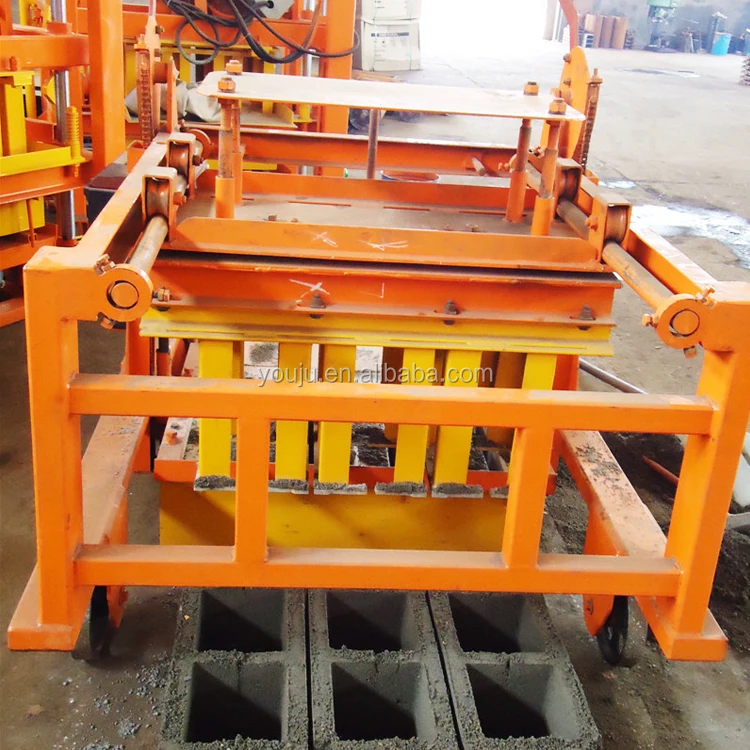
Because the QMJ4-45 lays blocks directly onto the ground, you eliminate pallet purchase, pallet storage, and the labour of cycling pallets back to the machine. The trade-off is floor space: each day’s output stays on the ground until it cures enough to move, so your curing area must accommodate roughly one shift’s production before the oldest blocks are lifted. Planning that area before the machine arrives prevents the bottleneck where fresh blocks have nowhere to land. [NEED_CITE: curing area sizing for egg-laying block machines]
Reading the Specs That Matter for Block Density
The 7.4 kW motor drives both vibration and the manual force applied through the lever. On an egg-laying machine, block density depends on how well the vibration compacts the mix before the operator releases the mould. The four-pole guidance with ultralong bearings keeps the pressure head aligned so every cavity fills evenly; misalignment would leave one corner soft and the block would crack during curing. The 45-second cycle gives a semi-skilled operator enough time to position, vibrate, and eject without rushing. Voltage must match your site supply exactly — running a 380 V motor on 415 V shortens its life, and we confirm the value in writing before the machine enters production.
The Cost of Skipping the Mix Test
A machine configured for clean, graded sand will struggle when your yard receives aggregate with high clay content or oversized gravel. Blocks come out crumbly, the mould fills unevenly, and the stated cycle time stretches as the operator re-vibrates each cycle. I have seen first-time buyers blame the machine when the real issue was a mix the press was never set up to handle. Sending a sample of your local material before order lets us adjust vibration duration and recommend a sieve size, so the QMJ4-45 mobile block machine performs once it reaches your site. [NEED_CITE: impact of local aggregate variability on block strength]
Why Sizing Starts With Your Block, Not the Brochure
Every configuration decision on this machine flows from the format you actually sell. We begin with your target block drawing, confirm the mould cavity count, and calculate daily output for that specific format — not a catalogue average. Mould design is handled in-house, so custom dimensions or interlocking profiles are drawn and reviewed before steel is cut. Voltage, frequency, and control language are locked in writing so there is no commissioning delay when the machine arrives. A wear parts list ships with the quotation, meaning your first replacement of seals or springs is already planned rather than discovered mid-shift.
Documentation & Verification
- Line layout showing curing area sized to your chosen block format
- Capacity calculation sheet stating output per mould with cycle time
- Mould drawing and format list reviewed before production starts
- Voltage and frequency confirmation signed off before assembly
- Factory test record on your submitted mix design and aggregate sample
- Wear parts and mould replacement list included with the quotation
Installation, Commissioning & Support
- Ground must be level concrete to support 1 T machine weight and vibration load
- Dedicated 7.4 kW circuit with confirmed voltage and frequency before energising
- Machine ships as a single unit; four-pole guide checked on arrival for transit shift
- First mould fitted and cycle timed on your aggregate during on-site commissioning
- Operator trained on manual force technique and jog control sequence
- Mould change demonstrated with replacement cavity seated on ultralong bearings
What to Share Before We Quote the QMJ4-45 Mobile Block Machine
Send us the exact block dimensions your market requires, the daily volume you plan to sustain, and a sample or lab report of your local aggregate. Let us know your site voltage and frequency so the motor is wound correctly, and tell us whether you need curb stone or road block moulds alongside hollow blocks. With those details, we return a configuration proposal that names every format and its realistic output. [NEED_CITE: pre-order information checklist for block machine buyers]
Frequently Asked Questions
Q: How is the 2,400 pcs/8 h figure calculated, and what block format does it assume?
A: That figure assumes the 400×200×200 mm hollow block mould running four cavities per cycle at a steady 45-second interval across an eight-hour shift. If your primary product is a different size, the daily total changes because cavity count and ejection behaviour differ. We state the capacity for each format you plan to produce before the order is confirmed.
Q: Which block formats can the QMJ4-45 produce, and how long does a mould change take?
A: The machine covers hollow blocks, solid blocks, road blocks, and curb stones through mould swaps on the four-pole guide. Mould change time is recorded during the factory test on your chosen formats so you know the exact duration before shipment, rather than relying on a generic estimate.
Q: What raw materials and mix design work best with this machine in my local market?
A: The QMJ4-45 handles concrete, sand, cement, fly ash, lime, and gypsum. The best mix depends on your local aggregate’s grading and clay content. We ask for a material sample before order, run a test press, and recommend sieve size and moisture targets so block density meets your market standard.
Q: Is the machine pallet-free, and what does that mean for my curing area?
A: Yes, the egg-laying design places blocks directly on the ground, eliminating pallet cost and handling labour. Your curing area must hold one full shift of production before blocks are moved, so we help you calculate the floor space needed based on your chosen format and daily target.
Q: What voltage, frequency, and control language will be configured before shipment?
A: Voltage and frequency are confirmed in writing against your site supply before the motor is wound. The control panel uses manual force and jog switches, so language is less of a concern than with PLC screens, but all labelling is produced in your preferred language before dispatch.