


Description
Specified Against Your Block Format — daily output is calculated per hollow block size and local aggregate, not a single misleading headline number.
Technical Specifications
| Parameter | Value |
|---|---|
| Model | QMR4-45 |
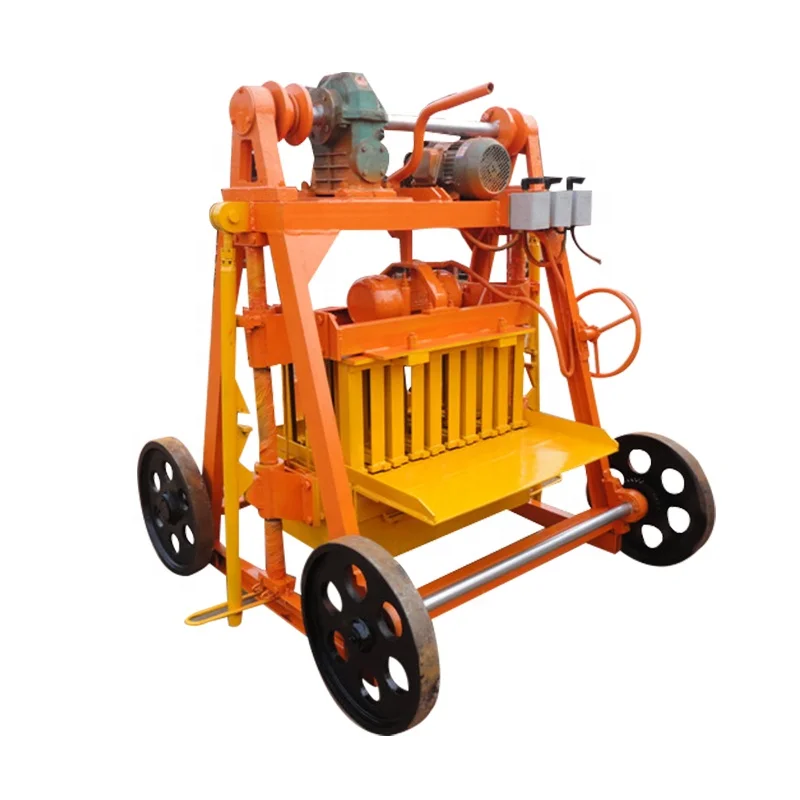
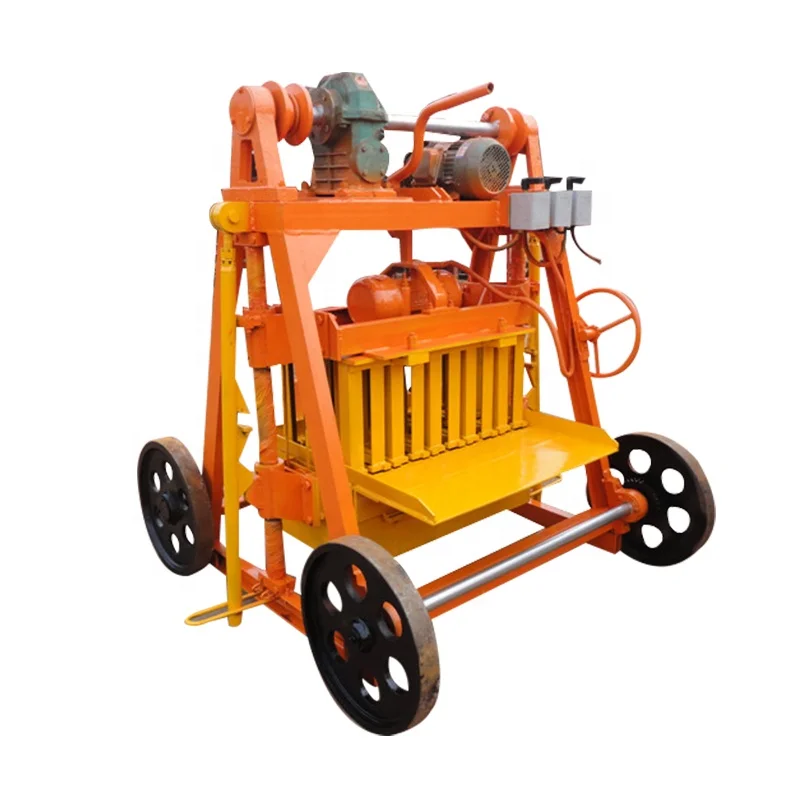
| Product Type | Mobile Egg Laying Block Making Machine |
| Overall Dimensions (L×W×H) | 2420×1320×1650mm |
| Moulding Cycle | 40-45s |
| Pallet Size | No pallet required |
| Net Weight | 810kg |
| Rated Power | 6kW |
| Diesel Engine Option | 6kW or 6-8HP |
| Voltage | 220V or 380V or according to client local voltage |
| Productivity (400×200×200mm hollow block) | 4pcs/mould, 3000 pcs/day (8 hours) |
| Productivity (400×150×200mm hollow block) | 5pcs/mould, 3500 pcs/day (8 hours) |
| Productivity (400×120×200mm hollow block) | 6pcs/mould, 4500 pcs/day (8 hours) |
| Automation Level | Manual / semi-automatic (egg laying, mobile) |
| Power Source Option | Electric motor or diesel engine |
| Mould Change System | Manual mould change for different block formats |
| Assembly State | Fully assembled, mobile unit |
| Warranty | One year guarantee for the whole machine |
| Certification | CE |
Application Suitability
| Application | Material or Output |
|---|---|
| On-site hollow block production for housing projects | Crushed stone, sand, cement, and water mix laid directly on the ground |
| Remote or off-grid construction sites | Diesel-powered operation where grid electricity is unstable or unavailable |
| Small-scale block yards adding hollow formats | 400×200×200mm, 400×150×200mm, and 400×120×200mm hollow blocks |
| Contractor producing blocks across a linear infrastructure site | Machine moved along the work front as production progresses |
| First-time block plant entrepreneurs | No pallet inventory, no curing racks, minimal fixed infrastructure |
What "3000 Pieces per Day" Actually Means for the QMR4-45 Mobile Egg Laying Block Machine
That figure only holds if you are running 400×200×200mm hollow blocks for a full eight-hour shift at a consistent 40-45 second cycle.
Most catalogues print a single output number and leave the buyer to discover on commissioning day that it was based on the largest, easiest-to-compact format. With the QMR4-45 mobile egg laying block machine, the daily capacity shifts with every mould swap. A 400×120×200mm hollow block delivers up to 4500 pieces in the same shift because the mould holds six cavities instead of four. Conversely, if your local aggregate is heavier than standard river sand — volcanic scoria, dense basalt dust, or unwashed crusher run — the vibration force and hydraulic pressure may need adjustment before the machine reaches its stated cycle time. [NEED_CITE: effect of aggregate density on block compaction and cycle consistency] I once watched a contractor in East Africa lose an entire week of production because the quoted output assumed a sand-and-cement mix while the nearest available aggregate was volcanic gravel. Every output claim here is tied to a specific block dimension so you can plan realistically.
Matching the Mould to the Hollow Block Your Market Actually Buys
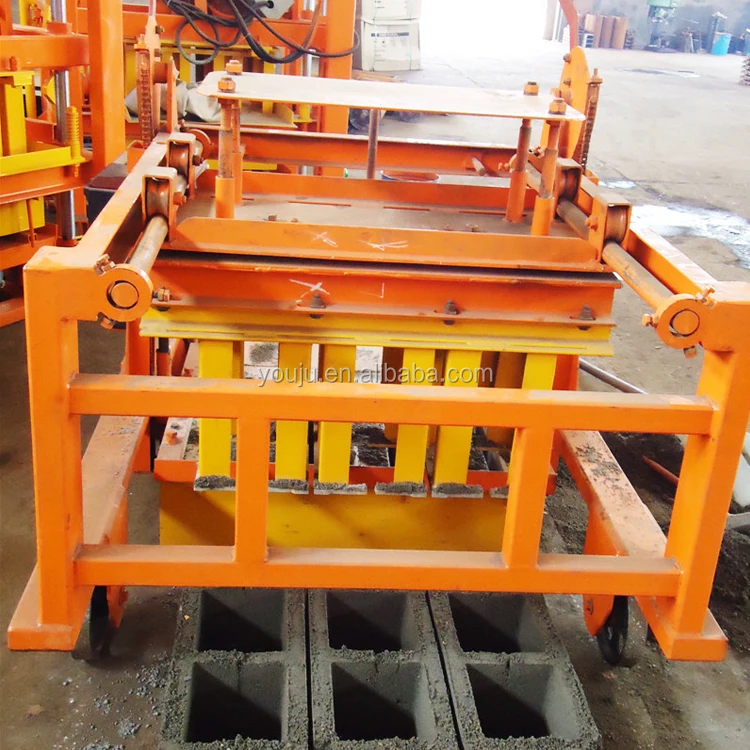
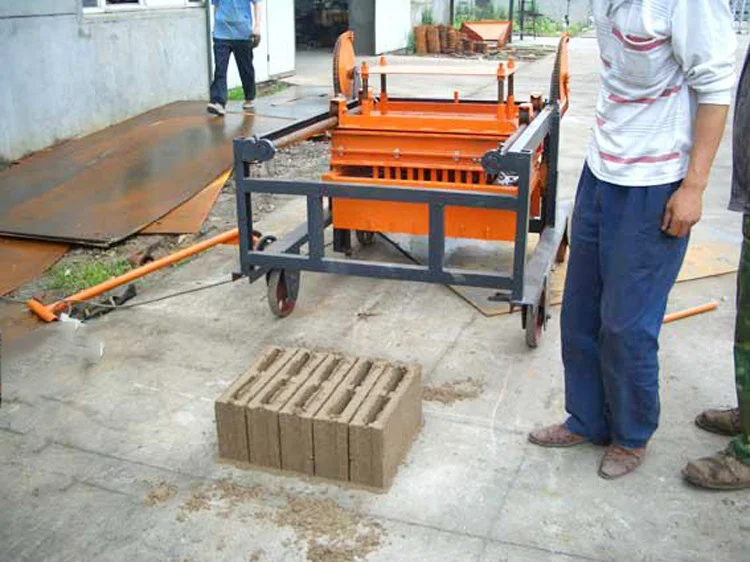
The QMR4-45 mobile egg laying block machine ships with mould capability across three standard hollow block widths. The 400×200×200mm format is the most common structural block in many African and Southeast Asian markets, while the 150mm and 120mm widths serve partition walls and non-load-bearing applications. Mould change is manual: the operator unboltS the current mould, lifts it clear, and secures the replacement. The QMR4-45 mobile egg laying block machine specifications list each format with its own cavity count and daily output, so a buyer comparing options can match the machine to actual sales volume rather than a generic number.
No-Pallet Egg Laying and What It Eliminates
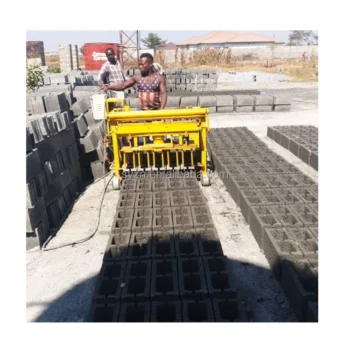
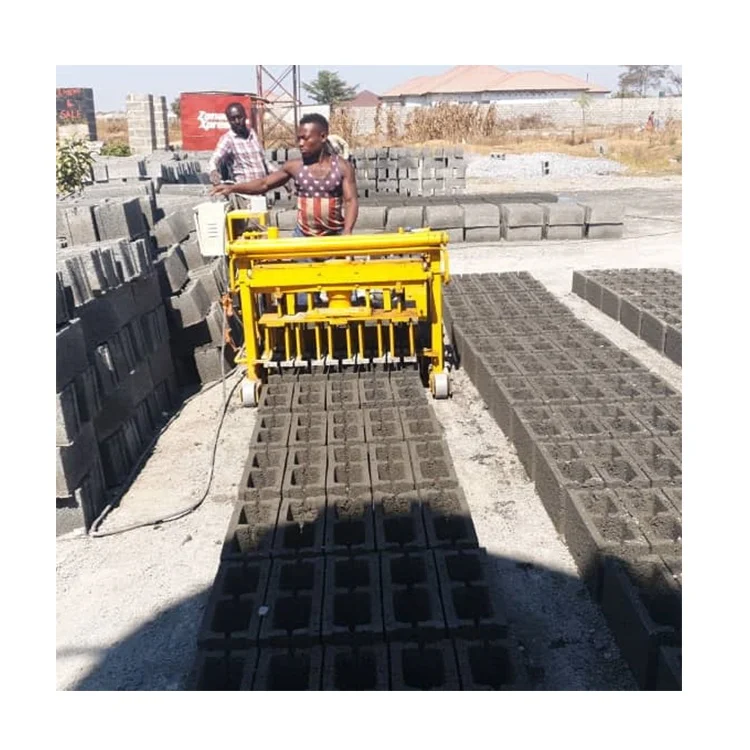
An egg laying machine deposits freshly pressed blocks directly onto the ground and moves forward on its own wheels. There are no pallets to purchase, no pallet return loop to staff, and no curing racks to build. This simplifies the production footprint considerably — the curing area is simply a flat, swept concrete slab. For contractors already managing a construction site with limited space and no forklift, removing pallet logistics means fewer moving parts in the daily workflow. [NEED_CITE: on-site block production without pallet infrastructure]
Reading the Specs That Actually Matter
The 40-45 second moulding cycle governs how many blocks the machine can press per hour, but cycle time alone does not guarantee block strength. The rated power of 6kW drives both the vibration motor and the hydraulic system. On a site where grid voltage fluctuates, the available diesel engine option at 6-8HP removes dependence on an unstable supply. Overall dimensions of 2420×1320×1650mm and a net weight of 810kg mean the unit can be repositioned by a small loader or pushed manually over short distances on level ground. Voltage is configurable at 220V or 380V, and must be confirmed before dispatch — a 380V motor wired for a 220V site will not start, and a 220V motor connected to a 380V supply will burn out within minutes. The manual mould change system keeps maintenance simple but requires the operator to allow time for the swap rather than expecting instant format switching.
The Hidden Cost of Overlooking Mix Design and Local Aggregate
A machine calibrated for clean, graded river sand will underperform when fed with locally available crusher dust or unwashed gravel. The vibration force and hydraulic pressure settings must match the density and particle shape of the raw material. When they do not, blocks crack during curing or fail compressive strength tests on site. I have seen contractors blame the machine when the real problem was an untested mix. [NEED_CITE: compressive strength testing standards for concrete masonry units] Asking for a sample of the buyer’s aggregate before finalizing the quotation prevents weeks of lost production and rework after the machine arrives.
Why Source This Machine Through a Format-Matched Approach
Block machinery is the sole focus here, so the QMR4-45 is specified as a complete system — machine, mould, and handling — rather than assembled from separate suppliers. Configuration is set against the buyer’s actual hollow block format, local aggregate, and site conditions, not a catalogue default. Mould design covers the sizes the buyer’s market sells, with custom drawings available for non-standard formats. Automation level is selectable, so a buyer can start with manual egg laying and move to a stationary line later. Installation and commissioning support includes operator training so the crew understands cycle timing, mould swaps, and daily maintenance from day one.
Documentation & Verification
- Line layout and capacity calculation stating the hollow block format assumed for each output figure
- Mould drawing and format list confirming included and optional hollow block sizes
- Voltage, frequency, and control language confirmation document signed before dispatch
- Factory test record on the buyer’s specified block format and mix proportion
- Hydraulic and electrical schematic for on-site troubleshooting
- Wear parts and mould availability list for the first replacement cycle
Installation, Commissioning & Support
- Level concrete slab required; the 2420×1320mm footprint needs clearance on all sides for block ejection
- Dedicated 6kW circuit at confirmed 220V or 380V, or diesel engine fuel supply arranged before arrival
- Machine ships fully assembled; only mould mounting and power connection needed on site
- First-day commissioning covers cycle timing, vibration adjustment, and test pressing with local aggregate
- Operator training on manual mould change procedure and 40-45 second cycle discipline
- Wear parts list supplied with recommended reorder intervals based on eight-hour daily operation
What We Need to Quote Accurately
Send the hollow block dimensions your market sells most, along with a photo or description of the local aggregate you plan to use. Confirm your site voltage and frequency, and let us know whether grid power is reliable enough for electric operation or if diesel is the safer choice. If you already have a curing area, share its dimensions so we can confirm the egg laying travel path fits.
Frequently Asked Questions
Q: How is daily output verified for each hollow block format, and what mix design is assumed?
A: Each output figure — 3000, 3500, or 4500 pieces per eight-hour day — is tied to a specific hollow block dimension and cavity count. The calculation assumes a standard cement-to-aggregate ratio with river sand or graded crusher dust. If your local material differs in density or particle shape, we adjust the vibration and pressure settings during commissioning and reconfirm the achievable cycle time on your actual mix.
Q: Which mould formats are included, and how long does a mould change take?
A: The base package includes one hollow block mould in your chosen size. Additional 400×200×200mm, 400×150×200mm, or 400×120×200mm moulds are available as options. Mould change is manual: the operator unbolts the current mould, swaps it, and re-secures the new one. Allow a portion of the shift for the changeover rather than treating it as an instant switch.
Q: Diesel versus electric — how do I choose?
A: If your site has a stable 220V or 380V supply with adequate amperage for a 6kW load, the electric motor offers lower running cost and less noise. Where grid power is unreliable or absent, the 6-8HP diesel engine option keeps production running independently. Running cost comparison depends on your local electricity tariff and diesel price, so we recommend calculating both before deciding.
Q: What block strength is achievable, and how does vibration match my aggregate?
A: Block strength depends on the mix design, compaction force, and curing conditions together. The QMR4-45 applies vibration and hydraulic pressure in combination to compact the mix. Before dispatch, we request a sample or specification of your local aggregate so we can match the vibration force and pressure settings to its density, ensuring the blocks meet the compressive strength standard your project requires.