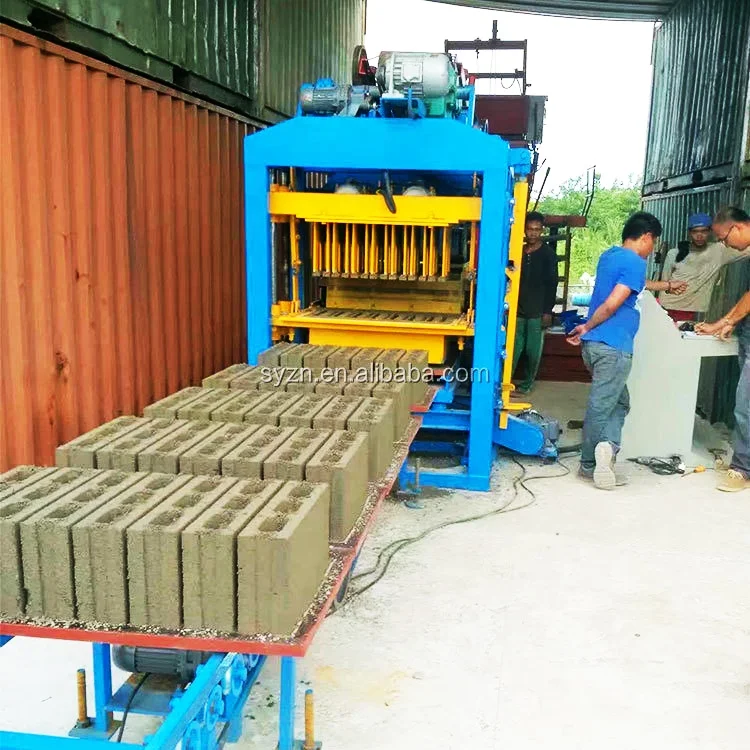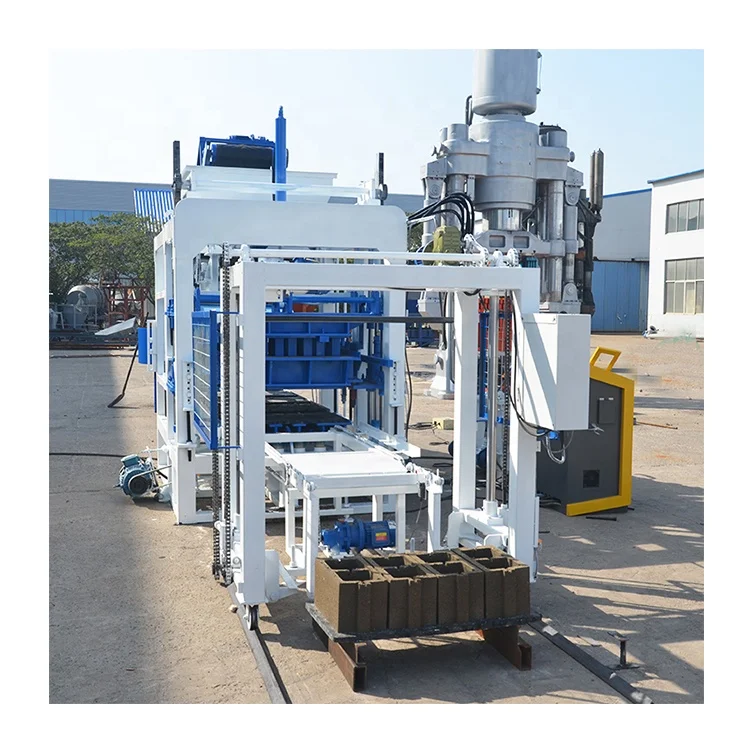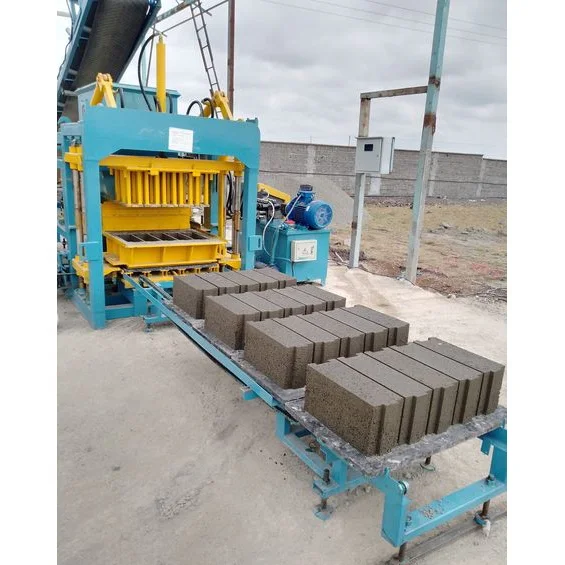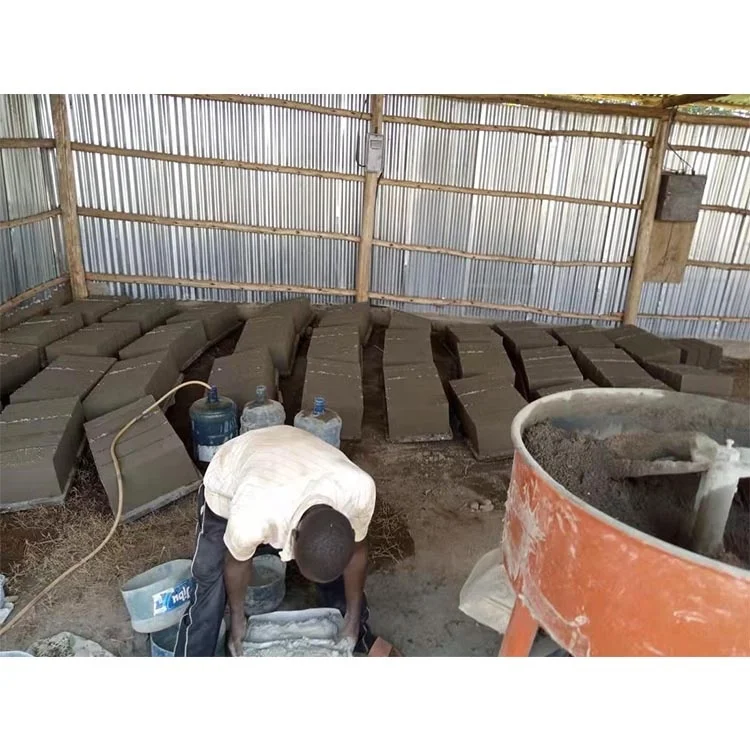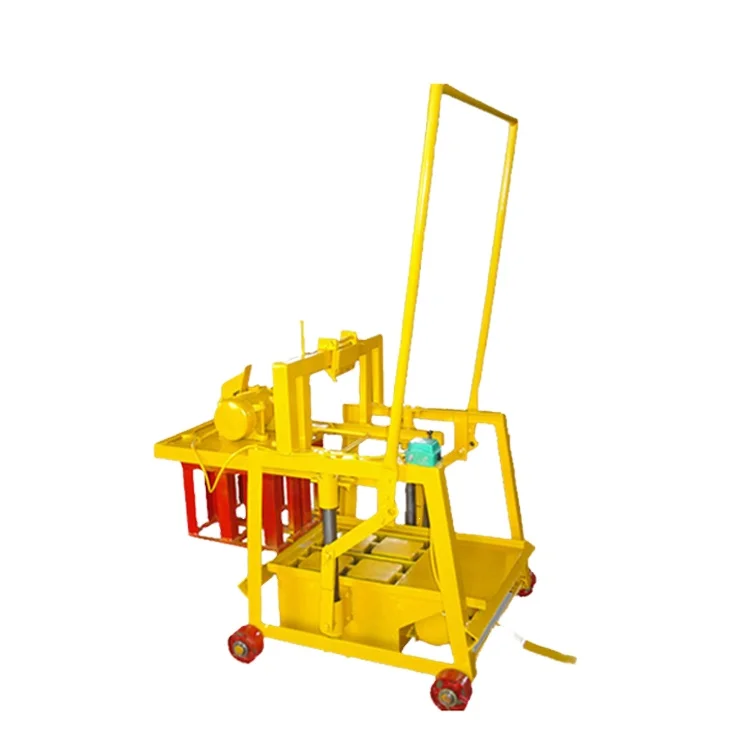


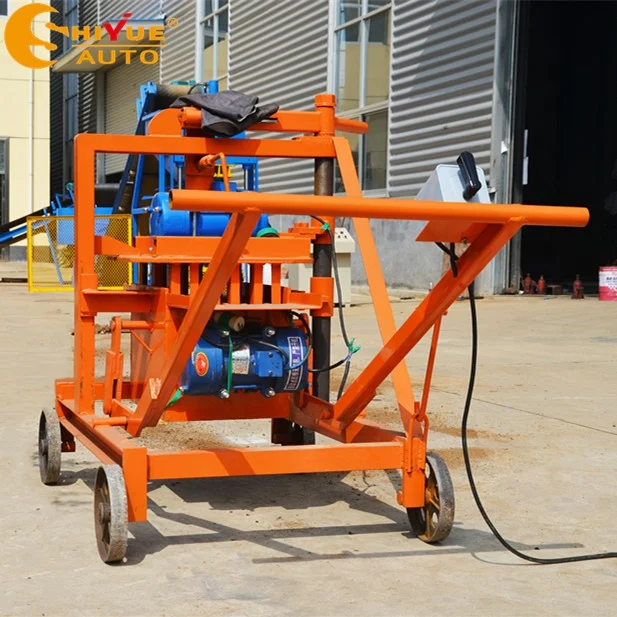
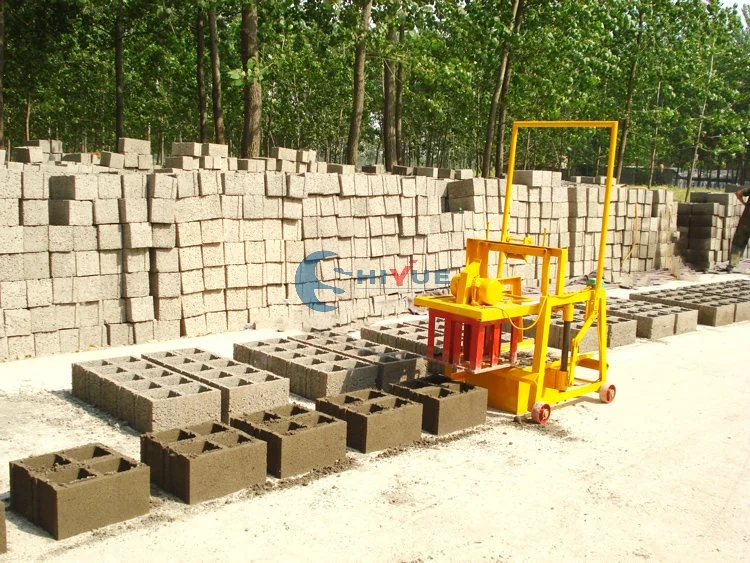
Description
Honest per-format capacity — every daily output figure for the QMJ2-45 is tied to a stated block format, mould cavity count, and cycle time, so buyers see what they will actually produce on site.
Technical Specifications
| Parameter | Value |
|---|---|
| Model | QMJ2-45 |
| Product Type | Mobile Brick Making Machine |
| Machine Type | Mobile / Egg-laying (semi-automatic) |
| Rated Power | 1.5 kW |
| Molding Cycle | 45 s |
| Output Capacity | 1280 pcs / 8 hours (based on 300×150×100 mm solid block, 2 pcs/mould) |
| Vibration Motors | 2 pcs per mould |
| Raw Materials | Concrete, sand, cement |
| Net Weight | 150 kg |
| Overall Dimensions (L×W×H) | 920 × 800 × 1258 mm |
| Voltage | Configured to buyer’s local standard (basis to be confirmed) |
| Control System | Semi-automatic (button / relay operation) |
| Mould Format | Customizable (example: 300×150×100 mm) |
| Mould Change System | Manual |
| Pallet Requirement | None (egg-laying type) |
| Stacking Method | Manual / on-site curing without pallet |
Application Suitability
| Application | Material or Output |
|---|---|
| On-site solid block production for housing projects | Concrete, sand, cement — blocks laid directly on prepared ground |
| Small-scale block venture with limited curing yard | 300×150×100 mm solid blocks at low capital outlay |
| Remote or rural construction without fixed plant infrastructure | Semi-automatic operation using locally sourced aggregate |
| Secondary format production for existing block manufacturers | Customizable mould for format diversification |
Why "1280 Blocks per Day" Needs a Closer Look
A capacity number means nothing without the block size and cycle time behind it.
Many mobile block machines quote a single daily output that assumes the smallest, lightest block the mould can form. In real site conditions — with a 300×150×100 mm solid block and two cavities per mould — the QMJ2-45 mobile brick making machine specifications point to a 45-second cycle and 1280 pieces over an eight-hour shift. If a buyer switches to a larger hollow block or interlocking paver, the cycle lengthens, the cavity count drops, and the daily number falls accordingly. That gap between catalogue output and site reality is the single biggest cause of disputes I see on commissioning visits [NEED_CITE: common causes of mobile block machine output disputes in field installations].
Mould Format Drives Every Other Number
The QMJ2-45 mobile brick making machine specifications list a 300×150×100 mm solid block as the baseline example with two cavities per mould. Swap to a wider kerbstone or an interlocking paver and the mould cavity count may fall to one, which immediately halves the pieces per cycle. The 45-second molding cycle also assumes a mix that compacts cleanly under vertical vibration; a sticky or high-clay aggregate will require a longer vibration burst and extend that cycle. Buyers must therefore confirm their target block format and local aggregate before treating any output figure as a commitment.
Two-Motor Vibration and Density Consistency
Each mould on this machine carries two vibration motors, one providing bed-mould vertical vibration and the other adding upper-mould compression vibration. This dual-source approach is intended to compact the concrete mix evenly from bottom to top of the cavity, reducing the density gradient that leads to weak upper edges. On a lightweight egg-laying frame, motor balance matters because uneven vibration can shift the machine mid-cycle and leave an uneven block base on the ground [NEED_CITE: vibration motor alignment tolerances in egg-laying block machines].
Reading the Specs That Actually Matter on Site
The 1.5 kW rated power keeps the machine within reach of a standard single-phase generator, which is critical on remote sites without grid connection. At 150 kg and 920 × 800 × 1258 mm, two operators can reposition the QMJ2-45 without a forklift, letting them follow a curing path across a prepared yard. The semi-automatic button and relay control means there is no PLC screen to learn and no software language to configure — operators simply start and stop the vibration and lift sequence manually. Voltage must still be confirmed before production: I have seen machines sit idle for weeks because the motor was wound for 380 V / 50 Hz and arrived in a 220 V / 60 Hz market.
When the Wrong Mix Choice Cancels Out the Machine
A mobile machine leaves no room to hide a poor mix design. If the local sand carries a high clay content, the concrete will not release cleanly from the mould and block corners will shear during demoulding. I once saw a contractor running unwashed river sand on a comparable egg-laying unit, and nearly half the output crumbled before curing began. The QMJ2-45 mobile brick making machine specifications list concrete, sand, and cement as raw materials, but the actual ratio and aggregate grading must match local supply — otherwise the rated cycle time becomes irrelevant [NEED_CITE: effect of aggregate clay content on egg-laying block machine demoulding quality].
Why Buyers Source This Machine Here
Block machinery is the single focus of Shandong Shiyue Intelligent Machinery, so the QMJ2-45 is specified as a matched system of machine, mould, and handling rather than assembled from unrelated components. Mould design is adapted to the block formats the buyer’s market actually sells, including custom drawings when a standard catalogue format does not fit. Configuration is set against the buyer’s local aggregate and mix design, not a default setting from a brochure. Automation level can be chosen so a buyer starts semi-automatic and adds upgrades later. Installation support includes operator training at the site so the crew can run the first production day independently.
Documentation & Verification
- Factory test record produced using the buyer’s specified block format and mould cavity count
- Mould drawing and format list confirming included and optional block types
- Voltage and frequency confirmation document signed before production begins
- Operation and maintenance manual with wear parts identification for local sourcing
- Packing photographs taken at container loading for shipment transparency
Installation, Commissioning & Support
- Flat, compacted ground surface required; no fixed foundation needed for the 920 × 800 mm footprint
- Power supply matching confirmed voltage and frequency with a dedicated circuit for the 1.5 kW motor
- Machine arrives fully assembled at 150 kg; two operators can unload and position on site
- First-day commissioning includes mould alignment check and vibration motor balance verification
- Operator training covers mix ratio adjustment, cycle pacing, and manual mould change procedure
- Wear parts list provided so first replacements for vibration motor mounts and mould liners can be sourced locally
What We Need from You Before Quoting
Send the exact block format you intend to sell, including dimensions and whether it is solid, hollow, or interlocking. Confirm the local voltage and frequency at the project site so the motor can be wound correctly before dispatch. If possible, provide a sample of the sand or aggregate you plan to use so the mix design and vibration settings can be matched before the QMJ2-45 mobile brick making machine specifications are finalized.
Frequently Asked Questions
Q: How is the "1280 pcs/day" figure calculated, and which block format does it assume?
A: The 1280-piece daily output assumes a 300×150×100 mm solid block with two cavities per mould and a 45-second molding cycle running continuously over an eight-hour shift. Switching to a larger block or a format with fewer cavities per mould will reduce the daily total proportionally. Always ask for a capacity calculation sheet tied to your specific block format.
Q: Can the QMJ2-45 produce hollow blocks, interlocking pavers, or only solid blocks?
A: The machine accepts interchangeable moulds, so hollow blocks and interlocking pavers are possible if the mould is designed for them. However, cavity count and cycle time will change with each format. Confirm with the supplier which moulds are included and request an output recalculation for every additional format you plan to produce.
Q: What voltage, frequency, and plug type must I confirm before shipment?
A: Voltage and frequency must match the local supply at the project site, and this must be confirmed in writing before production starts. A motor wound for the wrong frequency will overheat or underperform. Provide your site specifications early so the 1.5 kW motor and control wiring arrive ready to connect without modification.
Q: How long does a mould change take, and do I need tools?
A: Mould change is manual and typically requires basic hand tools to release the mounting bolts. On a small egg-laying machine like this, a trained operator can complete a swap within a single shift break. Request the mould change procedure in the operation manual and verify that mounting hardware is included with each additional mould ordered.
Q: Which spare parts wear first, and are they available from local suppliers?
A: Vibration motor mounts, mould liner surfaces, and relay contacts are the first items to show wear under normal production. The supplier provides a wear parts list identifying these components by standard specifications, allowing sourcing from local industrial suppliers. Confirm this list is included with the operation manual before shipment.