


Description
Configuration Set Against Local Aggregate — Every QT6-15 we ship leaves the factory tuned for the buyer’s actual raw material and block format, not a catalogue default.
Technical Specifications
| Parameter | Value |
|---|---|
| Model | QT6-15 |
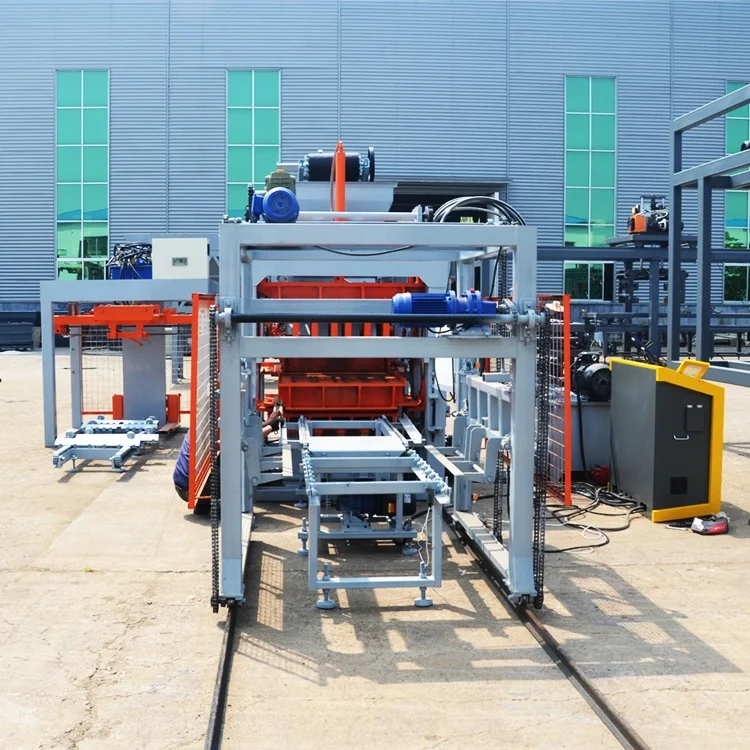
| Product Type | Automatic Hydraulic Concrete Block Making Machine |
| Overall Dimensions (L×W×H) | 7400×1900×2660 mm |
| Molding Cycle | 15–25 s |
| Vibration Frequency | 4600 r/min |
| Vibration Force / Exciting Power | 40–50 kN |
| Rated Power | 31.25 kW |
| Mixer Model | JQ350 |
| Pallet Size | 850×550×25 mm |
| Total Weight | 7 T |
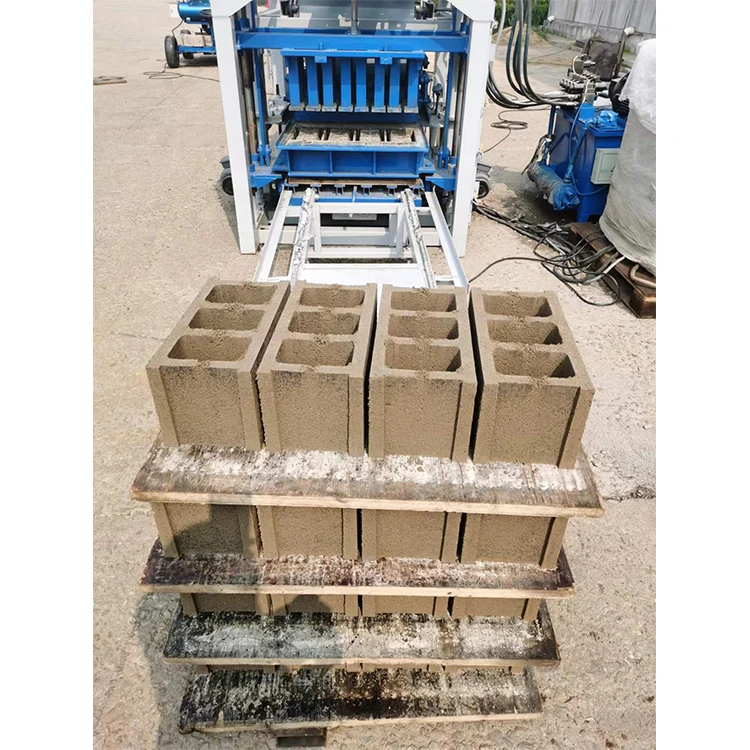
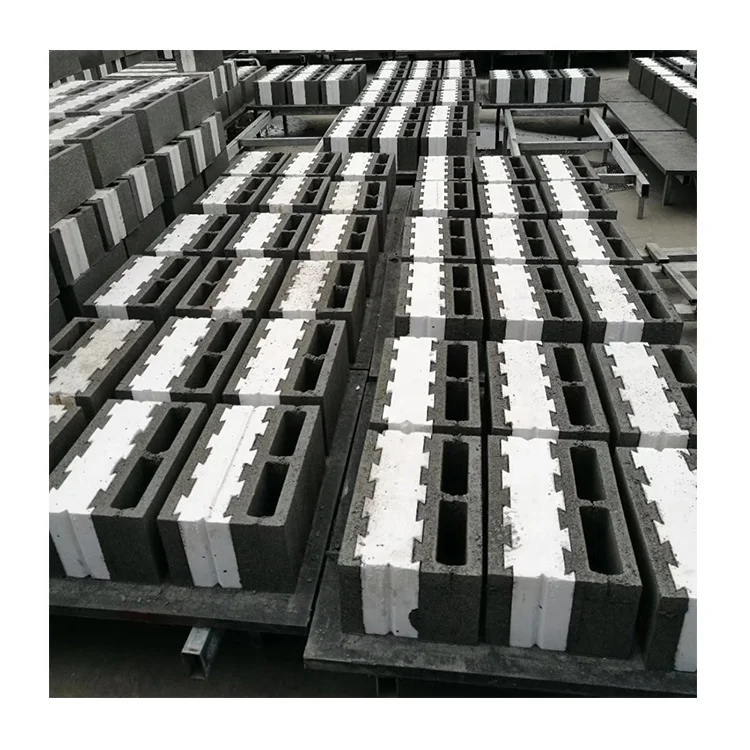
| Applied Products | Paver, solid block, hollow block, curbstone |
| Raw Materials | Crushed stones, sand, cement, dust, fly ash |
| Control System | PLC control system |
| Hydraulic Station | Included |
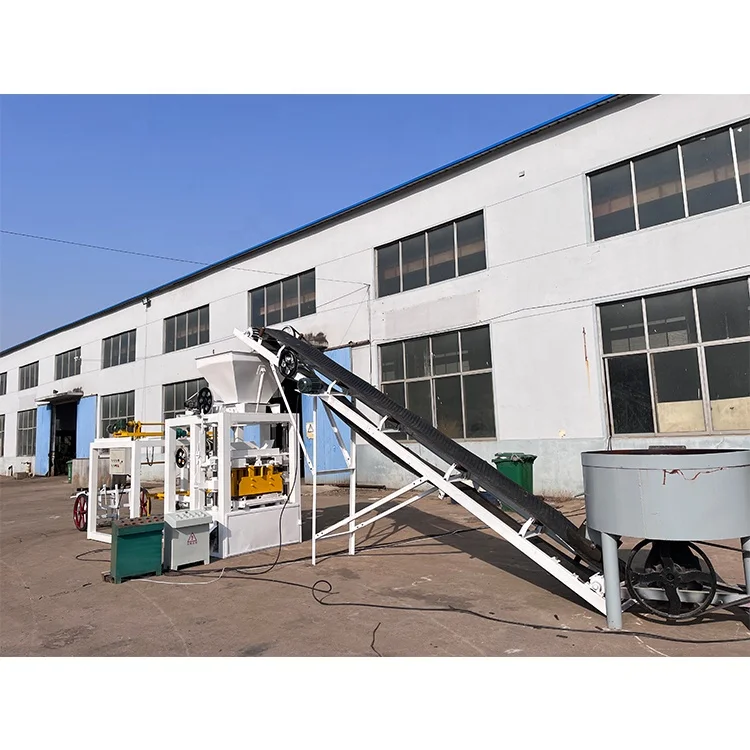
| Included Line Equipment | Pallet feeder, brick conveyor, block sweeper |
| Output Capacity (Hollow block 400×200×200 mm) | 1200–1680 pcs/hr (basis: 15–20 s cycle) |
| Output Capacity (Hollow block 400×150×200 mm) | 1800–2400 pcs/hr (basis: 15–20 s cycle) |
| Output Capacity (Solid brick 240×115×53 mm) | 3240 pcs/hr (basis: 15–20 s cycle) |
| 8-Hour Output (Hollow block 400×200×200 mm) | 9600–13440 pcs/8 hr (basis: 15–20 s cycle) |
| 8-Hour Output (Hollow block 400×150×200 mm) | 14400–19200 pcs/8 hr (basis: 15–20 s cycle) |
| 8-Hour Output (Solid brick 240×115×53 mm) | 16200–19440 pcs/8 hr (basis: 15–20 s cycle) |
Application Suitability
| Application | Material or Output |
|---|---|
| Hollow Block Production | Crushed stone, sand, cement, fly ash |
| Solid Brick Production | Sand, cement, dust |
| Paver and Interlocking Brick | Crushed stones, sand, cement |
| Curbstone Manufacturing | Aggregates, cement |
| On-Site Construction Production | Local aggregates and cement |
What "1200 Pieces per Hour" Leaves Out About Block Machine Capacity
Capacity is only meaningful when tied to a specific block format and cycle time.
Many buyers receive quotes that advertise high hourly outputs without disclosing that the number assumes a small, thin paver rather than the large hollow block the buyer’s market actually demands. When the automatic concrete block making machine specifications are stripped of their underlying assumptions, a promised production rate can fall drastically short once the correct mould is installed. I have seen buyers invest heavily in equipment expecting a certain volume, only to discover their daily quota requires running the press for double the planned shifts [NEED_CITE: common discrepancies in block machine output claims].
Matching Mould Format to Realistic Daily Output
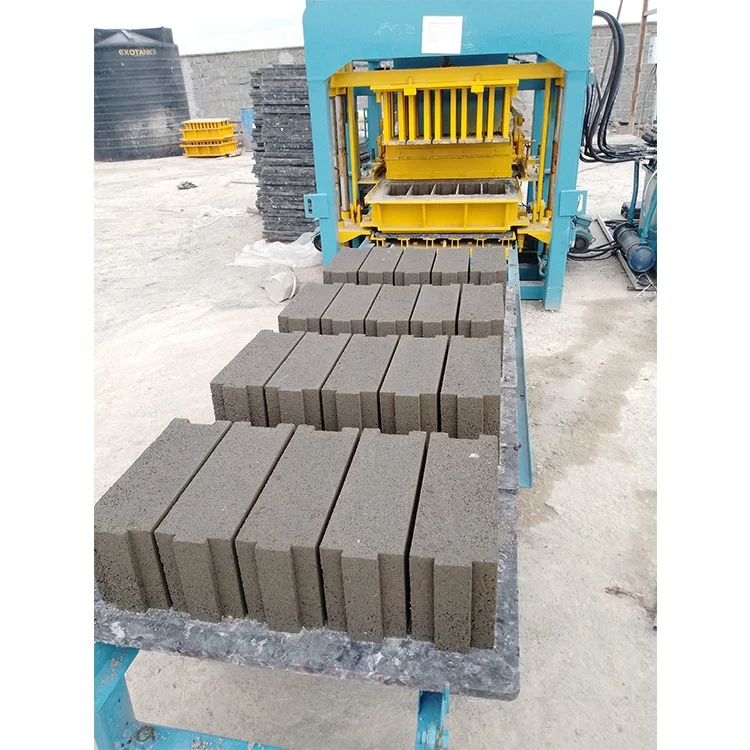
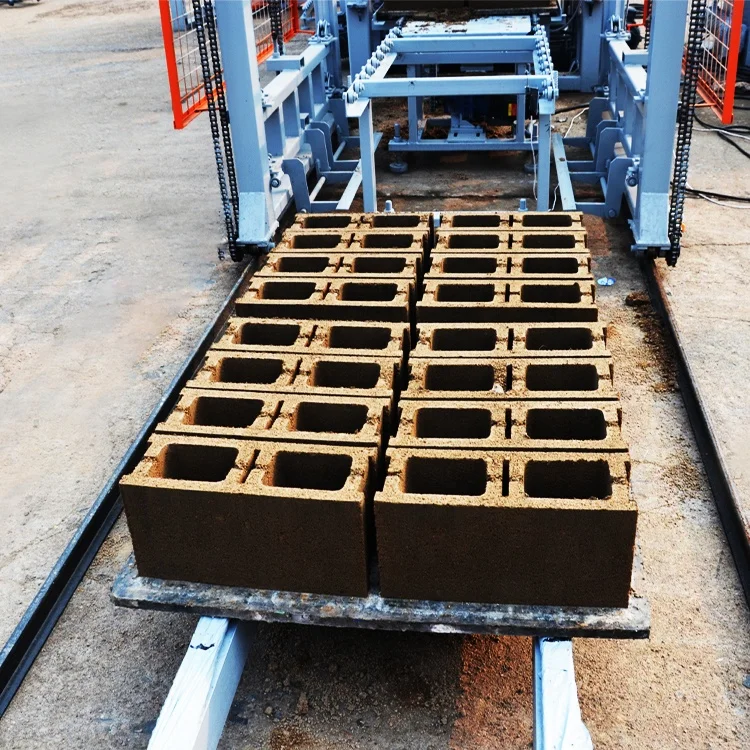
Sizing an automatic concrete block making machine requires looking past the peak cycle speed and examining the entire production chain. The QT6-15 is configured with an 850×550 mm pallet, which dictates the face area available for moulding. If a buyer intends to produce 400×200×200 mm hollow blocks, the machine will press a specific number of units per cycle within the 15 to 25-second window. We provide capacity calculations that state the exact block format assumed, ensuring the buyer can plan their curing racks and labor shifts accurately.
Vibration, Pressure, and Local Mix Design
The consistency of block strength relies heavily on how well the vibration force and hydraulic pressure match the specific mix design. A standard setting might work perfectly with standard river sand, but fail completely when local crushed stone or fly ash is introduced. The QT6-15 provides a vibration force range of 40–50 kN alongside an integrated hydraulic station, allowing us to tune the compaction parameters to the buyer’s actual aggregate. This prevents the common issue where block density fluctuates throughout the production run [NEED_CITE: impact of aggregate variation on concrete block density].
Pallet Sizing and Curing Area Compatibility
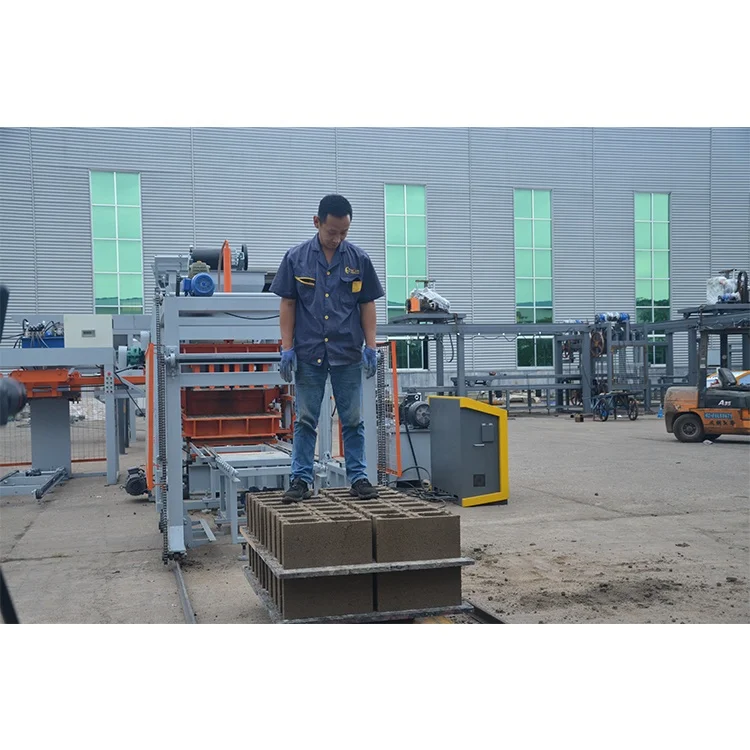
The pallet is the foundation of the entire handling process. If the pallet size is chosen without regard for the buyer’s existing curing area or forklift dimensions, the result is a logistical bottleneck. The 850×550×25 mm pallet used with this automatic concrete block making machine specifications package is confirmed upfront. This ensures the blocks can be moved from the press to the curing zone using the buyer’s current material handling equipment, avoiding costly site modifications or the need to purchase specialized transport vehicles.
Power and Control System Integration
Operating a hydraulic press in varying global markets requires precise electrical configuration. The QT6-15 runs on a 31.25 kW rated power system, incorporating a JQ350 mixer and a PLC control system. Before production begins, we confirm the exact voltage, frequency, and PLC display language required at the installation site. This level of detail prevents commissioning delays that frequently occur when a machine arrives with the wrong motor windings or an interface the local operators cannot read [NEED_CITE: industrial voltage and frequency standards by region].
The Cost of Overlooking Format-Specific Tuning
When a machine is set up for a generic catalogue mix rather than the local material, the consequences extend far beyond inconsistent strength. Blocks may crack during the curing process, or fail to meet local construction standards, leading to rejected batches and damaged reputation. Adjusting the vibration and hydraulic settings on-site to compensate for a poor initial configuration consumes valuable production time and accelerates wear on the mould and mechanical components [NEED_CITE: costs associated with improper block machine calibration].
Why Configuration Precedes the Quotation
Our approach centers on treating the block machinery as a single, matched system. We specify the machine, the mould, the pallet, and the handling equipment together based on the buyer’s target block format and local site conditions. The QT6-15 is not a one-size-fits-all solution; it is a platform that we adapt to ensure the vibration, pressure, and cycle times align with the specific products the buyer’s market sells. This includes providing custom mould designs and confirming automation levels that fit the buyer’s initial investment and future upgrade plans.
Documentation & Verification
- Line layout and capacity calculation stating the exact block format assumed for each output figure.
- Mould drawing and format list confirming included and optional block sizes.
- Pallet specification matched to the buyer’s curing rack and handling equipment.
- Voltage, frequency, and PLC display language confirmation prior to production.
- Factory test record using the buyer’s target mix design where possible.
Installation, Commissioning & Support
- Foundation requirements based on the 7 T total weight and dynamic vibration loads.
- Dedicated power circuit sizing for the 31.25 kW rated power draw to prevent voltage drops.
- Mechanical assembly and hydraulic station commissioning by experienced technicians.
- Operator training on the PLC control system and routine mould change procedures.
- Wear parts and mould list provided for the first year of production planning.
Moving Forward With Accurate Data
To ensure the QT6-15 meets your specific production goals, we need to understand your target block formats, the local raw materials available, and your daily volume requirements. Please provide details regarding your site’s voltage supply, the dimensions of your existing curing area, and the level of automation you require for pallet handling and stacking.
Frequently Asked Questions
Q: How is the QT6-15 capacity calculated per block format?
A: Capacity is calculated based on the mould face area on the 850×550 mm pallet and the cycle time required for that specific format. For example, producing 400×200×200 mm hollow blocks at a 15–20 second cycle yields 1200–1680 pieces per hour. We provide a detailed breakdown for every format you intend to produce.
Q: How is the machine configured for my local aggregate?
A: We request samples or detailed descriptions of your local sand, crushed stone, or fly ash. We then adjust the vibration force (40–50 kN) and hydraulic pressure settings to match the compactability of your specific mix, ensuring consistent block density and strength rather than relying on a generic factory default.
Q: What information do you need regarding pallets and handling?
A: We need the dimensions of your curing racks and the specifications of your forklifts. The QT6-15 uses an 850×550×25 mm pallet; confirming this matches your existing infrastructure ensures smooth material flow from the press to the curing area without requiring expensive site modifications.
Q: Are voltage and PLC language confirmed before shipment?
A: Yes, these are critical hold-points in our process. We require written confirmation of your site’s voltage, frequency, and the preferred language for the PLC display before the electrical cabinet is wired, preventing any commissioning delays once the machine arrives at your facility.