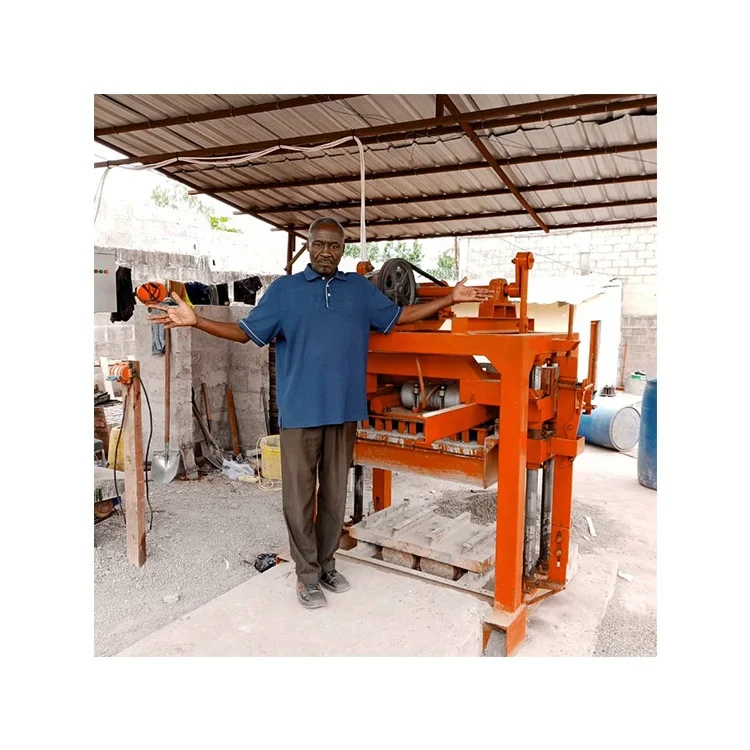
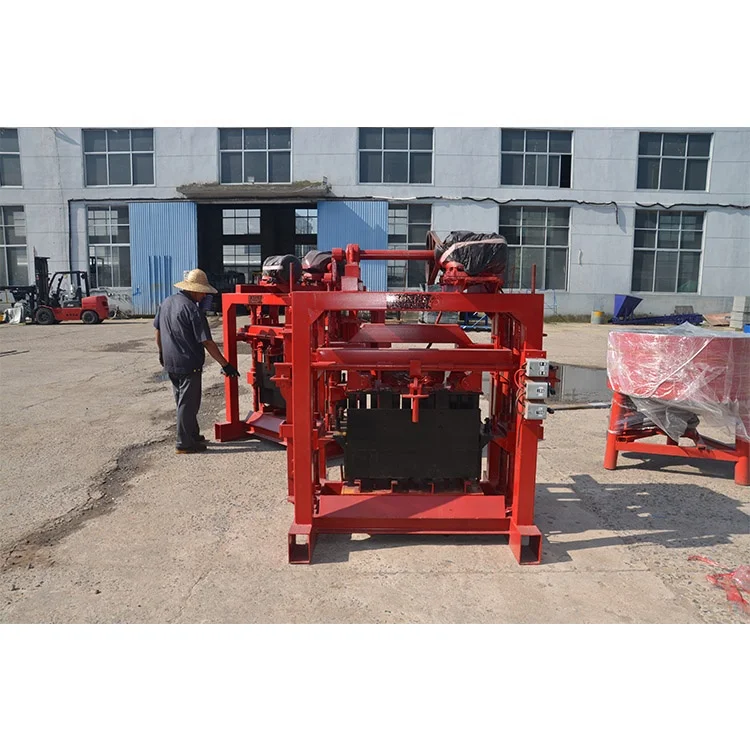
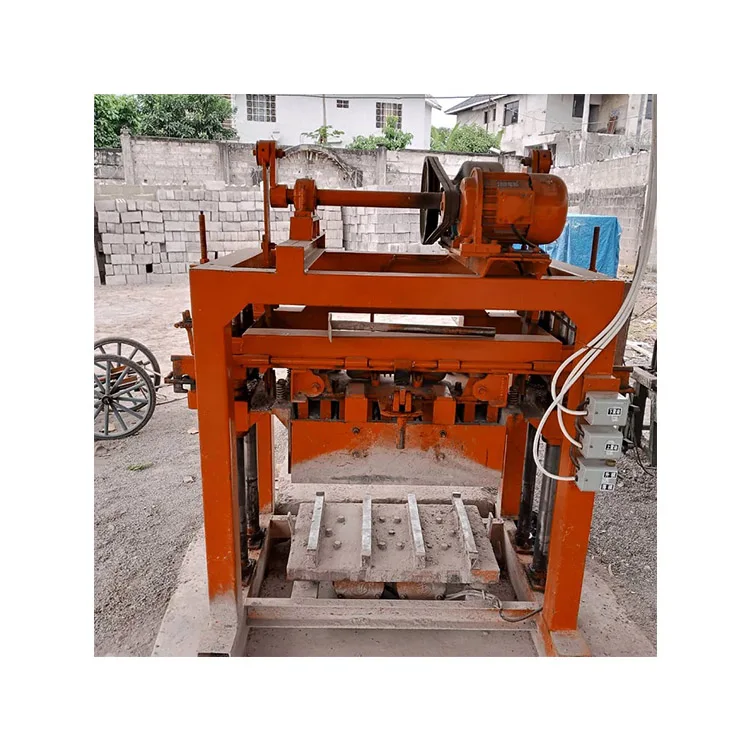
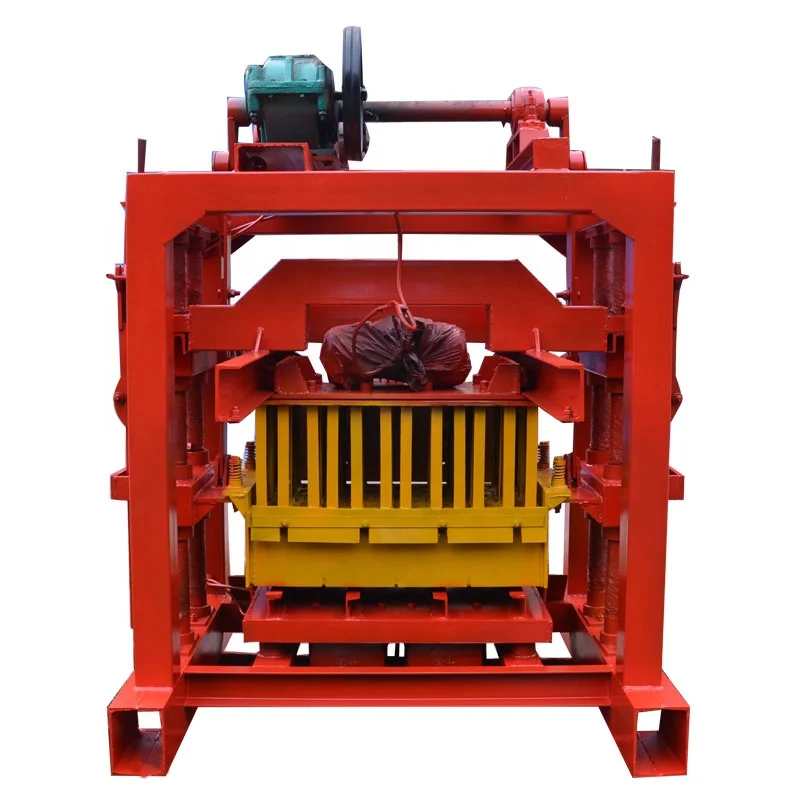
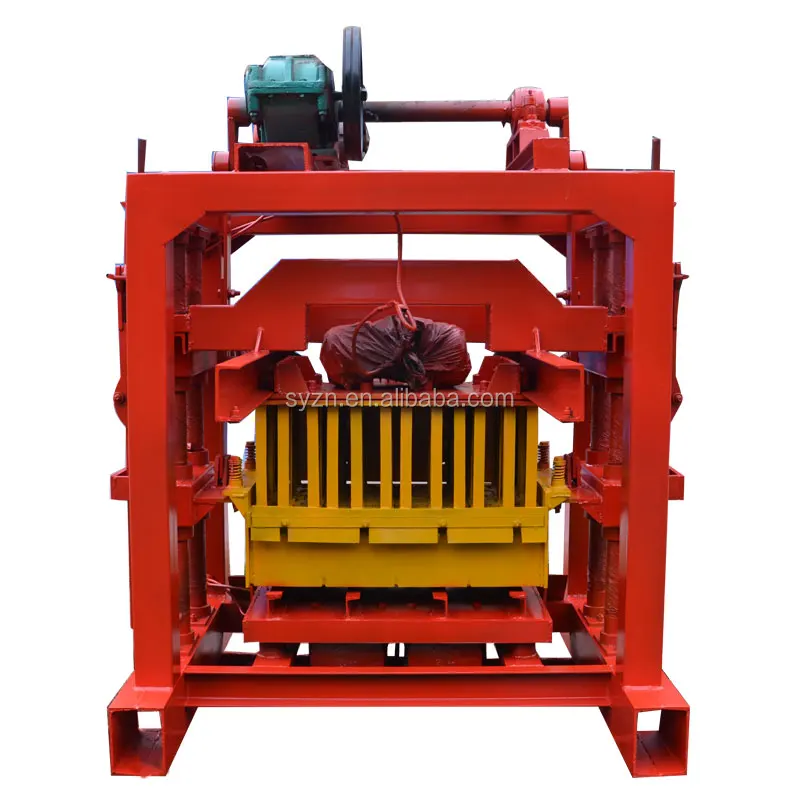
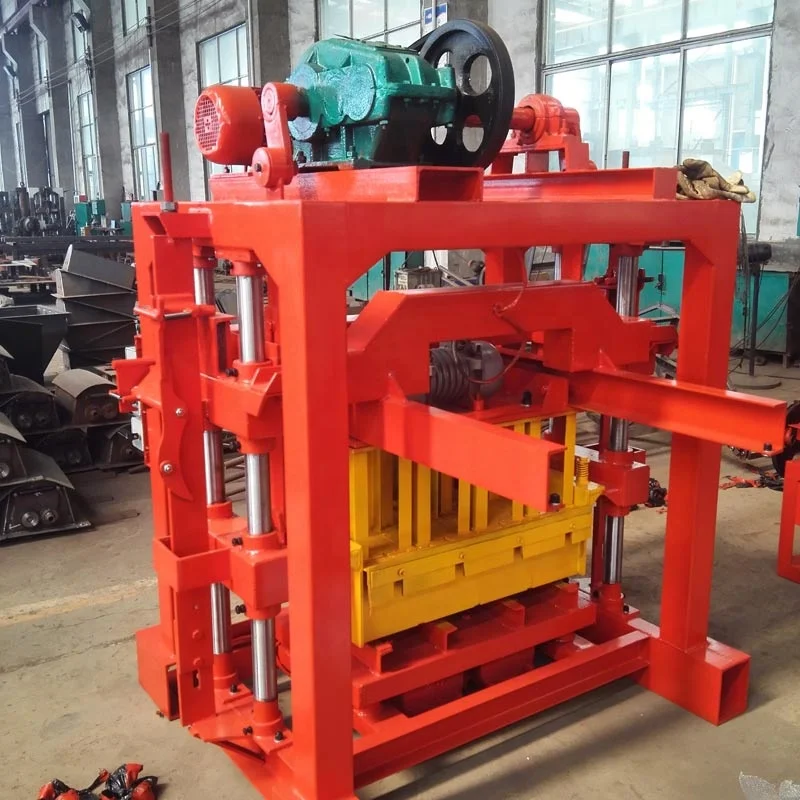
Description
Matched to your block format — the QTJ4-40 capacity is calculated per specific mould size rather than offered as a single unverified daily total.
Technical Specifications
| Parameter | Value |
|---|---|
| Model | QTJ4-40 |
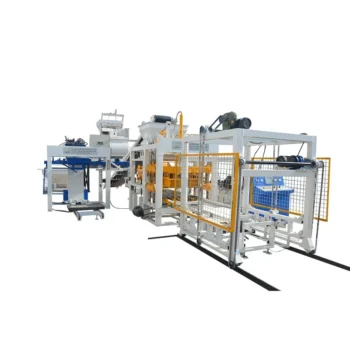
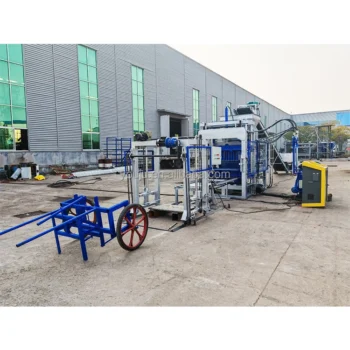
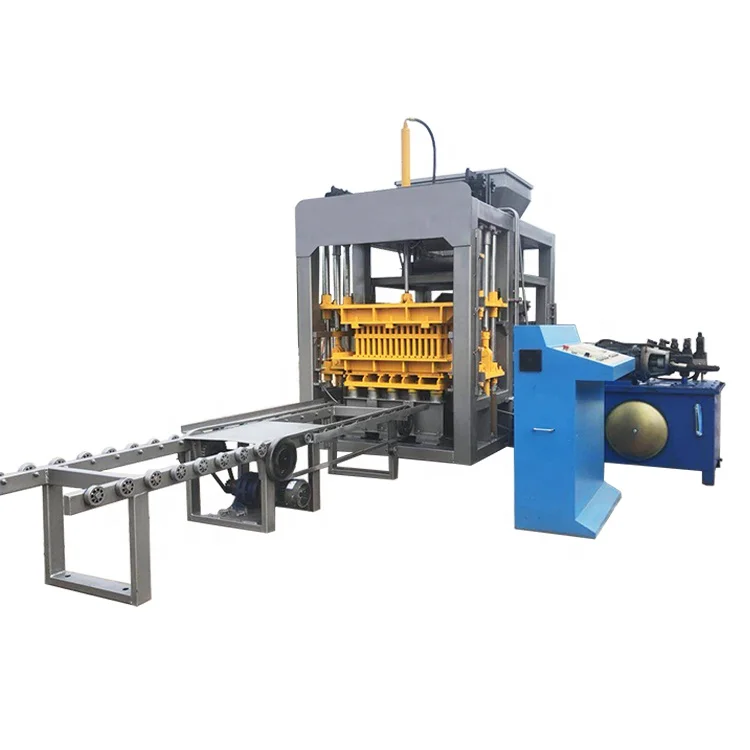
| Product Type | Semi-Automatic Concrete Block Making Machine |
| Overall Dimensions (L×W×H) | 1350×1460×1800 mm |
| Machine Weight | 1.2 T |
| Rated Power | 10.4 kW |
| Molding Cycle | 40 s |
| Vibration System | Bed mould vertical vibration + upper mould compression vibration |
| Pallet Size | 850×450×20 mm |
| Pallet Material Option | Fiber glass (optional) / wooden pallet (locally sourced) |
| Automation Level | Semi-automatic |
| Voltage | Configurable to local supply (basis to be confirmed) |
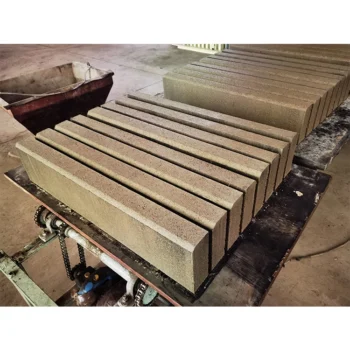
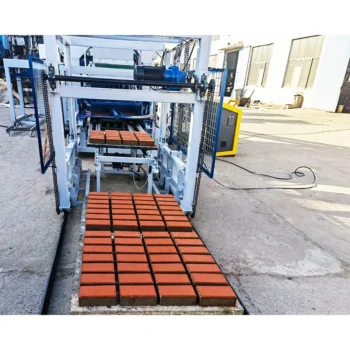
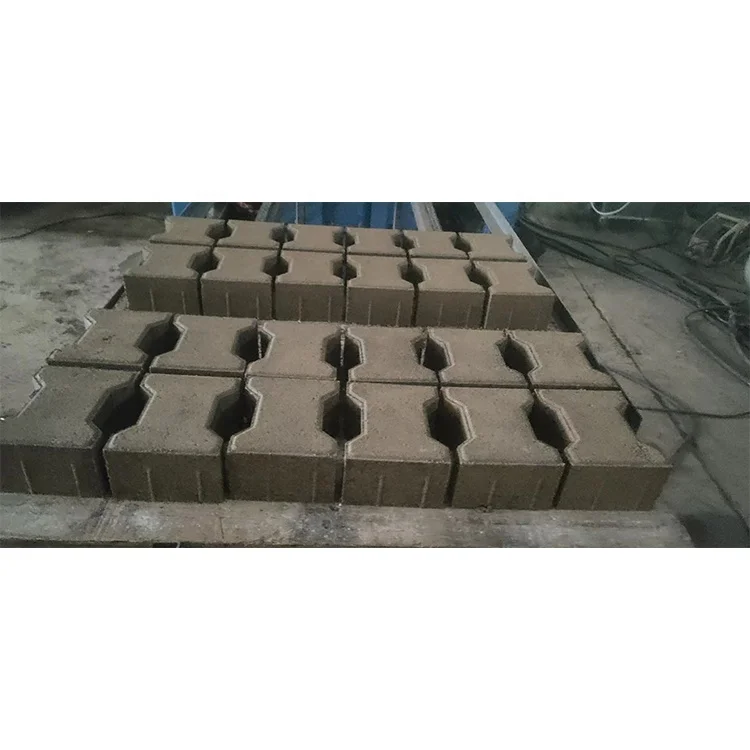
| Mould Compatibility | Hollow, solid, paver (4, 5, 6, 8 inch formats) |
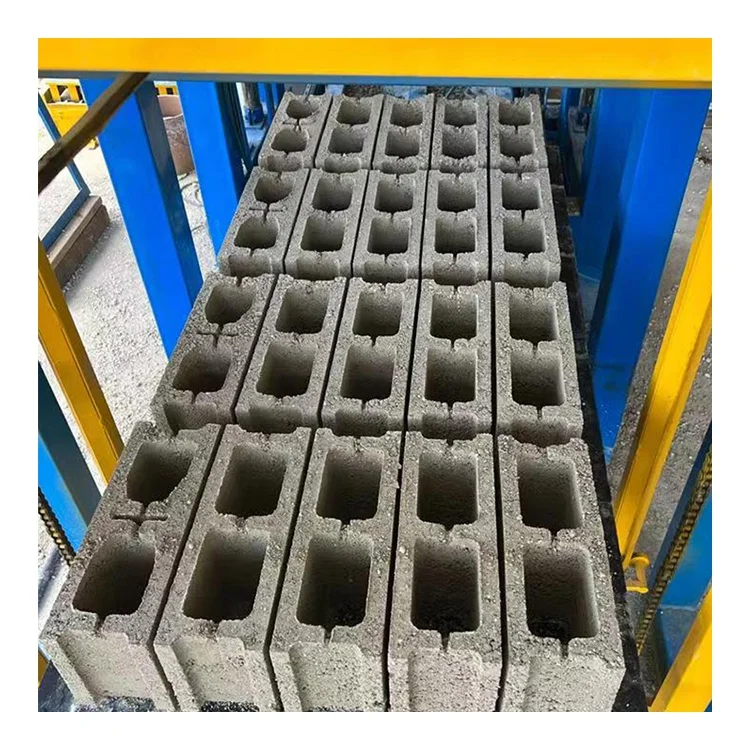
| Output — 400×200×200 mm hollow | 4 pcs/mould, 360 pcs/h, ~2,880 pcs/8 h (source value — verify) |
| Output — 400×150×200 mm hollow | 5 pcs/mould, 450 pcs/h, ~3,600 pcs/8 h (source value — verify) |
| Output — 225×112.5×60 mm solid | 9 pcs/mould, 800 pcs/h, ~6,400 pcs/8 h (source value — verify) |
Application Suitability
| Application | Material or Output |
|---|---|
| Small-scale hollow block plant | Crushed stone, river sand, cement, fly ash mixes for 6-inch and 8-inch hollow blocks |
| On-site contractor production | Local aggregate with cement for solid and hollow blocks at housing project locations |
| Paving block format addition | Sand, cement, and fine aggregate for interlocking and rectangular pavers |
| First-time entrepreneur block yard | Semi-automatic operation with locally sourced wooden pallets and manual stacking |
What "2,880 Blocks per Day" Actually Means for Hollow Block Making Machine Specifications
The number only holds true when the block format, mix design, and cycle time are all locked to a single reference point.
Catalog sheets often quote a peak daily output without stating the assumed block size, wall thickness, or aggregate type behind that figure. A technical buyer comparing hollow block making machine specifications from three suppliers may see identical cycle times but vastly different daily totals — because each supplier used a different reference format. I have watched production lines stall on day one simply because the quoted capacity assumed a lightweight aggregate the buyer could not source locally [NEED_CITE: common causes of block plant commissioning delays]. When the format is named and the mould drawing is confirmed before the order is placed, the gap between expectation and reality narrows considerably.
Cycle Time Holds at 40 Seconds Across Formats
The QTJ4-40 runs a fixed 40-second molding cycle regardless of whether the mould produces four large hollow blocks or nine smaller solid blocks. This consistency matters because downstream pallet handling and manual stacking must be paced to match. When cycle time fluctuates, operators either wait idle or rush the pallet change, introducing cracked edges. Hollow block making machine specifications that list a single cycle figure without breaking output down per format leave the buyer guessing about real shift throughput.
Dual Vibration Targets Consistent Density
Bed mould vertical vibration works together with upper mould compression vibration to compact the concrete mix from both directions. This arrangement reduces voids in the block wall and produces uniform density across the pallet surface. On a semi-automatic press where the operator manually positions each pallet, consistent vibration force becomes the primary variable controlling block strength [NEED_CITE: vibration force and block compressive strength correlation]. The QTJ4-40 keeps both vibration sources active throughout the 40-second cycle so that density does not drop off toward the end of the stroke.
Reading the Specs That Matter Beyond the Brochure
Rated power of 10.4 kW covers both vibration motors and the hydraulic clamping circuit. Buyers should cross-check this figure against the available supply at the plant; undersized transformers cause voltage sag that weakens vibration amplitude mid-cycle. The 850×450×20 mm pallet size dictates the curing rack spacing and forklift tine width the buyer must already have on site. Mould compatibility across 4, 5, 6, and 8 inch formats means the same press can serve multiple market segments, yet each format change requires the operator to swap the mould box and recalibrate the upper compression head. Pallet material choice — factory-supplied fiber glass or locally sourced hardwood — directly affects pallet lifespan and the weight the operator must handle each cycle.
The Cost of Skipping Format-Specific Capacity Checks
Ordering a block press on a single headline output figure leads to pallet mismatches first. If the curing yard was built for a smaller pallet, every block must be re-stacked by hand before it enters the racks, erasing any speed advantage the press itself delivers. Voltage mismatches surface later: a 380 V/50 Hz motor running on a 440 V/60 Hz supply will overheat within the first week, and the warranty rarely covers electrical damage from unconfirmed supply conditions [NEED_CITE: motor burnout due to voltage and frequency mismatch]. Mould lead times compound the problem — a buyer who discovers after delivery that the standard mould does not match the local market’s preferred block dimension faces a multi-week wait for a custom replacement.
Why Sourcing Through a Format-Focused Supplier Matters
Capacity calculations here state the exact block format assumed for each output tier, so there is no hidden multiplier to decode later. Mould drawings and format lists ship with every quotation, letting the buyer verify dimensions before the machine enters production. Voltage and control language are confirmed in writing before the electrical panel is wired, avoiding on-site rewiring costs. The pallet specification sheet names the size and material that match the press, giving the buyer a reference to check against existing curing racks and handling equipment. Factory test records document cycle time and block weight using the buyer’s submitted mix design, not a generic lab sample.
Documentation & Verification
- Line layout drawing naming each block format and its assumed daily output
- Mould drawing and format list confirming every size included in the shipment
- Pallet specification sheet matched to the 850×450 mm press table
- Voltage, frequency, and control language confirmation signed before wiring
- Factory test record showing block weight and cycle time on buyer’s mix
- CE declaration included where the destination market requires it
Installation, Commissioning & Support
- Foundation pad must support 1.2 T static load plus dynamic vibration forces
- Dedicated circuit sized for 10.4 kW with voltage matching confirmed pre-shipment
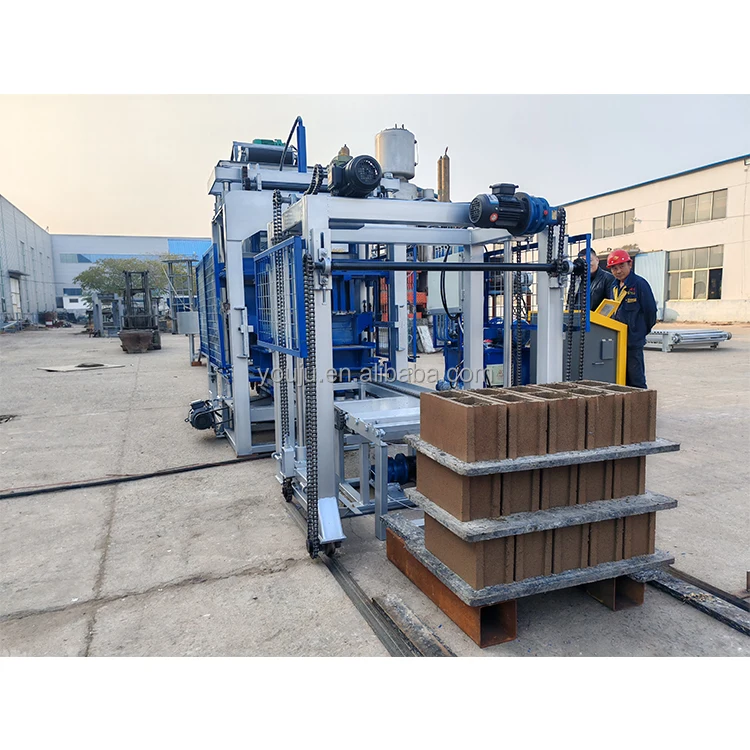
- Machine ships partially assembled; host frame, mould, and pallets bolt on site
- First-run cycle verification against the 40-second target with buyer’s mix
- Operator training covers mould swap procedure and vibration head adjustment
- Wear parts list identifies mould liners and vibration springs for reorder planning
Before You Request a Quote
Share the exact block format your market demands, including wall thickness and face dimensions. Provide a sample or lab report of your local aggregate so the mix design can be matched to the vibration settings. Confirm your plant’s voltage, frequency, and preferred control display language to avoid commissioning delays [NEED_CITE: electrical standards for concrete block machinery by region].
Frequently Asked Questions
Q: How is daily output calculated for each block format on the QTJ4-40?
A: Each format is timed over a 40-second molding cycle, then multiplied by the number of cavities in that specific mould and the working hours per shift. The 400×200×200 mm hollow block yields four pieces per cycle, while the solid block mould produces nine. Output figures assume uninterrupted pallet supply and no format changeovers during the counted period.
Q: What pallet size and material does the machine require?
A: The press is designed for an 850×450×20 mm pallet. Fiber glass pallets are available as a factory option for longer service life, but many buyers source hardwood pallets locally to reduce shipping volume. Whichever material is chosen, the thickness must remain at 20 mm to keep the vibration table flush with the mould base.
Q: Which block formats are available as standard moulds?
A: Standard moulds cover 4-inch, 5-inch, 6-inch, and 8-inch hollow blocks, along with solid blocks and common rectangular pavers. Custom dimensions can be produced from buyer-supplied drawings. Each additional mould ships with its own format-specific output calculation so the buyer can plan shift targets accurately.
Q: How do I confirm voltage, frequency, and control display language before shipment?
A: The supplier requests the buyer’s local supply specifications and preferred language during the quotation stage. These details are written into the order confirmation and verified on the electrical schematic before the control panel is assembled, preventing costly rewiring or label replacement after the machine arrives on site.
Q: What is the realistic mould change time when switching formats?
A: A trained operator can swap the mould box and recalibrate the upper compression head within a single shift break, assuming the correct tools and crane or hoist are available at the press. Planning format changes at the start of a shift rather than mid-run keeps daily output closer to the calculated target for each block size.