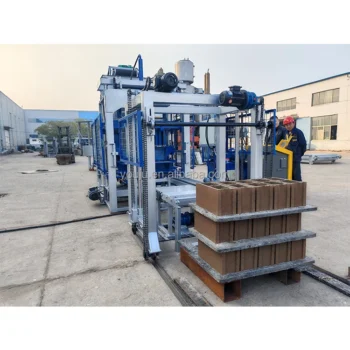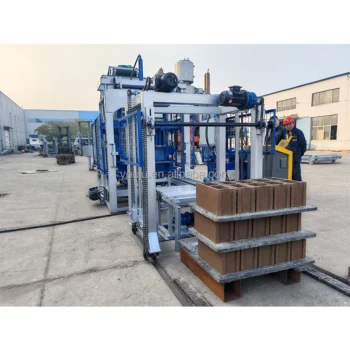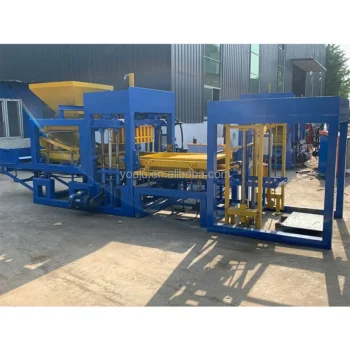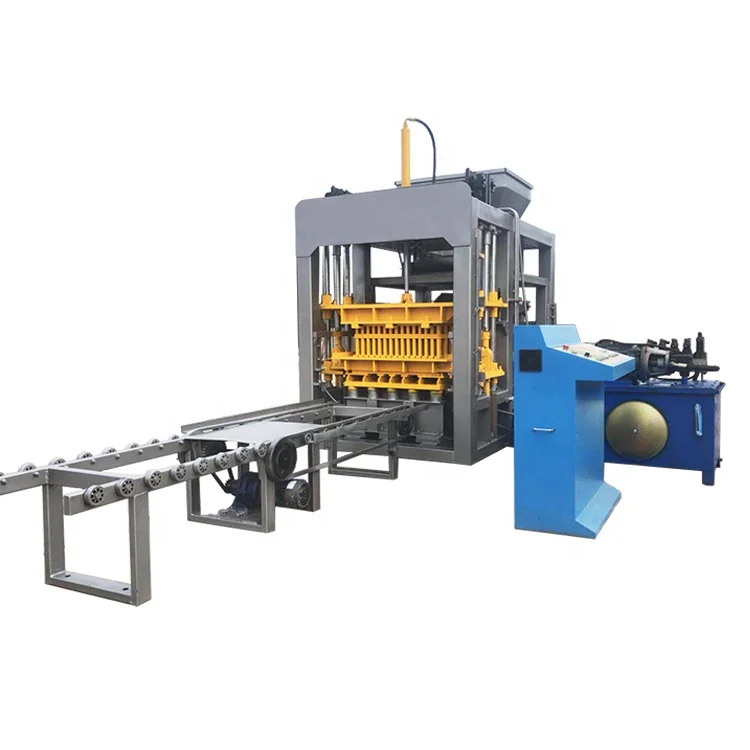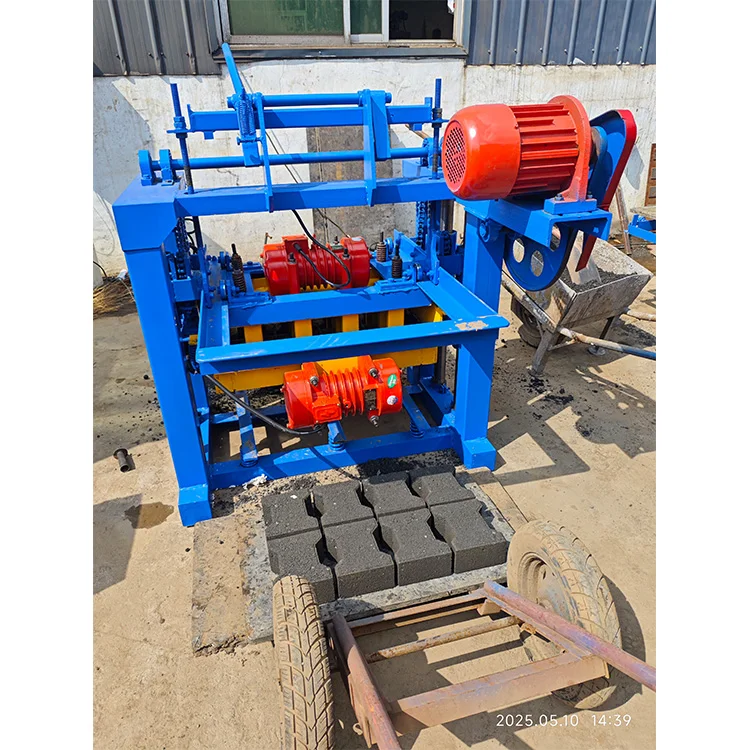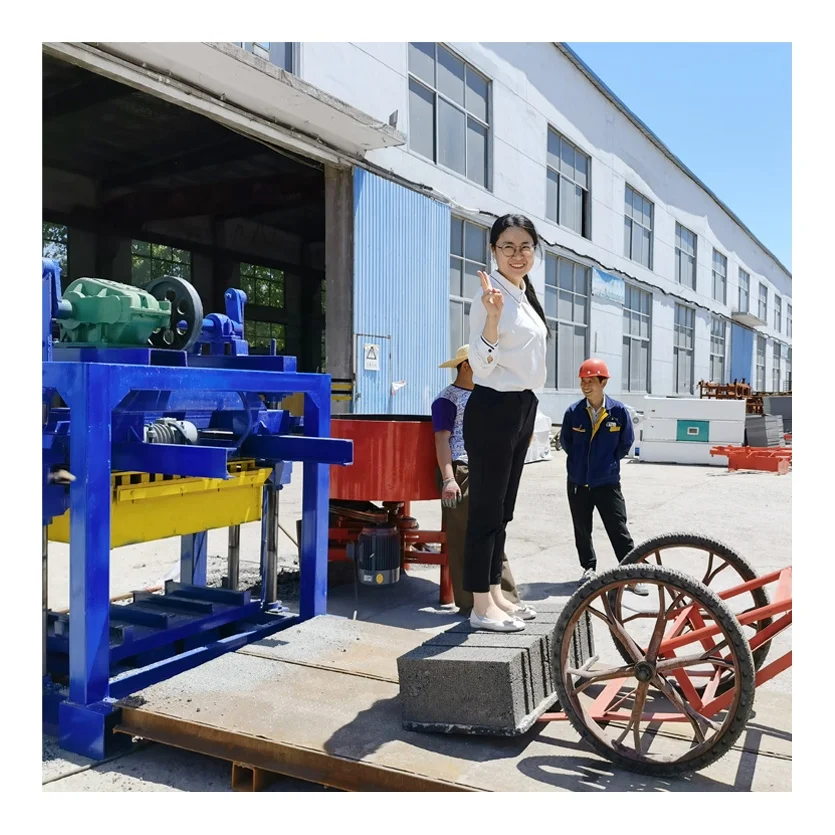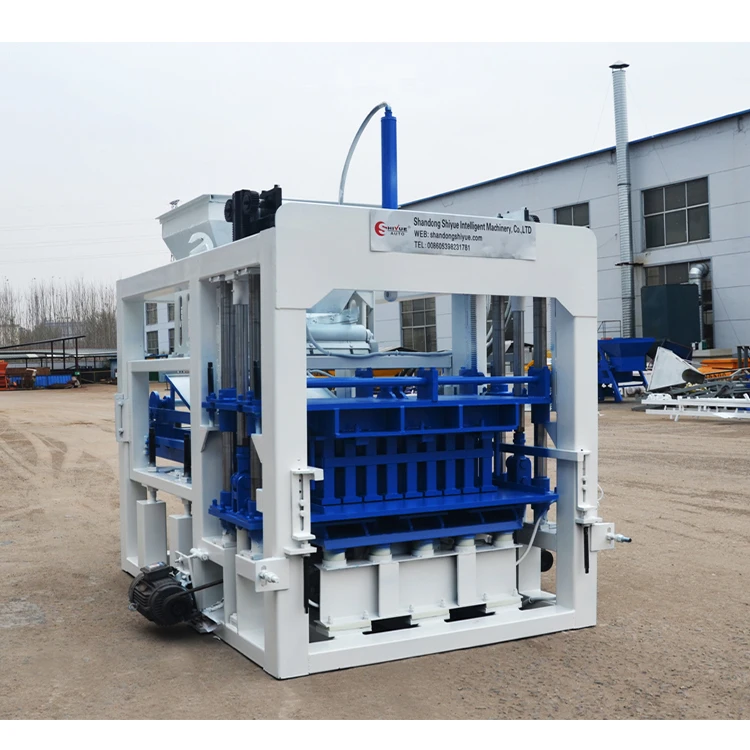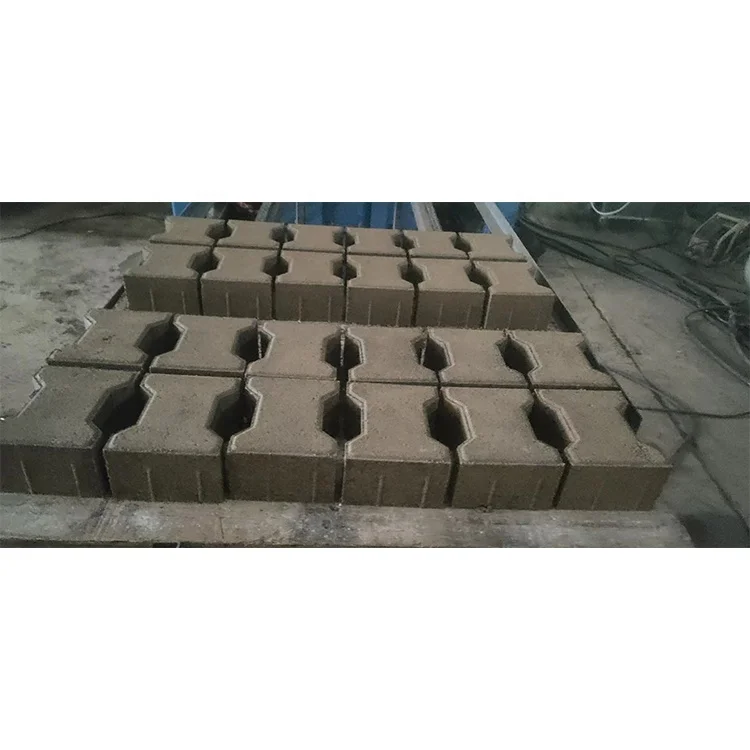
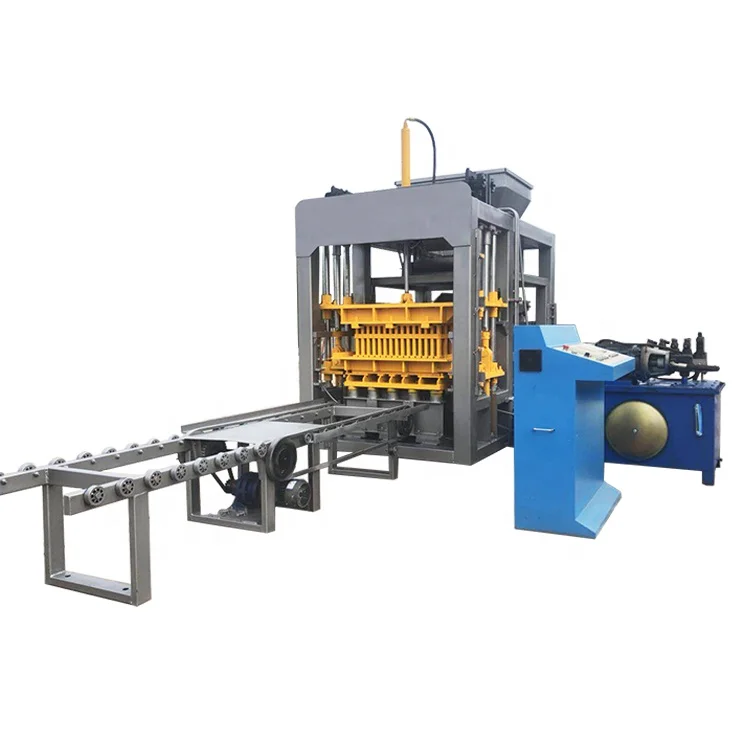
Description
Matched Mould System — Every cavity count and cycle time for the QT5-15 is verified against your target block format and local aggregate before the machine leaves the factory.
Technical Specifications
| Parameter | Value |
|---|---|
| Model | QT5-15 |
| Product Type | Automatic Hydraulic Concrete Block Making Machine |
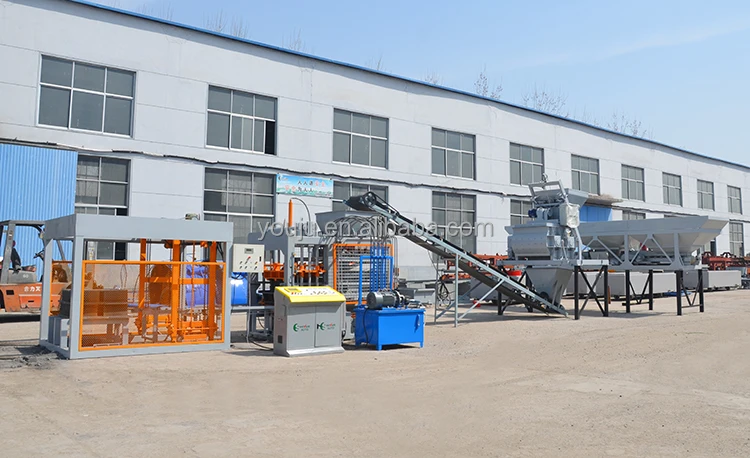
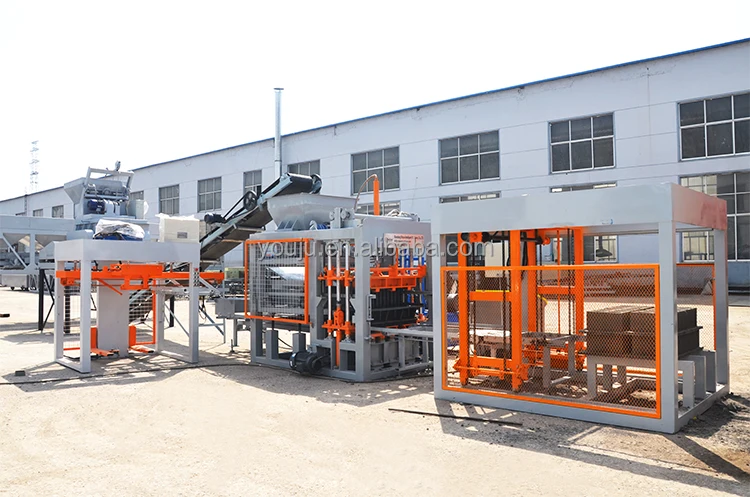
| Overall Dimensions (L×W×H) | 7400 × 1950 × 2800 mm |
| Rated Pressure | 21 MPa |
| Main Vibration Form | Hydraulic platform vibration |
| Vibrating Frequency | 2800–4500 rolls/minute |
| Cycle Time | 15–20 seconds (basis not stated in source — confirm block format / material / thickness) |
| Motors Power | 26.5 kW |
| Pallet Size | 1100 × 550 mm |
| Machine Weight | 6 T |
| Control System | PLC with fault diagnosis and remote monitoring |
| Output (240×115×90 mm brick, 16 pcs/mould) | 23,040–28,800 pcs / 8 h |
| Output (400×115×53 mm brick, 32 pcs/mould) | 61,440–70,400 pcs / 8 h |
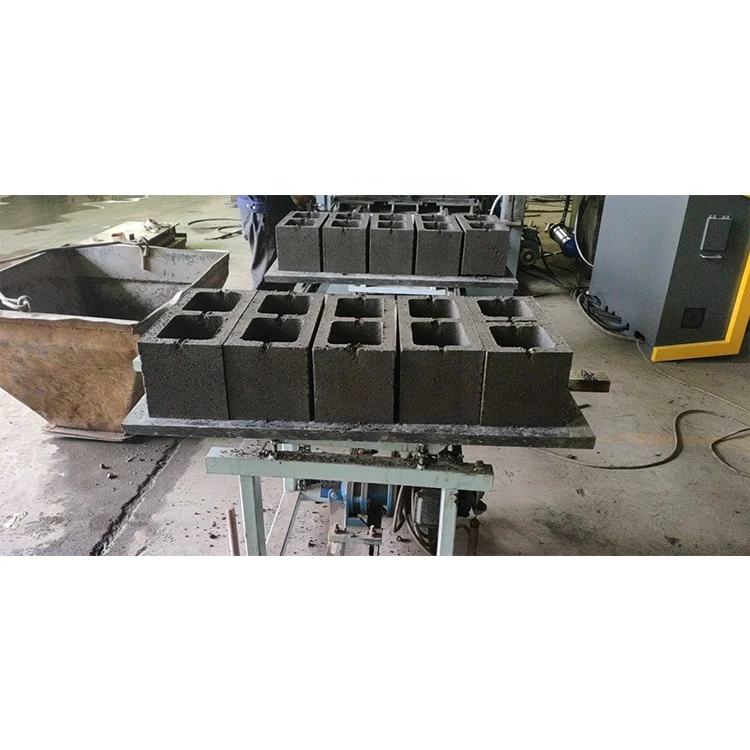
| Output (400×200×200 mm hollow block, 5 pcs/mould) | 7,200–9,600 pcs / 8 h |
| Automation Level | Full automatic |
| Voltage | Configurable to buyer site requirements |
| Standards | CE declaration available |
Application Suitability
| Application | Material or Output |
|---|---|
| Standard solid brick production | Cement, crushed stone, sand — 240×115×90 mm format |
| Thin-format facing brick | Cement and fine aggregate — 400×115×53 mm format |
| Hollow block for load-bearing walls | Cement, coarse aggregate, sand — 400×200×200 mm format |
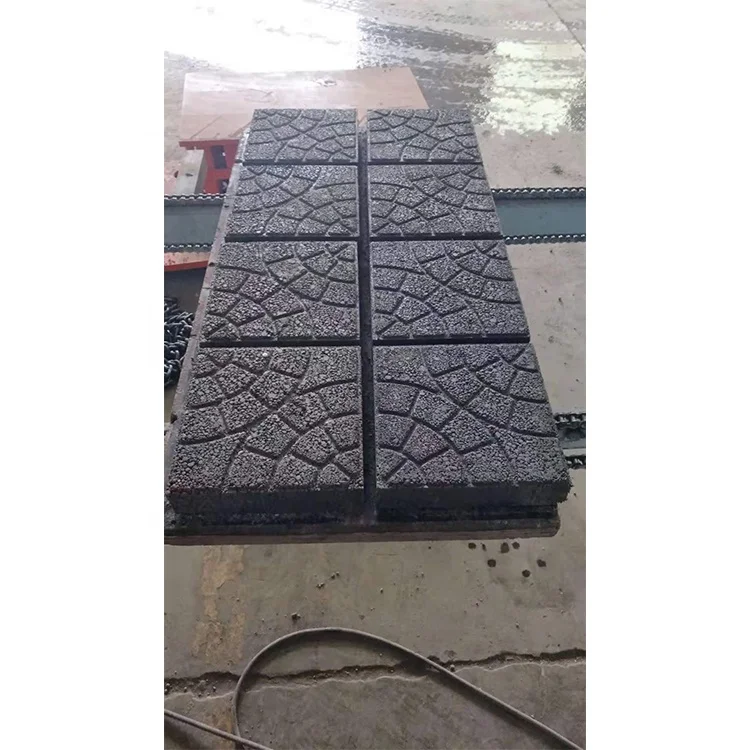
| Paving brick and interlocking paver | High-density mix with coarse grit |
| On-site production for housing projects | Locally sourced aggregate matched to regional building codes |
What "28,800 Pieces per Shift" Actually Means for Your Plant
A capacity number without a block format attached is a guess, not a guarantee.
Most concrete block making machine specifications quote a single output figure and leave the buyer to discover on commissioning day that the real number depends entirely on which mould is loaded. The QT5-15 block machine how to choose question starts with understanding that 28,800 pieces per 8 hours assumes the 240×115×90 mm brick mould with 16 cavities, while switching to 400×200×200 mm hollow blocks drops that figure to 7,200–9,600 pieces because only five cavities fit on the same pallet. I have watched plant owners in West Africa sign contracts based on the headline number, then spend months trying to reconcile daily tallies with what the salesman promised. The cycle time of 15–20 seconds also shifts depending on mix consistency and compaction requirement [NEED_CITE: relationship between cycle time and mix moisture in hydraulic block presses].
Format-by-Format Capacity and What Drives It
The concrete block making machine specifications for the QT5-15 list three reference formats, each tied to a mould cavity count and a realistic 8-hour window. The 400×115×53 mm thin brick achieves the highest volume at 61,440–70,400 pieces because 32 cavities fit on the 1100×550 mm pallet, but this format demands a finer aggregate and longer curing to avoid edge chipping. Hollow block output sits at the lower end because five large cavities require more fill time and higher vibration energy per cycle. Knowing your market’s dominant format lets you size the QT5-15 correctly instead of hoping a mid-range number covers every scenario.
Vibration Frequency as a Material Variable
The 2800–4500 rolls/minute range on the QT5-15 is not a fixed setting but a window the operator adjusts based on what the local sand and aggregate actually do inside the mould. Low frequency during the feed phase lets the mix settle into deep cavity corners, while high frequency during compaction drives out trapped air. On a site in South Asia where the river sand carried a high clay fraction, we spent days mapping the right frequency band because the default setting produced blocks that crumbled at the corners. That is why matching vibration profile to local material matters more than any catalogue rating [NEED_CITE: effect of clay content in sand on concrete block compressive strength].
Reading the Pressure and Vibration Numbers Together
The 21 MPa rated pressure works in tandem with hydraulic platform vibration to compact the mix from below, which is where most density variation originates in stationary block machines. If hydraulic pressure is high but vibration is too low for a stiff mix, the top surface stays porous while the bottom densifies, creating a weak plane that fails during pallet handling. Conversely, excessive vibration on a wet mix causes segregation, pushing cement paste to the surface and leaving voids at the core. The 26.5 kW motor package supplies enough headroom to sustain both systems at peak draw without tripping breakers during the compaction stroke. Pallet size at 1100×550 mm determines how many cavities each format can carry and must align with your curing rack spacing and forklift fork width.
The Hidden Cost of Skipping the Mould Question Early
Buyers who confirm machine tonnage and cycle time but postpone mould selection often discover that the standard moulds in the quotation do not match the block dimensions their market actually buys. A mould swap after delivery means new tooling lead time, test runs that consume raw material, and production days lost while the press sits idle. In one project I supported, the buyer’s local standard for hollow blocks was 10 mm wider than the catalogue mould, and the mismatch only surfaced when the first batch failed a dimensional inspection by the site engineer [NEED_CITE: common dimensional tolerances for concrete masonry units in regional building codes]. Specifying the exact format and requesting a mould drawing before production avoids this entirely.
Why Sourcing the QT5-15 Here Reduces Configuration Risk
The QT5-15 is configured as a matched system — press, mould, pallet, and handling — rather than assembled from unrelated quotations. Capacity calculations state the block format and cavity count behind every output figure, so you can cross-check against your daily target before committing. Mould design follows the buyer’s format list or custom drawings, meaning the tooling matches what your market sells, not what the factory happens to stock. Automation level is selectable, allowing a plant to start with semi-automatic pallet handling and add stacking later. Installation support includes on-site commissioning and operator training, so the crew running the machine on day one understands the PLC fault diagnosis interface and remote monitoring system.
Documentation & Verification
- Line layout showing pallet flow, curing rack spacing, and output per format
- Mould drawing and cavity list for every block type in your quotation
- Hydraulic and electrical schematic matching your confirmed voltage and frequency
- Factory test record run on your target block format before dispatch
- PLC language and control interface confirmation sheet signed before production
- Operation and maintenance manual with wear parts and mould replacement intervals
Installation, Commissioning & Support
- Foundation pad sized for 7400 × 1950 mm footprint with vibration isolation
- Dedicated power circuit rated for 26.5 kW continuous draw plus start-up surge
- Machine arrives dismantled; reassembly and alignment verified on your floor
- First-run parameter mapping against your local aggregate and mix design
- Operator training covering PLC fault diagnosis and remote monitoring use
- Wear parts list with mould and hydraulic seal replacement schedule
Before You Request a Quote
To size the QT5-15 accurately we need your target block format with dimensions, the daily volume your market absorbs, and the local aggregate you plan to use. Share your site voltage and frequency, the language your operators read on a control screen, and the curing area dimensions so pallet and rack layout can be confirmed together. If you already run upstream mixers or downstream handling equipment, send the model details so the line can be balanced around the press.
Frequently Asked Questions
Q: How is the 8-hour output calculated for each block format?
A: Each capacity figure multiplies the mould cavity count by the number of cycles achievable in an 8-hour shift, accounting for pallet indexing and demoulding. The 240×115×90 mm brick uses 16 cavities, the thin brick uses 32, and the hollow block uses 5. Actual output depends on confirmed cycle time for your mix.
Q: How do I match vibration settings to my local sand and aggregate?
A: The 2800–4500 rolls/minute range lets you tune feed and compaction phases separately. High-clay sand needs a different frequency band than clean crushed grit. We map the setting during commissioning using your actual material, not a default value.
Q: What mould change time should I plan for between formats?
A: Mould change involves unbolting the current toolset, lowering the new mould, and recalibrating fill depth and vibration. With practice, a trained crew completes the swap in a fraction of a shift, but frequent daily changes still reduce net output and should be factored into capacity planning.
Q: Does the 1100×550 mm pallet fit my existing curing racks?
A: Rack rail spacing and forklift fork width must accommodate this pallet dimension. Confirm your curing area layout before ordering so pallet material and handling equipment can be specified as one matched set rather than adapted after delivery.
Q: What documentation ships with the QT5-15?
A: You receive a machine specification sheet, mould drawings for every format quoted, hydraulic and electrical schematics, a factory test record on your block type, PLC language confirmation, and an operation manual with a wear parts list.