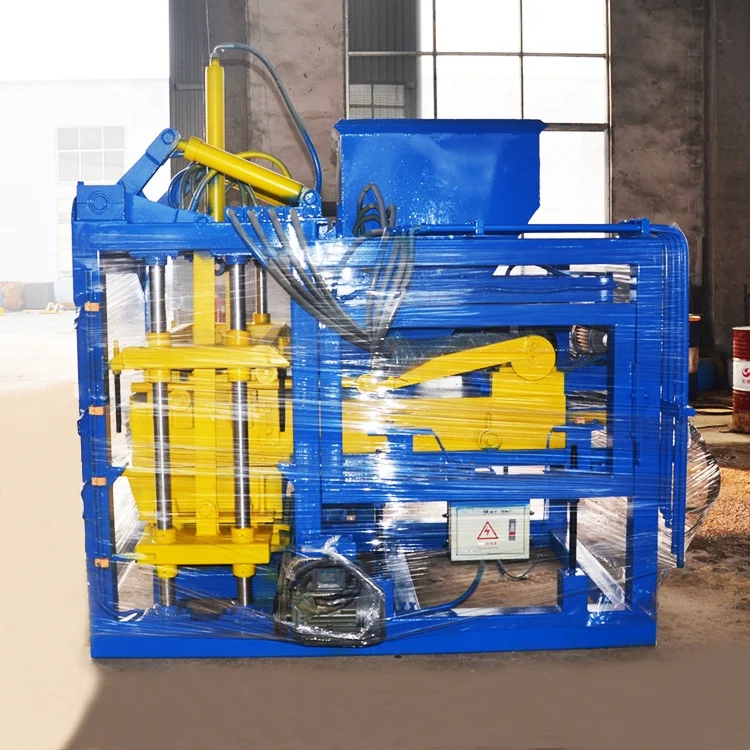


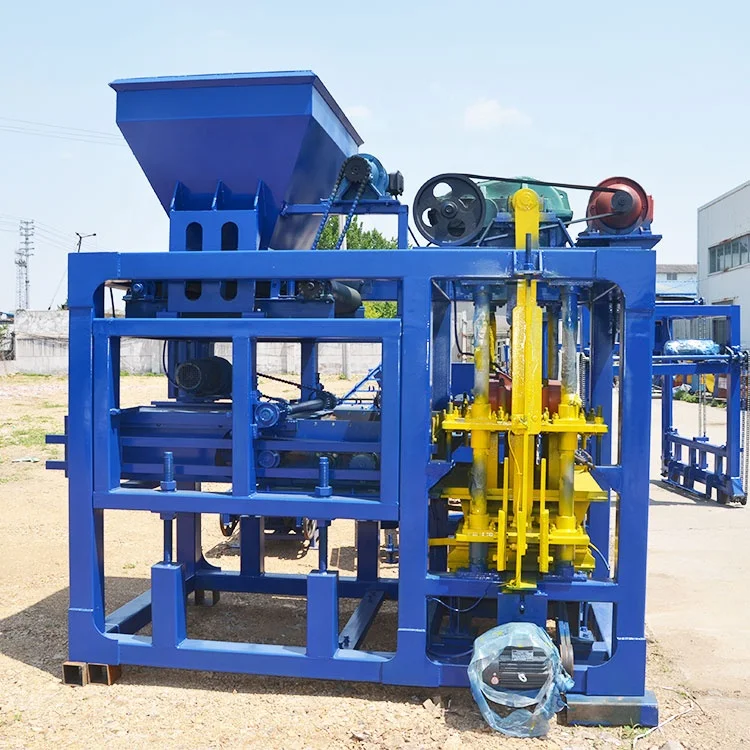

Description
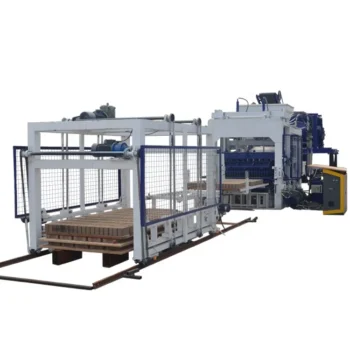
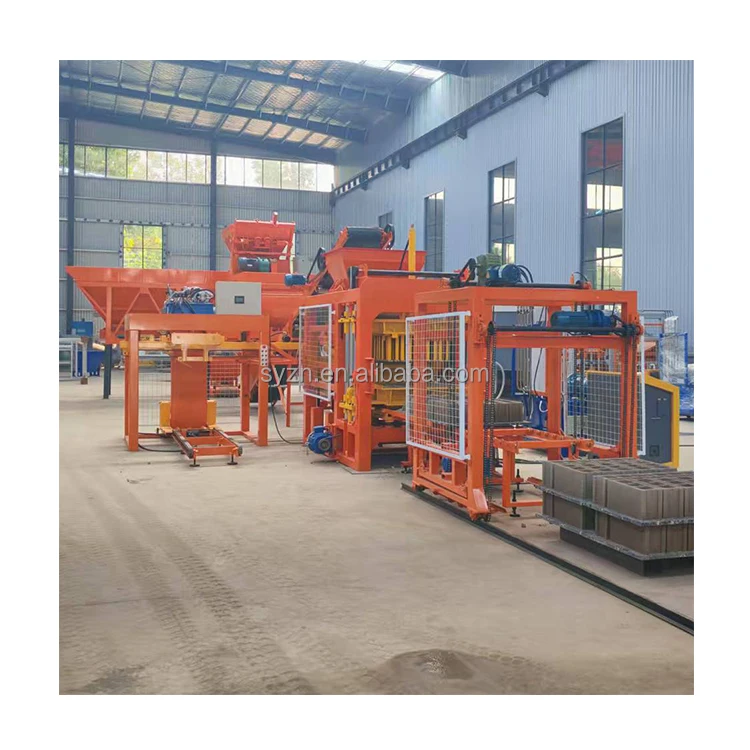
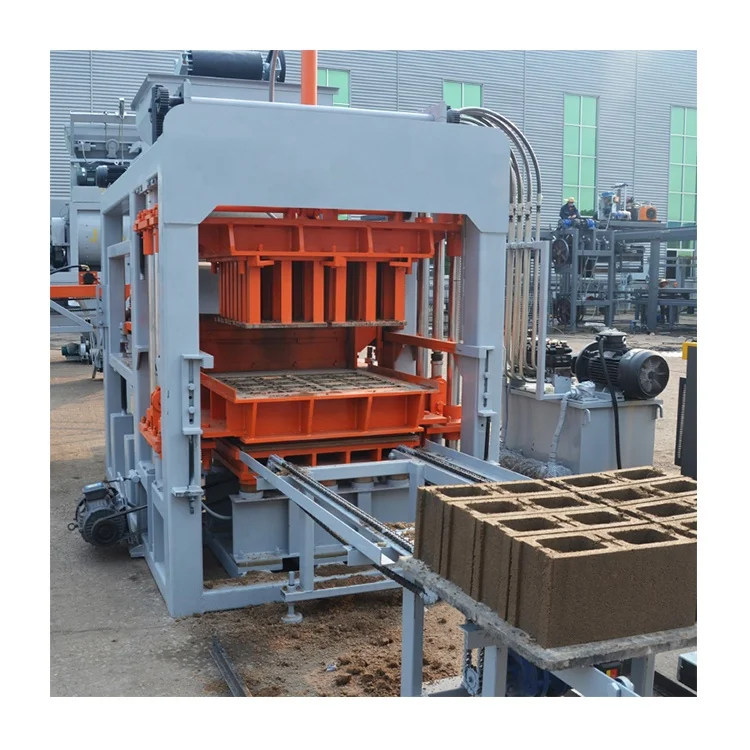
Matched System Supply — the QTJ4-25 block machine, mould, pallet and mixer are specified as one coordinated unit rather than sourced from separate vendors, so cycle time and material feed stay aligned with the format your market actually buys.
Technical Specifications
| Parameter | Value |
|---|---|
| Model | QTJ4-25 |
| Product Type | Semi-Automatic Concrete Block Making Machine |
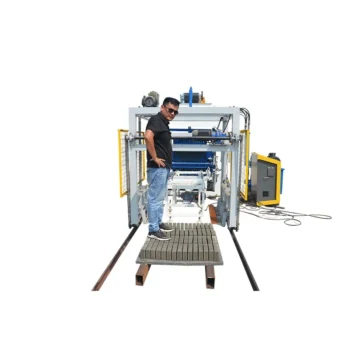
| Overall Dimensions (L×W×H) | 6400×1500×2700 mm |
| Molding Cycle | 25 s |
| Vibration Frequency | 2800–5100 r/min |
| Exciting Force | 60 kN |
| Total Power | 17.9 kW |
| Mixer Model | JQ350 |
| Pallet Size | 850×550×20 mm |
| Net Weight | 2500 kg |
| Automation Level | Semi-automatic |
| Hydraulic Station | Equipped |
| Applied Products | Hollow block (8 inch, 6 inch), solid brick |
| Raw Materials | Crushed stone, sand, cement, dust, fly ash |
| Output Capacity (390×190×190 mm Hollow Block) | 480 pcs/h, 3800 pcs/8hr (basis: 4 pcs/mould) |
| Output Capacity (400×150×200 mm Hollow Block) | 600 pcs/h, 4800 pcs/8hr (basis: 5 pcs/mould) |
| Output Capacity (240×115×53 mm Solid Brick) | 2100 pcs/h, 17000 pcs/8hr (basis: 18 pcs/mould) |
| Voltage & Frequency | Configurable (basis to be confirmed with buyer site) |
| Control System | Manual panel or PLC option (basis to be confirmed) |
| Mould Change Time | (basis not stated in source) |
| Certification | CE declaration available where applicable (basis to be confirmed) |
Application Suitability
| Application | Material or Output |
|---|---|
| First-plant hollow block production | 8-inch and 6-inch hollow blocks from crushed stone, sand, and cement |
| On-site project block manufacturing | Solid bricks and hollow blocks for housing or infrastructure contractors |
| Product range extension for distributors | Pavers and solid bricks added to an existing catalogue on one host machine |
| Low-investment block plant setup | Semi-automatic production using locally available aggregates including fly ash and stone dust |
What QTJ4-25 Block Machine Specifications Won’t Tell You Until You Ask
The cycle time only means something when tied to the block format you actually sell.
Quoted output figures in this equipment class frequently assume a standard hollow block, yet buyers in Southeast Asia and the Pacific often run solid brick or smaller paver formats for the majority of their shift. When the actual format differs from the test basis, daily throughput falls noticeably short of the catalogue number. That gap only closes when the capacity calculation states the block format, mould cavity count, and cycle assumption side by side [NEED_CITE: honest block machine capacity reporting standards].
Cycle Time and Format: Reading the Numbers Honestly
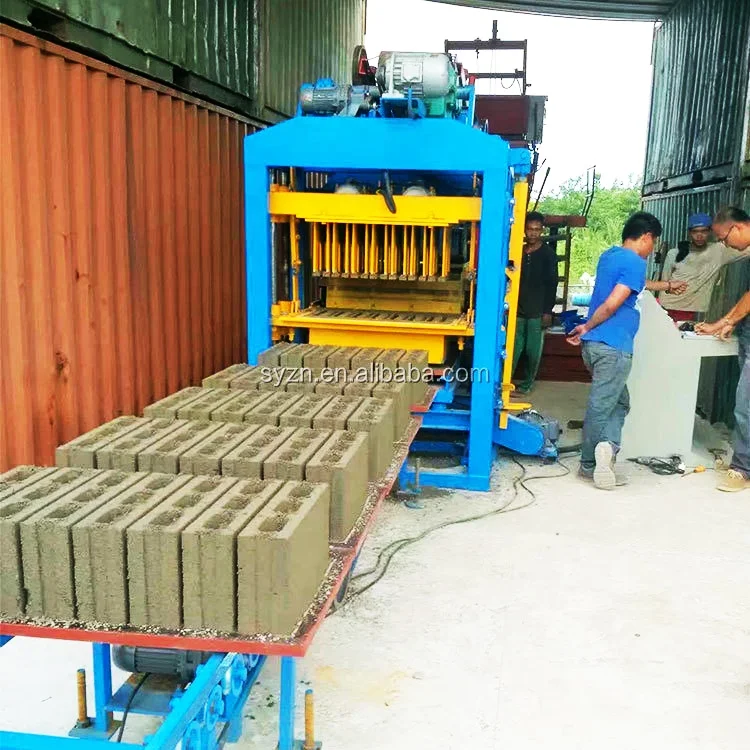
A 25-second molding cycle drives the QTJ4-25 block machine specifications, but that figure translates into very different daily outputs depending on the mould loaded. With a 4-cavity mould for 390×190×190 mm hollow blocks, the machine produces 480 pcs/h or roughly 3800 pcs over an 8-hour shift. Switch to a 5-cavity mould for 400×150×200 mm blocks and throughput rises to 600 pcs/h. Solid brick production using an 18-cavity mould reaches 2100 pcs/h under the same cycle. These figures assume continuous operation with a matched JQ350 mixer feeding consistently — any bottleneck upstream compresses actual output.
Pallet Size and Curing Area Alignment
The 850×550×20 mm pallet is not an arbitrary choice. It must match the curing rack dimensions already in your yard and the fork width of the forklift that will move wet blocks to the curing zone. A pallet wider than your rack spacing forces manual re-stacking; a pallet heavier than your forklift’s safe working load slows every transfer. Confirming pallet material — treated timber, bamboo composite, or steel — against local humidity and expected service life prevents premature replacement that quietly erodes margin.
Vibration Force, Hydraulic Pressure, and Block Density
The 60 kN exciting force combined with bed-mould vertical vibration and upper-mould compression vibration determines how densely the aggregate pack consolidates before the block leaves the press. For lightweight aggregates like volcanic rock common in Philippine and Indonesian markets, vibration frequency and dwell time need adjustment away from the river-sand default setting. Without that retuning, block strength can fall below local masonry standards even though the machine itself is operating within specification [NEED_CITE: aggregate-specific block machine tuning requirements].
Mismatched Mix Design and Local Aggregate
Arriving on site to find the machine configured for a sand-cement ratio unavailable locally is a recurring commissioning delay. The mixer, feed hopper aperture, and vibration profile all assume a specific mix workability. When the buyer substitutes crushed coral, laterite, or volcanic scoria without prior sample testing, the first production days yield undersized or cracked blocks. Sending a raw material sample before configuration locks the settings to what actually arrives at the plant gate.
Why Specify Here Rather Than From a Catalogue
Block machinery is the single focus of this supply chain, which means the QTJ4-25 host, moulds, pallets, and JQ350 mixer ship as one verified set rather than assembled from unrelated sources. Configuration is set against the buyer’s actual block format and local aggregate, not a default table. Mould drawings are provided for the exact dimensions the buyer’s market demands, and custom mould design from buyer drawings is available. The automation level starts semi-automatic to control initial capital outlay, with a defined upgrade path to higher automation when volume justifies it [NEED_CITE: block machine automation upgrade pathway].
Documentation & Verification
- Line layout and capacity calculation stating the exact block format and mould cavity count for each output tier
- Machine specification sheet confirming 60 kN vibration force, 25 s cycle, and 850×550 mm pallet size
- Mould drawing and format list matching the hollow block and solid brick dimensions your market requires
- Voltage, frequency, and control panel language confirmation record before production begins
- Factory test record run on the agreed block format before dispatch
- Operation and maintenance manual with wear parts and mould replacement list
Installation, Commissioning & Support
- Foundation pad sized to 6400×1500 mm footprint with allowance for mixer and pallet feed station
- Dedicated power circuit rated for 17.9 kW total load at confirmed local voltage and frequency
- Machine shipped in dismantled state for container loading; reassembly on site with alignment check
- First-run commissioning includes vibration frequency and feed time tuning to the buyer’s actual aggregate sample
- Operator training covers mould change procedure, hydraulic station daily checks, and pallet handling workflow
- Wear parts list and mould reorder specification provided at handover for uninterrupted production
What to Include in Your Inquiry
To size the QTJ4-25 correctly, share the block formats your market moves fastest — dimensions, cavity preference, and target daily volume per format. Confirm the aggregate sources available locally and whether you can ship a sample for mix testing. State your site voltage, frequency, and preferred control language so the electrical panel and PLC are configured before the machine leaves the factory.
Frequently Asked Questions
Q: How is the QTJ4-25’s output capacity calculated per block format, and what does 3800 pcs/8hr actually assume?
A: That figure assumes a 390×190×190 mm hollow block with a 4-cavity mould running a 25-second cycle continuously over an 8-hour shift with the JQ350 mixer feeding without interruption. Different block dimensions or cavity counts change the hourly and daily totals, so each format you plan to run should have its own stated capacity line before you commit.
Q: Which pallet size and material should I choose based on my curing area and forklift?
A: The standard 850×550×20 mm pallet must clear your curing rack spacing and stay within your forklift’s safe working load when fully loaded with wet blocks. Material choice — timber, bamboo composite, or steel — depends on local humidity and how many curing cycles you expect before replacement. Confirming these details before shipment avoids costly on-site workarounds.
Q: What mould formats are available, and how long does a mould change take on the QTJ4-25?
A: Moulds cover 8-inch and 6-inch hollow blocks, standard solid bricks, and paver formats, with custom mould design available from buyer drawings. Mould change time depends on the quick-clamp system fitted and operator familiarity — first-time changes take longer, but repeat swaps become routine once the team has practiced the sequence on site.
Q: How do I confirm voltage, frequency, and control language before shipment to my country?
A: State your site supply voltage, phase, and frequency along with the preferred PLC or panel display language during the inquiry stage. A written confirmation record is issued before production starts so the electrical panel and control interface arrive configured for immediate commissioning rather than requiring rewiring or reprogramming after delivery.
Q: What raw material mix does the QTJ4-25 require, and can it be configured for my locally available aggregates?
A: The machine processes crushed stone, sand, cement, fly ash, and stone dust, but vibration frequency and feed settings must match the specific aggregate density and workability. Shipping a sample of your local material before configuration allows the vibration profile and mixer timing to be tuned in advance, reducing the commissioning adjustment period on site.