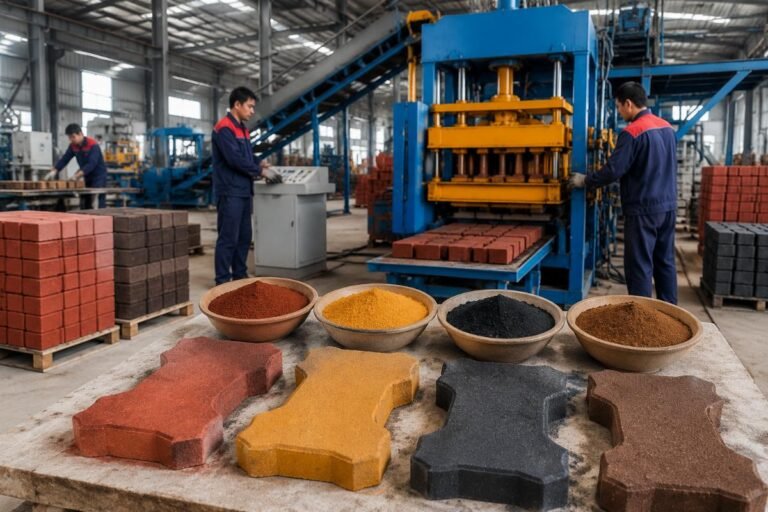
Buy Paver Block Machine with Free Shipping – Wholesale Supplier
Free shipping is the cheapest part of your investment; the real cost hides in voltage mismatches, abrasive raw materials, and untrained operators.
When sourcing a paver block machine with free shipping, the critical factors are not logistics discounts but equipment adaptability to local power grids, raw material quality, and turnkey commissioning support that ensures stable brick output from day one.
I spent years on installation sites across West Africa, watching lines stall not because of machine quality but because buyers focused on freight savings while ignoring grid instability and sand composition. In Lagos, a client purchased a second-hand European paver block machine with free shipping included, only to burn through three control cabinets within months due to voltage fluctuations exceeding acceptable ranges. The molds wore out prematurely because the local river sand carried high silt content, forcing the entire line into extended downtime. That scenario repeats across emerging markets: buyers chase logistics deals while overlooking operational readiness [NEED_CITE: root cause analysis of block machine failures in unstable power environments].
Let me walk you through what actually determines whether your paver block machine with free shipping becomes a profit generator or a costly lesson.
What Does "Free Shipping" Actually Cover for Paver Block Machines?
Free shipping typically means CIF port delivery, but customs clearance, inland transport, and on-site commissioning determine whether your machine produces saleable bricks or sits idle in a container.
Most buyers misunderstand Incoterms when negotiating a paver block machine with free shipping. The term usually covers ocean freight to your nearest port, but the hidden costs emerge immediately after arrival: customs duties, port handling fees, inland transportation to your factory site, and most critically, professional installation and commissioning. Without proper setup, even a perfectly manufactured machine will underperform or fail entirely [NEED_CITE: international trade terms and machinery import procedures].
Consider the total landed cost structure:
| Cost Component | Typical Coverage | Buyer Responsibility |
|---|---|---|
| Ocean Freight | Usually Included | None if CIF terms |
| Port Handling | Rarely Included | Arrange and pay |
| Customs Clearance | Never Included | Hire local agent |
| Inland Transport | Never Included | Arrange trucking |
| Installation | Varies by Supplier | Confirm scope |
| Operator Training | Varies by Supplier | Confirm duration |
| Spare Parts Kit | Sometimes Included | Negotiate upfront |
A government contractor in East Africa once calculated that after paying port fees, customs duties, and inland transport, the "free shipping" savings represented less than a fraction of total project costs. The real value came from the supplier’s on-site commissioning team, which ensured the machine produced specification-compliant interlocking bricks within the first week of arrival.
The lesson: negotiate the complete landing package, not just freight terms. Ask specifically about installation supervision, training duration, and whether the supplier provides remote technical support during the initial production phase.
How to Match Machine Specs to Your Local Power Grid and Raw Materials?
Voltage fluctuations beyond acceptable thresholds require stabilizers; high-silt sand sources demand upgraded mold materials to prevent premature wear.
Electrical compatibility is the first technical checkpoint when ordering a paver block machine with free shipping. Industrial power grids in many emerging markets experience voltage swings that can damage sensitive control systems. According to international electrical standards, equipment should operate within specific voltage tolerance ranges, but actual grid conditions often deviate significantly [NEED_CITE: IEC voltage tolerance standards for industrial equipment].
Here’s what you need to verify:
Power Grid Assessment:
- Measure actual voltage at your factory site during peak and off-peak hours
- Check for phase imbalance issues common in developing grid infrastructure
- Calculate total connected load including mixers, conveyors, and hydraulic systems
- Determine if your transformer capacity matches machine requirements with adequate safety margin
When voltage fluctuations are severe, the solution is not to accept the problem but to specify voltage stabilizers as part of your order. A West African client learned this after repeated control board failures. Once they installed industrial-grade stabilizers matched to their machine’s power requirements, electrical failures dropped dramatically.
Raw Material Compatibility:
The second critical factor is your sand and aggregate quality. River sand with high silt content acts like sandpaper on standard molds, accelerating wear and reducing brick dimensional accuracy. The solution involves material testing and mold specification upgrades [NEED_CITE: ASTM standards for concrete aggregate testing and suitability].
| Sand Quality | Silt Content | Standard Mold Life | Upgraded Mold Requirement |
|---|---|---|---|
| Clean Quarry Sand | Minimal | Extended Service | Standard Specification |
| Moderate River Sand | Noticeable | Reduced Service | Enhanced Hardness Grade |
| High-Silt River Sand | Substantial | Premature Wear | Premium Alloy Required |
A paver block manufacturer in South Asia discovered that their local sand source contained elevated silt levels. Standard molds required replacement far more frequently than expected, driving up production costs. After switching to molds with enhanced hardness specifications, mold service life extended substantially, and brick quality remained consistent.
Before ordering your paver block machine with free shipping, send sand samples to the supplier for testing. Request mold material recommendations based on your specific raw material composition. This simple step prevents costly operational disruptions.
Which Paver Block Machine Model Fits Your Production Scale?
Match your daily output requirements and investment budget to the appropriate automation level, from manual egg-laying units to fully automatic PLC-controlled production lines.
Selecting the right paver block machine with free shipping depends on your production targets, available capital, and operational expertise. The market offers solutions ranging from entry-level manual machines to high-output fully automatic lines, each serving different business stages.
Here’s a specification comparison matrix:
| Machine Category | Daily Output Range | Automation Level | Operator Requirement | Investment Scale | Best For |
|---|---|---|---|---|---|
| Mobile Egg-Laying | Modest Output | Manual Operation | Minimal Staff | Entry-Level Budget | Start-up Operations |
| Semi-Automatic Line | Moderate Output | Partial Automation | Small Team | Mid-Range Investment | Growing Businesses |
| Fully Automatic Line | High Volume | PLC Controlled | Trained Technicians | Significant Capital | Industrial Scale |
A private investor in Latin America started with a mobile egg-laying machine, producing interlocking bricks for local paving projects. The low initial investment and minimal operator requirements allowed quick market entry. As demand grew, they upgraded to a semi-automatic line, then eventually to a fully automatic system with color feeders for decorative pavers.
The key considerations:
For Start-up Operations:
Mobile egg-laying machines offer the lowest barrier to entry. They require minimal infrastructure, operate with basic operator skills, and produce interlocking bricks suitable for pedestrian areas and light-duty applications. The turnkey solution includes basic training and spare parts.
For Growing Businesses:
Semi-automatic lines balance productivity with investment. They include batching systems, conveyors, and pallet handling, requiring moderate operator training but delivering consistent output for commercial paving projects.
For Industrial Scale:
Fully automatic lines with PLC control deliver maximum output with minimal labor. They suit government infrastructure projects, large-scale housing developments, and export-oriented manufacturing. The investment includes comprehensive installation, operator training, and ongoing technical support.
When evaluating a paver block machine with free shipping, consider not just the machine price but the complete production system: batching plants, mixers, conveyors, pallet systems, curing arrangements, and stacking equipment. The supplier should provide a complete layout design matched to your site dimensions and production goals.
What Turnkey Services Ensure Stable Operation After Arrival?
On-site installation, comprehensive operator training, and accessible remote technical support form the three pillars of continuous brick production.
Ordering a paver block machine with free shipping means nothing if the machine cannot produce saleable bricks upon arrival. Turnkey commissioning services bridge the gap between equipment delivery and profitable operation.
The commissioning process involves several critical stages:
Mechanical Installation:
Professional technicians assemble the machine according to engineering specifications, ensuring proper alignment of hydraulic systems, vibration motors, and mold assemblies. This stage requires precision tools and experience with specific machine architectures.
Electrical Commissioning:
Control systems are programmed and tested, sensors calibrated, and safety interlocks verified. The electrical team ensures compatibility with local power conditions and configures PLC parameters for your specific product recipes.
Trial Production:
The commissioning team runs test batches, adjusting vibration intensity, hydraulic pressure, and cycle times to achieve optimal brick density and dimensional accuracy. Raw material proportions are fine-tuned based on local aggregate characteristics.
Operator Training:
Local staff receive hands-on training covering machine operation, routine maintenance, troubleshooting common issues, and quality control procedures. Training duration depends on automation level and operator baseline skills [NEED_CITE: industrial equipment training methodologies and competency standards].
A construction equipment distributor in Southeast Asia emphasized that their clients’ success depended entirely on commissioning quality. Machines installed by untrained local technicians frequently suffered premature wear, production inconsistencies, and operational failures. In contrast, sites where supplier technicians supervised the entire commissioning process achieved stable production within the target timeframe.
Ongoing Technical Support:
Even after successful commissioning, access to remote technical support prevents minor issues from becoming major disruptions. Modern communication tools enable real-time troubleshooting, parameter adjustments, and maintenance guidance. Suppliers should provide clear channels for technical consultation, spare parts ordering, and emergency support.
The turnkey package for your paver block machine with free shipping should explicitly include:
- Supervised mechanical and electrical installation
- Complete commissioning with trial production
- Structured operator and maintenance training
- Access to remote technical support
- Spare parts recommendations and supply chain
Without these elements, you risk extended downtime, production defects, and frustrated operators unable to maximize machine potential.
Conclusion
Free shipping captures attention, but equipment adaptability and turnkey support determine long-term profitability.
Your paver block machine with free shipping becomes a viable investment only when matched to local power conditions, raw material quality, and supported by professional commissioning. Voltage stabilizers, upgraded molds for abrasive materials, and comprehensive operator training transform equipment delivery into continuous production capability. Focus on the complete operational system, not just logistics savings, and your block manufacturing business will achieve stable output and sustainable returns.