

Description
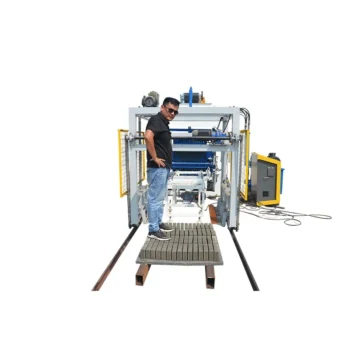
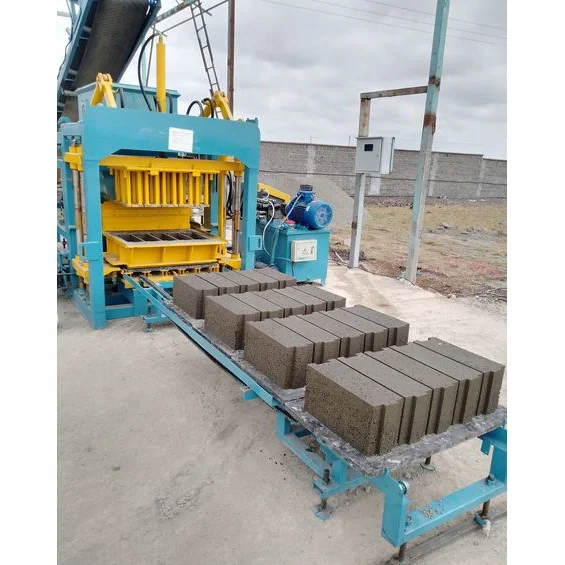
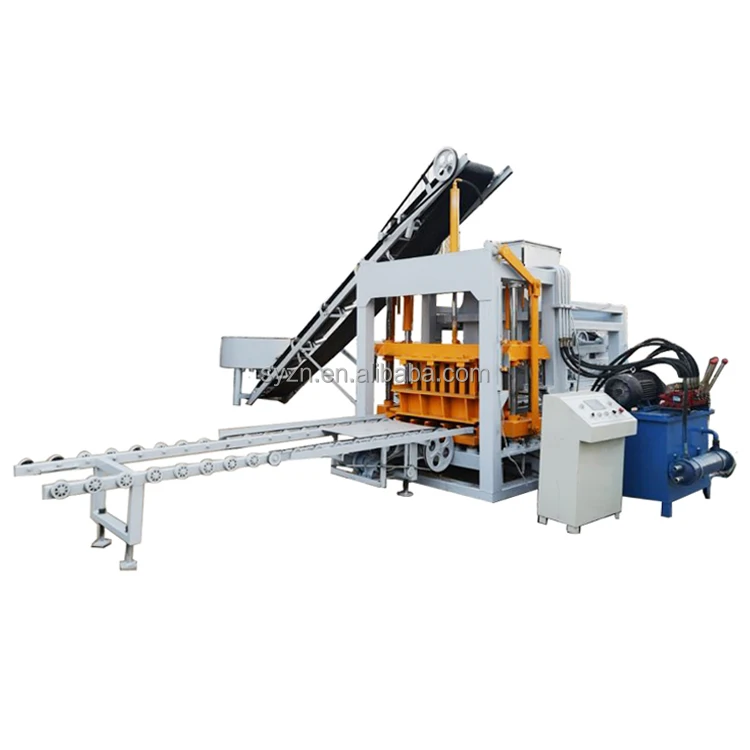
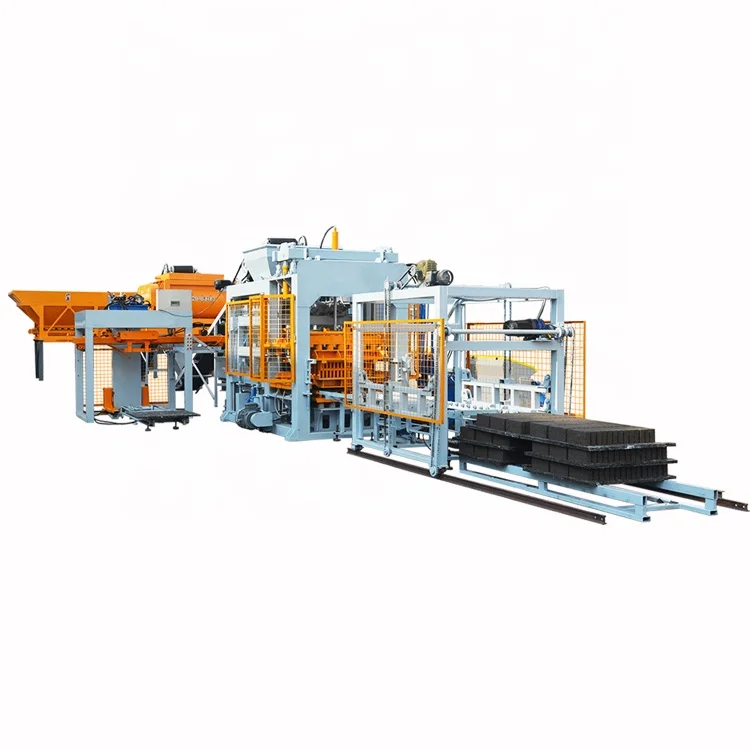
Matched System Design — The QT4-15A is configured as a complete line with PLC, hydraulic station, pallet feeder, and block sweeper supplied as one integrated package rather than assembled from mismatched components.
Technical Specifications
| Parameter | Value |
|---|---|
| Model | QT4-15A |
| Product Type | Fully Automatic Concrete Block Production Line |
| Overall Dimensions (L×W×H) | 7100×1600×2610 mm |
| Molding Cycle | 15–25 s |
| Vibration Frequency | 4600 r/min |
| Exciting Power (Vibration Force) | 40–50 kN |
| Total Power | 18.45 kW |
| Mixer Model | JQ350 |
| Pallet Size | 850×550×25 mm |
| Total Weight | 3 T |
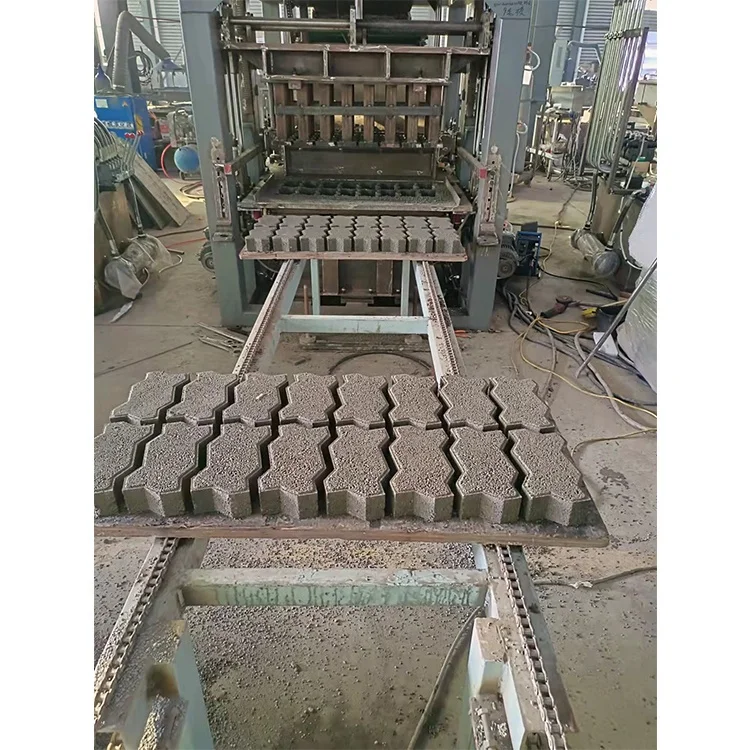
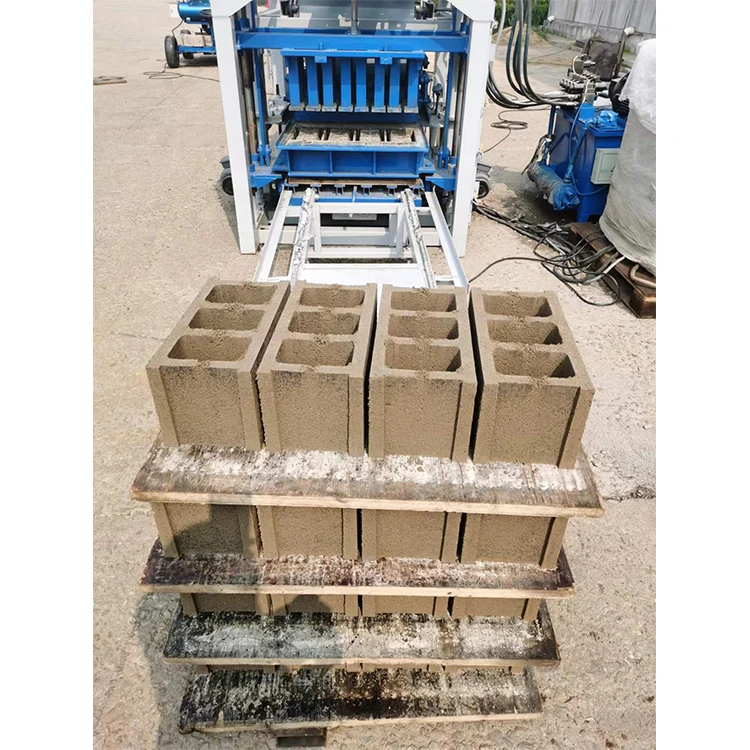
| Applied Products | Paver, solid block, hollow block, curbstone |
| Raw Materials | Crushed stones, sand, cement, dust, fly ash |
| Control System | PLC control system (language and brand to be confirmed) |
| Hydraulic Station | Included (pressure rating in MPa to be confirmed) |
| Included Equipment | Block making machine, hydraulic station, PLC control system, pallet feeder, brick conveyor, block sweeper |
| Free Accessories | Manual hydraulic trolley, spare parts and tools |
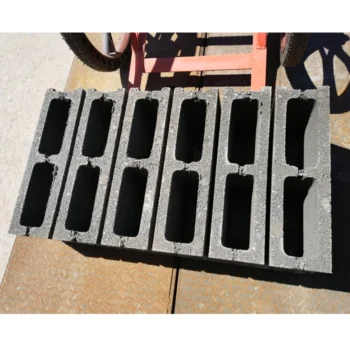
| Output Capacity (Hollow Block 400×200×200 mm) | 4 pcs/mould, 408 pcs/h, 3264 pcs/8 hr |
| Output Capacity (Hollow Block 400×150×200 mm) | 5 pcs/mould, 510 pcs/h, 4080 pcs/8 hr |
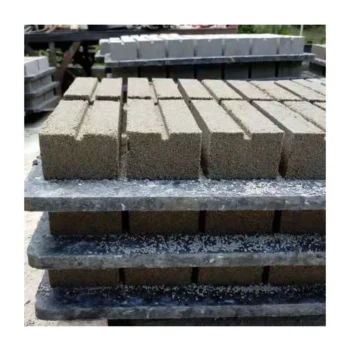
| Output Capacity (Solid Brick 240×115×53 mm) | 18 pcs/mould, 2100 pcs/h, 17000 pcs/8 hr |
| Automation Level | Fully automatic |
Application Suitability
| Application | Material or Output |
|---|---|
| Hollow block production (400×200×200 mm) | Crushed stone, sand, cement, fly ash — 3264 pcs per 8-hour shift |
| Hollow block production (400×150×200 mm) | Sand, cement, stone dust — 4080 pcs per 8-hour shift |
| Solid brick production (240×115×53 mm) | Cement, sand, fly ash — 17000 pcs per 8-hour shift |
| Paver and curbstone production | Aggregate and cement via mould change |
| On-site block production for contractors | Local aggregate, cement, sand |
What "408 Pieces per Hour" Actually Means for Your Output
The QT4-15A automatic block machine specifications only hold meaning when tied to a specific block format and mould.
I once quoted a West African contractor based on a cycle rate without asking which block his market bought. The machine arrived, ran fine on paper, but his local aggregate had high clay content, and the vibration force was not matched to his mix. His real daily output dropped to roughly half what he planned for. That gap between quoted capacity and actual production is the single biggest source of buyer regret in this equipment class. The QT4-15A output figures above are each tied to a named block size — 400×200×200 mm hollow block at 408 pieces per hour, 400×150×200 mm at 510 pieces per hour. Switch the mould and the cycle shifts, and so does your daily number. [NEED_CITE: relationship between aggregate gradation and block press cycle time]
Format-Specific Capacity Breakdown
Every capacity figure for the QT4-15A automatic block machine specifications is calculated against a defined mould and block dimension. The 15–25 second molding cycle produces 4 hollow blocks per press on the 400×200×200 mm mould, 5 on the 400×150×200 mm, and 18 solid bricks per cycle on the standard brick mould. Buyers who size their plant around a single cycles-per-hour number often discover the real throughput changes when they switch formats mid-shift.
Pallet Sizing Against Your Existing Infrastructure
The 850×550×25 mm pallet on this line is not arbitrary — it determines how many blocks sit per board, how the boards stack in the curing yard, and whether your current forklift can handle a full rack. Before confirming the order, measure your curing area and confirm the pallet dimension works with your handling equipment. A mismatch here means blocks are moved by hand or curing space sits half-used. [NEED_CITE: pallet dimension standards in concrete block production]
Vibration Force and Hydraulic Pressure as a Matched Pair
The QT4-15A delivers 40–50 kN of vibration force at 4600 r/min, working in tandem with the hydraulic station to compact the mix. Neither number alone tells you whether the blocks will meet your local strength standard. The vibration breaks down air pockets while the hydraulic pressure locks the particles together — if the ratio is wrong for your aggregate’s particle shape and moisture content, blocks come out crumbly on one end and over-pressed on the other. This is why a sample mix test matters before the machine ships.
The Cost of Skipping Configuration Checks
When voltage and PLC display language are not confirmed before production, the machine sits idle after arrival while an electrician rewires the panel and the operator stares at instructions in an unfamiliar script. When the pallet size does not match the curing rack spacing, every board has to be repositioned manually. These are not theoretical problems — they show up repeatedly when the pre-shipment checklist is treated as optional. [NEED_CITE: common commissioning delays in exported block machinery]
Why This Configuration Approach Works
Block machinery is our single focus, so the QT4-15A is specified as a matched system — the press, mould, pallet, feeder, conveyor, and sweeper are selected together, not sourced from separate vendors and bolted on-site. Configuration is set against the buyer’s actual mix design and local aggregate rather than pulled from a catalogue default. Mould design covers the formats the buyer’s market actually sells, including custom drawings when standard sizes do not apply. The automation level is selectable, so a buyer can begin with the included pallet feeder and conveyor and add automatic stacking later. Installation includes operator training so the crew understands cycle settings, mould changeover, and daily maintenance from the first shift. [NEED_CITE: integrated block line specification versus component-by-component sourcing]
Documentation & Verification
- Line layout with capacity calculation stated per block format and mould
- Machine specification sheet covering all QT4-15A electrical and hydraulic parameters
- Mould drawing and format list for each block type in your order
- Pallet specification matched to curing area dimensions and forklift capacity
- Voltage, frequency, and PLC display language confirmation before production
- Factory test record using your target mix design before dispatch
Installation, Commissioning & Support
- Foundation plan based on the 7100×1600 mm machine footprint and 3 T operating weight
- Electrical supply confirmed for 18.45 kW total draw with dedicated circuit requirements
- Machine shipped in dismantled state with assembly guide and bolt schedule
- First-run commissioning includes cycle time tuning against your local aggregate
- Operator training covers PLC navigation, mould changeover, and daily greasing points
- Wear parts list with hydraulic seals and vibration motor bearings identified for first reorder
Preparing Your Inquiry
To size this line correctly, we need your target block formats and the daily output you plan to sell, not just a machine model number. Send a sample or lab report of your local aggregate — particle size distribution and clay content determine the vibration and pressure settings. Confirm your site voltage, frequency, and the language you need on the PLC display so commissioning starts on day one.
Frequently Asked Questions
Q: How is output capacity calculated for each block format?
A: Each figure is based on the mould cavity count and the 15–25 second cycle range. For the 400×200×200 mm hollow block, four pieces per mould at that cycle yields 408 pieces per hour. Change the format and both the cavity count and achievable cycle shift, so the daily projection changes accordingly.
Q: What pallet size does the QT4-15A use?
A: The standard pallet is 850×550×25 mm. Before ordering, cross-check this against your curing rack spacing and forklift tine width. If your existing infrastructure uses a different dimension, the pallet size can be adjusted to match so boards slot directly into your curing area.
Q: Can the PLC display language be set before shipment?
A: Yes, but the language and PLC brand must be confirmed during the quotation stage. If this is left until the machine arrives, the operator may face an unfamiliar interface during the critical first week of production when settings are still being dialed in.
Q: How should hydraulic pressure be matched to my local aggregate?
A: The hydraulic station pressure must be balanced with the 40–50 kN vibration force and your specific mix design. High-clay or high-moisture aggregates need different pressure profiles than clean crushed stone. A sample mix test before production identifies the correct setting for consistent block strength.