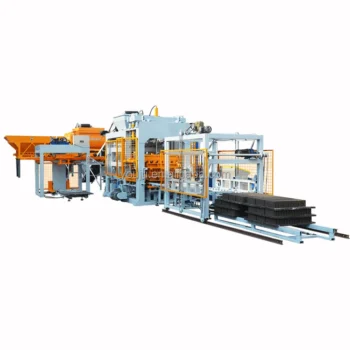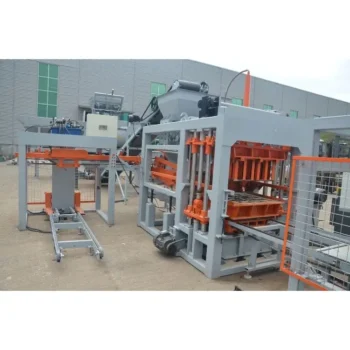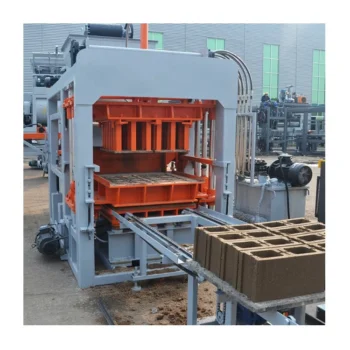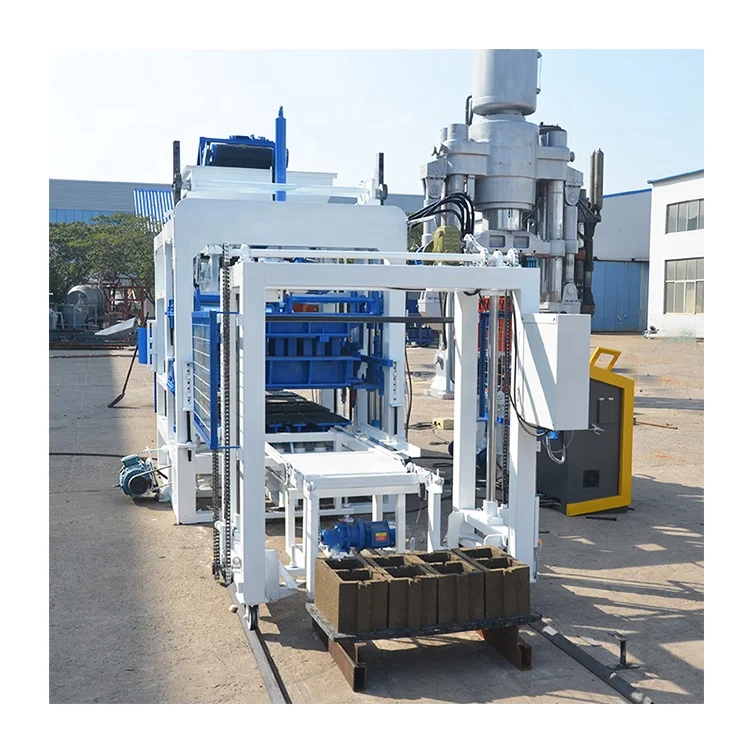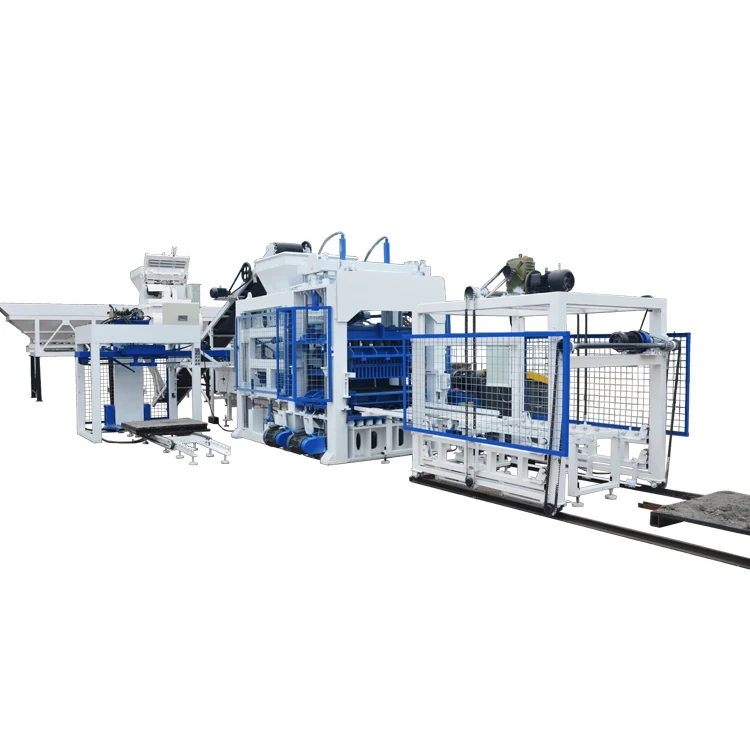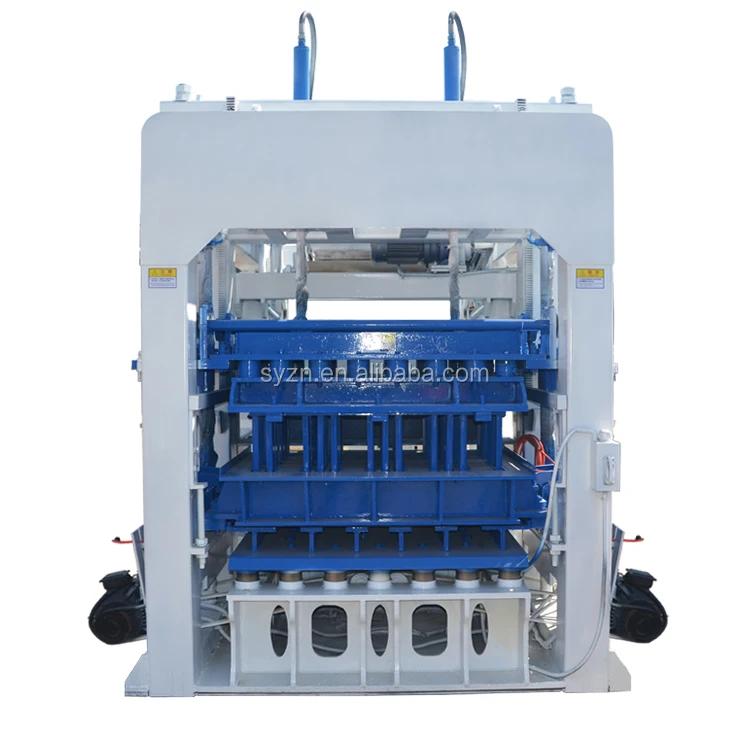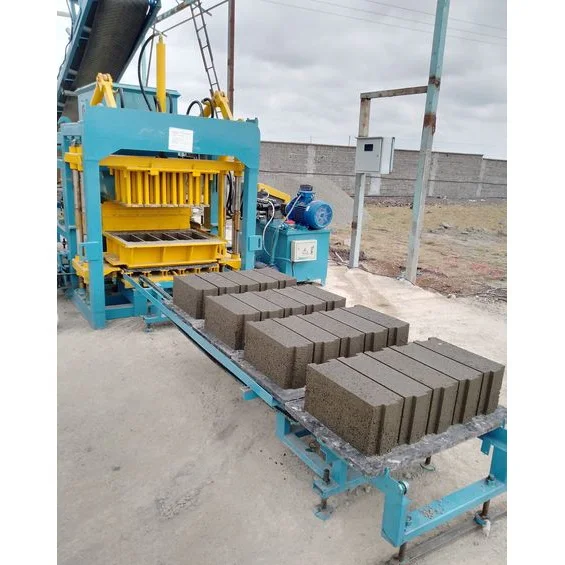
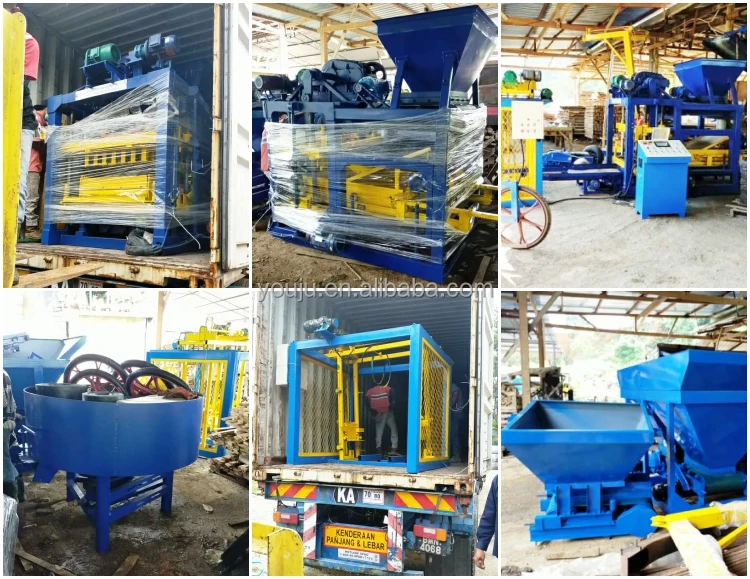
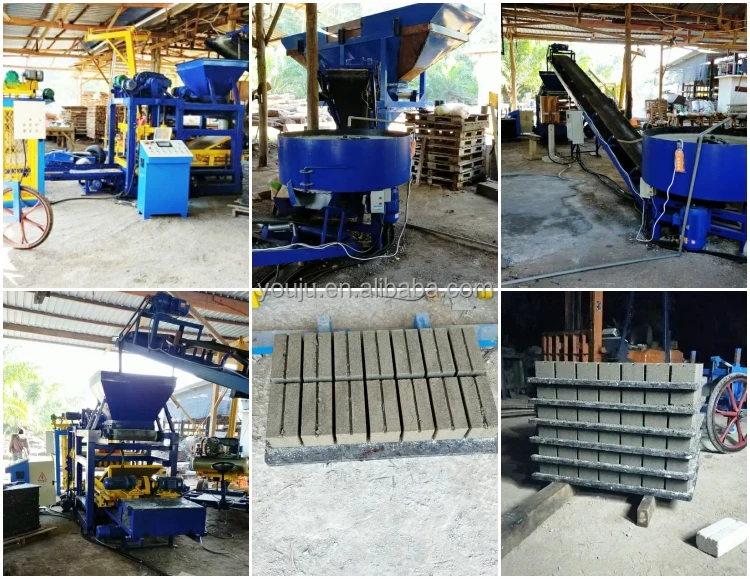
Description
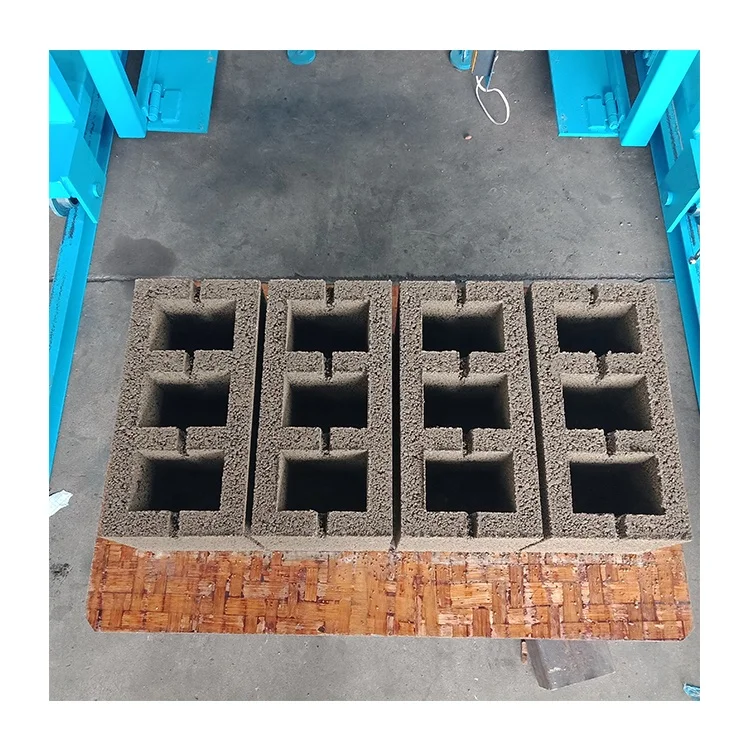
Mould Matched to Market — QTJ4-25 configurations are built around the block format your local buyers actually pay for, not a catalogue default, so every cycle time and pallet decision starts with your target product.
Technical Specifications
| Parameter | Value |
|---|---|
| Model | QTJ4-25 |
| Product Type | Automatic Concrete Block Making Machine |
| Overall Dimensions (L×W×H) | 3000×1800×2680 mm |
| Total Mass | 3.5 T |
| Overall Power | 16.58 kW |
| Vibration Force | 60 kN |
| Vibration Frequency | 2800–4500 r/min |
| Main Vibration Form | Platform Vibration |
| Pallet Size | 850×480 mm |
| Molding Cycle | 25 s |
| Demolding Method | Mechanical |
| Guide Column | Four guide columns, overlong guide design |
| Frame Material | National standard manganese steel |
| Surface Treatment | Chrome-plated |
| Factory Area Required | 300 m² |
| Output (400×200×200 mm hollow block, 4 pcs/mould, 8 h) | 4640 pcs/day |
| Output (240×115×90 mm brick, 9 pcs/mould, 8 h) | 11200 pcs/day |
| Output (240×115×53 mm solid brick, 21 pcs/mould, 8 h) | 26400 pcs/day |
| Automation Level | Semi-automatic |
| Control System | Confirm PLC or manual before order (basis to be confirmed) |
| Voltage & Frequency | Confirm before order (basis to be confirmed) |
Application Suitability
| Application | Material or Output |
|---|---|
| Hollow block production for residential walls | Crushed stone, sand, cement, fly ash |
| Solid brick runs for load-bearing structures | Gravel, cement, slag blends |
| Interlocking paver manufacturing | Colored concrete mixes with fine aggregate |
| On-site block production for housing projects | Locally sourced dust and sand with cement |
| Kerbstone and curb production for roadworks | High-strength concrete with coarse gravel |
Why "4640 Blocks a Day" Means Nothing Without the Format Attached
A capacity number without a block size is marketing, not engineering. The QTJ4-25 automatic block machine specifications how to choose discussion must always begin with the exact format you intend to sell, because the same machine produces 4640 hollow blocks per day but 26400 solid bricks in the same eight-hour shift. I have watched buyers sign purchase orders based on the highest output figure on a spec sheet, then discover their market only buys 400 mm hollow blocks and their real daily volume is less than a fifth of what they budgeted for.
The mould cavity count, the block volume, and the vibration energy required to compact each format all change the cycle economics. A 25-second cycle sounds fast until you realise a four-cavity hollow block mould and a twenty-one-cavity solid brick mould deliver fundamentally different throughput. When you evaluate the QTJ4-25 automatic block machine specifications how to choose, the only honest comparison is output per format, per shift, on your actual mix [NEED_CITE: block density and compressive strength testing standards by market].
Pallet Size and Curing Area Must Agree Before the Machine Ships
The 850×480 mm pallet is a fixed constraint on this press. If your existing curing racks were built for 900×550 mm pallets from a previous line, every wet block you produce will need manual re-stacking before it enters the rack — labour that erases the cycle speed advantage. I always ask buyers to send a photograph of their curing yard and forklift forks before we confirm pallet material, because bamboo, PVC and steel pallets each behave differently under sun exposure and forklift abrasion. Getting the pallet decision wrong does not break the machine, but it silently inflates your handling cost every single shift.
Vibration Force, Mix Design and the Aggregate You Can Actually Buy
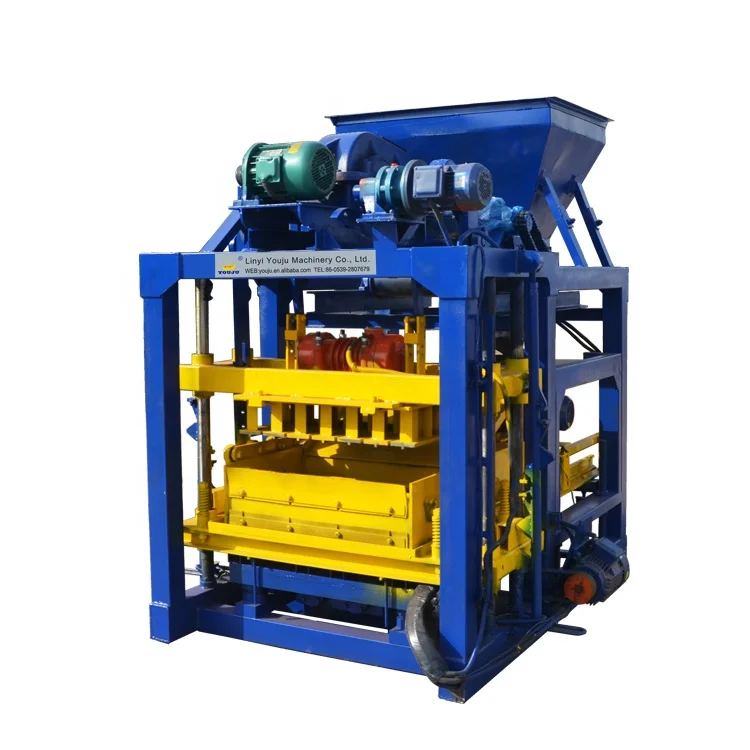
The 60 kN platform vibration is paired with an upper mould vibration motor to compact the mix from both directions. That dual action works well — but only when the mix design matches the energy delivered. A high-clay local sand absorbs vibration differently from washed river sand, and blocks pressed with the wrong water-cement ratio will crack during curing regardless of how much force the press applies. This is why I push buyers to send a sample of their intended aggregate to the lab before we lock in the vibration frequency setting. The QTJ4-25 automatic block machine specifications how to choose conversation is incomplete without a trial run on your actual raw material [NEED_CITE: concrete block compressive strength and aggregate grading requirements].
Reading the Spec Sheet Like a Technical Buyer
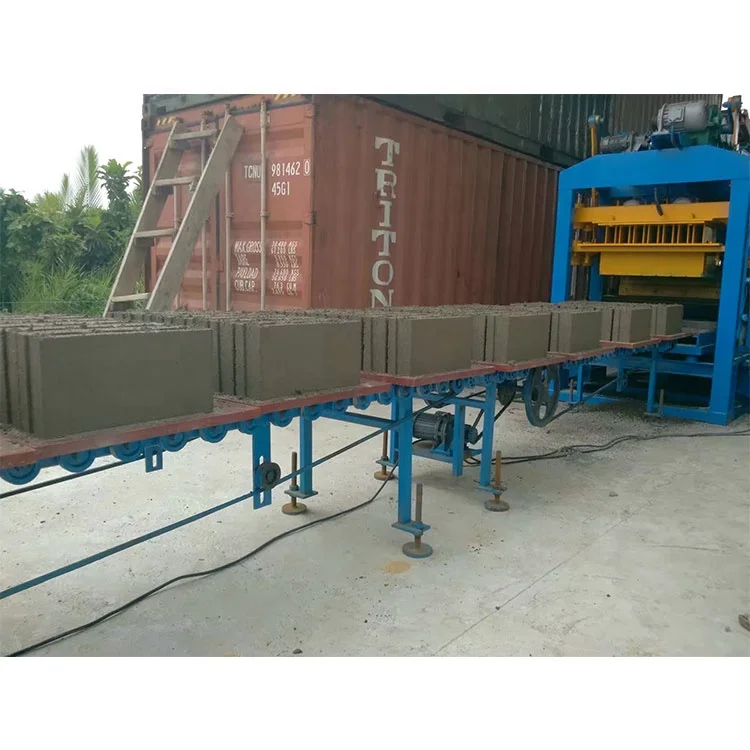
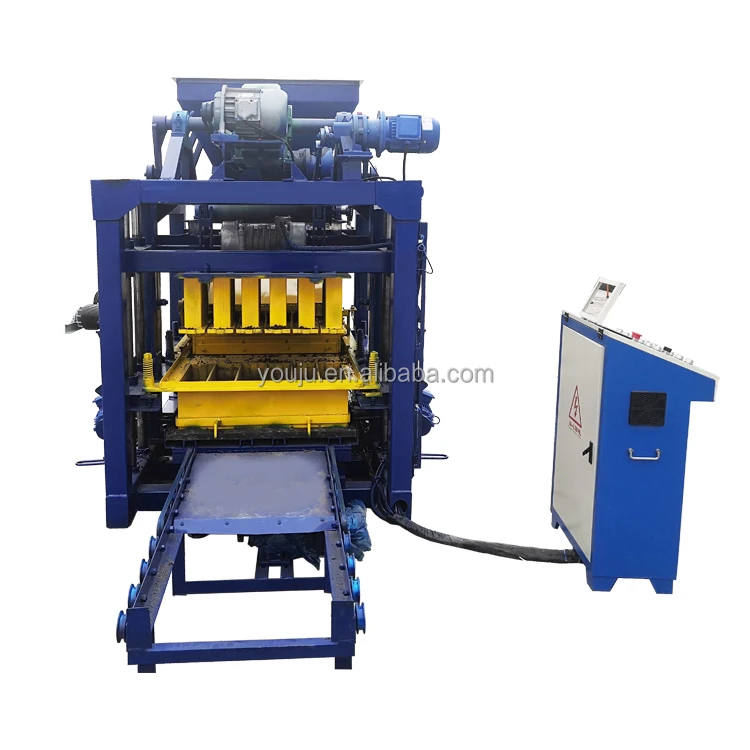
The 2800–4500 r/min vibration frequency range matters because lower frequencies move larger aggregate while higher frequencies settle fine sand and fly ash mixes. Choosing the wrong end of the range leaves voids in hollow block walls or a rough surface on pavers. The four overlong chrome-plated guide columns resist lateral deflection during the vibration cycle, which directly affects dimensional tolerance — blocks that vary by more than 2 mm in height will be rejected by automated paving crews. The 300 m² factory area requirement includes the press, mixer, pallet return and a minimum curing buffer; plan your slab before the machine arrives, not after. Semi-automatic operation with mechanical demolding means pallet feeding and block stacking still require operators, so budget labour accordingly rather than assuming full automation.
The Cost of Skipping the Format Conversation
Buyers who order without confirming their top-selling block format often end up with a mould that sits unused while they source a custom replacement — a delay measured in weeks, not days. I have seen production lines sit idle because the buyer’s market shifted from solid brick to interlocking paver between the inquiry and the shipment, and nobody updated the mould order. Voltage mismatches compound the problem: a 380 V machine arriving at a 440 V site requires a transformer that was not in the budget, delaying commissioning by days while the contractor sources one locally [NEED_CITE: industrial voltage and frequency standards across export markets].
Why Sourcing Through a Block-Machinery-Focused Supplier Matters
Every QTJ4-25 automatic block machine specifications how to choose conversation here starts with your block format, not our catalogue. Moulds are designed against your market’s actual product range, including custom drawings when standard formats do not match local demand. The machine, mould, pallet and handling equipment are specified as one system so the press is never waiting on a mismatched upstream station. Automation level is selectable — you can start with mechanical demolding and add automatic pallet feeding later as volume grows. Installation support includes operator training on your specific mix and block format, not a generic startup script.
Documentation & Verification
- Line layout showing capacity per block format assumed in calculations
- Mould drawing and format list matched to your target products
- Pallet specification including material and load rating confirmation
- Voltage, frequency and control language sign-off before production
- Factory test record on your requested block format before dispatch
Installation, Commissioning & Support
- 300 m² slab preparation guide covering press footprint and curing buffer
- 16.58 kW total power supply with dedicated circuit and voltage confirmation
- Mechanical demolding commissioning with cycle timing per your mould
- Operator training on mix adjustment for local aggregate and water content
- Wear parts and mould cavity list with first replacement schedule
- Chrome-plated guide column inspection protocol for alignment checks
Before You Send an Inquiry
Tell us which block format your market actually buys — dimensions, daily volume target, and the aggregate you can source within a reasonable transport distance. Share your site voltage and frequency so we can confirm the electrical configuration before the machine enters production. If you already have curing racks and forklifts, send the pallet dimensions they accept so the 850×480 mm pallet decision is validated, not guessed.
Frequently Asked Questions
Q: How is daily output calculated and which block format does each figure assume?
A: Every output figure on this page names the block dimensions, mould cavity count and shift length. For example, 4640 pieces per day assumes a 400×200×200 mm hollow block with four cavities per mould across an eight-hour shift. Different formats change the number substantially, so always request a per-format capacity sheet.
Q: How long does a mould change take on the QTJ4-25, and what formats are available?
A: The machine accepts exchange moulds for hollow blocks, solid bricks, porous blocks and pavers. Change time depends on operator familiarity and whether the new mould is pre-assembled. Plan for a portion of a shift during the first change, reducing as the crew gains experience.
Q: What pallet size does this machine require, and what material options exist?
A: The press uses 850×480 mm pallets. Material options include bamboo, PVC and steel. The correct choice depends on your curing environment, forklift type and expected pallet lifespan. Confirm compatibility with your existing curing racks before ordering.
Q: How should vibration force and mix design be matched to local aggregate?
A: The 60 kN platform vibration must be paired with a mix that responds to that energy level. High-clay sands behave differently from washed aggregate. We recommend a lab trial with your actual raw material before locking in vibration frequency and water-cement ratio settings.
Q: What documentation is provided before and after shipment?
A: You receive a line layout with per-format capacity, mould drawings, pallet specifications, voltage and language confirmation, a factory test record on your block format, hydraulic and electrical schematics, and an operation manual. CE documentation is available where applicable.