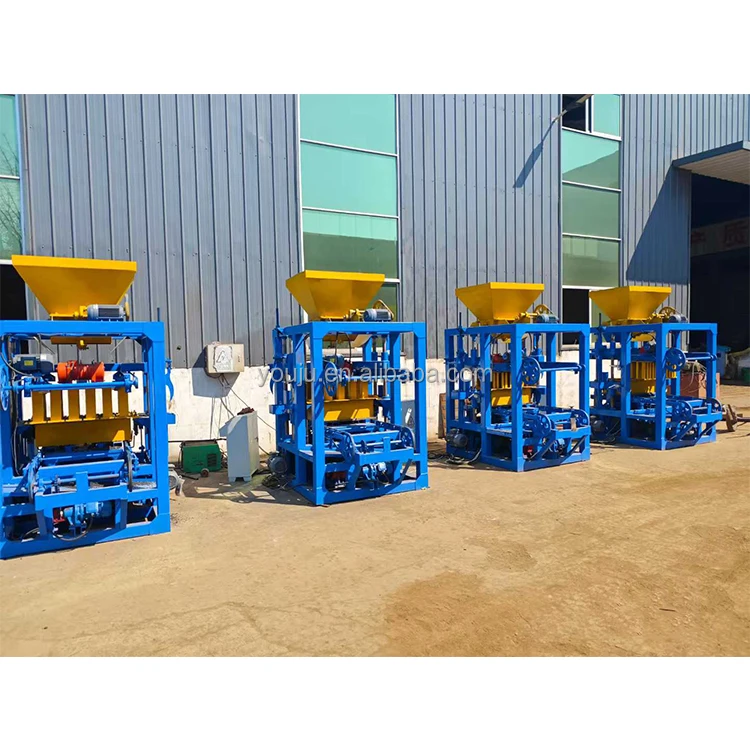
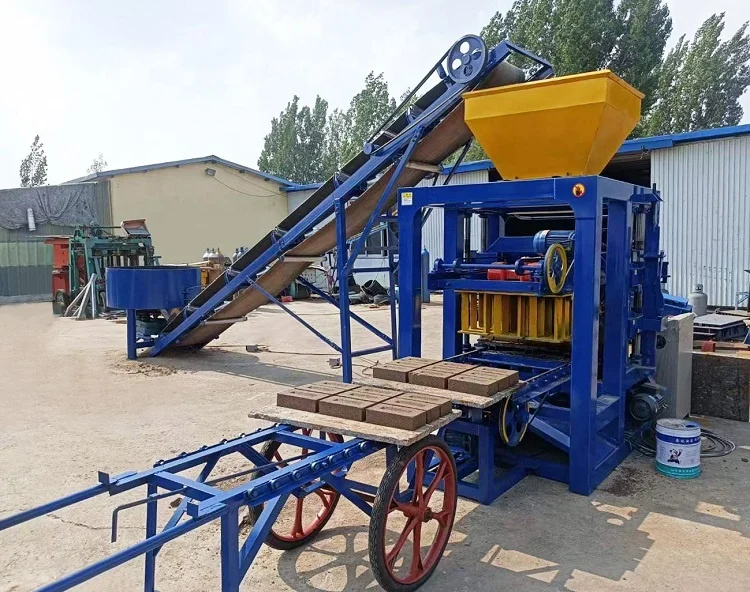
Description
Mould-to-market alignment — every output figure on this page is tied to the specific block format, pallet size and mix design you will actually run, not a catalogue default.
Technical Specifications
| Parameter | Value |
|---|---|
| Model | QTJ4-24 |
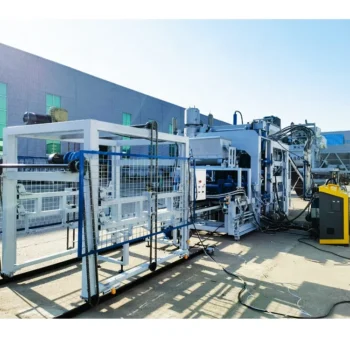
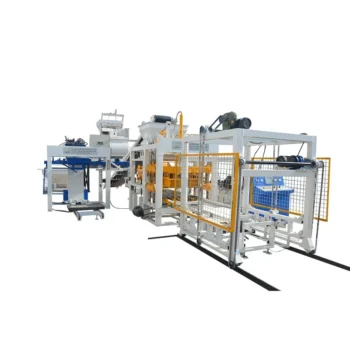
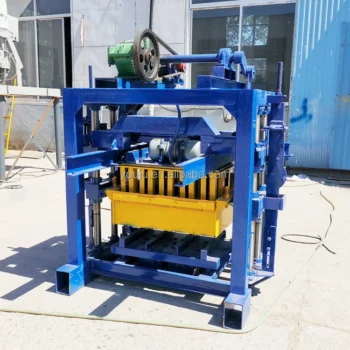
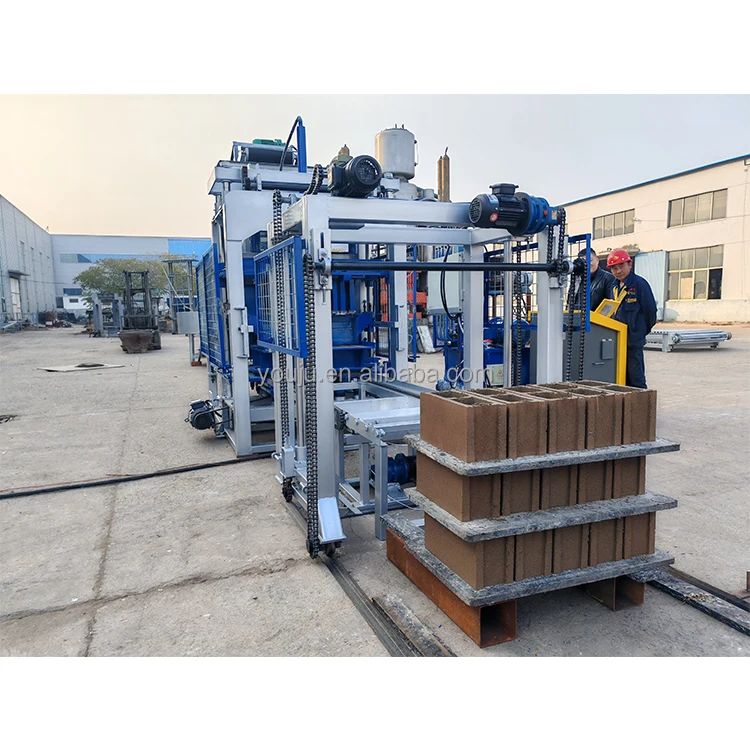
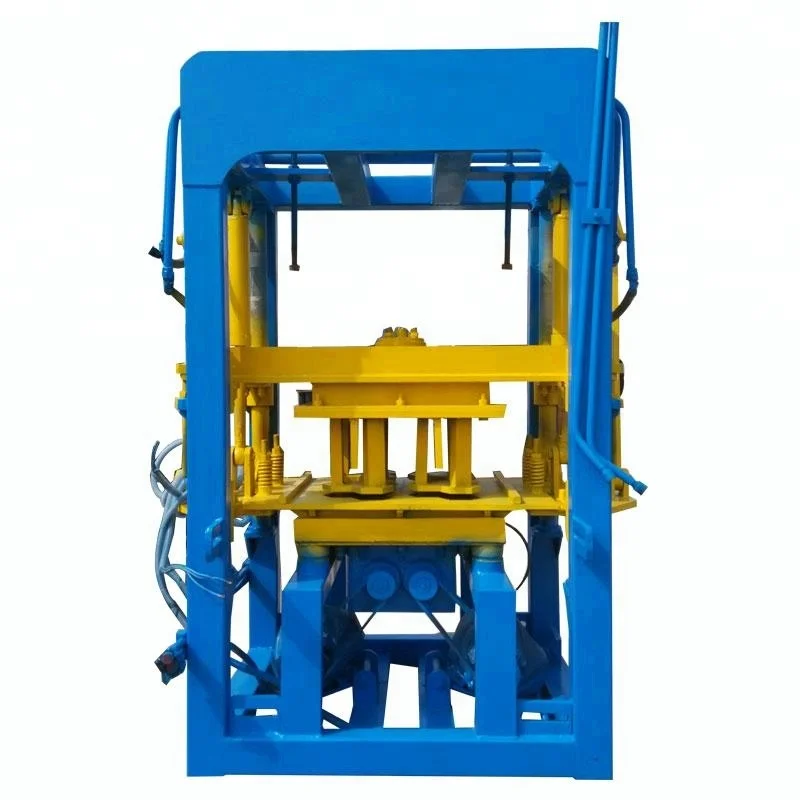
| Product Type | Semi-Automatic Concrete Block Making Machine |
| Molding Type | Platform vibration |
| Overall Dimensions | 3600 mm × 1700 mm × 2560 mm (working state) |
| Total Mass | 1750 kg |
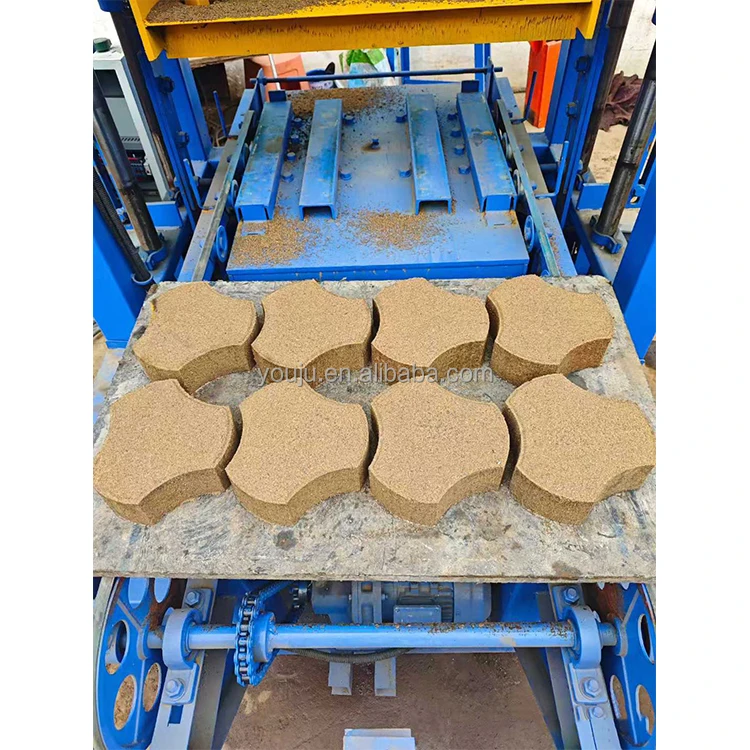
| Pallet Size | 850 mm × 450 mm |
| Overall Power | 14.25 kW |
| Vibration System | Lower platform (2 × 3 kW high-speed motors) + upper (1.5 kW attached vibrator) |
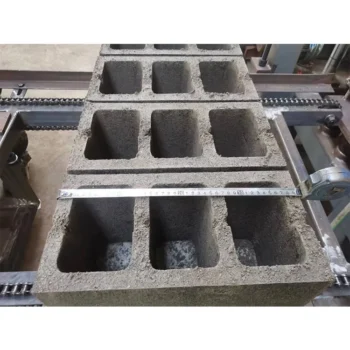
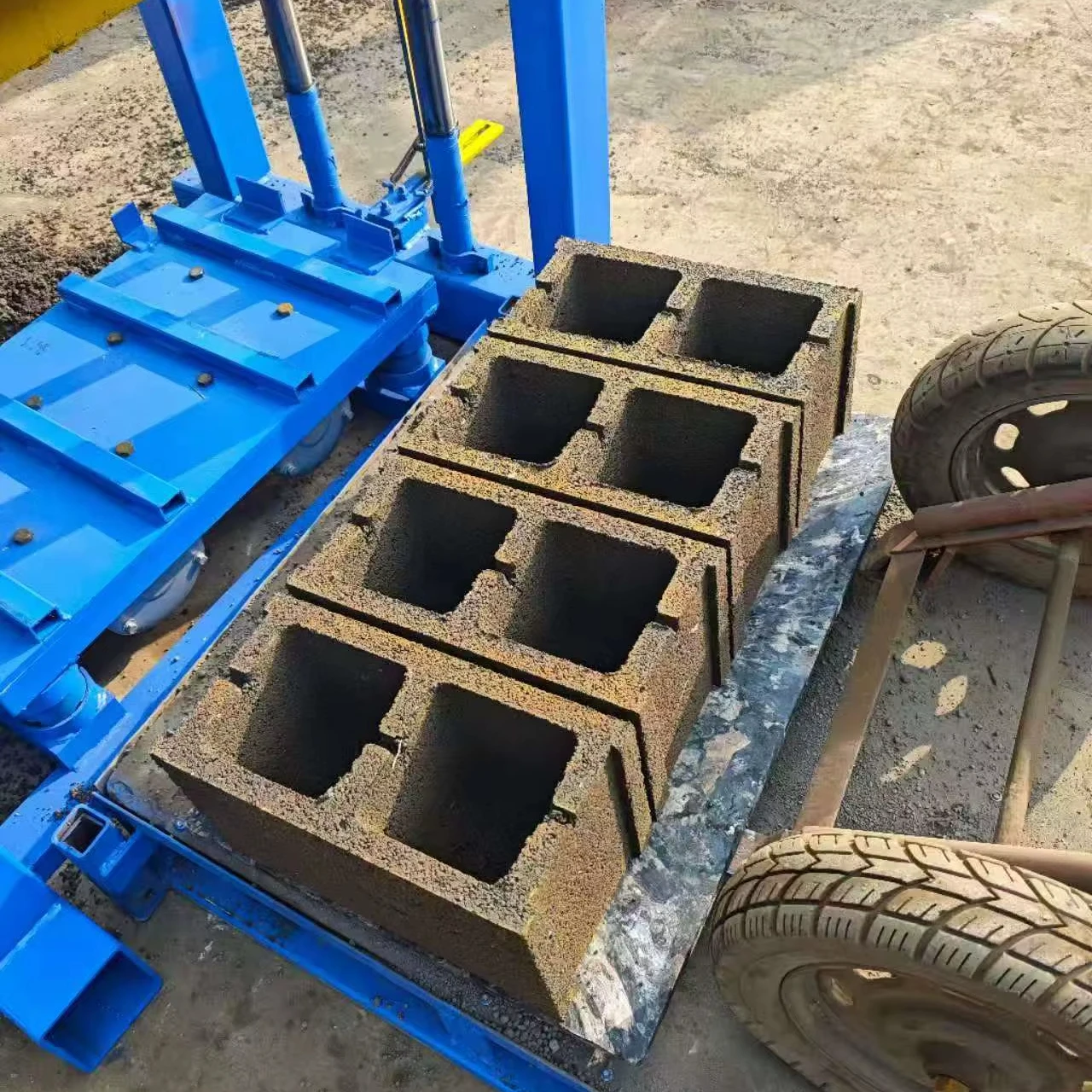
| Mould Format | 390 × 190 × 190 mm (4 pcs/mould); 240 × 115 × 53 mm (21 pcs/mould) |
| Elevating System | Cone-shape motor with JZQ250 reducer, V-belt drive |
| Delivery Device | Cycloidal pin-wheel reducer, chain and belt drive |
| Material Storage | Dual-hopper (releasing hopper + storing hopper) |
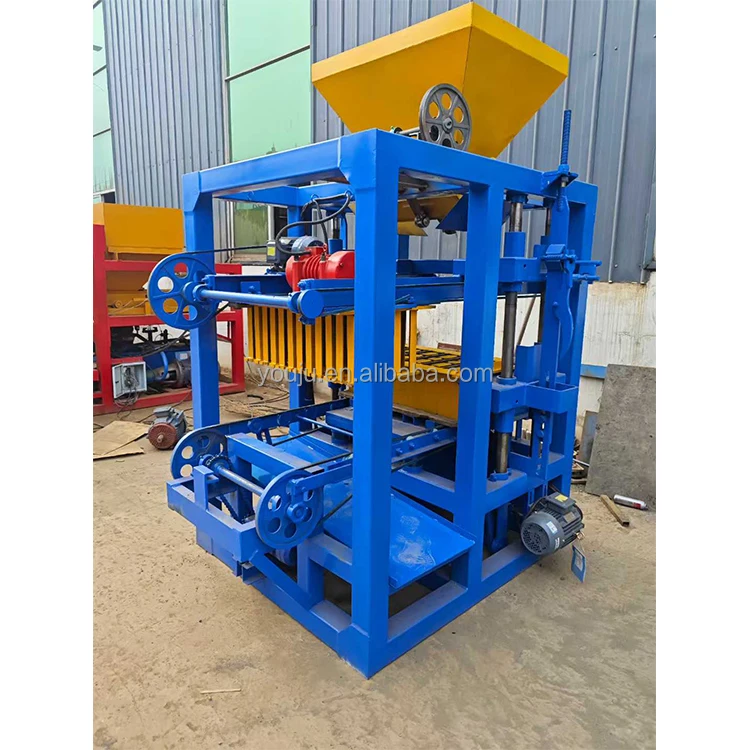
| Frame | Dragon-gate style, super-steel, four vertical wear-resisting shafts |
| Automation Level | Semi-automatic (mechanical and electronic combined control) |
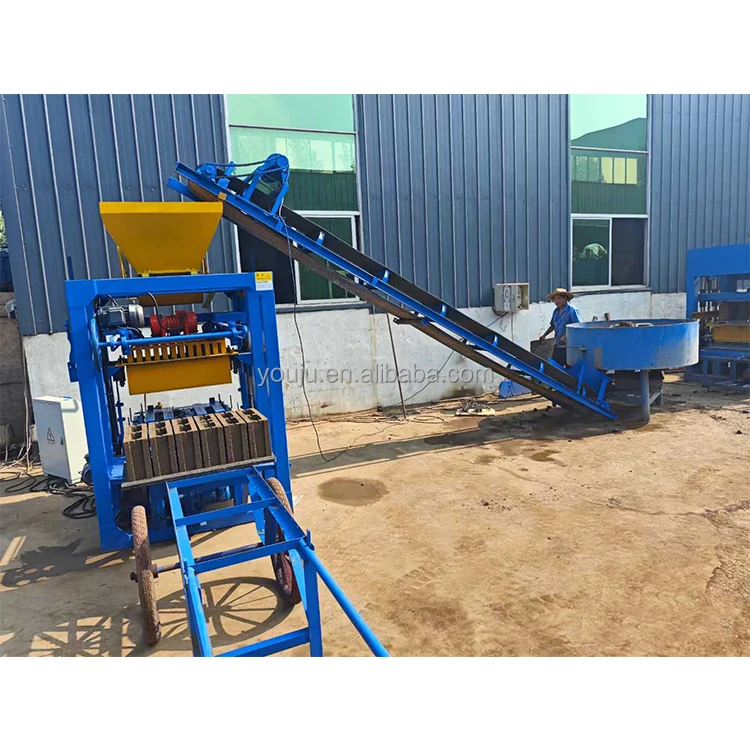
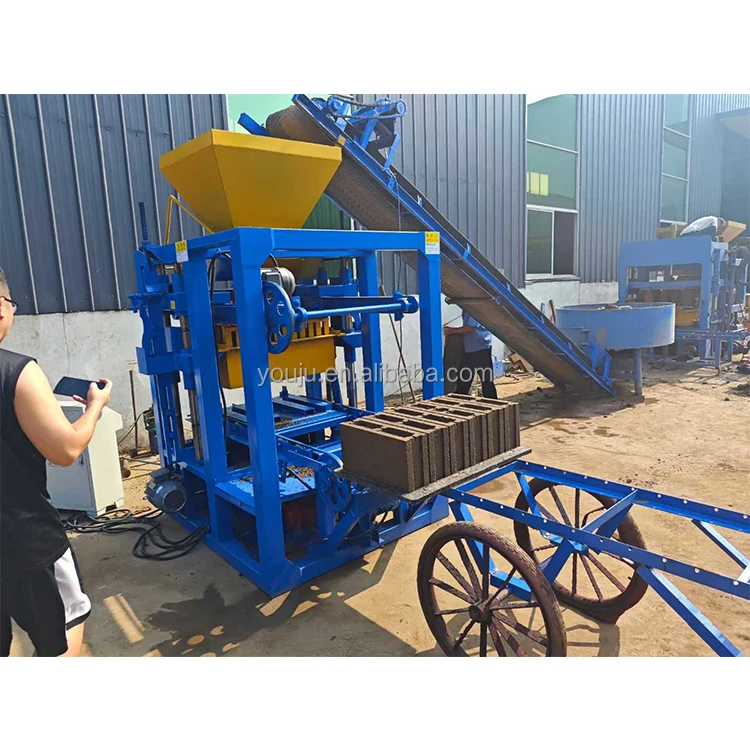
| Supporting Equipment (basic) | JQ350 pan mixer, 6 m belt conveyor, trolley |
| Supporting Equipment (optional) | Auto stacker (3–6 layers depending on block height) |
| Cycle Time | basis to be confirmed by block format, material and thickness |
| Output Capacity | basis to be confirmed by block format, material and thickness |
| Voltage & Frequency | basis to be confirmed with manufacturer |
| Control System | Electronic controlling part (PLC or relay logic to be confirmed) |
| Hydraulic Pressure | Not applicable (mechanical vibration type) |
Application Suitability
| Application | Material or Output |
|---|---|
| Small-scale hollow block plant | 390 × 190 × 190 mm hollow blocks from crushed stone, sand and cement |
| On-site production for contractors | Standard solid bricks 240 × 115 × 53 mm using locally sourced aggregate |
| First block plant for entrepreneurs | Hollow and solid formats on a compact footprint with JQ350 pan mixer |
| Range extension for existing producers | Adding standard hollow block or solid brick to current catalogue |
What the Cycle-Time Figure Leaves Out When Sizing a QTJ4-24
The cycle time only becomes meaningful once you lock the block format, local aggregate and target strength.
I once saw a buyer quote a shift output based on a generic cycles-per-hour number and then run a lightweight volcanic ash mix that cut actual production to roughly six tenths of the plan. The construction crew was waiting for blocks and the whole schedule slipped. With the QTJ4-24, the vibration force comes from two 3 kW platform motors and a 1.5 kW upper vibrator, which must be matched against your specific density requirement. [NEED_CITE: relationship between vibration amplitude and aggregate grading in block compaction] If the mix is too lean or the aggregate too coarse, the semi-automatic block machine simply cannot reach the same cycle rhythm without risking corner cracks.
Matching Mould Format to the Block You Actually Sell
The QTJ4-24 ships with mould plates for 390 × 190 × 190 mm hollow blocks at four pieces per cycle and 240 × 115 × 53 mm solid bricks at twenty-one pieces per cycle. These two formats behave very differently inside the mould box. Hollow blocks need a stiff, low-slump mix so the cores hold their shape when the mould lifts, while solid bricks tolerate a slightly wetter batch. A semi-automatic block machine of this size gives you both options, but the daily throughput depends entirely on which format you run and how fast your crew can move pallets to the curing area.
Pallet Size, Curing Yard and the Forklift You Already Own
The 850 mm × 450 mm pallet is the interface between the press and everything downstream. If your curing racks are built for a different span, or your forklift tines are wider than the pallet, you will spend more time re-stacking than producing. Before the order is placed, the pallet material — bamboo, PVC or hardwood — must also be decided because each responds differently to moisture and UV exposure in open-air yards. [NEED_CITE: pallet material degradation rates under tropical curing conditions] Getting this wrong means buying a new set of pallets before the first year is out.
Reading the Spec Sheet Like a Block Maker, Not a Catalogue Browser
The dual-hopper storage system keeps a measured batch ready above the mould so the operator never waits for the mixer. The dragon-gate frame with four wear-resisting vertical shafts maintains mould alignment, which directly controls wall thickness consistency in hollow blocks. Lower platform vibration from two 3 kW motors compacts the bottom face, while the 1.5 kW upper vibrator settles the top surface, giving a uniform density through the block height. Cycle rhythm on the QTJ4-24 is therefore a function of how quickly the dual-hopper refills, how fast the elevating motor lifts the mould, and how soon the operator clears the finished pallet — not a single number pulled from a brochure.
The Hidden Cost of Skipping the Voltage Question
Voltage and frequency are easy to overlook when the focus is on mould count and pallet size, but they can stall commissioning for weeks. A 50 Hz motor running on a 60 Hz supply spins faster, overheats and fails prematurely; a control panel wired for 380 V three-phase will trip instantly on a 220 V site. [NEED_CITE: voltage and frequency standards by export market] With the QTJ4-24’s 14.25 kW total load, the difference between a correctly sized breaker and an undersized one is the gap between steady production and constant nuisance trips. Confirm the local supply before the machine is built, not after it arrives in the container.
Why Buyers Source This Machine Through Our Line-Up
Every QTJ4-24 we quote is configured against the buyer’s actual block format, local aggregate and curing yard layout rather than a stock list default. Mould drawings are supplied before shipment so the first replacement cycle is already planned. Pallet size and material are confirmed alongside the press so the curing racks and forklift are never mismatched. Voltage, frequency and control display language are locked in writing before production starts, avoiding on-site rewiring. Operator training covers mould change, hopper adjustment and basic maintenance so the crew is productive from day one.
Documentation & Verification
- Line layout showing QTJ4-24 footprint, belt conveyor route and pallet flow
- Capacity calculation sheet stating the exact block format and mix design assumed
- Mould drawing with core pin positions for 390 × 190 × 190 mm hollow block
- Pallet material and thickness specification matched to your curing rack span
- Factory test record run on your target mix before container loading
- Electrical schematic with confirmed voltage, frequency and control language
Installation, Commissioning & Support
- Concrete pad sized to the 3600 × 1700 mm working footprint plus mixer clearance
- Dedicated 14.25 kW circuit with breaker rating confirmed against local code
- Machine arrives on four vertical shafts, bolted down and leveled on site
- First-cycle parameter tuning on your aggregate and target block strength
- Operator training on dual-hopper feed timing and mould change procedure
- Wear parts list covering vibration motor mounts and shaft bushings
Before You Send the Inquiry
Tell us which block format you sell most — hollow, solid or both — and the daily volume your market absorbs. Share a sample of your local aggregate and cement type so we can run a trial mix and confirm cycle rhythm on the QTJ4-24. Include your site voltage, frequency and the pallet dimensions your curing yard already uses so the line arrives ready to run.
Frequently Asked Questions
Q: What is the realistic daily output of the QTJ4-24 for each block format, and what cycle time is assumed?
A: Daily output depends on the block format, mix design and pallet handling speed. The machine produces four 390 × 190 × 190 mm hollow blocks or twenty-one 240 × 115 × 53 mm solid bricks per mould. Cycle time and shift capacity are calculated only after we test your specific aggregate and target strength, so the figure you receive reflects your actual conditions.
Q: How do I confirm the 850 × 450 mm pallet works with my existing curing area and forklift?
A: Measure your curing rack span and forklift tine width before ordering. The pallet length and width are fixed to the mould plate size, but material — bamboo, PVC or hardwood — is selectable. We cross-check your rack dimensions and forklift capacity against the pallet specification to avoid re-stacking after the press.
Q: Can the vibration force be matched to my local aggregate for consistent block strength?
A: Yes. The QTJ4-24 uses two 3 kW lower platform motors and a 1.5 kW upper vibrator. We adjust the eccentric weight position and vibration duration to suit your aggregate grading and cement content. A trial mix is run before shipment so compaction density meets your strength target without corner damage.
Q: What mould formats are available, and how long does a mould change take in practice?
A: Standard formats include 390 × 190 × 190 mm hollow block and 240 × 115 × 53 mm solid brick. Custom moulds can be designed to buyer drawings. Mould change time depends on the number of core pins and the operator’s familiarity with the bolt pattern; training covers the procedure so crews can switch formats within a single shift break.
Q: Is the control system confirmed for my market’s voltage, frequency and operator language?
A: Voltage, frequency and control display language are confirmed in writing before production starts. The QTJ4-24 uses a combined mechanical and electronic control system, and the electrical panel is built to match your site supply. This step prevents commissioning delays caused by mismatched breakers or unreadable displays.