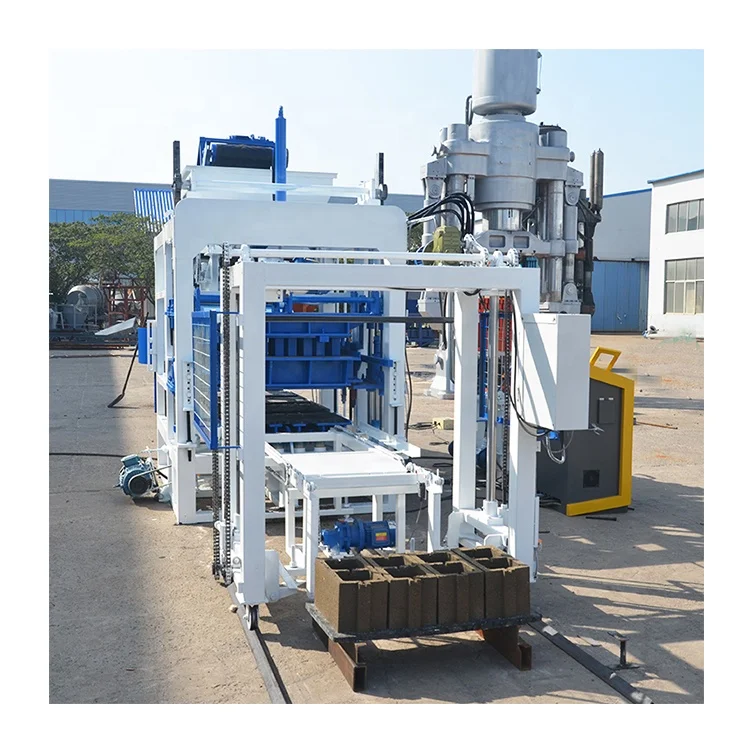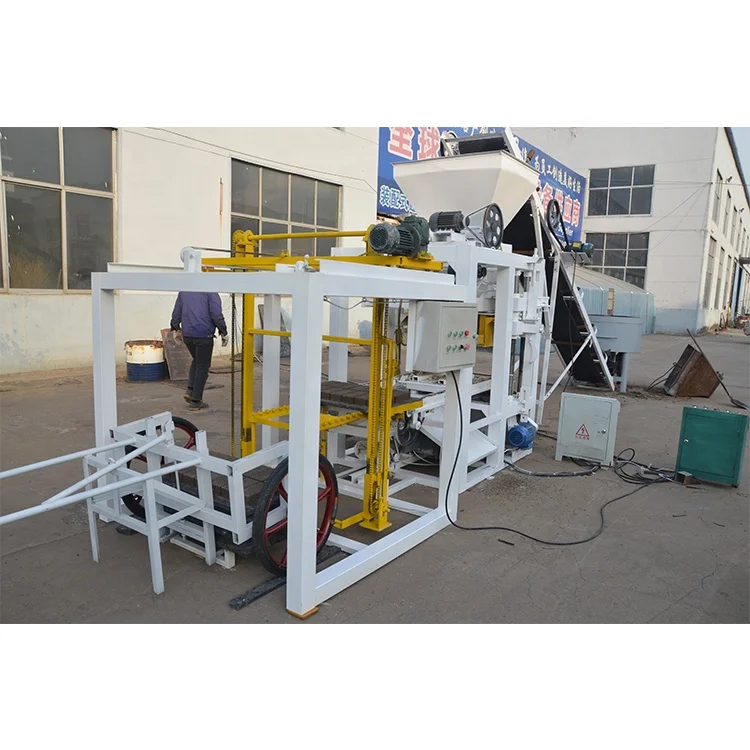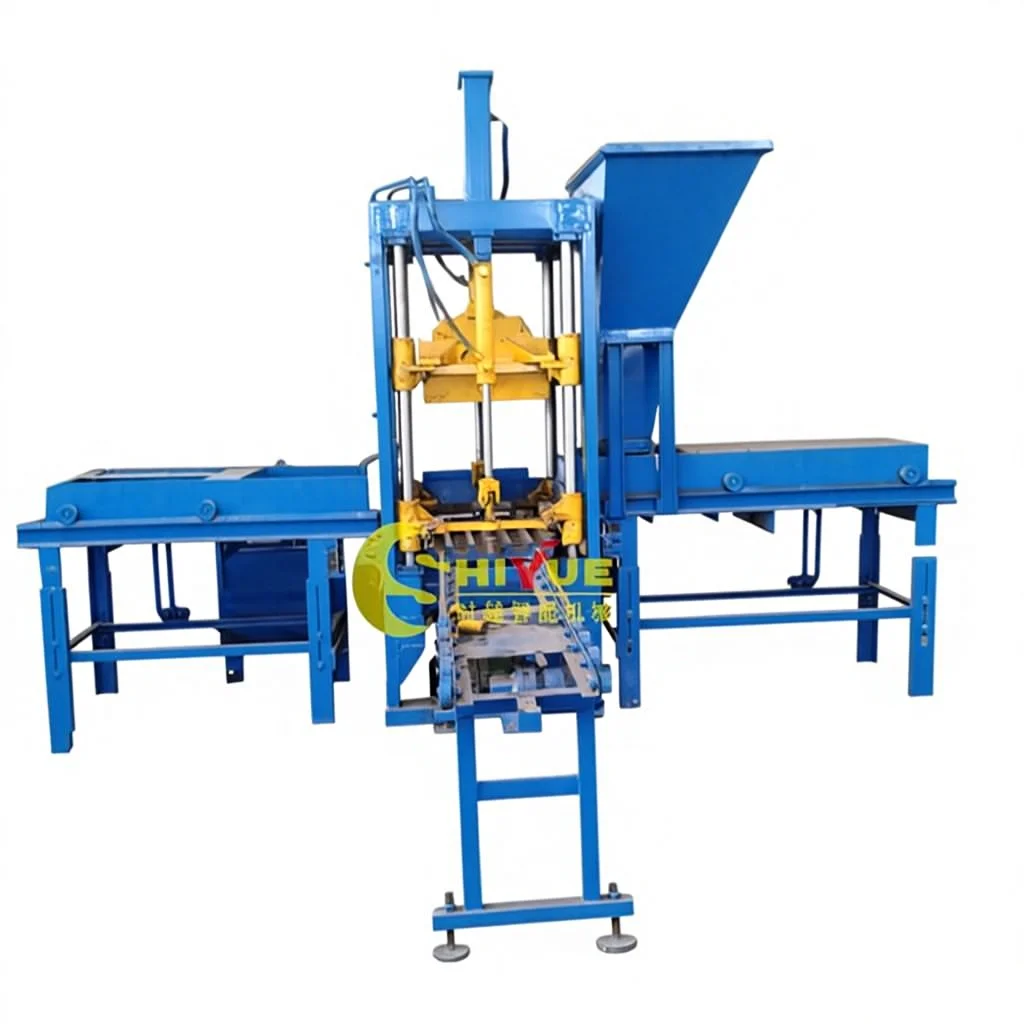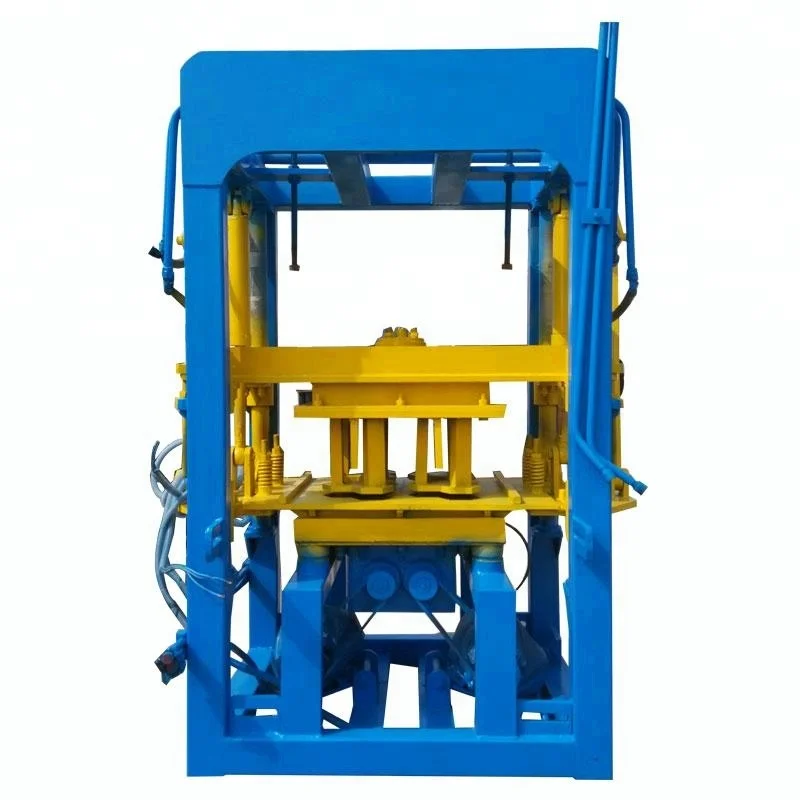
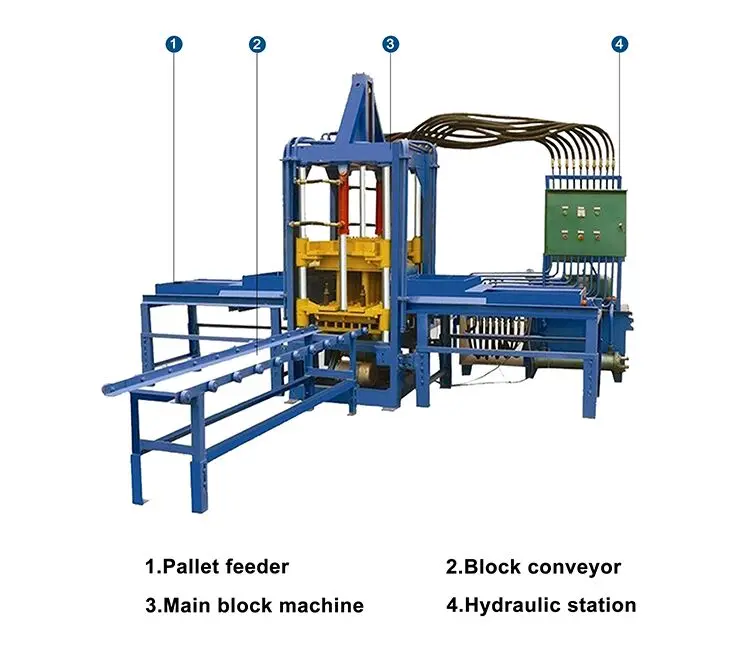
Description
Honest capacity per mould — we calculate the QTF3-20 daily output against the specific block format and aggregate you will actually run, not a generic catalogue figure.
Technical Specifications
| Parameter | Value |
|---|---|
| Model | QTF3-20 |
| Product Type | Stationary Block Making Machine |
| Overall Dimensions | 4000 × 3500 × 2300 mm |
| Net Weight | 2870 kg |
| Vibration Form | Platform Vibration |
| Total Power | 17.5 kW |
| Drive System | Hydraulic |
| Control Style | Semi-Automatic |
| Output Capacity | 4320 pcs/day (basis not stated in source — confirm block format / material / thickness) |
| Frame Construction | #12 U-bar welding, overall frame structure |
| Proximity Switch | Contactless monitoring |
| Layer Feeding | Double layer (raw material and color surface material) |
| Main Electrical Components | Sourced from Germany or Chinese top brand |
| Main Hydraulic Components | Sourced from Germany or Chinese top brand |
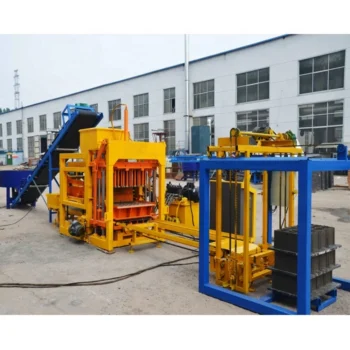
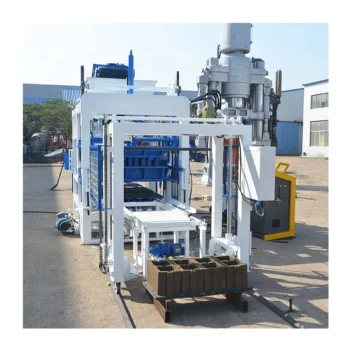
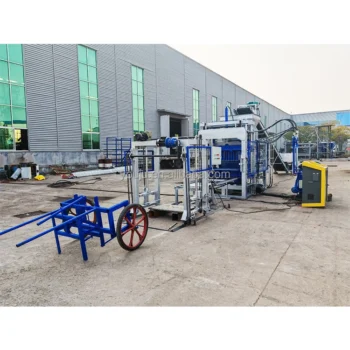
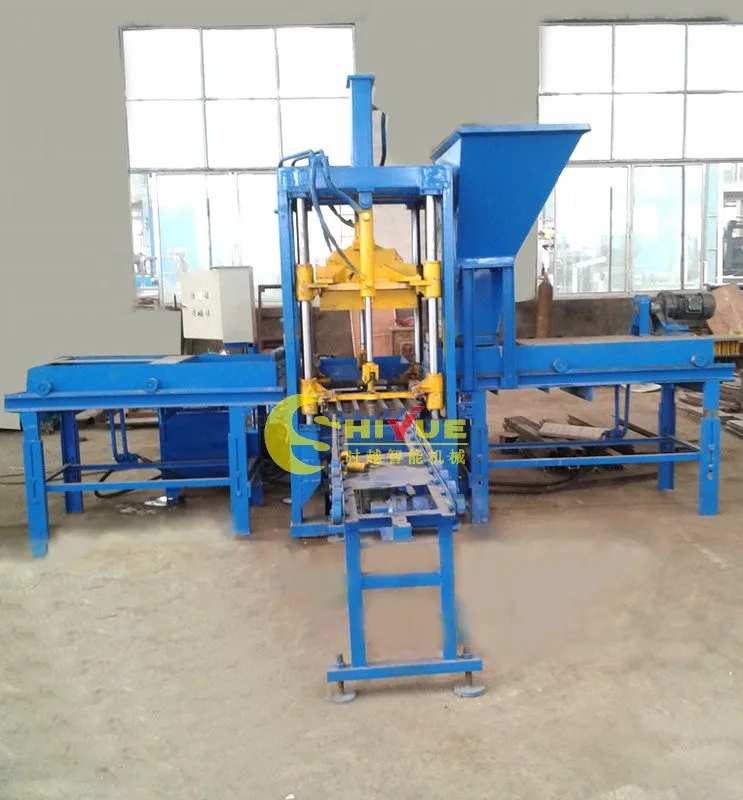
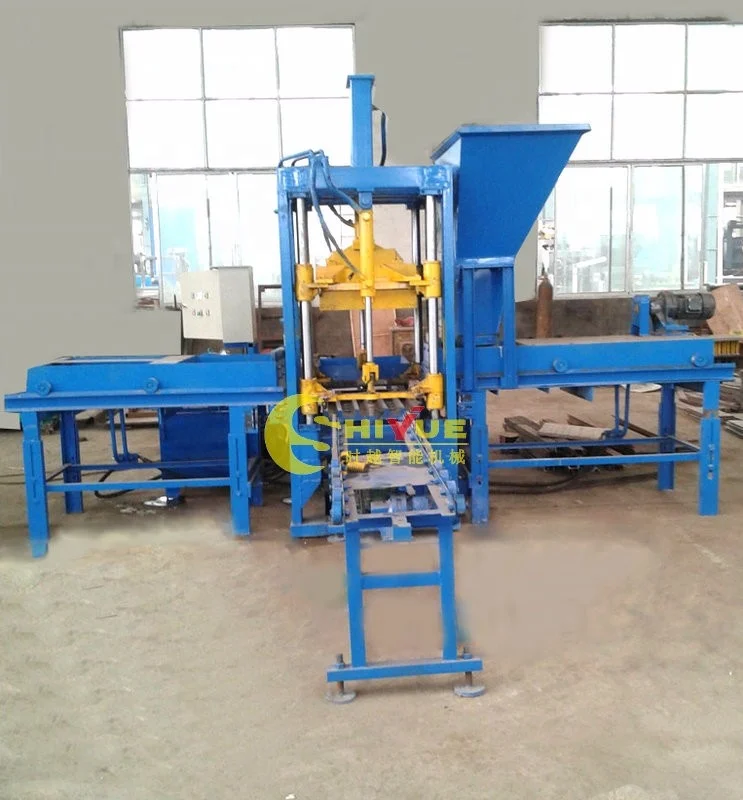
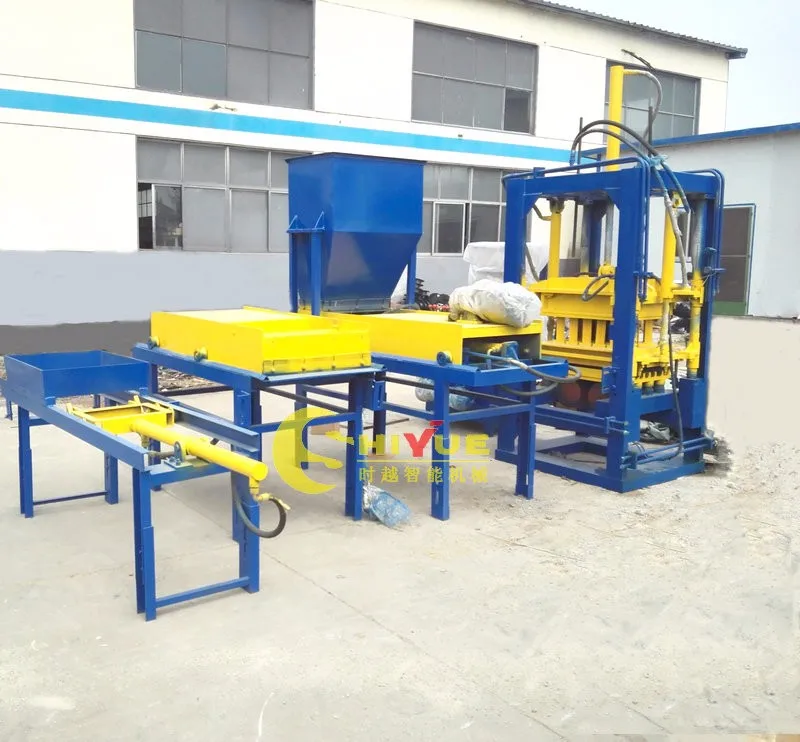
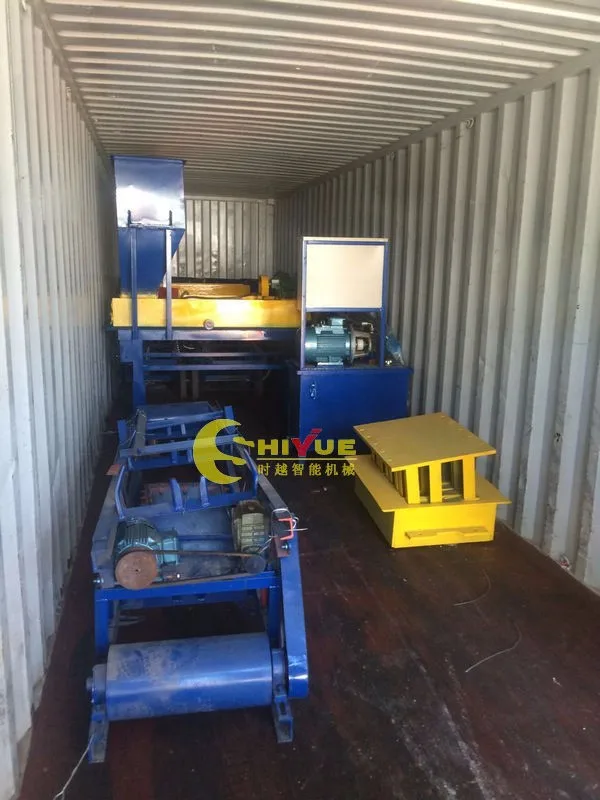
| Included Stations | Host machine, material feeding machine, color material machine, pallet feeder, block conveyor, hydraulic station, electricity box |
| Companion Equipment | Compatible with JQ350 mixer and 8-meter conveyor belt |
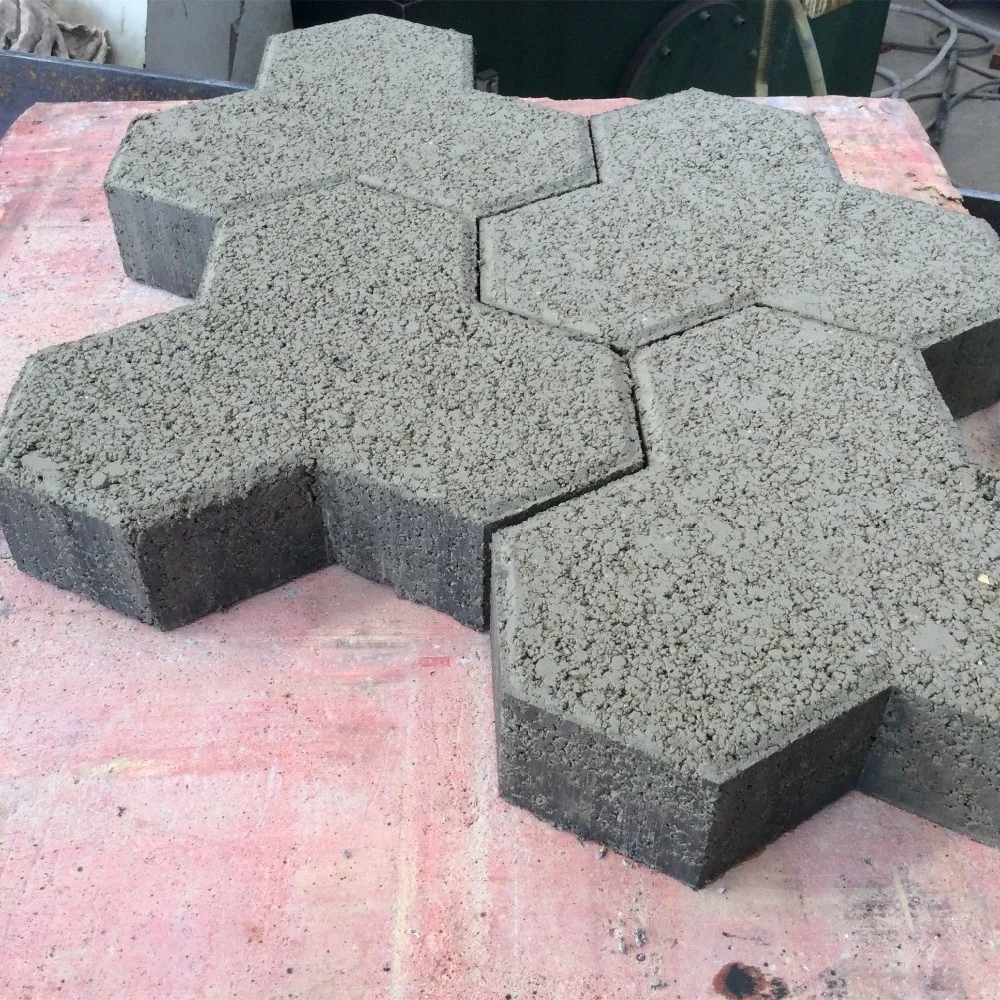
| Mould Compatibility | Environmental brick, interlock brick, color pavers, park grass brick, hollow brick, porous brick, standard brick |
| Voltage & Frequency | Configurable to buyer’s site requirements |
| PLC Display Language | Configurable to buyer’s preference |
| Pallet Size | Matched to buyer’s curing area and forklift |
Application Suitability
| Application | Material or Output |
|---|---|
| Hollow block production for residential and commercial walls | Cement, sand, fly ash, coarse aggregate, slag |
| Interlocking brick manufacturing for paving and landscaping | Cement, crushed stone, river sand |
| Color paver and face-mix brick production | Base mix plus color surface material via double-layer feeder |
| Park grass brick and slope protection brick for infrastructure | Cement, coarse aggregate, porous mix designs |
| Small to medium block plant startups and contractor on-site production | Locally sourced raw materials matched to regional availability |
What "4320 Pieces per Day" Actually Means for Your QTF3-20 Stationary Block Machine
The headline capacity number only holds true if your block format, mix design, and aggregate match the exact conditions under which it was measured.
Buyers often receive a daily output figure and assume it applies to every brick they plan to produce. In reality, a hollow block and a solid interlock brick demand different cycle times, vibration durations, and hydraulic pressure settings. When the QTF3-20 stationary block machine specifications are quoted without stating which format the 4320 pcs/day figure assumes, the number becomes a starting point rather than a guarantee. I have seen projects stall because the planning phase relied on a capacity that applied to a standard brick the buyer never intended to sell. [NEED_CITE: block format impact on cycle time and daily throughput]
Matching Mould Format to the Block Your Market Buys
The QTF3-20 supports a range of mould formats, from hollow bricks and interlock pavers to grass bricks and porous bricks. Each format changes the pressing cycle and the material feed sequence. A technical buyer sizing this machine needs the cycle time stated per format, not averaged across all of them. The double-layer feeding system allows color paver production on the same press, feeding base material and color surface material in separate stages within one cycle.
Platform Vibration and Hydraulic Pressure as a Paired System
Vibration alone does not produce consistent block density. The platform vibration form on this QTF3-20 stationary block machine works alongside hydraulic pressure to compact the mix evenly across the pallet area. If the hydraulic pressure is set too low for a dense aggregate blend, the block will lack compressive strength. If vibration force is excessive for a lightweight mix, the block surface will crack or spall. The balance between these two forces must be tuned to the buyer’s specific mix design and target block format.
Reading the Specification Sheet Beyond the Headline Numbers
The 17.5 kW total power covers the host machine, material feeder, color material feeder, and hydraulic station together. The #12 U-bar welded frame absorbs vibration stress across high-cycle production shifts, reducing fatigue on structural welds. Contactless proximity switches monitor press position without mechanical wear, which matters when the machine runs multiple format changes per week. The pallet size must align with the buyer’s existing curing racks and forklift dimensions — a mismatch here means either replacing all pallets or reconfiguring the curing yard before the first block is produced. [NEED_CITE: pallet size coordination with curing infrastructure]
The Hidden Cost of Skipping Voltage and Language Confirmation
When voltage, frequency, and PLC display language are not confirmed in writing before the QTF3-20 enters production, the machine arrives on site and cannot be commissioned. A 380V/50Hz motor wired for a 440V/60Hz grid will burn out within the first shift. A PLC screen displaying in a language the operator cannot read turns a semi-automatic machine into a manual one. These are not rare failures — they happen regularly when the buyer focuses on price and capacity without locking down electrical and control specifications. [NEED_CITE: voltage and frequency standards by export market]
Why Procurement Here Differs from a Catalogue Order
We configure the QTF3-20 against your actual mix design and local aggregate, not a default recipe from a brochure. Mould design covers the formats your market sells, with custom drawings available when standard moulds do not fit your product range. The pallet specification is selected based on your curing area layout and the forklift you already operate. Automation level is selectable, so you can start semi-automatic and add automatic stacking or cubing later without replacing the press. Installation includes operator training on mould change procedure, cycle adjustment, and daily maintenance routines.
Documentation & Verification
- Line layout showing QTF3-20 station spacing and pallet flow direction
- Capacity calculation document stating the block format behind the 4320 pcs/day figure
- Mould drawing and format list with cycle time per brick type
- Pallet specification matched to your curing rack and forklift dimensions
- Voltage, frequency, and PLC display language confirmed in writing before production
- Factory test record on your target block format before dispatch
Installation, Commissioning & Support
- Foundation pad leveled to support 2870 kg net weight and vibration load
- Dedicated electrical circuit rated for 17.5 kW total power draw at your site voltage
- Host machine, feeder, and hydraulic station assembled and aligned on site
- First-run parameter tuning for hydraulic pressure and vibration matched to your mix
- Operator training on double-layer feeding sequence and contactless switch monitoring
- Wear parts list covering mould surfaces, hydraulic seals, and proximity switches
What to Include in Your Inquiry
To size the QTF3-20 stationary block machine correctly, share your target block format and the daily output you need for that specific brick. Provide the raw materials you can source locally, including aggregate type and cement grade. Confirm your site voltage, frequency, and preferred PLC display language so the electrical and control systems are built to match before shipment.
Frequently Asked Questions
Q: What block format does the 4320 pcs/day capacity assume, and what is the realistic output for my target brick?
A: The 4320 pcs/day figure requires confirmation of which block format, material blend, and thickness it was measured under. Realistic daily output for your specific brick is calculated once your target format, mix design, and local aggregate are defined. We provide a capacity document stating the format behind every number before you commit.
Q: How long does a mould change take on the QTF3-20, and does it require specialist tools?
A: Mould change time depends on the format transition and whether the mould mounting system has been configured for quick release. Some changes can be completed within a shift by trained operators using standard tools. We specify the mould change procedure and estimated time for your chosen formats during the configuration stage.
Q: Which pallet size and material does this machine require, and can it work with pallets I already own?
A: Pallet size is determined by the mould format and the curing rack spacing in your yard. The pallet material must withstand repeated vibration cycles and moisture exposure. If you already have pallets and forklifts on site, we match the QTF3-20 pallet feeder to those dimensions rather than forcing a new standard.
Q: What voltage, frequency, and PLC language options are available for my country?
A: The electrical system is built to your site voltage and frequency, confirmed in writing before production begins. The PLC display language is selectable and specified at the order stage. This prevents commissioning delays caused by motor incompatibility or operator interface confusion upon arrival.
Q: Can the QTF3-20 be configured for my local aggregate and mix design rather than a default catalogue mix?
A: Yes. The hydraulic pressure and vibration settings are tuned to the aggregate and cement blend you can actually source. A machine configured for river sand will underperform if your local material is laterite or crushed stone. We base the configuration on your material samples and target block strength, not a generic formula.