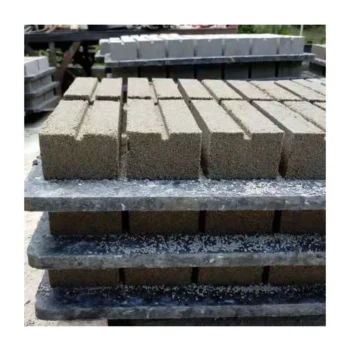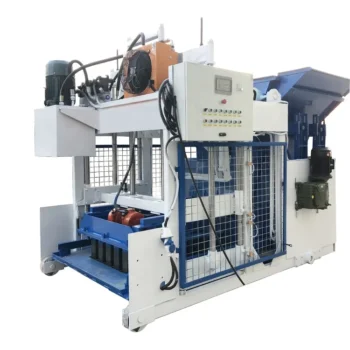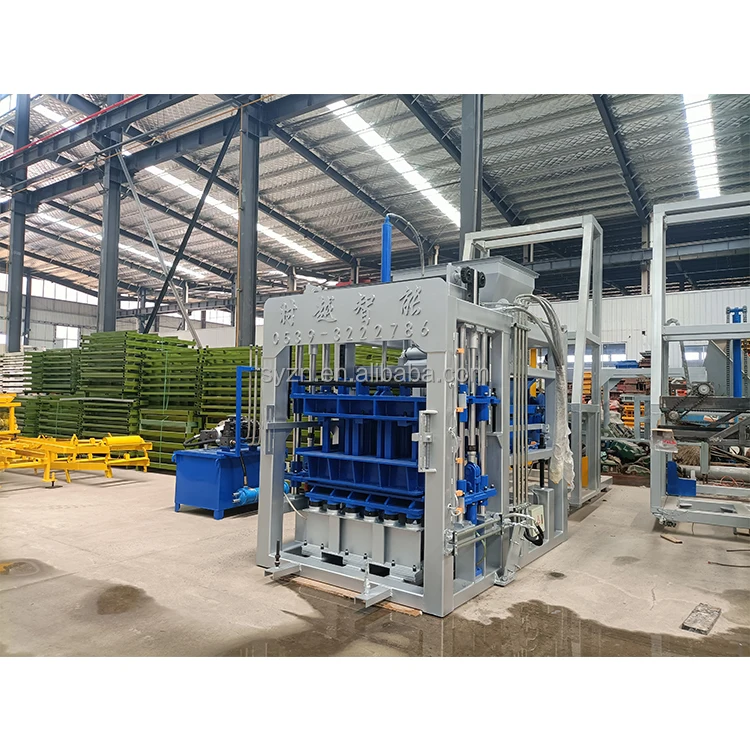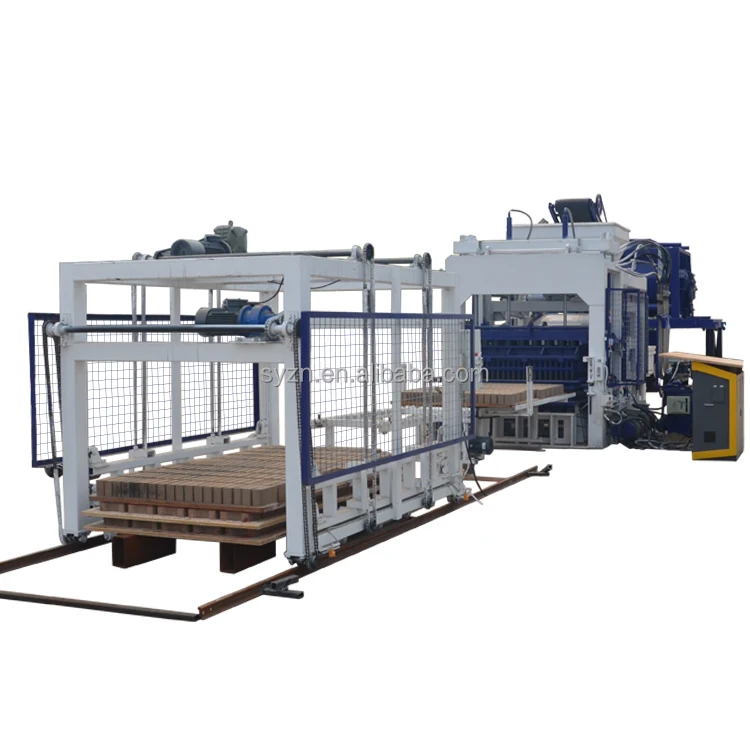
Description
Mould matched to market format — every capacity figure for the QTJ4-24 is tied to a specific block dimension and cycle time, not a catalogue headline that assumes a product you will never sell.
Technical Specifications
| Parameter | Value |
|---|---|
| Model | QTJ4-24 |
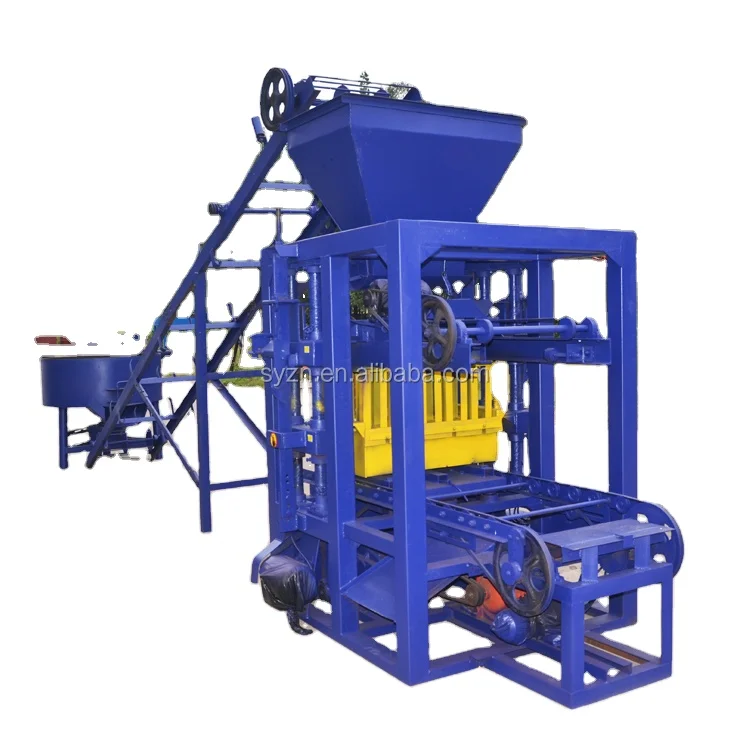
| Product Type | Semi-Automatic Hollow Block Making Machine |
| Overall Dimensions (L×W×H) | 3600mm × 1700mm × 2560mm |
| Total Mass | 3.5T |
| Main Machine Power | 11.95kW |
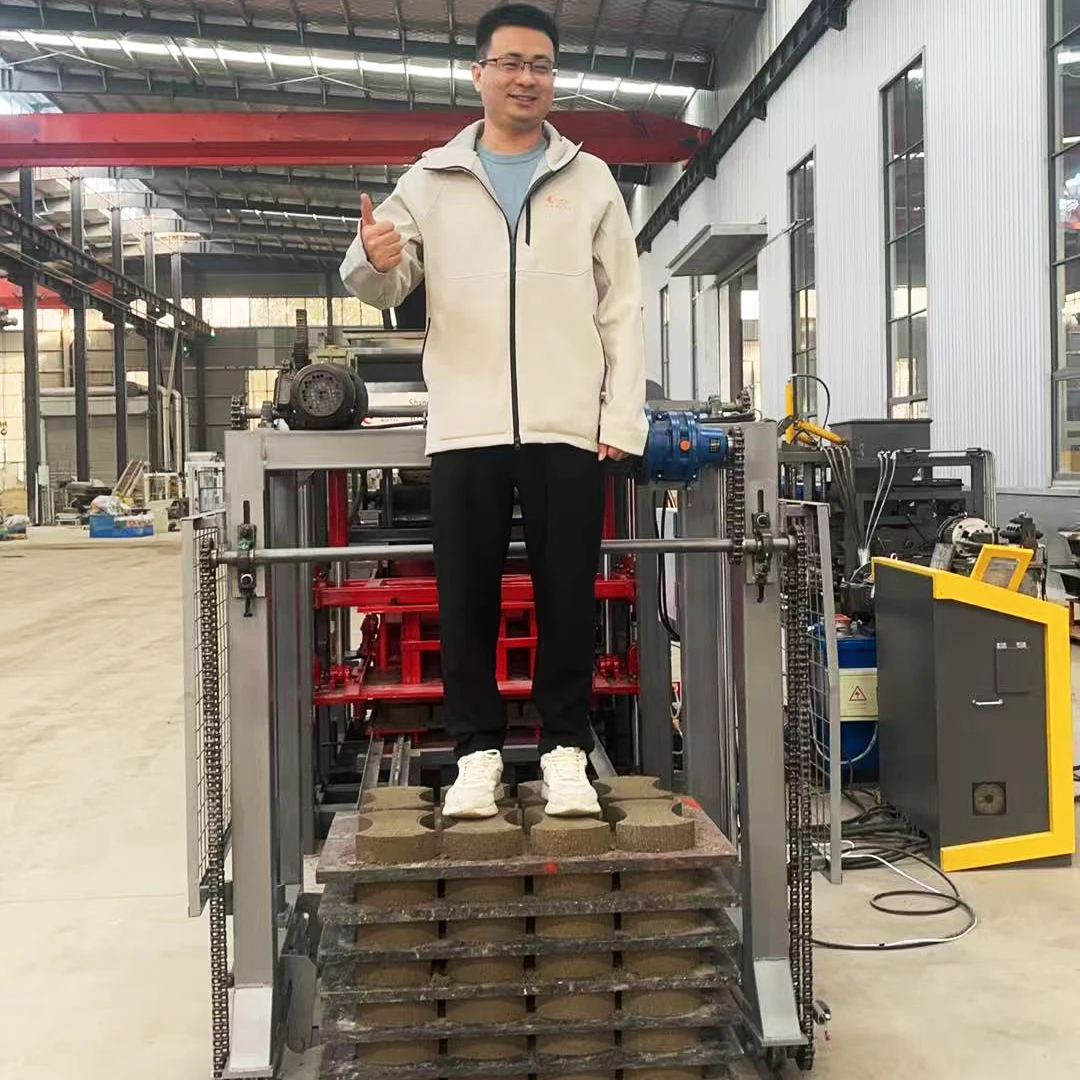
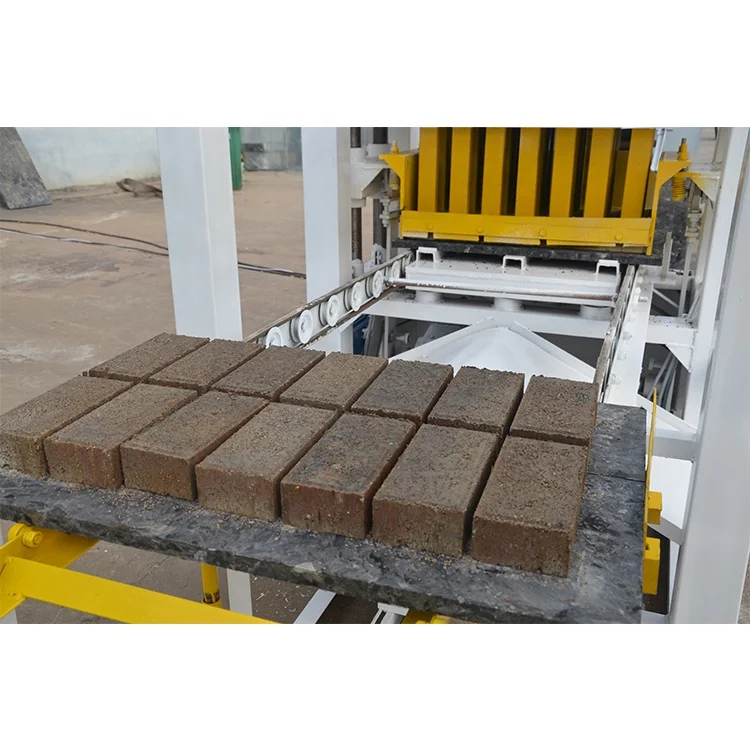
| Pallet Size | 900mm × 450mm |
| Molding Cycle | 24-26s |
| Mould Format Options | 400×200×200mm (4 pcs/mould), 390×240×190mm (3 pcs/mould), 390×120×190mm (6 pcs/mould), 240×115×53mm (21 pcs/mould) |
| Output Capacity | 4 pcs per cycle for 400×200×200mm hollow block (basis: stated mould format, 24-26s cycle) |
| Vibration Type | Table vibration with fluctuation vibration molding |
| Feeding Method | Manual feeding, two feed ways available |
| Control System | Electrical control cabinet with mechanical interworking |
| Supporting Equipment | Compatible with JQ350 or JQ500 vertical mixer, 6m or 8m belt conveyor |
| Wire Specification | Main machine 3×6mm², Mixer 3×4mm², Conveyor 3×2.5mm², General power 3×16mm² |
| Lubrication | JQ350 reducer 10kg 35-40#, JQ500 reducer 15kg 35-40# |
| Warranty | 1 year for whole machine (excluding spare parts) |
Application Suitability
| Application | Material or Output |
|---|---|
| Concrete hollow block (CHB) production | Crushed stone, sand, cement, water — local aggregate density must be confirmed before vibration force is set |
| Solid standard brick production | Same raw material base, mould changed to 240×115×53mm format yielding 21 pcs per cycle |
| Multi-cellular brick production | Lightweight aggregate mixes requiring adjusted vibration parameters |
| Paving brick production | Higher density mix designs with increased cement content |
| Small-scale on-site contractor production | Semi-automatic operation suitable for project-based block manufacturing |
| First block plant setup | Lower investment entry point with upgrade path available |
Why "Cycles Per Hour" Tells You Nothing Without the Mould Format
A machine running 24-second cycles on a 4-piece hollow block mould produces a fundamentally different daily output than the same machine running those same cycles on a 21-piece standard brick mould.
Most quotations for QTJ4-24 hollow block machine specifications quote a single output figure without naming which block format that figure assumes. The buyer then discovers on commissioning day that their actual product — the one their local market orders — yields considerably less than the headline number [NEED_CITE: block machine output claims without format assumptions]. I have walked onto sites where the owner was running 390×120×190mm hollow blocks and getting nowhere near the quoted daily throughput, simply because the quotation was based on a 400×200×200mm format the buyer never intended to sell. The cycle time stays at 24-26 seconds regardless of which mould is loaded; what changes is the piece count per mould, and that is the number that actually determines what leaves the curing area each shift.
Mould Format Determines Your Real Daily Output
The QTJ4-24 offers four confirmed mould formats, and each one must be evaluated separately against your market demand. When you are sizing this machine, the relevant question is not what it can produce in theory but what it will produce in the specific format your buyers are ordering this quarter and next.
Pallet Size Must Match Your Curing Infrastructure
The 900×450mm pallet is not a universal standard. Before you confirm an order, verify that this dimension fits your existing curing racks, that your forklift forks can handle the loaded pallet weight, and that your curing area floor space accommodates the pallet footprint at the volume this machine will generate each day [NEED_CITE: pallet sizing for block curing areas]. A pallet specified without this check creates a bottleneck downstream of the press that no amount of machine speed can resolve.
Vibration Force, Pressure, and Local Aggregate
Table vibration with fluctuation molding compacts the mix into the mould cavity, but the force required depends directly on the density and particle shape of your local aggregate. Volcanic scoria, crushed coral, recycled demolition material, and standard river sand each demand a different vibration profile to achieve consistent block strength [NEED_CITE: vibration force matching to aggregate type in block production]. If your quotation does not include a conversation about what material you will actually feed into the mixer, the machine may arrive configured for a mix you cannot source.
What the Wiring Schedule Tells You About Installation
The wire specification — 3×6mm² for the main machine, 3×4mm² for the mixer, 3×2.5mm² for the conveyor, and 3×16mm² for general power — defines the electrical infrastructure your site must have ready before the machine arrives. Confirming voltage and frequency in writing at the quotation stage prevents the common situation where a machine sits unpowered for weeks while transformers or switchgear are sourced locally.
The Cost of Skipping the Format Conversation
When a buyer orders based on a single capacity number without verifying which mould format it assumes, the consequences compound. Pallets arrive in a size that does not fit the curing racks. The vibration force is set for standard sand while the local quarry supplies lightweight pumice. Mould changes take an entire shift because the quick-change system was never specified. Each of these is a solvable problem at the quotation stage and an expensive one after the container has been unloaded [NEED_CITE: common commissioning delays in block machine installation].
What We Bring to Your QTJ4-24 Hollow Block Machine Specifications
Block machinery is our single focus, which means the press, mould, pallet, and handling equipment are specified as one matched system rather than assembled from separate suppliers who have never spoken to each other. Every configuration is set against your actual mix design and target block format, not pulled from a catalogue default. Mould design covers the formats your market actually sells, including custom drawings when your buyers need something the standard range does not include. The automation level is selectable — you can start with the semi-automatic QTJ4-24 and plan an upgrade path without replacing the entire press. Installation support includes operator training so your team understands mould change procedure, vibration adjustment, and daily maintenance before the commissioning engineer leaves site.
Documentation & Verification
- Line layout drawing showing QTJ4-24 footprint with pallet flow and curing area allocation
- Capacity calculation sheet stating output per shift for each of your specified mould formats
- Mould drawing and format list confirming piece count and block dimensions before production
- Pallet specification sheet matched to your curing rack spacing and forklift load rating
- Voltage, frequency, and control language confirmation document signed before build
- Factory test record using your target mix design where sample material is available
Installation, Commissioning & Support
- Stationary installation on precast concrete ground required — site must be level and cured before the 3.5T machine is positioned
- General power circuit at 3×16mm² with dedicated breaker, voltage and frequency confirmed in writing before dispatch
- Machine ships in dismantled state for container loading; reassembly and alignment completed on-site during commissioning
- JQ350 or JQ500 mixer reducer filled with specified 35-40# lubricant before first production run
- Operator training covers mould change procedure, vibration force adjustment, and two-feed-way operation
- Wear parts and mould replacement list provided with recommended reorder quantities for first year
What to Include in Your Inquiry
Tell us which block formats your local construction market is ordering and in what proportion, so we can calculate realistic daily output for each rather than quoting a single headline figure. Specify the aggregate material you will source locally — river sand, crushed stone, volcanic scoria, or recycled material — along with your available cement supply, so the vibration force and mix ratio can be matched before the machine enters production. Confirm your site voltage, frequency, and preferred control display language, along with the pallet size your existing curing racks and forklifts can accommodate.
Frequently Asked Questions
Q: How is output capacity calculated per block format on the QTJ4-24?
A: Each mould format produces a different piece count per cycle — four pieces for 400×200×200mm hollow blocks, twenty-one pieces for 240×115×53mm standard bricks. With a 24-26 second cycle, daily output depends entirely on which mould is running and how many effective production hours your shift allows. We provide a per-format calculation rather than a single number.
Q: Which mould format should I choose for my market?
A: Visit local building material suppliers and note which hollow block dimensions are stocked and which are on backorder. The format with consistent demand is the one to size your machine around. Additional moulds can be added later as your market expands into other formats.
Q: How long does a mould change take on this machine?
A: Mould change time depends on whether a quick-change system is included in your configuration. Without it, a full mould swap including alignment and test cycles can consume a significant portion of a shift. We discuss this during quotation so the system matches how frequently you plan to switch formats.
Q: Will my local lightweight aggregate affect block strength?
A: Yes. Lightweight aggregates such as volcanic scoria or pumice require different vibration force settings and potentially adjusted mix ratios to achieve the same compaction density as standard sand. We need to know your material source before the machine parameters are finalized.
Q: Is the 900×450mm pallet compatible with my curing area?
A: Verify your curing rack spacing, forklift fork width, and available floor area against this pallet dimension before confirming your order. A mismatch here creates a handling bottleneck that affects your entire daily output regardless of machine cycle speed.