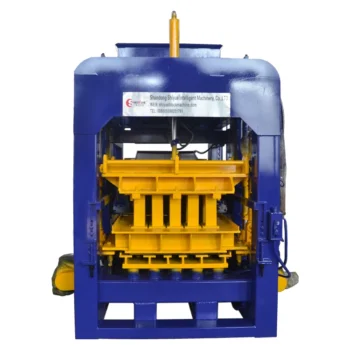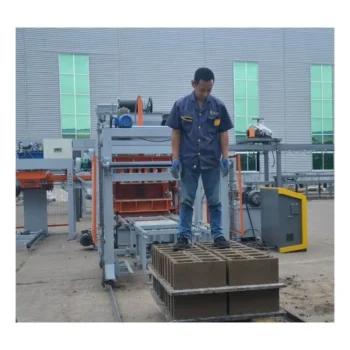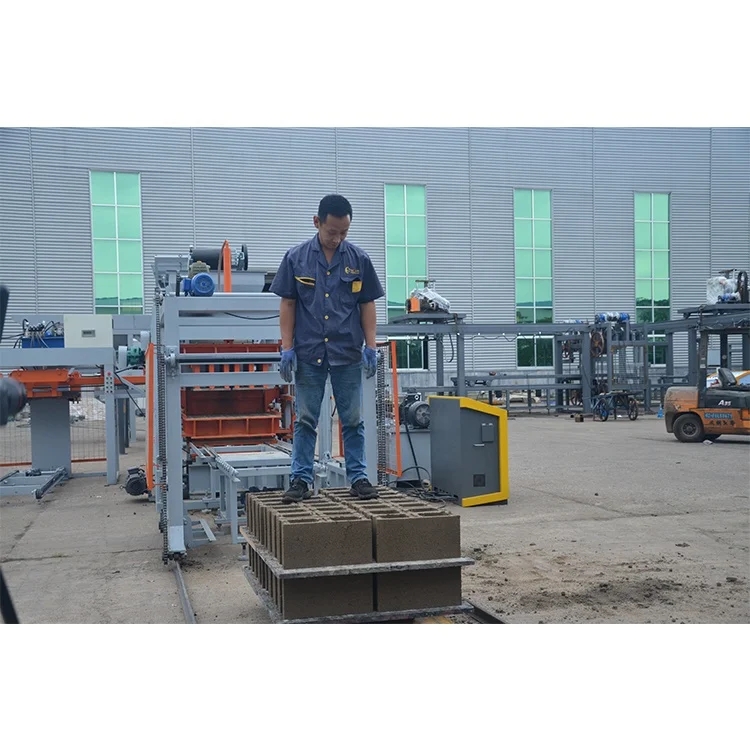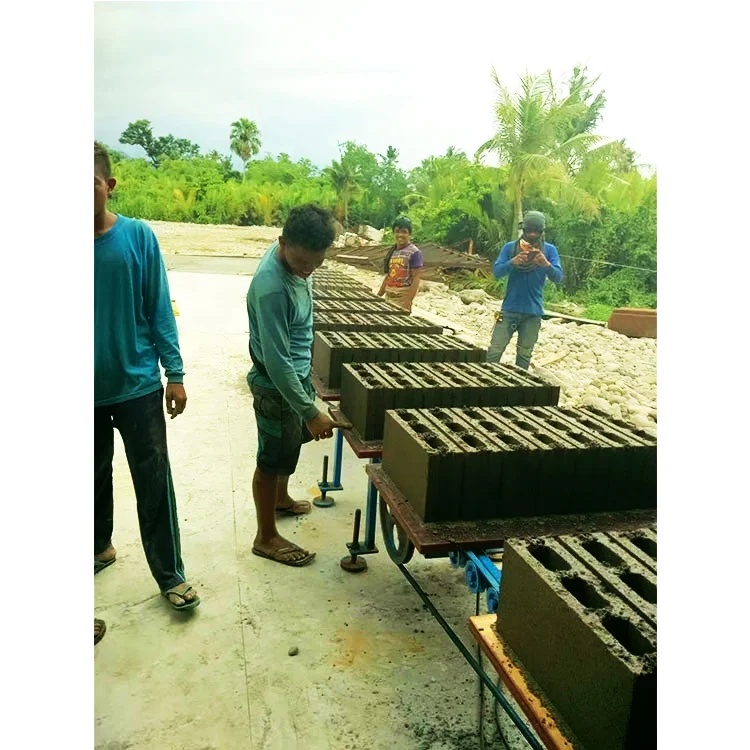
Description
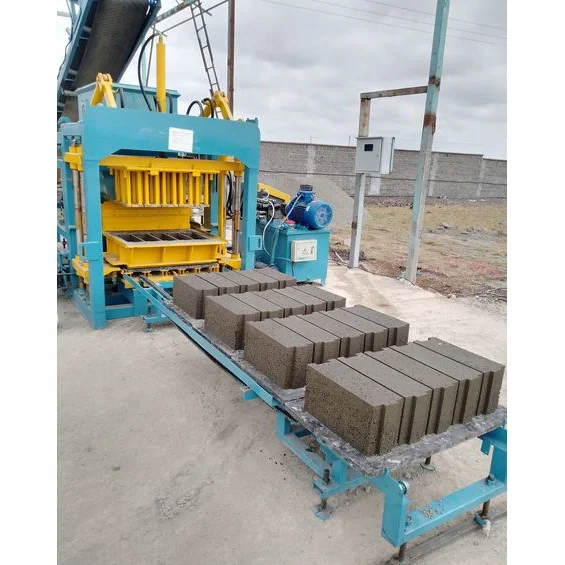
Mould Matched to Format — QTJ4-24 cycle time and piece count are quoted per block size, not as a single headline number that collapses on the shop floor.
Technical Specifications
| Parameter | Value |
|---|---|
| Model | QTJ4-24 |
| Product Type | Semi-Automatic Concrete Block Making Machine |
| Main Machine Power | 11.95 kW |
| Control System | Electrical control cabinet with mechanical interworking (PLC not specified) |
| Overall Dimensions (L×W×H) | 3600 mm × 1700 mm × 2560 mm |
| Total Mass | 3.5 T |
| Pallet Size | 900 mm × 450 mm |
| Molding Cycle | 24–26 s |
| Output per Mould (400×200×200 mm) | 4 pcs/mould (basis not stated in source — confirm shift hours) |
| Output per Mould (390×240×190 mm) | 3 pcs/mould (basis not stated in source — confirm shift hours) |
| Output per Mould (390×120×190 mm) | 6 pcs/mould (basis not stated in source — confirm shift hours) |
| Output per Mould (240×115×53 mm) | 21 pcs/mould (basis not stated in source — confirm shift hours) |
| Vibration System | Table vibration feeding + fluctuation vibration molding |
| Feeding Method | Manual feeding, two feed ways available |
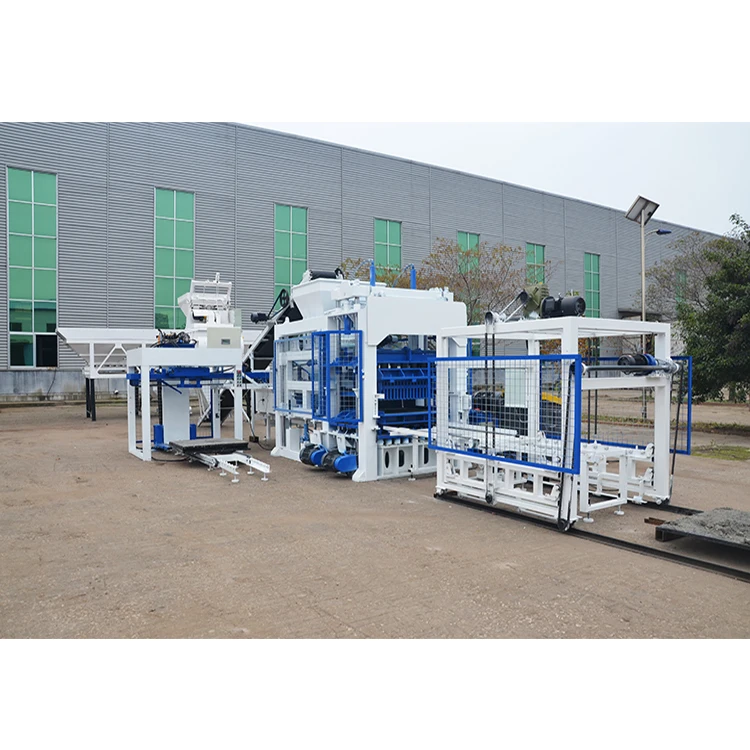
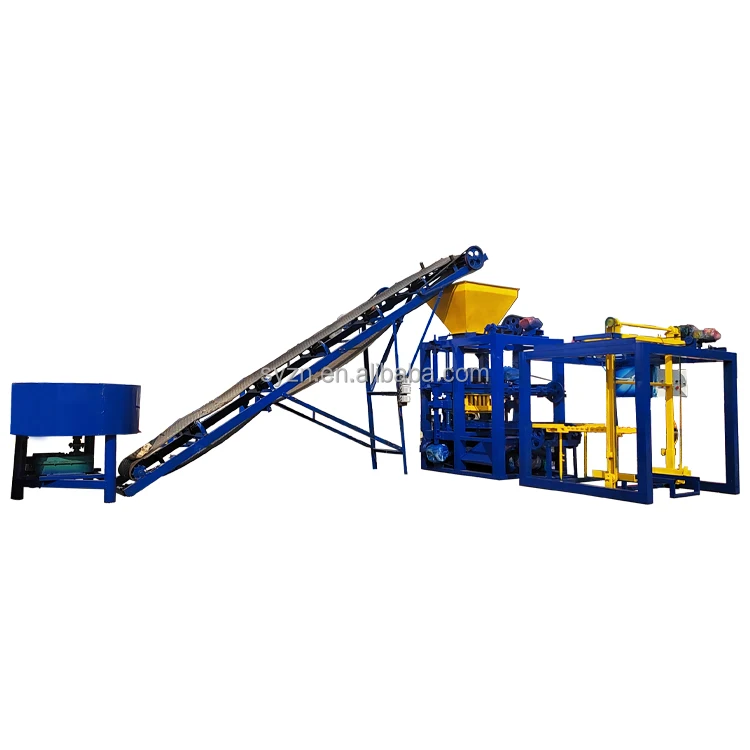
| Line Configuration | Composable with JQ350 or JQ500 Mixer and 6 m belt conveyor |
| Assembly State | Stationary, requires precast concrete ground, leveling and alignment on-site |
| Key Features | Mould change by format, mechanical interworking control, stationary installation |
Application Suitability
| Application | Material or Output |
|---|---|
| Hollow block production | Crushed stone, sand, cement, and local aggregate blends |
| Multi-cellular brick manufacturing | Lightweight aggregate or standard mix designs |
| Paving brick production | High-density concrete mixes with fine aggregate |
| Standard solid brick output | Clay替代 mix or cement-sand formulations |
| Small-scale block plant | Workshop-level output with semi-automatic operation |
| On-site construction projects | Housing or infrastructure blocks produced at the job site |
What "Blocks Per Hour" Leaves Out When No Format Is Stated
A capacity figure without a block format attached is not a capacity figure at all.
Many quotations for the QTJ4-24 block machine specifications list a single hourly output number. That number usually assumes the smallest solid brick in the catalogue. Switch the mould to a 400 mm hollow block and the same machine produces a fraction of those pieces per cycle, because the mould holds fewer cavities and the cycle extends to allow proper compaction. I have watched plant owners discover this gap on their first production week, when the daily tally falls short of what they promised their buyers [NEED_CITE: block format impact on realistic output calculation].
The fix is simple: demand the output stated per format, per shift, before the purchase order is signed.
Matching the Mould to the Block Your Market Actually Buys
The QTJ4-24 block machine specifications cover four standard mould formats out of the box: 400×200×200 mm hollow, 390×240×190 mm cellular, 390×120×190 mm partition, and 240×115×53 mm solid. Each format carries its own piece count per mould — from 4 pieces for the large hollow to 21 pieces for the standard solid brick. The molding cycle holds at 24–26 s across formats, but the daily output shifts dramatically depending on which block you run. A buyer producing primarily hollow blocks for load-bearing walls will see a lower piece count per shift than one running solid bricks for infill, even though the machine cycle remains constant.
Why Vibration Force Must Match Your Local Aggregate
Table vibration feeding combined with fluctuation vibration molding gives the QTJ4-24 a two-stage compaction approach. The first stage settles the mix into the mould cavity; the second stage applies higher-frequency vibration under pressure to drive out air voids. This sequence matters when your aggregate differs from the factory test standard. In East Africa, I have seen local crushed stone with higher fines content absorb vibration energy differently than graded river sand, leaving the block core under-compacted. Adjusting the vibration duration — not just the force — brought the density back into spec without changing the mix design [NEED_CITE: vibration tuning for local aggregate variation].
Pallet Size, Curing Area, and the Forklift You Already Own
The 900 mm × 450 mm pallet size on this machine is fixed by the mould frame and vibration table dimensions. Before ordering, walk your curing yard and measure the rack spacing, then check the fork width on the forklift that will move the loaded pallets. A mismatch here means either building new racks or buying a different forklift — costs that never appear in the machine quotation. The pallet material also matters: timber pallets absorb moisture and swell in humid climates, while bamboo-composite or PVC pallets hold dimension but cost more upfront. Specify the pallet material against your local humidity and curing method, not against the catalogue default.
When Voltage and Language Get Skipped in the Quotation
The electrical control cabinet on the QTJ4-24 uses mechanical interworking rather than a PLC with a configurable display. That means the control panel language is set at the factory and cannot be switched on site. If your operators read Swahili or Bengali, confirm the panel labeling and manual language before production starts. Voltage and frequency also need explicit confirmation: the wire specification calls for 3×16 mm² for general power and 3×6 mm² for the main machine circuit, but the actual voltage rating is not stated in standard documentation [NEED_CITE: voltage and frequency standards by export market]. A machine wired for 380 V / 50 Hz arriving at a site with 415 V / 60 Hz will not start, and rewinding the motor on site adds weeks to commissioning.
The Cost of a Mould Change That Takes a Full Shift
The QTJ4-24 offers format flexibility through interchangeable moulds, but the time to swap a mould determines whether that flexibility is real or theoretical. If the mould change requires disconnecting multiple hydraulic lines, recalibrating the vibration table, and re-aligning the feed shoes, your operators will avoid switching formats altogether. The result is a plant that produces only the block it started with, while the other moulds sit on a shelf. Ask for the documented mould change procedure and the tools required, then time it during the factory acceptance test.
Why a Matched Line Beats Assembled Components
Configuring the press against your actual mix design and local aggregate, rather than a catalogue default, keeps block strength consistent from batch to batch. The mould is designed for the specific format your market sells, including custom drawings when standard sizes do not fit. Pallet size and material are chosen to match your curing rack and forklift, not picked from a stock list. The mixer model — JQ350 for lower output or JQ500 for higher daily volume — is selected based on your target shift output and the moisture content of your local sand. Voltage, frequency, and control panel language are confirmed in writing before the machine enters production.
Documentation & Verification
- Factory test record run on your specified block format and mix design before dispatch
- Mould drawing and format list confirming every cavity count included in your order
- Pallet specification sheet matched to your curing rack dimensions and forklift capacity
- Electrical schematic showing confirmed voltage, frequency, and circuit wire sizes
- Operation and maintenance manual in your operators’ working language
Installation, Commissioning & Support
- Precast concrete foundation required; machine leveled and aligned on the 3600×1700 mm footprint before first run
- Dedicated circuit for the 11.95 kW main motor, separate from the mixer and conveyor feeds
- Stationary assembly with JQ350 or JQ500 mixer and 6 m belt conveyor connected on site
- First-run vibration tuning against your delivered aggregate sample to set compaction density
- Operator training on mould change sequence and daily lubrication of the mechanical interworking cabinet
- Wear parts list covering vibration table springs, feed shoe liners, and mould wear plates
What to Send With Your Inquiry
Provide the exact block formats your market demands, including dimensions and target daily output per format. Share a sample or lab report of your local aggregate — sand, crushed stone, or alternative material — so the vibration parameters can be set before the machine ships. Confirm your site voltage and frequency, and the language your operators need for the control panel and manual.
Frequently Asked Questions
Q: How is the QTJ4-24 output calculated per block format, and what shift assumption is used?
A: Each mould format carries its own piece count — 4 for 400×200×200 mm hollow, 21 for 240×115×53 mm solid. The 24–26 s cycle applies across formats, but daily output depends on your shift length and the specific block you run. Ask for a capacity table that states format, cycle, and shift hours together.
Q: Which mould formats are included, and how long does a mould change take on site?
A: Standard supply covers four formats, but the included set depends on your quotation. Mould change time varies with operator experience and tool availability; request the documented procedure and verify it during the factory test before shipment.
Q: How are voltage, frequency, and control panel language confirmed before shipment?
A: The electrical control cabinet uses mechanical interworking with fixed panel labeling. Voltage and frequency must be stated in writing before production, as the wire specification is cut to order and the motor is wound for your site supply.
Q: What pallet size and material should I choose for my curing setup?
A: The machine uses a fixed 900 mm × 450 mm pallet. Match the pallet material — timber, bamboo-composite, or PVC — to your local humidity and curing method. Check your existing rack spacing and forklift fork width before confirming the order.
Q: Which mixer model fits my daily output and local raw material?
A: The JQ350 suits lower-volume workshops; the JQ500 matches higher daily targets or drier mix designs. The choice depends on your shift output goal and the moisture content of your local sand, which affects mixing time and batch consistency.