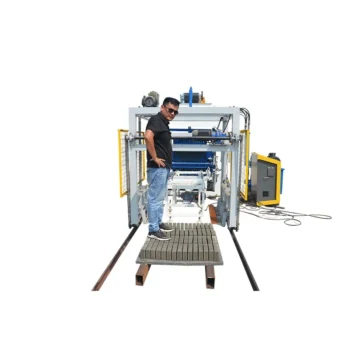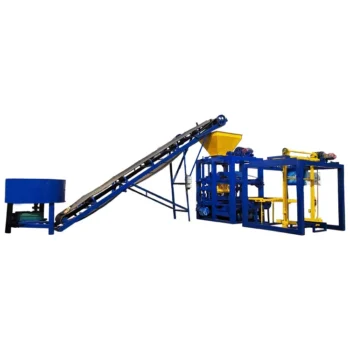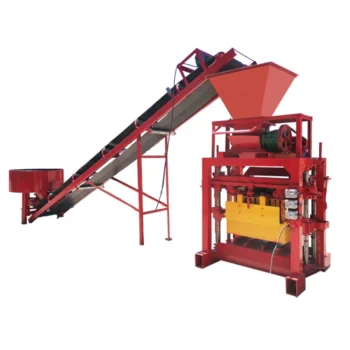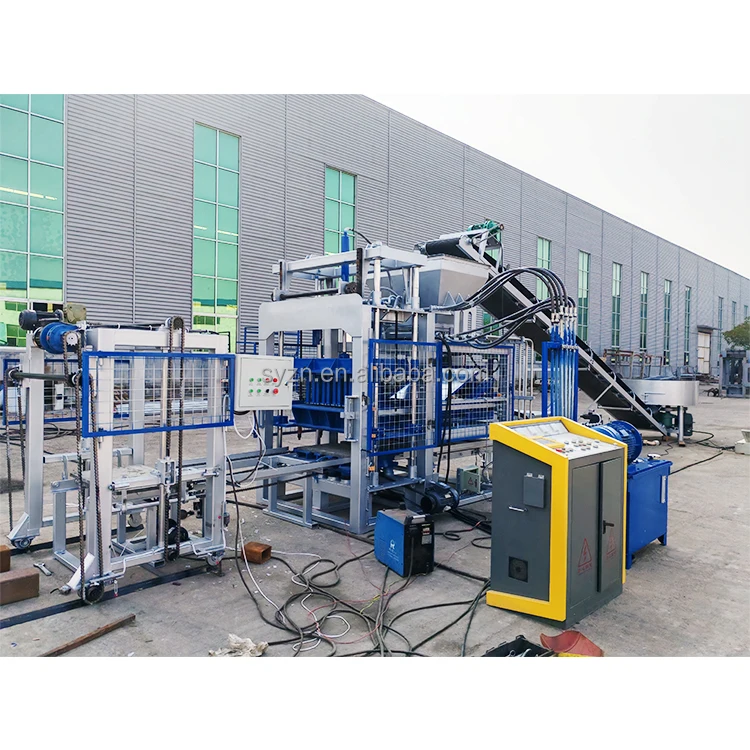
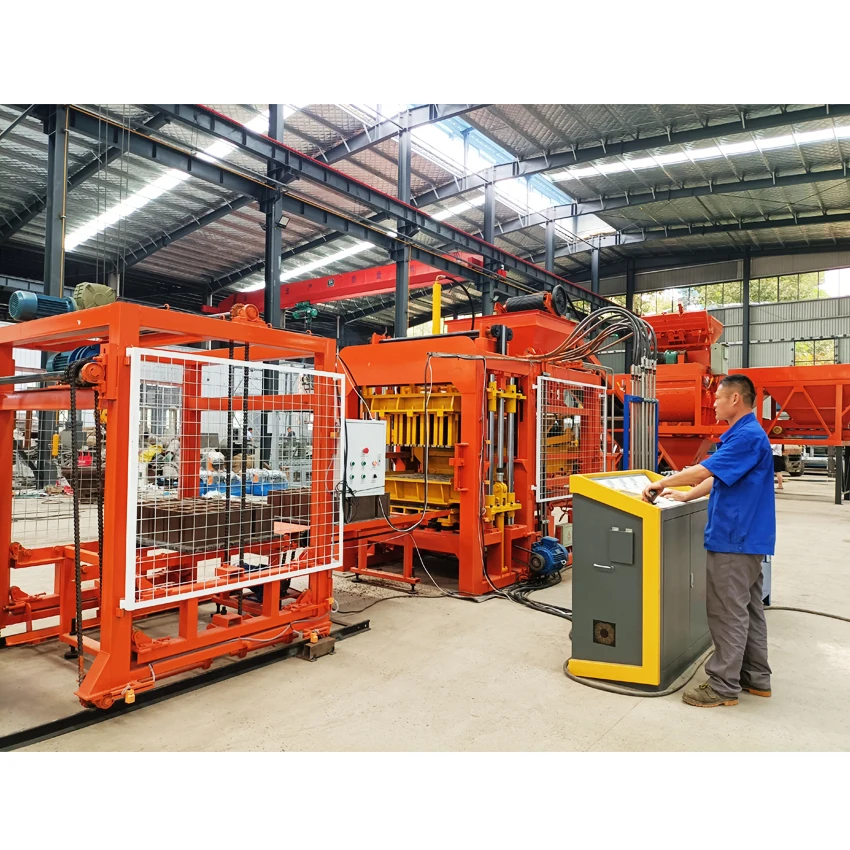


Description
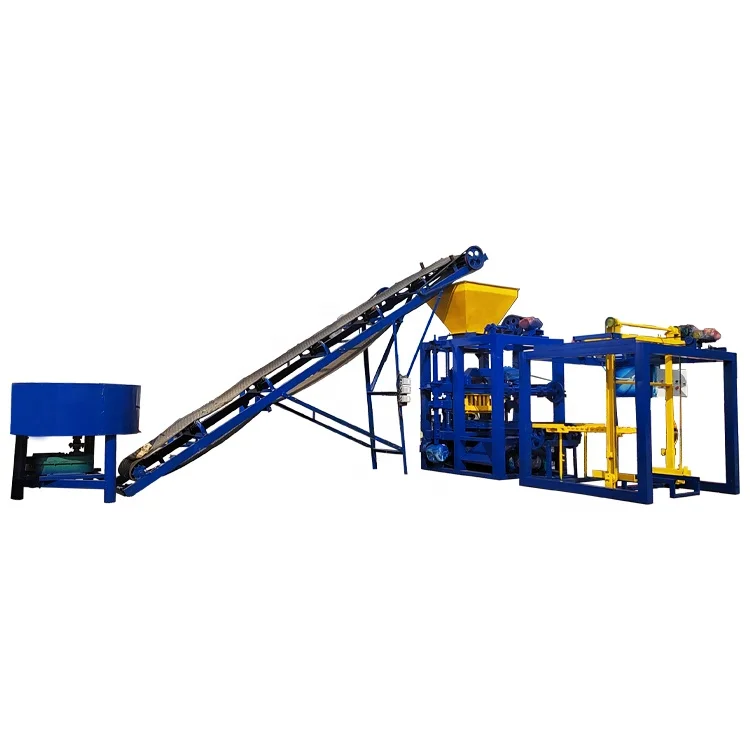
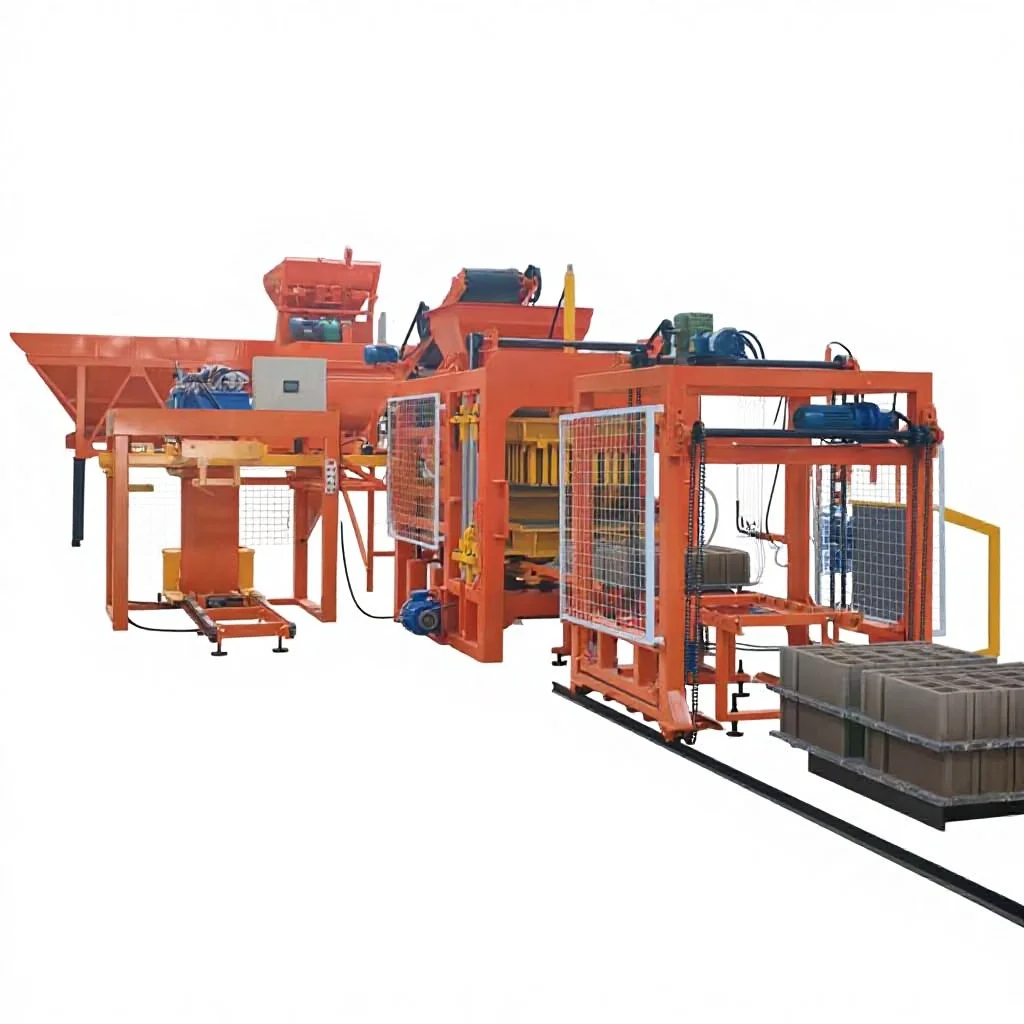
Format-Matched Output — the QT6-15 is configured against your target block dimensions, pallet size, and local aggregate so daily volume reflects what the mould actually produces, not a catalogue headline.
Technical Specifications
| Parameter | Value |
|---|---|
| Product Type | Hydraulic Concrete Block Making Machine |
| Model | QT6-15 |
| Overall Dimensions (L×W×H) | 8200×1700×2950 mm |
| Vibration Frequency | 0-60 Hz |
| Vibration Form | Platform Vibration |
| Vibration Force | 45 kN |
| Moulding Mode | Automatic loading, vibration moulding |
| Pallet Size | 880×850 mm |
| Molding Cycle | 15-20 s |
| Overall Power | 37 kW |
| Total Mass | 7 T |
| Demolding Method | Hydraulic |
| Recommended Factory Area | 1200 m² |
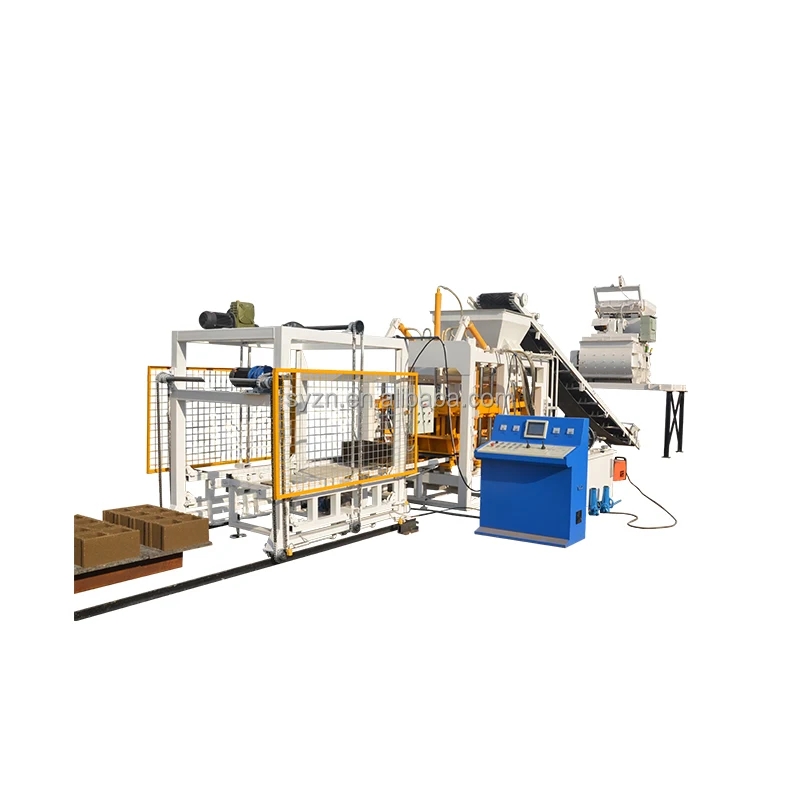
| Control System | PLC (Programmable Controller) with touch screen HMI |
| Output Capacity (Hollow Block 400×200×200 mm) | 1080-1440 pcs/hour, 8640-11520 pcs/8hr |
| Output Capacity (Hollow Block 400×150×200 mm) | 1440-1920 pcs/hour, 11520-15360 pcs/8hr |
| Output Capacity (Solid Brick 240×115×53 mm) | 5760-7680 pcs/hour, 46080-61440 pcs/8hr |
| Output Capacity (Rectangular Paver 200×100×60 mm) | 2160-2880 pcs/hour based on 20-25s cycle, 17280-23040 pcs/8hr |
| Output Capacity (Zigzag Paver 225×112.5×60 mm) | 2160-2880 pcs/hour based on 20-25s cycle, 17280-23040 pcs/8hr |
| Block Compressive Strength | >15 MPa |
| Raw Material Adaptability | Waste ash, slag, cement, various aggregates |
| Hydraulic System | Independent integrated hydraulic station |
| Fault Diagnosis | Built-in PLC fault diagnosis system |
| Automation Level | Automatic (PLC controlled) |
| Warranty | 1 year (excluding spare parts) |
Application Suitability
| Application | Material or Output |
|---|---|
| Hollow block production for building construction | Crushed stone, cement, and waste ash blends |
| Solid brick production for masonry | Cement and fine aggregate mixes |
| Rectangular and zigzag paving block production | High-density aggregate and cement for roads, walkways, and landscaping |
| Multi-cellular brick production | Lightweight aggregate and slag-based mixes |
What "Cycles per Hour" Leaves Out About QT6-15 Block Machine Specifications
A cycle time means nothing without the block format attached to it.
I have watched buyers receive equipment rated at impressive hourly numbers, only to discover those figures assumed a small solid brick rather than the hollow block the buyer actually sells. The QT6-15 block machine specifications on this page tie every capacity figure to a named block size and its corresponding cycle window. A 400×200×200 mm hollow block cycles in 15-20 seconds; a paver needs 20-25 seconds. Those extra seconds add up across a shift. [NEED_CITE: block format assumptions in manufacturer capacity quotes] When the quotation says only "cycles per hour" without naming the format, your real daily output can fall well short of what you planned for.
Per-Format Capacity You Can Build a Production Plan Around
The QT6-15 block machine specifications list output for five distinct formats, each with its own mould cavity count and cycle time. Hollow blocks at 400×200×200 mm yield 8640-11520 pieces per eight-hour shift, while the smaller 400×150×200 mm variant pushes that to 11520-15360 pieces. Paver formats run on a slightly longer cycle. Every number here is anchored to a specific block dimension so you can compare against your order book directly.
Matching the Pallet to Your Curing Area and Forklift
The 880×850 mm pallet is the interface between the press and everything downstream. If your curing racks were built for a different pallet dimension, blocks will not slot in. If your forklift tines are spaced for a narrower pallet, handling becomes a daily problem. Confirming pallet compatibility before the machine ships avoids re-racking an entire curing yard after arrival.
Reading the Specs That Actually Shape Block Quality
Vibration force and hydraulic pressure work together to compact the mix. The QT6-15 delivers 45 kN of vibration force across a 0-60 Hz frequency range through platform vibration, which drives aggregate particles into tight contact before the hydraulic system completes the compression. This combination determines whether your blocks reach the stated >15 MPa compressive strength. The independent integrated hydraulic station sits apart from the main frame, isolated from vibration and dust that degrade valve seals over time. Moulding cycle varies between 15-20 seconds for hollow blocks and 20-25 seconds for pavers, reflecting the different compaction requirements of each format. The PLC with touch screen HMI includes a built-in fault diagnosis system, which cuts the time your operator spends tracing a sensor fault or valve timing error. [NEED_CITE: relationship between vibration force and block compressive strength in hydraulic press systems]
The Cost of Skipping Format-Level Configuration
When a machine arrives configured for a mix design you cannot source locally, the choices are expensive: ship in the specified aggregate at ongoing freight cost, or rework the machine parameters on site. Vibration frequency and hydraulic pressure that suited clean river sand will not produce the same density with high-clay local aggregate. The result is blocks that crack during curing or fail compression tests. I have seen production lines sit idle for days while technicians adjust parameters one batch at a time, burning raw material and missing delivery deadlines. [NEED_CITE: impact of local aggregate properties on block machine configuration]
Why Technical Buyers Source the QT6-15 Here
Configuration starts with your actual mix design and target block format, not a default catalogue setting. The machine, mould, pallet, and handling equipment are specified as a matched system from a single supplier focused entirely on block machinery. Mould design covers the formats your market demands, including custom drawings when standard options do not fit. Automation level is selectable, so a buyer can begin with semi-automatic pallet handling and add stacking later. Installation support includes on-site commissioning and operator training, so the first production run happens with someone who knows the PLC fault diagnosis system standing beside your team.
Documentation & Verification
- Line layout and capacity calculation stating the block format assumed for the QT6-15
- Mould drawing and format list confirming all block types producible on the 880×850 mm pallet
- Machine specification sheet with voltage, frequency, and PLC display language confirmed pre-production
- Factory test record demonstrating actual cycle time and block quality with your mix design
- Hydraulic and electrical schematic for on-site maintenance reference
- Operation and maintenance manual covering wear parts and mould replacement intervals
Installation, Commissioning & Support
- 1200 m² factory area required; confirm floor load rating for the 7 T machine mass before delivery
- 37 kW total power draw demands a dedicated circuit matching confirmed voltage and frequency
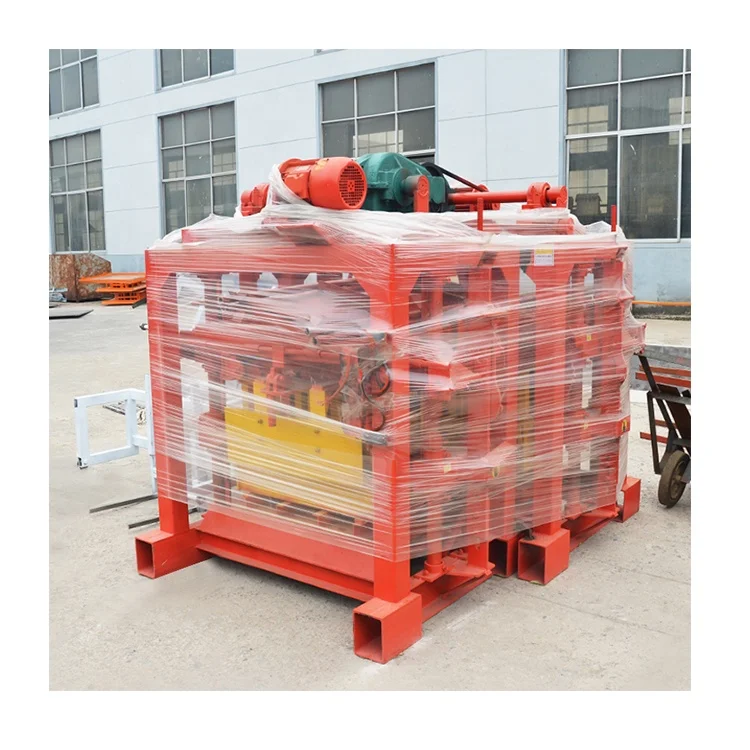
- Machine ships dismantled; reassembly and platform vibration alignment handled during on-site commissioning
- PLC touch screen HMI language set before production to match your operator team
- First-run parameter tuning against your local aggregate and mix design included in commissioning
- Wear parts list and mould inventory provided for planning initial spare stock
What We Need to Size Your Configuration
Send your target block format with dimensions, the daily volume you need per format, and a raw material report for your local aggregate including clay content and moisture range. We also need your site voltage, frequency, and preferred PLC display language. If you have existing curing racks or forklifts, share those pallet dimensions so the 880×850 mm pallet specification is verified against your handling setup before the QT6-15 block machine specifications are finalized.
Frequently Asked Questions
Q: How is capacity calculated for each block format on the QT6-15?
A: Capacity is derived from the number of cavities in the mould multiplied by the number of cycles completed per hour, which itself depends on the molding cycle for that format. A hollow block at 400×200×200 mm cycles in 15-20 seconds; a paver at 200×100×60 mm needs 20-25 seconds. Each figure on the capacity table reflects this calculation for the named format.
Q: What mould formats are available and how long does a mould change take?
A: Standard moulds cover hollow blocks, solid bricks, rectangular pavers, and zigzag pavers on the 880×850 mm pallet. Custom moulds can be designed to buyer drawings. Mould change time depends on the format switch and operator familiarity; your specification sheet will state the expected changeover procedure for your ordered mould set.
Q: How do you match vibration force and hydraulic pressure to my local aggregate?
A: We request your raw material report and mix design before configuration. The 45 kN vibration force and 0-60 Hz frequency range are then set against your aggregate type and clay content. The independent hydraulic station pressure is adjusted so compaction produces blocks exceeding 15 MPa without over-stressing the mould.
Q: What pallet size does the QT6-15 use and is it compatible with my curing area?
A: The QT6-15 uses an 880×850 mm pallet. Before order confirmation, we verify this dimension against your curing rack spacing and forklift tine width. If your existing handling equipment was built around a different pallet size, adjustments must be planned before the machine arrives to avoid manual restacking.
Q: What documentation verifies block strength and machine performance before shipment?
A: A factory test record is produced using your specified mix design and target block format. This record documents actual cycle time, block dimensions, and compressive strength results. The test is completed before dispatch so you can review performance data before the machine leaves the factory.