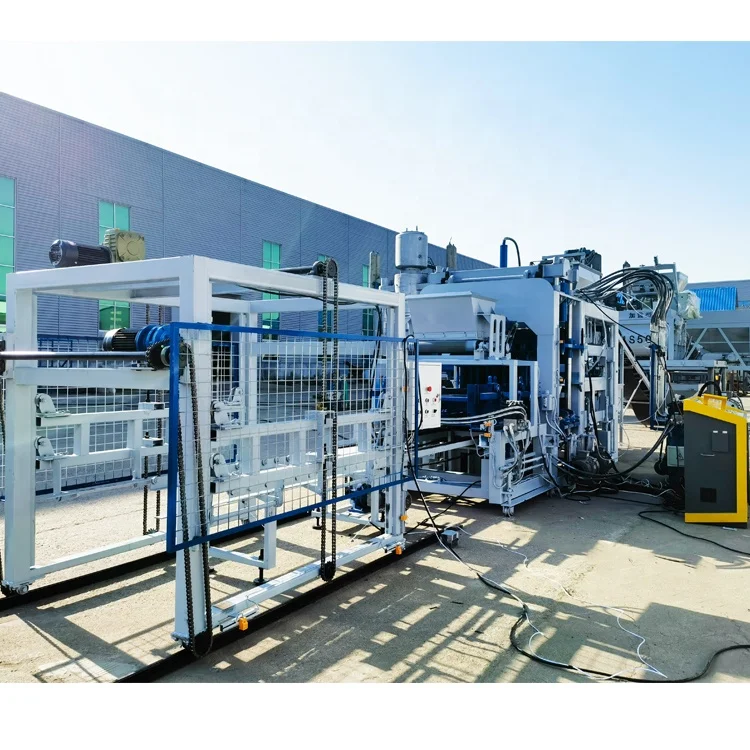


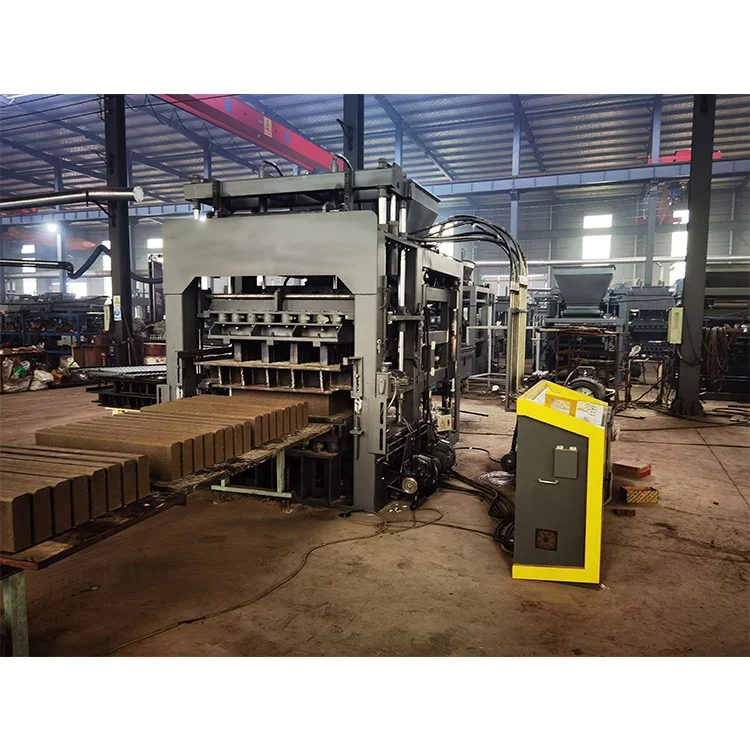
Description
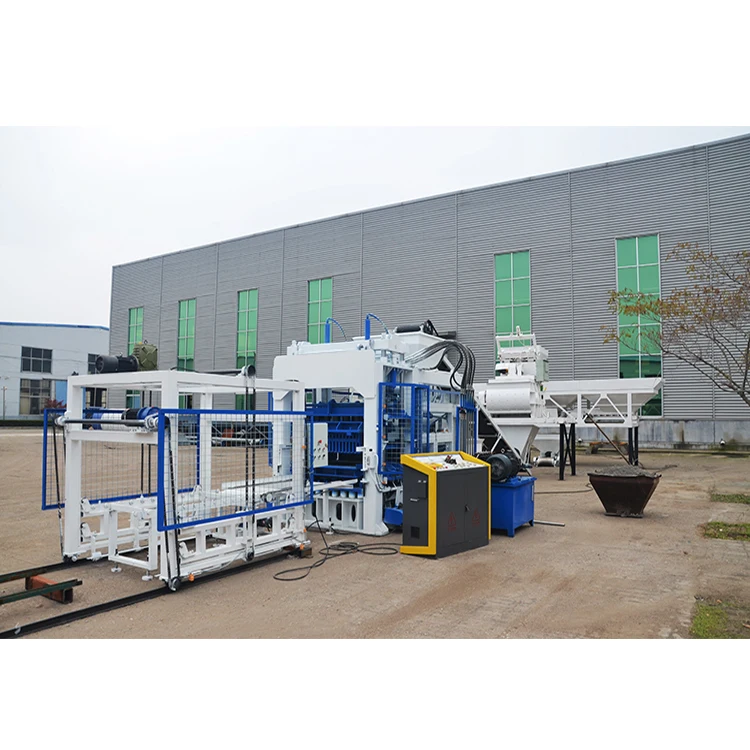
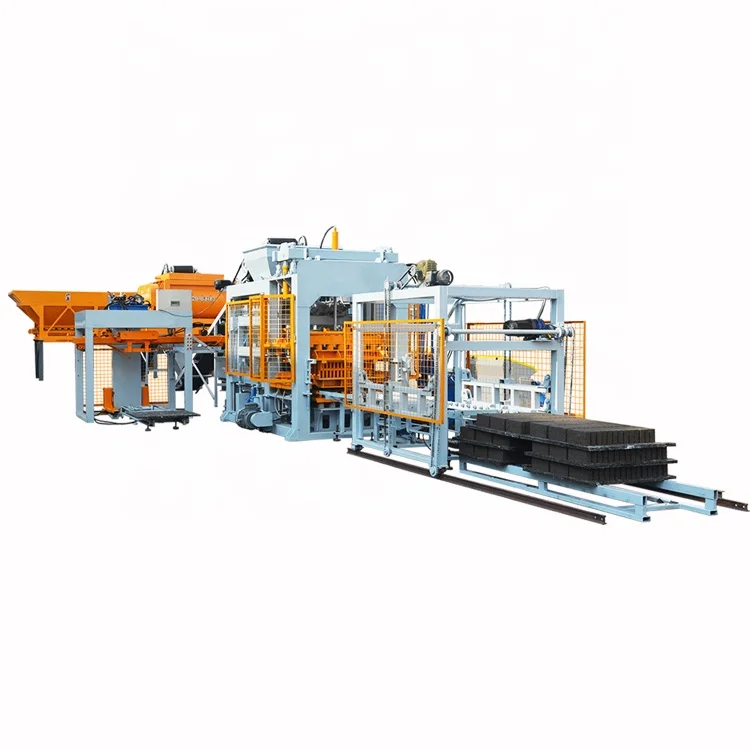
Matched System Sizing — the QT8-15 block machine, pallet dimensions, mould formats and stacker are specified together against your target block type rather than sourced from separate catalogues.
Technical Specifications
| Parameter | Value |
|---|---|
| Model | QT8-15 |
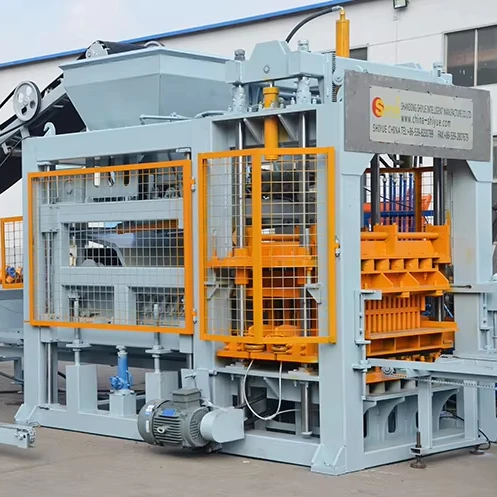
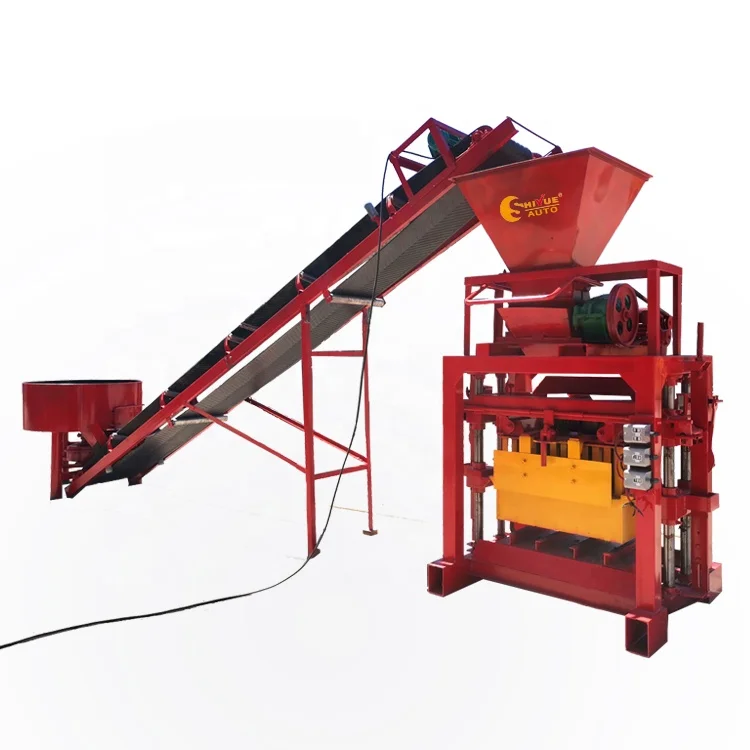
| Product Type | Hydraulic Full Automatic Concrete Block Making Machine with Stacker |
| Overall Dimensions (L×W×H) | 8300 × 1860 × 3000 mm |
| Rated Hydraulic Pressure | 21 MPa |
| Main Vibration Form | Platform Vibration |
| Vibration Frequency | 2800–4500 r/min |
| Vibration Force | 45 kN |
| Pallet Size | 950 × 900 mm |
| Molding Cycle | 15–20 s (basis not stated in source — confirm block format, material and thickness) |
| Overall Power | 55.5 kW |
| Total Mass | 8 T |
| Demolding Method | Hydraulic |
| Recommended Factory Area | 300 m² |
| Automation Level | Full Automatic |
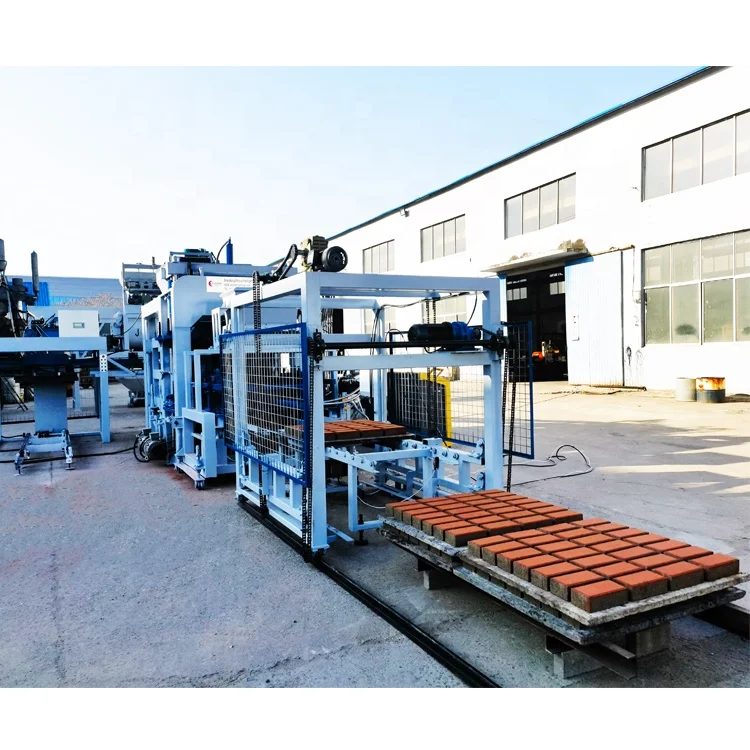
| Stacking Method | Stacker included |
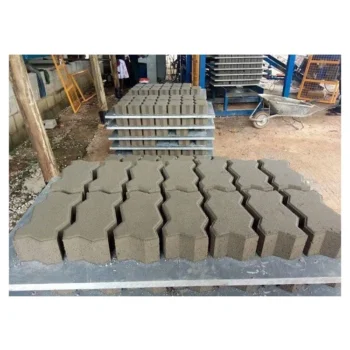
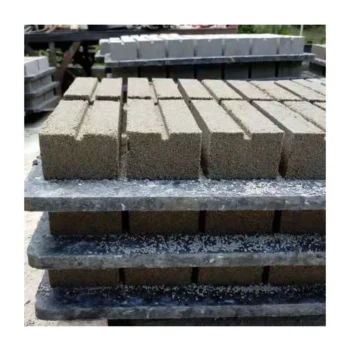
| Applied Products | Concrete blocks, hollow/solid blocks, pavers, interlocking blocks, curbstone, colored pavers |
| Raw Materials | Crushed stone, sand, cement, fly ash, gravel, slag, dust |
Application Suitability
| Application | Material or Output |
|---|---|
| Hollow block production for structural walls | Crushed stone, sand, cement, fly ash blends |
| Solid block manufacturing for load-bearing masonry | Gravel, sand, cement with high hydraulic compaction |
| Interlocking paver production for driveways and walkways | Fine aggregates, cement, pigment for colored pavers |
| Curbstone forming for road and pavement edges | Coarse aggregate, cement, slag mixes |
| Porous and permeable block runs for drainage systems | Open-graded aggregate, cement, minimal fines |
What "15–20 Second Cycle" Actually Means for Your Output
Cycle time is only meaningful when tied to the exact block format and mix design you will run.
I once spent two weeks in Nigeria re-tuning vibration and pressure curves because the local volcanic ash aggregate behaved nothing like the standard river sand used during factory testing. The QT8-15 block machine specifications list a 15–20 s molding cycle, but that window shifts depending on whether you are pressing thin pavers or tall hollow blocks, and how your local aggregate locks together under vibration [NEED_CITE: effect of aggregate grading on block compaction cycle]. Without a format-specific capacity sheet, a buyer cannot translate cycle time into a realistic daily pallet count, and the gap between quoted and actual output becomes the first dispute on the production floor.
Pallet Size and Curing Area Alignment
The 950 × 900 mm pallet is the interface between the press and everything downstream. If your curing racks, forklift tine spacing, or yard layout were planned around a different pallet footprint, every pallet transfer becomes a manual correction. Confirming pallet compatibility before the QT8-15 block machine specifications are locked prevents costly yard rework after the line arrives.
Vibration Force Meets Hydraulic Pressure
The 45 kN vibration force combined with 21 MPa hydraulic pressure determines how densely the mix compacts inside the mould cavity. A porous paver needs a different pressure-vibration balance than a load-bearing hollow block. Matching these two parameters to your aggregate profile and cement ratio is what keeps block strength consistent from the first pallet to the last [NEED_CITE: relationship between vibration force and compressive strength in concrete block production].
Reading the Specs That Matter on the Shop Floor
Platform vibration at 2800–4500 r/min drives the aggregate particles into a tight matrix before the hydraulic head applies 21 MPa of top pressure. The frequency range lets the operator dial in a setting that suits fine sand for colored pavers at the upper end and coarser gravel for hollow blocks at the lower end. The 55.5 kW overall power rating covers the hydraulic pump, vibration motors, mixer feed, and stacker drives running simultaneously, so the electrical supply must sustain that peak draw without voltage drop. At 8 T total mass, the QT8-15 block machine specifications require a concrete foundation rated for dynamic loading — a thin slab will crack under repeated vibration cycles and shift the press out of level, degrading block dimensional accuracy.
The Cost of Skipping Format-Level Sizing
When a line is ordered on headline cycle time alone, the first symptom is usually a pallet jam at the stacker because the curing cycle for that particular block format is longer than the press output rate. Blocks arrive at the rack still too green to stack, and operators start pulling pallets by hand, defeating the purpose of the automatic stacker [NEED_CITE: common causes of green block damage during automatic stacking]. Mould changeovers also suffer — if the quick-change system was not specified for the formats you actually rotate, a swap that should take minutes consumes a full shift, and your format flexibility exists only on paper.
Why Source This Machine Here
Block machinery is the single focus of the workshop, so the QT8-15 press, mould, pallet, and stacker are specified as one matched set instead of assembled from unrelated suppliers. Every configuration starts from the buyer’s target block format, local aggregate sample, and mix design — not a default catalogue row. Mould design covers the formats your market sells, with custom drawings available when standard options do not fit. Automation is selectable, meaning a plant can begin semi-automatic and add stacker or cubing modules later. Installation support includes on-site commissioning and operator training tied to your specific product range.
Documentation & Verification
- Line layout and capacity calculation stating the exact block format assumed for each output figure
- Mould drawing and format list provided before order confirmation, including custom designs to buyer drawings
- Voltage, frequency, and PLC display language confirmed in writing before production begins
- Factory test record showing cycle time and block strength against the buyer’s specified mix design
- Hydraulic and electrical schematic matching the as-built configuration
- Operation and maintenance manual with wear parts and mould replacement list
Installation, Commissioning & Support
- Foundation must handle 8 T dynamic mass with anchor bolt pattern matching the 8300 × 1860 mm footprint
- Electrical supply rated for 55.5 kW peak draw with dedicated circuit and voltage confirmed before wiring
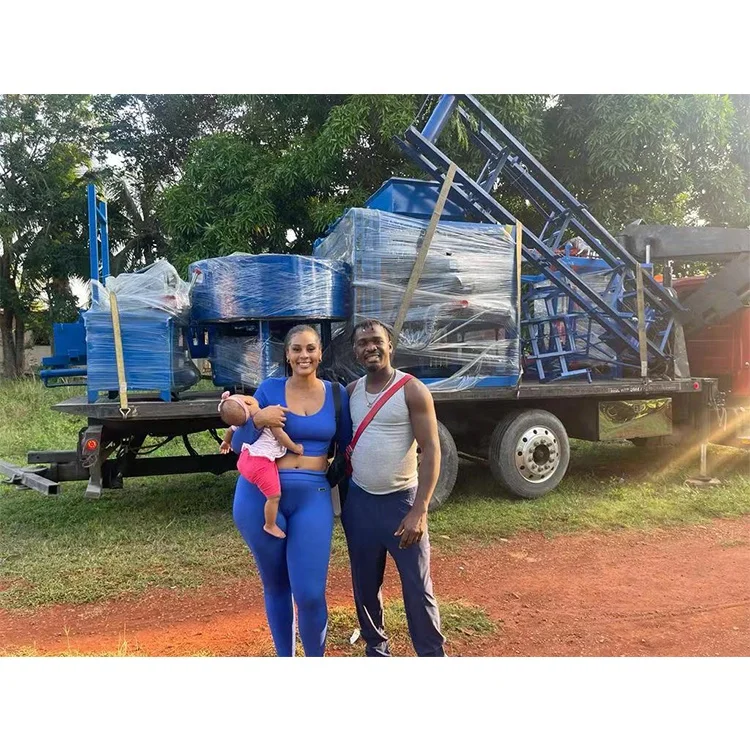
- Machine shipped in dismantled modules; reassembly and levelling performed on-site by commissioning team
- First production run validates molding cycle and block strength against your local aggregate sample
- Operator training covers PLC controls, mould change procedure, and stacker synchronization
- Wear parts list and hydraulic seal kit provided with recommended replacement intervals
What to Include in Your Inquiry
Send the specific block formats your market demands — hollow, solid, paver, interlocking, or curbstone — along with target daily output per format. Share a local aggregate sample or lab analysis so vibration and pressure settings can be matched before the machine is built. Confirm your site voltage, frequency, and preferred PLC display language, and note any existing forklift or curing rack dimensions the 950 × 900 mm pallet must align with.
Frequently Asked Questions
Q: What is the realistic daily output of the QT8-15 for my specific block format?
A: Output depends on block dimensions, mix design, and curing time. The molding cycle is listed at 15–20 s, but actual throughput must be calculated per format. A capacity sheet is prepared during the proposal stage, stating the exact block type, pallet count per hour, and assumed shift length so daily expectations match production reality.
Q: How is the 950 × 900 mm pallet validated against my curing area and forklift fleet?
A: Before order confirmation, the pallet footprint is checked against your curing rack spacing, yard layout, and forklift tine width. If a mismatch is found, pallet dimensions or rack configuration are adjusted so every transfer from press to stacker to rack is handled mechanically without manual intervention.
Q: Which mould formats are available, and what is the mould change time on the QT8-15?
A: Standard moulds cover hollow blocks, solid blocks, pavers, interlocking bricks, and curbstones. Custom moulds can be designed to buyer drawings. Change time depends on the quick-clamp system specified; a format-specific estimate is included in the proposal so buyers know actual downtime between product switches.
Q: How are vibration force and hydraulic pressure matched to my local aggregate?
A: The 45 kN vibration force and 21 MPa hydraulic pressure are tuned against a sample of your local aggregate and mix ratio. Factory testing replicates your material profile, and pressure-vibration curves are adjusted until target block strength and surface finish are achieved consistently across a full production run.