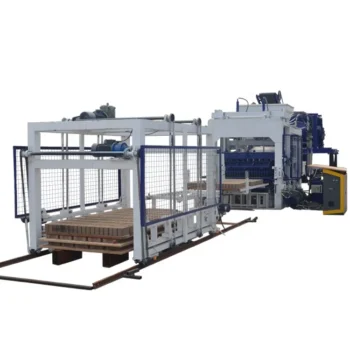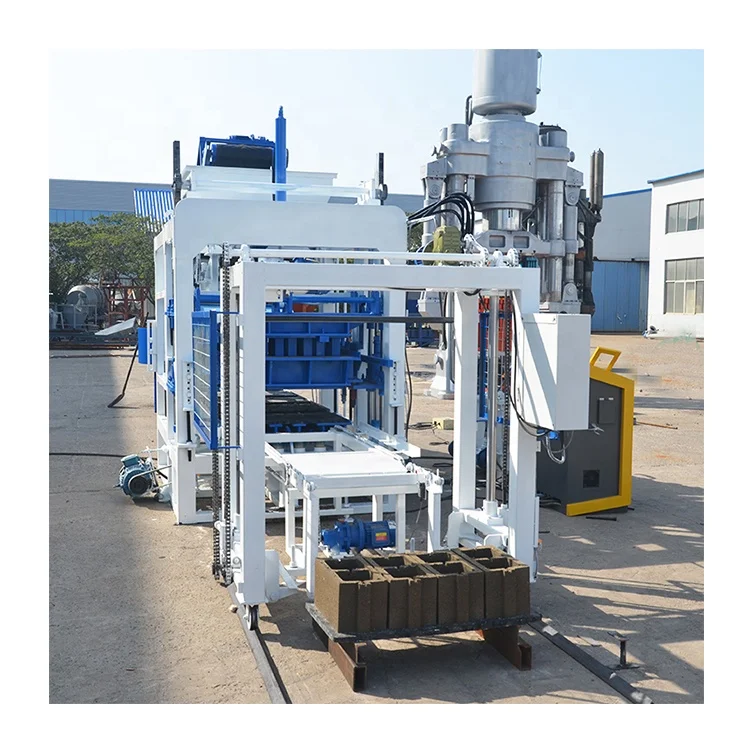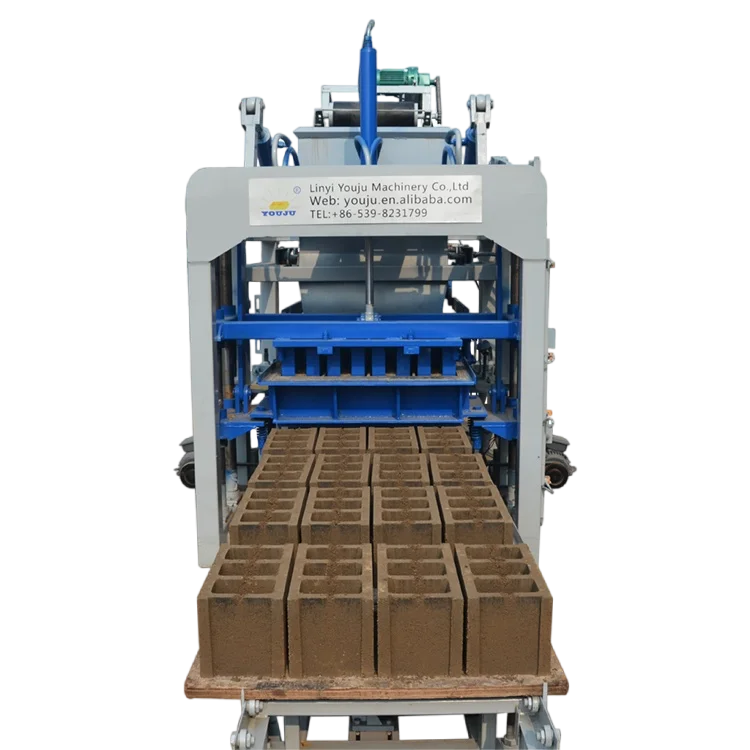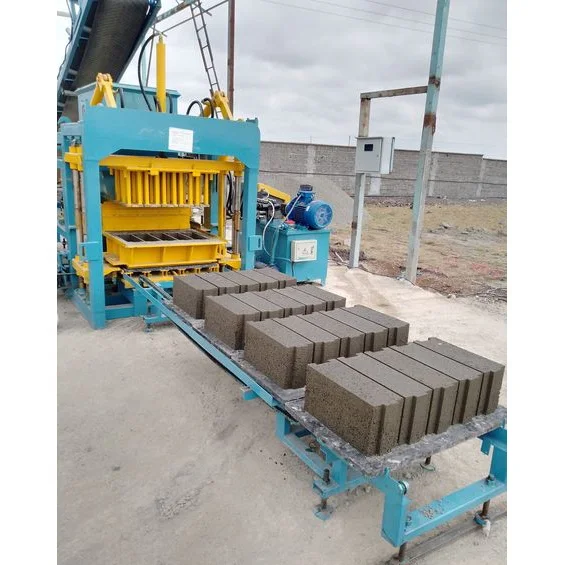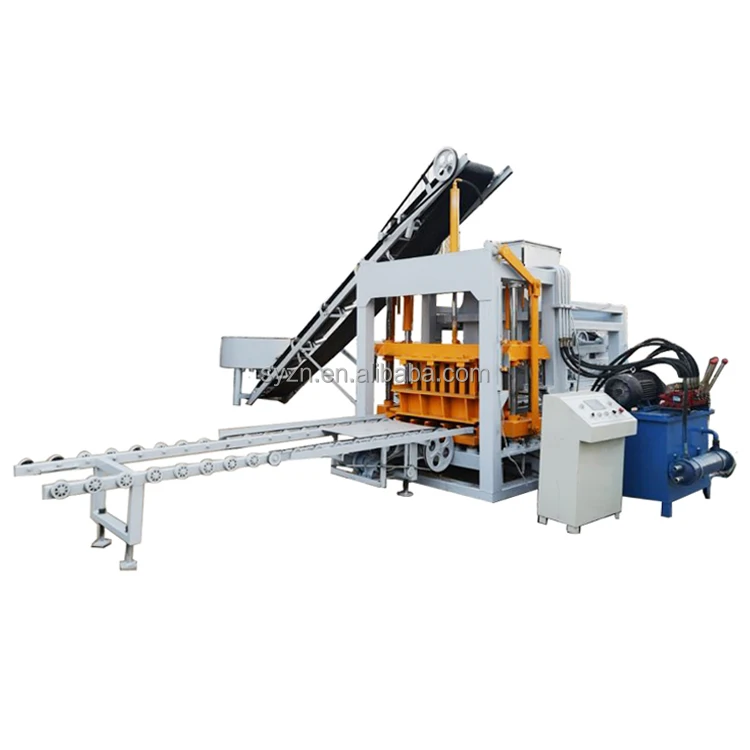
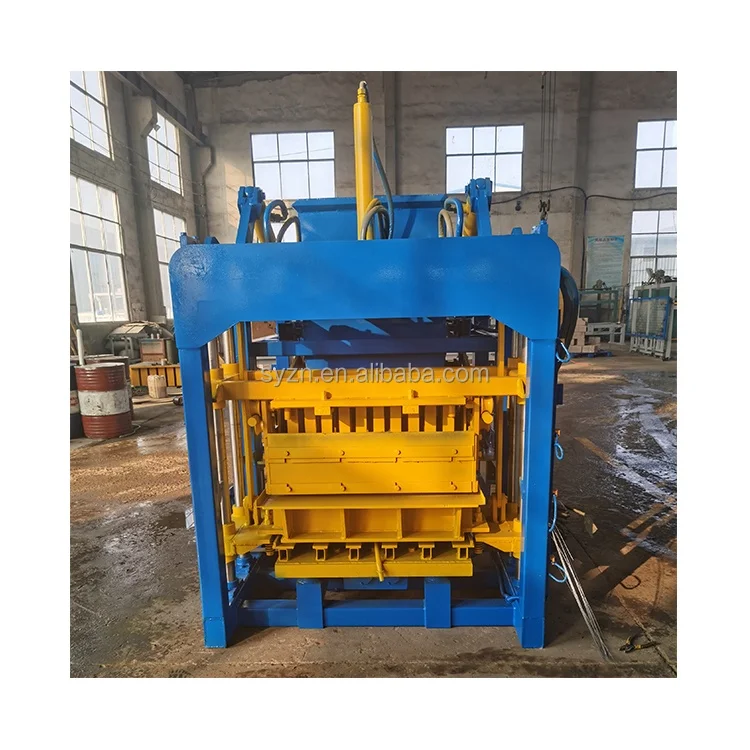
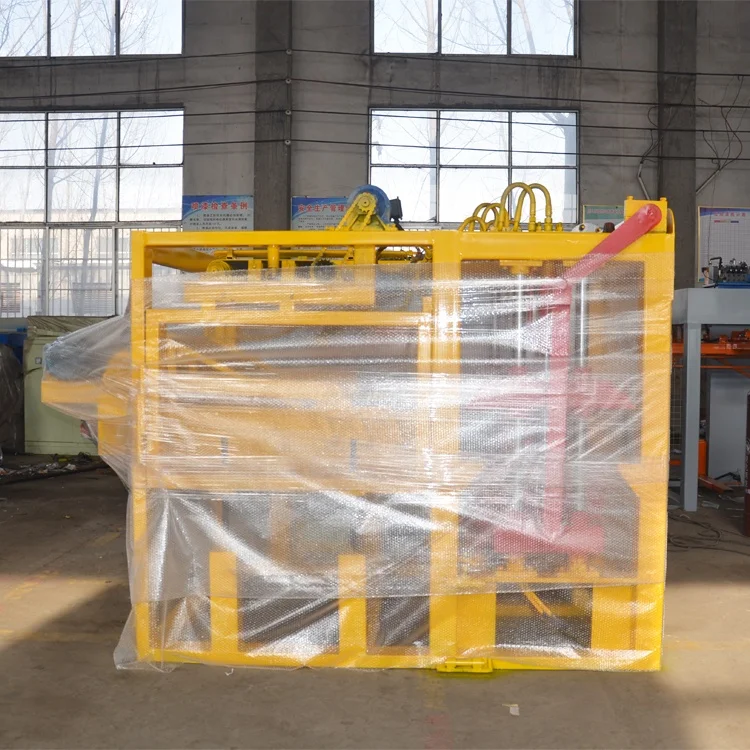

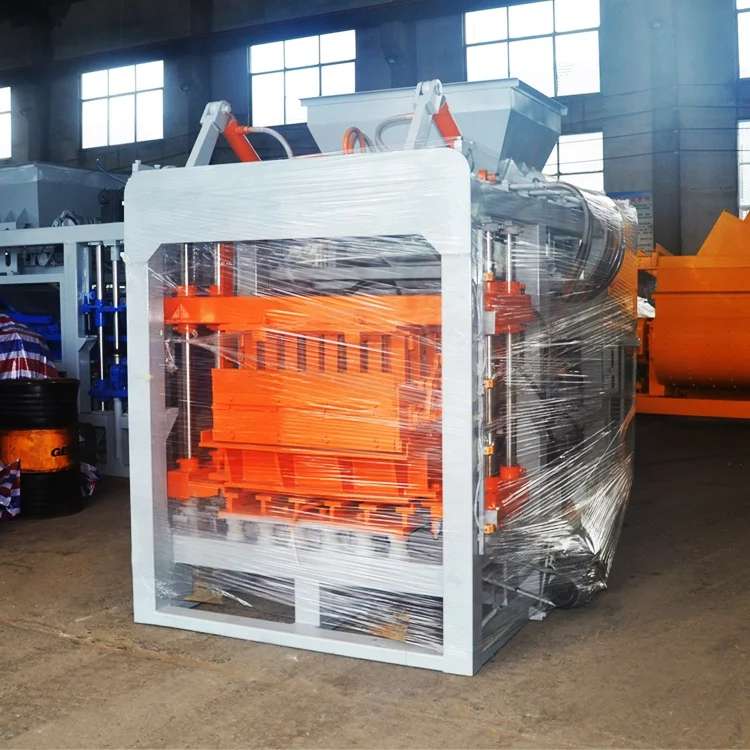

Description
Single-focus machinery engineering — every QT4-15 configuration leaves the factory with mould, pallet, and press matched as one system, not bolted together from separate suppliers after the fact.
Technical Specifications
| Parameter | Value |
|---|---|
| Model | QT4-15A |
| Product Type | Automatic Concrete Block Making Machine |
| Overall Dimensions (L×W×H) | 7100×1600×2610 mm |
| Moulding Cycle | 15–25 s (varies by block format and mix) |
| Vibration Frequency | 4600 r/min |
| Exciting Power (Vibration Force) | 40–50 kN |
| Rated Power | 18.45 kW |
| Mixer Model | JQ350 |
| Pallet Size | 850×550×25 mm |
| Net Weight | 3 T |
| Applied Products | Paver, solid block, hollow block, curbstone |
| Raw Materials | Crushed stones, sand, cement, dust, fly ash |
| Output Capacity (Hollow Block 400×200×200 mm) | 4 pcs/mould, 408 pcs/h, 3264 pcs/8 hr |
| Output Capacity (Hollow Block 400×150×200 mm) | 5 pcs/mould, 510 pcs/h, 4080 pcs/8 hr |
| Output Capacity (Solid Brick 240×115×53 mm) | 18 pcs/mould, 2100 pcs/h, 17000 pcs/8 hr |
| Automation Level | Semi-automatic (based on original medium and small-scale block machine platform) |
| Stacking Method | Manual with trolley (automatic stacker availability to be confirmed) |
Application Suitability
| Application | Material or Output |
|---|---|
| Hollow block production for residential and commercial walls | Crushed stone, sand, cement, and fly ash blends |
| Solid brick manufacturing for load-bearing structures | Cement and fine aggregate mixes with standard curing |
| Paver production for walkways and light-traffic areas | Dense aggregate blends requiring higher vibration compaction |
| Curbstone and kerbstone for roadside and landscaping projects | Coarse aggregate with reinforced mould configurations |
| On-site block production for housing and development contractors | Locally sourced sand and crushed stone with portable pallet setups |
What QT4-15 Block Machine Specifications Leave Unsaid on Most Datasheets
Capacity numbers printed on a brochure mean nothing until you know which block format and cycle time produced them.
I have watched buyers sign contracts based on a headline hourly output, only to discover on commissioning day that the figure assumed a small solid brick — while their entire business plan depended on hollow blocks that cycle more slowly and consume more mix per piece. The QT4-15 block machine specifications on this page state the format behind every output claim. That 408 pieces per hour for hollow blocks assumes the 400×200×200 mm format at the shorter end of the 15–25 second cycle range; switch to a larger block or a slower-setting mix and the real number shifts [NEED_CITE: block format and cycle time impact on daily output calculations]. Getting this right before the machine ships is the difference between a plant that meets its contracts and one that quietly disappoints its customers.
Format-by-Format Capacity, Not a Single Headline Number
Most block machine quotations lead with a single output figure and leave the buyer to guess which product it refers to. The QT4-15 block machine specifications instead list three separate production rates tied to specific mould configurations. A plant running 400×200×200 mm hollow blocks will see different throughput from one pressing 240×115×53 mm solid bricks, and the difference is not trivial — it shapes shift planning, curing rack turnover, and delivery schedules. Any buyer comparing this machine against another should verify that both quotations assume the same block format and cycle time before drawing conclusions.
Matching Vibration and Pressure to Your Actual Mix
One job in Peru stays with me. A machine of this class shipped out configured for standard sand aggregate, but the buyer was feeding local volcanic pumice into the hopper. The vibration force and hydraulic pressure did not match the lighter, more abrasive mix, and the blocks came out crumbling. We had to fly out and recalibrate the entire system on-site. The QT4-15 delivers 40–50 kN of exciting power at 4600 r/min through both the bed mould and upper mould compression — enough force for dense aggregate, but the settings must be tuned to whatever the buyer actually sources locally [NEED_CITE: vibration force calibration for non-standard lightweight aggregates]. A machine configured for a generic mix is a machine that will underperform on arrival.
Pallet Size, Mould Change, and the Details That Decide Daily Reality
The 850×550×25 mm pallet is the interface between the press and everything downstream — curing racks, forklifts, storage yards. If a buyer’s existing curing area was built around a different pallet dimension, every rack must be rebuilt or the pallets must be custom-ordered at ongoing cost. Equally important is mould change time, which determines whether a plant can realistically produce hollow blocks in the morning and pavers in the afternoon, or whether a format switch eats an entire shift. The QT4-15 block machine specifications list the pallet size openly so buyers can verify compatibility before the order is placed, not after the crate arrives at the port.
Reading the Numbers Behind the Press Frame
The 18.45 kW rated power covers the vibration motors, hydraulic pump, and mixer drive together — understanding this split matters when sizing the electrical supply and planning for voltage drop over long cable runs common at remote construction sites. The JQ350 pan mixer paired with this press handles the batch volume required to keep the mould cycle fed without the press idling between batches. At a 15–25 second moulding cycle, the mixer must discharge fast enough to prevent the operator from waiting, which is why the mixer model is specified alongside the press rather than left to the buyer to guess. The semi-automatic classification means pallets are handled manually with a trolley; buyers planning fully automatic stacking should confirm upgrade options before production starts, because retrofitting an automatic stacker later is more complex than specifying it at the factory stage [NEED_CITE: automation level considerations for semi-automatic block machine upgrades].
The Cost of Skipping the Configuration Conversation
When a block machine is ordered on price alone without confirming local aggregate, voltage, or pallet compatibility, the problems do not appear in the factory — they appear weeks later on the buyer’s production floor. Blocks that crack during curing, pallets that do not fit existing racks, control panels in a language the operators cannot read, and mixers that cannot keep pace with the press cycle all trace back to details that were never discussed before the machine shipped [NEED_CITE: common causes of block machine commissioning delays in export markets]. The QT4-15 is a capable platform, but its real output depends entirely on whether the configuration conversation happened honestly before steel was cut.
Why Buyers Specifying the QT4-15 Start Here
Block machinery is the only thing this company builds, which means the press, mould, pallet, and handling equipment are specified as one matched system rather than assembled from separate catalogues after the fact. Moulds are designed for the specific block formats the buyer’s market actually sells, with custom drawings available when standard sizes do not match local building codes. The automation level is selectable, so a buyer can begin with semi-automatic operation and add stacking or pallet feeding as volume grows. Configuration is set against the buyer’s actual mix design and local aggregate, not a generic default that looks good on paper but fails in the hopper. Installation support includes operator training so that the team running the machine on day one understands mould changes, cycle adjustment, and daily maintenance routines.
Documentation & Verification
- Line layout and capacity calculation stating the exact block format assumed for each output figure
- Mould drawing and format list confirming which block sizes the supplied moulds produce
- Pallet specification sheet including material grade and thickness matched to your curing setup
- Voltage, frequency, and PLC display language written confirmation before production begins
- Factory test record showing actual cycle times on the buyer’s specified block format
Installation, Commissioning & Support
- Foundation plan sized to the 7100×1600 mm footprint with anchor bolt positions for the QT4-15A frame
- Electrical supply rated for 18.45 kW with dedicated circuit and confirmed voltage and frequency for your site
- Machine shipped in dismantled sections with reassembly sequence and lifting point diagrams provided
- First-run commissioning includes vibration force calibration matched to your local aggregate and mix proportions
- Operator training covers mould change procedure, cycle time adjustment, and JQ350 mixer batch sequencing
- Wear parts and mould consumables list supplied at delivery with reorder codes for ongoing supply
What to Include with Your Enquiry
Buyers evaluating the QT4-15 block machine specifications get an accurate quotation fastest when they provide the block formats their market demands, the daily output target by format, and details on locally available raw materials including aggregate type and source. Confirming the site voltage, frequency, and preferred control language at the enquiry stage prevents commissioning delays once the machine arrives.
Frequently Asked Questions
Q: How is the 408 pcs/h hollow block output calculated, and what format does it assume?
A: That figure assumes the 400×200×200 mm hollow block at four pieces per mould, running at the shorter end of the 15–25 second moulding cycle. If your target block is larger or your mix sets more slowly, the actual hourly rate will differ. Always ask for a capacity calculation tied to your specific format before comparing quotations.
Q: What pallet size does the QT4-15 require, and can I use pallets I already own?
A: The machine uses 850×550×25 mm pallets. If your existing curing racks and forklift attachments were built around a different pallet dimension, you will need to either adapt your racks or source new pallets. Confirm pallet compatibility during the quotation stage, not at delivery.
Q: Which block formats can one machine produce, and how flexible is the mould change?
A: The QT4-15 can produce hollow blocks, solid bricks, pavers, and kerbstones through mould interchangeability. The practical flexibility depends on mould change time and how many formats your shift plan allows. Request the format list and change procedure to assess whether daily switching is realistic for your production schedule.
Q: How do I confirm the machine is configured for my local aggregate and mix design?
A: Provide your aggregate type, source, and typical mix proportions with your enquiry. The vibration force and hydraulic settings should be adjusted to match your actual material, not a generic default. A factory test on your specified mix before dispatch is the most reliable way to verify block strength and cycle time.
Q: What voltage and control language options are available for export markets?
A: Voltage, frequency, and PLC display language must be confirmed before production begins to avoid commissioning delays. State your site electrical specification and preferred operator language at the enquiry stage so these are locked into the build documentation.