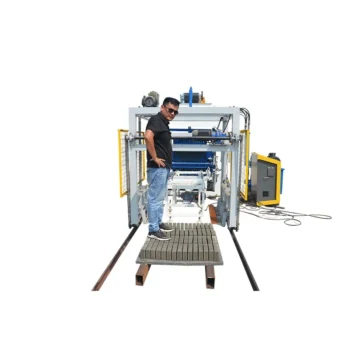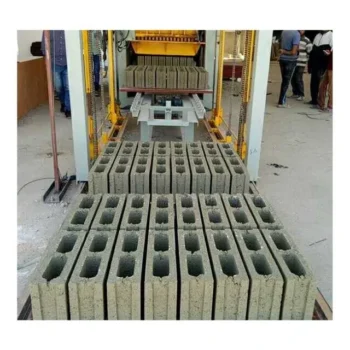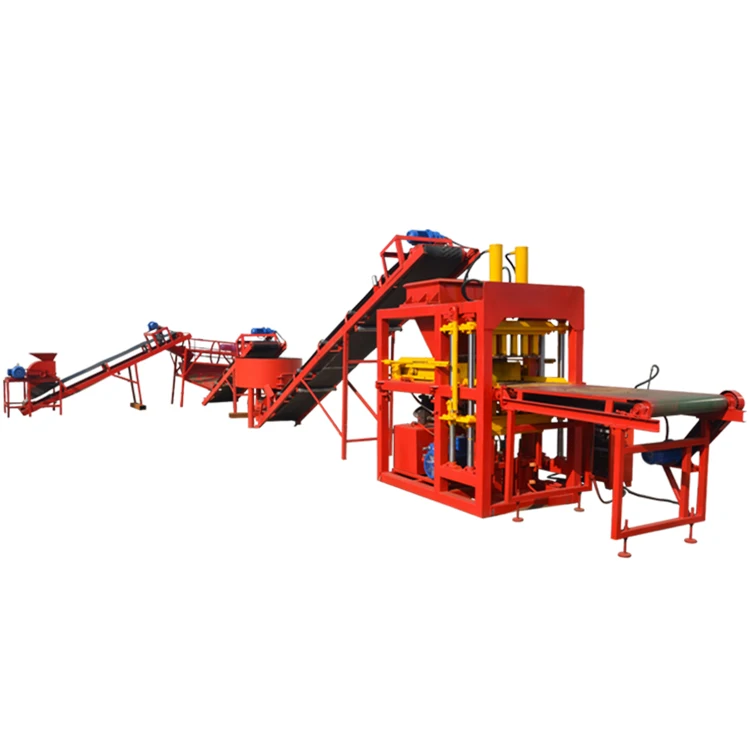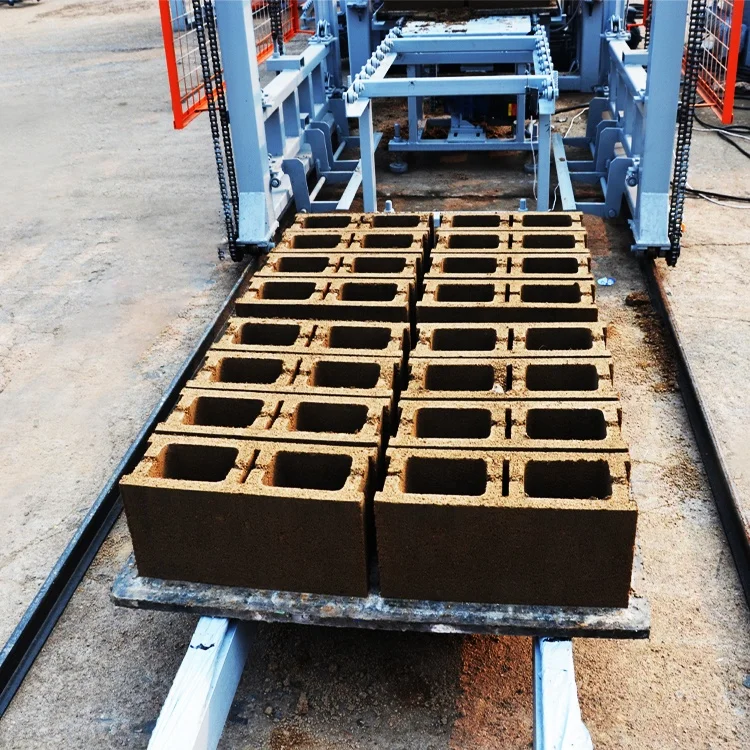

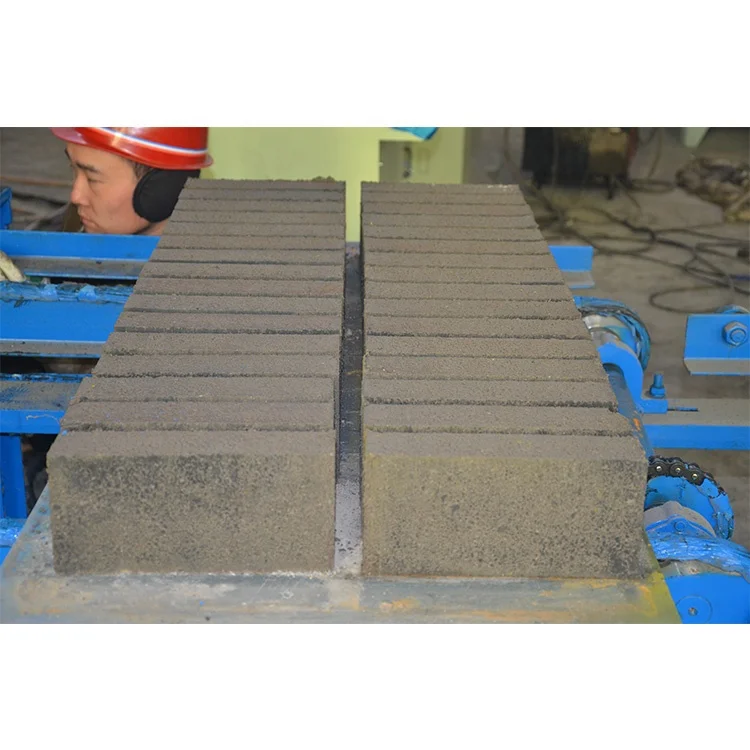


Description
Format-Specific Capacity Matching — every QT4-20 block machine configuration starts with your target block format and local aggregate, ensuring daily output figures reflect what your market actually buys rather than catalogue defaults.
Technical Specifications
| Parameter | Value |
|---|---|
| Model | QT4-20 |
| Product Type | Hydraulic Concrete Block Making Machine |
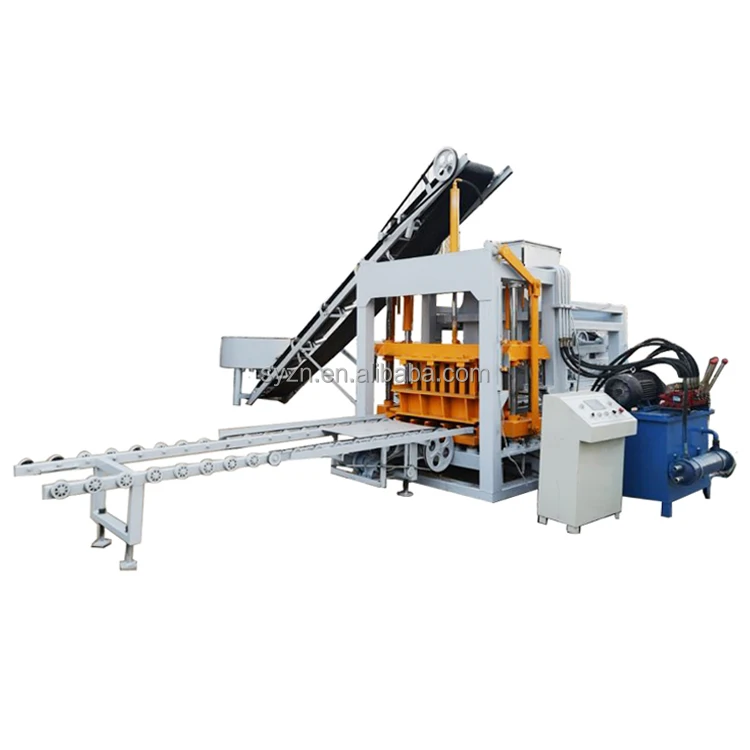
| Overall Dimensions (L×W×H) | 7100×1600×2610mm |
| Rated Pressure | 16-21MPa |
| Main Vibration Form | Platform Vibration |
| Vibration Frequency | 4600 r/min |
| Vibration Force | 45kN |
| Pallet Size | 1020×570mm |
| Molding Cycle | 20-30s (basis not stated in source — confirm block format and material) |
| Overall Power | 27.5kW |
| Total Mass | 6T |
| Demolding Method | Hydraulic |
| General Water Consumption | 12T/Day |
| Factory Area Required | 500m² |
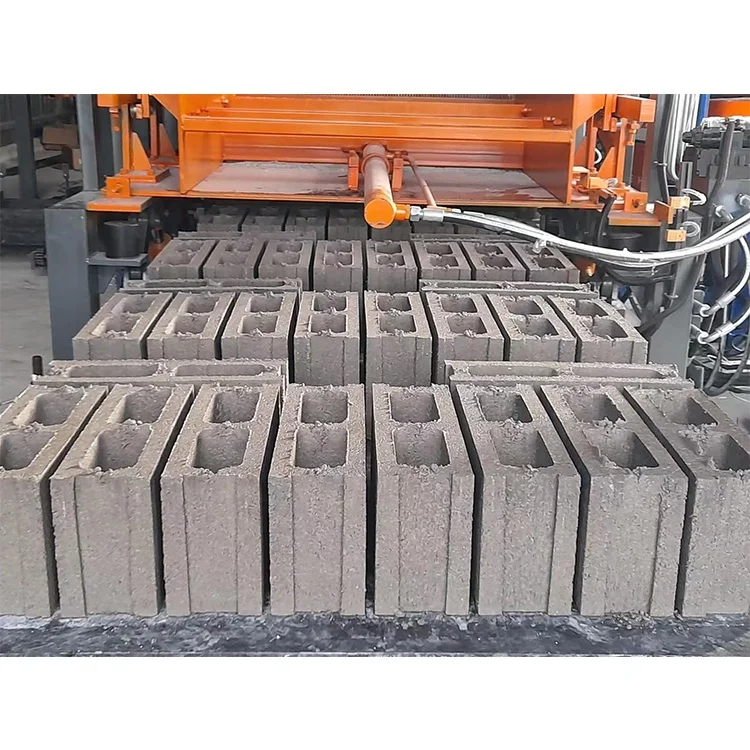
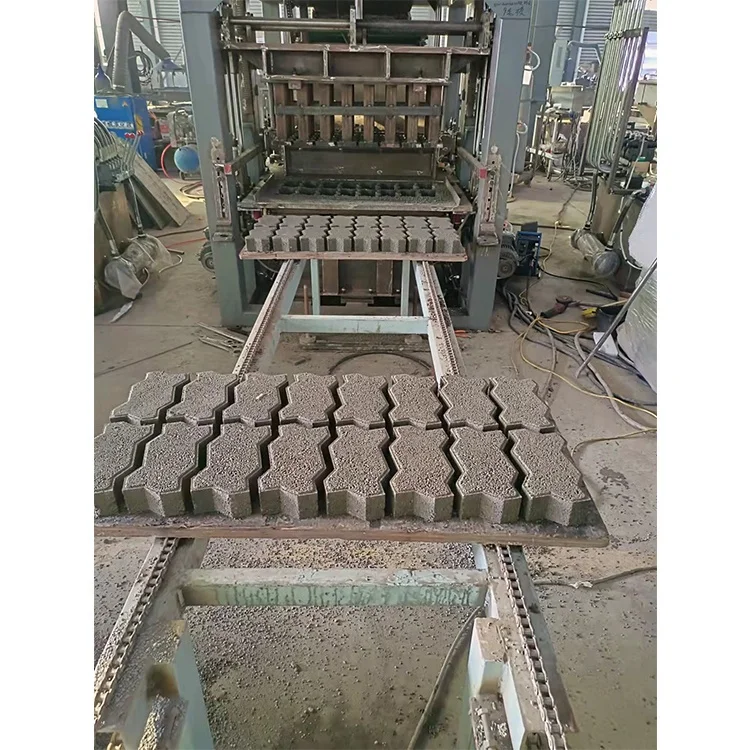
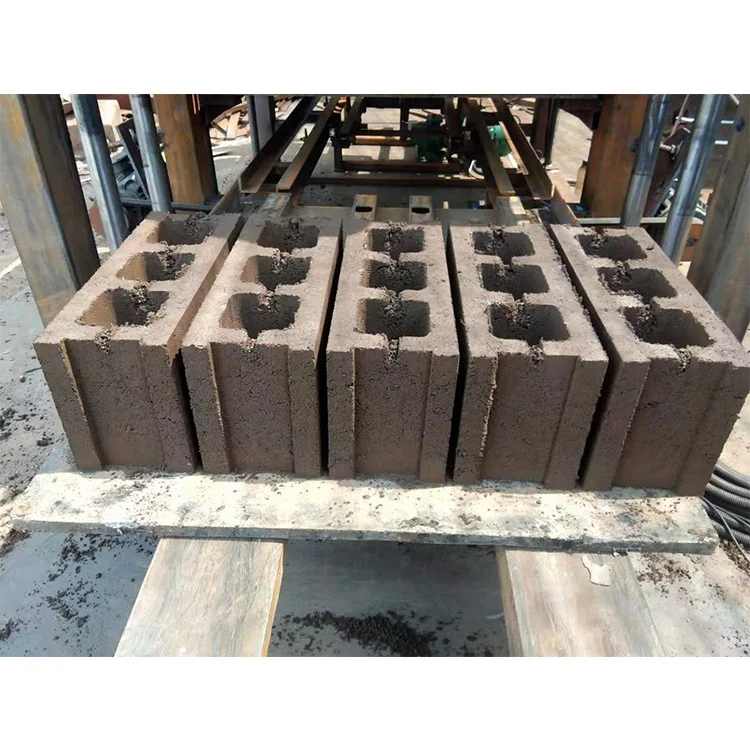
| Applied Products | Concrete blocks, hollow/solid blocks, pavers, interlocking blocks, curbstone, colored pavers |
| Raw Materials | Crushed stone, sand, cement, fly ash, gravel, slag, dust |
| Automation Level | Semi-automatic (configuration to be confirmed) |
| Mould Compatibility | Multiple formats: hollow, solid, paver, interlocking, curbstone |
| CE Declaration | Available where applicable |
Application Suitability
| Application | Material or Output |
|---|---|
| Hollow block production for residential wall construction | Crushed stone, sand, cement, fly ash blends |
| Solid block manufacturing for load-bearing structures | Gravel, sand, cement with standard aggregate |
| Interlocking paver production for driveways and walkways | Fine aggregate, cement, color pigment |
| Curbstone fabrication for road and infrastructure projects | Coarse aggregate, cement, high-density mix |
| Colored paver runs for landscaping and commercial projects | Sand, cement, oxide pigment, fine gravel |
What "20-30 Seconds per Cycle" Actually Means for Your Daily Output
Cycle time only translates to daily capacity when tied to a specific block format and mix design.
Suppliers routinely quote a single cycles-per-hour number without revealing which block size or material profile it assumes. A QT4-20 block machine specifications sheet showing a 20-30 second molding cycle sounds productive, but that figure shifts considerably when you move from a standard 400×200×200mm hollow block to a thinner paving block or a denser curbstone. I have watched buyers in Southeast Asia build entire project timelines around a headline cycle time, only to discover during commissioning that their local volcanic ash blend required vibration parameter adjustments that extended the cycle well beyond the quoted range. [NEED_CITE: block format impact on cycle time and daily throughput]
The gap between quoted capacity and actual output widens further when pallet handling, stacking, and curing are excluded from the line configuration. A press completing a cycle every 25 seconds means nothing if the operator is still moving pallets by hand to a curing rack fifty meters away.
Matching Vibration Force to Your Local Aggregate
The QT4-20 block machine specifications list a platform vibration frequency of 4600 r/min paired with 45kN of vibration force. These two values must work together with the hydraulic pressure range of 16-21MPa to compact your specific mix into a block that meets local strength standards. When the aggregate is lightweight — such as pumice or expanded clay common in parts of Indonesia and the Philippines — excessive vibration can segregate the mix rather than consolidate it. Conversely, dense river gravel demands the full pressure range to achieve uniform density throughout the block cross-section. This is why configuration begins with a material sample, not a catalogue page.
Pallet Size and Its Ripple Effect on the Curing Yard
The 1020×570mm pallet dimension on the QT4-20 determines more than how many blocks fit per cycle. It dictates the spacing of your curing racks, the fork pocket width on your existing forklifts, and the square-meter footprint of your curing area. Buyers who select a pallet size without checking these downstream dimensions frequently end up purchasing new handling equipment or rebuilding rack systems after the machine arrives. [NEED_CITE: pallet handling compatibility with curing infrastructure] I have seen plants in Vietnam and Cambodia where the pallet size was confirmed against the press alone, ignoring the fact that the curing yard was designed around a different pallet standard from a previous machine.
Decoding the Pressure and Vibration Relationship
The rated hydraulic pressure of 16-21MPa provides the static compaction force, while the 45kN vibration at 4600 r/min delivers dynamic consolidation through the platform. In block making, neither parameter alone determines output quality. Hydraulic pressure squeezes the mix into the mould cavity, and vibration collapses air voids within that mix. When both are correctly matched to the block format — a tall hollow block needs sustained pressure to fill deep cavities, while a flat paver needs higher vibration to achieve surface density — the resulting block meets compressive strength requirements consistently across every cycle. The 27.5kW total power rating supports this dual-action system without overloading standard workshop electrical supplies. The 6T total mass provides the machine frame rigidity needed to absorb repeated vibration cycles without structural fatigue over extended production runs.
The Hidden Cost of Skipping Format-Specific Configuration
When a QT4-20 block machine specifications package arrives without format-by-format capacity calculations, the buyer has no basis for planning labour shifts, raw material deliveries, or curing yard rotation. Blocks pulled from the mould too early because the cycle was rushed lose edge definition and compressive strength. Blocks left too long in the mould because the cycle was extended to compensate for an incompatible mix tie up the press and reduce throughput. [NEED_CITE: consequences of mismatched vibration parameters to local aggregate] Mould changeovers then become a source of further lost time if the buyer selected formats that the local market does not purchase, paying for flexibility that never earns its keep.
Why Sourcing This Machine Here Matters
Every QT4-20 configuration is set against the buyer’s actual block format and local aggregate rather than a standard factory preset. Mould design covers the formats your market sells, including custom drawings when your product range falls outside standard catalogues. Pallet specifications are confirmed against your existing curing racks and forklift dimensions before production begins, not after the crate arrives. The automation level remains selectable, so a buyer starting with semi-automatic operation can plan a future upgrade path without replacing the entire press. Installation and commissioning include operator training on your specific mix design, ensuring the vibration and pressure parameters are dialed in from the first production run. [NEED_CITE: manufacturer-supported commissioning and operator training for block machinery]
Documentation & Verification
- Line layout with capacity calculation stated per block format and mix design
- Mould drawing and format list confirming compatibility and changeover procedure
- Pallet specification cross-referenced with your curing rack and forklift dimensions
- Hydraulic and electrical schematic including confirmed voltage and frequency
- Factory test record using your specified raw material blend before dispatch
- Operation and maintenance manual with wear parts and mould replacement list
Installation, Commissioning & Support
- Foundation slab prepared to level specifications for the 7100×1600mm machine footprint
- Dedicated power circuit rated for 27.5kW total load with confirmed voltage and frequency
- Machine arrives dismantled for container loading with reassembly supervised on site
- Vibration frequency and hydraulic pressure calibrated to your aggregate during first production run
- Operator training covering mould change procedure and daily maintenance checkpoints
- Wear parts list provided with initial spare set including hydraulic seals and vibration components
What We Need Before Quoting
Share your target block formats with dimensions, the daily output you need per format, and a sample or analysis of your local aggregate and cement type. Confirm your workshop voltage, frequency, and preferred control display language. If you have existing curing racks or forklifts, send the pallet dimensions they accommodate so the QT4-20 block machine specifications we propose align with your full production line, not just the press itself.
Frequently Asked Questions
Q: What is the realistic daily output for hollow blocks versus pavers on the QT4-20?
A: The 20-30 second molding cycle varies by block format and material density. Hollow blocks with standard aggregate typically complete faster than dense pavers or curbstones. We provide a capacity calculation document stating the output per format based on your specific mix design, so you can plan shifts and raw material orders against verified figures rather than a single generic number.
Q: How do I confirm the pallet size matches my existing curing area and forklift?
A: The standard 1020×570mm pallet must align with your curing rack spacing and forklift fork width. Before production, we cross-reference your pallet handling equipment dimensions against the QT4-20 block machine specifications. If your existing infrastructure uses a different pallet standard, we discuss whether adapting the rack system or adjusting the pallet size is the more practical path forward.
Q: What mould formats are available, and how long does a mould change take?
A: The QT4-20 supports hollow, solid, paver, interlocking, and curbstone moulds. Changeover time depends on the mould mounting system and operator familiarity. We include a format list and changeover procedure in the documentation, and operator training covers the sequence so your team can switch formats without consuming an entire shift on the first attempt.
Q: How is the machine configured to match my local aggregate and mix design?
A: We request a material sample or aggregate analysis before finalizing vibration force and hydraulic pressure settings. The 4600 r/min vibration frequency and 16-21MPa pressure range provide adjustment room, but the correct starting point depends on your material. This prevents the situation where blocks fail strength tests in the first weeks because the parameters were set for a generic mix rather than yours.