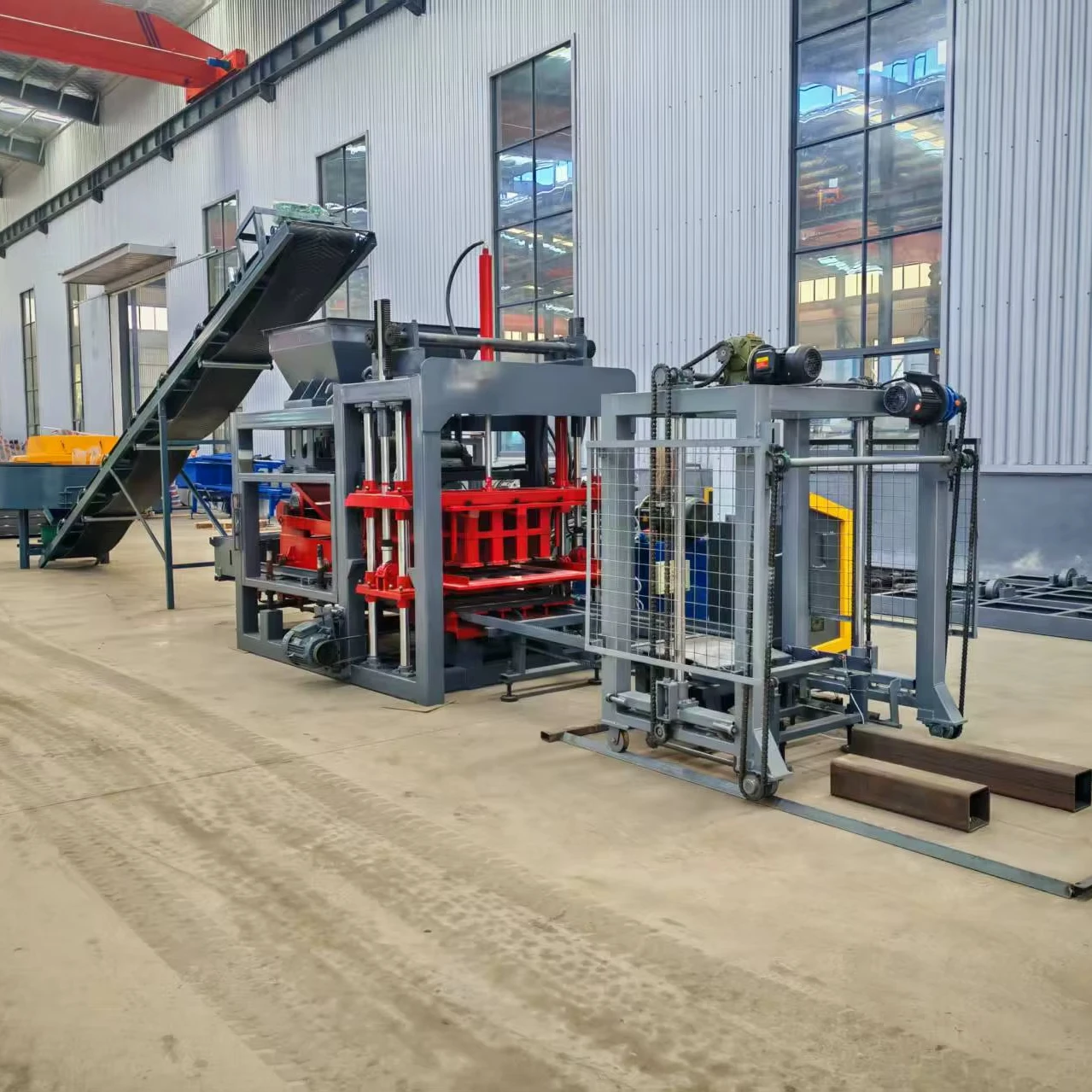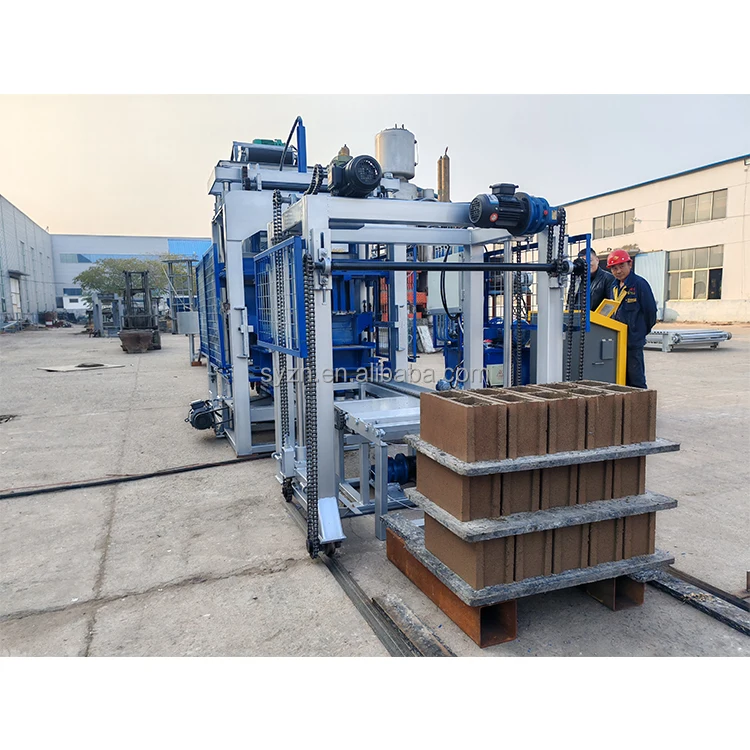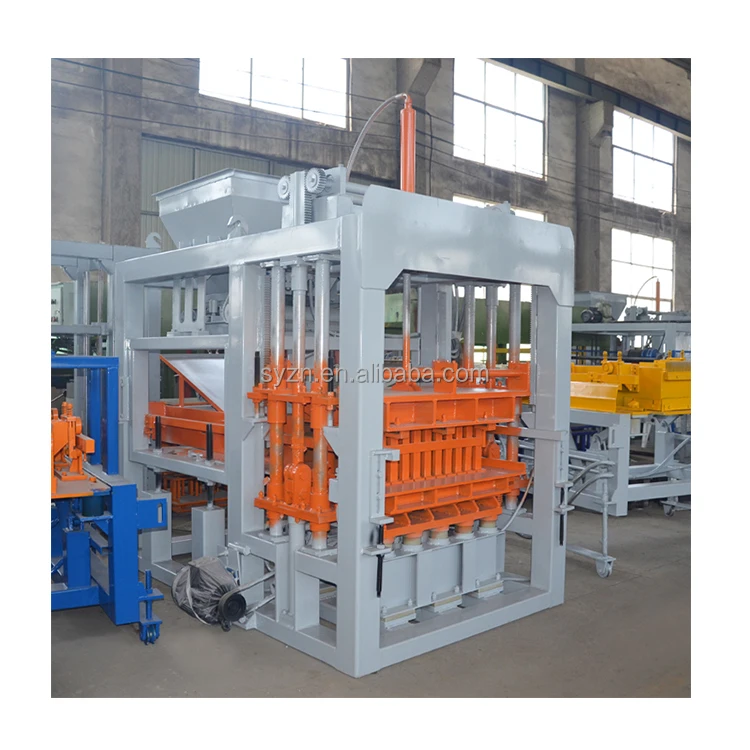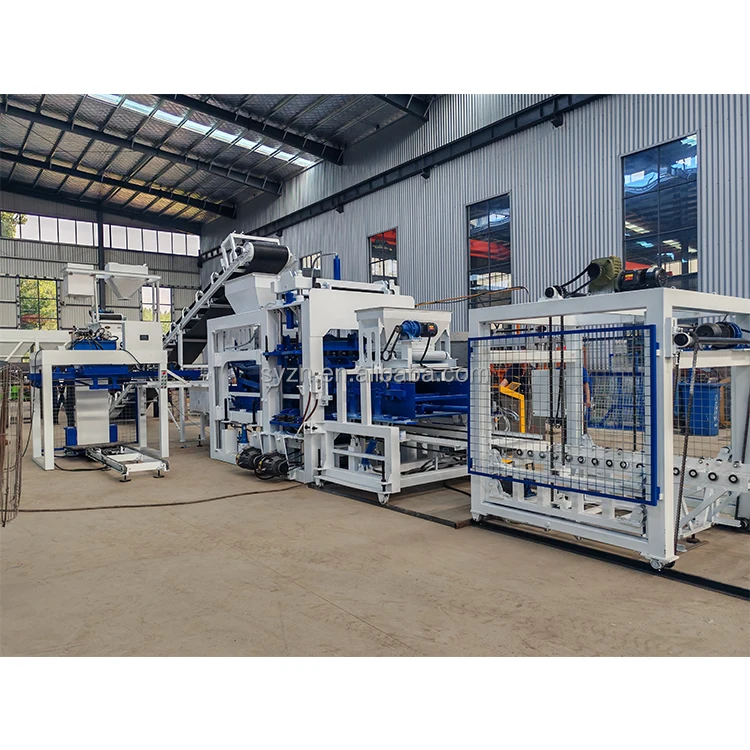

Description
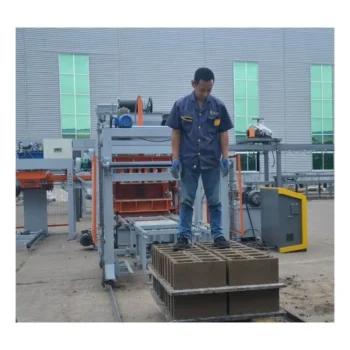
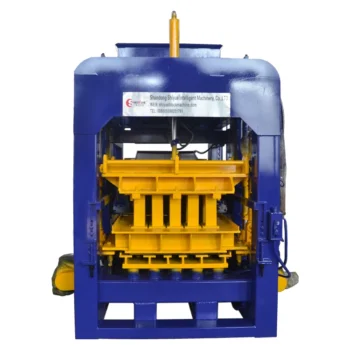
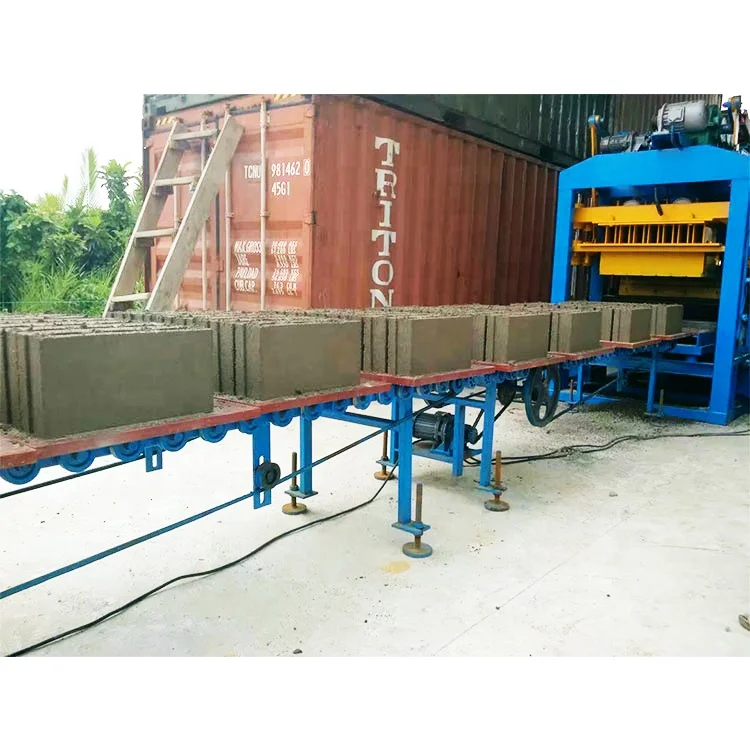
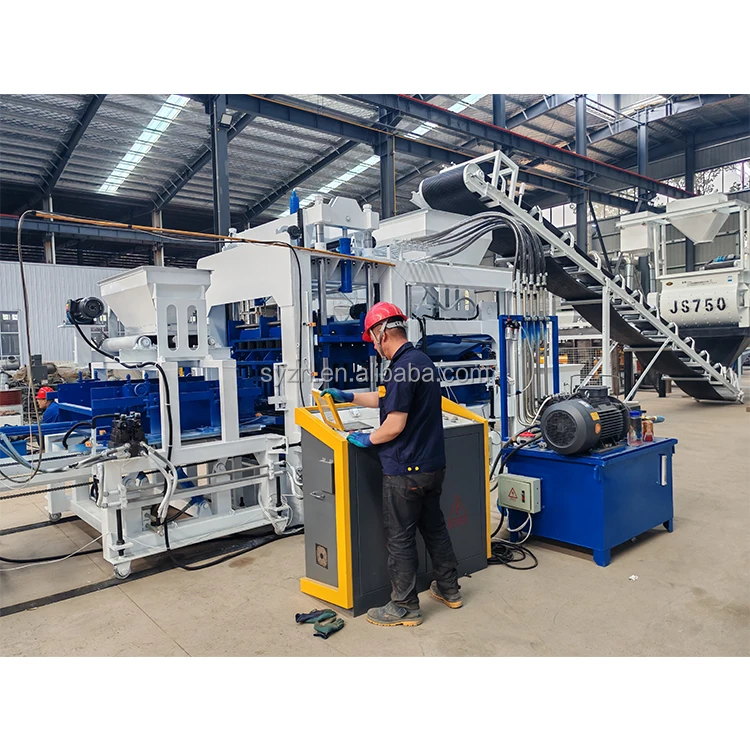
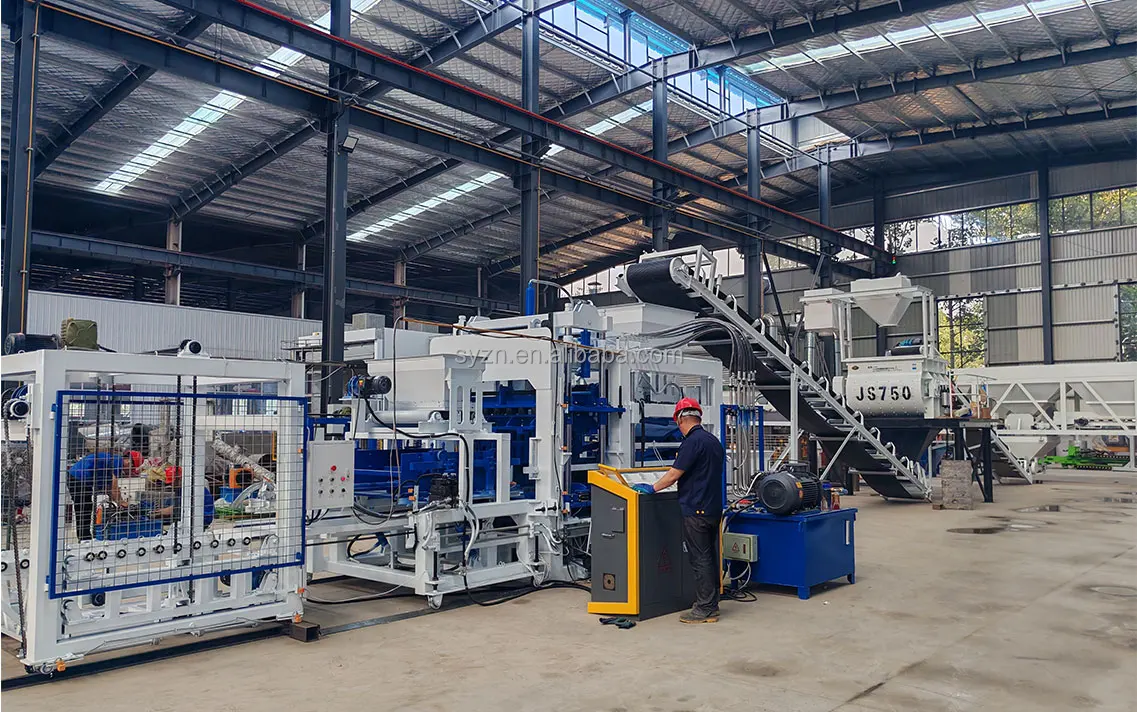
Matched System Supply — We size the QT8-15 block making machine against your local aggregate and target format, so the press, pallet, and moulds arrive as one verified line rather than a catalogue default.
Technical Specifications
| Parameter | Value |
|---|---|
| Model | QT8-15 |
| Product Type | Hydraulic Block Making Machine |
| Overall Dimensions (L×W×H) | 8300 × 1860 × 3000 mm |
| Rated Pressure | 21 MPa |
| Main Vibration Form | Platform Vibration |
| Vibration Frequency | 2800 – 4500 r/min |
| Vibration Force | 45 kN |
| Pallet Size | 950 × 900 mm |
| Molding Cycle | 15 – 20 s (basis not stated in source — confirm block format / material / thickness) |
| Overall Power | 55.5 kW |
| Total Mass | 8 T |
| Demolding Method | Hydraulic |
| Factory Area Required | 300 m² |
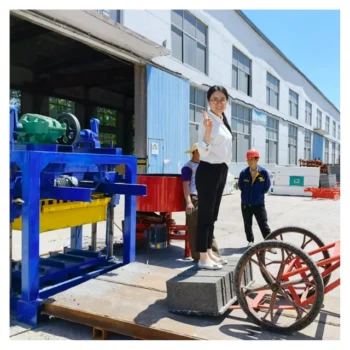
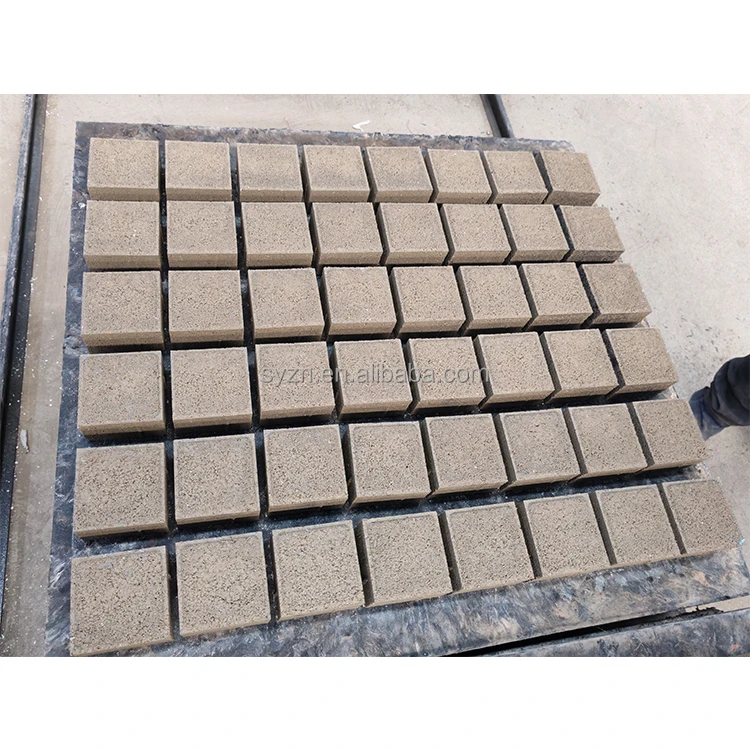
| Applied Products | Concrete blocks, hollow / solid blocks, pavers, interlocking blocks, curbstone, colored pavers |
| Raw Material Compatibility | Crushed stone, sand, cement, dust, fly ash, gravel, slag |
| Voltage & Frequency | Not stated in source — confirm before order |
| Control System | Not stated in source — confirm PLC brand / language |
| Automation Level | Not stated in source — confirm semi-automatic or automatic |
| Warranty | 1 year |
Application Suitability
| Application | Material or Output |
|---|---|
| Hollow block production for masonry walls | Crushed stone, sand, cement, fly ash blends |
| Solid load-bearing block manufacturing | Gravel, cement, and slag aggregates |
| Interlocking paver and colored paver runs | Fine sand, cement, pigment additives |
| Curbstone and kerb production | Coarse aggregate with high cement content |
| On-site block production for housing projects | Locally sourced sand and crushed stone |
Why "15-20 Seconds per Cycle" Tells Only Part of the Story
Cycle time means nothing without the block format attached to it.
When a supplier quotes a QT8-15 block making machine at 15-20 seconds per cycle, the buyer naturally multiplies that into a daily output figure. But a 400×200×200 mm hollow block on a 950×900 mm pallet yields a very different piece count than a thin interlocking paver occupying the same pallet area. Without stating which format the cycle time assumes, the headline number creates an expectation the machine cannot meet on the format your market actually buys. [NEED_CITE: capacity calculation methods for hydraulic block presses]
I once watched a buyer in West Africa plan an entire curing yard around a cycles-per-hour figure that assumed a solid block format — while his customers were ordering hollow blocks. The real throughput fell well short, and he ran short of pallets within the first week. That mismatch is exactly the kind of gap this page aims to close before you sign a purchase order.
Matching Pallet Size to Your Curing Infrastructure
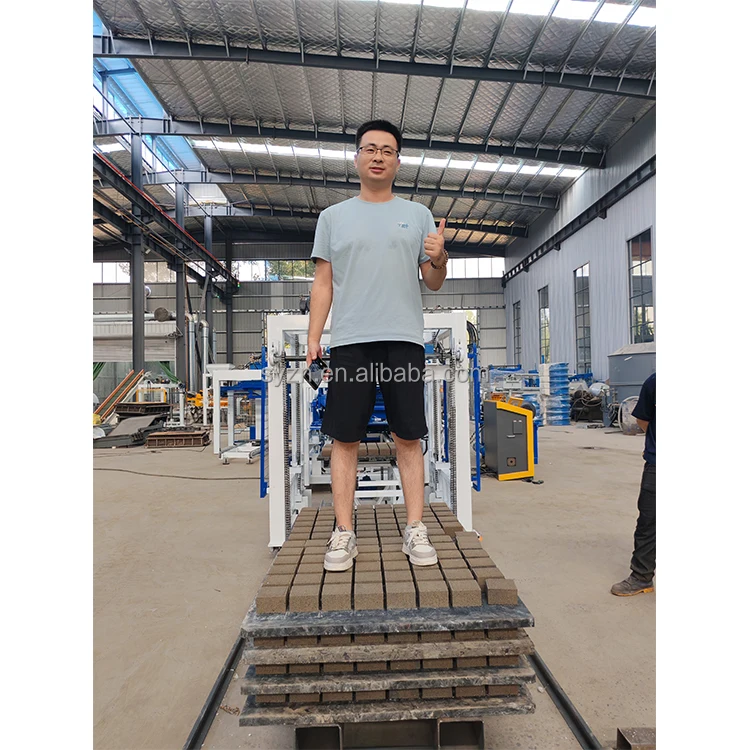
The QT8-15 runs on a 950×900 mm pallet, which determines how many blocks sit on each board and how those boards move through your curing area. If your existing racks, forklifts, or yard layout were built around a different pallet dimension, you either reconfigure the handling side or lose time on every transfer. We confirm your pallet ecosystem before locking in the machine, so the press output flows straight into curing without manual re-stacking.
Vibration Force and Hydraulic Pressure as a Paired System
A 45 kN vibration force working against 21 MPa rated pressure is the compaction envelope of this QT8-15 block making machine. But those two numbers only produce consistent block strength when they are set against your specific mix design. High-clay aggregates absorb vibration differently than clean crushed stone, and the pressure curve must compensate. We run sample batches with your actual raw material to find the right frequency point within the 2800-4500 r/min range before the machine ships. [NEED_CITE: effect of aggregate clay content on vibration compaction in block making]
Reading the Specs That Actually Matter on Site
The 55.5 kW overall power draw tells you what electrical infrastructure you need — dedicated circuits, transformer capacity, and cable sizing all follow from that figure. The 8 T total mass influences foundation requirements: a concrete pad thick enough to absorb platform vibration without cracking over months of operation. The 21 MPa hydraulic pressure rating defines the hose and seal specifications you will stock as spares. And the 300 m² factory area requirement sets the minimum building footprint, but the real space question is whether your curing yard can absorb the daily pallet volume the machine produces. [NEED_CITE: foundation design guidelines for vibrating block making equipment]
What Happens When Voltage and Language Are Left to Chance
A machine arrives at port, the electrician opens the control panel, and the voltage does not match the local grid. Commissioning stops until a transformer is sourced. Or the PLC display is in a language the operator cannot read, so parameter adjustments become guesswork. These are not rare events — they happen regularly when voltage, frequency, and control language are not confirmed before production starts. [NEED_CITE: common commissioning delays in exported industrial machinery]
Why Buyers Choose This Route
Every QT8-15 configuration starts with the buyer’s target block format and local aggregate, not a catalogue default. Machine, mould, pallet, and handling equipment are specified as a single matched system, so nothing arrives mismatched. Mould design covers the exact formats your market demands, with custom drawings available when standard options do not fit. Automation level is selectable, meaning you can begin at semi-automatic and plan a future upgrade path. Installation support includes on-site commissioning and operator training tied to your specific material mix.
Documentation & Verification
- Line layout with capacity calculation stating your chosen block format
- Mould drawing and format list matched to your market dimensions
- Pallet specification confirming size, material, and load rating
- Hydraulic and electrical schematic for your maintenance team
- Factory test record run on your raw material sample before dispatch
- Voltage and control language confirmation sheet signed before production
Installation, Commissioning & Support
- Foundation pad poured to handle 8 T mass and platform vibration loads
- Dedicated power circuit sized for 55.5 kW draw at your confirmed voltage
- Machine assembled on site with hydraulic and electrical connections verified
- First production run supervised with vibration frequency tuned to your aggregate
- Operator training covering mould change procedure and daily maintenance checkpoints
- Wear parts list provided with recommended reorder intervals for seals and mould liners
What We Need to Quote You Accurately
Send us the block format your market buys most — dimensions, wall thickness, and target daily output. Tell us what aggregate you source locally and whether you have sieve analysis data. Confirm your site voltage, frequency, and the language your operators read. If you already have curing racks or a forklift, share the pallet dimensions they were built around so we can verify compatibility with the 950×900 mm pallet system.
Frequently Asked Questions
Q: How is the QT8-15 output capacity calculated, and which block format does it assume?
A: The 15-20 second molding cycle must be tied to a specific block format and mix design to produce a meaningful daily figure. We provide a capacity calculation that names the exact block dimensions, pallet layout, and raw material blend assumed, so you can compare the number against your actual market demand rather than a generic headline.
Q: What mould formats are available, and how long does a mould change take?
A: Mould options cover hollow blocks, solid blocks, interlocking pavers, and curbstones sized to your market requirements, with custom drawings available. Mould change time depends on the format switch and whether the machine is set up with quick-release clamping — we confirm the procedure and timing during commissioning.
Q: How do I confirm the right pallet size for my curing area?
A: The standard 950×900 mm pallet must align with your existing curing racks, forklift tine spacing, and yard layout. We ask for your handling equipment specifications before finalizing the order so that wet blocks move from press to curing without manual re-stacking or damaged boards.
Q: What voltage and control language options are available?
A: Voltage and frequency are configured to match your local grid, and the PLC display language is confirmed before production begins. This avoids the common situation where a machine sits idle after arrival because the electrical supply or operator interface was never verified.
Q: How do I match vibration force and hydraulic pressure to my local aggregate?
A: We request a sample of your raw material — or at minimum a sieve analysis and description of clay content — and run test batches to find the correct frequency within the 2800-4500 r/min range. This ensures the 45 kN vibration force and 21 MPa pressure produce the block strength your market requires.