

Description
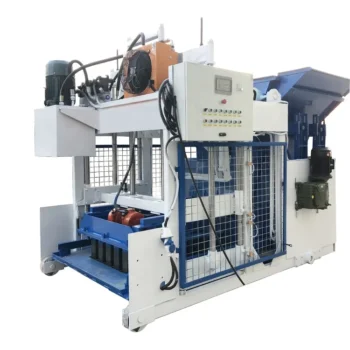
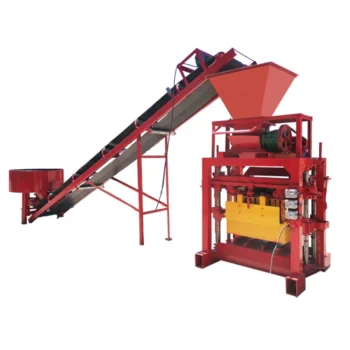
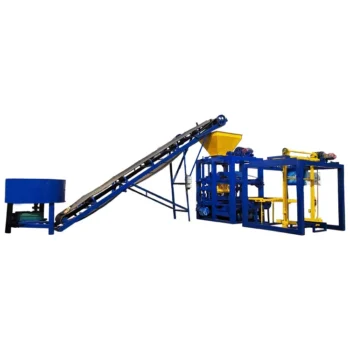
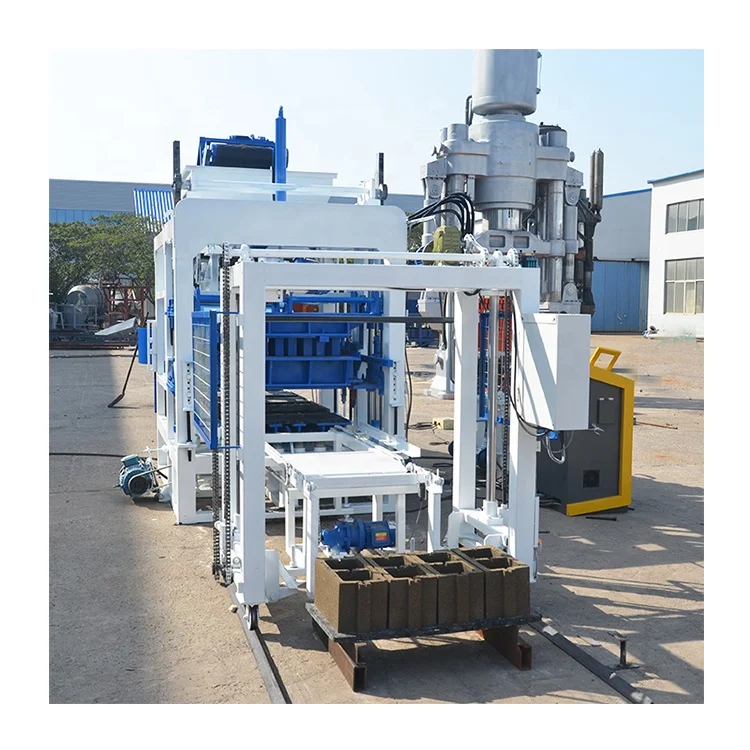
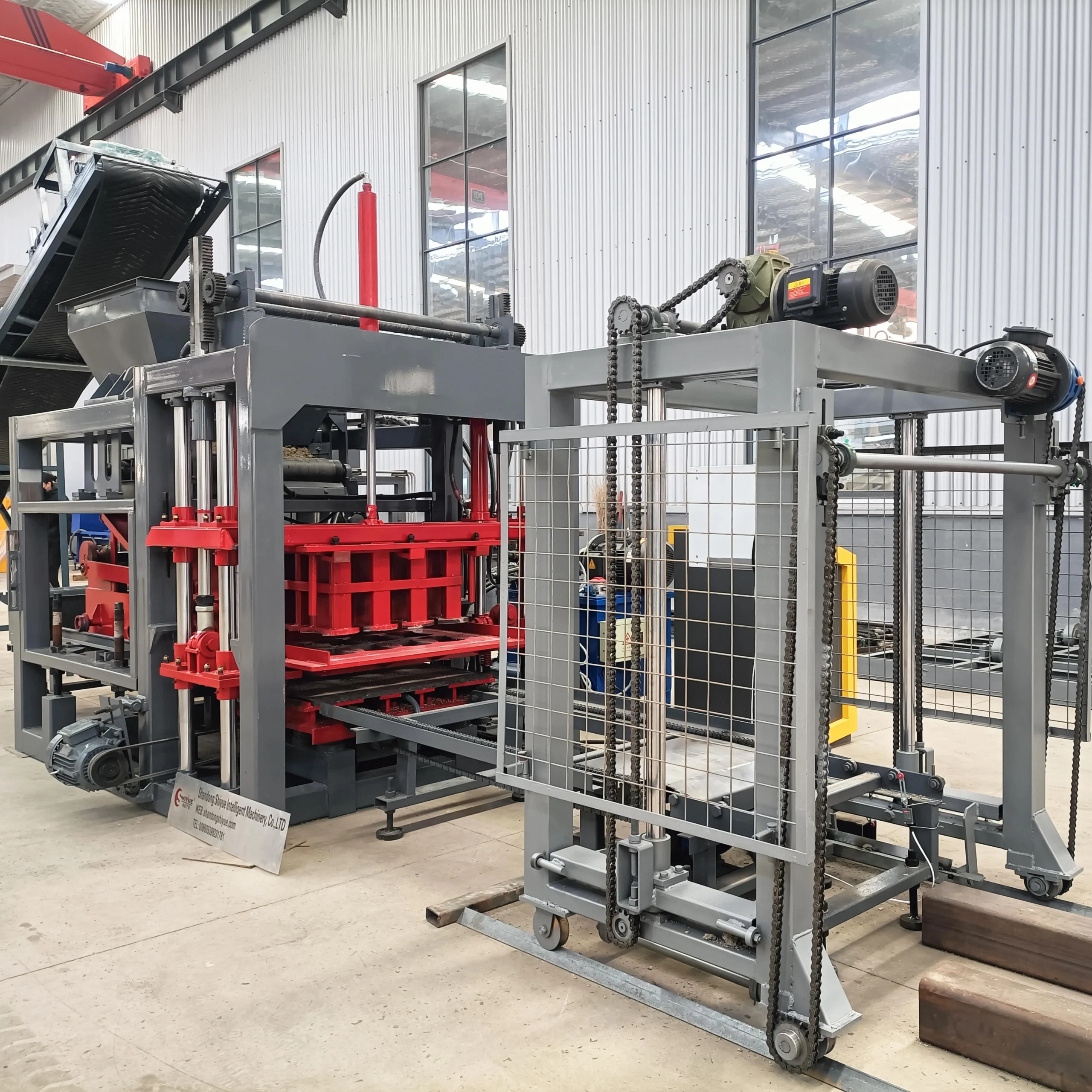
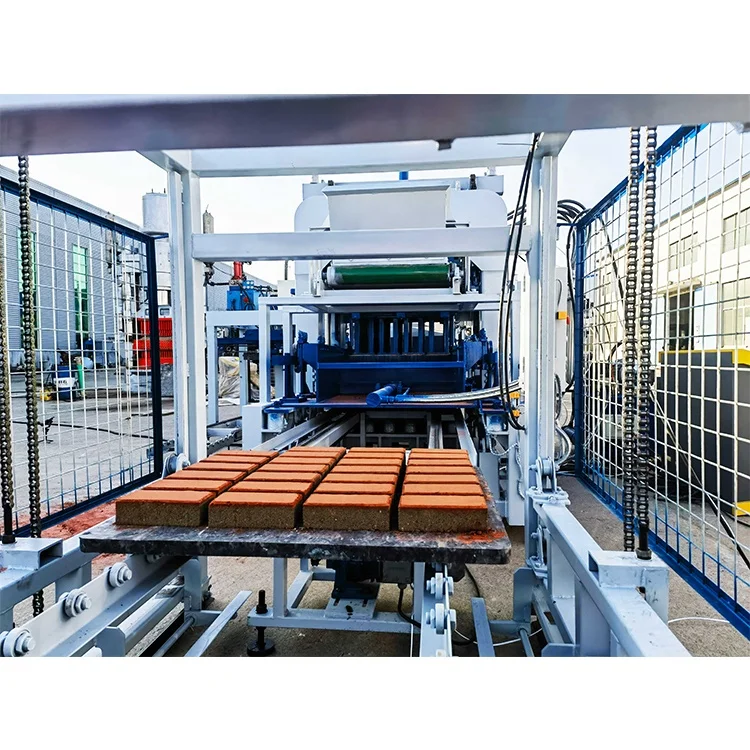
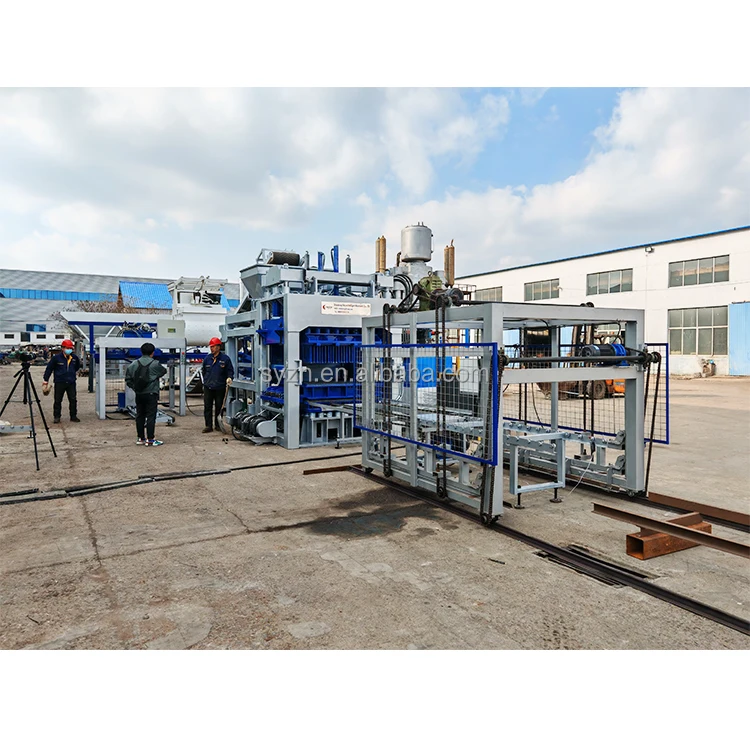
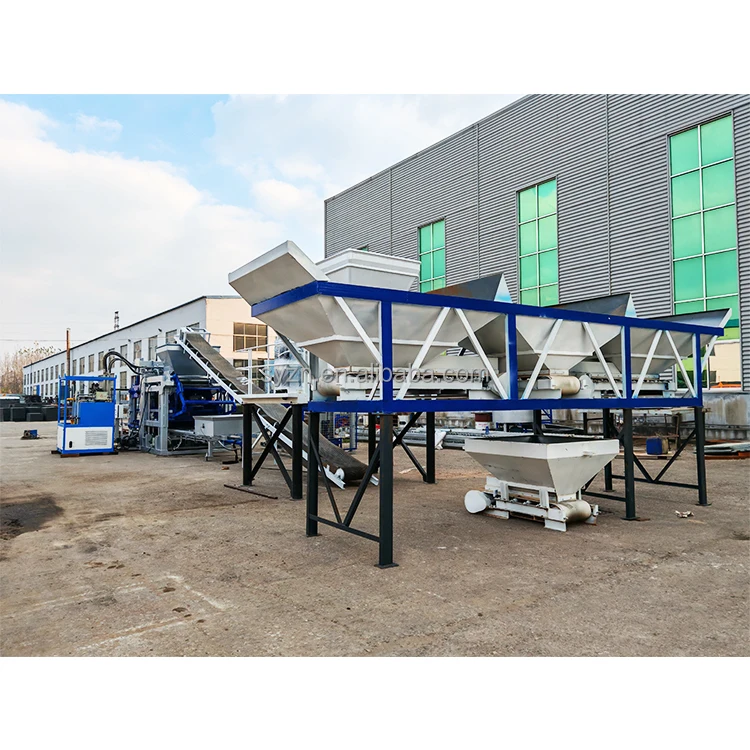
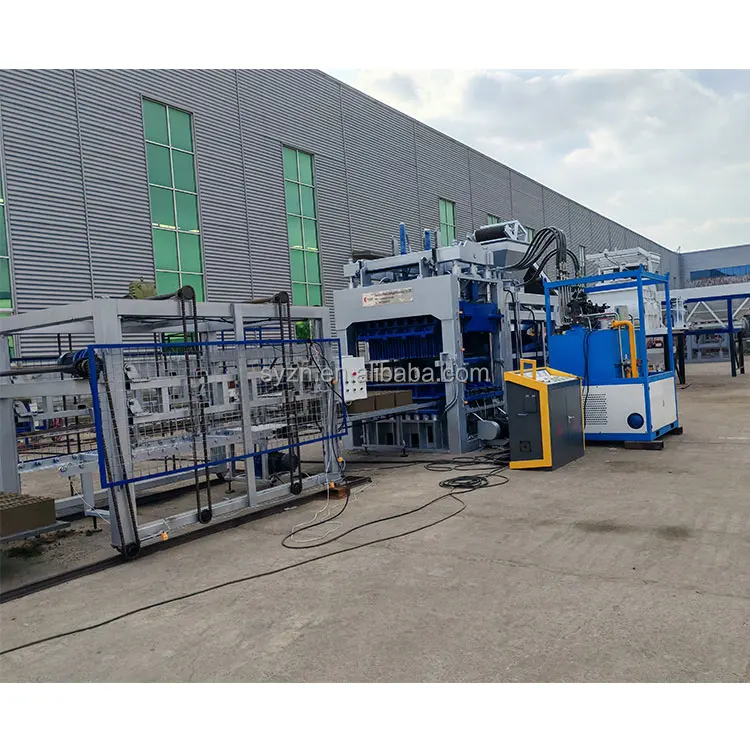
Matched System Engineering — The QT18-15 block machine, mould, pallet, and handling equipment are specified together against your actual mix design and target format, not pulled from a catalogue default.
Technical Specifications
| Parameter | Value |
|---|---|
| Model | QT18-15 |
| Product Type | Hydraulic Concrete Block Making Machine |
| Overall Dimensions (L×W×H) | 9350×2520×2950 mm |
| Net Weight | 18 T |
| Rated Power | 90 kW |
| Voltage & Frequency | 380V (configurable to buyer needs) |
| Control System | PLC (display language options available) |
| Demoulding Method | Hydraulic |
| Pallet Size | 1350×1350×30 mm |
| Output Capacity | 4320 pcs/h based on 400×200×200 mm hollow block, 18 pcs/mould |
| Daily Output | 34560 pcs/day based on 400×200×200 mm hollow block |
| Hydraulic Pressure | To be confirmed per configuration |
| Vibration Force | Four external vibration motors (kN rating to be confirmed) |
| Mould Format Examples | 400×200×200 mm (18 pcs/mould), 400×150×200 mm (24 pcs/mould) |
| Automation Level | Automatic |
| Material Feeder | European design with turning arm cylinder |
| Upper Mould Synchronization | Dual-side synchronous gear, four-point stabilization |
| Vibration Damping | Airbag system with adjustable air pressure |
| Standards | ISO 9001:2008, CE |
Application Suitability
| Application | Material or Output |
|---|---|
| Hollow concrete block production | Crushed stone, sand, cement, fly ash aggregates |
| Solid block manufacturing | Dense concrete mixes for load-bearing walls |
| Interlocking brick production | Graded aggregates for dry-stack formats |
| Paver production | High-strength concrete with fine aggregate finishes |
What "4320 Pieces per Hour" Leaves Out
The number only holds if your block format, mix design, and aggregate match the assumptions behind it.
Capacity figures on block machines are routinely stated against a single reference format — often a large hollow block that happens to yield the highest pieces-per-mould count. When a buyer runs a different format, the actual throughput can drop substantially. I have seen plants where the daily tally fell well short of expectations simply because the cycle time for the buyer’s primary product was never verified against the quoted number. The QT18-15 block machine specifications here are stated per format: 4320 pieces per hour based on a 400×200×200 mm hollow block at 18 pieces per mould, and 5760 pieces per hour based on a 400×150×200 mm block at 24 pieces per mould [NEED_CITE: capacity calculation methodology for hydraulic block presses]. If your market sells a different format, the cycle time and daily output must be recalculated before the machine is ordered.
Matching Vibration to Your Aggregate
Every aggregate behaves differently under vibration. Red laterite soils common across West Africa, for instance, absorb vibration energy in ways that clean river gravel does not. The QT18-15 uses four external vibration motors paired with an airbag damping system where air pressure is adjustable. This means the vibration amplitude can be tuned on-site to match the density and moisture characteristics of whatever material is locally available. Getting this wrong produces blocks that crumble at the edges or fail compression tests after curing.
Pallet Size and the Rest of Your Plant
A 1350×1350 mm pallet is large, and it was chosen to support the high pieces-per-cycle count that makes the QT18-15 competitive for high-capacity plants. But that pallet must fit your existing curing racks, your forklift fork dimensions, and the aisle widths in your curing yard. I have watched plants receive machines with pallets that their forklifts could not handle, forcing a complete re-racking of the curing area [NEED_CITE: pallet handling logistics in concrete block plants]. The pallet specification should be confirmed against your facility layout before production begins.
Reading the Specification Sheet Honestly
The 90 kW rated power drives both the hydraulic system and the vibration motors simultaneously, which matters for your transformer sizing and dedicated circuit planning. The European-design material feeder with turning arm cylinder distributes concrete uniformly across the mould cavity — uneven feeding is one of the most common causes of density variation between blocks in the same cycle. The dual-side synchronous gear on the upper mould provides four-point stabilization, which keeps the pressure even across all cavities and extends mould life. The hydraulic demoulding method gives cleaner extraction than mechanical stripping, reducing surface damage on interlocking brick formats. These parameters together determine whether your block strength stays consistent from the first pallet of the shift to the last.
The Cost of Skipping Configuration
When voltage and frequency are not confirmed before the machine leaves the factory, commissioning stalls. A PLC display in a language the local operators cannot read means every fault code requires a phone call instead of a quick fix. A mould change system that was not timed during factory testing can consume most of a shift, eliminating the format flexibility that justified the investment [NEED_CITE: mould change procedures on multi-format block machines]. These are not minor inconveniences — they are production stoppages that cost real daily output.
Why Source This Machine Here
Block machinery is a single focus, so the QT18-15 is not assembled from mismatched suppliers. The machine, mould, pallet, and handling equipment are specified as one system. Configuration is set against the buyer’s actual mix design and local aggregate, not a default table. Mould design covers the formats the buyer’s market actually sells, including custom drawings when needed. The automation level is selectable — a plant can start with semi-automatic pallet handling and add stacking later. Installation support includes on-site commissioning and operator training so the first week of production is not spent troubleshooting preventable issues.
Documentation & Verification
- Line layout with capacity calculation stating block format assumed for each output figure
- Mould drawing and format list confirming which block types the capacity applies to
- Pallet specification matched to curing rack dimensions and handling equipment
- Hydraulic and electrical schematic with confirmed voltage and frequency
- Factory test record on buyer’s target block format before dispatch
- Operation and maintenance manual in confirmed PLC display language
Installation, Commissioning & Support
- Foundation plan sized to the 9350×2520 mm footprint and 18 T operating weight
- Dedicated power circuit rated for 90 kW at confirmed voltage and frequency
- On-site parameter tuning of airbag vibration pressure to match local aggregate
- PLC display language set before shipment to avoid commissioning delays
- Operator training covering mould change procedure and cycle time by format
- Wear parts list including hydraulic seals and vibration motor service intervals
What We Need to Quote Accurately
Provide your target block format and the daily volume your market demands. Send a sample of your local aggregate or describe the raw materials you plan to use. Confirm the voltage, frequency, and PLC display language for your facility. If you have an existing curing yard, share the rack dimensions and forklift specifications so the 1350×1350 mm pallet can be validated against your layout.
Frequently Asked Questions
Q: How is the QT18-15 capacity verified per block format?
A: Each output figure is calculated against a specific mould and cycle time. The 4320 pieces per hour figure assumes a 400×200×200 mm hollow block at 18 pieces per mould. If your primary product is a different format, we recalculate cycle time and daily output before the quotation is issued, so the capacity you buy is the capacity you run.
Q: How should I match the 1350×1350 mm pallet to my curing area?
A: Measure your curing rack spacing, forklift fork width, and aisle clearance. The pallet size drives how many blocks cure per rack tier and how they move through the yard. We confirm pallet compatibility with your existing handling equipment before production starts to avoid costly facility modifications after delivery.
Q: What mould formats are available and how long does a change take?
A: Standard formats include hollow blocks, solid blocks, interlocking bricks, and pavers, with custom mould design available to buyer drawings. Mould change time depends on the format and the quick-release system fitted. We verify change time during the factory test so you know the actual downtime between production runs.
Q: How are vibration force and hydraulic pressure matched to my mix?
A: The four external vibration motors work with an adjustable airbag damping system. We ask for a sample or description of your local aggregate, then set the air pressure and hydraulic pressure to produce consistent density with that specific material. On-site fine-tuning during commissioning adjusts for any variation in moisture or gradation.
Q: What voltage and PLC language options are confirmed before shipment?
A: Voltage and frequency are configurable, and the PLC display language is selected from available options. Both are confirmed in writing before production begins. This prevents the common situation where a machine arrives and sits idle while an electrician sources a transformer or an operator waits for a translated manual.