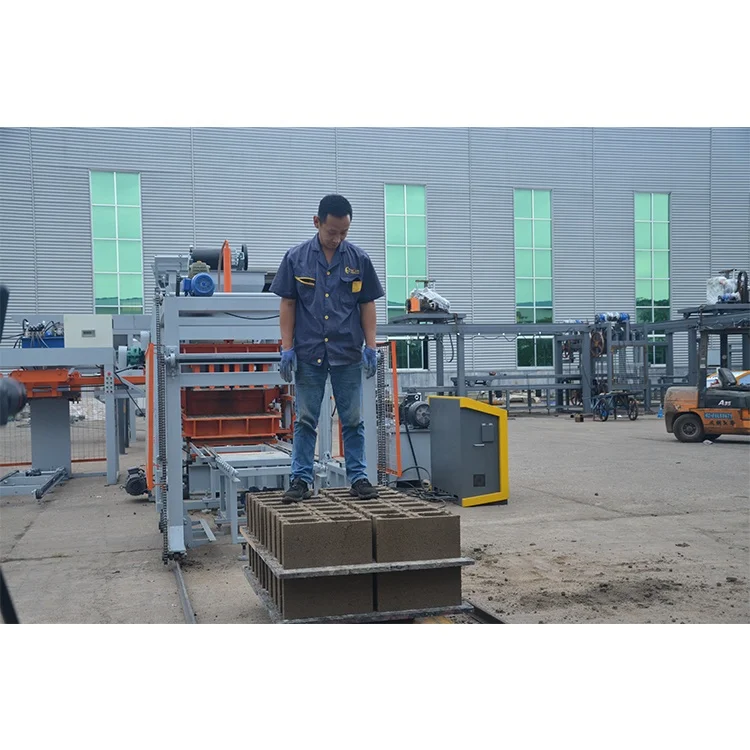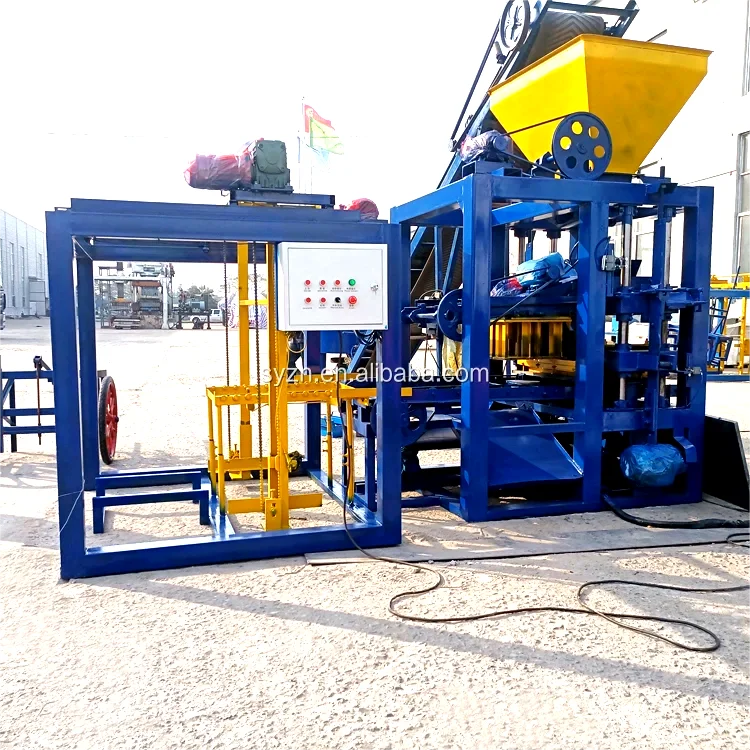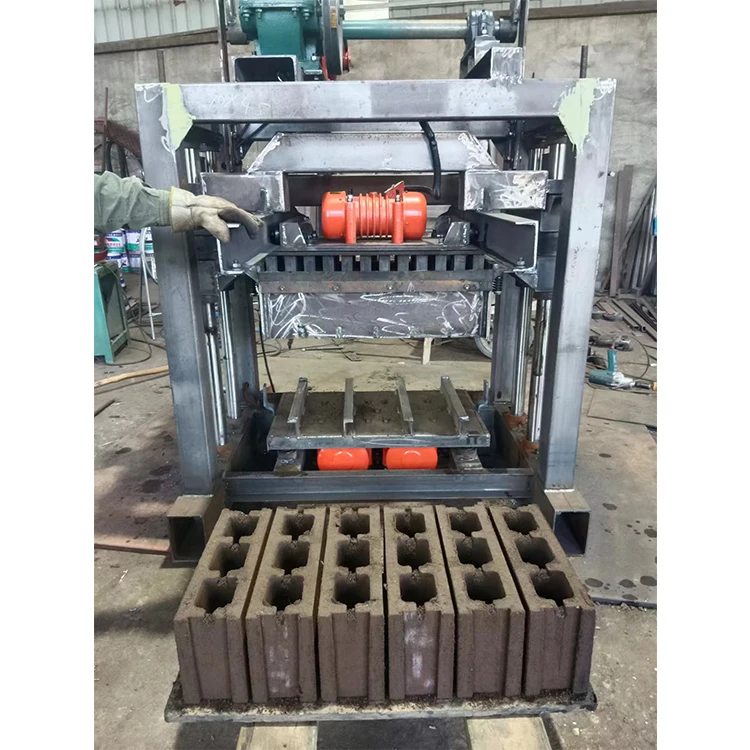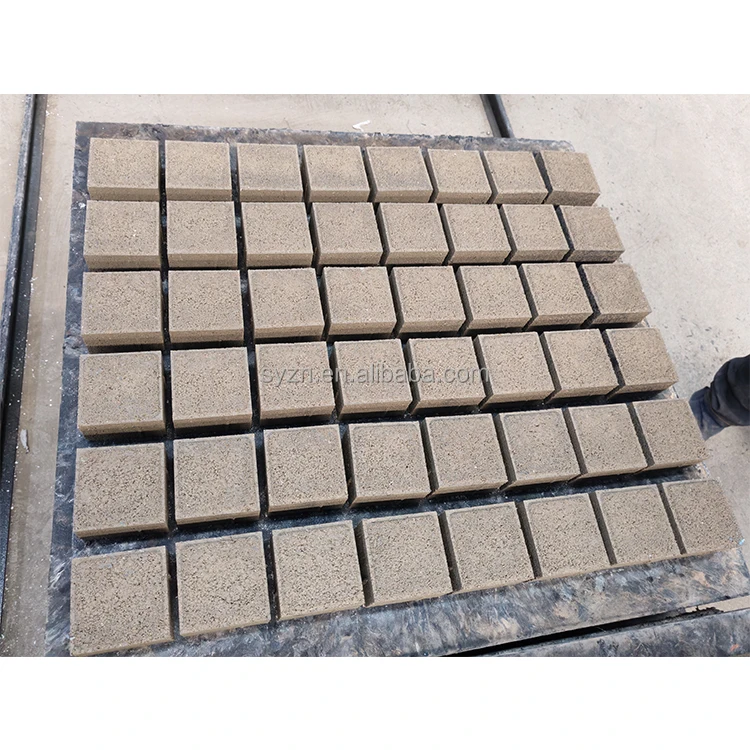

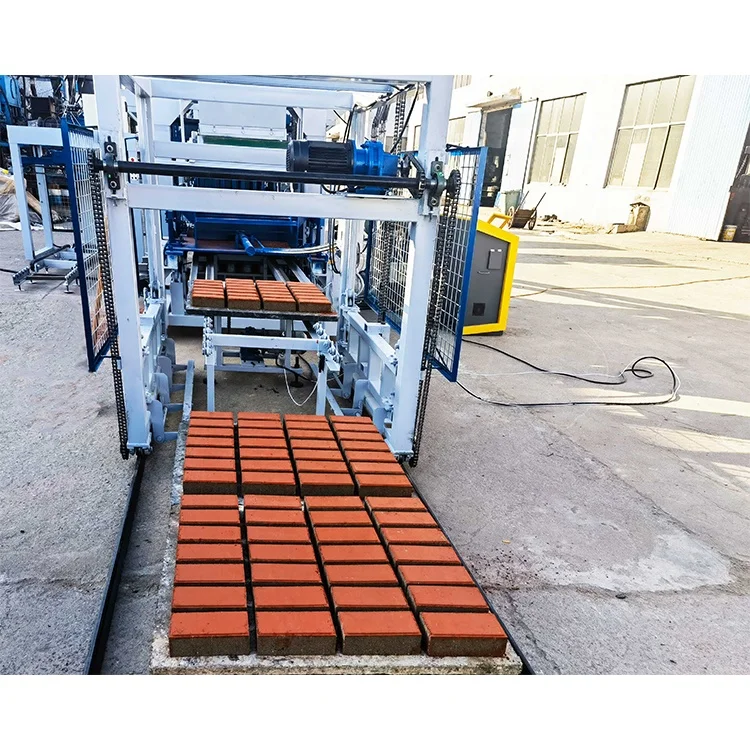


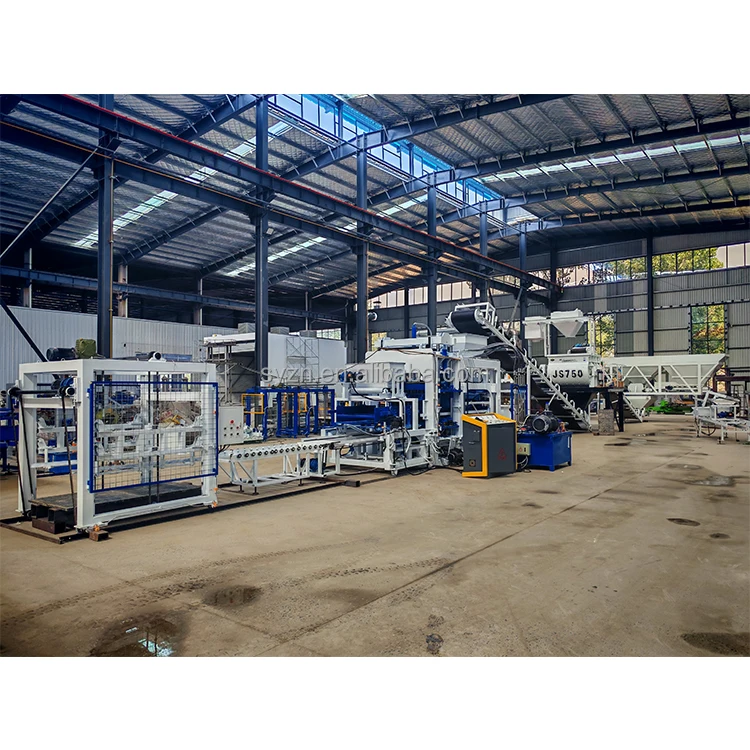
Description
Block format honesty — every output figure is tied to a specific block type and material, not a brochure headline that falls apart on the first production shift.
Technical Specifications
| Parameter | Value |
|---|---|
| Model | QT8-15 |
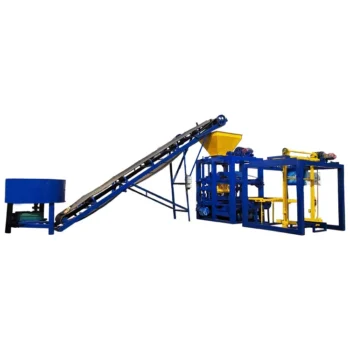
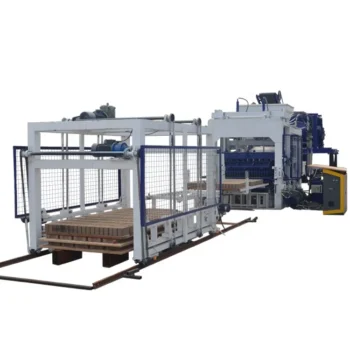
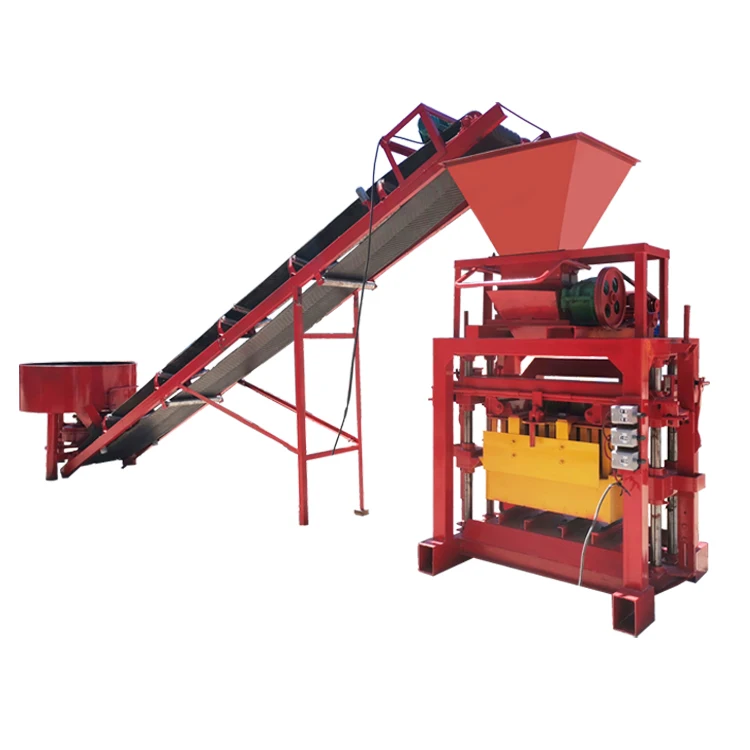
| Product Type | Full Automatic Hydraulic Block Making Machine |
| Overall Dimensions (L×W×H) | 8300×1860×3000 mm |
| Rated Hydraulic Pressure | 21 MPa |
| Main Vibration Form | Platform Vibration |
| Vibration Frequency Range | 2800–4500 r/min |
| Vibration Force | 45 kN |
| Pallet Size | 950×900 mm |
| Molding Cycle | 15–20 s (basis not stated in source — confirm per block format and material) |
| Total Installed Power | 55.5 kW |
| Total Mass | 8 T |
| Demolding Method | Hydraulic |
| Minimum Factory Area | 300 m² |
| Raw Materials Accepted | Crushed stone, sand, cement, fly ash, gravel, slag, stone dust |
| Automation Level | Full Automatic (PLC brand and model to be confirmed) |
| Voltage & Frequency | Configurable (to be confirmed before production) |
| Control Language | Configurable (to be confirmed before commissioning) |
| Mould Change Time | To be confirmed |
| Output Capacity | Per format calculation required (basis to be confirmed) |
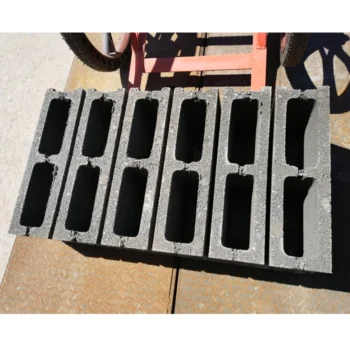
| Applicable Block Formats | Hollow blocks, solid blocks, pavers, interlocking blocks, kerbstone, colored pavers |
| Warranty | 1 year (excluding wear parts) |
Application Suitability
| Application | Material or Output |
|---|---|
| Hollow block production for wall construction | Crushed stone and cement mix, fly ash blends |
| Solid block production for load-bearing walls | Dense aggregate with cement binder |
| Paving block and interlocking paver production | Fine sand, stone dust, cement, pigment for colored runs |
| Kerbstone and curb production | Coarse gravel, cement, high-pressure hydraulic compaction |
| Colored concrete paver production | Pigmented face mix over standard base layer |
What "15–20 Seconds Cycle" Actually Means for Your Daily Output
Cycle time without a block format is meaningless.
I have watched buyers compare machines on a single cycle number and then discover on commissioning day that their main product — say a 200 mm hollow block — pulls the cycle well past the quoted range. The QT8-15 block machine specifications list a 15–20 second molding cycle, but that figure assumes a particular block size, wall thickness, and aggregate gradation that may not match your local mix. Hollow blocks with deep cores require longer vibration to consolidate the face, while thin pavers can cycle faster but demand tighter dimensional tolerance. Without a format-by-format breakdown, daily output projections are guesswork [NEED_CITE: block cycle time dependency on format and aggregate].
Pallet Size Determines Everything Downstream
The 950×900 mm pallet on the QT8-15 sets the number of blocks per press stroke and locks in your curing rack dimensions, forklift tine spacing, and stacking pattern. A buyer who already runs a block plant must verify that existing racks accept this pallet footprint before the machine ships. Switching pallet size after installation means replacing curing racks and reconfiguring the handling line — a cost that never appears in the original quotation.
Matching Vibration to Local Aggregate
Platform vibration at 2800–4500 r/min delivers up to 45 kN of compaction force into the mould cavity. The correct frequency depends on whether your local aggregate is sharp crushed stone, rounded river sand, or high-clay stone dust. I recently spent a night re-tuning a QT8-15 block machine specifications sheet in Southeast Asia because the local stone dust carried heavy clay content that dampened vibration transfer; the blocks came out soft until we adjusted the frequency upward and extended the vibration window. Your mix design must be confirmed against the machine’s vibration profile before capacity figures are finalized [NEED_CITE: vibration frequency and aggregate compatibility in block compaction].
Reading the Core Specs Against Your Production Reality
The 21 MPa rated hydraulic pressure drives demolding and supports the range from lightweight hollow blocks to dense interlocking pavers. Lower pressure settings suit hollow blocks where the core must remain intact during extraction; higher settings compress paver mixes to the density needed for vehicular traffic. The 55.5 kW total installed power covers the hydraulic pump, vibration motors, and material feed system simultaneously — a figure that matters when sizing your transformer and dedicated circuit. The 8-ton machine mass contributes to vibration damping during pressing; a lighter frame would transmit more energy into the foundation, requiring a more substantial concrete slab beneath the 300 m² factory area. Mould change flexibility depends on how the QT8-15 secures and aligns each mould cassette, a detail that determines whether your crew can swap from hollow block to paver in one shift or needs most of the day [NEED_CITE: hydraulic pressure settings for different block densities].
The Cost of Skipping Format-by-Format Confirmation
Buyers who accept a single headline capacity figure often discover that their highest-volume block format runs slower than quoted, pulling daily output below the threshold needed to meet contract deadlines. Pallet incompatibility with existing curing infrastructure forces unplanned rack purchases. Unconfirmed voltage and control language delay commissioning by days or weeks while electricians source the correct transformer and the PLC display is reprogrammed. These are not rare edge cases — they appear on nearly every project where the specification phase was rushed [NEED_CITE: common commissioning delays in block plant installations].
Why Buyers Specify Through This Process
The QT8-15 is configured against your actual block format and local raw material, not pulled from a catalogue default. Mould design covers the specific shapes your market demands, including custom profiles from buyer drawings. Pallet, handling, and curing specifications are matched as one system rather than left as separate afterthoughts. Automation level is selectable, allowing a buyer to start with semi-automatic pallet handling and add full stacking later. Factory testing records document cycle time and block strength on your exact mix before the machine leaves the workshop.
Documentation & Verification
- Line layout showing capacity per block format with pallet flow and curing rack arrangement
- Mould drawing set listing every block profile and dimensional tolerance
- Pallet specification confirming material, thickness, and compatibility with your existing racks
- Hydraulic and electrical schematic with confirmed voltage, frequency, and PLC language
- Factory test record documenting cycle time and block compressive strength on your mix
- Wear parts and mould list identifying consumables and replacement intervals
Installation, Commissioning & Support
- 300 m² minimum factory area with level concrete slab rated for 8-ton dynamic load
- Dedicated power circuit sized for 55.5 kW continuous draw at confirmed voltage and frequency
- Machine arrives partially assembled; hydraulic and vibration systems require on-site alignment
- First-run commissioning includes vibration frequency tuning to your specific aggregate blend
- Operator training covers mould change procedure, PLC navigation, and daily maintenance checkpoints
- Wear parts list identifies high-friction components and recommended stocking quantities
Before You Request a Quote
Send us the block formats your market actually sells, with target daily volume for each. Include a sample or lab report of your local aggregate so we can match vibration settings and confirm cycle times per format. Confirm your existing voltage, frequency, and any curing racks or forklifts the pallets must work with.
Frequently Asked Questions
Q: How is QT8-15 output capacity calculated per block format, and what is the realistic daily output?
A: Output is calculated by dividing available production hours by the confirmed cycle time for each specific block format, then multiplying by blocks per pallet. Hollow blocks and pavers have different cycle lengths and different block counts per press stroke, so a single headline number cannot represent the full range. We provide a format-by-format table before quotation.
Q: Which mould formats are available, and can custom moulds be designed from buyer drawings?
A: Standard moulds cover hollow blocks, solid blocks, interlocking pavers, kerbstones, and colored face-mix pavers. Custom moulds can be engineered from buyer-provided drawings, including non-standard dimensions and surface textures, with mould cassette dimensions matched to the QT8-15 pallet and hydraulic demolding travel.
Q: How are vibration force and hydraulic pressure adjusted to match local aggregate?
A: Vibration frequency is adjustable across the 2800–4500 r/min range, and hydraulic pressure settings are tuned during commissioning. The correct combination depends on aggregate particle shape, clay content, and cement ratio. We confirm settings using a sample of your local material during factory testing or on-site commissioning.
Q: Is the 950×900 mm pallet compatible with my existing curing racks and forklift?
A: Pallet compatibility depends on your rack slot width, tine spacing, and stacking pattern. We confirm pallet dimensions and material against your existing infrastructure before production. If your racks were built for a different pallet size, we discuss options before the machine ships rather than after it arrives.
Q: What information is needed to confirm voltage, frequency, and control language before production?
A: We need your site voltage, phase configuration, and supply frequency in writing, along with the preferred PLC display language. These details are locked before manufacturing begins to prevent commissioning delays. Changes after production has started may require component replacement and extend lead time.