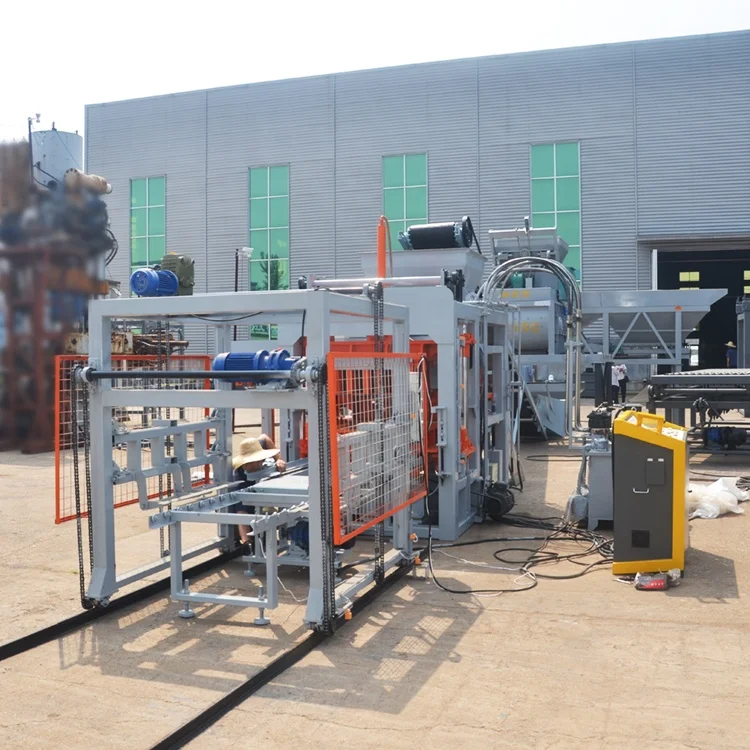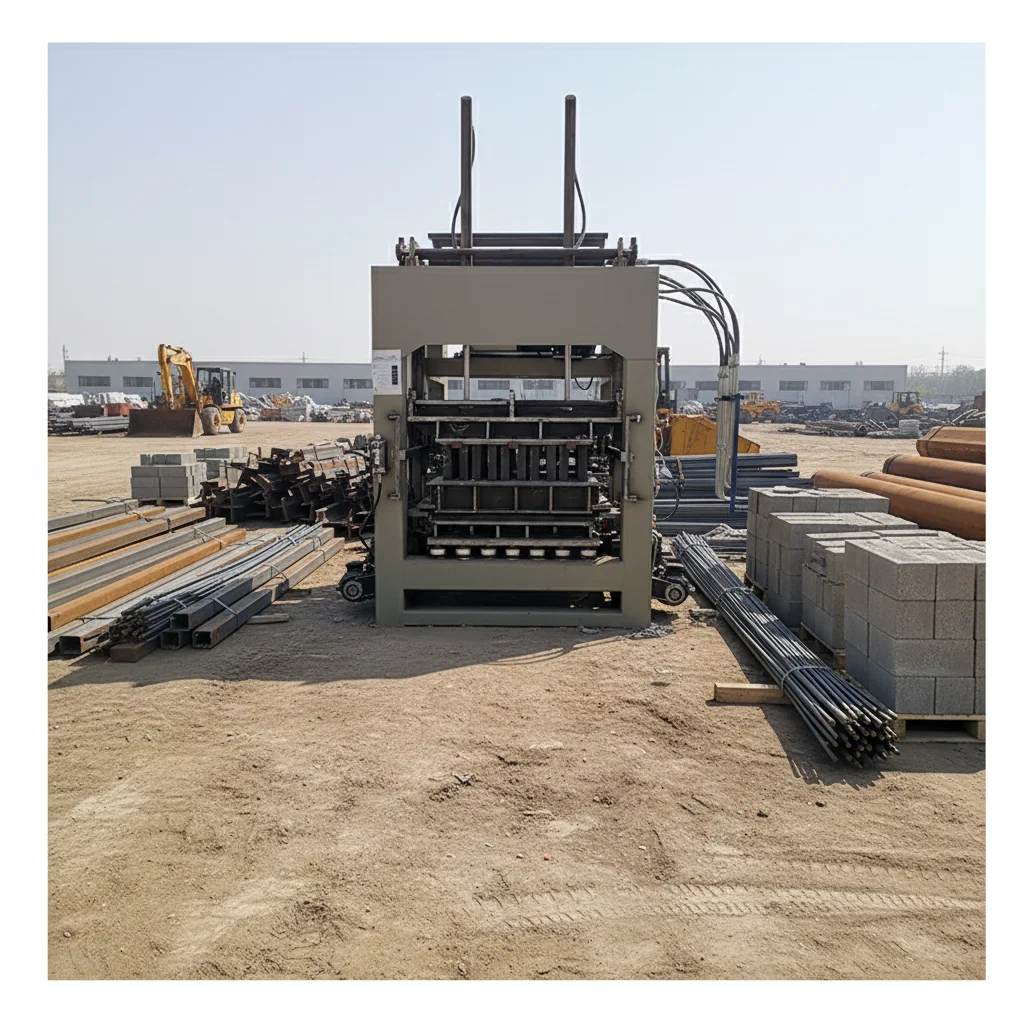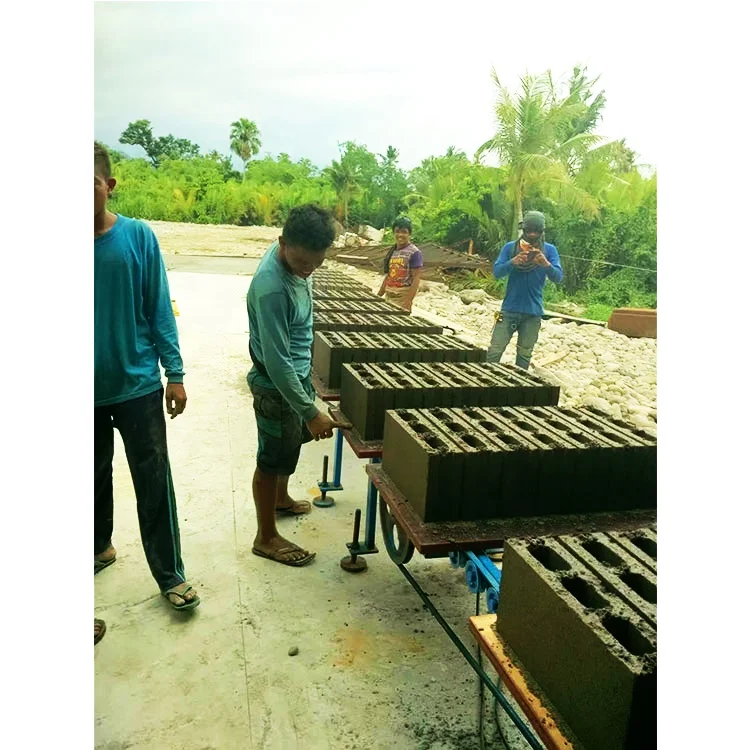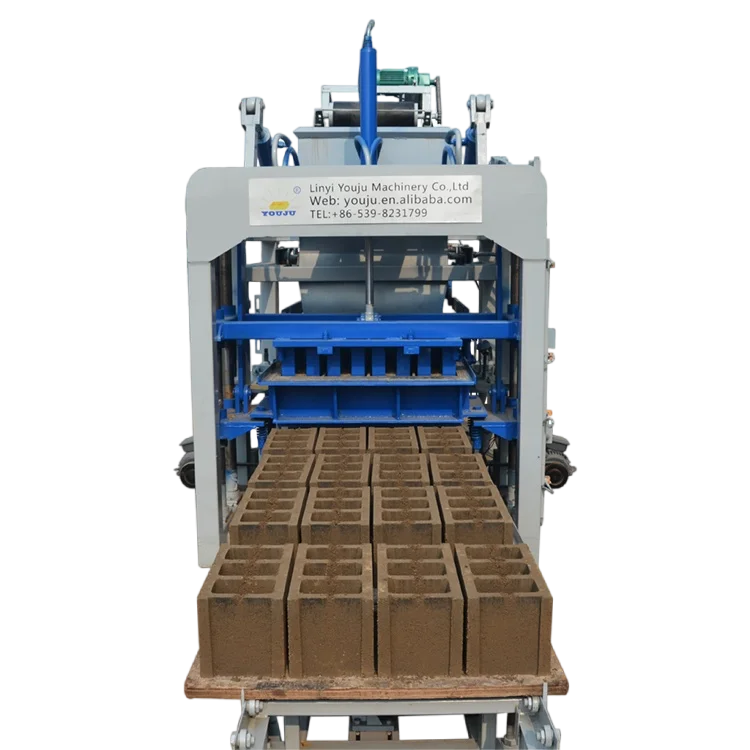
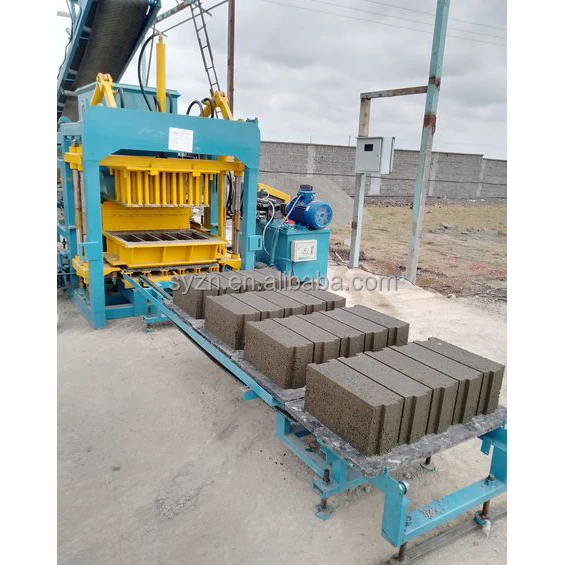

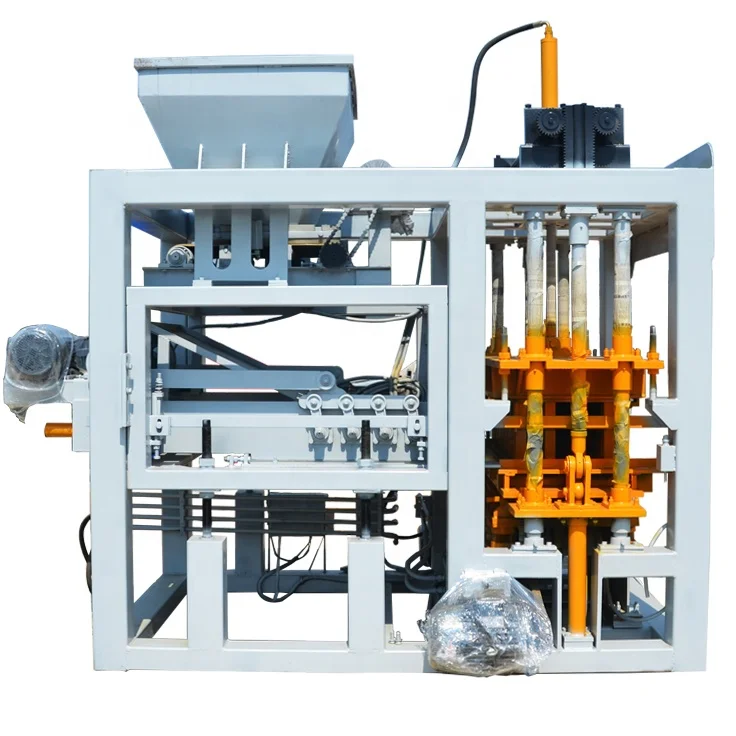
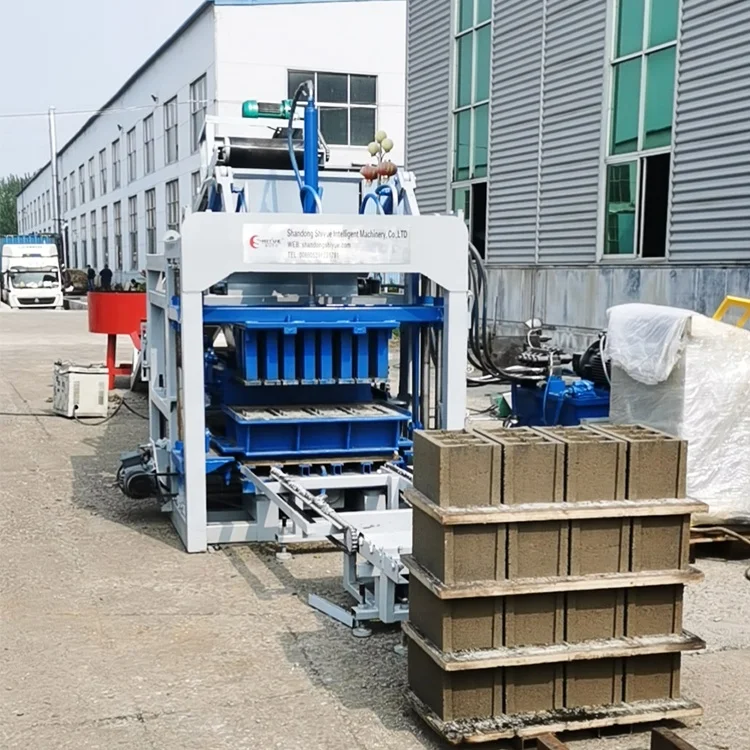

Description
Configuration matched to your local aggregate and target block format — capacity is calculated per specific product type rather than quoted as a single misleading cycles-per-hour figure.
Technical Specifications
| Parameter | Value |
|---|---|
| Model | QT415 |
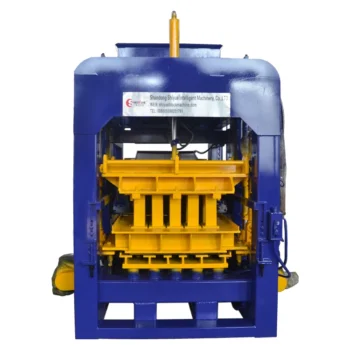
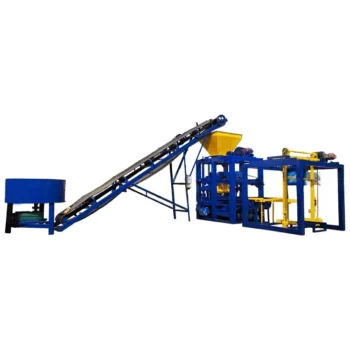
| Product Type | Full Automatic Vibration Press Concrete Block Making Machine |
| Overall Dimensions (L×W×H) | 4100×1600×2600 mm |
| Rated Hydraulic Pressure | 16–21 MPa |
| Main Vibration Form | Platform Vibration |
| Vibration Frequency | 4200 r/min |
| Vibration Force | 55 kN |
| Pallet Size | 880×550 mm |
| Molding Cycle | 25–30 s (basis not stated in source — depends on block format and material) |
| Overall Power | 18.45 kW (source value — verify against manufacturer catalog) |
| Total Mass | 4 T |
| Demolding Method | Hydraulic |
| Minimum Factory Area | 300 m² |
| Raw Materials | Crushed stone, sand, cement, dust, fly ash, gravel, slag |
| Automation Level | Full Automatic |
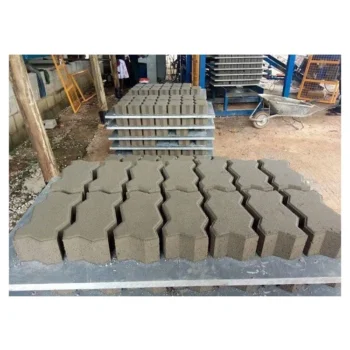
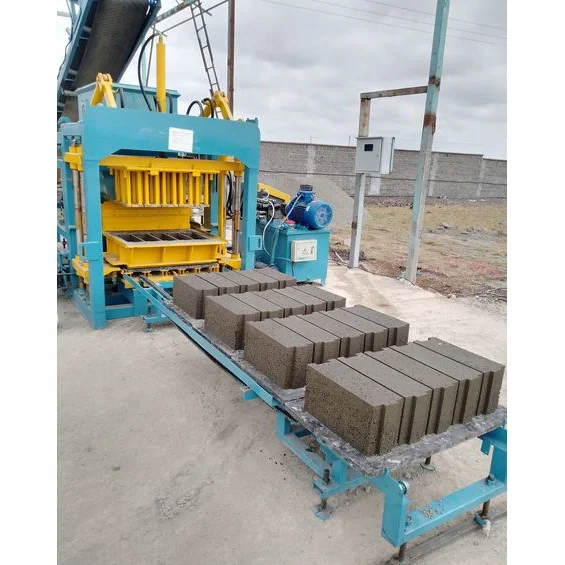
| Applied Products | Hollow blocks, solid blocks, pavers, interlocking blocks, kerbstones, colored pavers |
| Container Loading | 1×40HQ (basic equipment set) |
Application Suitability
| Application | Material or Output |
|---|---|
| Hollow block production for building walls | Crushed stone and cement with fly ash or sand aggregate |
| Solid block manufacturing for load-bearing structures | Dense aggregate blend of gravel, sand and cement |
| Interlocking paving brick for roads and walkways | Fine sand and cement mix with pigment for colored pavers |
| Kerbstone and curb production for infrastructure | Coarse aggregate with high cement ratio for edge durability |
| On-site block production for housing projects | Locally available stone dust and cement adjusted to regional aggregate |
What "25-Second Cycle Time" Leaves Out About the QT415 Block Machine Specifications
A cycle time is only meaningful when tied to the exact block format and local material you will actually run.
Catalog sheets often quote a single molding cycle without specifying whether that figure applies to a thin paver or a deep hollow block. In practice, a mix containing fine volcanic ash requires longer vibration and different hydraulic dwell than a standard crushed-stone blend. Buyers who order based on the fastest quoted cycle routinely see their daily output fall well short once production starts [NEED_CITE: real-world cycle time variation by aggregate type in block pressing]. Sizing the QT415 concrete hollow block making machine format and capacity around your actual product mix prevents this gap.
Matching Vibration Force to Your Local Aggregate
The QT415 block machine specifications list 55 kN of vibration force delivered through platform vibration at 4200 r/min. That force must be calibrated against the density and particle shape of your raw material. Angular crushed stone compacts differently from rounded river gravel, and fly ash blends demand adjusted vibration duration to reach full density without surface cracking. A configuration set against your specific mix design ensures consistent block strength across every production run.
Pallet Size and Curing Area Compatibility
The 880×550 mm pallet size on this machine determines how many blocks are pressed per cycle and how those pallets move through your curing area. If your existing forklifts and curing racks were designed around a different pallet dimension, adding this press without checking compatibility creates a bottleneck right at the stacking station. Confirming pallet material and size against your site layout before production avoids costly retrofits after the equipment arrives [NEED_CITE: pallet handling compatibility in block production lines].
Reading the Pressure and Vibration Combination
Hydraulic pressure between 16 and 21 MPa works together with the 55 kN vibration force to compact the mix into the mould cavity. Higher pressure alone does not guarantee stronger blocks — if vibration frequency is too low for the aggregate size, voids remain inside the block wall. Conversely, excessive vibration with insufficient hydraulic dwell can cause the block to slump during demolding. The QT415 full automatic vibration press concrete block making machine balances both parameters through adjustable PLC timing, but those settings must be tuned to your mix during commissioning. The 4100×1600×2600 mm overall footprint fits within a 300 m² factory area, leaving room for raw material staging and pallet circulation.
The Hidden Cost of Wrong Configuration Choices
When pallet size is chosen without checking the curing rack spacing, blocks cure unevenly and forklift operators spend extra time repositioning loads. A mould designed for a block format your market does not buy sits on the shelf while you order custom tooling at premium lead times. Voltage and frequency confirmed too late means the motor and PLC arrive incompatible with your local grid, delaying commissioning by weeks while replacement components ship [NEED_CITE: electrical specification mismatches in exported machinery installations]. These are not equipment failures — they are specification gaps that surface only after the machine is on your floor.
Why Source This Machine Here
Block machinery is the single production focus, so the QT415 is specified as a matched system — press, mould, pallet and handling — rather than assembled from unrelated suppliers. Mould design follows your local market formats, including custom drawings for block profiles that standard catalogs do not cover. Capacity calculations are stated per block format, so you see realistic daily output for hollow blocks, solid blocks and pavers separately instead of a single inflated number. The automation level is selectable, allowing a semi-automatic start with a defined upgrade path to full automatic stacking and cubing. Factory testing runs your actual mix design before dispatch, catching vibration and pressure mismatches before they become your problem.
Documentation & Verification
- Line layout and capacity calculation stating the block format assumed for each output figure
- Mould drawing and format list confirming cycle time per product type
- Pallet specification matched to your curing rack dimensions and forklift capacity
- Voltage, frequency and PLC display language confirmation recorded before production begins
- Factory test record using your raw material blend before dispatch
- Operation and maintenance manual with hydraulic and electrical schematics
Installation, Commissioning & Support
- Foundation plan sized to the 4100×1600 mm footprint with vibration isolation requirements
- Dedicated power circuit matching confirmed voltage and frequency for the 18.45 kW total load
- Container loading in 1×40HQ with dismantling sequence documented for reassembly
- On-site commissioning includes vibration force calibration against your local aggregate blend
- Operator training covers mould change procedure and PLC parameter adjustment
- Wear parts and mould list supplied for first replacement planning
Preparing Your Inquiry
Share the specific block formats your market sells, including dimensions and wall thickness for hollow blocks. Provide a sample or analysis of your locally available aggregate so the mix design can be tested before configuration. Confirm your site voltage, frequency and preferred PLC display language to avoid electrical mismatches. Include your available factory floor area and curing rack dimensions so pallet size and handling equipment are specified correctly from the start.
Frequently Asked Questions
Q: What is the realistic daily output of the QT415 for different block formats?
A: Daily output depends on block size, wall thickness and the aggregate in your mix. The molding cycle is listed at 25–30 seconds, but that figure must be validated against your specific format — a deep hollow block takes longer to compact than a thin paver. A capacity calculation stating the assumed block format is provided with every quotation so you can compare output figures honestly.
Q: How is the mould selected to match the blocks my market actually sells?
A: Mould design starts with the block profiles your local buyers purchase, not a standard catalog list. Custom moulds are built to your drawings, including interlocking patterns and kerbstone profiles. Each mould is tested with your raw material during factory trials to confirm that vibration force and hydraulic pressure produce consistent density and clean demolding.
Q: What pallet size does the QT415 use and how does it fit my curing area?
A: The machine uses an 880×550 mm pallet. Before production, this dimension is checked against your existing curing rack spacing and forklift tine width. If your current setup uses a different pallet size, the handling system is adjusted or alternative pallets are specified to avoid a bottleneck at the stacking and curing stations.
Q: How long does a mould change take and what tools are needed?
A: Mould change time depends on the format and whether quick-release clamps are included in your configuration. Hydraulic demolding means the mould is bolted to the press table, and swap procedures are covered during operator training. The goal is to keep format changeover within a portion of one shift so multi-format production remains practical.
Q: How are voltage, frequency and control language confirmed before shipping?
A: Your local electrical grid specifications and preferred PLC display language are recorded before production begins. The motor winding, control panel and PLC interface are built to those confirmed values. This step is documented in writing so commissioning is not delayed by electrical incompatibility when the machine arrives at your site.