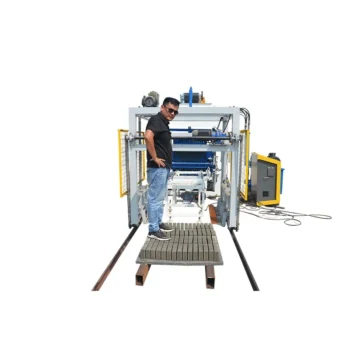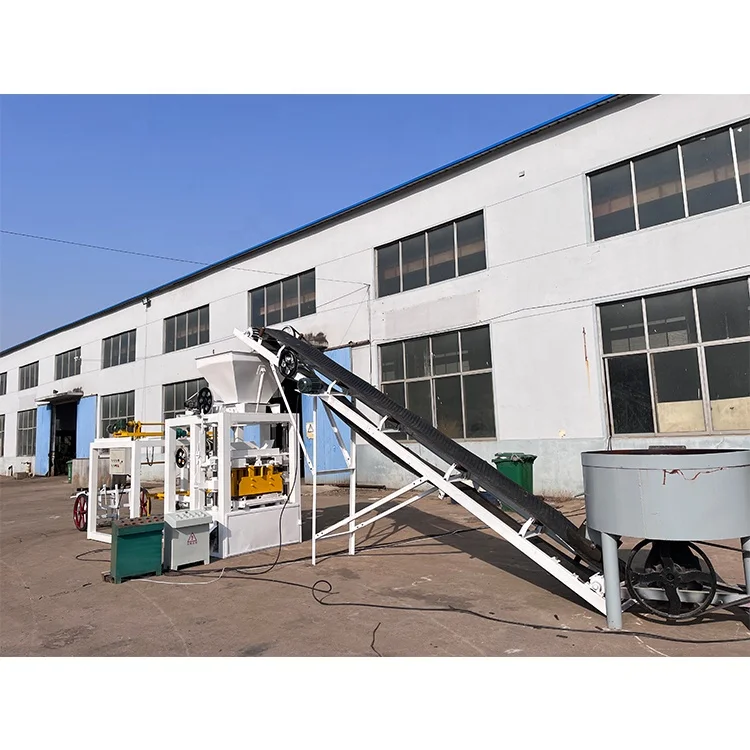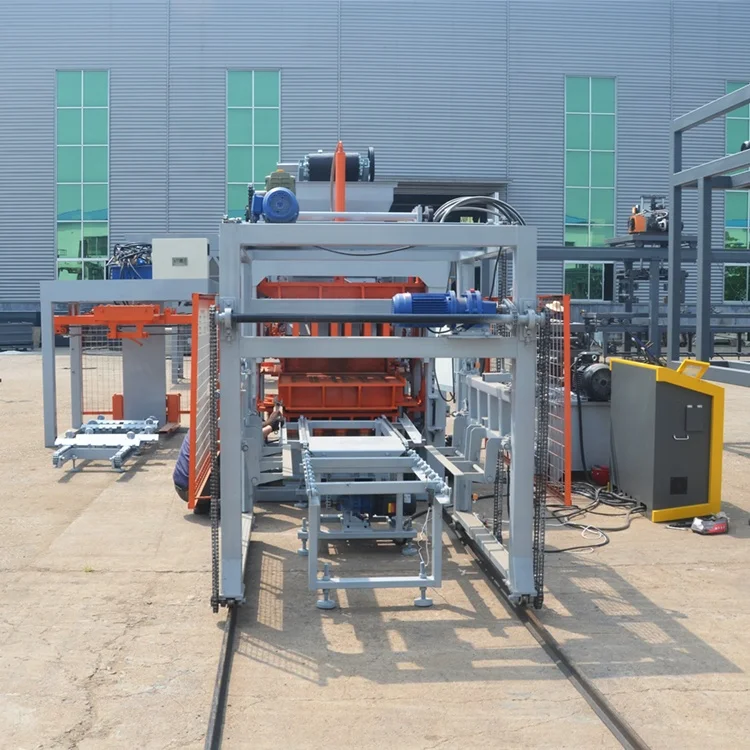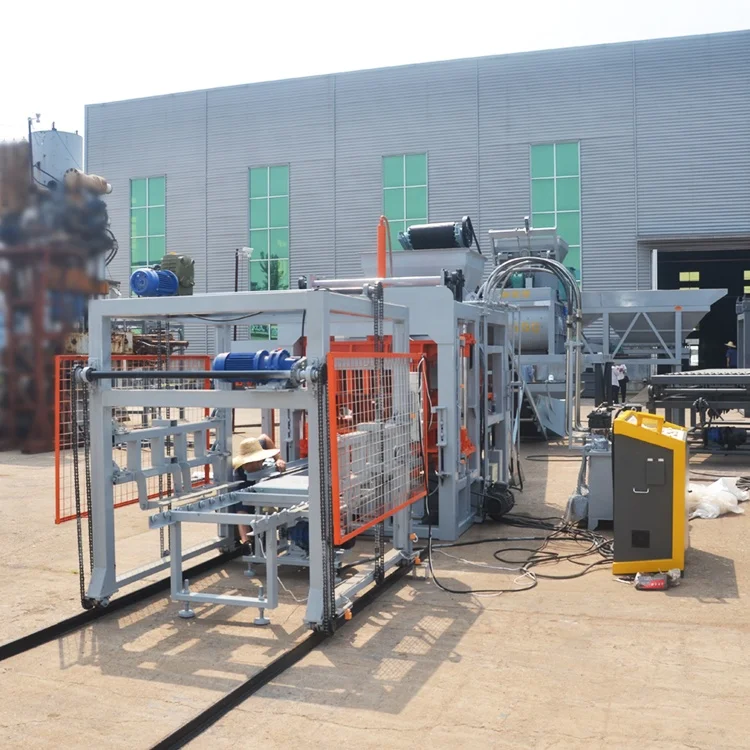



Description
System-Matched Line Design — Every output figure below states the exact block format, cavity count, and mould size assumed, so daily throughput projections hold up on your shop floor, not just in a catalogue.
Technical Specifications
| Parameter | Value |
|---|---|
| Model | QT4-15A |
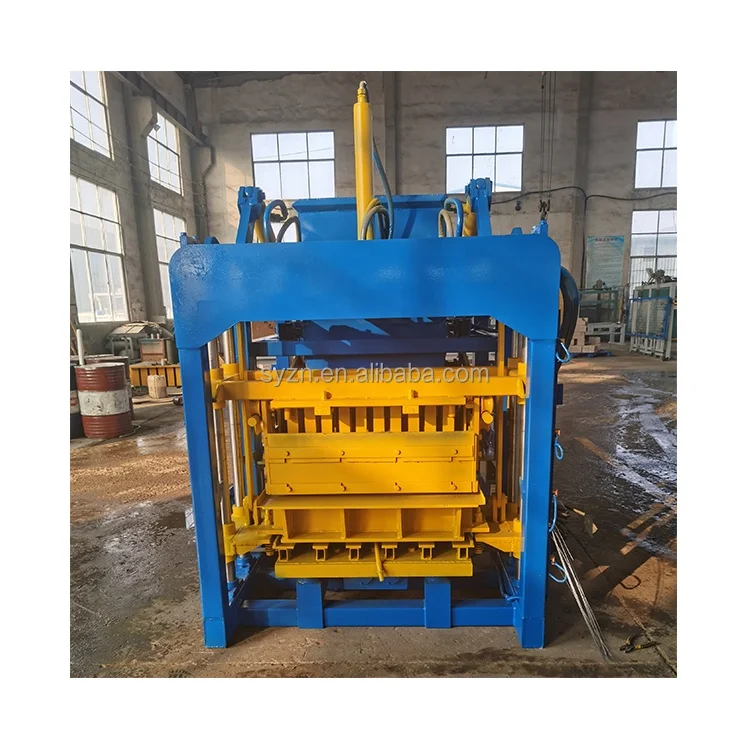
| Product Type | Automatic Concrete Block Making Machine |
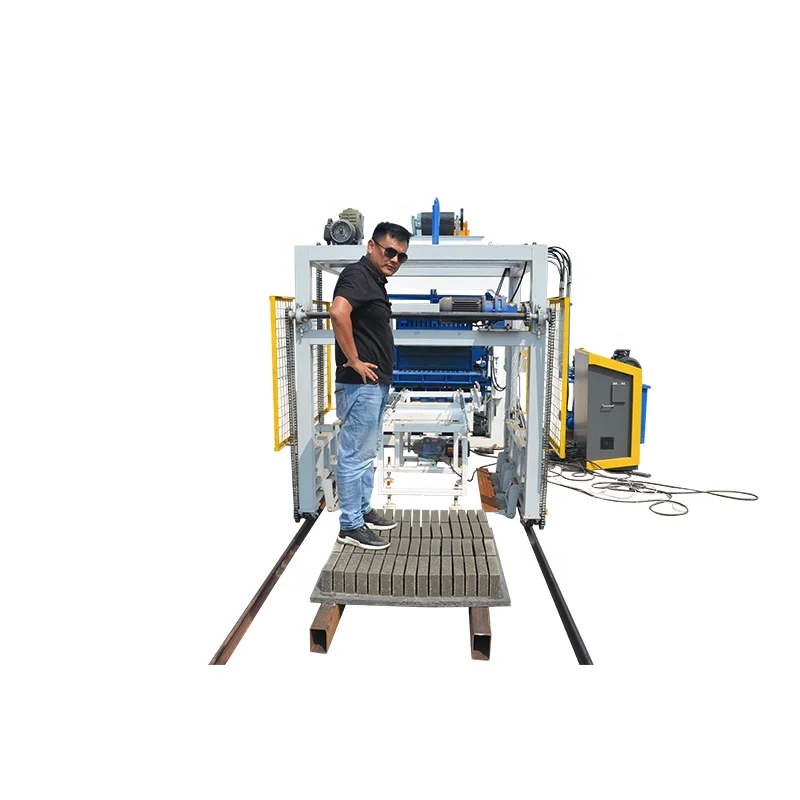
| Overall Dimensions (L×W×H) | 7100 × 1600 × 2610 mm |
| Molding Cycle | 15–25 s (basis to be confirmed by block format and material) |
| Vibration Frequency | 4600 r/min |
| Vibration Force | 40–50 kN |
| Total Power | 18.45 kW |
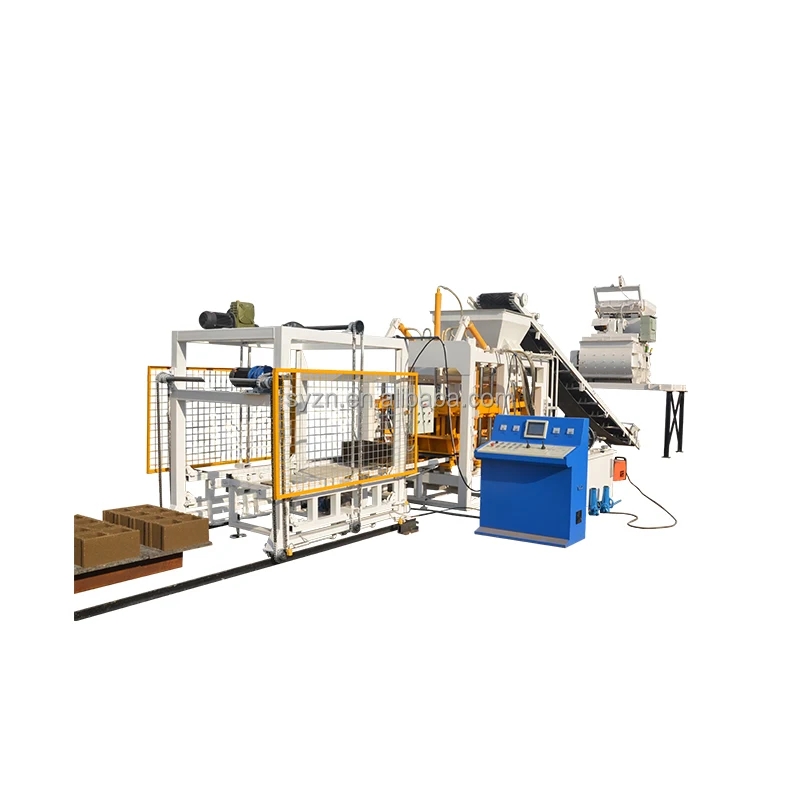
| Mixer Model | JQ350 |
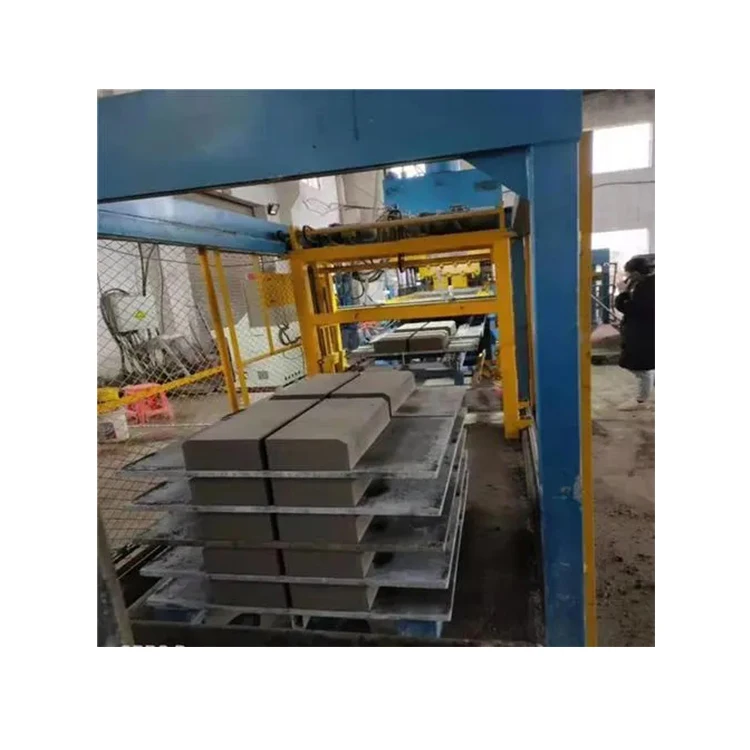
| Pallet Size | 850 × 550 × 25 mm |
| Total Weight | 3 T |
| Control System | PLC control system |
| Hydraulic Station | Included |
| Included Equipment | Block making machine, hydraulic station, PLC control system, pallet feeder, brick conveyor, block sweeper |
| Free Accessories | Manual hydraulic trolley, spare parts and tools |
| Output — Hollow Block 400×200×200 mm | 4 pcs/mould, 408 pcs/hr, 3264 pcs/8hr |
| Output — Hollow Block 400×150×200 mm | 5 pcs/mould, 510 pcs/hr, 4080 pcs/8hr |
| Output — Solid Brick 240×115×53 mm | 18 pcs/mould, 2100 pcs/hr, 17000 pcs/8hr |
| Applied Products | Paver, solid block, hollow block, curbstone |
| Raw Materials | Crushed stones, sand, cement, dust, fly ash |
Application Suitability
| Application | Material or Output |
|---|---|
| Hollow block production for residential and commercial masonry | Crushed stone, sand, cement, fly ash blends |
| Solid brick manufacturing for load-bearing walls | Sand, cement, and fine aggregate mixes |
| Paver and interlocking block for driveways and walkways | Crushed stone and cement with fine surface layer |
| Curbstone production for municipal infrastructure | High-strength concrete with coarse aggregate |
| On-site block production for housing and development projects | Locally sourced sand and stone with cement |
| Format expansion for existing concrete product plants | Multiple mould sets across hollow, solid, and paver ranges |
What "Automatic Block Making Machine Specifications" Actually Means for Your Output
Capacity only matters when tied to the block format you actually sell.
Many quotations list a single cycles-per-hour number without revealing which block size or mould cavity count it assumes. I have walked through plants in Spain and Mexico where the owner bought a machine based on a peak figure, only to find their primary product — say a 400×150×200 mm hollow block — ran at a completely different rate. The automatic block making machine specifications sheet for the QT4-15A states each output figure alongside its mould cavity count: 408 pcs/hr for a 4-cavity 400×200×200 mm hollow block, 510 pcs/hr for a 5-cavity 400×150×200 mm hollow block, and 2100 pcs/hr for an 18-cavity solid brick. This level of transparency lets you model your real daily revenue before the machine ships, rather than discovering gaps after commissioning [NEED_CITE: common causes of output shortfall in small block plants].
Matching Machine Configuration to the Block Format You Sell
The QT4-15A operates as a format-driven system where the mould, pallet, vibration force, and hydraulic pressure must all align with the specific block dimensions and strength requirements of your target market. A paver demands higher compaction density than a hollow block, which means the 40–50 kN vibration force and hydraulic station must be tuned to the mix design and cycle time that produce the required surface finish and compressive strength. When a buyer in Peru needed both hollow blocks and interlocking pavers from one press, the critical conversation was not about peak speed but about whether the vibration table could deliver consistent compaction across both formats without excessive mould wear.
Why Pallet Size Decisions Reach Beyond the Press
The 850 × 550 × 25 mm pallet dimension determines how many blocks cure per rack, how the pallets stack in your curing area, and whether your existing forklift can handle the loaded weight. I have seen buyers specify a machine without confirming pallet compatibility, then discover their curing racks were built for a different size and their forklift tines were too short for the loaded pallet width. Before the QT4-15A enters production, confirming pallet material — whether bamboo, PVC, or steel — against your local humidity and curing method prevents warping issues that cause dimensional inconsistency downstream. The pallet feeder included in this line is configured around this exact pallet size, so any deviation must be addressed before fabrication begins [NEED_CITE: pallet material selection and curing environment factors].
Reading the Vibration and Hydraulic Numbers Together
The 4600 r/min vibration frequency and 40–50 kN exciting force work alongside the hydraulic station to compact the concrete mix into the mould cavity. Higher vibration frequency alone does not guarantee block strength; the hydraulic pressure must hold the mould head down with enough force to resist the upward vibration energy, otherwise the block surface becomes porous and the edges crumble. The JQ350 mixer feeds material at a rate matched to the QT4-15A’s cycle time, so the press is not left waiting between strokes. When configuring this press, the key decision is matching vibration force and cycle time to your specific aggregate gradation — a coarse crushed stone mix needs longer vibration at higher force than a fine fly-ash blend, and the PLC control system stores these parameters per mould so operators do not reset them manually after each change.
The Cost of Skipping Format-Level Configuration
Ordering a block machine based on a generic hourly output figure, without verifying which format and mould cavity count that number assumes, leaves buyers with a press that cannot meet the daily volume their business plan requires. Similarly, accepting a default pallet size without checking it against the curing area dimensions and forklift capacity creates a bottleneck that no amount of automation can fix. Voltage and frequency assumptions made without written confirmation delay commissioning by weeks, and moulds specified from a catalogue rather than from the buyer’s actual market demand result in formats that sit unused while the high-volume product runs on an undersized mould [NEED_CITE: consequences of misconfigured block production lines].
Why Buyers Configure Their Line Here
Every QT4-15A quotation starts with the buyer’s target block format, local aggregate sample, and daily output goal, not a standard catalogue package. The mould, pallet, hydraulic pressure, and vibration parameters are specified as one matched system rather than sourced from separate suppliers, which eliminates the finger-pointing when block strength falls short. Mould design covers the formats the buyer’s market actually orders, including custom drawings when a local standard dimension falls outside the default range. The automation level is selectable, so a plant can begin with semi-automatic pallet handling and add automatic stacking later without replacing the press. Documentation includes a capacity calculation that states the assumed block format for every output figure, and the PLC display language is confirmed in writing before production begins.
Documentation & Verification
- Line layout drawing with capacity calculation stated per block format and mould cavity count
- Mould drawing and format list confirming included sizes and custom options
- Pallet specification sheet covering size, material, and thickness matched to curing setup
- Hydraulic and electrical schematic for local maintenance and troubleshooting
- Voltage, frequency, and PLC display language confirmation before production
- Factory test record on buyer’s specified block format before dispatch
Installation, Commissioning & Support
- Foundation plan based on 7100 × 1600 mm footprint and 3 T operating weight
- Power supply confirmation for 18.45 kW total load with dedicated circuit requirements
- Machine dismantling for container loading and reassembly sequence on arrival
- PLC parameter setup per block format during on-site commissioning
- Operator training covering mould change procedure and daily maintenance points
- Wear parts list and mould maintenance schedule provided at handover
Preparing Your Inquiry
To configure the QT4-15A around your production needs, the starting information includes the block formats your market demands, the target daily output per format, and a sample or description of your local aggregate and sand gradation. Confirming your site voltage, frequency, and preferred PLC display language at this stage avoids rework after the machine is built. If you have existing curing racks, forklifts, or upstream mixers, sharing their specifications ensures the pallet size and line integration are compatible from day one.
Frequently Asked Questions
Q: How is the capacity figure calculated for each block format?
A: Each output number on the QT4-15A specification sheet is tied to a specific block dimension and mould cavity count — for example, 408 pcs/hr assumes a 400×200×200 mm hollow block with 4 cavities per mould. The molding cycle of 15–25 seconds varies depending on the mix design and block thickness, so the actual rate must be confirmed against your material and target format during configuration.
Q: What mould formats are available, and how long does a change take?
A: The QT4-15A supports hollow block, solid brick, paver, and curbstone moulds, with custom formats available to buyer drawings. Mould exchange is required to switch between formats, and the changeover time depends on the operator’s familiarity with the system. We provide training and tooling at commissioning so the crew can handle changes within a practical timeframe for multi-format production days.
Q: How should the machine be configured for my local aggregate?
A: Configuration starts with your aggregate gradation, sand type, and cement ratio, because the vibration force of 40–50 kN and the hydraulic pressure must be matched to your specific mix to achieve target block strength. We review your material data before finalizing the PLC parameters and cycle time, ensuring the press produces consistent density across formats rather than relying on generic factory defaults.
Q: What pallet size does the QT4-15A require, and will it fit my curing area?
A: The standard pallet size is 850 × 550 × 25 mm, and this dimension determines how pallets load onto your curing racks and how your forklift handles them. Before production, we confirm pallet material — bamboo, PVC, or steel — against your curing environment and humidity conditions. If your existing racks or handling equipment require a different size, this must be addressed during the configuration stage.
Q: Are voltage and PLC language confirmed before the machine ships?
A: Yes. Voltage, frequency, and PLC display language are confirmed in writing before the QT4-15A enters production, so the electrical system and control interface match your site conditions on arrival. The documentation package includes hydraulic and electrical schematics, an operation manual, and a factory test record on your specified block format to support immediate commissioning.