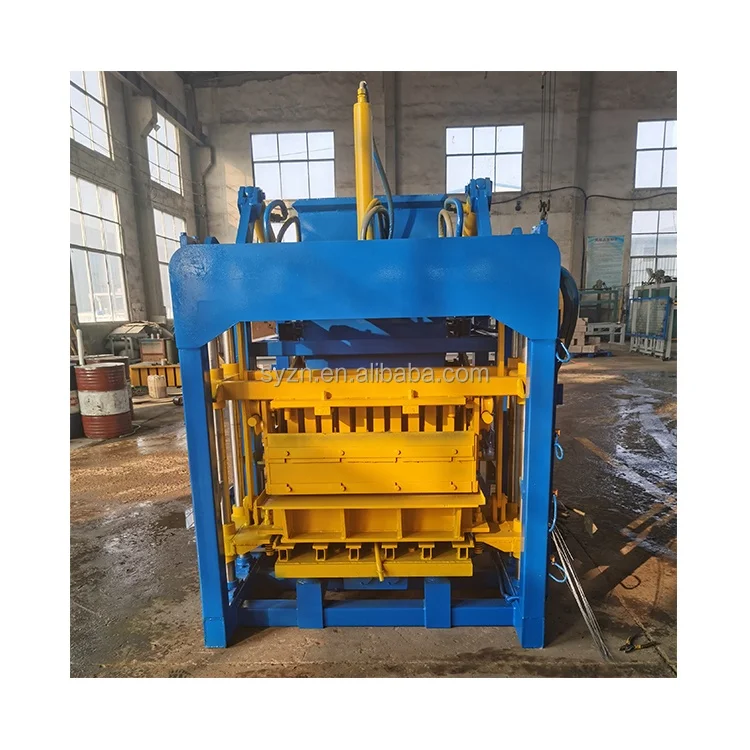


Description
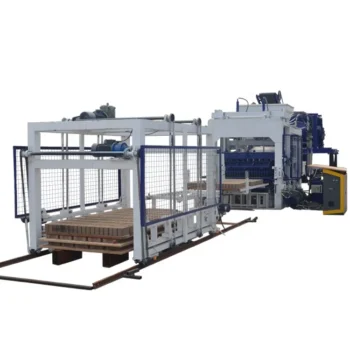
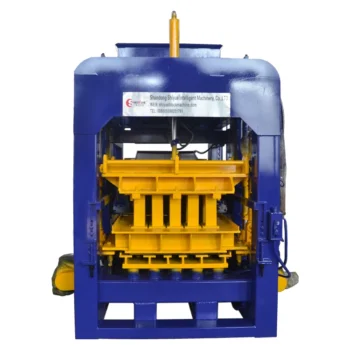
Vibration and pressure matched to your mix — We configure the QT4-15 block machine cycle parameters against your actual aggregate and target format, not a catalogue default, so rated capacity translates to real daily output.
Technical Specifications
| Parameter | Value |
|---|---|
| Model | QT4-15A |
| Product Type | Automatic Concrete Block Making Machine |
| Overall Dimensions (L×W×H) | 7100 × 1600 × 2610 mm |
| Molding Cycle | 15–25 s |
| Vibration Frequency | 4600 r/min |
| Exciting Power (Vibration Force) | 40–50 KN |
| Total Power | 18.45 kW |
| Mixer Model | JQ350 |
| Pallet Size | 850 × 550 × 25 mm |
| Total Weight | 3 T |
| Applied Products | Hollow block, solid brick, paver, curbstone |
| Raw Materials | Crushed stone, sand, cement, fly ash, dust |
| Output Capacity (400×200×200 mm hollow) | 408 pcs/hr, 3264 pcs/8 hr |
| Output Capacity (400×150×200 mm hollow) | 510 pcs/hr, 4080 pcs/8 hr |
| Output Capacity (240×115×53 mm solid) | 2100 pcs/hr, 17000 pcs/8 hr |
| Control System | Semi-automatic |
Application Suitability
| Application | Material or Output |
|---|---|
| Hollow block production for load-bearing walls | Crushed stone and cement mix, 400×200×200 mm or 400×150×200 mm formats |
| Solid brick manufacturing for masonry infill | Sand, fly ash, and cement blends, 240×115×53 mm standard |
| Paving stone production for walkways and yards | Aggregate-rich mix with fine sand finish, interlocking or rectangular formats |
| Curbstone fabrication for road and drainage edging | High-cement-content mix for compressive strength, custom mould profiles |
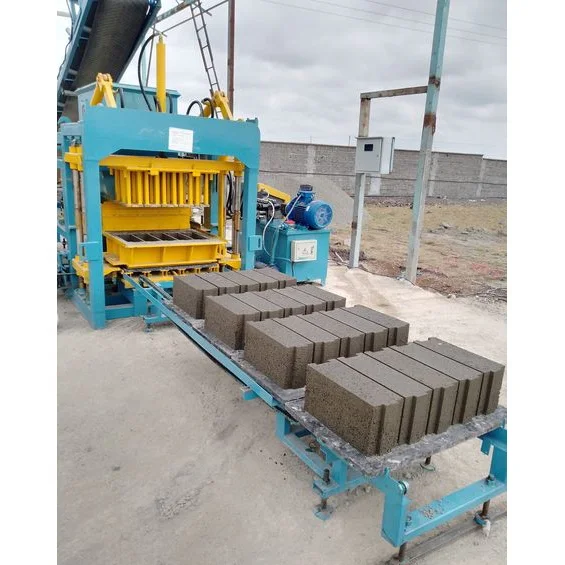
| On-site block production for housing developments | Locally sourced aggregate and fly ash, semi-automatic operation with manual pallet handling |
What "408 Blocks per Hour" Actually Means on the Shop Floor
The capacity figure only holds when the block format, mix design, and vibration parameters are all aligned to your production conditions.
I have stood beside a QT4-15 block machine that was running well below its stated output because the local sand carried a high clay content, and the vibration force had been set for clean river gravel. The blocks came out soft on one side and cracked on the other. It took a full day of adjusting the exciting power and cycle timing before the machine approached its rated 408 pieces per hour on 400×200×200 mm hollow blocks. [NEED_CITE: effect of aggregate clay content on vibration compaction in block making]
This is why the automatic concrete block making machine specifications on a brochure should never be taken as a guarantee. The molding cycle range of 15–25 seconds exists because different formats and mixes demand different dwell times. A solid brick at 240×115×53 mm completes a cycle faster than an 8-inch hollow block, and the 2100 pieces per hour figure reflects that shorter cycle, not a universal throughput rate. Buyers who size their entire curing yard and pallet inventory on the highest number in the table end up short on pallets and curing space within the first week.
Pallet Size and Curing Area Must Be Planned Together
The 850×550×25 mm pallet dimension on the QT4-15 is not arbitrary. It defines how many blocks fit per cycle, how the pallets stack on curing racks, and which forklift tine spacing works. If your existing curing area was laid out for a different pallet size, the mismatch will force you to either reconfigure the yard or handle pallets manually, negating the advantage of a semi-automatic line. Matching pallet size to your curing infrastructure is one of the most overlooked steps in block plant planning.
Mould Change Time Determines Real Format Flexibility
The QT4-15 supports hollow, solid, paver, and curbstone formats, but switching between them requires removing the current mould, aligning the new one, and recalibrating the vibration table height. When the mould change takes most of a shift, the format flexibility you paid for becomes theoretical. [NEED_CITE: mould change procedures and downtime in hydraulic block presses] Buyers should confirm the exact bolt pattern and lifting points before ordering additional moulds, and plan the change procedure so it fits within a scheduled break rather than eating into production hours.
Reading the Vibration and Pressure Numbers Together
The vibration frequency of 4600 r/min and the exciting power range of 40–50 KN work as a pair. High frequency with insufficient force leaves the concrete under-compacted, especially in deep-core hollow blocks where the vibration must travel through the mould walls to reach the center. Conversely, excessive force on a low-cement mix can cause segregation, pushing the coarse aggregate to the bottom and leaving a weak, sandy surface. The QT4-15 block machine capacity in any given format depends on finding the correct balance for your specific crushed stone gradation and cement percentage. This balance is established during commissioning and should be documented as a baseline for future operators.
The Cost of Skipping the Mix-Vibration Match
When the vibration force and local aggregate are not matched before the machine ships, the first weeks of production become an expensive trial. Blocks fail compressive strength tests, customers reject deliveries, and the operator keeps adjusting settings without a reference point. I have seen plants run through an entire container of cement before calling in technical support, only to learn the fix was a five-minute parameter change on the vibration controller. [NEED_CITE: compressive strength testing standards for concrete masonry units] The 18.45 kW total power budget of this machine is adequate for the stated output range, but only if the energy is directed efficiently through correctly tuned vibration and hydraulic pressure.
Why Sizing the Line Around This Machine Works
We treat the block machine as one station in a production sequence, not a standalone purchase. The JQ350 mixer is paired to match the QT4-15 cycle time so the press is never left waiting for material. Raw material proportions are calculated against your locally available sand, crushed stone, and fly ash, not a reference mix from a different region. Mould designs are produced for the block dimensions your market actually buys, with custom drawings when standard formats do not apply. Pallet material and thickness are selected for your climate and curing method, reducing warping and replacement frequency. [NEED_CITE: pallet material degradation rates in tropical vs arid curing environments] Semi-automatic control means the operator manages pallet feeding and stacking while the pressing cycle runs on a fixed program, keeping labour requirements modest without sacrificing cycle consistency.
Documentation & Verification
- Line layout drawing showing QT4-15 placement with pallet flow and curing rack positions
- Capacity calculation sheet stating the exact block format and mix assumed for each output figure
- Mould drawing and format list confirming bolt pattern and vibration table clearance
- Hydraulic and electrical schematic with component part numbers for local sourcing
- Voltage and frequency confirmation document matching your site supply before production begins
- Factory test record demonstrating molding cycle times on the confirmed block format
Installation, Commissioning & Support
- Foundation plan sized to the 7100 × 1600 mm footprint with anchor bolt positions marked
- Electrical connection checklist for 18.45 kW load with dedicated circuit and overload protection
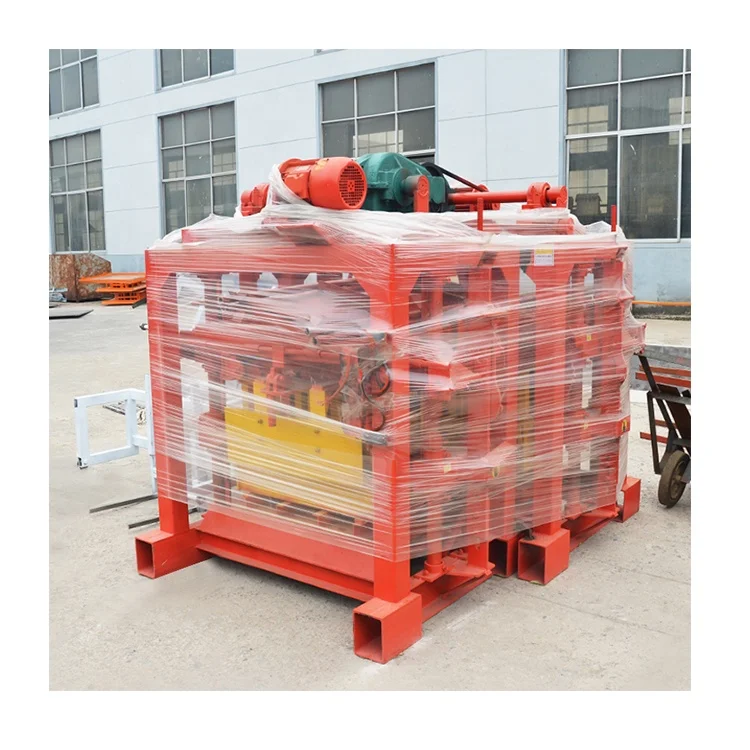
- Machine shipped partially assembled; vibration table and hopper bolted on site to reduce container volume
- First-run commissioning includes vibration force tuning against your actual aggregate sample
- Operator training covers mould change procedure, cycle adjustment, and daily lubrication points
- Wear parts list with mould liner and vibration spring replacement intervals noted
What We Need From You to Size the Line
To give you a realistic capacity figure rather than a catalogue number, we need to know the block formats your market sells, the daily volume you plan to run, and the source and gradation of your local aggregate. Share your site voltage and frequency, the pallet size you already have in stock if any, and the curing space available so we can confirm the 850×550 mm pallet will work with your existing racks and forklift. If you have a target block strength specification, include that as well so we can adjust the mix and vibration parameters before the machine leaves the factory.
Frequently Asked Questions
Q: How is the QT4-15 capacity calculated for 6-inch versus 8-inch hollow blocks?
A: The output of 510 pieces per hour applies to 400×150×200 mm hollow blocks, while 408 pieces per hour is rated for 400×200×200 mm blocks. The difference comes from the molding cycle: thinner-walled blocks require less vibration dwell time, allowing a shorter cycle within the 15–25 second range. Your actual daily output depends on pallet circulation speed and curing rack capacity.
Q: What is the realistic mould change time on this machine?
A: A trained operator can complete a mould swap on the QT4-15 within a scheduled production break, provided the correct lifting tools and bolt spanners are on hand. The procedure involves releasing the mould clamps, lifting the old mould clear, setting the new one on the vibration table, and recalibrating the press height. Planning the change during a shift transition minimizes lost output.
Q: Which pallet material works best in a humid climate?
A: For the 850×550×25 mm pallet size used by the QT4-15, PVC pallets resist moisture absorption and warping in tropical conditions, while bamboo pallets offer a lower initial cost in drier climates. The choice affects curing rack weight capacity and forklift handling. We recommend confirming pallet material after sharing your local humidity and temperature range.
Q: How do you match vibration force to our local aggregate?
A: We ask for a sample description of your crushed stone gradation, sand source, and any fly ash or dust you plan to use. The 40–50 KN exciting power range on the QT4-15 is then tuned during commissioning to achieve target block density. High-clay or fine-heavy mixes typically need lower frequency and longer dwell time to avoid surface cracking.