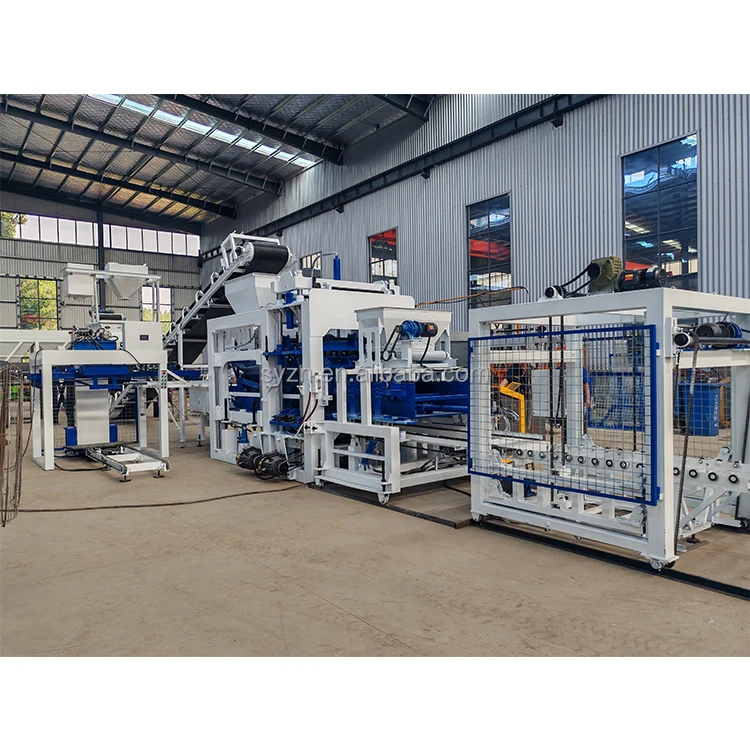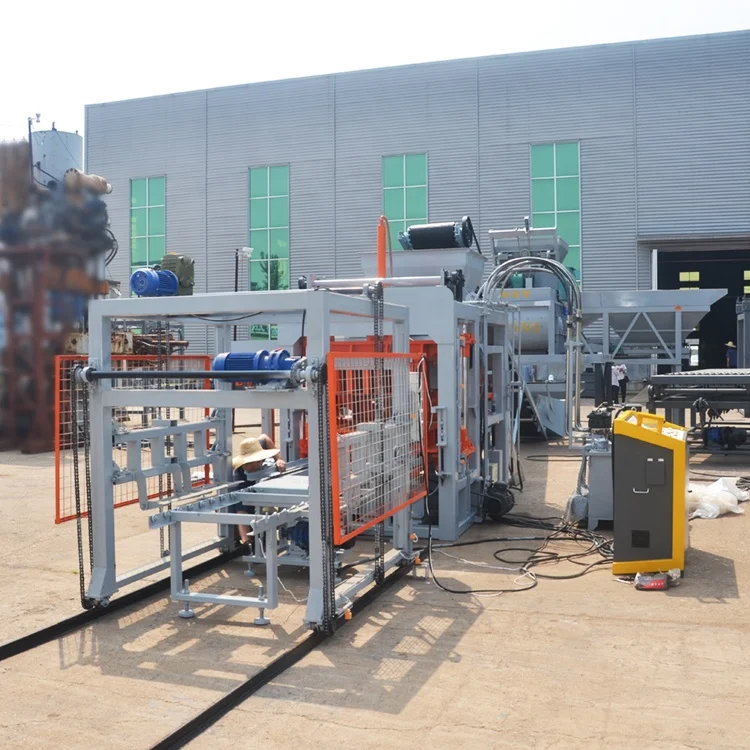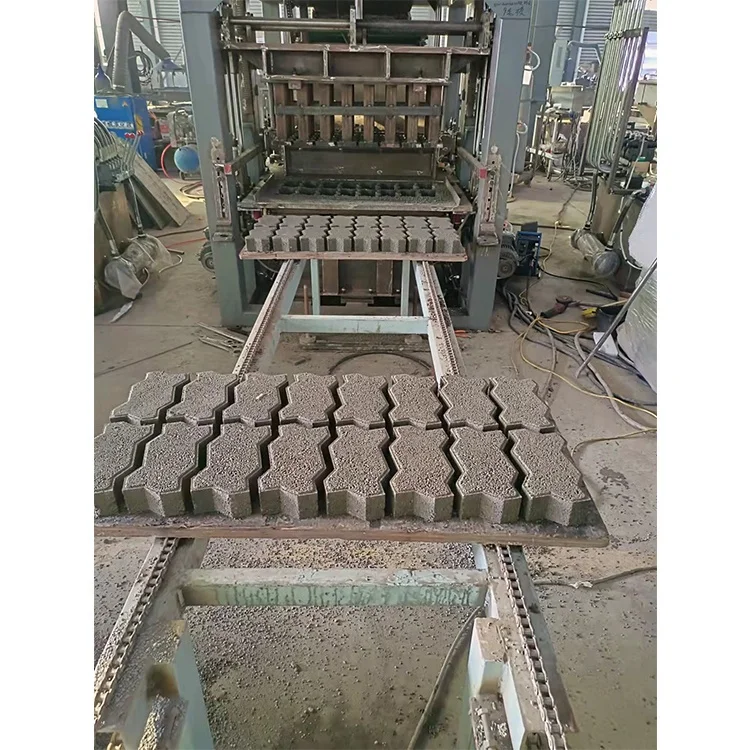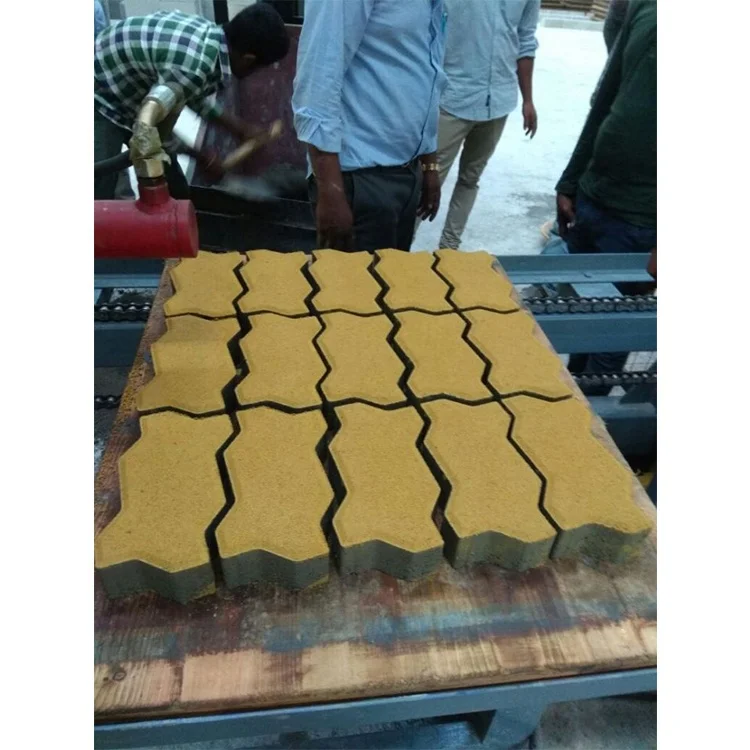
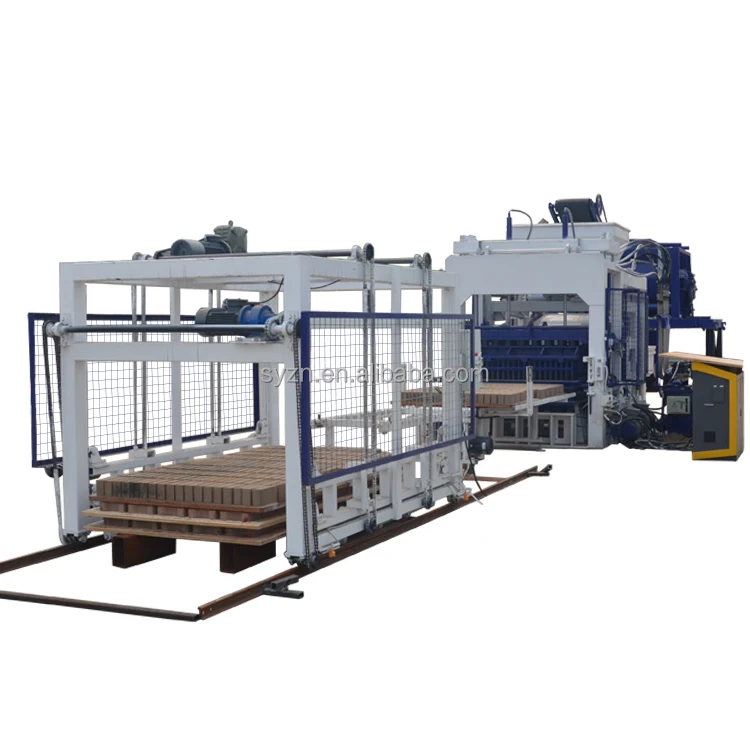
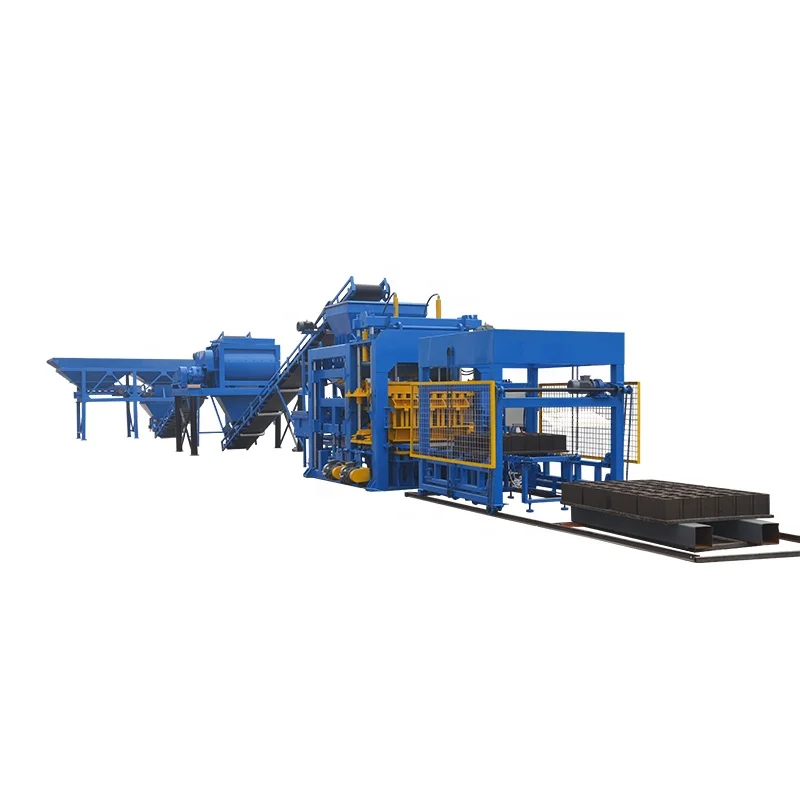
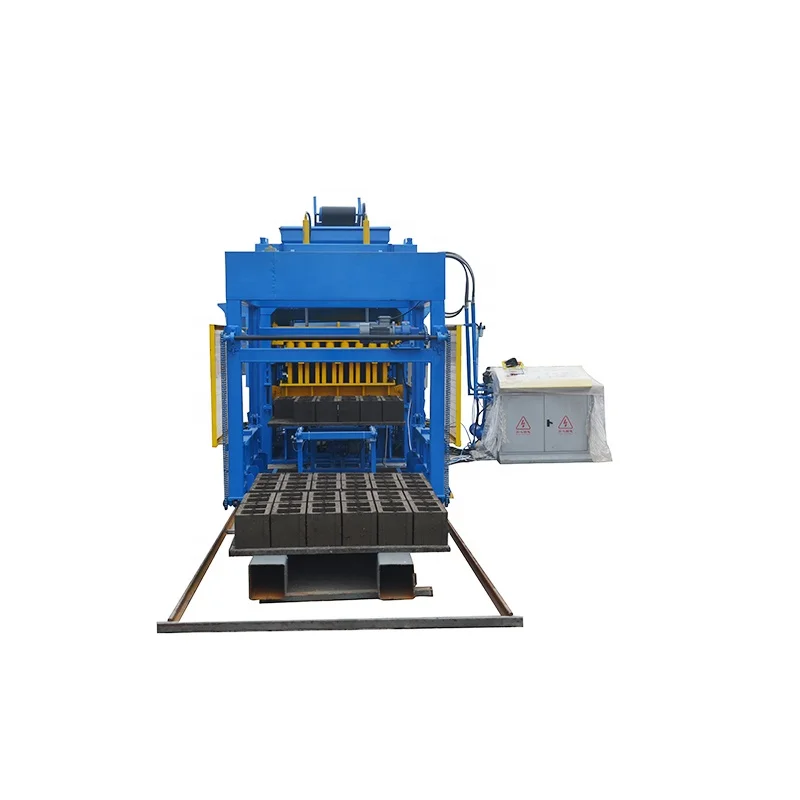


Description
Honest Capacity by Format — Every QT12-15 output figure we quote states the exact block format, cycle time, and local aggregate assumption behind it.
Technical Specifications
| Parameter | Value |
|---|---|
| Model | QT12-15 |
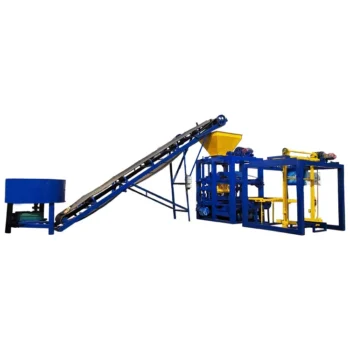
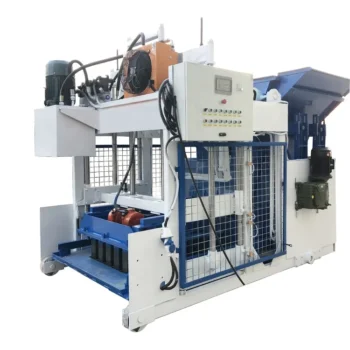
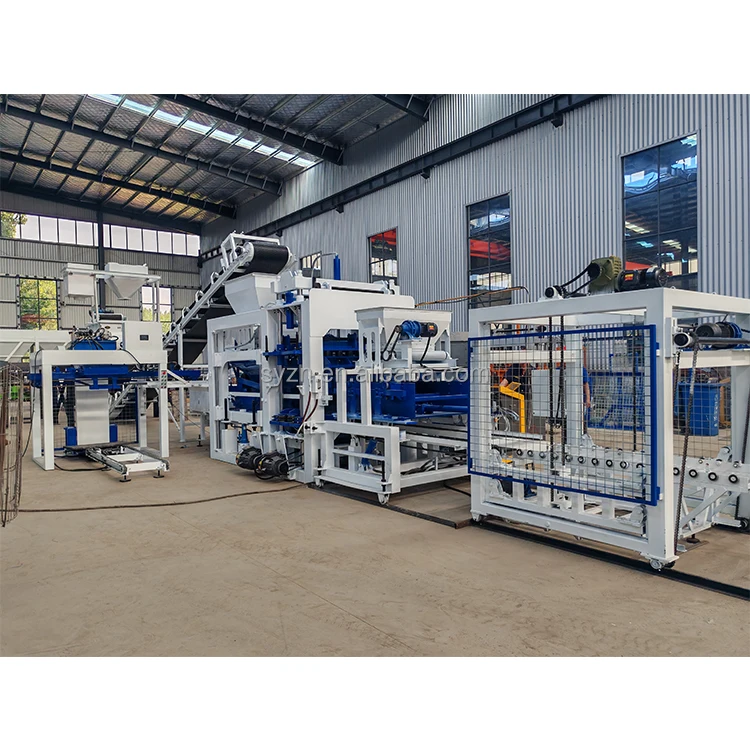
| Product Type | Fully Automatic Hydraulic Block Making Machine Line |
| Rated Power | 62 kW |
| Pallet Size | 1300 × 900 mm |
| Vibration Type | Table vibration (dynamic + static table) |
| Vibration Force | 120 kN |
| Vibration Acceleration | 20g |
| Vibration Technology | Four-axis synchronous vibration with forced synchronization gear shaft |
| Moulding Cycle | 15–30 s (basis to be confirmed per block format and material) |
| Feeding System | Press-in arch breaker with 360° rotation |
| Control System | PLC with frequency conversion control |
| Voltage & Frequency | Customized to local industrial voltage |
| Wear Protection | Replaceable cloth platform wear-resistant plate |
| Noise Reduction | Flexible vibration reduction on pressure head + adjustable pressure air bag in mold box |
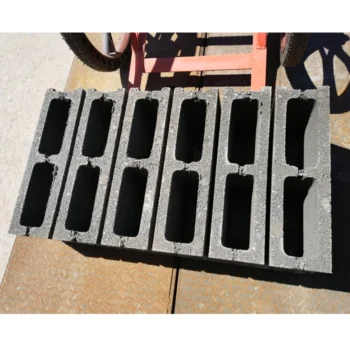
| Block Formats Supported | Hollow, solid, interlocking, paving, porous, slope protection bricks |
Application Suitability
| Application | Material or Output |
|---|---|
| High-capacity hollow block production | Crushed stone, cement, and local aggregate blends |
| Interlocking and paving brick manufacturing | Quarry dust, river sand, and cement mixes |
| Solid block production for load-bearing walls | Dense aggregate and standard cement ratios |
| Porous and slope protection bricks | Lightweight aggregates and specialized permeable mixes |
What "Cycle Time" Actually Means for Your Daily Output
A 15-second cycle on a standard hollow block does not translate to the same speed on a heavy paving brick.
Many buyers receive quotations stating a single cycle time, only to discover that switching to the thicker or denser formats their market actually demands slows the press considerably. The vibration force and hydraulic pressure must be matched to the specific mix design, otherwise the machine either struggles to compact the material or wastes energy on lighter formats. Sizing a high output block machine requires a format-by-format breakdown rather than a blanket catalogue figure. [NEED_CITE: concrete block compaction standards for different aggregate densities]
Matching the Pallet to Your Curing Layout
The 1300 × 900 mm pallet size dictates how many blocks are pressed per cycle, but it also determines your curing area footprint and the forklift capacity required to move them. If your existing facility is designed for smaller pallets, adopting this QT12-15 block making machine specifications layout means re-evaluating rack spacing and transport equipment. We confirm the pallet material and dimensions against your actual site conditions before finalizing the line configuration.
Mould Selection and Format Flexibility
Producing hollow, solid, interlocking, paving, porous, and slope protection bricks on a single line requires precise mould engineering. The cycle time shifts depending on the cavity depth and the compaction required for each format. Rather than offering a generic mould list, the QT12-15 block making machine specifications are finalized only after reviewing the exact dimensions and strength requirements of the products your local market buys. [NEED_CITE: mould wear rates across different concrete abrasiveness levels]
How Vibration and Pressure Dictate Block Density
The 120 kN vibration force and 20g acceleration generated by the four-axis synchronous system are not arbitrary numbers; they determine how tightly the aggregate particles pack together before the hydraulic pressure locks them in place. The dynamic and static table combination ensures the vibration reaches the top of the mould cavity evenly, preventing weak spots in taller hollow blocks. The press-in arch breaker with 360° rotation feeds the material uniformly, which is critical when switching between free-flowing sand and sticky quarry dust. If the vibration frequency is not adjusted via the PLC to match the specific aggregate weight, the resulting blocks will show inconsistent density across the pallet area.
The Cost of Ignoring Local Aggregate Properties
When a machine is configured for a standard mix design that the buyer cannot source locally, the result is either a costly material import or a compromised block strength. A press tuned for clean river sand will choke on high-clay quarry dust, leading to incomplete mould filling and excessive wear on the cloth platform. [NEED_CITE: impact of aggregate clay content on concrete block pressing]
Why Configuration Must Precede the Quotation
Block machinery as a single focus means the press, mould, pallet, and handling equipment are specified as one matched system. The QT12-15 is configured against your actual mix design and target block format, not a default catalogue setting. Mould drawings are provided for the specific formats your market sells, and the automation level is selectable so the line matches your current labor setup. We verify voltage, frequency, and PLC display language before production begins to prevent commissioning delays.
Documentation & Verification
- Line layout and capacity calculation stating the assumed block format for each output tier.
- Mould drawing and format list confirming cycle times for your specific brick dimensions.
- Pallet specification matched to your existing curing racks and forklift capacity.
- Hydraulic and electrical schematic with confirmed voltage and control language.
- Factory test record using a mix design representative of your local materials.
- Wear parts and mould list for planning your first replacement cycle.
Installation, Commissioning & Support
- Foundation plan detailing load-bearing requirements for the 62 kW dynamic vibration table.
- Power drop specifications confirming the customized voltage and dedicated circuit needs.
- On-site assembly of the 1300 × 900 mm pallet feeding and stacking stations.
- PLC parameter tuning to match your specific aggregate moisture and compaction targets.
- Operator training on the 360° arch breaker and mould change procedures.
- Wear part replacement schedule for the cloth platform and vibration isolators.
Sizing the Line to Your Market
To accurately configure this equipment, we need to review the specific block formats you intend to sell and the local raw materials available. Please provide your target daily output per format, the characteristics of your local aggregate, and the dimensions of your planned curing area so we can confirm the pallet handling layout.
Frequently Asked Questions
Q: How is daily output calculated for different block formats?
A: We do not use a single blanket figure. The capacity calculation states the exact block format, mould cavity count, and assumed cycle time. A 15-second cycle on a standard hollow block yields a different daily volume than a 30-second cycle on a dense paving brick, and our quotation breaks this down per format.
Q: Is the 1300 × 900 mm pallet the only option?
A: This pallet size is standard for this tier to maximize pieces per cycle, but it must align with your curing area and forklift. We verify your site layout before confirming the pallet material and dimensions to ensure smooth handling from the press to the curing racks.
Q: How does the machine handle different local aggregates?
A: The PLC frequency conversion control allows us to adjust vibration acceleration and cycle parameters. We configure the feeding system and pressure settings based on your specific mix design, whether you are using clean sand, quarry dust, or lightweight aggregates.
Q: What is involved in changing moulds for different brick types?
A: The machine supports hollow, solid, interlocking, and paving formats. Mould change procedures are covered during operator training, and the physical swap time depends on the specific mould size and the automation level selected for your line.
Q: How are voltage and control language confirmed?
A: We specify the exact voltage, frequency, and PLC display language required for your facility before production starts. This prevents commissioning delays and ensures your operators can read the control interface from the first day of operation.