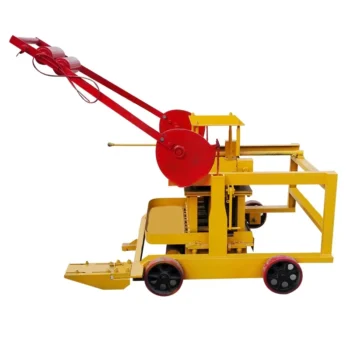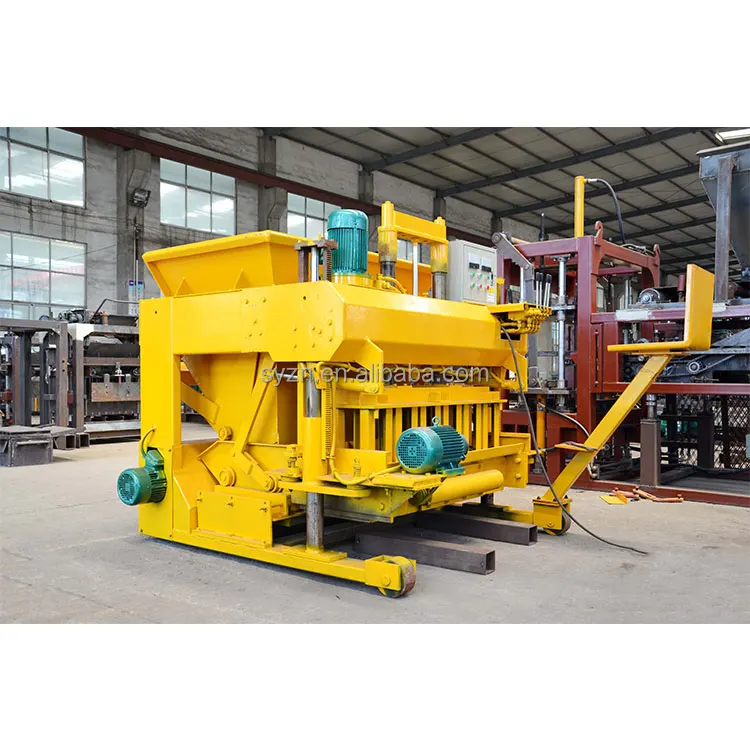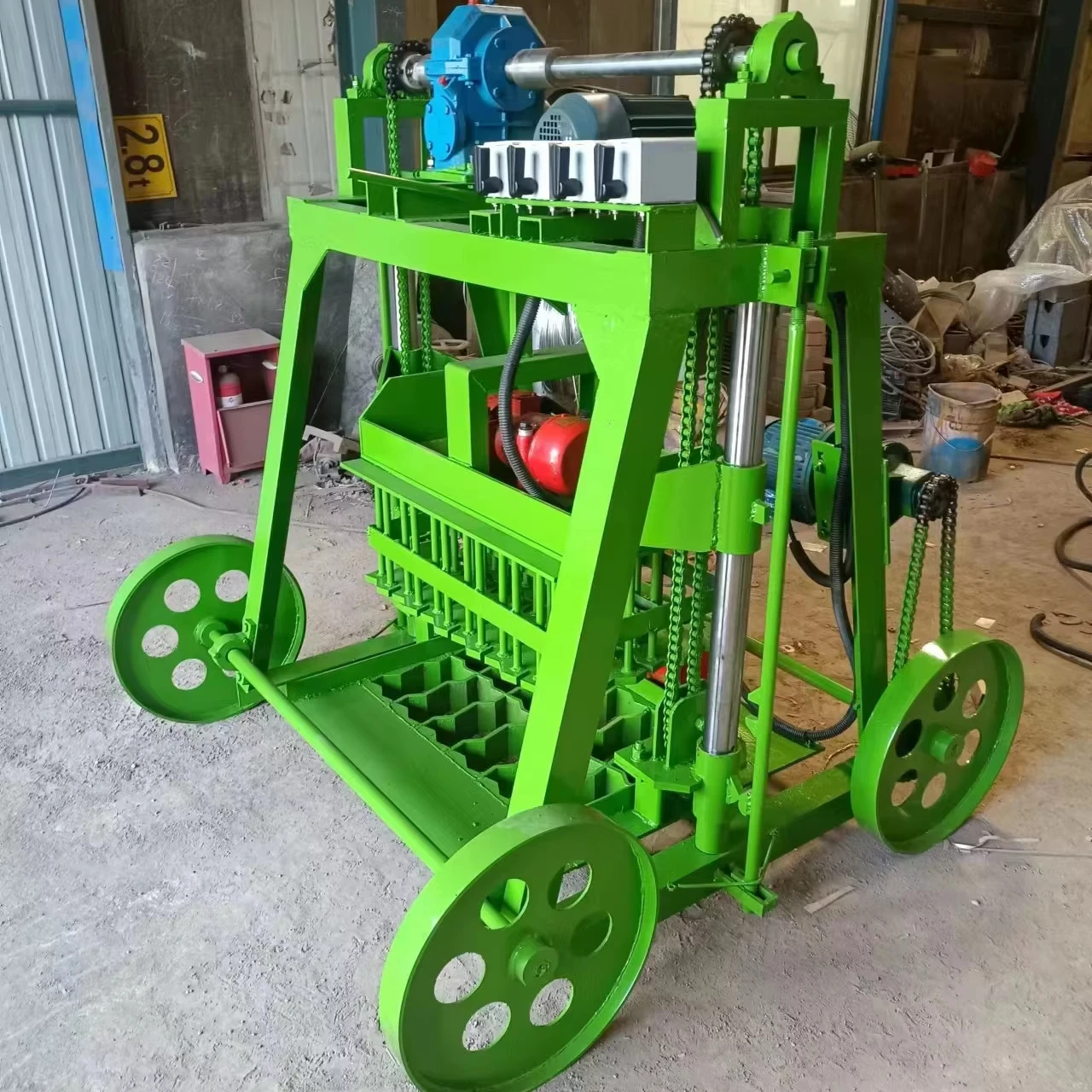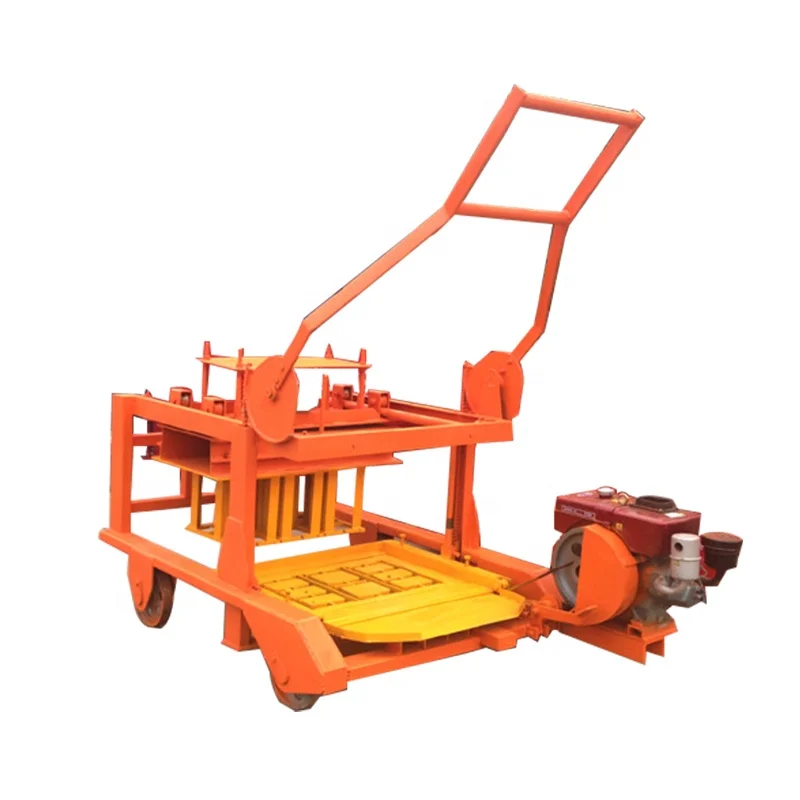
Description
Honest capacity by format — The QMR4-45 diesel movable hollow block machine output is quoted per mould cavity count and cycle time for each of the three standard block sizes, not as a single unqualified daily number.
Technical Specifications
| Parameter | Value |
|---|---|
| Model | QMR4-45 |
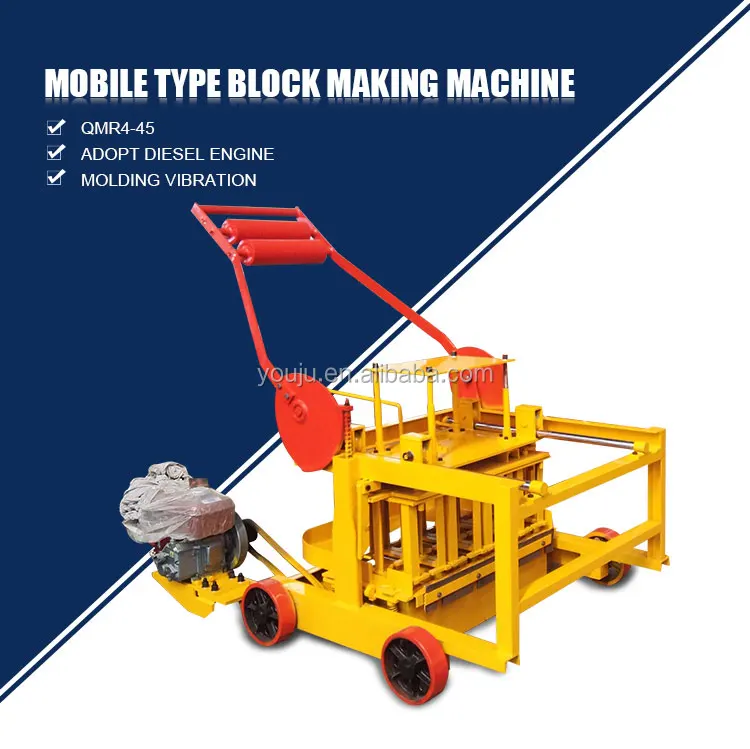
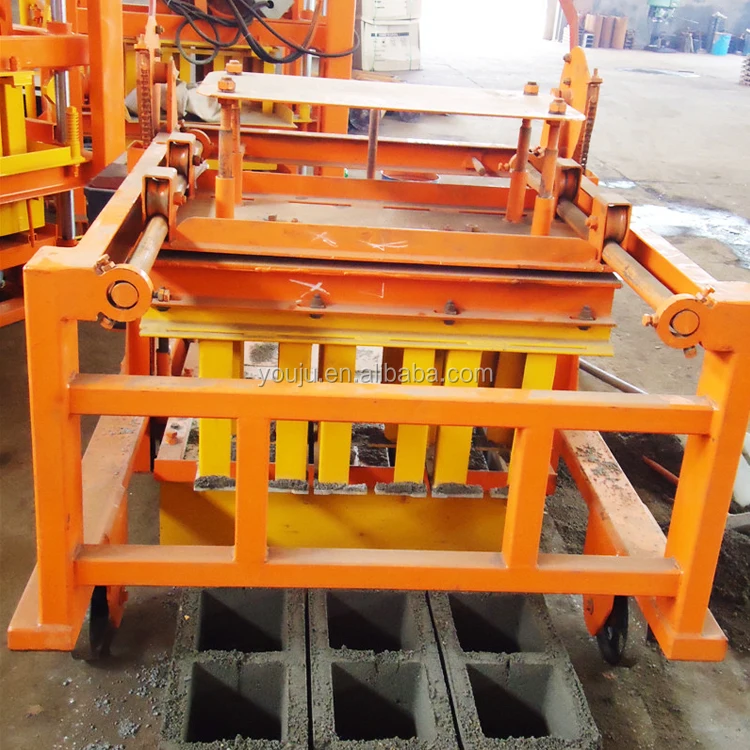
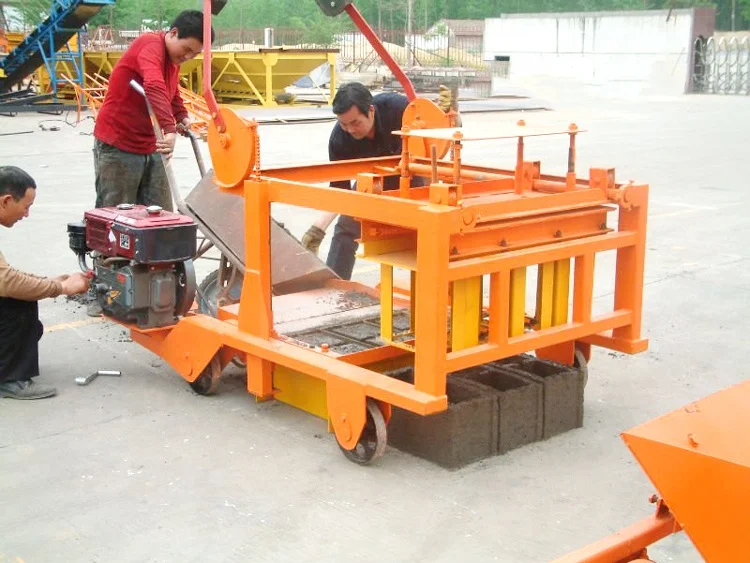
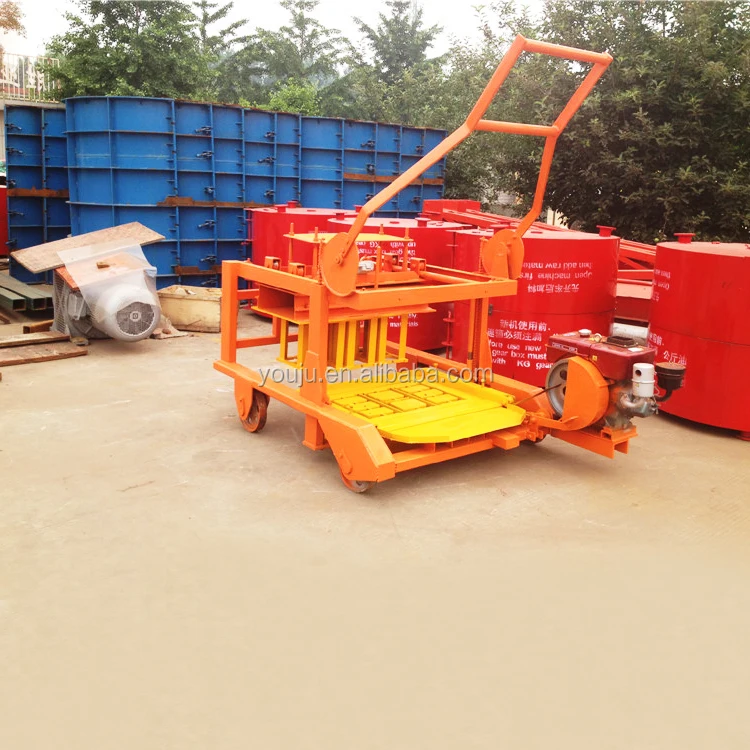
| Product Type | Diesel Movable Hollow Concrete Block Machine |
| Overall Dimensions (L×W×H) | 2420 × 1320 × 1650 mm |
| Net Weight | 810 kg |
| Moulding Cycle | 40–45 seconds |
| Rated Power | 6 kW |
| Primary Power Source | Diesel engine, 6 kW / 6–8 HP |
| Voltage Options | 220V / 380V / configurable to client local voltage |
| Pallet Requirement | None (egg-laying, on-ground production) |
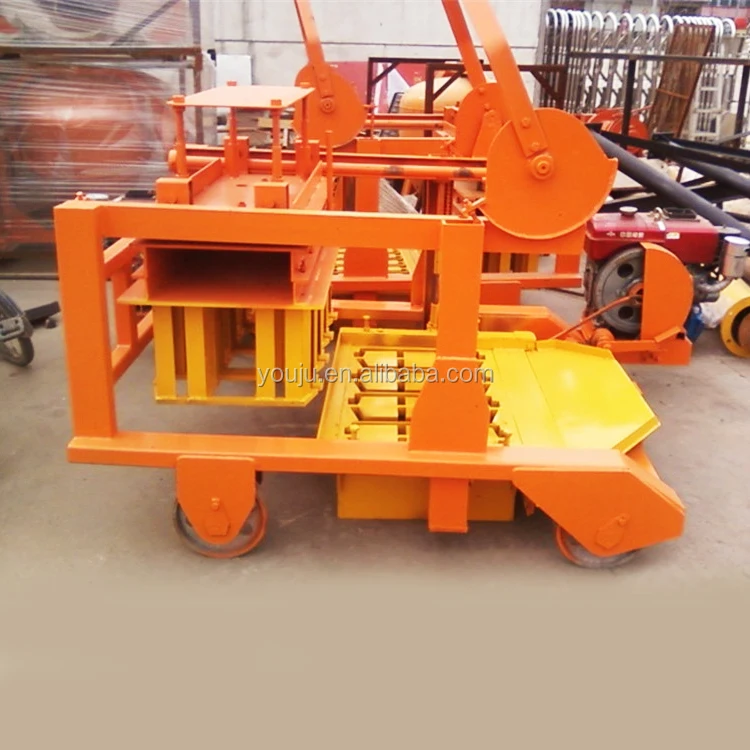
| Assembly State | Skid-mounted, mobile unit |
| Output Capacity | 3,000 pcs/day based on 400×200×200 mm hollow block, 4 pcs/mould |
| Productivity (Alt Format 1) | 3,500 pcs/day based on 400×150×200 mm hollow block, 5 pcs/mould |
| Productivity (Alt Format 2) | 4,500 pcs/day based on 400×120×200 mm hollow block, 6 pcs/mould |
| Automation Level | Manual operation with diesel-powered hydraulic pressure |
| Mould Format Options | 400×200×200 mm / 400×150×200 mm / 400×120×200 mm hollow blocks |
| Certification | CE (certificate availability to be verified per order) |
Application Suitability
| Application | Material or Output |
|---|---|
| Remote construction site block production | Crushed stone, sand, and cement without grid power dependency |
| Entrepreneur-led micro block plant | Hollow concrete blocks with minimal infrastructure and no pallets |
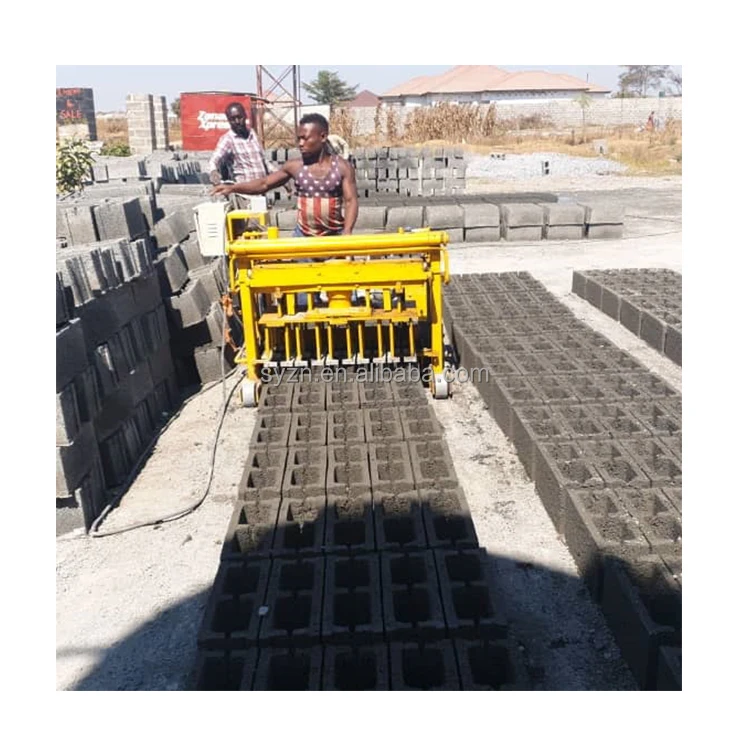
| Housing project on-site manufacturing | 400×200×200 mm or 400×150×200 mm hollow blocks cured on graded ground |
| Off-grid cement brick operation | Diesel-hydraulic formed blocks where electrical supply is absent or unreliable |
What "3,000 Pieces per Day" Actually Requires on Site
The QMR4-45 diesel movable block machine specifications only hold when your ground is level, your mix is consistent, and your crew can keep pace with a 40–45 second cycle.
I have watched contractors take delivery of a mobile egg layer and then spend the first week discovering their site floor was too soft to support freshly laid blocks without deformation. Capacity figures assume a stable, graded production surface and a crew that can move the machine forward after every cycle without bottlenecking. If your local aggregate is rounded river gravel rather than crushed angular stone, the block may release from the mould cleanly but fail to reach the compressive strength your project engineer specified [NEED_CITE: aggregate grading standards for load-bearing concrete masonry units].
Mould Options and What Each Format Delivers
The QMR4-45 supports three hollow block formats, each with a different cavity count per mould. The 400×200×200 mm format produces 4 blocks per cycle, the 400×150×200 mm produces 5, and the 400×120×200 mm produces 6. Choosing the right format depends on what your local construction market actually specifies in wall designs, not on which number yields the highest daily count.
Diesel Hydraulic Pressure Without Grid Dependency
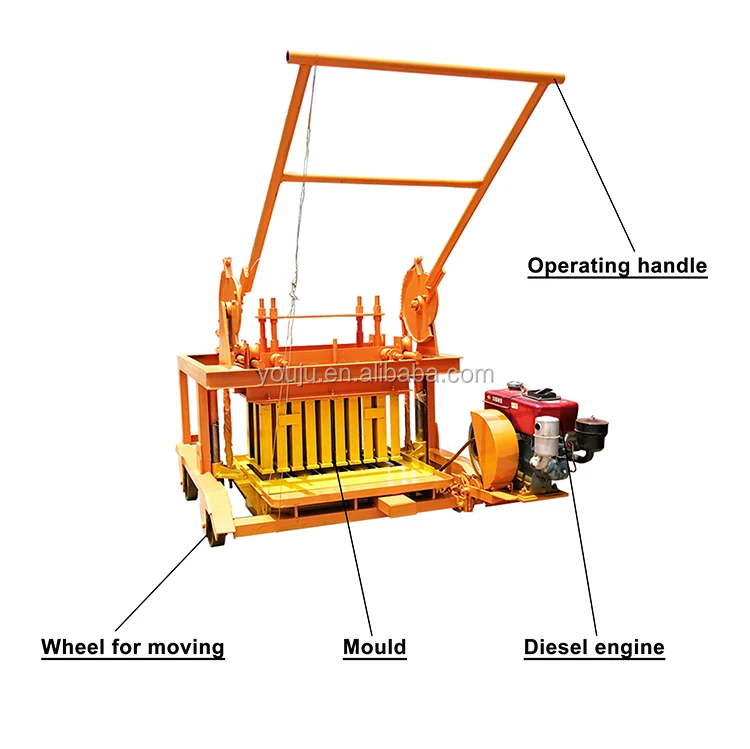
This machine uses a 6 kW / 6–8 HP diesel engine to drive the hydraulic system, meaning it can operate entirely independent of grid electricity. The hydraulic pressure supplies the forming force needed to compact the mix around the mould cores. On sites where the nearest reliable power connection is kilometres away, the diesel configuration removes the need for a generator dedicated solely to the block press [NEED_CITE: diesel hydraulic system maintenance intervals in continuous production].
Cycle Time, Vibration, and Block Density
The 40–45 second moulding cycle encompasses filling, vibration, hydraulic compaction, and mould release. Vibration force and hydraulic pressure together determine how densely the concrete is packed into the mould cavity. A mix that is too dry will not flow fully into corners under the available pressure, leaving blocks with weak edges. A mix that is too wet will slump after the mould lifts. The QMR4-45 diesel movable block machine specifications assume a mix design matched to the local aggregate grading and the hydraulic force the diesel engine can deliver. Pallet size is irrelevant here since blocks are laid directly on the ground, but ground flatness tolerance directly affects how uniformly each block cures.
When the Wrong Aggregate Grading Shows Up in Week Two
A contractor in a remote mining region once ran a diesel mobile block machine with locally available sand that was far finer than the mix design assumed. The blocks released from the mould looking intact but crumbled under the forklift after three days of curing. The root cause was not the machine — it was the gap between what the specification sheet presumed and what the site actually had in the stockpile. If your aggregate is sourced locally and has not been tested for particle size distribution, request a sample block run before committing to a full production schedule [NEED_CITE: effect of fine aggregate proportion on hollow block compressive strength].
Why a Single Supplier for Machine and Mould Matters
Block machinery as a single focus means the QMR4-45 arrives with its mould, hydraulic system, and diesel engine specified as one matched unit rather than assembled from separate vendors. Configuration is set against the buyer’s actual mix design and local aggregate, not a catalogue default. Mould design covers the formats the buyer’s market sells, with custom drawings available for non-standard sizes. The automation level is fixed as manual for this model, which keeps the machine operable by crews without PLC experience and simplifies field maintenance. Installation and commissioning support includes operator training so that cycle technique and mix proportioning are understood from the first day of production.
Documentation & Verification
- Line layout and capacity calculation document stating which of the three hollow block formats each output figure assumes
- Mould drawing and format list showing exact cavity dimensions and wall thickness for the selected format
- Voltage and control language confirmation sheet, relevant if any auxiliary electrical components are included
- Factory test record run with a mix matching your local aggregate before dispatch
- Wear parts and mould list with part numbers for every replaceable component
- Operation and maintenance manual covering diesel engine service intervals and hydraulic line inspection
Installation, Commissioning & Support
- Skid-mounted 810 kg unit arrives assembled; site needs only a level, compacted ground surface of sufficient length for continuous laying
- Diesel engine requires standard fuel supply and scheduled oil and filter service per the 6 kW / 6–8 HP manufacturer schedule
- No pallet feeding, stacking, or curing rack infrastructure needed, reducing site setup to ground preparation and weather protection
- Mould change between the three standard formats involves manual swap of the mould box; first change supervised during commissioning
- Operator training covers mix proportioning, cycle pacing at 40–45 seconds, and machine repositioning technique after each lay
- Wear parts kit matched to the buyer’s aggregate abrasiveness shipped with the initial order to prevent unplanned downtime
What to Prepare Before Requesting a Quote
Tell us which of the three hollow block formats — 400×200×200, 400×150×200, or 400×120×200 mm — your local construction projects actually require, and at what daily volume. Provide a sample or description of your available aggregate so the mix can be adjusted before the machine is configured. Confirm your site altitude and ambient temperature range, since diesel engine output varies with air density.
Frequently Asked Questions
Q: How is daily output calculated for each hollow block format, and what shift length is assumed?
A: Output is calculated from the 40–45 second cycle time multiplied by the blocks per mould — 4, 5, or 6 depending on format — across a standard working shift. The published figures of 3,000, 3,500, and 4,500 pieces per day assume uninterrupted production with a trained crew. Actual output depends on mix preparation speed, ground conditions, and how many hours your shift runs.
Q: Can the QMR4-45 operate entirely on diesel without any electrical connection?
A: Yes, the primary hydraulic and forming systems are diesel-driven via the 6–8 HP engine. Voltage options of 220V or 380V are available if auxiliary electrical components are required, but the core production cycle does not depend on grid power. Confirm with the supplier whether any control or lighting circuits need electrical input for your specific configuration.
Q: What ground surface conditions are needed for egg-laying production without pallets?
A: The ground must be level, compacted, and free of standing water. Blocks are laid directly onto the surface and remain there through initial curing, so any unevenness will deform the bottom face. A concrete slab or well-graded gravel bed is preferred. The production area must be long enough to accommodate continuous forward movement of the machine through the shift.
Q: How long does a mould change take, and are custom sizes available?
A: Mould change on the QMR4-45 is a manual operation involving unbolting and swapping the mould box. A trained operator can complete it within a reasonable window, though the first change should be supervised. Custom mould sizes beyond the three standard formats can be designed to buyer drawings, subject to dimensional limits of the machine’s mould frame and hydraulic stroke.
Q: What mix design and aggregate grading produce consistent block strength with diesel hydraulic pressure?
A: Consistent strength depends on matching the mix water content and aggregate particle size distribution to the hydraulic compaction force the diesel engine delivers. Angular crushed aggregate typically performs better than rounded gravel. Request a test run with your local material before full production begins, and keep the mix proportions documented shift by shift for traceability.