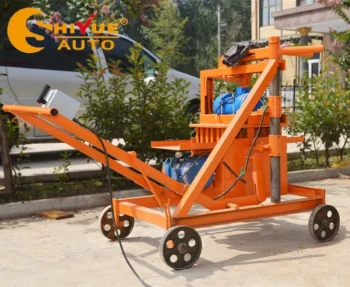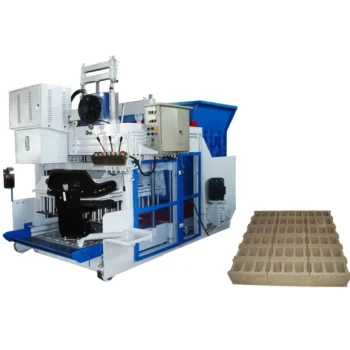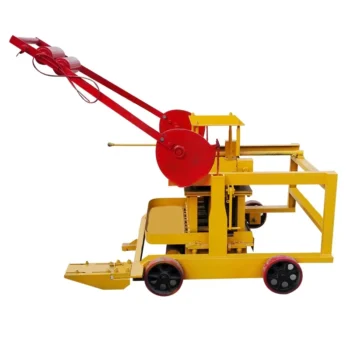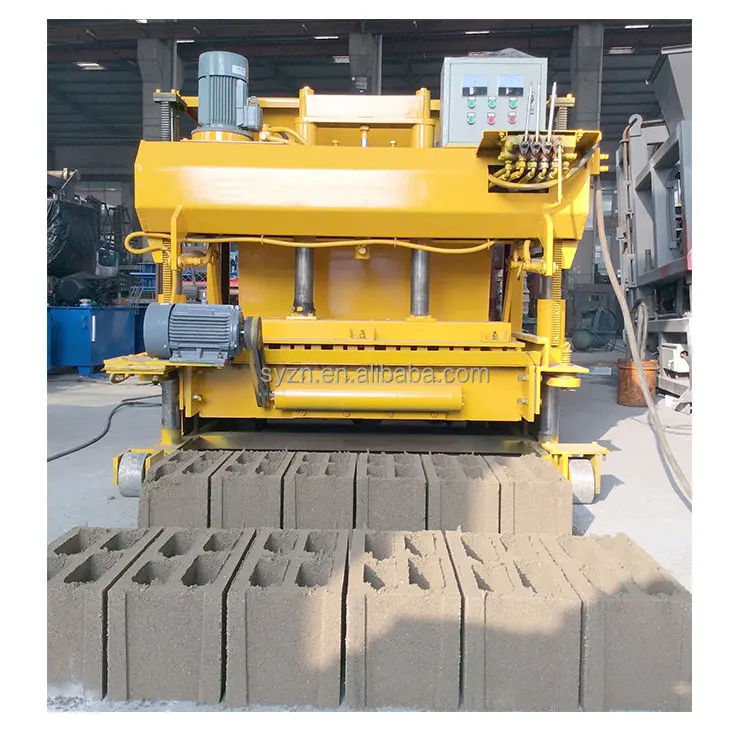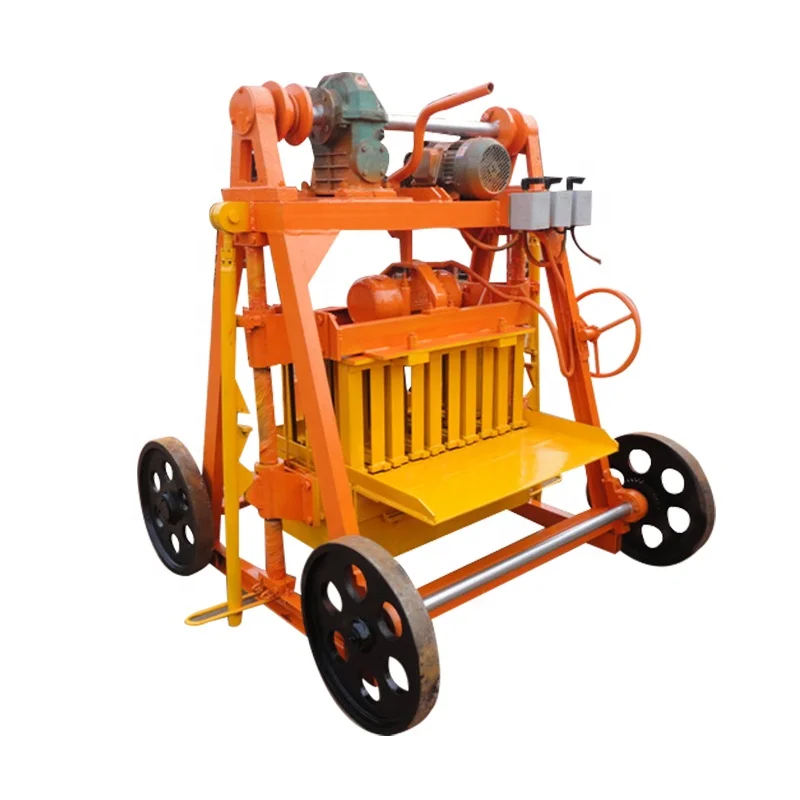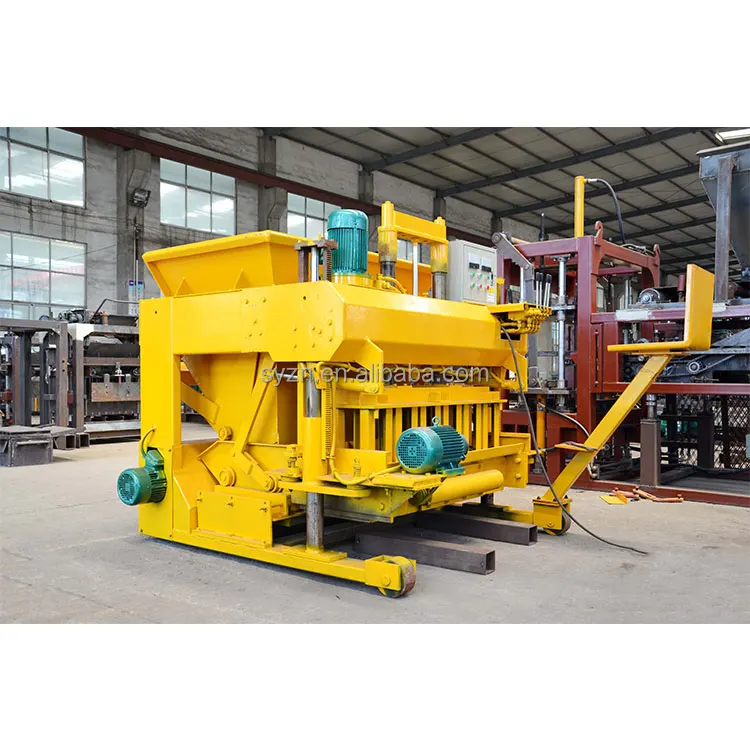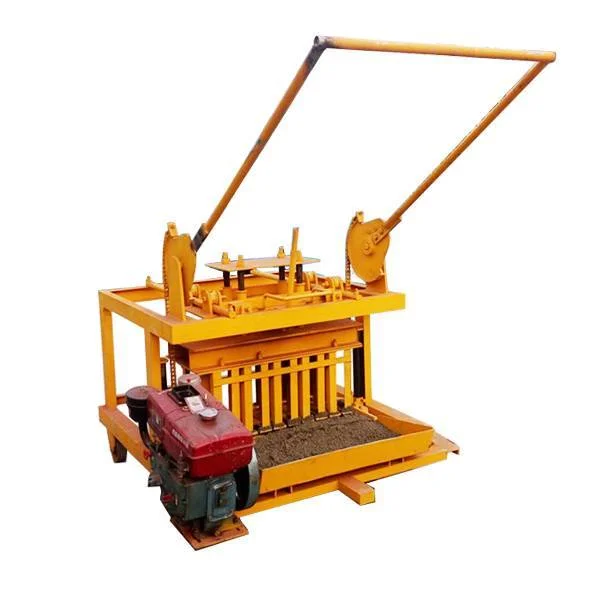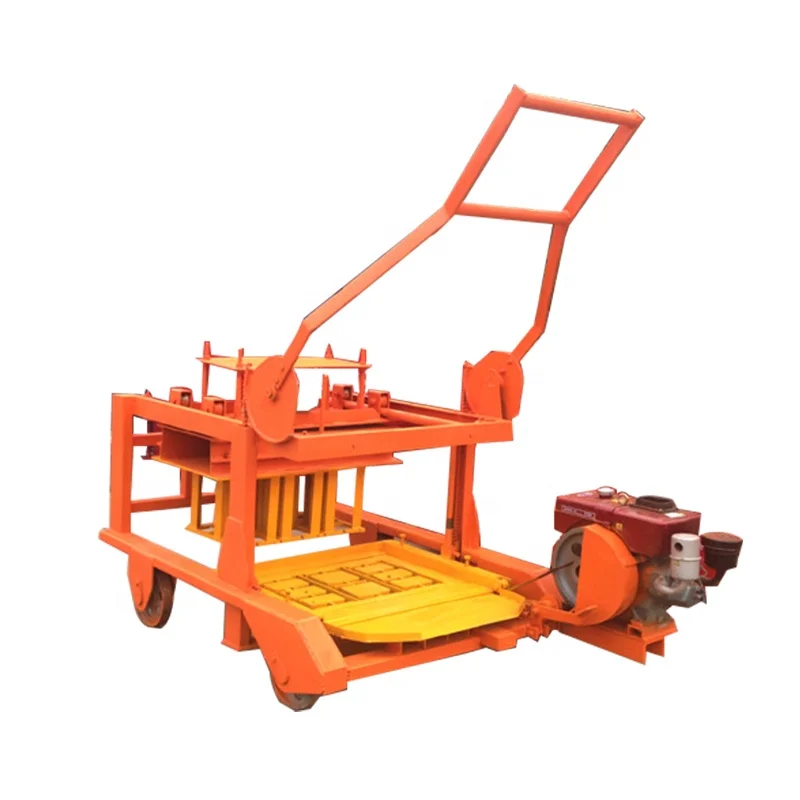



Description
Mould-Matched Mobile Output — Capacity figures for the QMR4-45 are calculated per block format with your local aggregate, not quoted as a single daily total that ignores cavity count and curing reality.
Technical Specifications
| Parameter | Value |
|---|---|
| Model | QMR4-45 |
| Product Type | Mobile Diesel/Electric Block Making Machine |
| Molding Cycle | 45s (basis not stated in source — confirm block format / material / thickness) |
| Power Source | Diesel (Electric variant also available) |
| Rated Power | 8 hp (basis not stated in source — confirm if diesel engine output) |
| Molding Form | Vibration and Pressure |
| Vibration Force | 60 KN |
| Total Weight | 800 kg |
| Overall Dimensions | 2420 × 1320 × 1650 mm |
| Pallet Requirement | No pallet needed (egg-laying type) |
| Mobility | Mobile / movable on-site |
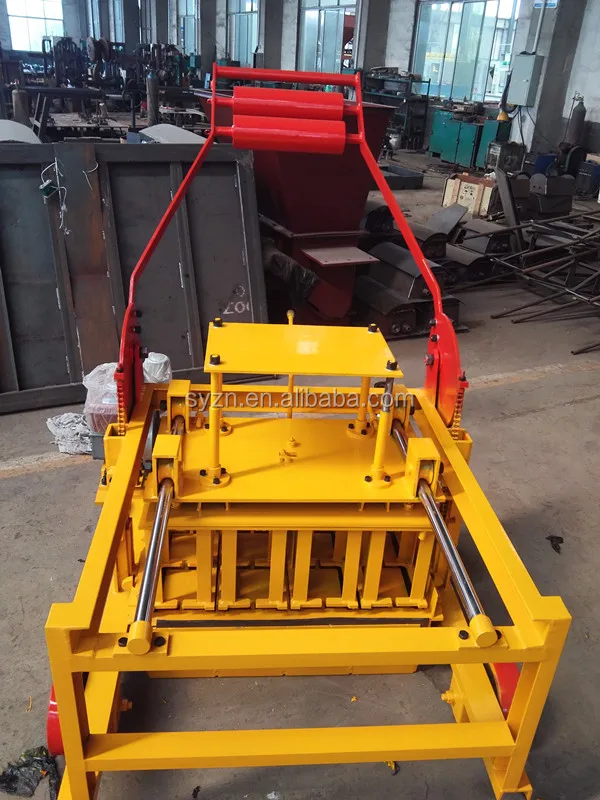
| Key Features | On-ground block laying, diesel or electric power option, quick-change mould mounting |
Application Suitability
| Application | Material or Output |
|---|---|
| On-site hollow block production for housing projects | Cement, crushed stone, local sand |
| Solid concrete block manufacturing for masonry walls | Cement, aggregate, fly ash blends |
| Paver brick laying for driveways and walkways | Fine aggregate, cement, pigment additive |
| Small-scale block entrepreneurship in developing markets | Locally sourced sand, gravel, cement |
| Fly ash brick production near thermal power plants | Fly ash, lime, gypsum, sand |
What a "45-Second Cycle" Actually Means for Your Shift Output
The 45-second cycle is a baseline reference, not a guarantee of daily throughput across every block format you intend to sell.
I have stood on job sites in West Africa where the machine arrived, the operator pressed start, and hollow blocks collapsed within seconds of demoulding. The vibration force and hydraulic pressure were set to catalogue defaults that did not match the local river sand gradation. Four days of recalibration followed before the crew produced saleable output. That experience is why mobile block machine specifications must be read format by format, not as a blanket number. When you evaluate a mobile block machine for your project, the question is never just how fast one cycle runs — it is how many good blocks of your specific format you can lay in a shift after accounting for material feeding, mould changes, and machine repositioning [NEED_CITE: factors affecting real shift output in mobile block production].
Matching Vibration Force to Your Aggregate Reality
The 60 KN vibration force on the QMR4-45 must be evaluated against the particle size distribution of your local sand and crushed stone. Coarse aggregate requires stronger vibration to consolidate, while fine river sand with high silt content may need reduced vibration to prevent segregation. This mobile block machine delivers vibration through a direct mechanical system, meaning the force at the mould face is relatively consistent — but consistency only helps if the starting point matches your mix.
Why Mould Cavity Count Decides Your Real Daily Volume
A hollow block mould with two cavities produces half the volume per cycle compared to a four-cavity mould, even though the 45-second cycle time stays the same. When comparing mobile block machine specifications, buyers often see the cycle number without checking which mould configuration was assumed. The QMR4-45 accepts interchangeable moulds for hollow blocks, solid bricks, and pavers, but each format carries its own cavity arrangement and therefore its own shift output profile. Confirming mould drawings before purchase prevents arriving on site with a machine that cannot meet your daily volume target in the format your market actually demands [NEED_CITE: mould cavity configuration and output correlation in egg-laying block machines].
Vibration, Pressure, and the Density Equation
Block strength in an egg-laying machine depends on two forces working together: the 60 KN vibration consolidates the mix into the mould corners, while hydraulic pressure from above compacts the material vertically. If vibration dominates, blocks may be dense but have rough surfaces and broken edges. If pressure dominates without sufficient vibration, the mix does not flow into narrow mould sections, leaving weak corners on hollow blocks. The QMR4-45 uses a combined vibration-and-pressure system, and the balance between the two must be adjusted after you share your aggregate sample and target block strength. Machine weight at 800 kg also matters — lighter machines tend to bounce on uneven ground, reducing effective compaction at the base of the block. The overall dimensions of 2420 × 1320 × 1650 mm give the QMR4-45 a footprint that provides reasonable ground contact, but the working surface still needs to be levelled concrete or compacted earth for consistent results. Diesel power at 8 hp drives both the hydraulic pump and vibration motor, so engine condition directly affects whether rated vibration force is actually delivered at the mould face.
The Cost of Skipping Mould Confirmation Before Shipment
Arriving on site to discover that your most popular block format requires a custom mould with a multi-week lead time turns a project timeline upside down. Contractors lose crew wages while waiting, and the machine sits idle in the sun. I have seen operators force-fit the wrong mould size, producing blocks with inconsistent dimensions that masons reject on the wall. The egg-laying design removes pallet costs, but it does not remove the need to specify exactly which formats you will produce and confirm mould availability in writing before the machine ships [NEED_CITE: mould lead time impact on project scheduling in mobile block operations].
Why Buyers Source the QMR4-45 Through This Channel
Block machinery is our single focus, so the QMR4-45 arrives with mould, mixer, and trolley specified as one matched system. We configure vibration and pressure settings against your actual aggregate sample and target block format rather than shipping catalogue defaults. Mould design covers the formats your local market sells, including custom drawings when standard options do not match. You can start with diesel power and semi-manual operation, then upgrade supporting equipment as output grows. Installation support includes operator training on mould changes and mix adjustment for your specific materials.
Documentation & Verification
- Factory test record showing block output on your specified format and mix before dispatch
- Mould drawing and format list confirming cavity count and dimensions for each block type
- Machine specification sheet with confirmed power source and vibration force ratings
- Voltage and control language confirmation sheet for diesel or electric variant
- Operation and maintenance manual covering mould change procedure and daily checks
- Wear parts and mould replacement list with part numbers for reorder
Installation, Commissioning & Support
- Ground surface must be levelled concrete or compacted earth to support 800 kg machine weight without settling
- Diesel engine variant requires fuel supply and exhaust clearance per the 8 hp rated power specification
- Mixer pairing with JZC350 or JQ350 confirmed to match your power source and batch volume needs
- First commissioning includes vibration and pressure calibration using your local aggregate sample
- Operator training covers 45-second cycle pacing, mould change technique, and mix water adjustment
- Wear parts stock list provided for vibration motor components and hydraulic seals
What to Include With Your Enquiry
To match the QMR4-45 to your actual production needs, share the block formats and dimensions your market demands, along with daily volume targets per format. Provide a sample or gradation report of your local sand and aggregate so vibration and pressure can be calibrated before shipment. Specify whether diesel or electric power suits your site conditions, and confirm the language required for any control interfaces.
Frequently Asked Questions
Q: What is the realistic daily output of the QMR4-45 for each block format?
A: Daily output depends entirely on which mould is installed, the cavity count for that format, material feeding speed, and operator experience. A two-cavity hollow block mould produces fewer units per shift than a multi-cavity paver mould, even with the same cycle baseline. Request a capacity calculation sheet that states output per specific block dimension before confirming your order.
Q: Which moulds are available, and can custom formats be designed?
A: Standard moulds cover common hollow blocks, solid bricks, and pavers. If your local market sells a format outside the standard range, custom mould design is available based on your drawings or dimensional requirements. Confirm mould availability and lead time during the enquiry stage so production planning is not disrupted after machine arrival.
Q: How does the 45-second cycle translate into real shift output?
A: The 45-second figure is a baseline that does not include time for material feeding into the mixer, trolley transport to the machine, mould changes between formats, or machine repositioning across the curing area. Real shift output is lower and format-specific. Ask for a capacity calculation that accounts for your planned production sequence and crew size.
Q: What if my local aggregate differs from the standard specification?
A: Local sand gradation, crushed stone sizing, and silt content all affect block density and surface finish. Share an aggregate sample or test report during the enquiry so vibration force and pressure settings can be matched to your material. Running the machine on default settings with incompatible aggregate leads to crumbling blocks and wasted cement.
Q: How long does a mould change take, and are special tools needed?
A: Mould change time on egg-laying machines depends on the mounting system and operator familiarity. The QMR4-45 uses a bolt-on mould plate that can be swapped with standard hand tools, but the first change always takes longer until the crew builds routine. Factor changeover time into your shift plan if producing multiple formats in one day.