
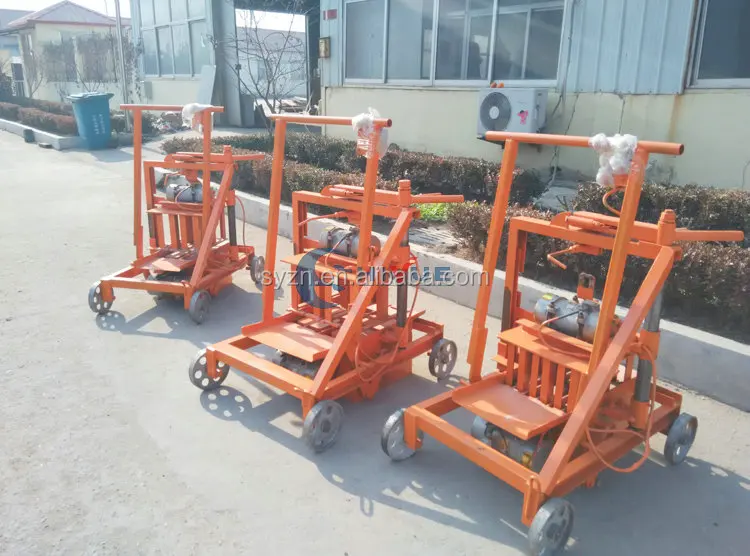

Description
Honest capacity by format — The QMJ2-45 is configured around the hollow brick sizes your market actually sells, so daily output is calculated per block dimension rather than quoted as a single unqualified number.
Technical Specifications
| Parameter | Value |
|---|---|
| Model | QMJ2-45 |
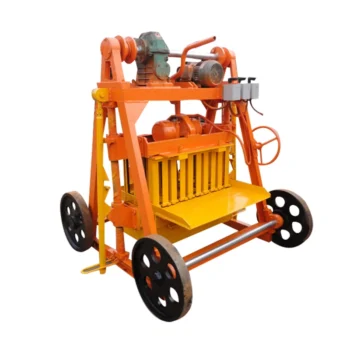
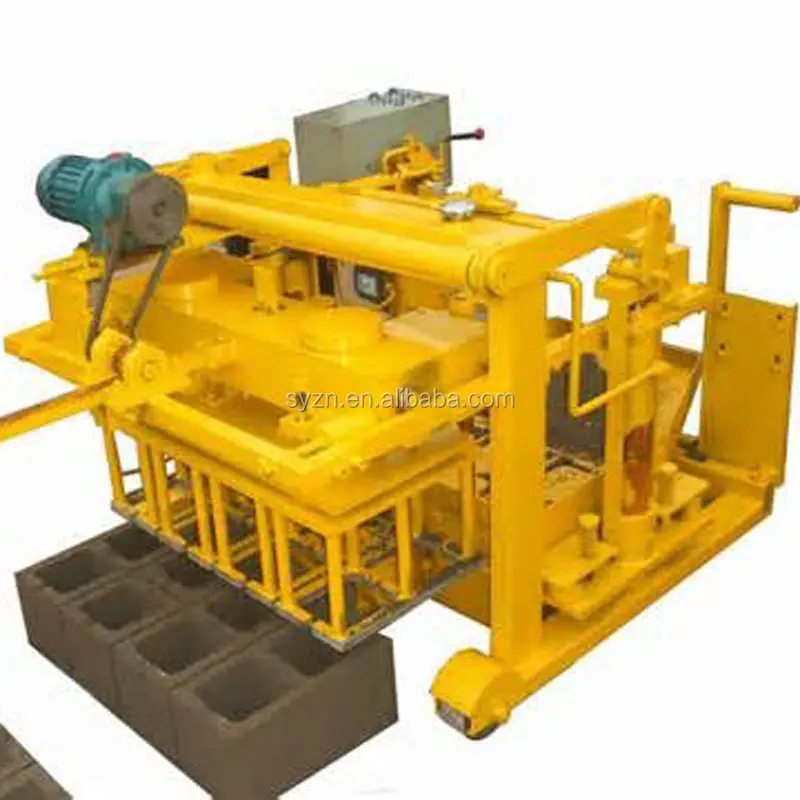
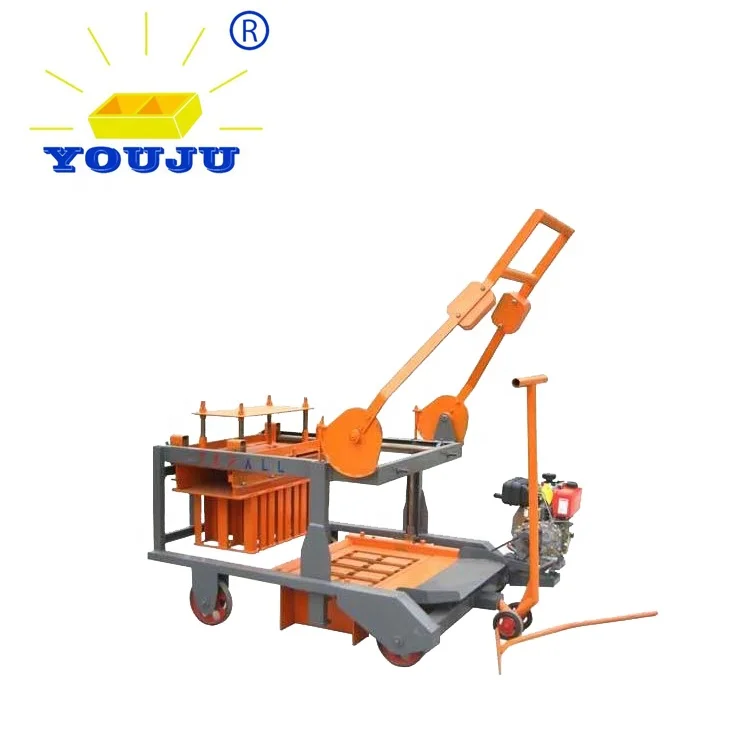
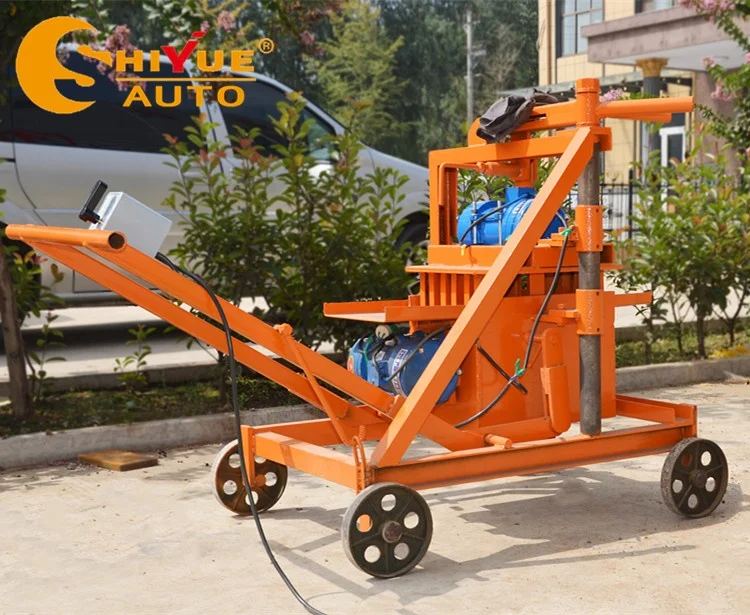
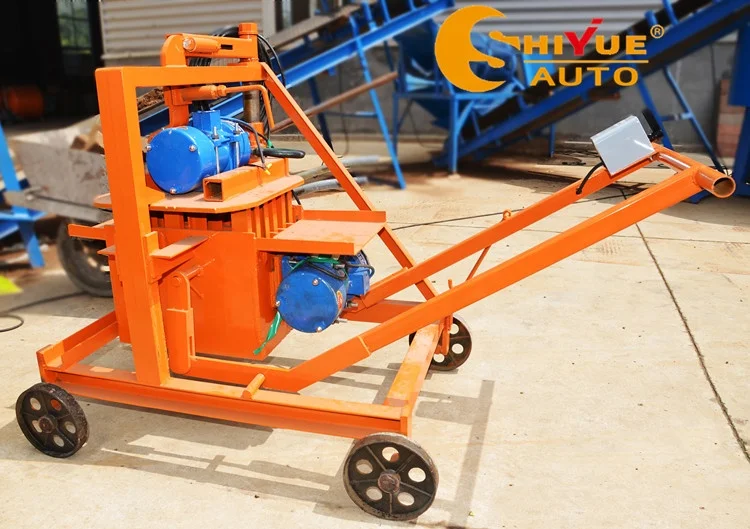
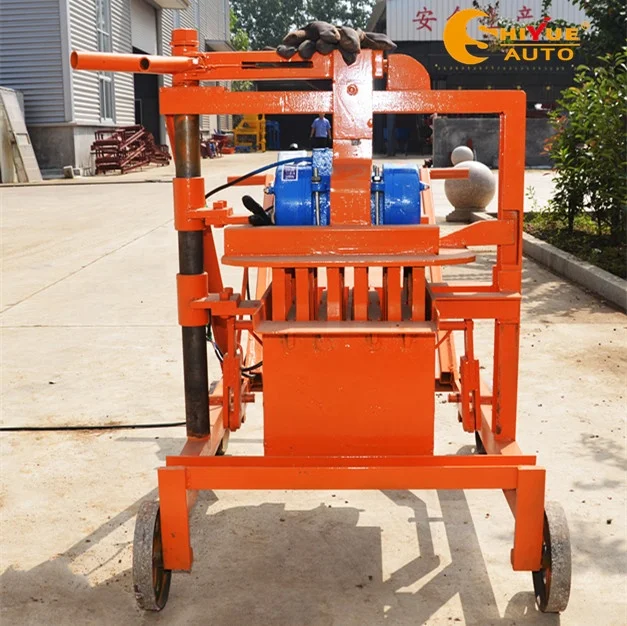
| Product Type | Manual Mobile Concrete Block Making Machine |
| Operation Type | Manual |
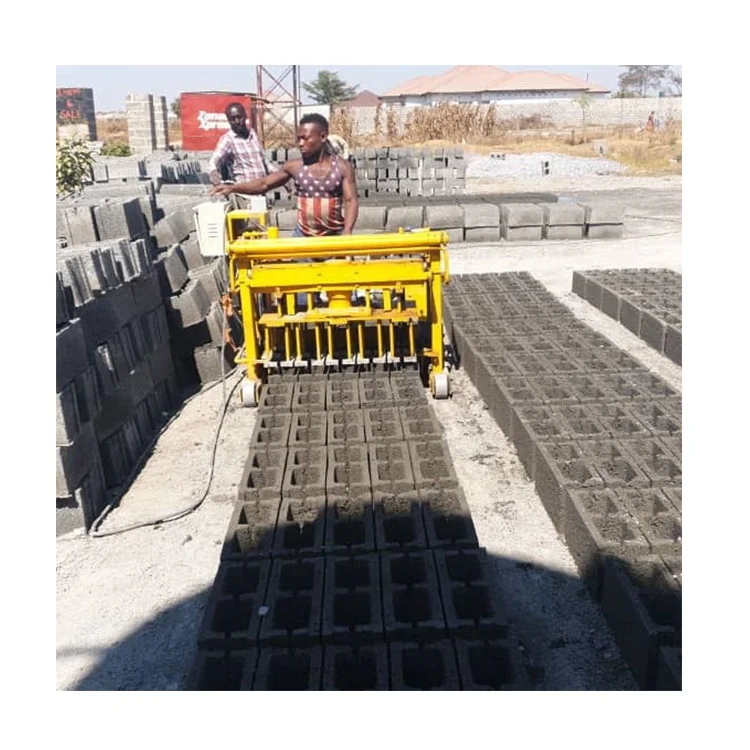
| Mobility | Egg-laying mobile, no pallets required |
| Power Source | Diesel engine |
| Labor Requirement | 1 to 3 workers |
| Mould Change | Supported, multiple hollow brick formats |
| Mould Format (basis) | 400×200×200mm hollow brick |
| Cycle Time | 25–30 s (basis not stated in source — confirm block format, material, thickness) |
| Output Capacity | 160 pcs/h based on 400×200×200mm hollow brick, 2 pcs/mould |
| Output Capacity | 240 pcs/h based on 400×150×200mm hollow brick, 3 pcs/mould |
| Output Capacity | 320 pcs/h based on 400×100×200mm hollow brick, 4 pcs/mould |
| Daily Output (8 h) | 1,280 pcs based on 400×200×200mm hollow brick |
| Daily Output (8 h) | 2,560 pcs based on 400×100×200mm hollow brick |
| Pallet Requirement | None |
| Space Requirement | Small footprint, no fixed plant needed |
Application Suitability
| Application | Material or Output |
|---|---|
| On-site hollow block production for building contractors | Concrete mixed with locally sourced crushed stone, sand, and cement |
| Remote or off-grid housing projects | Diesel-powered operation where grid electricity is unavailable |
| Small-scale block manufacturing | Low-volume runs of 400×200, 400×150, and 400×100mm hollow bricks |
| First-time block plant startups | Entry-level production with minimal labor and no pallet inventory |
What "1,200 Blocks a Day" Actually Means on a QMJ2-45
Output only holds up when you tie every number to a specific block format and cycle time.
Sellers often quote a single daily capacity figure for the QMJ2-45 mobile block machine specifications how to choose without stating which hollow brick size that number assumes. In practice, a machine cycling 25–30 seconds per mould produces very different totals depending on whether the mould holds two large blocks or four narrow ones. I have watched sites plan their entire material procurement around a headline number, only to find the actual output drops once they switch from a 100mm partition block to a 200mm load-bearing format [NEED_CITE: block format assumptions in capacity quotations].
Matching Mould Format to the Block Your Market Sells
The QMJ2-45 mobile block machine supports mould changes across three common hollow brick dimensions: 400×200×200mm, 400×150×200mm, and 400×100×200mm. Each format pulls a different piece count per cycle, so the machine you order should already carry the mould that matches the block your buyers ask for most. Switching between formats on site is manual but straightforward, provided the mould bolts and locating pins are kept clean.
Diesel Power and the Off-Grid Job Site
Many project sites in East Africa and South Asia lack reliable three-phase power during the construction phase. The QMJ2-45 mobile block machine runs on a diesel engine, removing grid dependence entirely. This matters most when a housing project sits outside municipal reach and the nearest concrete batching plant is hours away. The engine also simplifies the spare parts supply chain, since diesel mechanics are available in most rural areas [NEED_CITE: off-grid power constraints at remote construction sites].
Reading the Specs That Actually Matter
The egg-laying design eliminates pallets entirely, which means no pallet investment and no dependency on a prepared curing yard with forklift access. Blocks are laid directly on compacted ground and the machine walks forward for the next cycle. Cycle time sits in the 25–30 second range, but that figure depends on how quickly operators feed the mix and level the hopper — with only one worker on mixing, the press will idle between cycles. Labor requirement is listed as one to three workers, and in my experience the lower end works only when the aggregate is pre-sorted and the water supply is already at the machine. Mould change is supported, but buyers should confirm whether additional moulds ship with the machine or must be ordered separately.
What Happens When Mix Design Is Skipped
A mobile block machine is only as good as the concrete going into its hopper. I have seen contractors in Kenya feed raw red soil straight into an egg-laying machine without running a trial mix first — the resulting hollow blocks lacked compressive strength, and an entire truckload cracked during transport to the building wall. The QMJ2-45 mobile block machine specifications how to choose guide should always include a mix design step where local aggregate is tested for gradation and clay content before the machine leaves the factory [NEED_CITE: aggregate testing standards for concrete block production].
Why Sourcing the Supporting Details Here Matters
Block machinery is a single focus for our supply line, so the QMJ2-45, its moulds, and any wearing parts are specified as one matched system rather than assembled from unrelated sources. Configuration is set against the buyer’s actual mix design and local aggregate, not a catalogue default. Mould design covers the hollow brick formats the buyer’s market sells, with custom drawings available on request. The automation level is selectable — a buyer can start with the manual QMJ2-45 and later add a stationary line with pallet handling. Installation and commissioning support includes operator training at the job site, which is critical when the crew has never run an egg-laying machine before.
Documentation & Verification
- Line layout and capacity calculation stating the hollow brick format assumed for each output tier
- Mould drawing and format list confirming which 400-series sizes ship standard and which are optional
- Factory test record with cycle time measured per block format before dispatch
- Operation and maintenance manual covering diesel engine servicing and mould bolt torque sequence
- Wear parts list identifying high-wear items for the first reorder cycle
Installation, Commissioning & Support
- Compacted, level ground required; the diesel engine needs no electrical connection or dedicated circuit
- Diesel fuel supply and spare filter elements should be on site before the first production run
- Mould alignment pins and hopper gate inspected during on-site commissioning before full-speed cycling
- Operator training covers mix consistency, hopper feed rate, and the 25–30 second manual cycle rhythm
- First spare parts order should include mould wear liners and hopper scraper blades sized to the QMJ2-45
Before You Send the Inquiry
To size the QMJ2-45 mobile block machine to your project, share the hollow brick formats your market sells, your target daily output per format, and the local aggregate you plan to use. If the site has no grid power, confirm that a diesel engine is acceptable and state the ambient temperature range. Also let us know whether you need additional moulds beyond the standard 400×200×200mm format shipped with the machine.
Frequently Asked Questions
Q: How is daily output calculated and which block format does each figure assume?
A: Every output figure is tied to a specific hollow brick size. The 1,280-piece daily total assumes the 400×200×200mm format at two blocks per mould over an eight-hour shift. The 2,560-piece figure assumes the 400×100×200mm format at four blocks per mould. Cycle time of 25–30 seconds is factored in, but actual output depends on crew speed and mix availability.
Q: What mould formats are available and how long does a mould change take?
A: Standard formats include 400×200×200mm, 400×150×200mm, and 400×100×200mm hollow bricks. Mould change is manual, involving bolt removal and locating pin realignment. On a trained crew, the swap takes a fraction of a shift, provided mould surfaces and bolt threads are kept clean of dried concrete residue.
Q: Does the machine require pallets or a prepared curing area?
A: No. The QMJ2-45 is an egg-laying type that deposits blocks directly on compacted ground and moves forward for the next cycle. This removes pallet investment entirely and eliminates the need for a dedicated curing yard with forklift access, making it suitable for tight or remote project sites.
Q: Can the machine run on local aggregate and mix design?
A: It can, but only after a trial mix is validated. Local aggregate must be tested for gradation, clay content, and maximum particle size before the machine is configured. I always recommend sending a sample of your intended raw material so we can adjust the mould clearance and vibration expectations before shipment.
Q: What spare parts should be ordered with the first shipment?
A: Key items include mould wear liners matched to your block format, hopper scraper blades, diesel engine filters, and replacement locating pins for the mould change system. Ordering these upfront avoids production stoppages when the first wear cycle comes due, especially in regions where sourcing compatible parts locally is difficult.